

 Maurice Ravel’s Boléro has a long, complex relationship with rock and roll, sometimes quoted explicitly (Jeff Beck’s “Beck’s Bolero”) other times through suggestion (Rush’s “Jacob’s Ladder”). In its thematic and rhythmic repetition and building orchestration there is a tension and release, an erotic energy inseparable from rock’s spark. This has often been perceived as a weakness of the work, even signaling cultural dissolution, to its detractors.* Ravel himself had misgivings about the piece, and almost immediately following its first performance equivocated on what exactly he had created.
I am particularly desirous that there should be no misunderstanding about this work. It constitutes an experiment in a very special and limited direction, and should not be suspected of aiming at achieving anything different from, or anything more than, it actually does achieve… The themes are altogether impersonal – folk-tunes of the usual Spanish-Arabian kind, and (whatever may have been said to the contrary) the orchestral writing is simple and straightforward throughout, without the slightest attempt at virtuosity… It is perhaps because of these peculiarities that no single composer likes the Boléro – and from their point of view they are quite right. I have carried out exactly what I intended, and it is for the listeners to take it or leave it. — Maurice Ravel, London Daily Telegraph, July 1931.
This is a primordial punk/art statement, the “take it or leave it” a rejection of the academy, rock and roll’s essence, defying established thought but not without some churning within. It takes some mastery of a form to be able to do this, and so the statement is no easy out for the composer. His qualifications are not rationalizations or apologies, but a struggle with what he’s wrought. Boléro is a masterpiece, and like many orchestral works it is a shapeshifter. It tends towards 10 minutes in length or 19 — although Ravel preferred it to be in the 15- to 16-minute range. It is an arabesque, a sketch of Spain, a jazz age jewel, a childhood memory, a factory rhythm, an experiment, a riff monster, an impulse, an excercise, a piece of wizardly power. It is very occasionally, as it was originally, the score to a ballet. It is in its essence enigmatic. Even the better recorded version, and there are many out there, is a topic of fierce debate among aficionados. Many prefer Charles Munch’s RCA Living Stereo version from the 1950s, but at 13 minutes it quick-times the proceedings, undoubtedly for the consideration of the LP and perhaps influenced by the Toscanini performance that popularized the work in America, at a tempo that set the composer and conductor at odds. If it’s true, the story is great:
Ravel: That’s not my tempo.
Toscanini: When I play it at your tempo, it is not effective.
Ravel: Then do not play it.
Many longer versions are out there, however, and it’s probably hard to find one, fast or slow, that isn’t at least a little great, as it is apparently quite difficult not to knock this one out of the park if the conductor can keep the pace steady. For the sake of authenticity here is presented the 1930 version conducted by Ravel himself, or perhaps by Albert Wolff with Ravel present (this too is a topic of some debate) and approving. The provenance is sketchy, lost in the murk and mire of Ravel’s looming madness, the carelessness of record companies, and the vagaries of YouTube; however, this performance is most likely from 1930 with the Orchestre De L’Association Des Concerts Lamoureux.
* Allan Bloom famously called it the only classical piece of music young people liked, as puzzling “proof” — for who knows what that survey must have looked like — that everything was going to hell in the 1980s.
** Above painting of dancer/actress Ida Rubinstein, who commissioned Ravel to write the piece, by Valentin Serov (Wikipedia).
 From
From  In 2014,
  Say what you will about pop radio, you nostalgists and prognosticators of musical doom. I will laugh and scoff with you, because there is, as there always has been, portents of conformity in the monochrome sameness of the popular. But your arguments against are blind to the tail-chasing beast: it’s as often in pop as not that the true revolutions happen, where the work is done, before in creeps mimicry and gold diggery. In the case of Hozier, the revolution is subversion by honoring the blues and soul music his native Ireland so loves. In 2014 into 2015 he produced a bona fide pop radio hit in “Take Me To Church,” which got played on all the I Heart Radio stations in the U.S. In true pop radio fashion it was catchy, easy on the ears, anthem-y. But unusual too — it wasn’t hard to hear beneath the compressed radio waves a rock band sweating it out behind a gifted singer, songwriter, and guitarist. It almost seemed like it was a mistake, because how long has it been since you heard an actual band pumping out the rock on a pop station? The song was from Hozier’s full length, self-titled debut, which, while not a perfect record, isn’t far from it. With lyrics that investigate sexuality, religion, and drugs without robbing any of them of their dark poetry, the album maintains a soulful bounce that only occasionally loses its chug. Them-period Van Morrison would be proud. “To Be Alone,” which Hozier put together, or so I understand because the internet on this point mostly fails me, as a tribute to Junior Kimbrough (who gets a writing credit), does not bear the stamp of Kimbrough’s rough electric blues — although perhaps captures the feel — suggesting instead Peter Green during his brief time as the leader of Fleetwood Mac, it’s lead riff echoing the B riff of Green’s”Oh Well.” The production, too, has that dank, rainy reverb that Green loved, and deals in the dark depths of green manalishis and black magic women. Knowing nothing of the man but his music, I can say that he’s gotten at least that bit right, and while it would be a stretch to say his is the future of pop music, that he found his way into pop’s armored compound is a righteous thing.
 “Outlaw country” is an ironic descriptor at best, applied to a music that, without the modifier, began as a lucrative embarrassment to the phonograph salesmen of the 1920s, their newly-minted “hillbilly” record catalogs doing surprisingly well next to the more respectable stacks of whatever maudlin tenor was the operatic toast of the day. Country music’s cornpone reputation grew as its burgeoning industry began to trade on an image based in white southern poverty; but if the marketing suggested the music was as impoverished as its people (a patent falsehood), this achieved for the proponents of such thinking a comfortable outsider-ism, a romantic us-versus-them rewind and replay of Reconstruction that survives in other place in the South as well, through for instance a protracted and continuing — and, unfortunately, necessary — civil rights movement, to this day. So then, what’s this Outlaw business? The term attached to Willie Nelson, Waylon Jennings, and a handful of other country writers and singers who, starting in the late 1960s, were drawn away from the industrial strength, smooth country music produced by “Nashville,” that Tennessee town’s small oligarchy of producers and record labels who held sway over any music distributed under the category of country, and pointedly avoided shifting their audience’s gaze towards the rockier issues or musical themes of the times. Jennings, like Nelson, bucked at this, knew what it meant for their art, and went back to Texas; he turned up the rock’n’roll rhythms he’d played with Buddy Holly, sang what he wanted, and called Nashville out on its phony conservatism. In so doing, Waylon and the country outlaws — and the new southern bands like the Allman Brothers and Lynyrd Skynyrd — found a younger, national country audience, and also reminded rockers that their favorite music was as much country as blues.
 In 1979, while in New York City and around the time he was adding guitar overdubs to
  Put a couple of decades on the protagonist of
 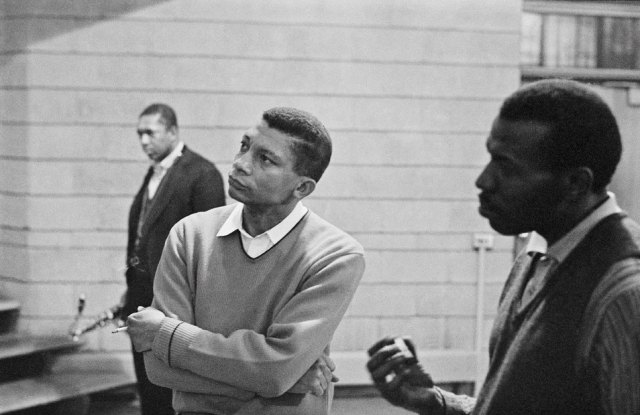 If love is one of the most common themes in song, love songs that stretch beyond simple declarations, admitting a type of defeat in the face of defining such an emotion, are remarkably rare. In the past weeks soundstreamsunday has featured
  One of the few individuals who could lay any real claim to being essential to the British folk revival, Elaine “Lal” Waterson lent her unique voice — absolutely beautiful and instantly recognizable — to the records she and her brother Mike and sister Norma made as The Watersons, defining the passion and respect necessary to performing traditional material while opening up the freedom and possibility such songs allowed. Although a tremendous songwriter in her own right, she wrote sparingly, and before her death in 1998 created only a handful of records. “Midnight Feast” is from 1996’s Once in a Blue Moon, a collaboration with her son, guitarist and producer Oliver Knight. It is an unusual record; Knight’s inventiveness as an electric guitarist gives the album a consistently full and yet uncluttered sound, supporting his mother’s poetry and voice, highlighting her artful, at times jazz-like, delivery. Indeed, in tone and mood there is nothing so much like this album as Abbey Lincoln’s 1959 landmark Abbey is Blue, in its grooves an acknowledgement of the fullness of life, with its travails and its joys. A profound wisdom at work, speaking of the deeper mysteries.
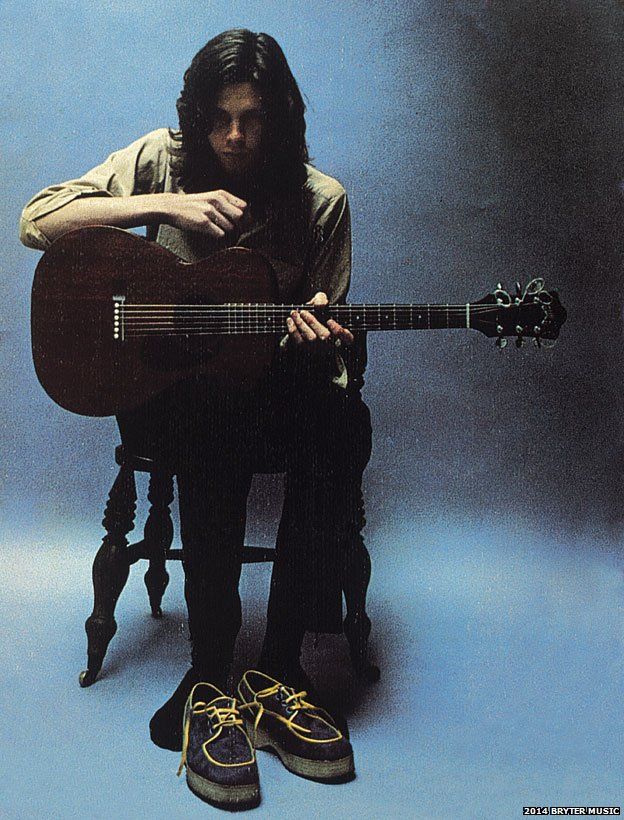 Across three years and three albums, Nick Drake produced singular, autumnal music that in its vision and genius defies era and genre. An extraordinary guitarist, lyricist, and gifted writer of melody, Drake was a lone wolf, debilitatingly shy, and thus his records were midwifed, by producer Joe Boyd — to this day Drake’s champion — and arranger Robert Kirby, along with various luminaries from the British folk rock/jazz scene. Richard Thompson, one of the players, estimates Drake probably sold only 5,000 albums in total when they first appeared, and it would take a VW ad a generation after his death to bring his music to a wider audience, but Nick Drake’s discography carries a timeless beauty, the light of late fall, and I hear in it the expressiveness — pain, humor, love — of Van Morrison and the soft, breathy sway of Joao Gilberto. “Northern Sky” from Bryter Layter is to my mind a perfect song of deep love and yearning, informed by the sensitive playing of John Cale, Dave Pegg, and Mike Kowalski. It wasn’t the breakthrough Drake expected (Island Records declined to release it as a single), and, perhaps disillusioned by his own overt attempt at and ultimate failure to make a commercial record, it’s believed to be one of the reasons he stripped down his sound for Pink Moon. And yet “Northern Sky’s” shimmering, jazz-inflected pronouncement, “I never felt magic crazy as this,” and its bell-like arrangement, is as fitting and whole a description of Nick Drake’s music as any I can imagine.
 Progarchy