
 The traditional folk music community — the collectors and pedagogues in the first half of the 20th century who defined the boundaries of the vernacular music fueling the folk revival of the 1950s and 1960s — probably had little use for a John Jacob Niles, scholar and singer of traditional and local songs whose work bore an imprint so unique that his interpretations took on a life of their own. Armed with giant lutes and dulcimers of his own devise, he would sing in a classically-trained impassioned vibrato whoop (Henry Miller described it as “ethereal chant which the angels carried aloft to the Glory seat”), investing in his songs a Kentuckian-by-way-of-France mondo spirit that channeled, intentionally or not — for Niles was a Modern — what Greil Marcus would later call the Old Weird America, inspiring a young Bob Dylan and echoing down the years in the work of Jeff Buckley and Devendra Banhart, and less intentionally, I suspect, but somehow powerfully in Radiohead and Gazpacho. Niles perhaps more than any other collector internalized the music he sought and found and wrote, seeing in it not a museum piece to be recited but a point of joy that deserved what he could add to it. He found what resonated with him and built a bridge forward with it, and while Led Zeppelin may have covered Fred Gerlach’s version of “Gallow’s Pole” and not Niles’s “Hangman,” Jimmy Page probably had more in common with Niles as an artist who extended a musical legacy rather than dwelt on some phantom authenticity. Here, on “Little Black Star,” Niles does the white man’s take on the “negro folk song,” complete with an affected pronunciation and an equally suspect attribution (some believe Niles might’ve just written this song himself). Through it though the piece builds a kind of magic that’s difficult to shake, and like much of the John Jacob Niles’s catalogue, is hard to forget.

 Bob Dylan is the rare artist who, at 75, retains the power, energy, and restlessness that distinguished his early work. As both a recording and performing artist, his electricity is unabated, and he continues to make vibrant contributions to the post-folk culture he virtually created. That he has achieved this is astounding; for those of us who have followed his career and know something of its roots and evolution, it is not surprising. He constantly recasts his song catalogue, the depth of which by 1965 (let alone 2016) was unrivaled in the rock/folk/singer-songwriter genre he invented, to match his current sound, and commands a fluidity of vision in his writing that sees beyond the trees and perhaps the forest as well. Witness “High Water,” a tribute to Charley Patton (whose “High Water Everywhere” is a stone cold delta blues barking, howling, classic), from 2001’s Love and Theft. This is a blues about love and the water that rises, that has picked up some oldtime, some drone, shaking and breaking and name-checking muscle cars and evolutionary philosophers. The thing is that it works because when Dylan sings “the cuckoo is a pretty bird” that’s a kind of referenced code that he’s hollering back to Patton. He’s writing a blank check to freely associate (find and listen to a version of “The Cuckoo” and you’ll get what I mean), to make the rhyme work and throw meaning to the wind and to the listener. Harder than it sounds because it’s about the sound, what music is, what makes its power inexplicable. To make that warble on the 5th day of July, and trace your absurd and beautiful melody: it takes courage and a resolution that comes at a price only Dylan, and maybe Patton, knows.
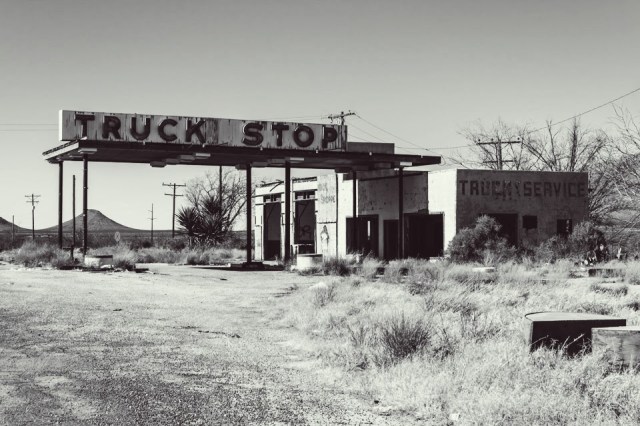 Years before the hybrid of classic rock and distorted garage psychedelia and punk became the legendary Grunge that vanquished the Hair Metal Dragon in the early 1990s, Screaming Trees and Thin White Rope plied their trade in relative obscurity and penury. Even as “punk broke” in America and they were afforded greater opportunity for exposure, as groups they had already cycled through lineup changes and masterwork albums, and the timing for broad success never really synced. Yet you can sight through the lens of their recorded legacy an understanding of what Grunge in America was, where it came from, what it meant, how it drew upon American roots music, acknowledging what Greil Marcus called the “old, weird America,” of everything from 13th Floor Elevators and Neil Young to the folk revival of the 1960s to the hillbilly/race records of the 1920s and 1930s. The references aren’t always apparent, but they’re embedded in the dust devils Thin White Rope appeared through and the rain-soaked northwestern pines the Screaming Trees turned dayglo.
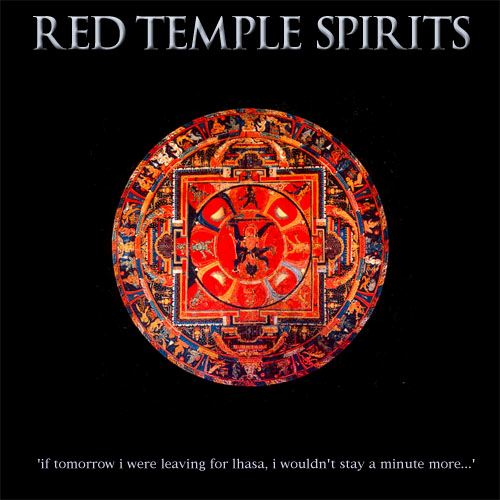 For years, LA’s Red Temple Spirits were a tease, a psych rock ghost that once got a short write-up in Rolling Stone, which gave an address to write to if you wanted the album, an address for an obscure label that never wrote back. It was the pre-internet treasure map to sacred recordings process that was our siren’s call. Guesswork, album reviews, dudes in record stores who’d gone to see Hendrix and never really come back. From the description I read, this band was for me. But for about five years, every record store I walked into got the question: “Red Temple Spirits?” and I would receive a shake of the head back. Along with Television Personalities, in the late 80s and early 90s they were my grail, a band whose records couldn’t seem to be found for love or money, as if they wanted it that way, ached to be left alone. Around 1993 I finally and gratefully scored a cassette of their 1989 album If tomorrow I were leaving for Lhasa I wouldn’t stay a minute more… (possibly from Austin’s Waterloo records, who had hooked me up with Television Personalities a couple years earlier too) and discovered the small window of hype Rolling Stone gave them was deserved. A rockier, psychier version of the
  The Cure’s Disintegration is a lush, beautiful masterpiece. When it was released in 1989, the band was cresting a wave of popularity, and rare was the college dorm room in America that didn’t have a copy of their singles comp, Staring at the Sea (1986), sitting next to the deck, while Kiss Me Kiss Me Kiss Me (1987) was radio ready. Robert Smith had become an unlikely hero, a post-punk goth who had paid his dues and, with a colossal songwriting talent, was reaping the rewards of someone who virtually created his own genre. Nobody else sounded like the Cure. Neither psychedelic nor prog nor punk, but fearless in their approach, comfortable in their painted skin. On Disintegration the band slows the tempos, backgrounding Smith’s economical lyrics with huge keyboard/guitar drift pieces that seem to exist in the gloaming. A perpetually wilting flower, the first-person character in Smith’s work has had a long shelf life, and would rot if it weren’t for Smith’s genius with song and his ability to effortlessly write pop hits at will. Entreat is from the tour supporting the album, recorded at Wembley in ’89, and consists of the all the songs on Disintegration in the same running order. It had a very limited release originally, but pieces of it emerged here and there on CD singles taken from Disintegration (I first heard parts of it on the Pictures of You EP), and was eventually, finally bundled with Disintegration on the 2010 re-release. Entreat was a bold move, a full performance of a newly-released record, and demonstrates just how confident Smith and his band were in the new songs.
 Finding abandon in structure is what rock is about, but it’s rarely approached with such intentional power as on the live sets that Robert Fripp and David Sylvian played in Japan in 1993, which make up the album Damage and the film presented here, Road to Graceland: Live in Japan 1993. It’s not surprising that one of the great live albums in rock would come from a duo whose very distinct songwriting and voices meshed with such ease, but the precious vein they mined yielded such a small set of work and such little attention — after all, art rock/pop in the early 90s was in a far different place in the popular consciousness than it had been a decade earlier — that the record is nearly invisible today even if you’re fairly well-acquainted with the careers of both men. This is neither In the Court of the Crimson King (or Discipline) or Gentleman Take Polaroids (or Rain Tree Crow), but a striving towards something that summed higher, capturing two artists with deep histories and still in their prime. Fripp’s work here, as always, is masterful; a guitarist whose technical ability is matched by a uniquely creative sound and spirit and generosity, he creates space for Sylvian’s profoundly expressive voice and writing. Sylvian, in turn, doesn’t fill the frame either, yielding his significant presence when necessary to the outstanding band he’s playing with. This is my favorite pairing of Fripp with a vocalist, because as much as I like the work he did in King Crimson with Adrian Belew in the 80s and John Wetton in the 70s, he and Sylvian have a chemistry that gets to the center of their strengths, and, appropriately — given Fripp’s brief but incendiary participation in the Berlin Trilogy — summons the work of
 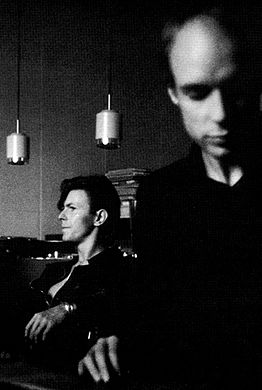 Forty years on it seems like it must have been inevitable, obvious even, the crossing paths of
 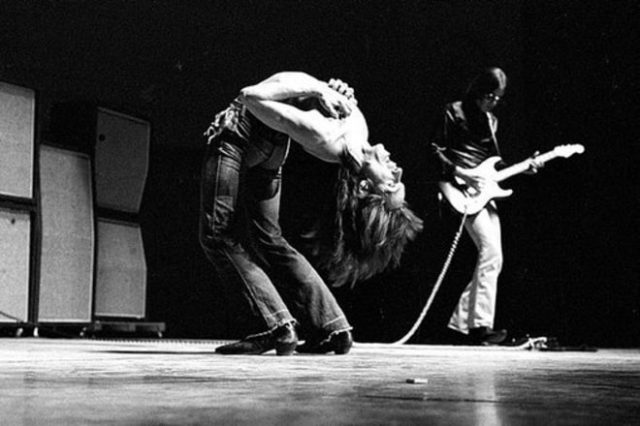 Three months after
 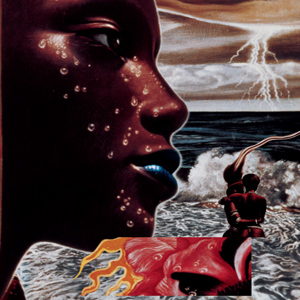 It’s unavoidable. It is impossible to speak of modern music, regardless of genre, and not take note of the critical importance of Miles Davis. Call him what you will or what he called himself — a genius of composition, a dazzling trumpeter/performer and band leader/manipulator, an agent provocateur, a counter-racist, coke fiend, pimp, misogynist — Miles Davis was to musical art what Pablo Picasso was to visual art in the 20th century. It’s so true it’s not even up for debate, and there’s about a kazillion hours of recorded, generous, lovely, dark, funky, bopping proof. By natural extension Davis was the incarnation of what
  Progarchy