Fresh from the warm South Florida, comes a prog rock veteran Barry Weinberg, with his debut album “Samsarana” dropping January 25th.
The fifteen-piece musical beast of a debut appears very much ready to stand next to plethora of amazing albums that the genre gave birth to over the years.
After short and atmospheric intro titled “Conception,” forward comes “Creation” leading off with a very Floydian feel and with a full sized chorus following all verses, it seems there may be an easy ride ahead for more cautious listeners. “Welcome to my World” is a laid-back stripped down acoustic piece with Weinberg’s voice over leading to “This Vicious Circle,” which sees Weinberg’s circling melody wash over the pebbles and steal away the shoreline behind, whereas “Come Out and Play” is a groovy and funny little piece.
“Beyond the Astral Sky” kicks in through a silent verse, attacking with a slightly alternative-flavoured chorus, and some sharp instrumentation, before the leviathan-sized hook belonging to “Taking it All” take things to a further level, with occasional hard rock sprinkle. We hear the same good work kept up through “Endless Sea” and “A Passage of Time,” the latter ringing the Genesis influence.
After another instrumental interlude “Perception,” “You Cannot Burn the Fire” comes as, arguably, the heaviest piece, incorporating heavy metal riffing and evil-flavoured singing. “Come My Way” brings in the folk element, while the following “The Way” comes with a steady pace, making for one of the highlights.
“Samsarana” is an absolutely accomplished piece of playing, writing and performance that should see the genre pushed out of its confines.
“Samsarana” is out on January 25th; pre-order it from Barry Weinberg’s official website.
There is music that I can’t relate to. Sometimes it’s because the song is plainly stupid, trite, or obnoxious that I just wish it would be sent into the sun. It’s like your friend who posts way too much personal stuff on Facebook, you just want to scream “Stop”. Then, there is an even more perverse music, a music that speaks like a man half-way through a Xanax withdrawal, a music that both baffles the mind and produces a near awkward laughter in the listener. This is the music of lunatics, music that I would say (in the most professional of instances of course) has gone “completely bananas”.
And here we are with just an album, The Mercy Stone’s debut experimentation Ghettoblaster. An album I am sure my closest friends are sick of hearing and hearing about in the last coupe of weeks, yet it took me some time to write about it because — life.
If you are someone who actually was alive to see the prog spectacle of the ‘70s you may remember the slightly nerdy King Crimson or even the lord dorkdom of the cape wearing Yes. While there are many genuinely cringe worthy moments from those bands nothing — and until I can be proven wrong I genuinely mean NOTHING compares to the awkward vibe you get from Ghettoblaster.
The Mercy Stone is a new project; it’s been around for a few years and was assembled by composer and guitarist Scott Grady — who has a master’s degree in music composition — and who assembled a 12-piece group to “to put his composition chops to work within a project that would have the substance and sophistication fitting for a contemporary-classical concert stage as well as the accessibility that would be palatable to rock audiences.” Going simply-said for an extraordinary amalgam of Classical Music, Jazz and Rock, the group presents a large body of work with their full-length debut Ghettoblaster. Large as in bringing together Stravinsky, Led Zeppelin, Nirvana, Radiohead, Bach, Nine Inch Nails, Pink Floyd, to name but a few.
The music on Ghettoblaster is very well composed and performed. Grady tends to pull together a strong cast of performers for his musical circus act. These fine tunes tend to be something to marvel at. It is this dichotomy that provides more of the head scratching moments. The album progresses in a peculiar, but fairly typical fashion during the majority of its run time. You might find the music endearing and charming as it blends rock, jazz, and classical qualities.
The ‘70s were a glorious period in music because people were getting paid way too much money to do all sorts of crazy projects, and even though some of the end results were complete disasters there was a sincerity to them. There was no sense of irony or pretentiousness in the attitudes of the musicians, they just wanted to make weird and complicated music. With Ghettoblaster, this ensemble does exactly that. The Mercy Stone are driven by the love of music, and it pays back — maybe not filling their pockets, but rather something on a higher, more spiritual level. Highly recommended.
Hailing from Calgary, Alberta in Canada, a progressive metal trio Heyoka’s Mirror has earlier this month launched their debut EP “Loss of Contact with Reality,” available as a name-your-price download and CD from Bandcamp.
“Loss of Contact with Reality” places Heyoka’s Mirror to the art-metal vanguard, but the three-song EP does find the band on surer footing from which to make their next leap forward. The last track in particular, “Chronovisor,” gets surprisingly good mileage from an unlikely source: melodic metal, maybe the least reputable of metal subgenres. It’s the metal niche that has least renounced the campy excesses of new-wave Brit metal a la Iron Maiden and Judas Priest, but it’s also the most melodic, its tell signs being clean-sung harmonies and dramatic synths that tend to blast out from behind the guitars. It turns out the style makes a good segue between the sections of “Chronovisor” that are rooted in math rock and those that are rooted in thrash metal, and the effectiveness with which Heyoka’s Mirror employs those soaring melodies suggests they may yet develop their own mutant pop sensibility.The first two songs are dynamic; they’re also wildly uneven, with very cool ideas alternating, often in rapid succession.
More than anything else, Heyoka’s Mirror is dependent on their ability to generate momentum here, by virtue of which they can keep listeners engaged in these unwieldy but ultimately rewarding compositions. By that standard, “Loss of Contact with Reality” is a success, though its true significance will be determined by how the band capitalizes on that momentum when they come up with their forthcoming full-length.
Ukrainian progressive rock outfit Obiymy Doschu has launched their new album entitled “Son” (Ukrainian for ‘dream’), and the band’s singer and songwriter Vladimir Agafonkin tells us about it, but also about the meaning of the band’s name, and more. You can read our review of the album here.
What made you go for the name Obiymu Doschu?
Obiymy Doschu means “Rain’s Embrace” in Ukrainian. This name reflects the melancholic, lyrical, autumnal feel of the music. At first, we wanted to use the English name, and write English lyrics, but eventually decided to write songs exclusively in Ukrainian. It’s an incredibly beautiful, mellow sounding language that fits this kind of music perfectly. Besides, we strive to write deep, meaningful poetry for our songs, and this wouldn’t be possible with a non-native language. It’s better to do your very best for a narrow audience than to be mediocre for a wider one.
How do you usually describe your music?
It’s a unique emotional blend of progressive rock with neoclassical, neofolk and post-rock elements, heartfelt Ukrainian lyrics and lush, beautiful string arrangements.
What is your writing process like?
It usually starts with a short musical idea, typically played on an acoustic guitar, which then very slowly expands and grows with new layers, details and meaning over many years — both as a result of individual writing and band member collaboration. We never rush the writing process. Most of the songs on our new album “Son” were perfected over a decade, with core song melodies and lyrics appearing first, and string arrangements last.
Who or what is your inspiration, if you have any?
Musically, we draw inspiration from modern progressive rock bands such as Opeth, Porcupine Tree, Anathema, from darker bands such as Katatonia and My Dying Bride, from neoclassical composers such as Max Richter, from unconventional bands such as Tenhi, The Gathering and Sigur Ros, but also from Ukrainian folk music. As for the meaning of our songs — we draw inspiration from everyday struggles we face as human beings, exploring basic feelings such as love, loneliness, compassion, regret, hope.
What is your favourite piece on the new album “Son” and why?
Each and every song is my favorite piece — I can listen to them all over and over. But personally I’d like to highlight “Zemle moya myla” (“My dear land”), a love ode to my country. It holds a very important message and connects to me on a very deep level. Ukraine went through a lot of pain and struggle over the last few years, but many people still hope for the best and persevere, working on a better future, no matter what happens. We strive to be among them.
What makes “Son” different?
It’s rare for a rock band to put so much effort and care into music — we worked on it for 8 years, spent 2 years just recording it in 7 different studios, involved 15 musicians including a string quartet on most songs, and patiently worked extremely hard on it despite a very high risk of never reaching a sizable audience.
Today’s listeners tend to focus on easily digestible content, and writing long, conceptual, complex works such as Son is out of fashion. But we still do it because we deeply love what we do, and will continue despite all odds.
What should music lovers expect from “Son”?
It’s a complex, beautiful, emotive, meticulously crafted record with lots of wonderful melodies, great instrumentation and unique Ukrainian charm. We’ve put our souls into this album and it shows. Even if you don’t understand a word, give it a chance.
What kind of emotions would you like your audience to feel when they listen to your music?
We want them to feel connected to us. To feel that even in their deepest feelings, with all the pain they went through, they’re not alone, and there is always hope, and there is beauty.
Which do you like most, life in the studio or on tour?
We don’t tour much. We’re not yet known enough to tour productively, and for Ukrainian bands, it’s usually strongly unprofitable and also draining. It’s also not easy to organize — everyone in the band has day jobs and families to take care of. But we try our best to turn the rare concerts we do into unforgettable experiences.
The studio process is very different, but it’s incredibly rewarding and enjoyable — when you see the songs you wrote slowly gaining shape with the help of many talented musicians and engineers, when the songs start to come together, it’s such a joy. You feel like those are the moments that are worth living for.
Pick your three favourite albums that you would take on a desert island with you.
Some of my most beloved albums (many of them progressive rock/metal) are not meant to be listened to over and over again, but there are albums that you can listen to forever and never get tired. Those are the kinds I’d take on an island with me.
Death Cab for Cutie — Transatlantism
Sigur Rós — Ágætis byrjun
The Gathering — How to Measure a Planet?
For more information about Obiymy Doschu visit the band’s official website.
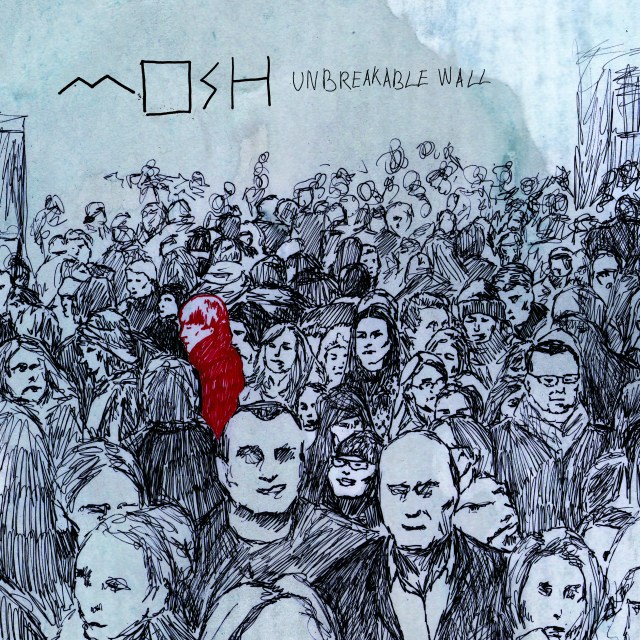
“Unbreakable Wall” is a debut release from Mosh, an Israeli musician who “pours the human experience in all it’s rage, sadness, and happiness into his music as he explores universal themes of inner conflict, relationships with others and relationships with government.”
Speaking of the sound of “Unbreakable Wall,” it has a very solemn, jazzy feel that is brought some brightness in the form of Mosh’s vocal melodies. Due to amount of range Mosh possesses he is able to single handedly change the mood, or evoke some otherwise unseen emotion, in the various points of his songs. The effect of this is seen excellently on the track opening song “Keep on Moving,” where he begins the song with some low-register singing and then during the chorus he extends himself into a melody that would trip most vocal chords of the average rock singer. Throughout the song his constant change of singing, to all out bawling, to quiet talking makes the mood of the listener swing with the hymns. The instrumentation on the track and throughout the song is also superb and helps create the perfect backdrop for Mosh’s vocal expertise. Of special effect to this is the harmonica solo, courtesy of Roy Rieck.
Passionate performance on the lead single “Fish Us” sets the tone for the more mellow and emotional delivery both vocally and instrumentally, what tells about how far “Unbreakable Wall” goes when it comes to diversity. The mood of “All I’ve Got” is a fair bit optimistic than the previous song. The song has an acoustic guitar in it, and some other instruments. Mosh’s awesome voice shows in this song and his guitar abilites do as well. “One Way Out” is a mood-changer; stylistically it almost borders with the 1970s funk music; it comes with a catchy groove that makes it one of the highlights of the record. Warm vintage sound of electric piano in “You’ve Reached My Arms” and psychedelic vibe evolving around Mosh’s and Zoe Polanski’s vocals bring “Unbreakable Wall” to new heights. The instrumental work in “Save Me” serves as such a beautiful background for Mosh’s vocals, leading to some of his best performances on the album.
Overall, “Unbreakable Wall” is a pleasant listen, and perfect alternative rock offering from a musician that clearly knows what he wants to achieve.
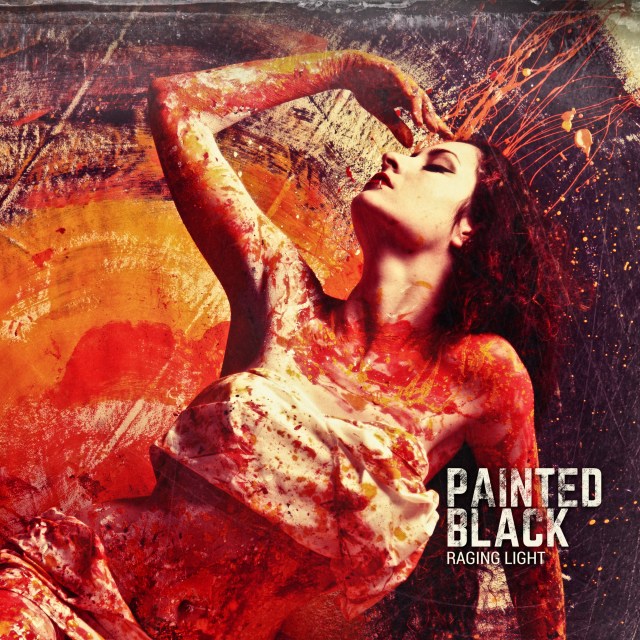
Lisbon based progressive metal visionaries PAINTED BLACK released their second full length album, and follow up to their 2014 EP Quarto Vazio back in October via Wormhole Death.Titled Raging Light, you may need to ensure your seatbelts are fully adjusted as you are in for one hell of a journey.
Raging Light constantly keeps you guessing as it meanders through a varied assortment of quirky time signatures, hitting you at every turn with ruthless blastbeats and piercing vocals as the quintet encapsulate you in a maze of riffs. In particular, the combination of “The Raging Light” and “Dead Time” are both packed to the brim with beautifully crafted insanity and just as you feel your head is about to spin off “The Living Deceiver”is a welcome change of pace inundated with hypnotic riffs.
Considering the progressive metal scene’s tendency to lean towards more extensive compositions for the most part PAINTED BLACK have devised very digestable tracks which keep the listener enticed and engaged. They combine the harmonious subtleties of OPETH, the atmospheric pace of KATATONIA and the bludgeoning force of DARK TRANQUILLITY to devastating effect but where they particularly shine is on the album closer “Almagest,” a 17-minute prog epic. Ironically when they begin to dial down the vicious assault they are at their most captivating with eerie whispering verses and a more methodical pace.
PAINTED BLACK are clearly an intellectual and forward thinking band, and hopefully The Raging Light will bring them recognition they deserve. This is a band to look forward to in the coming years.
Ukrainian Progressive Rock six-piece Obiymy Doschu have just put out their new release titled “Son” (Ukrainian for ‘dream’). The first thing that is quite obvious is that the band sing in Ukrainian, and I would say that it makes the difference indeed.
As Progressive as Progressive Rock can be, long lingering guitar solos with chords that stretch past the count of an individual musical bar blends with softly played keyboards and piano, and beautiful vocals are earnest, and in top form. The music of “Son” is hauntingly beautiful, moving, strange, and cosmic. Fans of Nosound, Lunatic Soul, Gazpacho, Sylvan, No-Man and Blackfield will want to add this release to their collections.
What an extraordinary collection of music this is. From the atmospheric symphonic intro of the opening track “Ostannya Myt’,” to the gorgeous acoustic guitars of the gentle, “Razom,” to the supernatural, eerie, dreamlike sequence of “Son,” the listener is transfixed, almost as if staring into the darkest regions of outer space. What Prog Rock is, Obiymy Doschu does it perfectly, and this release is proof. The longer this CD plays, the more real the music becomes, and it quickly becomes clear that the members of the band have some supreme talent in composing music that is moody, atmospheric, layered and intensely technical. Each track takes the listener on a voyage, of sight, sound and sensations. String and woodwind instruments, as well as choir, are used to their fullest potential to create that sound that is neo-classical, while the drumslay a steady backbeat, but a closer listen reveals syncopated rhythms.
“Son” is just downright amazing. Listen to the title track that when hearing it, one will feel as if they are suspended somewhere between a dream and reality. Close your eyes when hearing this song, and as the song fades into black, you will be left with emotions that don’t come to often when hearing music – breathless, spent, and moved. The title track in parts is soft, in others loud, at others heavy, while music that is bizarre but passionate as hell plays havoc with your sense of what is real and what is made up.
Again, this was downright marvelous. The mixing, courtesy of Bruce Soord (The Pineapple Thief), is incredible, the sound astonishing, with every note crystal clear. The vocals are audible and easily understood. The lyrics make sense (no, I don’t speak Ukrainian, but the band took care of it), and the musicianship was breathtaking. Not a bad track to be heard, no “fillers” to have to worry will come along and ruin the progression of sensations that are felt during this CD’s playing time. For lovers of the intense, the heartfelt, the reflective, and the sincere type of Progressive Rock that Obiymy Doschu plays – and plays so perfectly – this is a must have.
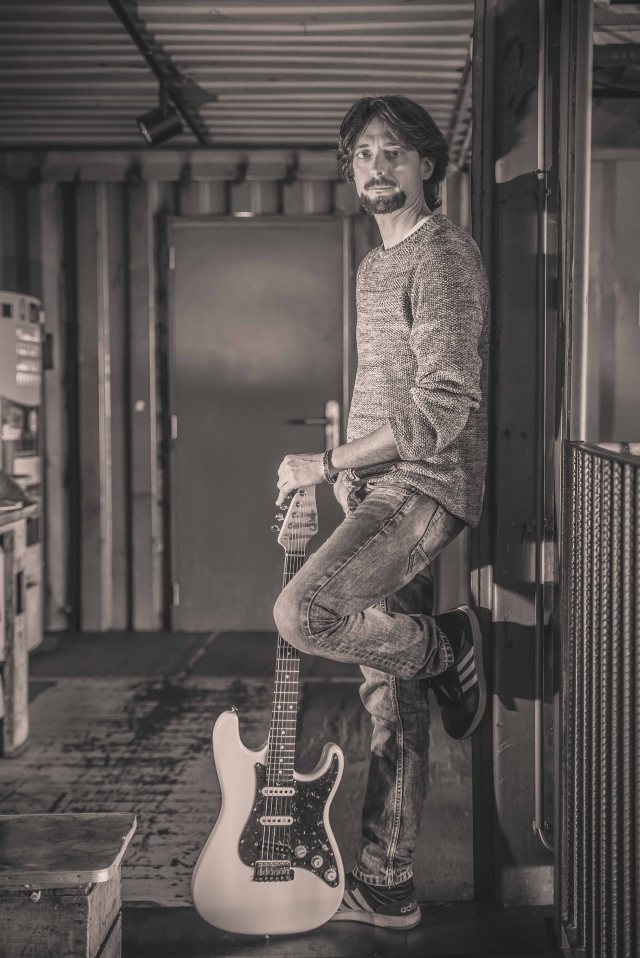
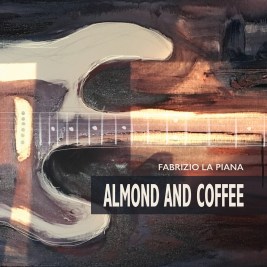
Fabrizio La Piana is a guitarist and composer who is well versed in a lot of styles having played with jazz, rock and metal bands in the past. His new solo CD, “Almond and Coffee,” covers a lot of ground ranging from grinding jazz rock to progressive rock, with addition of ambient music here and there.
Several tunes here have him sounding like a spiritual heir to the guitar guru John McLaughlin. “Funky Song” features him winding up wobbly chords along a lurching beat in the company of bassist Bernhard Hollinger and drummer Niels Voskuil, making for a power trio that is on fire throughout the record.
On “Almond and Coffee” (the song) La Piana delivers series of spacious licks, with rhythm section providing depth to the overall airy tune. “Forte” has shimmering washes of guitar playing into a sinister theme, while “Pulice” kicks off with tribal drum pattern and La Piana’s noodling.
“50-50” is arguably grooviest piece on Almond and Coffee, which also features La Piana and Hollinger exchanging solos. “Rokin” feels as a slice of laid back guitar noodling with La Piana chipping out springy, twisty notes. After it lulls you in, the song takes a fusion route before eventually closing the album with dreamy, delay-laced washes.
Fabrizio La Piana uses plethora of techniques and abilities here to make a varied and enjoyable record. With “Almond and Coffee” he may not reinvent a wheel, but the record is surely one of the most enjoyable jazz rock releases to come out in 2017.
Drawing parallels to the work of mighty Frank Zappa and David Bowie, as well as Isis, Cult of Luna, the Mars Volta and the Dear Hunter, the Atlanta-based band Spurge seems like a promising act. But delving deeper to their most recent release, an EP simply titled “Four More Songs” reveals plethora of different sounds and vibes.
The creator of the band, bassist Jen Hodges gives us an insight into the world of Spurge, their writing process, and more.
What made you go for the name Spurge?
When I first got players together in Nashville, this was just a solo project and I was releasing material as Jen Hodges. My musicians were wanting like a “Jen Hodges and something or other” name. I told them I was down and whatever they picked was good for me. My drummer at the time had a very endearing lisp and excited called out “Sthpurge!” We were all kind of unsure what he said at first. He said it again and told us it was a kind of weed. We all dug the double entendre. For a while we called ourselves Jen Hodges and Spurge. We dropped the Jen Hodges this year because the band feels like a total group effort at this point.
How do you usually describe your music?
I like to call it progressive post rock. Most of the time people have no idea what that means so I end up explaining that we play post rock type textures but add in guitar/bass/drum solos. I’ve heard people call it neo-classical rock, experimental, ambient, and fusion before. I believe someone called us a jam band once as well.
What is your writing process like?
Whenever I’m noodling around on the bass or guitar by myself I’ll come up with a few riffs I dig. I’ll usually collect 15 or so riffs over the course of six months and start stringing them together using theory to craft transitions. I record a scratch take with me playing all the instruments and send it out to my band. My band are all top tier at what they do, so I tell them whatever guitar/drum parts they write is cool with me. They always come back with some pretty sick stuff. We rehearse it, record it, then I’ll go back in and record my bass solos as the finishing touch. It’s an odd approach but I like how loose and open it is. The creative process is my favorite part of playing.
Who or what is your inspiration, if you have any?
There are a lot of players I admire. Their music inspires me to contribute to humanity’s little collection of sound. I’ve never been able to duplicate other people’s styles. Mostly due to my bass being upside down and backwards. However, I like being a part of the musician community and hearing other people’s music motivates me to keep writing. Some of the musicians who influenced me at an early age are Flea, Buckethead, Jimmy Urine, Layne Staley, David Gilmore, John Paul Jones, Victor Wooten, and Thundercat.
What is your favourite piece on the new EP “Four More Songs” and why?
Oof. That’s tough. I like the bass solo best in Amphibian. I like the verse in Om the best. I like the piano solo in Rain the best. I like the guitar riffs in David Bowie the best. I like Miles’ vocals in Amphibian the best. I don’t think I can pick an overall piece I like best though.
What makes “Four More Songs” different?
Different than my other albums? Or different in general? Different than my other albums because I had an idea about what I wanted before I started writing. I knew for sure I wanted to write a 7 minute song, a David Bowie tribute, a schizophrenic piece with a metal bridge, and I wanted to finish Rain. I had been in the process of writing Rain for five years at that point. It was a reject song from a previous band. The record is different in general because it’s got my style in it. All my music is different than most stuff out there. I am proud about that. I feel like I finally found my sound.
What should music lovers expect from “Four More Songs”?
Beauty, ugliness, groove. A lot of texture. Some experimentation in recording techniques. We recorded Wayford’s vocals on Om by putting a box fan between him and the mic. I broke a major rule and stacked 4 bass lines on top of one another in David Bowie. My poor producer wasn’t too happy about it. He’s the man though and heard my idea and made it work. I think this is a record you can listen to all the way through and be sucked in enough not to skip any parts. There is no filler. And you never know what’s coming next.
What kind of emotions would you like your audience to feel when they listen to your music?
All of the emotions. (I just made myself laugh.) I’d like them to feel content, relaxed even. I’d like them to forget about their phones and their responsibilities and allow themselves to be taken through the story. Maybe hype during the more exciting parts. Entertained. I’d like them to feel entertained. Whatever emotion produces that outcome is fine with me. As long as they are indeed feeling something. Then I’ve done my job.
Which do you like most, life in the studio or on tour?
I’ve never been on tour where we don’t sleep in the van or on the floor or in someone’s basement so I’d have to say studio life. I’d love to experience tour where we get a hotel room each night. That might change my mind a little bit. Tours have been fun, yet exhausting. Studios are sacred spaces. The creative process is my favorite part of playing so the studio is hard to beat. I know a lot of people can get stressed out in the studio, but I’ve always been comfortable not having control so I just let people be themselves on the tracks. If I don’t like it, I’ll edit it later. I think the music reflects the positive vibes in the studio.
Pick your three favourite albums that you would take on a desert island with you.
Wow that’s tough too. Only 3? John Prine Live, Dark Side of the Moon, and RHCP Mother’s Milk. I just looked those choices over for about two minutes and I’m sticking with my answer.
“Four More Songs” is available from Bandcamp. Stay in contact with Spurge via Facebook and Twitter, and visit their website for more information and news.
With the amount of records being released in the present era, ranging from the bedroom to high-class studio productions, it is quite a challenge to satisfy my hunger for music lately. Most of this has to do with the fact that the music being released today lacks sincerity. Maybe I am stuck badly to the old-school understanding of rock music, but even though I try so hard, it happens quite a lot that I cannot understand and enjoy the modern music.
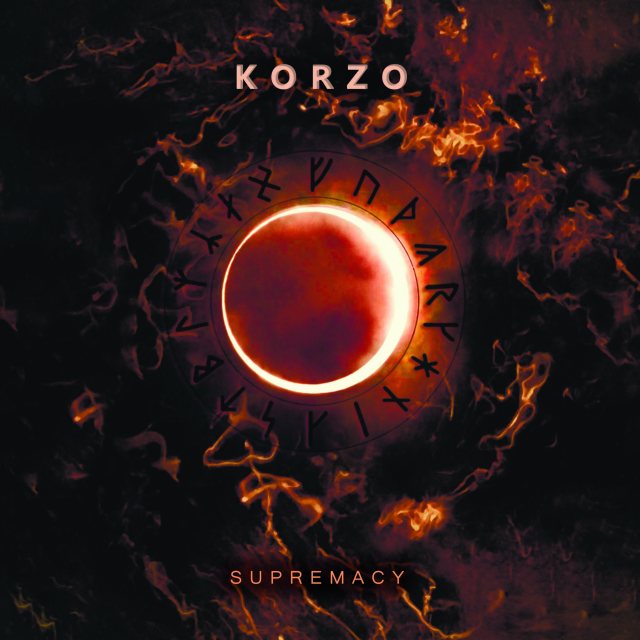
Korzo from Ukraine could be described as a true progressive rock metal band with touches of metal here and there, offering well-thought melodies, interesting vocal arrangements, and passages that connect the dots that are quite enjoyable. DP, who is the key person for this project, is a singer and guitarist who absolutely shines on the band’s sophomore studio release Supremacy. Although his voice tells the story, DP does a great work with his guitar — backing up the vocal melody most of times.
The album opens with “Empty,” which after a short ambient intro shows that Supremacy has a lot to offer. With often changes, Korzo distances themselves from delivering just a pure, lifeless showcase of technical proficiency, something that these guys definitely have, but rather presents the work that is alive, dynamic and above all, interesting.
References to various stylistically different artists can be heard in Korzo’s music. Their explorations within Anathema’s or Porcupine Tree’s melancholia speak of that, but the band is not afraid to delve deeper and expand their horizons. As Supremacy flows by, a listener is taken to a sound-trip that gets more metal-esque. Each of the songs on the album has its own personality, and labelling this record under a single genre would do this band a lot of injustice.
To summarise, Supremacy is a record largely based on the progressive rock genre channelling many different elements. This is a true epic, specifically in the amount of quality material, which requires quite a few listens to get into it. How far Korzo are ready to go? Time will tell. But for now they are on the right path.




 On “Almond and Coffee” (the song) La Piana delivers series of spacious licks, with rhythm section providing depth to the overall airy tune. “Forte” has shimmering washes of guitar playing into a sinister theme, while “Pulice” kicks off with tribal drum pattern and La Piana’s noodling.

 Progarchy