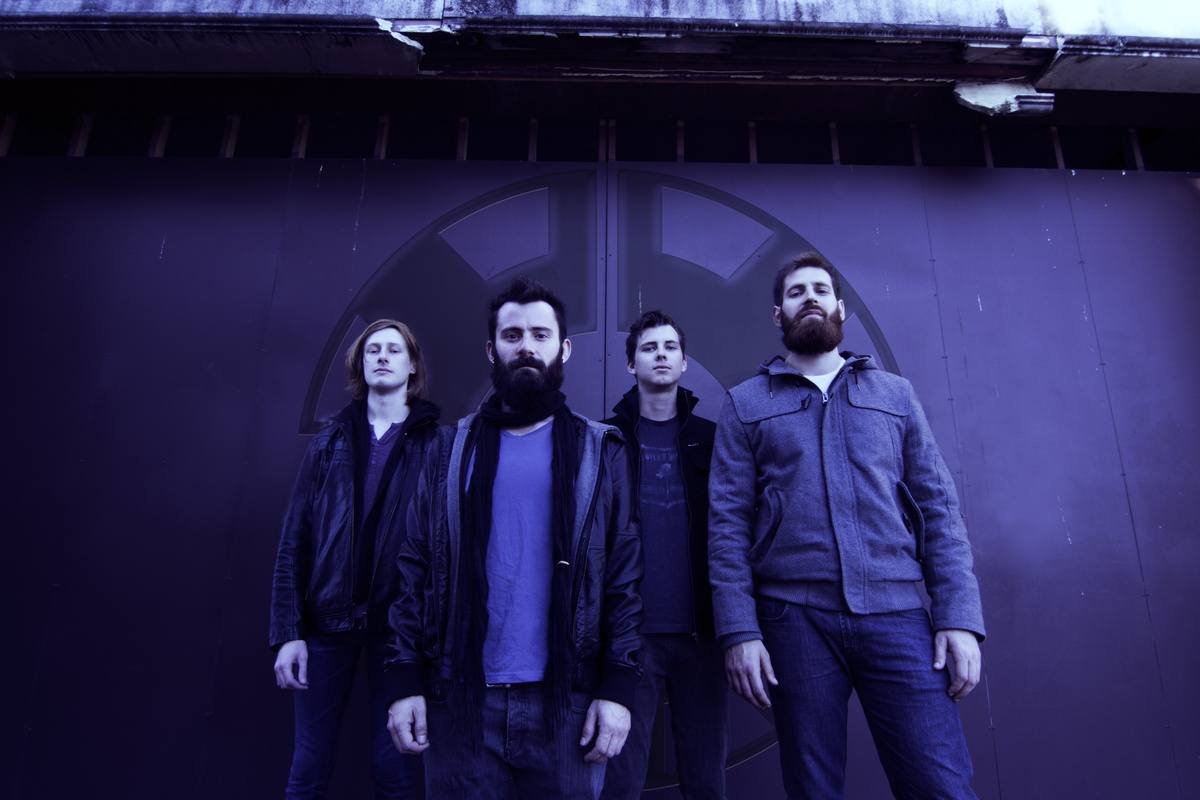
The Under is a Boston based band that really know how to mix different styles in their music. This June, Bostonians released a five-track self-titled EP, which with it’s almost 30 minutes brings organic, tasty sound.
No matter if you are more into rock, or if you enjoy it harder with metal, there is absolutely something for everyone. The EP’s structure relies mostly on the metal, but it’s prog rock, punk and alternative that make it different for The Under. The juxtaposition of vocals and guitar rhythms are appropriately contrasted: while Daniel Costa takes highs, his guitar will often help balance sound so as to not make the songs too asymmetrical.
The Under is a moving journey through the catacombs of haunting vocals, heavy riffs, and hard-hitting drums. “The Strengthening” opens the EP in a deliberately delicate style, with Costa’s vocals leading the song affectionately along. “The Fear” is less upbeat than the previous number, but its moving groove and Costa’s smooth shifting through the verses will make you nod your head during the song’s 6-odd minutes.
Throughout the first listens of the EP, the delicate and compassionate vocals of Costa seem to need many of the songs, but getting deeper into this material and nature of the harsh drumbeats and heavy yet fascinating guitar combine perfectly to provide each and every track with a real fragility. These are songs songs which work because of the multiple layers on which they are formed upon, most notably on “Insidious” where the mix of clean and brutal death metal vocals sets a fitting scene for the rest of instruments. “Apotheosis” is a chilling ode to alternative and progressive rock, and is the only instrumental piece on the EP. “The Harvest” gets the speed back with its thrash arrangements in the way of early Metallica.
2015 brought many great new releases, and although they are not newcomers on the scene, The Under will be a very pleasant surprise for many who look for something new and different. Make sure to check out this release.
Track listing:
1. The Strenghthening
2. The Fear
3. Insidious
4. Apotheosis
5. The Harvest
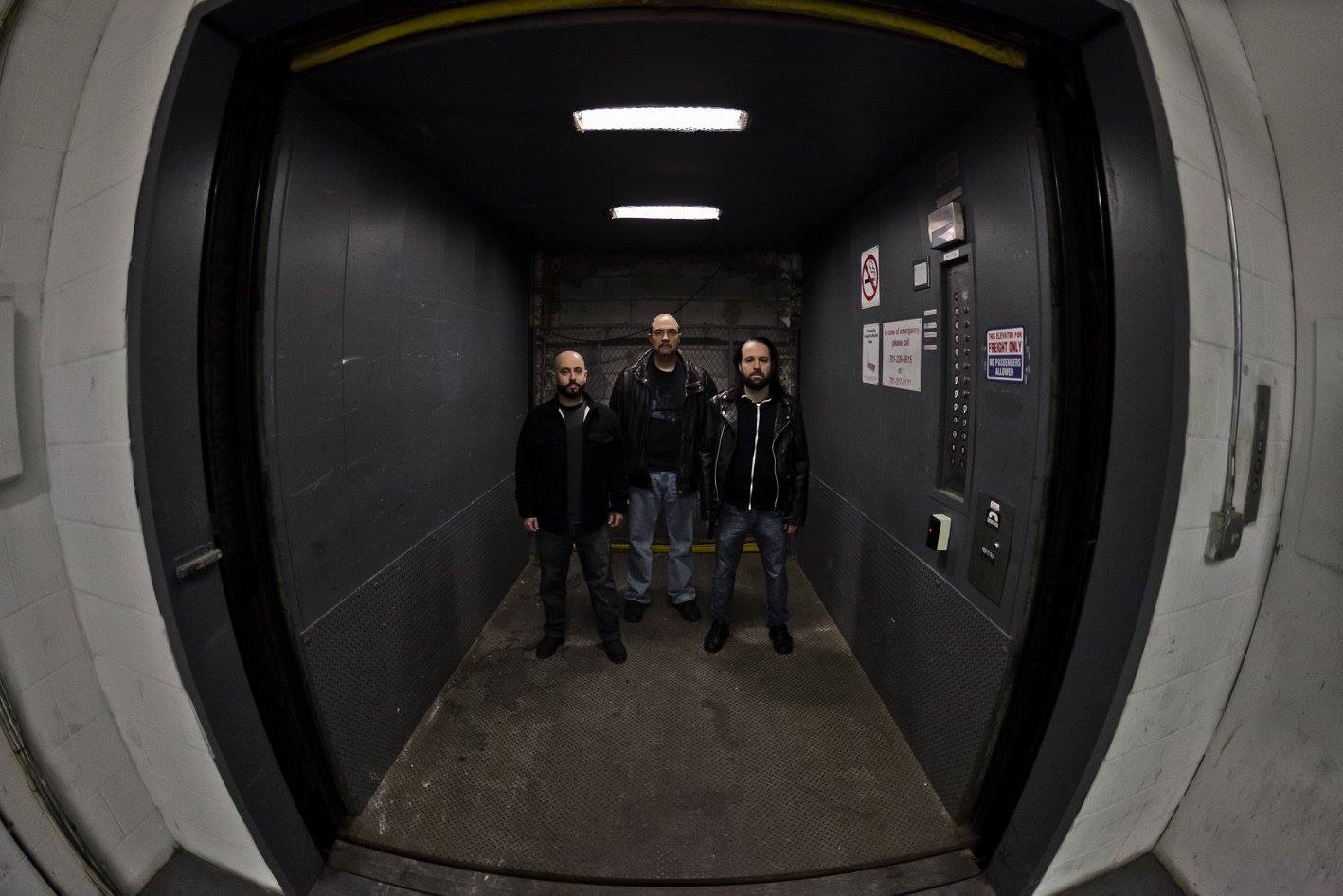
The Under are:
Dan Costa – vocals / guitars
Randy Odierno – drums
Ben Sternbaum – bass
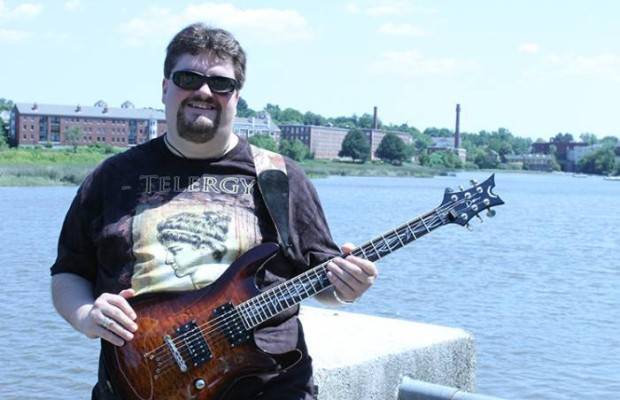
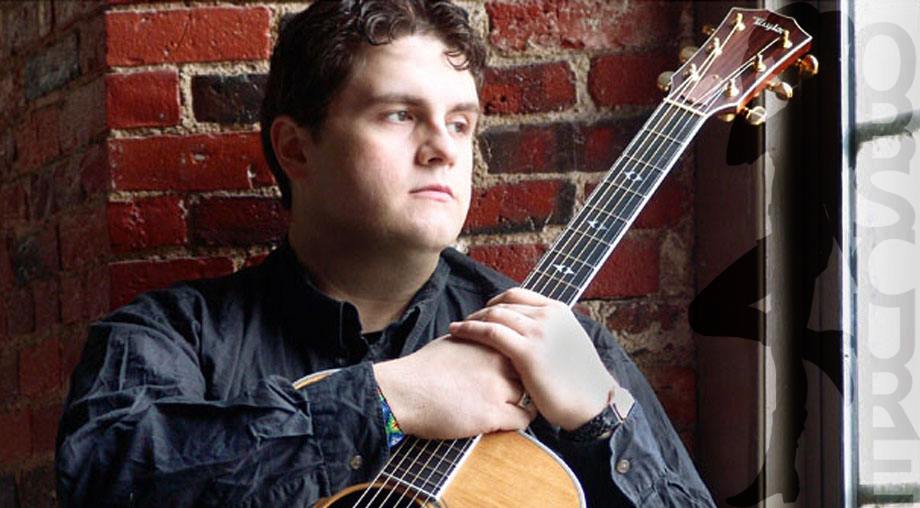
Hampton, New Hampshire native, Robert McClung have been releasing studio albums under the name Telergy since 2011, and in the period of four years he put out three full-length records. His newest offering titled “Hypatia,” tells the story of ancient Greek astronomer, philosopher and mathematician. McClung has once again gathered a team of extraordinary musicians who contributed to the new album.
Robert was kind to give answers to our questions.
What can you tell me about the new Telergy album coming into life? What are your memories from the writing and recording sessions?
There were lots of fun moments. When flutist Mattan Klein came through the area on tour I only had a few hours on one day to grab him to record, but he was far away from my studio. I made a few frantic phone calls and found a synagogue near his gig that would let me use their place for a few hours. So I threw a laptop and some mics in a bag and away we went!
When Durga McBroom from Pink Floyd was in a studio in L.A. recording her parts she had to call me to clarify the pronunciation of some words in the script. I was going to a movie with a some friends at the time and they couldn’t believe who I was talking to on the phone, haha!!
I think my favorite moment during the recording was the cello duet “Martyr”. We recorded it live in a 100 year old cathedral at midnight. The acoustics were amazing and to watch such incredible musicians (Kristen Miller and Adam Nunes) performing something I wrote live was magic for me.
What inspired you in the first place to tell the story of the philosopher and mathematician Hypatia?
She is very much overlooked in history and doesn’t get the attention she rightly deserves. The people behind her murder went to great lengths to try and erase her from the historical record. I thought doing an album about her was a good way to bring her story to a wider audience.
“Hypatia” as well as the previous Telergy album features guest contributions from some of the most influential people on progressive rock and metal scene. It must be flattering knowing that these musicians are a huge part of the Telergy story?
It is a tremendous honor to work with the musicians I work with. The fact that they even know who I am and want to be part of what I do is incredibly humbling. None of them have “rock star” attitudes. They are all really down to earth people who are super supportive of the unique thing that I do. I am blessed.
For the purpose of releasing the album, you launched a crowdfunding Indiegogo campaign. Are you satisfied with how it turned out?
Absolutely!! I did crowd funding for the last album too. In both cases I more than surpassed my funding goal. All the profits from Telergy albums go to charity, so it’s a good thing for me and the people that benefit from the album’s sales.
A part of raised funds in the crowdfunding campaign was given as a charity to the Cross Roads House. What is your connection with them?
I have volunteered for them for many years. Every year I play Santa for their annual Christmas party and buy gifts for all the children at the shelter. I know what it’s like to be homeless, and I’m glad I can help people going through such a tough experience.
What do you think is important for a successful crowdfunding campaign? Also, do you think that crowdfunding is a good tool to strengthen the connection between an artist and audience?
I think my crowd funding success is largely attributed to the notoriety of the artists involved with Telergy. Some have large fan bases that directs allot of traffic to the site. I also made the best use of social media and friends to promote and spread the word. I do think it helps create a bond with the artist. The fans get to be directly involved with the band’s success.
Which of the three released albums was most challenging to compose and perform?
Definitely Hypatia! The scores were very in depth. Some of the orchestral players had to be in the studio for several days each to layer all the parts. As for myself, I played more solos on the first album “The Exodus”, so I got to do more challenging stuff there. But with the last two albums most of the solos went to more well known people. I’m more than happy to step back and let others shine. As the composer, producer and engineer, I have plenty on my plate to deal with already.
With whom of guest contributors was funniest to work over the past three records?
Hard to say. There have been plenty of silly moments in the studio over the years. Horn player Jennifer Larson always has me laughing in between takes. She’s got a great sense of humor. Which really helps make long and tedious recording sessions allot more enjoyable.
Perhaps one of the most interesting facts about Telergy’s music is absence of singers. Have you ever thought about adding them? Wouldn’t it in any way make your work easier when attempting to tell a certain story?
The entire objective going into Telergy was to tell stories using music, just the notes themselves. Which is where the name Telergy actually comes from (Definition: the hypothetical action of one person’s thought and desire upon the brain of another person by the transmission of some unknown form of energy. i.e, to communicate without words).
This concept used to be common in music. Good examples would be Mussorgsky’s “Pictures at an Exhibition”, Gershwin’s “An American in Paris” and Prokofiev’s “Peter and the Wolf”. Somewhere along the line this form of great art died out and gave way to more lyrical oriented things with Broadway and the like. I guess what I’m trying to do with Telergy is bring this great art form back to life. No offense to great lyrics, but working instrumentally is what gives me the most joy these days. But who knows, maybe some day I’ll get the urge?
How do you see progressive music in 2015?
There are a plethora of great bands and artists out there doing amazing things. Spock’s Beard, Nightwish, Kamelot, Within Temptation, Haken. Even some of the classic acts like Kansas, Yes and King’s X are still touring and making significant contributions to the genre.
The internet has allowed for much wider distribution and connection to the fan base than ever before. An artist like me, with no label support or promotion, would have had a pretty rough time twenty years ago. But now it’s much different. Which is all very good.
I guess the drawback is that rampant piracy and streaming services that pay pennies a play to artist mean there really is no money to be made in the business anymore. Which is sad, because it means artists need to do other things than just music to earn a living most of the time and can’t be devoted full time to their art. Which is bad. But if you got into music to make money in the first place, you’re in it for all the wrong reasons.
Are there any plans in the future to bring Telergy on stage and present music from the albums as a spectacle in the way of Ayreon and similar artists?
I would love to do so, but the cost involved would be pretty astronomical. It would involve dozens of top notch musicians, weeks of rehearsals, a very large hall and tons of production. None of which is anything I could ever afford to do on my own. For it to become a reality a financial backer would have to get involved and pump some serious cash into the endevour. So the basic answer is, highly unlikely.
But for now I am quite content just working on writing and recording great music. Who knows what the future may hold?
Buy Telergy’s “Hypatia” from iTunes, and follow the project on Facebook.
Progressive rock 5-piece band from Seattle, Autumn Electric have released their fifth studio album “Star Being Earth Child” in July. A rock opera album, “Star Being Earth Child” tells the story of an alien visitor whose friendship awakens a young child’s environmental awareness. Partially inspired by visiting petroglyphs in Albuquerque during the Live Feed tour, “Star Being Earth Child” is Autumn Electric‘s most musically ambitious project to date. Progarchy talked with guitarist, singer and flutist Michael Trew.
Autumn Electric released a new album “Star Being Earth Child” this summer. Tell us something about the creative process of this new record.
After the “Flowers For Ambrosia” tour in 2014, I was gathering up whatever song ideas the others had, and just started throwing paint at the wall. One of the ideas our guitarist Max Steiner had sent me, I wanted to write lyrics about the Petroglyphs we had visited in New Mexico. One of the figures was called the Star Being, people here on earth that were once from a celestial place and have forgotten who and what they are. I could sympathize with this idea, and began to write several songs, with a story and characters forming within them.
Much of the album was co-written with major sections by our drummer Chris Barrios, as well as Steiner, which I eventually weaved into an hour long musical story. Then of course Steiner moved to Germany early on in the writing, leaving the rest of us to put it together and add his parts as the final layer.
After 5 releases, it’s evident that Autumn Electric has become definitely more experienced and more mature. And with every album your sound gets more “progressive”. Is it your conscious decision to go more progressive or is it just the natural development of your sound?
I would say it has been very natural. I was in a couple of bands around 2001-2003 that were doing something similar to our recent stuff. The end result has a lot to do with who is in the band. Going prog can scare some off as well attract others.
Autumn Electric is a band that remains truthful to what progressive rock sounded in its early stages. How do you see the modern progressive music considering that during the years the genre developed taking influences from metal and its extreme subgenres?
I love the rock/jazz/folk/classical approach as well as early manifestations of orchestral synths and guitar not sounding like a guitar. I see the genre expand from several different nuclei, all of which I think are vital.
Is the dynamic flow of the pieces carefully architected or is it an organic outgrowth of performing them together?
A lot of both.
Tell me about the themes this album captures.
Preservation of the Earth, purpose of life, rights of humans and animals, questioning authority, science fiction… all the good stuff.
Explain the concept of the album art.
There are two characters in the story: The Mother and her son Leif. The Mother is a Star Being living as a human, and the son is only human.
What are your plans in terms of touring and promoting the new album live?
We completed a 2 month tour of the United States this Spring, presenting “Star Being Earth Child” as a live rock opera. It was captured in a full film at the tour finale in Seattle, which can be seen on YouTube. Since returning home we have been focusing mainly on college/public radio.
Which bands or artists influenced your work on the new album?
This was the first time I really let me intense love for Genesis run wild. There are a lot of idiosyncratic, highly composed passages. I drew of some of the structural ideas of The Lamb, The Wall, Tommy, and Days of Future Passed. People get a laugh out of the reference to Close Encounters of the Third Kind at the very end of the album, and some may notice it’s woven into some of the other songs. Of course the use of the 1970 song “Who’s Garden Was This?” by John Paxton, whose version by John Denver caught my attention, to which we included in two places on the album.
Do you see the band s music as serving a purpose beyond music?
Yes, in many ways. We hope through the music as well as our interactions with people and community as one that pushes the boundaries, stimulates the mind and heart, and can lead to real change or exploration.
As an animal lover, and defender of the animal rights I would love to thank you personally for your help to PAWS by giving the part of your Bandcamp incomings. Is there anything you want to share with your listeners about this?
PAWS and other groups that we have worked with or are around are doing great things. I want to shed some light on them as I can, as well as encourage the act of charity within the independent music scene.
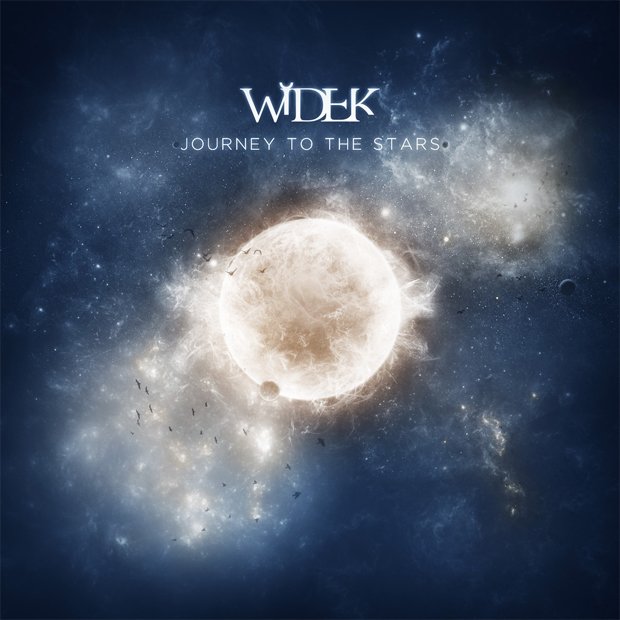
Instrumental fans who love the fusion of cinematic/atmospheric rock and progressive metal now have another offering in this bond of genres: “Journey to the Stars” by Polish one-man act Widek. The brainchild of Maciej Dawidek, “Journey to the Stars” also features solo contributions by some of the genre’s top guitarists, such as Chris Letchford (Scale the Summit), Per Nilsson (Scar Symmetry), Sithu Aye and Plini.
While “Journey to the Stars” is unquestionably a metal album, it’s definitely not an extreme metal record. Even without vocals (with the exception of the closing, bonus track “Ion”), it’s still entirely possible to create an extreme atmosphere through riffs and beats alone, but that’s not the direction Widek goes here for. Instead, this album is an extended experiment that blurs the lines of where metal begins and ends, taking the audience on a trip floating along through prog and atmospheric dreamscapes.
Widek works out his post-rock influences around the wall of melodiousness and prog metal riffwork. Perhaps the best possible description one can describe “Journey to the Stars“is that it sounds like a prog metal soundtrack. If Hans Zimmer was a metal fan, I guess that one of his scores could sound like this. The spacey atmosphere that adorns this release is often broken through guitar solos that are played by guest contributors. The instrumentation on the album is top notch as expected, but some listeners may object that much of the album sounds similar, although that “issue” definitely fades out after a few listens. As an advocate of instrumental guitar-driven music, I claim that there are plenty of distinguishing features to be found on “Journey to the Stars.”
With a devoted fanbase and two strong releases under his belt, Widek already leaves indelible mark on the international scene and hints that greater things are to come in the future. “Journey to the Stars” is a strong candidate for one of the best releases of 2015, and it will certainly find its place among many year-end top lists.
Track listing:
1. Mira (feat. Chris Letchford)
2. Earthshine (feat. Plini)
3. Chara (feat. Gru)
4. Orion II (feat. Sithu Aye)
5. Nova
6. Space Horizon
7. Sirius
8. Parallax (feat. Owane)
9. Rana
10. Canis Majoris (feat. Per Nilsson)
11. Pillars of Creation
12. ION (feat. Ricky Davenport)
It’s not strange that many bands on today’s progressive rock scene try to recreate the golden era of the genre by conscious applying it to their sound. Dublin based prog rock quartet, M-Opus, are about to launch their debut album titled “1975 Triptych,” and as its name suggests, it represents the band’s effort to put out a record that is 40 years old in spirit.
In this interview, singer and keyboardist Jonathan Casey talks about the album and how it came into existence. He is a professional musician who previously worked with David Cross (ex-King Crimson).
Tell me about the musical concept behind M-Opus and your upcoming full-length release “1975 Triptych.”
We’ve got quite a fun concept – M-Opus albums will be ‘from’ different years in the past, as if these are old albums that are only being released now. Our debut album pays respect to 1975, the year I was born! So the album is meant to sound like it’s from that time.
“1975 Triptych” seems to be quite a challenging work. Lead me through the creative process that informed the album.
It really started out with me writing without any practical aim, in a 70s style, loving the process. Then my muso buddies Colin (guitars) and Aran (drums) said they’d love to get involved, so we started demoing parts of it. I kept writing and the concept began to take shape. We all agreed, it should sound vintage and not super punchy and modern.
Speaking of challenges, is there a creative challenge to deal with in that the band members occupy similar sonic spectrums?
Yes that’s a real producer’s issue, standing back from it all and making sure individual parts are working together. Colin and I always edge towards an equal sound, there’s a lot of unison playing between keys and guitars. I’ve composed for orchestras and you soon get over the idea that you should avoid tutti passages in that world.
It’s obvious where your influences lie. Was it your idea since the beginning to create an album that recalls the golden era of the progressive rock genre?
Definitely, 100%. I feel that the vintage sound is part of the experience, part of the love we have for it. Classic prog rock with a big, modern production cuts across me. Think of ‘Moonlight Serenade’, I don’t want that sounding massive and maximised – that style has got a charm in its evocative, wartime-ballroom sonority. In traditional music, jazz, blues, it’s not unusual to treat the music in that time-stamped way. I’m after the same thing with prog, a sound that suits the music.
M-Opus – 1975 Triptych
What have you been listening during the songwriting process of “1975 Triptych”, and in which measure it shaped the album’s final structure?
I listened to a lot of what was going around that year and leading up to it, to keep my writing reasonably contemporaneous. Then for fun, I really love listening to a lot of different music; one car journey could include John Adams, James Brown, Joni Mitchell, Queens of the Stone Age and Mahavishnu!
The album structure was more influenced by my background in art history. In that world, it’s all about the inspiring presentation of the concept. A Triptych is a 3-panelled work, 1 small, 1 large, 1 small, each panel relating to the same subject, just like our record.
As its name suggests, “1975 Triptych” is comprised of three songs, including centerpiece “Different Skies” clocking at over 33 minutes. Describe the creative process behind this song, in particular.
It was a little like when a sculptor releases the figure from within the slab, knowing the form already in the marble, just having to reveal it. I’d write and arrange some of it, stop and listen and I would hear the music that wasn’t there yet, maybe earlier or later in the piece. So off I’d go and realise that hidden music. Eventually, I knew it was complete!
M-Opus
I understand that M-Opus is for you some sort of fresh start or creative renewal for you. Elaborate on it.
I’m fortunate in that I get paid for writing music on TV and film. After some years, I realised that I like this process, regardless of the style I was asked to work in. In my teens, I thought modern songwriting was the ‘real’ me, it was my true voice. But I discovered I’m as happy doing cartoon scores, horror stings, melancholic string pieces as anything else. So I had to ask myself, if that’s the case, what truly is the music you’d most like to write? And it turned out to be M-Opus!
Before M-Opus, you’ve been a part of the David Cross (ex-King Crimson) Band, with whom you toured and recorded two albums. How did this collaboration help you to define yourself through M-Opus?
It was so wonderful. I suppose it convinced me that working in this area of music is a reality, not just a dream. It encouraged me to make my own path out there.
I read that the next M-Opus release will be from 1978. How come? Tell me more about it.
It’s going to tell a story. A lot of narrative concept albums have somewhat elusive, spiritual stories – I wanted to try a clear, plot-driven sci-fi thriller and hopefully visualise it as a graphic novel. I have the story mapped out and about 30 minutes of music so far. I’m making it 1978 as it seems the right time for an album that is influenced by the success of Star Wars the previous year.
From the same source I found out that you will be recording an album dating back in 1982. 80’s in particular are not much loved period by progressive rock fans, mostly because of New Wave. How will this reflect on the music?
It will be a little challenging for sure. I want it to be authentic, but as you say, many prog bands released albums that are deemed their worst in this period! So there will be some very catchy songs on there but a healthy, exploratory aspect to it too. Peter Gabriel managed that very well on 3 and 4, of course.
You performed live with M-Opus. What is the reaction of audiences on your music? Are you satisfied with responses you receive?
Although this outfit have played live before, this will be our first time as M-Opus playing this stuff. Previously, we’ve done free-form stuff, heavy-ish things; audience members were often bemused or horrified! This new stuff is quite structured and lively, so I hope it’s going to be a great show.
What comes next for M-Opus?
Next up is live dates and working on ‘1978’. If anyone out there knows a thing or two about graphic novels/comic books, give us a call! It’s time to collaborate!
Guitarist Alexander Kitaev introduces us to Sibefor, in an interview where he talks about the band’s beginnings, the way they give birth to songs, gear, influences, and more.
How did you go about forming SiBefor?
SIBEFOR was formed back in 2010 by two experienced musicians tired of clichés, of bands copying each other with the aim of making original music never heard before.
What does the name of the band mean, what do you refer to?
It’s a combination of three words. Our music is for experiments, harmony, of what is inside.
Alexander Kitaev
Describe your songwriting process. What are the biggest challenges you face when writing music?
It all usually starts as bass and drums. Alberto and Ivan spend much time together; they understand each other without any words spoken and they pushy enough to polish the grooves until they shine. At this point of time, we add guitars, vocals and keyboards, revise constructions, order of the parts etc.
The biggest challenge? To put some interesting stuff in, mix some unusual ideas without making music too much elaborated.
Do you tend to follow any pre-defined patterns when composing a piece?
We believe that Music itself leads you to the right form. It will show you the way if you attentive enough.
What kind of gear do you use for recording your music?
Yamaha drums, paiste cymbals, warwick bass and amps, Paul Reed Smith guitars, Mesa/Boogie amps.. Various effects, keyboards, samplings pads..
How would you describe SiBefor’s music to someone who didn’t hear you before?
Unique sound, mystique atmosphere, pure emotions. A mix of rhythmic alternative and progressive rock, eastern melodies and contemporary melodic rock is what drive this music beyond familiar genres and forms.
Which bands or artists influence your work with SiBefor?
Somehow those who listen our music associate it with acts like System of a Down, Muse, HIM. Yet it’s a mystery why.
What are you up to these days?
Playing live. We just started getting out of our hometown. Playing around Baltics countries and Finland. And getting ready for some bigger tours to Spain and Italy.
Where do you draw your inspiration from and how do you go about channeling it into writing?
Live performances is what really inspire us toward new horizons. You get back from live shows to rehearsal room full of energy, filled with ideas and willingness to create. At this point most of our best pieces were born.
What is your view on technology in music?
Technology is a two-sided coin. Modern technology dramatically facilitate recording process, gives you tools which previously were used by elite musicians exclusively. However, with these amount of cool new tools it’s too easy to forget that it’s not technology who make music, it is you.
What are your plans for the future?
We are about to start a crowdsourcing campaign with hope to raise some money to record our first real LP. If we are lucky enough to cover half of studio costs, we will barricade ourselves in a studio for the whole summer. This means new album out by autumn, followed by whole Europe tour, I hope.
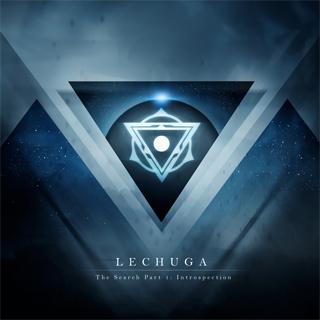
Benjamin Lechuga is a guitarist from Santiago, Chile. He was chosen by Steve Vai as the winner of the Steve Vai scholarship, and he moved to London to study at the Institute of Contemporary Music Performance. He is a member of the band DELTA with whom he released five studio album and opened for likes such Dream Theater, Symphony X, Stratovarius, Angra, and more. Apart from this, he is successfully pursuing solo career under the name Lechuga, and he’s recently put out an EP called “The Search Part 1: Introspection.”
We talked with Benjamin about his solo work, influences, and more.
Tell us something about your beginnings in music.
When I was a kid I had some piano lessons, I don’t remember how old I was but it definitely helped later on when I decided to pick up the guitar. I started playing guitar at the age of 10. My older brother showed me lot’s of music… Eric Clapton, Metallica, Rage Against The Machine, Iron Maiden, Frank Zappa, and some really cool prog and experimental chilean bands like Fulano, Mediabanda, Congreso, etc. He then took me to a Steve Vai concert and everything changed for me. Then I heard Dream Theater when I was about 12 or 13 and I became a big fan.
What types of change do you feel your music can initiate?
As a guitarist, I feel that my music is not completely focused on the guitar, but in the composition. To me it feels more like an instrumental band rather than a guitar solo career. And also not being afraid of mixing different styles. Maybe other metal guitarists can start focusing more on writing music, making arrangements… worrying about dynamics… and experimenting with different styles and cultures… rather than playing as fast as they can. It would be a nice change.
In December 2014 you released “The Search Part 1: Introspection.” Describe the creative process behind the release.
The creative process behind this album was very free. I wanted to have a clear mind to be able to write without prejudgements. I wanted to leave structure aside… I didn’t want to know how the song would end before I finished writing. I wanted to surprise myself.
I spent lot’s of hours in my studio, mainly very late at night when everyone’s quite and the inspiration comes.
How long did it take you to complete the songwriting for “Introspection”?
I guess it was about 4 months but not in a row… I started the idea of the synths at the intro and then didn’t work on it for a couple of months…. I started building my studio and then continue writing… To be honest I had to force myself a lot to write this album. It has been a year of changes in my life… I recently moved from my parent’s home, built my studio and now I have more responsibilities so it was very difficult to make the time to write music… but in working time, I think it was in 3 or 4 days to write the song and maybe other 3 or 4 days making arrangements.
What were the biggest challenges you faced when working on these songs?
I think The Search was definitely the most challenging song. The fact that it has so many different moods and dynamics made it made it difficult to fit together. I have to thank my friends Rafael Chaparro and Cristobal Dahm that played the saxophones, Tomás Ravassa that played the piano, José Tomás Novoa that did some electronic percussions and Consuelo Schuster that recorded the vocals for the song. I had a very clear idea of what I wanted in my mind but it was their talent that is recorded in the album.
Which bands or artists influence your music?
There’s a lot and in lot’s of different styles. In the progressive area I started listening to Dream Theater and Symphony X. I listened a lot to Mattias IA Eklundh, Bumblefoot and Steve Vai of course. But I also like Pat Metheny, Django Reindhart, Astor Piazzola, Fulano, Mediabanda, Frank Zappa, Paco de Lucía, Emir Kusturica. I love some chilean funk bands like Chancho en Piedra and Los Tetas. I also listen to film composers as Hans Zimmer, Danny Elfman, John Williams. Luckily I’ve been able to listen and love lot’s of new and young musicians. David Maxim Micic and Jakub Zytecki are my favourites lately. I simply don’t think I could ever fit into one style.
What kind of gear do you use in studio?
For guitar recording I use Caparison Guitars, I have some Engl Amps (4×12 pro cab), and the always faithful shure sm57. I love micing the amp… Haven’t yet tried digital amps that sound well. I record into a MOTU 896 mk3 Interface and I also have Universal Audio 4-710d preamps and my Empirical Labs Distressor compressor which I love. My DAW is Cubase 6.
Does spirituality have any sort of impact on you and your songwriting?
Not really. I’m more the kind of guy that writes music because of aesthetic reasons. The beauty in music is immense and I have a desire for searching that perfection in my writing. Luckily that perfection doesn’t exist and it is different everyday. The Search is endless.
How would you describe what you create under the name Lechuga to someone who didn’t hear your music before?
Wow, difficult question. I think Instrumental progressive music for musicians would be a nice try hahaha. It is only a search for the right notes at the right time hahaha. I really don’t know the answer for that question because my music is and always will be changing. The first album is very different from the Search Part 1… and The Search Part 2 will be completely different also.
What non-musical entities and ideas have an impact on your work?
I think that learning from everyone is the idea that has impacted my work the most. I’ve learnt that you can learn important lessons from everyone in the world, teachers, fathers, sons, homeless people, rich people, poor people, ignorant people, intelligent people, your friends, family, people that want to harm you, etc. It’s just the matter of listening and having the right criteria. I love learning and I can’t see myself as someone that has nothing more to learn, and I mean in every aspect of life. The day I feel like I have nothing else to learn I authorize you to shoot me.
What is your viewpoint on the struggle bands are facing today as they try to monetize their output?
I think it has always been an unfair treat for bands. The amount of work and love musicians do is completely unbalanced to the amount of money we receive. But, who cares? Truly musicians don’t do this for money. I’m more worried about letting people know about my music that for getting paid for it. Both of my albums are for free on YouTube.
I hope one day I can tour the world with a proper paycheck, but I won’t kill myself if it never happens.
Is there anyone in the current prog scene that you are into?
Yes, of course! There was a time not so long ago where I was tired of listening to the same bands and couldn’t find any news once that I was really into… It is one of the most depressing things that can happen to me. But since a couple of years I started listening to some new and young musicians. BILO, Destiny Potato, Jakub Zytecki, Plini, Sithu Aye, Widek, Polyphia, Chon… all real good and young! I’m in love with music again.
How do you see Lechuga’s music evolving in the future? Are you already working on the “Search Part 2”?
I haven’t written any music yet. I have the concept in my mind already, It’s only a matter of sitting down and translating the ideas. It is going to be different, that’s all I can say for know! Don’t want to spoil the surprise! Can’t wait to start writing in February/March!
Buy Lechuga’s “The Search Part 1: Introspection” from Bandcamp.
The last decade has brought us a rise in interesting progressive metal and rock with its roots not in the 1970s, but instead in extreme metal, alternative rock, and even punk. The musicians from this era still love classic progressive rock, but they are not producing music based only on that one foot. Instead, modern prog is a diverse, entertaining movement which has given us Haken and Leprous.
A band that gives signs of “should-be-added” to that list is Dropshard, and of that “Silk” is proof in kind. “Anywhere But Home,” which was released in 2011, was the band’s debut and it bore a striking resemblance to the work of Riverside, Anathema and/or Porcupine Tree. Despite this undeniable likeness, the record was chock full of fat grooves, great writing, beautiful vocal performances from singer Enrico Scanu and great performances from all the musicians.
Dropshard’s sophomore offering “Silk” is a clear improvement. The record is a menagerie of the best things about “Anywhere But Home,” plus new dimensions in terms of performance and writing. Like so many of the best bands, what makes Dropshard work is the combination of an original sound – in this case, keyboards driven music and airy riffing – with effective use of dynamic songwriting that plays on all of the band’s strengths. Dropshard does both ‘heavy, syncopated and groovy’ and ‘delicate and melancholy’ with extreme ease. Songs move smoothly between these two modes, often hooking on Enrico Scanu’s vocal performances to make the transitions work. Top this off with an instinctive understanding for melody, which is displayed in soaring choruses that feel like the synthesis of the heavy and melodic, and you have a recipe for excellence.
“Silk” is a more progressive record than its predecessor. Moments like the bridge in “Insight” and the verse in “Tied Together” show off a side of the band that works extremely well – syncopated rhythms, driving melodies and intuitive groove. Bursts of genius and variation are often perfectly differentiated from a bed of tom driven groove, juxtaposed with epic choruses – what comes as one of the Dropshard’s greatest strengths.
And while I love the truly heavy moments this record offers, I cannot deny that a huge part of the appeal of Dropshard is, here quite a lot mentoned, Enrico Scanu’s performance. He particularly shines when the band moves into the lighter material. For me, this is best exemplified by “Memento,” which may be the track that I come back to the most these days. Wandering firmly into Anathema territory, Scanu’s performance is heart-wrenching and the composition is the perfect music for shortening Autumn days. Scanu’s use of harmonies – a style already heard on “Anywhere But Home” – continues to be something that is very effective. These moments of delicate harmonies litter the album on so many occasions, and they add tiny moments of piercing perfection that push cerebral music to the emotional plane – and from great to excellent.
It is finally the fact that “Silk” is so artfully crafted and emotionally evocative that pushes it to the next level despite the audial limitations. As the record slopes towards its conclusion, I am struck over and over by the mastery of the melody and feel that Dropshard has. These moments of piercing beauty combined with the epic writing, the powerful performances and the next level of heaviness is sprinkled across the record makes “Silk” special.
It doesn’t happen quite often to me for an album to make such an impression that, barely halfway through my first listening, I felt inclined to claim that it was one of the best I had hear in a long time. Listening to the apparently endless series of releases filed under the ever-growing “progressive” umbrella tends to make one a bit jaded, so that even albums received enthusiastically rarely make it to the status of regular presences in a reviewer’s CD player. However, my first exposure to Syndone’s latest effort “Odysseas” was one of those moments in which the sheer beauty of the sounds coming out of the speakers caught me by surprise, and elicited superlatives that I normally use very sparingly.
Founded in 1989 by composer and keyboardist Nik Comoglio, it was his idea to form an ELP-style power trio. After the release of the first two studio albums “Spleen” (1991) and “Inca” (1993), the band split up. But then after 17 years, Syndone reformed with a new line-up comprised of Riccardo Ruggeri (vocals, acoustic guitar), Martino Malacrida (drums), Maurino Dellacqua (bass), Marta Caldara (vibraphone), Gigi Rivet (piano, moog), and Nik Comoglio (Hammond, piano, keyboards). They put out two more albums, “Melapesante” (2010) and “La Bella e la Bestia” (2012), and finally this year Syndone return with their fifth studio album entitled “Odysseas,” which was released on Fading Records.
“Odysseas” features guest appearances by drummer Marco Minnemann (The Aristocrats, Joe Satriani, Mike Keneally, Steven Wilson) and flutist John Hackett, brother of legendary Genesis guitarist Steve Hackett. As the title suggests, “Odysseas” is a tribute to Homer’s epic “The Odyssey,” where “the concept of travel is seen as the goal of the man being, always tended to look to the future.”
While there is progressiveness aplenty on display on “Odysseas,” the music is also surprisingly accessible, multilayered and eclectic, yet consistently melodic in the way of the band’s fellow RPI predecessors and contemporaries. The influence of the seminal movement is openly acknowledged throughout the album, but that is not where Syndone stops. They explore far beyond the term “progressive,” employing elements from jazz, Canterbury-styled progressive rock, classical and oriental music, and even funk.
While featuring all the traditional progressive rock staples, the rich instrumentation emphasizes the violin, vibraphone, acoustic guitars, lever harp, accompanied with orchestration and vocals of Riccardo Ruggeri who sings in his native language. “Odysseas” is no stranger to theatrical – “Il Tempo Che Non Ho” (what translates to “the time I do not have”) is an example of that. Stylistic diversity rolls all over the album. “Focus,” with its funky attitude mixed with Deep Purplesque approach supports it.
“Penelope” starts with a mid-eastern, oriental theme and with vocal harmonies reminiscent of one Jeff Buckley, but it’s not so long until a classical piano comes in. Ruggeri keeps showing his inarguably big talent and potential throughout the end of the piece, with voice that proudly makes parallel with one and only Fred Mercury of Queen fame. The band pays tribute to Canterbury’s progressive rock in the mind-blowingly intricate but appealingly fluid “Circe.”
Besides the effortless complexity of the instrumental parts, much of the album’s unique charm resides in Ruggeri’s vocals. The singer’s sublime pipes will cause jaws to drop throughout the whole album – his voice glides smoothly and caresses the ear like warm honey, crystal-clear but with a haunting note of sensuality, with a hint of the stilted theatrics. Never domineering, though not submissive, Riccardo’s vocals blend with the instrumentation and set the mood: whimsical yet somewhat pensive in the multifaceted “Nemesis”; sober and wistful in the stately “La Grande Bouffe”; and oddly cinematic, closing “Daimones.”
“Odysseas” is a joy from start to finish, and one of the most rewarding listening experiences I have had in 2014. Moreover, it’s one of those rare albums that, in spite of its complexity and sky-high technical quotient, can be enjoyed by anyone with an interest in great music – regardless of labels.
Australian alternative prog rockers, Opus of a Machine are set to release their debut album entitled “Simulacra” on November 16th. The band has crafted a release that has full potential to top many of the year’s top lists.
We talked with guitarist Zachary Greensill about the album, songwriting, inspiration, and even dogs.
First of all, what’s behind the name, “Opus of a Machine”? Is there an interesting story behind its choosing?
Depends on what you consider interesting! Funnily enough, the name comes from a Youtube comment I noticed about a particular well-known guitarist in the progressive scene that noted that the guys phrasing sounds like “the opus of a machine”. “Opus” is Latin for “work”, but most people know of it from the phrase “magnum opus”, which translate to “great work”. The name stuck out to me for a few reasons because of what it says about music and art. What would a machine with all the knowledge in the universe consider art? And more importantly, what gives us the ability to create art? Is it intuition? Or is just a series of electrical impulses, coupled with thousands of years of genetic and cultural programming? And if it’s the later, what makes us any less than any other machine?
What first attracted you to the sound and scope of progressive rock?
I think I enjoy the idea of creating progressive and unique themes not yet explored. The focus for me personally will always be “what makes the song as good as it can be?” as with any genre of music. However, I lean more towards progressive elements because it allows me to be more exploratory in my song writing. I love how bands like Radiohead, Devin Townsend or Pink Floyd weren’t only amazing songwriters but also had this element of experimentation to their music that set them apart from everyone else. Progressive ideologies allow us to be as unique and identifiable as we don’t have to subscribe to any given genre.
Your debut album, “Simulacra” is scheduled for a November 16th release. How long did it take you to complete work on it?
Depends of where you start! Some songs are around 3 or 4 years old and were written with little idea of where they would go in the long run. Recording began around two years ago and became a little stressful with the balance of touring with Caligula’s Horse (my other band) and working/studying. During that time, I was still fleshing out song ideas for the album, so it wasn’t as structured as most albums where you’d spend time writing, than pre-production, than recording, mixing etc. Overall, it took us a good 2 and a half years to fully complete the album.
Tell me about the process that informed the album.
I wrote most of the album with a large chunk co-written by Mitchell (Legg, vocalist/guitarist) before the band was even formed. When the band formed we immediately jumped into recording, which was already a crazy experience considering how stressful trying to record an album can be on friendships, especially new ones, but we made it work.
What was the inspiration behind “Simulacra,” any stories behind the choice of name, writing songs, planning of the album, anything that might help shed some light on it?
The album itself is a loose concept album, with a vague about a protagonist’s life. However, the “protagonist” is really just an avatar for themes such as loss, abuse, love, religion and perspective. The whole album is tied together by the title track, which is about cycles of themes that manifest themselves in different ways.
Do you have a favorite tracks from the new album or any moments that you’re particularly proud of?
For me, I’m extremely proud of the last track, Tuatara. It’s a bit of a prog cliché to end an album with a long drawn out track, but the way that song came together was without any preconceptions of length or album sequencing. I love the flow and emotional heaviness throughout the track. Plus, it has some of the best moments to perform live. That song is a treat.
Which bands in particular inspired your work on “Simulacra”?
Devin Townsend was a huge influence in the production of the album for me. I love the dense, wall of sound production and the idea of creating space and mood with layering. But so many bands inspired different aspects of the album. Karnivool, Meshuggah, Tool, Opeth, A Perfect Circle, Oceansize, Radiohead and Devin Townsend were some of the bands that stand out as key influences for the album.
Do you plan to promote the album live?
Absolutely. We’ve got an album launch show planned in our hometown of Brisbane on the 22nd of November; a week after the album is released to celebrate the release. After a short break around December/January, we plan on getting out and playing a good amount of shows in support of the album. Nothing is set in stone yet, but we’ll hopefully get down to some of the major cities of Australia early to mid next year.
Are there any recent prog albums that you might recommend? This year’s been incredible for music so far. Australia, in particular, has produced some of the greatest records this year.
Prog albums? That’ll be a tough one as I don’t listen to too much prog myself, but album that has come out this year that have been highlights have been Slipknot’s “5: The Grey Chapter”, Closure in Moscow’s “Pink Lemonade”, Animals as Leaders’ “Joy of Motion” and Voyager’s “V”.
What does the future look like for Opus of a Machine?
Pretty great, I’m stoked to hear the reception of “Simulacra” considering it’s been so long. Whether it’s good or bad, it’s going to be interesting and I can’t wait.
Do the band members of Opus of a Machine have dogs? Do you like dogs?
Hahaha, we’re all living in tiny apartments, so we haven’t had a chance to get dogs, but my girlfriend is obsessed with dachshunds so maybe sometime in the future we’ll get a dog. I’m definitely a dog person. Cats are not my bag.
Opus of a Machine’s debut album “Simulacra” is out on November 16th. Pre-order it now from Bandcamp at a discounted price and free shipping.







 Progarchy