Not Otherwise Specified started as a one-man project back in December 2008, led by multi-instrumentalist Craig Kerley. During the period of six years, Kerley released two studio albums: “Judgement” (2011) and “Projective Instruments” (2014). Not so long ago, Not Otherwise Specified switched to a full band, with tendency of performing live. About this and more than that, we talked with Kerley.
Do you have a specific approach when you work on a song?
I like to think of my approach to songwriting as a disorganized trial and error method. It’s kind of an out of body experience where I sort out ideas that suck from the ones that I like. I generally start out by jamming on one instrument or another and then taking pieces of that jam to create some structure. Basically, I just keep messing around with the songs until they come together into something I enjoy listening to. Once that happens, the song feels finished to me.
How did the writing process for your second album “Projective Instruments” go?
The writing process for this album was pretty laborious. It took me about two years to complete. Generally, I tend to create a skeleton of the song and then listen to it over and over again while taking notes on what needs to be changed, removed, or emphasized. I then go back into the studio to make these changes and listen again, following the same process. With “Projective Instruments” I went through this loop many times before I felt the songs were at a place I was comfortable with. There comes a time, when you realize you could keep editing and revising the song forever. In the end you just have to let go and believe what you created is good enough.
What was the inspiration behind “Projective Instruments”? Are there any stories behind the choice of name?
The name of the album is based in both the process I use for creating it and my hopes for how it will be digested by those who listen to it. In the field of psychology, projection is the action of taking underlying traits, conflicts, and belief systems, which we are often unaware of on a conscious level, and placing them on an abstract stimulus, such as an inkblot. When this happens, we take these stimuli, which have no meaning in of themselves, and interpret them based on our own personal meanings. A projective instrument is at its most basic level an abstract stimulus, which allows us to project our own meaning onto it. That is my hope for this album. I would love for those who listen to it to find their own personal meanings to attribute to the songs.
Two songs on the album are over 10 minutes. What does writing a song with an extended structure allow in comparison to writing a song with standard length?
I believe that writing longer songs provides an opportunity to more fully develop lyrical and musical concepts and images. Standard length songs are great for conveying singular emotional messages of low complexity, like anger, happiness, fear, and sadness. Long songs, however, allow you to address more complex emotional concepts like ambivalence, uncertainty, nostalgia, and contentment. Additionally, longer songs allow you to convey the process of changing emotional reactions as a function of time and maturity. I feel strongly that there is a place for both formats in modern progressive rock.
“Projective Instruments” was mixed and mastered by Jerry Guidroz, who previously worked with the likes of Transatlantic, Neal Morse, and Flying Colors. In what measure did he contribute to the album’s final form?
Jerry was the first set of outside ears I had on the project. It was wonderful having such a talented individual giving me feedback on what he felt would work best in the sound.
Why did you choose to close the album with a cover of Peter Gabriel’s song “Signal to Noise”? Are there particular reasons behind the choice of this tune?
The primary reason for choosing it is that it has been one of my favorite Peter Gabriel songs for a long time. It has an incredibly understated power in its chord progressions and presentation. So I thought, “What would it sound like if the power wasn’t understated?”
L-R: Keith Tuggle, Craig Kerley, Ben Daniels, Brian Arnold, Marty Gelhaar, Jeff Wheeler
Not Otherwise Specified fully transformed from being a one-man project to a band that’s supposed to hit the road. Have you already performed live? Who is in the band, and were any of the members previously involved in any other bands or projects?
Our first live performance is a band will be on Saturday, November 15 at Sweetwater Live in Duluth Georgia. We are very excited about this opportunity to play in front of a live audience, and look forward to many more opportunities in the future. The band itself is made up of six very talented musicians. Ben Daniels (guitar) and Keith Tuggle (bass) have worked together for several years writing very creative progressive rock. Jeff Wheeler (drums) is a big fan of progressive rock and has played in many original and cover bands in the Atlanta area. Brian Arnold (Guitar) is a student of 80s and 90s metal and rock’n roll, and has played in many bands over the years. Marty Gelhaar (keyboards) has had a long career of playing for and providing technical support to many of the top touring acts in the nation. He is a student of Prog and as had the opportunity to play keyboards live for bands such as Yes and Kansas.
You already started working on new songs with the new line-up. How did it go so far?
It’s great having other writers in the process. We are still at the ”rough draft” phase of writing the album, but have about an hour worth of material so far. I am getting many new perspectives from the band members. As a result, I believe this next album is likely to rise to a whole new level.
Do you have a clear vision with Not Otherwise Specified, in terms what do you want to achieve with the band?
More than anything else, I just want people to have the opportunity to hear our music. Our goal is to keep putting out the best progressive rock we can, and to have as many opportunities as possible to perform that music live for the people who appreciate it.
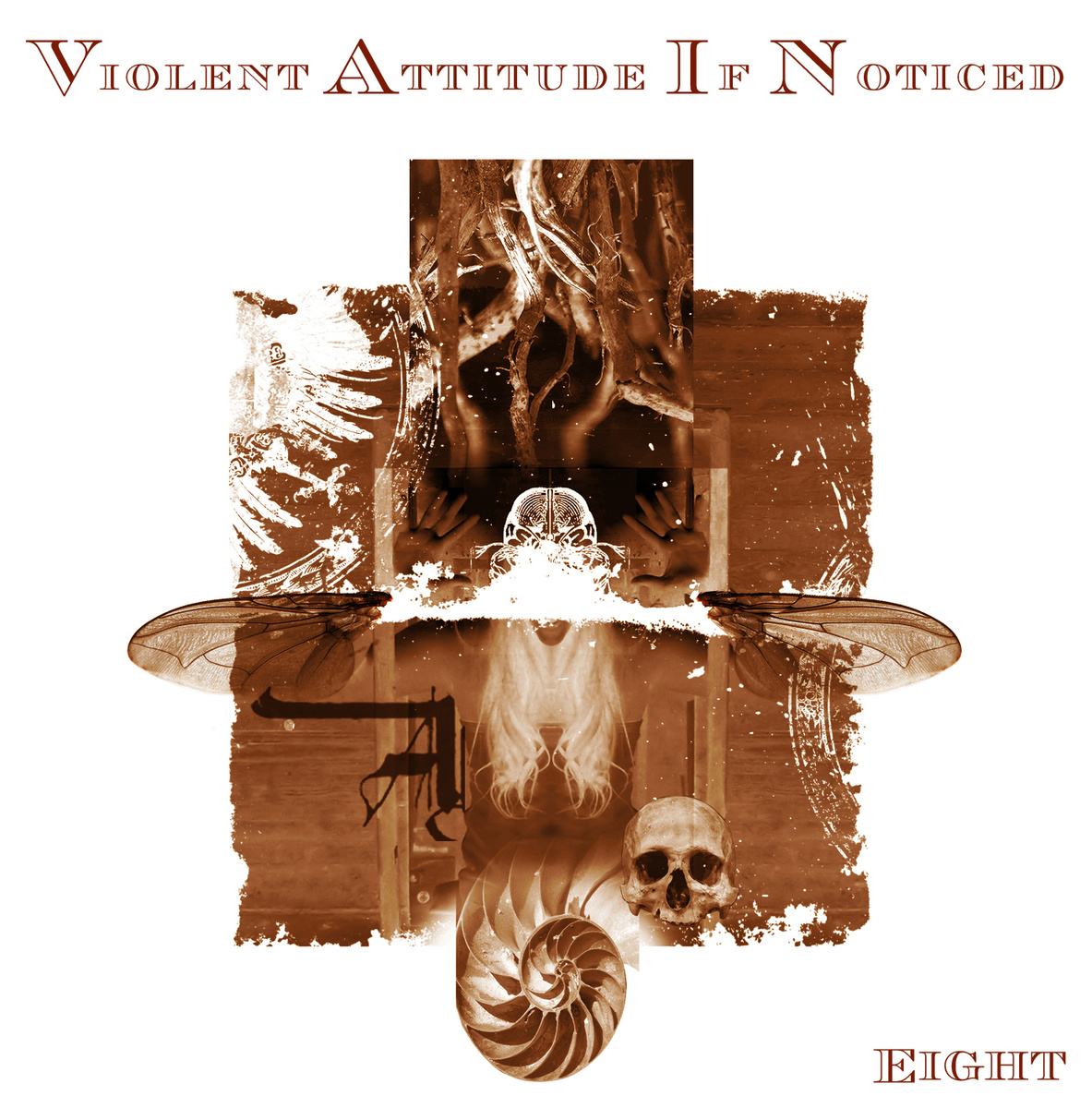
Hailing from Sao Paolo, Brazilian progressive rock quintet Violent Attitude If Noticed (abbreviated V.A.I.N.) is one of the most refreshing bands coming from South America. Formed in 2008, the group has ever since then released on EP and three full-length records. Their newest studio album is titled “Eight” and it brings, as the title suggests, eight new songs. Compared to their previous works, “Eight” is the band’s most ambitious recording to date, and is a bold statement of where the band is at the present time.
V.A.I.N. adds the “post” tag to their progressive rock, the songs on “Eight” are atmospheric, yet there is a classic progressive rock construction threaded to the album’s backbone. The album effectively channels musical influences taken from Porcupine Tree, Marillion, Nick Cave and Godflesh into a sufficiently original concoction. On the other side, the band mentions Edgar Allan Poe as one of the influences on the album’s lyrical compound.
The album kicks off fittingly with “Just Another Day“, an emotional and varied composition that ultimately sets the pace for the rest of the record. Dark, doomy atmosphere is threaded throughout the whole album. The same vibe is present on the following, title song which occasionally opens by employment of the acoustic guitar. Other gems include a tranquil “Alone Again,” which includes a guest appearance by Cleo, pessimistically named “Tomorrow Won’t Come,” and intricate and diverse “Salvation.”
All in all, “Eight” has a lot of masterfully crafted elements, yet it’s plain and simple. It is a fairly good accomplishment for the band. With this album under their belt, Violent Attitude If Noticed introduce themselves with confidence and complexity, and it will be interesting to hear what they do next.
1. Just Another Day 05:05
2. Eight 05:41
3. Delirium 03:59
4. Alone Again 06:16
5. Tomorrow Won’t Happen 03:54
6. Handle With Care 07:07
7. A Tree Tall Enough 05:01
8. Salvation 06:34
The fact is that there are not so many progressive rock bands on the current scene that actually understand the term progressive, and that offer music that is colourful and inventive. Portland based The Mercury Tree have been around for eight years and so far they produced three records. Their latest is titled “Countenance.” Long story short, this album is a masterpiece.
But there is much more happening on this 9-track monster than that. Complex arrangements and accessible atmosphere is what adorns the recording throughout its playtime. If their previous album “Freeze in Phantom Form” hinted a balance between eccentricity and straightforwardness, “Countenance” now has a fully take on this approach.
King Crimson’s touch in The Mercury Tree music was present since the band’s beginnings, but Portlanders’ blend of jazz and prog manages to feel new and relevant while capturing the qualities of ‘70s influences. There is a quintessential feeling of retro on “Countenance,” yet the record has a modern day polish making it sound like a pleasant attempt to recapture a classic era for a new generation.
“Pitchless Tone” and “Vestigial” ultimately set a scene for an element of distinctiveness, as Ben Spees and Connor Reilly pave the way with counterpointed guitar work and somewhat hypnotic rhythms, respectively.
That The Mercury Tree soar above their contemporaries is probably the most appropriately shown on the album’s longest piece “Otoliths.” On its almost 11 minutes, the song comes long way from an alternative rock piece to a classic prog rock hitter while crossing over the experimental tag.
A wisely named instrumental “Mazz Jathy” explores on the jazz fusion rhythmics, while “To Serve Man” sets the pace towards more a-la The Mars Volta mode. A share of psychedelia exists in the shape of “The Ellsberg Cycle.” The album closes with “Jazz Hands of Doom,” another title where the band gives a hint of what’s going on in there.
If you are looking for a recording that comes close to Kayo Dot’s “Coffins on Io” as the most experimental album released in 2014, look no further. The Mercury Tree has advanced to the point where all the potential and skills are masterfully used and put onto an album. Bravo!
The Mercury Tree’s “Countenance” is out now. But it directly from the band from Bandcamp.
Track listing:
1. Pitchless Tone 05:27
2. Vestigial 05:30
3. Otoliths 10:55
4. Mazz Jathy 06:47
5. To Serve Man 05:28
6. The Ellsberg Cycle 05:12
7. False Meaning 04:29
8. Artifracture 04:05
9. Jazz Hands of Doom 06:04
10. Rappel 03:26
Earlier this year, a progressive rock quintet from Madrid, Pervy Perkin, put out their debut double album called “Ink,” a record that counts 16 songs at total, clocking at 2 hours and 15 minutes. Many would say that it is a risky challenge, but the band answered it with courage, and accompanied with their talent and skills crafted a release that certainly counts as one of the “hottest” albums produced by a new coming artist in 2014.
We talked with drummer/vocalist Carly Pajaron and guitarist/vocalist Dante about “Ink,” as well as many other topics.
Your debut album titled “Ink” draws influences from many different music styles. How would you describe your music to someone who didn’t hear your music before? What artists do you think have inspired you most directly?
Dante: That’s a really hard question! How would you describe a painting without showing it? I think it’s quite tricky to describe music. Anyway, I usually describe the music of Pervy Perkin as a very vast universe where all genres have their place, where each song is a totally different “planet” on itself and where everything can happen. I could say that in general every song has “Metal” filter, and a progressive one, with odd time signatures, experimentation…things that we like and use quite a lot. But that’s not the case with songs of Ink as Falling from Earth or The Tree in the Sky for example, that are quite simple.
Pervy Perkin is a five-piece band. What in particular each one of you brought to the table while working on the songs from “Ink”?
Carly: Everyone brings his own vision for a certain part of the song or the composition, with a lot of cooperation, I mean, for example, if we are stuck in some part, someone will bring an idea that will make 5 of us move on and keep the good dynamic. It can be a riff, a melody, rhythm…
Anyone can bring an idea from other instrument for example, for me that is very common being myself a drummer I focus a lot on the bigger picture of the structure for example. Alvaro can make a fantastic riff in the moment, Dante has beautiful worked ideas, and Ugo was very clever in things that should and should not enter in a song, re-use ideas to make the song an entity. And now Aks and Alex bring their own vision, it is an overwhelming experience.
Did you map out any of the elements before starting to write “Ink”?
Dante: It all turned out pretty natural, actually. We just discussed what we wanted Pervy Perkin to be, that we will accept no limitations and that we would go as big as we wanted. We had a couple of ideas for songs that we wanted to be included in Ink, but almost everything was a result of the guys joining in Carly’s basement and composing and discussing.
Breaking down the album’s structure, it’s easy to notice that each one of you have parts where your instrumental work is really good. What is your way of putting these improvised instrumentations in an entity called song?
Carly: I think that the things that make the songs from Ink unique are the different vibes that each one give the listener, and we try to give some continuity to the ideas used within a song, that’s the key to keep the music fresh, interesting, and catchy in Pervy Perkin. Each one has its own genoma.
On future releases… I think that we are going to take a step further. May God have mercy on our souls!
“Ink” is a double album, but there is not a certain concept behind it. The first CD is titled “Book of Equinox” and the second “Book of Solstice,” and together they form “Ink”. How does the album title effect the material presented on the album? Give me a snapshot of the topics you explore on these songs?
Dante: “Ink” was a title we came up with because it is an instrument to write stories, our songs. Everything can be related to that title, and our first album was definitively everything. The “Books” were established to continue with that idea, and to avoid the CD1, CD2 kind of thing.
We explore many topics: obsession in “Of Echoes” and “Reflections,” social fight in “New Dawn,” Sci-fi in “T.I.M.E. Part 3” and“Asleep in a Wormhole,” huge opera about the change in one’s life due to a horrible happening in “Morphosis,” insanity and depression in “Memories of the Water,” facing a new life stage in “The End of the Beginning,” escape from reality and denial in “S!urm,” love in “3:11 AM,” or what I call a soundscape based on a vision in “Falling from Earth.”
So, what is with the name of the band? “Pervy” is not usually a term with good connotation, how does it reflect to the overall sound of the band?
Carly: Haha, well there is nothing with the name, what do you expect when you see a name like that? People just want to know what is behind that creepy name, and anything can appear, is a connotation for un-expectation I suppose… It is just like Red Hot Chili Peppers, and their sound has evolved through the years keeping that crazy name!
You had quite a few opportunities to present your work in front of live audiences. What is the general response you guys receive?
Dante: Absolutely amazing. Every gig we do, people would say that they loved our performance. “I’m not a fan of progressive/this kind of music, but you guys and your music are amazing”. That’s something we get a lot. We improve with every gig, and we always give everything we’ve got in the concerts. We believe that a concert should never be an artist playing his music and leaving. To see that, I rather listen to the album. A concert has to be an spectacle, an experience, and we seem to achieve that. We have been called “crazy” when playing, and for me, there’s no better compliment.
Are there any plans for hitting the road and touring Europe or North America?
Carly: As soon as we can, we hope to play in every single wreckage of the world, we only need the budget to make it and people hearing us and we will give the whole of ourselves live as we always try to do!
How do you sense the future?
Dante: Really good, actually. We are doing what we can, step by step, and we are getting amazing results. Now we are focusing on presenting Ink with gigs in different parts of Spain, and promoting the album worldwide. Also we are beginning to prepare material for the second album so we keep ourselves really busy (which I love).
Thanks for having us, it’s been a pleasure, be sure to give a listen to our first album, “Ink,” and follow us in social media (we are everywhere hahaha).
Any rock group that has been around for a few decades has seen its share of line-up changes. The same is true several times over for certain prog groups, some having a near legendary reputation for players coming and going, returning and re-leaving, rinsing and repeating. Yes comes to mind, along with King Crimson, Asia, and Kansas. The latter has essentially (if not precisely) had three different incarnations in the forty years since it formed in 1973: the original/current one (1973-1981; 1985-present), the one with John Elefante replacing Steve Walsh as lead singer/keyboardist (1982-84), and the line-up with Steve Morse taking the place of Kerry Livgren as lead guitarist (1985-89). Violinist Robbie Steinhardt has come and gone several times over the years; the two stalwarts have been drummer Phil Ehart and guitarist Rich Williams, who have appeared on every Kansas album. (A complete breakdown is available here)
The 1980s brought challenges stylistic, cultural, and technological in nature for most prog groups (Yes, Genesis, etc.) that tasted or enjoyed significant success in the 1970s . Much is made of the influence of punk in the demise of ambitious, complex prog albums, but other factors were in play. Those included the advance of electronic instrumentation and production values that were intertwined with the arrival of New Wave Music, something of a sophisticated, artsy cousin of punk. Also notable was the rise of Album Oriented Rock (AOR) in the mid-70s, which eventually narrowed the focus and homogenized the content of music-oriented radio. It is rather fascinating, in considering the groups Yes, Genesis, and Kansas, how each went through big line-up changes in the late 1970s and early 1980s, and then experienced massive successes in the first part of the Eighties with songs and albums that were less complex, more commercial, and often very much in keeping with the AOR sounds of the time. Journey, the band that (arguably) best embodied the AOR “sound”—or at least approach—was originally formed in the mid-1970s as a rather “meandering jazz-rock” , prog-ish band, finally arriving on the winning formula when singer/songwriter Steve Perry joined the group in 1977. And there is no doubt that Asia was formed by four prog giants in order to produce radio-friendly music that could—and did, of course—move truckloads of units.
Kansas, meanwhile, had its biggest hit with “Dust In the Wind” (what, you’ve heard of it?), which reached #6 on the Billboard Top 100 in 1978. Yet the song was not the typical Kansas song up to that point: it was quite short—just over three minutes long)—quite simple, and quite sparse, with just vocals, acoustic guitar, violin, and a great melody line (not to mention some overtly existential lyrics shot through with palpable angst). But, having achieved remarkable success, the band began to show the wear of constant touring and being pushed to have further commercial success. In addition, band founder and primary songwriter Livgren announced during the Monolith tour in 1980 that he had converted to Christianity after years of obvious spiritual seeking (many of the lyrics on the Monolith album were influenced by The Urantia Book). Later in 1980, Livgren released his first solo album, Seeds of Change, which featured overtly Christian lyrics. With discord growing, Walsh finally left Kansas in October 1981. The year before, Walsh had released his first solo album, Schemer-Dreamer, which featured Kansas band mates Livgren, Williams and Ehart, as well as the great Steve Morse, who would eventually become the lead guitarist of Kansas when Walsh rejoined the group in 1985 (yes, keeping track of this stuff can be challenging!).
Which brings me, finally, to John Elefante.
Back in late 1980, he was a young 22-year-old just getting started, along with his brother Dino (guitar), in the music business. He was also a recent convert to Evangelical Christianity and a huge fan of both Kansas, Yes, Gentle Giant, and other prog groups. In this 1992 interview, he explained how he came to be the lead singer of Kansas: he knew someone who knew someone who knew…and the rest was history. “I remember, the first thing the band wanted to do was to go over some of their early material,” he said, “They’d been off the road for a few months at that time, and I actually knew some of the songs better than they did!” The other two top candidates for the job were reportedly Warren Ham and Michael Gleason, both of whom would eventually form the group A.D. with Livgren in 1983. Kansas hit the road for one of the highest grossing tours of 1981 and then released Vinyl Confessions, which included the hit song, “Play the Game Tonight” (#17 on Billboard) and three songs penned by the Elefante brothers and one (“Play On”) co-written by Livgren and John Elefante.
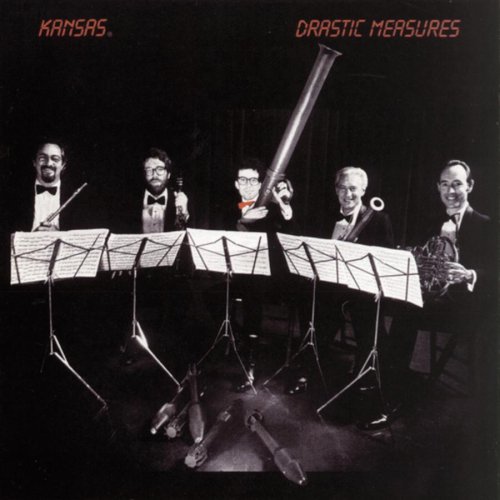
What is notable about Vinyl Confessions is the obvious move in the AOR direction; the only song that I would generally describe as “prog-gish” is the final cut, “Crossfire”, penned by Livgren. AllMusic.com is in the ball park in writing that “it was getting hard to distinguish Kansas from Foreigner and Journey.” The big difference was that while Journey and Foreigner specialized in love songs, the new Kansas material was lyrically much more in the vein of early ’80s CCM (Contemporary Christian Music). Songs such as “Borderline”, which urged listeners to make a choice between being “hot and cold”, obviously referred to the church of Laodicea, chastised in the Book of Revelation for being “lukewarm, neither hot nor cold” (Rev 3:15). The next album, Drastic Measures, which features the worst Kansas album cover of all time. was Elefante’s second and last with Kansas, and it was, to put it nicely, a mixed affair. Livgren was already moving on to A.D., and at times it is hard to believe it was produced by the same band that had, just a few years before, put out Leftoverture (1976)and Point of Know Return (1977). As Elefante would bluntly admit ten years later: “I didn’t like ‘Drastic Measures,’ and we even said to the band, ‘Guys, this is almost an Elefante Brothers album. This isn’t what Kansas is all about.’” Steinhardt had left the band at the end of 1982 and the band was now an overly AOR group, with just one song, “Mainstream”, breaking the six minute mark—and it was a Livgren-penned tune that openly skewered the direction of both the music world and his band:
It’s so predictable and everybody judges by the numbers that you’re selling,
Just crank ’em out on the assembly line and chart ’em higher (higher, higher),
Just keep it simple boys it’s gonna be alright, as long as you’re inside the Mainstream,
are we moving too far away?
Is it worth it if it doesn’t pay?
That said, the album does demonstrate that the young Elefante, in addition to being a fine vocalist, could write a great hook and a good tune. The hit, “Fight Fire with Fire” (#3 on the Billboard Mainstream Rock Chart) is a good example, but personal favorites include “Andi”, which is a precursor of sorts to songs such as Night Ranger’s “Sister Christian”, with its imploring, ruminating lyrics about a young girl trying to find her way in life (“And you’re not just anyone; don’t be ashamed”), and “Don’t Ever Take Your Love Away”, which ambiguously works as either a love song or a modern psalm: “‘Cause nothing means a thing unless you’re here/To live without your love’s my only fear/I just want to let you know/I can’t make it on my own.”
After Kansas broke up in 1984, John Elefante embarked on a prolific and award-winning career (multiple Grammy and Dove awards) in CCM as a producer, songwriter, and bandleader (Mastedon). Although he received offers that promised success in the broader music world (such as an invite to be lead singer of Toto in the late 1980s), Elefante was committed to working with Christian artists, including Guardian, Petra, Bride, and numerous others and, later, producing some of his own albums. During the 1990s, he released three solo albums, none of which I’ve listened to. In fact, I’ve not paid much attention to Elefante’s work for many years until he released his new solo album, On My Way to the Sun, his first in fourteen years, which came out on May 7th. I saw the album on amazon.com, noticed that Kansas members Williams and David Ragsdale (violin) performed on the 11-minute-long opening cut, “This Is How the Story Goes”, and I had a listen. My immediate impression was, “This is Kansas, circa 1978!” That was not entirely accurate, but similarities are obvious: the lush harmonies, the violin-driven opening, the very Kansas-esque guitar licks from Williams. In truth, the song is a near perfect marriage of mid-1970s and early 1980s Kansas, but with superior production and some frankly evangelistic lyrics:
And this is how the story goes:
You must believe it all, my friend,
from the beginning to the end.
Everyone lives forever, we just have to choose where,
Because the virgin had a son,
and the stone was rolled away,
so how can we can be terminal,
because He lives today.
Granted, those sort of direct lyrics aren’t going to attract many new listeners (I do like the line about being “terminal”; it reminds me somehow of Part IV if Eliot’s “East Coker”). But, while I’m not a big fan of overtly evangelistic rock tunes, I think “This Is How the Story Goes” is a really fine bit of prog-rock. It is perfectly produced and performed, has a killer hook, develops wonderfully, and is both rocking and thoughtful. Another plus, and a pleasant surprise, is just how great Elefante sounds. He has always been a fine singer, and he displays not only range, but an admirable combination of confidence and reserve, never over-singing or being indulgent; there isn’t an unnecessary note on the album.
The other nine songs are certainly in the AOR/”classic rock” vein, but with lots of nice twists and details. “Where Have the Old Times Gone” has some obvious tips of the hat to Led Zeppelin and Foreigner, but also features violin work that is directly from the Kansas playbook. The Foreigner influence is front and center on the title track while “All I Have to Do” could have fit nicely on Vinyl Confessions, albeit with an updated sound. “The Awakening” begins with a huge, warm wash of harmonized vocals that then leads into lush guitar-driven verse and chorus that reminds me of some of Livgren’s work with A.D. “Half the Way Home” featured more lush harmonies, over the top of a 38-Special-like guitar riff; the lead vocal, oddly enough, sounds like Doug (Dug) Pinnick of King’s X in a few spots, and there is a huge sing-a-long chorus (did I mention the album has big hooks?). “We All Fall Shorts” is a largely acoustic number that starts with a Beatles/Phil Keaggy vibe before moving into a very Yes-ish chorus. “Don’t Hide Away” returns to the Foreigner influenced sound, but with a very Styx-like chorus, along with a short section of rap (yes, that’s right). “This Time” offers a somewhat abrupt shift in tone and lyrics, a moody, minor-keyed (and quite emotional) song about a pregnant girl who decides, at the last moment, to keep her baby rather than have an abortion. The closing track, “Confess”, is, frankly, a praise-and-worship tune, but a very well done one at that: “Fall down on your knees/Praise Him/And fall to your knees/And confess with your lips/that Jesus is Lord.”
While the influences are obvious, there’s never a sense that Elefante is trying to write, say, a “Foreigner” or “Kansas” tune. Rather, this is a very cohesive-sounding album that works because Elefante is an exceptional musician, songwriter, and producer who seamlessly marries a myriad of loves and influences without losing his way or his focus. He knows prog-rock and classic rock better than most, and he does a fine, even exceptional, job of crafting songs that draw on those sources. Anyone who enjoyed the Elefante-fronted Kansas, or likes AOR/classic rock with lyrics that are unapologetically Christian will enjoy this well-crafted album. Having said that, here is the opening cut:
Pro Tip : Two great technologies that help you work on your music and videos from anywhere – Cloud Desktop and Cloud SharePoint from the best DaaS provider – http://www.apps4rent.com .


 What was the inspiration behind “Projective Instruments”? Are there any stories behind the choice of name?




 Progarchy