By day, I'm a father of seven and husband of one. By night, I'm an author, a biographer, and a prog rocker. Interests: Rush, progressive rock, cultural criticisms, the Rocky Mountains, individual liberty, history, hiking, and science fiction.
Another bootleg recording turned into a CD, this one from a show Rush played in 1974 at Electric Lady studios in New York City. The recording has been floating around for years in an unofficial CD, called Rush Hour, but about two years ago it was repackaged into an unofficial import CD, called Rush: Live at Electric Lady Studios and made available on Amazon.
The studio was built by Jimi Hendrix. He bought what was then the Generation Club in 1968 and two years later added a recording studio. He recorded “Snow Blues” there in 1970, but he didn’t get to use his space after that; he died in London a few weeks after making his recording. Hundreds of artists and bands have since played or recorded there, including The Rolling Stones, Led Zeppelin, Stevie Wonder, David Bowie, and Patti Smith. In more recent years Lana Del Rey, Arcade Fire…
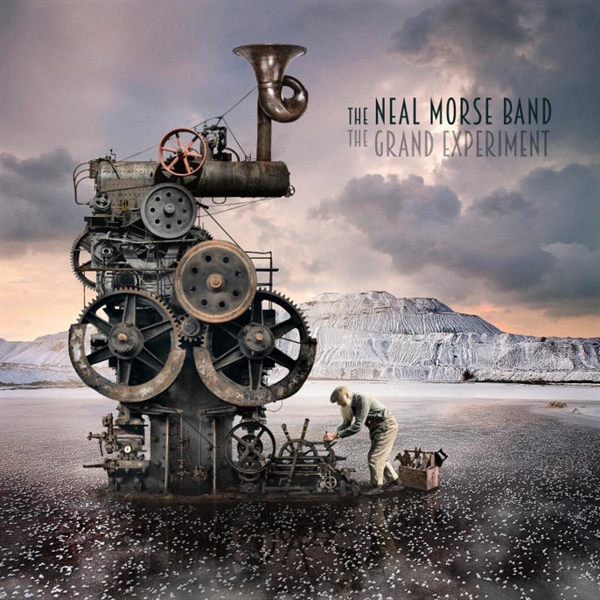
The Neal Morse Band, The Grand Experiment (Radiant Records, 2015), Special Edition. Tracks: The Call; The Grand Experiment; Waterfall; Agenda; Alive Again; New Jerusalem (Freedom is Coming); Doomsday Destiny; MacArthur Park; The Creation (Live); and Reunion (Live).
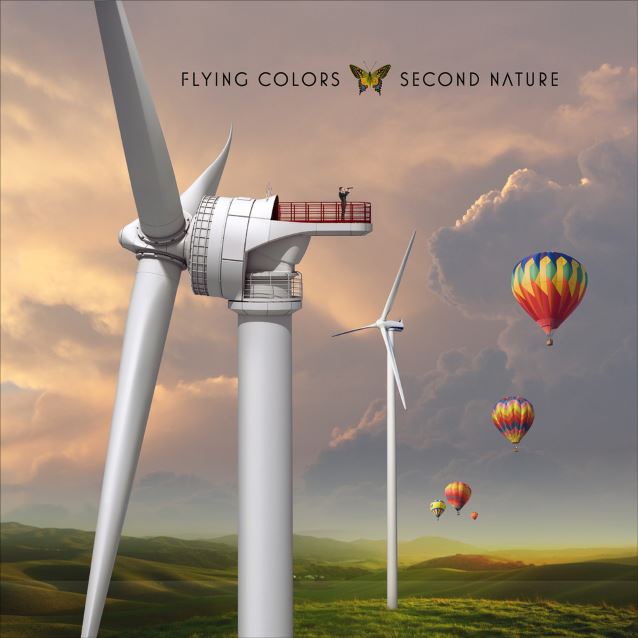
Not as beautiful as last year’s Flying Color’s SECOND NATURE album cover, but just as intriguing.
Birzer rating: 9.5/10.
“The Call” begins with a multipart gospel/Trevor Rabin-Yes era harmony before breaking into a wild keyboard/drum sequence that is pure third-wave prog. Quickly, all instruments play at full blast. It’s a rather ingenious immersion into the album.
Everything soars with a precision and beauty. “With every beating of my heart. . . I am engulfed in who you are.” Morse is doing for the listener what God’s grace has done for him. As the lyrics suggest, the only thing that prevents disaster of an eternal magnitude is an embracing of “The Call,” unique to each person.
A little past the halfway mark in the song, the Neal Morse Band breaks into a harrowing Transatlantic/Flower Kings moment of dread and introspection. Randy George’s bass, especially, steals the moment as things only slowly resolve into a hyperfrenetic mass of sound.
After Momentum, I had thought Morse had become rather comfortable in his Christianity, thus allowing it to become a part of his art, a foundation, rather than an explosion. That is, Momentum might very well have been written by a seriously religious person whose sensibilities had been shaped dramatically by his faith but who felt no need to proclaim it as though by one recently saved. This album, though, is an explosion of religious enthusiasm and praise. Clearly, “The Grand Experiment” is prog meets worship in a significant way.
Whether the listener will agree with Morse’s religious perspective or not matters little, as the music is so strong and the conviction so real that one can’t help but admire Morse for writing about and proclaiming what he loves most. I might not go to his Church, but he certainly makes his faith look extremely attractive, open, warm, and loving. This is not the kind of evangelicalism that condemns all who do not understand or agree 100% to some form of a brimstone hell. Instead, Morse chooses to critique the world but praise the potential of each individual as endowed by grace.
“The Grand Experiment,” the second track, opens with a more blues-based sound than I’d normally expect from Morse, but it has a strong Kansas, Styx, Allman Brothers feel as Morse almost growls his way through the beginning of the song. This is rather heavy. A short song at only 5 and ½ minutes, “The Grand Experiment” remains very heavy throughout—again, in a 1970’s American prog-gish fashion. Backwards keyboard sounds even swirl from speaker to speaker. It’s with this song that I realize how astounding the engineering, production, and mastering of this album is. An audiophile’s dream.
Tasteful acoustic guitar opens the third track, “Waterfall,” and the intertwining vocals carry a soft Crosby, Stills, Nash, and Young folk lilt throughout. “Waterfall” could easily have been a Flying Colors song. Most interestingly, the song morphs into a mid-period Genesis song, something off of Trick of the Tail or Wind and Wuthering mixed with a bit of early solo Sting. The trajectory of this six and ½ minute song is nothing short of extraordinary, and it proves just how brilliant Morse is as a musician.
“Agenda,” the fourth track, is another extremely hard-rock track, though less than 4 minutes in length. Despite the hard-rock elements of the instruments, Morse sings in a sweet poppish way, and the entire song reminds me of the best of Cheap Trick and The Pretenders.
The final sing of the main disc, “Alive Again,” is a nearly twenty-seven minute prog success. In every way, it’s a masterpiece. No hyperbole needed to explain this one. Indeed, the song is hyperbole made manifest! No one in the music world can write songs of this length in the way that Morse can. It is with this song that the Nashville progger reveals not only his brilliance and genius, but his very mastery of and over the genre. Rather than feeling like a series of songs thrust together with interesting bridges, “Alive Again” flows logically from part to part, telling a cohesive and compelling story. It has the structure of a classical symphony, but with all of the rock elements one would expect. The lyrics and vocal harmonies (again, think mid-1970s Kansas) guide, glue, and predominate, while the song never shies away from 1978 Rush-style atmospherics and percussion. Intensely religious, this song carries more respect for creation and the Creator than almost any formal church music produced over the last three decades. The song also features a psychedelic part with one of the members of the band (not Morse; Portnoy, maybe?) singing a testimonial. It works.
The bonus disc has three new songs—“New Jerusalem (Freedom is Coming)”; “Doomsday Destiny”; and “MacArthur Park”—as well as two songs recorded from last November’s Morsefest, “The Creation” and “Reunion.” Each of the new songs is absolutely gorgeous, and I’m not at all sure they didn’t make it as a part of the original, main album. While “New Jerusalem” has a bit of a Relayer aspect to it, nothing on the entire album has been shy about paying homage to earlier bands. Musically, this might very well be the best song on the two discs. There’s a bit more funk in “Doomsday Destiny,” for example, than anything on the main disc, but it would still fit well with the lyrical themes of The Grand Experiment. “MacArthur Park” seems to be an homage, at least musically, to Kansas, Yes, Jethro Tull, and ELP, despite the rather Peartian title.
My advice, make sure you get the entire package—the main disc as well as the special edition. The only reason I’m not giving this release a perfect 10 is simply because the album is confusing with its variations. But, the bonus disc is every bit as good as the main disc, and you’ll kick yourself in the future if you pass up these “bonus” songs. They are, to my ears, absolutely essential.
One last thing. I must praise the individual musicians. Morse might be the leader, the touchstone, and the fountainhead, but he has created a community of artists around him, artists who clearly love Morse, the art, each other, and the listener. No one of the five members of the Neal Morse Band gives only a part of himself. Each gives every single thing he has. George’s bass, Gillette’s guitar, Hubauer’s many, many instruments each boggle the mind.
But, I have to single out Portnoy. I’ve been listening to him since 1992. Since, I have regarded him as one of the three greatest drummers in the rock world, along with Peart and D’Virgilio. Over the past 23 years, though, I would’ve always put the caveat that Portnoy is the best hard rock drummer, lacking the subtly of Peart or D’Virgilio. For what it’s worth, I now officially revise that claim. Portnoy’s drumming and percussion absolutely, completely, and totally blow me away on this album. Holy Moses! The drumming and percussion is just so, so good that words fail me. Portnoy reveals sides to himself that I had no idea existed. On a personal note, he is just three or four months older than I am. I can’t tell you–the reader–how happy I am to see his growth, his desire to become what he is capable of. Thank you, Mr. Portnoy. I bow to your excellence.
Whatever the reason–Morse’s charisma or God’s grace or some mixture of both–“The Grand Experiment” is a true success, an explosion of enthusiasm, a true work of art. Nothing halfway here. This is the real deal. This is what we proggers live for.
Update, January 18, 2015–Chris Thompson, who works closely with Morse at Radiant, posted this on Facebook: “”The Grand Experiment” was written by everyone in the band. Neal came to the writing sessions with nothing, planning to co-write the entire album, with a piece of each member framed perfectly throughout each song.” Thanks, Chris!
Greetings from Team Radiant! We’re excited to share today the first ever Inner Circle release promo video! Get a sneak peek of what’s to come for members of the Neal Morse Inner Circle this month! Randy George has created a great behind the scenes time capsule video from the Question Mark Recording sessions that you all are going to love! See Mike killing it on “THE TEMPLE OF THE LIVING GOD,” Randy riffing out, and Neal spontaneously creating in this very special DVD experience. If you were ever wondering if you should join the Inner Circle, now is the time! Become a member of the Neal Morse Inner Circle by January 21st to receive this great DVD.
There are classics and then there are classics! In 2005, Neal Morse, Mike Portnoy, and Randy George got together to create what would become the legendary Question Mark album. What was once shrouded in mystery is now revealed in The Making of “?” DVD!
We’ve finally made it! Here we are with my Number 1 album of 2014. It has taken over a month to bring you my full top 20 but I hope that it has been worth it. It has taken a lot of effort on my part over the past few weeks to bring this series to you but it is a labour of love that I thoroughly enjoy. And based on the comments, follows, likes and interaction that I’ve had to each post, I get the feeling that many of you have enjoyed following it too. I want to thank everyone of you for making the effort so worthwhile and I hope that maybe it has helped some of you to discover your new favourite band.
If you’re new to this series however and want to discover what you’ve missed, the links to each post in the series can be…
Admittedly, I’ve been a Rush fan since 1981. But, I’ve also been a fan of Kevin J. Anderson’s work for over two decades. Peart and Anderson together. What a brilliant way to expand the larger Rush mythos.
For my entire writing career, my stories have been inspired by the music of Rush. And I’m not the only one. After the publication of my “Drumbeats” and CLOCKWORK ANGELS with Neil Peart, many other writers have approached me to talk about Rush.
It certainly made sense that we could find plenty of well-known writers interested in writing original stories inspired by Rush songs—enough to fill an entire anthology. Canadian author John McFetridge first approached ECW Press (publisher of CLOCKWORK ANGELS) with the idea, and they liked it; shortly afterward, they brought me on board to co-edit with John. We approached Neil Peart to make certain he supported the idea, since the stories would be based on his lyrics. While Neil isn’t directly involved in the project, he granted his approval, turning us loose to see what stories we could track down.
And I’m doing an original novella, 2113.
The many other authors who signed on include numerous award-winners, New York Times bestsellers, well-known writers of science fiction, fantasy, mystery, thrillers. We will have original pieces by me, David Farland, Mercedes Lackey, Greg van Eekhout, Dayton Ward, David Mack, Steven Savile, Brian Hodge, Michael Z. Williamson, Brad R. Torgersen, David Niall Wilson, Ron Collins, Mark Leslie, Larry Dixon, John McFetridge, and Tim Lasiuta. AND we will include a reprint of Richard Foster’s story “A Nice Morning Drive”—the original inspiration for “Red Barchetta”—and Fritz Leiber’s “Roll the Bones.”
Just today I finished the last scene in 2113, which I’ll be polishing while waiting for all those other cool stories to roll in.
No firm release date yet from ECW, probably in about a year. Meanwhile, I can’t wait to read it myself!
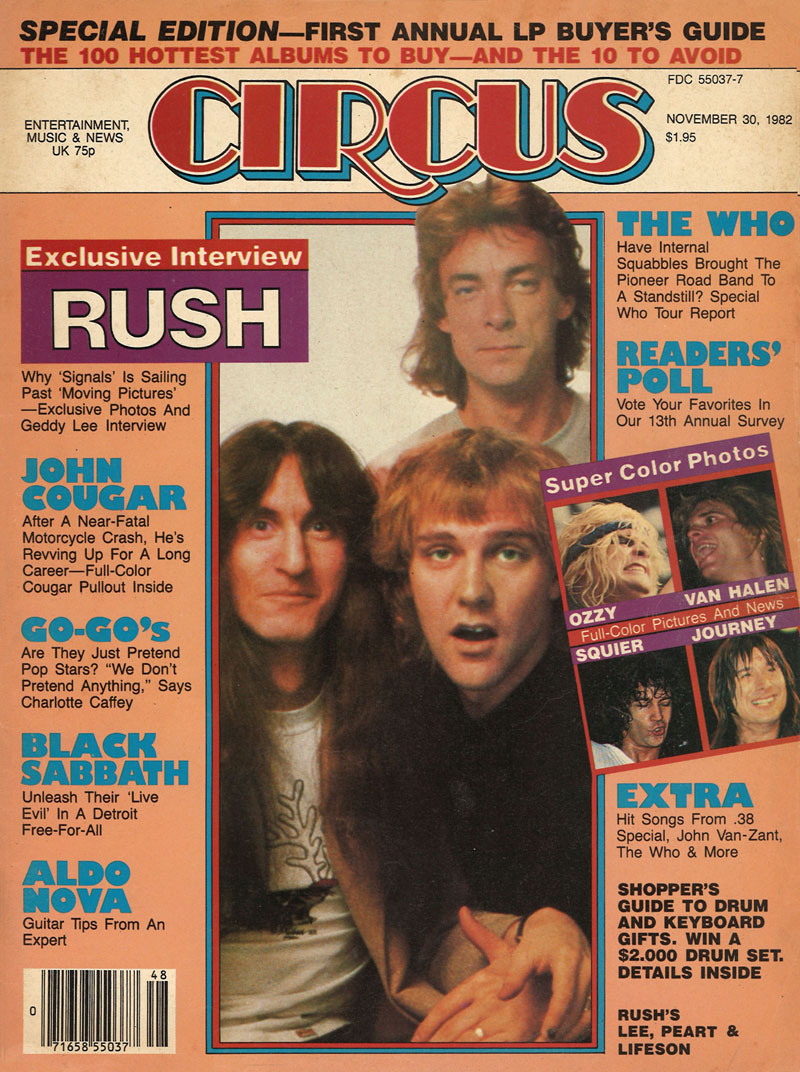
“If there’s one thing rock journalists dread more than watery drinks at press functions, it’s facing the wrath of Rush fans disgruntled over a less than favorable review.Not only are they a vocal lot who will gladly spring for the postage in order to castigate the offending scribe, but they’re unusually articulate.”—Philip Basche, CIRCUS (November 30, 1982)
It’s getting serious now as I enter the final three albums in my 2014 top 20 countdown, the bronze, silver and gold positions. Needless to say that all three bands coming up have released fabulous albums, worthy of any accolade coming their way.
Remember, every post in this series can be accessed at the bottom of this post along with the full series’ from 2012 and 2013.
But enough of that, here’s Number 3 for 2014…
Sólstafir
‘Otta’
Season Of Mist
Iceland. In my opinion, one of the most magical countries on Earth and, given the size of the population, a musical powerhouse. When my brother passed away in 2008, my family and I started a search for a perfect resting place for some of his ashes. His love of rugged landscapes, mountains and the wilderness led us inexorably towards Iceland. None of us had visited before and when…
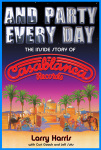
One of the interesting things to come out of Larry Harris’s 2009 book about Casablanca Records, And Party Every Day (Backbeat Books), is how close the label came to signing Rush. Harris, the company’s managing director, said he flew to Toronto in 1974 at the recommendation of a colleague to see if the band was a good fit for the label, which at the time was known mostly for its up-and-coming rock act, Kiss. Harris wasn’t that impressed with the band, especially with its looks, and took a pass, opening the door for Mercury to swoop in and snap them up. And the rest, as they say, is history.
Harris with Gene Simmons
Harris says he regrets not signing the band, but it’s probably a good thing he didn’t. Despite what it did for Kiss, Casablanca did not go on to become a major force in rock music; it went…
And, this is probably album cover of 2014. Hugh Syme.
I don’t want to get in the habit of quoting myself (a sure sign of descent either into senility or sociopathism), but I wrote this about a month ago:
In a world of true justice, Flying Colors would be blaring from every car stereo tuned to album rock radio across North America. Not only does SECOND NATURE have the single best album cover of the year, but the album is absolutely riveting. It’s not quite prog, though, as with the best of AOR, it contains great prog elements. Everything fits perfectly here. The lyrics are solid, the vocals are superior. The final two songs—Peaceful Harbor and Cosmic Symphony (sort of a gospel prog)—alone are worth the entire album. But, the entire album is, thankfully, worth the entire album. For me, every time I listen to this album, I’m transported back to 1985. This would have sounded great next to Power Windows. And, unquestionably, Peaceful Harbor would easily outdo almost any contemporary worship song should churches look for some good new music.
It’s not strong enough. The more I listen to this wonderful album, the more I realize just how very prog and how very good it is. I think the first album–which I admire and listen to frequently (it’s also my oldest son’s favorite album, which doesn’t hurt!)–tainted my view on this new one too much. That is, I was too willing to dismiss SECOND NATURE as AOR. Really, really, really good AOR, but still AOR.
May I please revise what I wrote so definitively in 2014? Please? SECOND NATURE is way too complicated and deep for AOR.
For some reason, I’ve spent the last three days with SECOND NATURE as my sound track, especially as I prepare for the new semester. On Tuesday, I had the grand privilege of meeting a Facebook friend, Geddy Lee Israel. We had a wonderful time, but that’s a different story. As we said goodbye to one another under very sunny but crisp Colorado skies, we started talking about Flying Colors. When i told him I thought it was the best AOR album of the year, he corrected me–no, it’s prog. Straight up prog. He was right.
Now, I know that labels reek, but Geddy’s comment got me to thinking. What it allowed was for me to see this album for what it probably is rather than what I’d wanted or I’d assumed it would be.
Whether you already like the album or not, I’d encourage you to listen to it again–but, this time, with headphones on and the lyrics in front of you. Imagine a deeply spiritual Neil Peart or an equally reasonable Kansas–you might come close to the lyrics of Flying Colors. I really had no idea how beautifully written these lyrics are until my brief goodbye with Geddy. Holy Moses, these are gorgeous in every way. Deep, yet ethereal. Truly poetic.
I hope I’m not violating copyright, but let me just offer this. This is the best song on the album, Peaceful Harbor.
And, here are the lyrics.
Born into the wind
It makes its way
To the lost and the hollow
Life begins again
Sometimes we lead
Sometimes we follow
Where we do not know
No sky can hold
No end, no border
The wind will fill the sails
And push you through to peaceful harbor
Love, like Heaven’s wind
No eye can see
How it blows in the darkness
Fear may freeze our steps
Loss and regret, every scar turning scarlet
Help to set your course
Through sightless days and violent waters
Love will fill your sails
And bring you through, to peaceful harbor
Chase this rising wind
anchor released
No want of landing
All in deep despair
Come feel the air
In its full finale
And yes, the chase is on
I’ll look beyond
With the bedlam behind me
And i embrace the sky
My soul will cry
May your wind ever find me


 Another bootleg recording turned into a CD, this one from a show Rush played in 1974 at Electric Lady studios in New York City. The recording has been floating around for years in an unofficial CD, called Rush Hour, but about two years ago it was repackaged into an unofficial import CD, called Rush: Live at Electric Lady Studios



 Progarchy