Chicago Symphony Orchestra – The Return of the King -Live-

2981_Show_PageYes, I know this is a “progressive rock” website, but please allow me this opportunity to share with you my wonderful experience last Thursday at Ravinia, in Highland Park, IL. And besides, Tolkien is beloved in the prog world anyways, just look at Led Zeppelin IV. The more I listen to that album, the more I think the whole thing is about Middle Earth, except for the first two songs. I digress… already.

For the past few years, the amazingly talented Chicago Symphony Orchestra (CSO) has performed Howard Shore’s musical score to the Lord of the Rings live along with a showing of the movies. The last two years were The Fellowship of the Ring and The Two Towers. This year was The Return of the King, which I had the great pleasure to attend. Just the idea of an orchestra playing a movie score live with the movie is astounding, but to do Howard Shore’s Lord of the Rings score live?! Incredible.

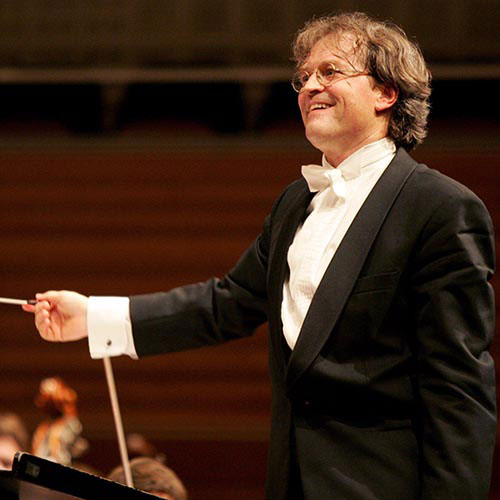
The conductor was the talented Ludwig Wicki, the first person to conduct a live performance of the Lord of the Rings trilogy. A native of Lucerne, Switzerland, Wicki spent time studying his trade in Bern, Dresden, and Pescara, Italy. Since forming the 21st Century Symphony Orchestra in 1999, he has spent much of his time performing live film music. Needless to say, he is a master of his craft.

Ludwig Wickie
Ludwig Wicki

The CSO is probably one of the top 10 orchestras in the world. They are simply fantastic. I saw them perform George Gershwin’s Rhapsody in Blue, along with other shorter symphonic pieces, a few weeks ago at Ravinia, and it was breathtaking. Their ability to play the LotR soundtrack with the movie was nothing short of magnificent. I listen to the complete soundtracks from those movies on a regular basis, and the CSO was every bit as good as the original soundtrack. In some respects, it was even better. There are certain scenes in the movie where the music blends into the background, but when it was played live, the music in general was much louder. It brings a great deal of emotion to the forefront.

Not only did the CSO perform the score live, but The Lakeside Singers and the Chicago Chorale sang the choral pieces to the movie. They were every bit as good as the choirs used in the score. Most astounding was the lovely miss Kaitlyn Lusk, a soprano who soloed for the required pieces. Her performance of the credits song, Into the West, was, in my opinion, better than Annie Lennox’s original recording. She never once missed a note throughout the night, and this was a long movie, and those are high parts to sing. Well done miss Lusk. (She’s so good, she was invited by Howard Shore himself to sing Into the West in 2005 as a part of his Grammy honors.)

Another cool part of the evening was my opportunity to meet Doug Adams, a Chicago native. He is known far and wide for his book, The Music of the Lord of the Rings Films. He was invited by Howard Shore, during the recording of the original scores, to document the process of creating the scores and recording them. He has also written the liner notes to the scores for LotR and The Hobbit soundtracks. I left my copy of his book at home (DOH!), so I had to buy another one and have him sign that. He was very friendly, and it was very generous of him to hold a book signing at the performance, when I’m sure he was there to enjoy the concert himself.

I don’t know much about the technical side of music, but I know that I love these soundtracks, and Mr. Wicki and the CSO performed the music perfectly in sync with the movie. It was such a joy to watch. Ravinia is also the perfect place to showcase something like this. It is easily the best venue in the Chicago area, if not in the whole Midwest. Highland Park is a beautiful (and expensive) suburb on the north side of Chicago, mere blocks from Lake Michigan. It is outdoors, with a covered pavilion and expansive lawn area. The park itself is over 100 years old, and the CSO have been playing there since the beginning. Quite the history. All throughout the summer, Ravinia has amazing concerts of all different genres (I saw Ian Anderson there last summer). I had a wonderful time, and I certainly hope the CSO does this again in the future, maybe with The Hobbit next year.

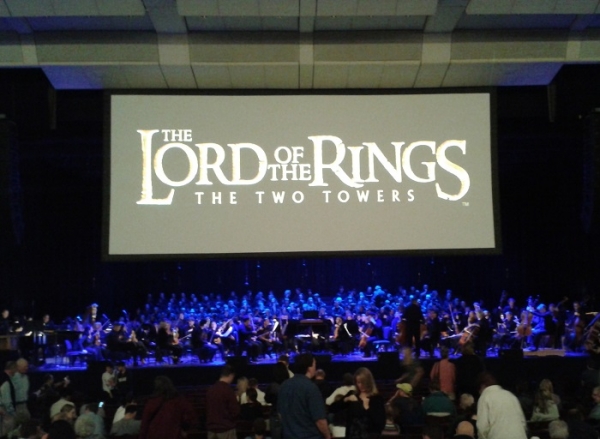
Last year's performance of The Two Towers, which I unfortunately was not able to attend
Last year’s performance of The Two Towers, which I unfortunately was not able to attend


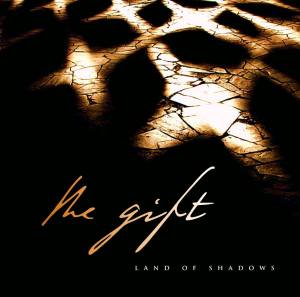
The Gift – “Land of Shadows”

cover

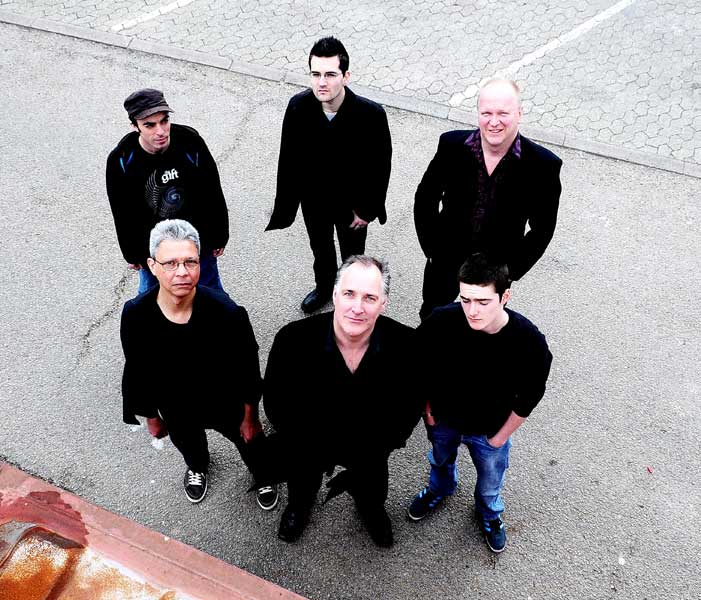
London’s The Gift have created a true masterpiece with their second album, “Land of Shadows.” In fact, I believe this is my favorite prog album of the year thus far, and there have been a lot of fantastic albums released this year. Their sophomore release comes eight years after their first album, “Awake and Dreaming.” Due to various circumstances, The Gift were never able to tour after their first album, and the project as a whole was set aside for several years until founder Mike Morton decided to breathe life into the band again.

So who are The Gift? On vocals and flute: Mike Morton. Guitars: David Lloyd. Bass: Kirk Watson. Keyboards: Howard Boder. Drums: Joseph Morton (Mike’s son).

Their music is self-described as symphonic prog, but I find that it ranges anywhere from that to prog metal to Gabriel-era Genesis prog back to symphonic prog. It’s really quite a joy to listen to. The technical skill of the musicians is certainly excellent, with the guitar work standing out as being exceptional. There are echoes of 70s “golden age” guitar along with hints of more modern metal guitar. Mike Morton’s vocals are fantastic and unlike anything I have heard in progressive rock. Interestingly enough, his voice instantly reminded me of Christian singer Steve Green, which is indeed a very good thing, as Steve Green has one of the most remarkable voices I have ever heard. The interplay between the instruments and Mike’s voice is simply beautiful.

“Land of Shadows” starts off with a short, spoken word piece entitled, “I Sing of Change.” It aptly sets the stage for the whole album. The second song, “The Willows,” seems to move through several sub genres of prog throughout its 12 minutes of awesome. It starts off quiet and slow, with soothing piano, drums, acoustic guitar and Mike Morton’s haunting vocals and lyrics. At about the 3 1/2 minute mark, the song quickly delves into The Gift’s version of progressive metal. Later, it circles back around to symphonic prog and a greater focus on the lyrics. By the end of the song, it almost feels like you are listening to Pink Floyd. But, to be sure, The Gift never copy the work of other bands. Instead, they blaze their own trail in this third wave of prog.

Each track on this album is fantastic, but I particularly enjoy “The Willows,” “Walk Into the Water,” and “The Comforting Cold.” Coming in as the fourth track, “Walk Into the Water” is a song of hope. I can’t help but hear references to baptism throughout the song, both in spiritual rebirth, and physical baptism. Specifically, I believe the song references the journey one takes as they prepare to die:

Walk into the water / Throw away your fear, wash away the pain / Walk into the water / You’ve nothing left to lose, mystery to gain… Take a quick look behind at your footprints in the sand / As you wade in blind it’s time to leave dry land / And walk, walk into the water…

Band photograph by Sabrina Dersel

The contemplation of death and rebirth in “Walk Into the Water” ties in perfectly with the seventh track on the album, the nearly 20 minute long “The Comforting Cold.” This song takes the Biblical story of Lazarus and places it in the modern day. In it, a tired worker dies of a heart attack on a train, and is brought back to life by paramedics, only to wish he could have remained in eternity. The song questions whether or not someone who had just died would really want to return to life, but it also reminds us that our time on earth is not guaranteed. We aren’t promised another day, and we must be ready for the reality of death. While this sounds depressing in a Pink Floyd “Animals” sort of way, it really isn’t. Actually, it is quite the opposite, offering hope where there should be despair.

The Gift have created something uniquely special with “Land of Shadows.” This is an album that I have thoroughly enjoyed over the past several months. The hope that this album offers the listener is refreshing. Of all the albums released in 2014, I think that “Land of Shadows” is one of the best pieces of art I have heard this year. Listening to this album is like looking at a fine painting. You can listen to this album over and over again and still hear something new and interesting in it, just like you can always find something new in a good painting. From the technical musical skill, to the soaring vocals, to the haunting lyrics, “Land of Shadows” is a must-have from 2014.


http://www.thegiftmusic.com/index.php

In Defense of the Positive Review

The Republic of Progarchy.  No borders, no border guards.  Free speech and free minds.  Image by Mark Widhalm.
The Republic of Progarchy. No borders, no border guards. Free speech and free minds. Image by Mark Widhalm.

The Republic of Progarchy is, all in all, a very happy, positive place. I think most of us here would rather talk about the albums that we love rather than the ones we dislike. And, as Brad Birzer has said many times before, it is better to talk about the good, the true, and the beautiful than to lower ourselves to that which is not beautiful. With that said, I think many readers wish that we would be a little more objective in our reviews sometimes. Allow me to explain why I don’t particularly like to write negative reviews.

Art is not something that can be easily judged. When it comes to any art, music included, most artists put their all into what they create (I exclude the majority of modern pop, techno, dubsteppy crap, along with the garbage Nashville considers country these days). Therefore, as a reviewer, it is difficult to harshly judge something that someone else has put so much work into. It just doesn’t seem right to ridicule their labor and effort.

As a bit of an artist myself (I dabble in watercolor, along with charcoal portraits, amongst other media), I know how upsetting it can be when someone who doesn’t understand how much work you have put into something unfairly criticizes your art. (I can think of one instance when I almost socked somebody, but he deserved it for other reasons too, hehehe. Thankfully, I think I’ve matured beyond that. I simply called him a Cretan instead… went right over his head.) If you have honestly used your talents to glorify God in your art, whatever the medium might be, who is anyone to criticize it just because they don’t like it?

There have been several newer progressive albums that I have listened to that many of my fellow Progarchy authors loved that I think were not very good. That does not mean that the albums were inherently bad. It simply means that didn’t like them. It is very very easy to criticize something that we don’t like, which is something that most people who know me will tell you that I am excellent at (Connor Mullin, no need to verify that). I could go on and on about how much I didn’t like an album, but in the end, what good does that do anyone? All a negative review does is discourage the reader from checking out the music for themselves to see whether or not they like it.

However, I do think there is a time and a place for a negative review. Take Brad Birzer’s recent negative review of Anathema’s latest album, Distant Satellites, for example. Now I don’t particularly like Anathema as a band – too quiet for my taste. But Brad believed that this latest album wasn’t up to Anathema’s normally high standards. If a band fails to reach their full potential, then I think they should be called out on that. My art teacher in high school was never afraid to tell us when our work sucked (his own words). He knew we had potential, and he refused to accept mediocrity. As reviewers and consumers of music, we should also refuse to accept mediocrity.

In the end, my point is we should not criticize an album just because we don’t like it, if the artists did indeed put their all into their work. I’m not a huge fan of U2, but I can appreciate what they have done for rock. I don’t have ACDC tattoos all over my body, but I can appreciate their profound influence on music without criticizing them (I actually enjoy ACDC every once in a while). I think all of my fellow Progarchy authors are at their best when reviewing something they like. Maybe our only fault is being too enthusiastic sometimes, and maybe we could tone it down a bit. But, I don’t think I will start negatively reviewing albums I don’t like just because I didn’t enjoy them. That would not be fair to the artists, to myself, or to you, our awesome readers.

Just my two cents.


ELP, William Blake, and Jerusalem – The Divine Conection

Brain-Salad-Surgery-620x400

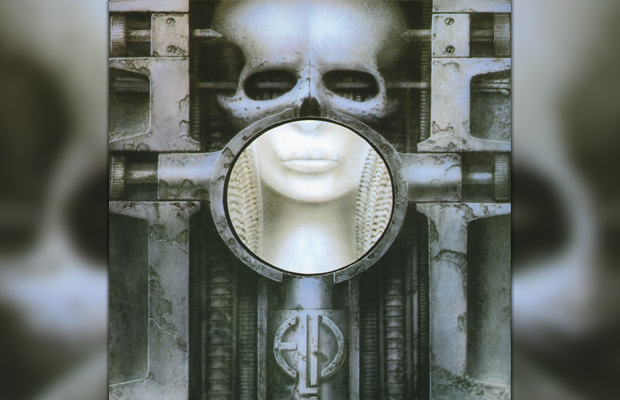
Back in the year 1973, Keith Emerson, Greg Lake, and Carl Palmer made an interesting decision regarding their album, Brain Salad Surgery. They decided to record their own version of the hymn, “Jerusalem,” and make it the first song on the new album. ELP had made a name for themselves in the world of progressive ROCK. These boys were not touring the Anglican Church circuit playing selections from the hymn book “whilst” citing the English Common Book of Prayer. Far From it. So why include a nearly 200 year old poem by William Blake, which was made a hymn by Hubert Parry in the early 1900s, in their new album? It seems like a strange choice, right? Well, maybe not.

And did those feet in ancient time
Walk upon Englands mountains green:
And was the holy Lamb of God,
On Englands pleasant pastures seen!

And did the Countenance Divine,
Shine forth upon our clouded hills?
And was Jerusalem builded here,
Among these dark Satanic Mills?

Bring me my Bow of burning gold;
Bring me my Arrows of desire:
Bring me my Spear: O clouds unfold!
Bring me my Chariot of fire!

I will not cease from Mental Fight,
Nor shall my Sword sleep in my hand:
Till we have built Jerusalem,
In England’s green & pleasant Land

And every British reader shouted, “AMEN!”

William Blake wrote “Jerusalem,” also known as “And Did Those Feet,” as a preface to a book of poems in the early 1800s. It is known for its heavy nationalism, which is why it is such a beloved hymn in Britain. Undergirding the poem is the legend of Christ’s supposed journey to England with Joseph of Arimathea. In the poem, Blake clearly questions the validity of the legend. The first two stanzas question the legend, and it is as if you can hear Blake answering his own questions. “And did those feet in ancient time / Walk upon England’s mountains green?” No! “And was the holy Lamb of God, / On England’s pleasant pastures seen!” Again, no! But, Blake wants to believe that Jerusalem was indeed “builded here / Among these dark Satanic Mills.”

I am reminded of what the early Christian apologist, Tertullian, once said: “What does Jerusalem have to do with Athens?” I ask, what does Jerusalem have to do with… London? Blake desperately wants Jerusalem to be built in “England’s green and pleasant Land” when he states that he is willing to fight without ceasing until the New Jerusalem is built in England.

This poem is simply dripping with religious imagery. From the Biblical image of chariots of fire taking Elijah into Heaven (II Kings 2:11) to God sending chariots of fire to protect Elisha (II Kings 6:17) to the prophet Ezekiel’s vision of chariots of fire in Heaven, it is clear that Blake wants a Heavenly army to fulfill his desire of the New Jerusalem established in England. Blake looks at the legend of Christ’s journey to England with skepticism, yet he looks forward to Jesus’ return with anticipation.

No wonder “Jerusalem” is so beloved in England. The hymn supports the belief that England and the West hold a superior sense of culture, society, truth… etc. What Englishman wouldn’t want to see the New Jerusalem established in England? But, there is a problem… those damned Satanic Mills. What are we going to do about those? And just what the heck are they anyways?

I’ll give you my thoughts on what they are, for what that is worth (not much, I assure you). From my reading of the poem, along with a quick glimpse of English history at the time, I believe the Mills are referring to factories and engines of war. Many argue that they refer to the rising problems of the garment factories and cotton mills in England, but I think that this poem was written far too early for that to be Blake’s main concern. The main British concern at the time was rising hostility with the French, not all that long after the American Revolution. As a rather pacifistic Romantic, Blake would have hated war. Yet, nevertheless, we see him calling for weapons of war in the next stanza. I believe he is doing so because, with this very poem, he wants to usher in the New Jerusalem “in England’s green and pleasant land.” However, before that event can take place, the factories and engines of war must be destroyed. There must be strife before Jerusalem can be established.

***

th

So, what does all of this have to do with ELP? Where is the connection?

First, why not place a favorite nationalistic hymn at the beginning of your new album? American musicians record their own versions of the “Star Spangled Banner” or “God Bless America” all the time, so it really would not be all that strange to place a patriotic song in a rock album.

Then again, knowing the rather a-religious (to put it nicely) tone to Greg Lake’s lyrics, maybe they meant to use it in a way not unlike William Blake. It is just barely possible that they were trying to refute the legend of Christ’s visit to England. However, I doubt that ELP was looking forward to the triumphal return of Christ and the establishment of the New Jerusalem in England. Rather, ELP wants to see Jerusalem built in England, but God has no part in it. How, you ask, did I arrive at this, well, random conclusion? Maybe “Karn Evil 9 1st Impression Part 1” can shed some light upon that:

And not content with that,
With our hands behind our backs,
We pull Jesus from a hat,
Get into that! Get into that!

We pull Jesus from a hat…. Think about that for a second. What does a magician do? Most magicians are masters of optical illusion, so, for ELP, is Jesus just an illusion? Perhaps the Grand Illusion… hehe. Is there nothing more to this song than a refutation of the original legend and a declaration that, since Jesus never came, then we must build the New Jerusalem ourselves?

Again, I ask, what does Jerusalem have to do with London? Well, for the Jews, Jerusalem was arguably the center of the universe. It was where God made his home on earth, in the Temple. It was where man could come to find the presence of God. However, the presence of God left the temple at the shredding of the curtain with the death of Christ. Man no longer needed a mediator to get to God. Man’s heart became the temple of the Lord. Therefore, Jerusalem lost its importance to humanity. For the nationalist who wants to believe that the legend of Christ’s visit to England was real, London is the new city where God’s presence should and will be. Furthermore, there was once a day when the sun never sat on the British Empire (one could argue that it still doesn’t). It would seem that Britain enjoyed the favor of God and would therefore be a logical place for the Heavenly Jerusalem.

For ELP, before London can become the New Jerusalem, the Satanic Mills must be destroyed. If they were weapons of war for Blake, what are they for ELP? In my opinion, there is no reason they can’t still be weapons of war. In 1973, the US was deeply entrenched in the Vietnam War, and with that war came all kinds of new technology designed to kill other people. The world was also firmly rooted in the Cold War, and there was an ever present reality that everything could be destroyed without a moment’s notice. Before ELP can make London their New Jerusalem, war must cease, and England must triumph.

But, then again, maybe not. Let’s look at “Karn Evil 9 Impression 1 Part 2” :

Welcome back my friends to the show that never ends
We’re so glad you could attend, come inside, come inside
There behind a glass stands a real blade of grass
Be careful as you pass, move along, move along

Come inside, the show’s about to start
Guaranteed to blow your head apart
Rest assured you’ll get your money’s worth
Greatest show in Heaven, Hell or Earth
You’ve got to see the show, it’s a dynamo
You’ve got to see the show, it’s rock and roll

Maybe, for ELP, it was always just a show. It’s just a dynamo, it’s just rock and roll. Maybe the whole discussion brought on by their use of “Jerusalem” is part of the show that they have created. Maybe this little article can sit next to the seven virgins and a mule. That would be nice. Maybe Greg Lake will pull Jesus from a hat; I don’t know.

It seems that the connection between William Blake and ELP isn’t really all that Divine after all. ELP starts, like Blake does, by refuting the legend, but their motives for ushering in the New Jerusalem are completely different than Blake’s. William Blake, I believe, honestly desired to see Britain become the “promised land.” For ELP, in the end, it was all just a show.

***

Other Progarchy posts on “Jerusalem” :

Dave Smith: https://progarchy.com/2014/06/11/jerusalem-a-view-from-a-brit/

Pete Blum: https://progarchy.com/2012/10/25/dark-satanic-mills/

Dream Theater: A Metal Anomaly

full_DREAM_THEATER_SHOT-FINAL_02_046a


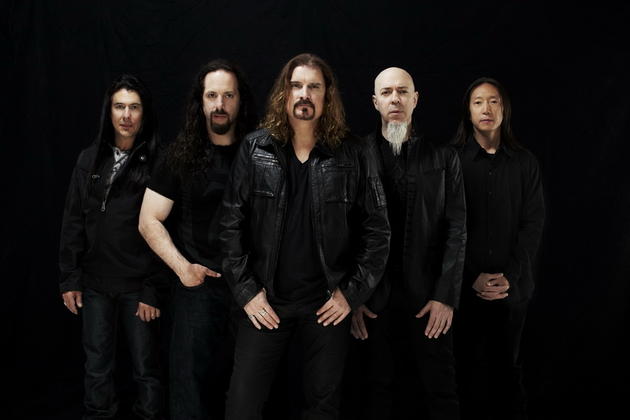
The second half of 2013 sucked. So did the first few months of 2014. I’d rather not get into the reasons why, but needless to say, one of the high points of last year for me was becoming a Progarchist. I say that because being apart of this awesome site has given me the opportunity to listen to music and bands that I otherwise would have never heard, and I have loved it. One of those bands is Dream Theater.

I first heard Dream Theater when my roommate was playing it towards the end of the spring semester of 2013. At first, I didn’t really like it, mainly because of LaBrie’s voice, but I couldn’t complain since I was the one that got my roommate into the “prog” genre in the first place. I didn’t think much of Dream Theater again until I became a Progarchist and received a review copy of their recent self-titled album. All I can say is, WOW. LaBrie’s voice grew on me, and I wondered how I had not discovered this band years earlier. What had I been missing? The technical skill of the musicians astounded me, and I found the vocals haunting. Little did I realize how their lyrics would profoundly touch me over the coming months.

As I said, the last several months haven’t been the best. Most of my family and friends wouldn’t (or don’t) understand it, and that’s ok. Regardless, I found myself drowning in music. I couldn’t/can’t get enough of it. It became an escape for me, and the go to genre when I’m really feeling down seems to be metal. I turned to the heavy metal albums from personal favorites of mine such as Avenged Sevenfold and Disturbed. I connected with the anger and the desperation, especially with Avenged Sevenfold’s 2010 album, Nightmare, featuring former Dream Theater drum god, the great Mike Portnoy (coincidence, I think not). Nightmare is dripping with anger and frustration, as the band struggled to cope with the recent death of their drummer, Jimmy “The Rev” Sullivan, who was probably one of the best metal drummers ever (you don’t believe me? Listen to the albums “Waking the Fallen” and “City of Evil”). I also was drawn to the punky pissiness (pardon my French, as it were) of the bands Three Days Grace and System of a Down. I soaked in the mysterious lyrics and awesome rock of Chevelle, which has been one of my favorite bands for a long time (their latest album, La Gárgola, is fantastic). I found myself being drawn into this world of angry rock, while simultaneously withdrawing from the people around me.

I actually enjoy the loud, obnoxious, sometimes screamy sound produced by many of these bands. It has always been a good release for me. But, something is missing, especially from Disturbed and Avenged Sevenfold. Hope. Hope is missing. The closest thing any of these bands have to hope is Three Days Grace’s song “Never Too Late.” The rest of it focuses on the darkness they think they find themselves in. That’s ok at first, but after a while, it can drag you down, if you let it. I let it.

This is where Dream Theater comes in. I listened to the their latest album, and I heard the song “The Bigger Picture.” I heard these lyrics and was blown away, as corny as it sounds:

Would you talk me off the ledge
Or let me take the fall
Better to try and fail
Then to never try at all

You look but cannot see
Talk but never speak
You live but cannot breathe
See but don’t believe

Wounds that never heal
A heart that cannot feel
A dream that’s all too real
A stare as cold as steel

I’ve listened to the stories of resentment and disdain
I’ve looked into the empty eyes of anger, fear, and shame
I’ve taken blood from every stone
And traveled every road

When I see the distant lights illuminate the night
Then I will know I am home

Those seemingly simple lyrics rocked me. Then I heard “Along for the Ride” :

I can’t stop the world from turning around
Or the pull of the moon on the tide
But I don’t believe that we’re in this alone
I believe we’re along for the ride

Then I heard “Illumination Theory” :

To really feel the joy in life
You must suffer through the pain
When you surrender to the light
You can face the darkest days

If you open up your eyes
And you put your trust in love
On those cold and endless nights
You will never be alone

Passion glows within your heart
Like a furnace burning bright
Until you struggle through the dark
You’ll never know the joy in life
Never know, never to know
You’ll never know
You’ll never know

I couldn’t explain it, but the lyrics spoke to me. I heard “Another Day” off of Images and Words, and that spoke to me as well. These songs offered hope, not despair. They did not wallow in the gloom, but looked forward to the light. Dream Theater may receive flack for not having deep lyrics or cohesive albums, but to me, it doesn’t seem to matter, because the band accomplished what I believe they set out to do. They wanted to reach somebody and share their hope with that person, and it worked. The best part: not once do Dream Theater sacrifice musical talent to get their message across!

Through the cold and endless nights, I felt alone. I had drifted from my faith in God, and I was in a dark place. Then I heard “Illumination Theory” calling me to open my eyes and to put my trust in love, and if I did, I would never be alone. Growing up, I was always told that God is love, and that He is always there for His children. It clicked for me, and I could finally see the light. It was a rough few months (where the only thing I could find purpose in was my studies, which thankfully I did well in), and I had a hard time relating to the world around me. But, Dream Theater was able to touch my soul in a way that the other metal bands couldn’t. Metal, on the whole, is rather devoid of hope and joy, and that is why I see Dream Theater as an anomaly. They don’t play by everyone else’s rules – they write their own, and for that, I am grateful.

It may seem lame that Dream Theater had such a profound effect on me during those dark days, and I really can’t explain why they did. All I know is that I believe I’m along for the ride, and it’s a ride I’m proud to say I’m now happy to be on. Thanks Dream Theater.

William Blake’s & ELP’s “Jerusalem”

[This is an email I just sent out to the Progarchy authors, and they suggested I make the conversation public. I plan on writing a longer piece on the topic soon – Bryan Morey.]


I have a question that is mainly directed at those of you who are British, but maybe those of you who were around in the 70s can answer it as well. During the fall semester, in my Restoration/Romantic Brit Lit class, I read (and wrote a paper on) William Blake’s poem, “Jerusalem.” When writing that paper, I figured a post on ELP’s Jerusalem was in order. I know this poem/song is a traditional British hymn expounding British nationalism, but I’m not exactly sure what emotions or responses the song brings up for a Brit. I know what I think of or feel when I hear the “Star Spangled Banner” or “God Bless America,” and I’m wondering what images or thoughts “Jerusalem” conjures.

I’m also interested in your opinions on why ELP made “Jerusalem” the first song on Brain Salad Surgery. It is hardly a typical rock song. And for those of you who remember when this album came out, what was the general reception to ELP’s version of “Jerusalem?”

Thanks!


Let me know what you all think in the comments.


Album Review: Ian Anderson, “Homo Erraticus”

Tom Emanuel's avatarRevolutions Per Minute

Homo Erraticus

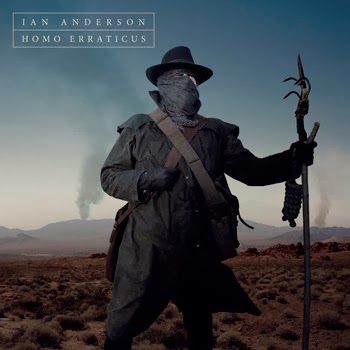
When they go on tour these days, most artists of Ian Anderson’s age might slot in a couple of new songs into their act, but mostly keep to a standard-issue “greatest hits” setlist. Anderson, clever fellow that he is, however, got audiences on his most recent tour to sit through a full hour of new material, by the rather brilliant stratagem of writing an album-length sequel to Thick as a Brick (entitled, creatively, Thick as a Brick 2) and then performing the two records back-to-back. And you know what? It was a really good record – no match for the original, certainly, but without question some of the best music Anderson has made since the late 70s.

This year he’s at it again, offering a sequel to that sequel in the form of Homo Erraticus(2014) (and touring it, in toto, alongside a “Tull’s Greatest Hits” setlist…

View original post 403 more words

B.B. King Live in Joliet, IL

b-b-king

Saturday night (May 31), I had the great pleasure and honor to see the King of the Blues, Mr. B.B. King, live at the Rialto Square Theater in Joliet, Illinois. As soon as I found out that he was going to be doing a concert so close to my house, I knew I had to go and that this would be a once in a lifetime experience. Boy, was I right. At 88 years young, Mr. King still sings with such effortless power, it astounds me. His playing on the guitar is simply incredible. As my Dad described it, B.B. King doesn’t just play the guitar, he makes the guitar sing. He brings out the best that the guitar has in it, in a way that only a select few people, such as Eric Clapton or Buddy Guy, are able to do.

The concert itself was around two and half hours long, but the first hour of that was a sort of “warm-up” by Anthony Gomes and his band. Gomes, originally from Toronto, is a very skilled guitarist, but his style of playing created more “noise” than anything else. He did not have the finesse or style to make the guitar sing and come alive. It was clear that he was trying to show off. The best part of that segment was when he brought Ronnie Baker Brooks onstage to play. Brooks is a Blues musician local to Chicago, and he is the son of Lonnie Brooks, who was rather famous in Blues circles in his own right. Both Ronnie and his father were invited on the stage by Mr. King later on in the show.

After Anthony Gomes and his band were through, the stage hands came out to get everything ready for B.B. King and his band. His band came out first and each member demonstrated their technical skill in a very jazz-like fashion. The band had four guys on trumpets, horns, flutes, saxophones, etc., a drummer, a keyboardist, a guitarist, a bassist, and of course B.B. King. When he came onto the stage, supported and surrounded by rather large security guards, he received a well-deserved standing ovation. Mr. King made his way to his seat, and he was given his guitar and microphone, and the magic began. You could tell that he really enjoys what he does. At 88 years old, there is nothing keeping him touring other than sheer love of the music. He was very thankful to the adoring crowd for their applause and respect, and he made sure to introduce each member of his band.

Once he settled down and began to sing (both vocally and through his guitar), I was simply amazed. His voice had such power that was simply effortless for him. Once he began to play his guitar, it was pure pleasure to listen to. His ability to allow the clear sound of the guitar to take over is incredible. While Gomes was clearly using all sorts of effects and pedals for his guitar, Mr. King kept it simple and just let Lucille do all of the work. As he played his way through several of his hits, such as “Thrill is Gone,” “Rock Me Baby,” and “Why I Sing The Blues,” he continued to stop and share stories and interact with the audience. At one point, he claimed he forgot the lyrics to “Why I Sing the Blues” during the song. While some people in some places might be mad at that, it was clear that most of this crowd had nothing but respect for Mr. King. Just being there seeing him perform was enough. As the man who revolutionized the Blues, and rock and roll, he really is a legend, and he commands respect by his very presence, in a way unlike any other performer I have seen.

After several songs, Mr. King’s security guys came out and handed him stuff (like guitar picks and other trinkets) to throw out to the audience. As a crowd assembled down front, someone held up a poster. Mr. King glanced over at it and made eye contact with one of his security guards, who then went over, took the poster, and brought it to Mr. King for him to sign. I found that totally awesome, that he would take the time to do that at the end of his concert. As everything was winding down, B.B. King said several times how he wished he could stay and play all night, and I really wish he would have. When he got up and made his way off the stage, I realized that I was watching a legend and a living piece of history walk away. It was truly an honor and a privilege to see B.B. King play live, and if any of you ever have the opportunity to see him, I highly recommend doing so. You will not regret it.

th-3

HOME

Steve Perry Finally Returns to Stage

Well, folks, it finally happened. One of the all time greatest voices in rock has returned to the stage, for one of the first times since the mid 90s. No, Steve Perry has not released a new album and he is not on tour (unfortunately). He did, however, join the Eels on stage at a concert, in St. Paul, Minnesota, last night to sing one of their songs, along with “Open Arms” and “Lovin’ Touchin’ Squeezin.” Lyndsey Parker of Yahoo writes,

Steve Perry, one of the most elusive frontmen in rock, hasn’t performed with Journey since 1991, or performed solo concerts since 1995. But don’t stop believin’, Perry fans. The rock icon finally returned to the stage Sunday night… to join indie-rock band the Eels at the 1,000-capacity Fitzgerald Theater in St. Paul, Minn.

Perry showed up at first to sing the Eels’ 2000 cult hit “It’s a Motherf—er,” his voice instantly recognizable and sounding surprisingly strong considering his well-publicized health problems (ongoing arthritis, hip-replacement surgery in 1998, two melanoma-removal surgeries in 2013). Joked Eels leader Mark Everett upon hearing the Fitzgerald audience’s thunderous response: “They don’t applaud like that for me! I guess I gotta disappear for 25 years!”

Considering everything Steve Perry has been through over the past 20 or so years (hip problems, Journey problems, losing his girlfriend to cancer), his voice was rather good. Time has obviously aged it, but he sounds as if he could finally be ready to make an album and possibly do a tour. I certainly hope so.

Check out the video of him at the concert. The audio quality is poor as the video was taken with a cell phone, but it is fairly close up. And a warning about the first song he sings, it is called “It’s a Motherf***er,” so there is some profanity in it. He starts singing “Open Arms” around four minutes.

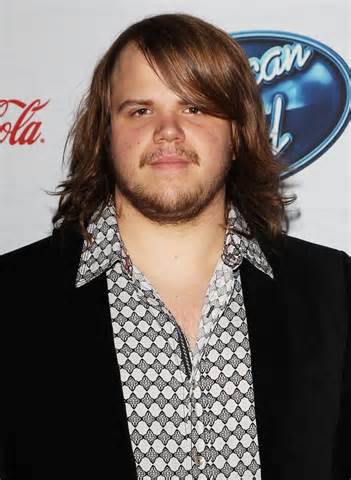
Finally, A Rocker Wins American Idol

th-2

No, I do not watch American Idol, so you can all stop judging me. Yahoo just keeps bombarding me with articles about it, and when I saw a few weeks ago (or was it months? I don’t know anymore) that one of the contestants sang Rush’s “Working Man,” I was pleasantly surprised. Most of the songs on American Idol generally, for lack of a better word, suck, as do many of the singers. So, to see someone sing some proggy music was quite refreshing.

The latest “American Idol” (quotations because how can he be America’s idol when hardly anyone watches the show anymore) is Caleb Johnson, and this guy has a great voice. He really does capture the classic rock sound, and I think he could do really well with his own hard rock band. From what I have read about his performances, and from the few I have watched, he seems to fit in better with a band than he does singing solo.

Caleb Johnson’s newfound fame means two things for the music world, in my opinion. One, it means that rock in general is making a legitimate “comeback” to the mainstream. However, it could also mean that the majority of American Idol’s viewers are older people who grew up with bands like Rush and Led Zeppelin. I certainly hope it means the former, because modern pop music has become atrocious. Long gone are the days when Journey or Al Stewart were considered pop music. Maybe, just maybe, we may see a return to a “rockier” pop. It is definitely possible; just look at the widespread success of Muse.

I was most impressed by Caleb Johnson’s performances of “Working Man” and Led Zeppelin’s “Dazed and Confused.” Watch and see what you think.