Self-Imposed Slavery: Riverside’s ‘Shrine of New Generation Slaves’

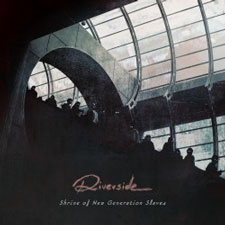
Image    Riverside’s recorded output began with three albums that are collectively known as the Reality Dream Trilogy (‘Out of Myself’, ‘Second Life Syndrome’, and ‘Rapid Eye Movement’).  These are all very good albums, although I wouldn’t call any of them great albums.  However, in 2009, Riverside took a big leap forward with ‘Anno Domini High Definition’ (ADHD).  The music took a noticeably different direction from its three predecessors, and reflected well on the album’s subject matter, i.e. the frenetic pace of modern life and accompanying dissatisfaction that sometimes goes with it.  After a two-and-a-half year wait (with the EP ‘Memories in My Head’ thrown in during the meantime), Riverside has returned with ‘Shrine of New Generation Slaves’ (SONGS).  And once again, they have taken a big – no, huge – leap forward.  Quite simply, this is Riverside’s best album to date.

Conceptually, the album relates to dissatisfaction with modern life, so much so that many people feel that they are slaves to something beyond their control.  Thematically, there are some common threads with various lyrics on SONGS predecessor, ADHD (in particular, the lyrics on the excellent ‘Driven to Destruction’).  Nevertheless, the lyrical (and thus conceptual) content extends beyond that to into areas such as stagnant relationships, the depravity of celebrity culture, surrender to nihilism, and ultimately, redemption.

Musically, the album is just fantastic.  In contrast to its predecessor, it does not feature a barrage of notes and thus gives the listener a little more space to contemplate the lyrics. That being said, I wouldn’t call it dimensionally sparse either, as there is plenty going on.  The music is probably the result of a different approach.  Bass player Mariusz Duda stated in a recent interview:

I had some problems before as I was a little bit tired of the formula that we had in the past and I didn’t want to do another album with complicated structures. I just wanted to finally focus more on the arrangements and the composition. To focus on some details, like a way for playing drums, a way of playing guitar. I really, really wanted to focus simply on songs. Simply songs, ambitious songs should be the foundation of this album. The metal parts I skip and replace them with hard rock elements.

Confident in the chops honed on previous albums, the band has taken more of a big picture approach to the music on this album – an approach that seems to have served them very well.

‘New Generation Slave’ opens up the album, featuring a heavy guitar riff interleaved with verses of Duda’s protagonist lamenting his life and dissatisfaction with it:

Ain’t nothing more to say

Your Honor

Don’t look at me like that

The truth is

I am a free man

But I can’t enjoy my life

The tempo then picks up, and keyboardist Michał Łapaj announces his presence in this piece by getting in touch with his inner Jon Lord (RIP), and repeats this a number of times throughout the album.  The opening track segues into ‘The Depth of Self Delusion’, which is less heavy and a bit slower, but no less good.  The use of acoustic guitar and atmospheric keyboards make their first appearance.  I don’t recall this much use of acoustic guitar on any previous Riverside release, and it’s great to hear them expand their sonic palette in this manner.  The song includes some interesting bass work in the latter half and closes with light acoustic guitar.  The band then blasts into ‘Celebrity Touch’ as Duda offers his critique of our Kardashian-ized culture and the pathological need some have for attention and approval from others:

I can’t afford to be silent

I can’t afford to lose my stand

What matters is to be in view

I am seen therefore I am

I can satisfy my hunger

I can satisfy my thirst

What about the feeling of importance

Now I’ve got my chance

In the center of attention

TV
Glossy magazines

My private life is public

I sell everything

Days are getting shorter

They’ll forget about me soon

So I jump on the bandwagon

With no taboos

The song includes a nice juxtaposition between a heavy riff that accompanies the above lyrics, to a less heavy, more reflective section:

But what if we start to talk

Not only say out loud

What if we sift the babble

From what really counts

What if we disappear

Go deeply underground

What if we hide away

From being stupefied

‘We Got Used to Us’ follows, and is yet another slower track that has somewhat of a Porcupine Tree-like vibe as our protagonist ponders a stagnant and dissatisfying relationship.  This one is pretty emotional.

Next up is the punchy ‘Feel Like Falling’, a song with crossover appeal having upbeat music that belies the lyrics, as our protagonist begins to realize the path he has chosen in life has led him astray and left him wanting to simply give up:

Had allowed that life to drift

For I’ve chosen a different trail

When light fades

I feel like falling into blank space

‘Deprived (Irretrievably Lost Imagination)’ is up next with music that is slower, mellower, and decidedly more melancholy than the previous track.  The music includes a nice, Floyd-ian interlude at about the halfway mark leading into a jazz-infused instrumental section in the latter half featuring some excellent sax playing.   Our protagonists dissatisfaction seems to be so intense at this point that they have gone beyond the mere desire to give up as in ‘Feel Like Falling’ – now we have a full fledged surrender to despair:

Curled up

Deprived
Curled up

Deprived
I shut away

Please don’t call my name

‘Escalator Shrine’ begins as another slower track, but picks up the pace after a few minutes.  Once again we hear the Hammond organ with the Leslie cabinet, some excellent bass playing, and some heavy (but not necessarily metal) guitar.  Like the previous track, it includes another Floyd-ian interlude at about the halfway mark.  Lyrically, ‘Escalator Shrine’ approaches the new generation slavery from more of an intellectual level than an emotional one, as our protagonist channels Albert Camus and the Myth of Sisyphus:

Dragging our feet

Tired and deceived

Slowly moving on

Bracing shaky legs

Against all those wasted years

We roll the boulders of sins

Up a hill of new days

‘Coda’ is the final track on the album, and maybe the most emotionally heavy, even though it is instrumentally the lightest – a single acoustic guitar.  Perhaps our protagonist has read some Epictetus, or maybe the serenity prayer, but it appears he has realized that his happiness and satisfaction with life is ultimately in his control and his own responsibility:

Night outside grows white

I lie faceup in my shell

Open my eyes

Don’t feel like falling into blank space

Indeed, for all of its darkness and all of its sadness, SONGS ends on an upbeat note, as our protagonist casts off his self-imposed chains:

I won’t collapse

I’m set to rise

It’s interesting to note that, although ‘Coda’ is the final track on the album, it is also numbered as Track 1, as is ‘New Generation Slave’.  Indeed, our protagonist has hit the reset button and is starting over.

I simply cannot say enough good about this album.  As thrilled as I was with ADHD, my response to SONGS is in a completely different realm.  Musically, the album has a perfect blend of heavy and light, of complex and simple, emotional and intellectual.  Nothing is overdone, nothing is incomplete.  The lyrics have a strong message, and as dark as the album’s atmosphere, it’s ultimately a message of hope for those that get it.  And if this album is an indication of what we can expect in the future from Riverside, then it’s another strong piece of anecdotal evidence that we are in the midst of a progressive rock golden age heretofore unseen.

Oh, and in case you didn’t get it, I strongly recommend this album 🙂
COMM, The Tangent

Image

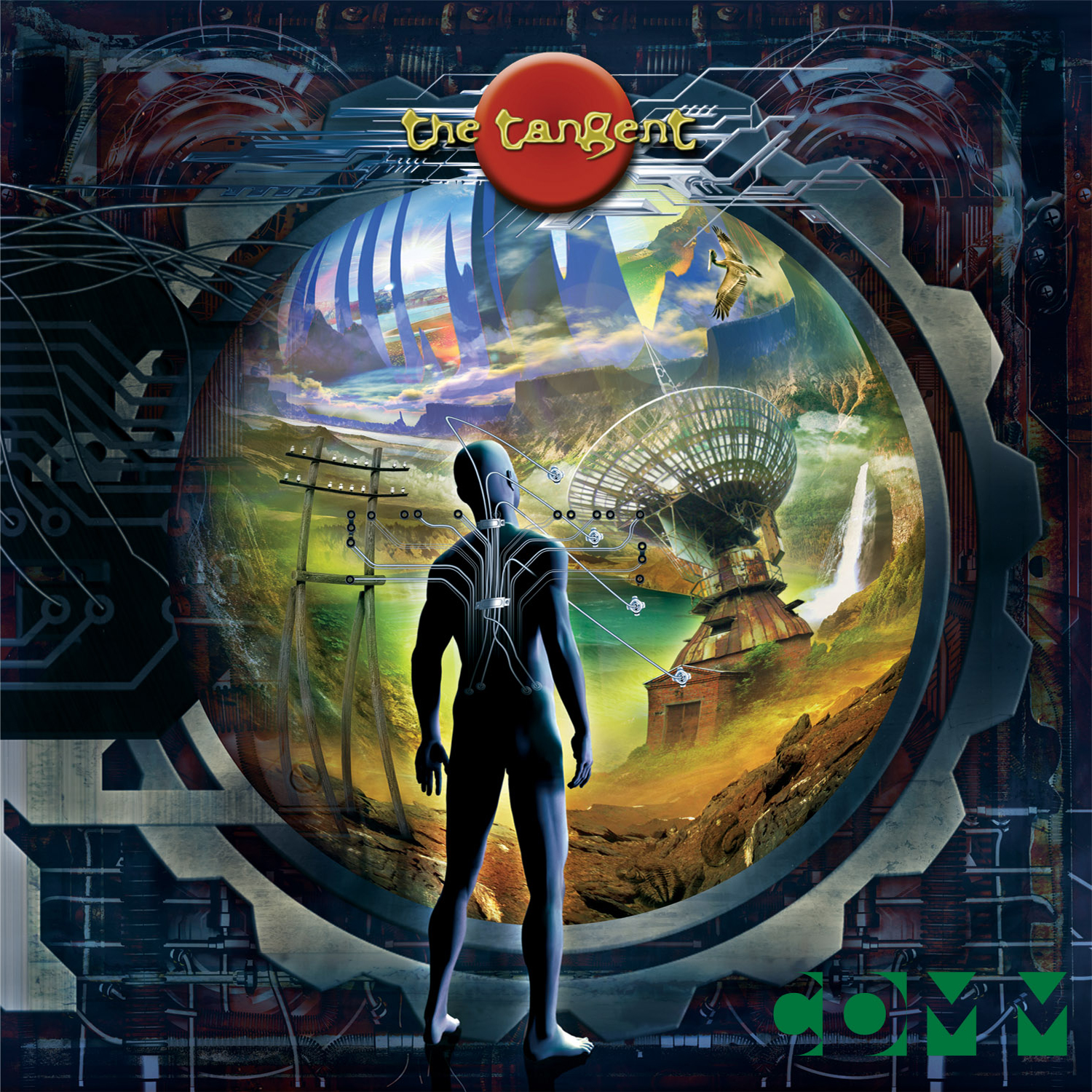
The impact of technology on society seems to be a recurring theme in progressive rock releases of recent times.  Already in this young year, King Bathmat has released ‘The Truth Button’, reviewed by Ian below, which deals with some of the darker aspects of our technological world.  In 2012, Arjen Anthony Luccassen released ‘Lost In The New Real, reviewed earlier by Brad, which follows a protagonist awakened in a distant future as he navigates the reality of a world he does not recognize – while also inviting us to imagine what our world would look like to someone from the past.  And preceding those two, is The Tangent’s COMM from 2011, which explores aspects related to the communications enabled by our digital world. 


COMM opens with sounds that now seems ancient – the squawking of two modems making a connection over a phone line, perhaps for someone’s dialup internet connection or perhaps somebody preparing to send a fax.  This provides the opening for the 20-minute epic ‘The Wiki Man’, which explores both our dependence on the internet and some of the various ways we use it.  Full of witty and biting observations, the piece also includes some incredible keyboards, including a nice, jazzy piano interlude that starts at about the 7:00 minute mark. 


The next two tracks, ‘The Mind’s Eye’ and ‘Shoot Them Down’ are not part of the concept proper, according to this interview with Andy Tillison.  ‘The Minds Eye’ refers to how we see and think of ourselves, and I find this piece more interesting lyrically than musically.  With respect to ‘Shoot Them Down’, it’s the opposite, as it relates to internal British political matters with which I am not familiar, but it does have some excellent guitar work.


‘Tech Support Guy’ returns us to the theme of the album, chronicling a very bad day for the tech support guy Adam.  Adam, it seems, is to be blamed for everything that goes wrong with his company’s network, never mind the fact that he didn’t build the servers, or write the software while the source of the problem is an ocean away.  The lyrics illustrate one of the darker effects of all of the instantaneous communications technology that surrounds us today, mainly the virtual loss of even minimal patience when something goes wrong (as it most certainly will sooner or later) and the impulse to blame someone for the problem with out thinking things through.  ‘Tech Support Guy’ will leave you sympathetic for the thankless tasks performed by all of Adam’s real life counterparts – and might also leave you hoping that the marketing manager’s boss walks into his office during the early moments of the system outage (you’ll understand the reference after you read the lyrics).


It’s in ‘Titanic Calls Carpathia’ that the concept of this album is really driven home.  Clocking in at a bit over sixteen minutes, ‘Titanic Calls Carpathia’ is divided into six sections.  The first two sections deal with two of history’s most famous distress calls, the first being referenced by the title of the piece, the second being Jim Lovell’s call to Houston during the ill-fated Apollo 13.  These two sections lyrically set the theme for ‘Titanic Calls Carpathia’, which can be interpreted as a distress call to our modern culture and society, many members of which who become obsessed with their gadgets and gizmos without realizing or stopping to think that what that obsession is doing to them. 


And now we can all talk across oceans

If we get things sussed we don’t even have to pay!

We get “FREE iTunes songs” when we return an empty bottle

But there’s so much around

That we throw the damn thing away


                        …


Beyond the rusting pylons, beyond the looted homes

People scrabble around for batteries to get more talk time for their phones

We want so much without paying, we forget someone has to make

The things we want for ourselves so we just eat each other’s cake


I’ll leave it to the reader to interpret the meaning of those lyrics for themselves, and indeed they could have different meanings to different people.  Needless to say, that in ‘COMM’, Tillison chooses to look at the dark side of technological advance on everyday lives, focusing on our trivial uses thereof, our loss of perspective resulting from its use, and in general, and how much we have let it spoil us. 


I’m not a technophobe, far from it – I’m very pro-technology.  But the message here is nevertheless something worth pondering.  Technology is a tool, and as such is neither good nor bad.  The various uses and abuses of technology is what makes it one or the other.  It’s great that we can all communicate with one another through avenues such as this blog, Facebook, email, and so on.  And it is certainly incredible that we have access to so much information almost instantaneously.  At the same time, it’s not so good when the use of technology becomes the preoccupation of one’s life to the exclusion of almost everything else.  I guess the real message here is one that applies to much more than just the realms of technology – everything in moderation.

A Progressive Rock Lexicon (or: How to Talk to a Prog Rocker)

In any field of endeavor, there is a certain language used.  One working in the legal field speaks of briefs, appeals, affidavits, and so on.  A football coach may speak of blocking schemes, blitzes, and pass routes.  And one who flies airplanes may speak of instrument flight rules, crosswind landings, air speed, and fuel mixture.


Alas, those that make and listen to music have their own language.  Of course, those of us involved with progressive rock, as listeners, musicians, producers, etc., usually look at the world a little bit differently.  As such, an alternate language has developed.


Thinking about this, I have come up with a list of a few terms to aid conversation between prog rockers, as well as to help those who would like to speak to us on our terms.  Of course, this list is by no means considered to be complete.  Fellow Progarchists and readers of this site, in the interest of smooth communications, you are not only welcome, but are encouraged to suggest additions.  So, without further adieu, and with tongue firmly planted in cheek, I present to you a brief glossary of progressive rock terms. 


Short song – a song under 10:00 minutes in length.


Unusual time signature – 4/4


Normal Time Signature – 7/4, 5/8, 7/8, etc.


Brick – a unit of measurement for determining thickness.


String Section – a group of musicians in an orchestra whose function it is to emulate a Mellotron.


Dancing – ??????


Pretentious (1) – a word used to describe the critics who accuse prog rockers of being pretentious.


Pretentious (2) – the lyrics from this guy:


Excess – ??????


Air Guitar – what rock fans play.


Air Keyboards – what progressive rock fans play.


Air Bass – Well, a lot of us play this too, especially those of us that are into Geddy Lee and Chris Squire.


Bass Guitar – a stringed instrument typically used in the melodic discourse of a progressive rock composition.  Occasionally used as part of the rhythm section.


Robert Moog – the greatest electrical engineer of all time.


Aaron Copland – a guy who used to write music for Emerson, Lake and Palmer.


Alberto Ginastera – See Copland, Aaron.


Female Prog Rocker – a woman that participates in progressive rock, either through listening or performing.  Most frequently found in Continental Europe, the U.K. and Scandinavian countries.  A North American variant of the species exists but is extremely rare.  Another related variant of the species is the prog rock spouse, defined as a wife dragged into the prog rock scene by an overzealous prog-rock loving husband. 


Consuming alcoholic beverages – rearranging your liver to the solid mental grace.


Seed drill – a tool for precisely positioning seeds in the soil, refined by a man who was preemptively named after the band Jethro Tull.


Composing – the art of multiple musicians in a band sitting around arguing for hours, sometimes very intensely, over whether the next bar is to be in F or F#.


Corporate Attorney – see video:


(it is rumored that they also did some prog rock in the 70’s)


1979, 2112, and the Making of a World View

This post has been floating around in my head for a while.  Being reminded that today, 21-12, is International Rush Day, what better day to go ahead and write it?

The year 1979 was a defining year for yours truly.  After my parents split up in 1978, my mother decided to pack up my sister and I and move us across the country.  Thus, as the clock turned over from 1978 to 1979, I was somewhere between my former home of Lewiston, Idaho, and my soon-to-be new home of Lexington, Kentucky.   On June 23rd of that same year, I became a life-long progressive rock fan at my first Yes concert (I would also see Rush on tour later that year).  Two other pivotal occurrences that year were my purchase of Rush’s seminal 2112, and a number of long discussions with my maternal grandmother.  My listening to 2112 and those discussions with my grandmother are related, and played a big part in forming part of my world view.

At this point, a little background on my mother’s family is in order.  My mother and her family hail from Germany – in fact, what was once known as East Germany.  My mother was born in Berlin during World War II, and when the shooting stopped, her family was in the part of Germany that became East Germany, which fell under the domination of a tyrannical government.  My grandfather, a literature professor, was occasionally outspoken – a quality that is fraught with danger in a country ruled by an oppressive government.  In 1953, he was warned by somebody (who I have never been able to find out) that he had better get the hell out of there.  He gathered his family, my mother and grandmother included, and boarded a train for West Berlin.  Had they been caught, my grandfather, and possibly his whole family, would have been shot by the authorities.  Luckily they made it to West Berlin, connected with others dedicated to helping those who wanted to escape the tyranny of East Germany, and were airlifted to West Germany.  They settled in Bonn, where they remained until coming to the U.S. in 1959.

Although the dormant prog gene wasn’t fully activated until that fateful night in June when I saw Yes, I had unknowingly during the spring of that year already purchased my first prog album, 2112.   I just thought it was a cool heavy metal/hard rock album by some guys that wanted to sing about something other than chicks, booze, drugs, and so on.  Certainly, the suite that gave the album its title got my attention, and not just the music but the lyrics.  More than a few times I sat in my room listening to side 1, album gatefold open so I could follow along with the lyrics, which told a fantastic story of a dystopian science fiction universe in which a guy had found a guitar, realized its beauty, and presented his discovery to the authorities only to be slapped down hard by them for deviating from “the plan.”  It seemed rather harsh and unfair to me.  Upon the first few listens, I did not realize that there was a deeper meaning to the story.

In addition to listening to 2112, I also had a number of discussions with my grandmother during the spring of 1979.  I hadn’t seen her for over 12 years prior to us moving to Lexington, and was only a toddler when we had initially moved out west.  There was a lot of catching up to do.  During our discussions, I asked my grandmother numerous questions about her previous life in Germany.  Her answers painted in my mind a picture of life under both the Nazis and later the Communists.  I learned of a society where certain books could not be read or published … a society where certain music could not be played … one in which certain ideas were not to be voiced publicly or written down.  Moreover, I learned that one could go to jail for reading or writing the wrong types of books, for listening to the wrong kind of music, and for expressing ideas that were not approved by the powers that be.  Freedom of movement was only a dream – you were told where you could and could not live.  And you certainly couldn’t leave the country any time you want.  Trying to do so without authorization could result in prison or death.  Having grown up in a mostly free country, I was stunned at the realization that countries like East Germany, the USSR, and others that restricted people in this way existed.  I knew of these countries and had a basic idea of their systems before that, but I had never fully realized how much the freedom of those that lived within them was restricted.  It wasn’t just on the big things, it was right down to a lot of very small things.

Interleaved with these discussions were my repeated listens to 2112.  At some point during this period, I started to make the connection between what was told to me by my grandmother and by the lyrics of 2112.  It began to dawn on my that 2112 wasn’t just a science fiction story set in some distant future, but was also an allegory for something that was very real in the present.  They may have had apparatchiks in politburos rather than priests in temples, but these distinctions were without difference.  Such tyranny and oppression that could prohibit an individual from doing something as seemingly innocent as playing a guitar could and did exist.  Governments that were threatened by the mere expression of certain ideas were the stuff of reality, not just lyrics for a side long rock suite set in a sci-fi future.  People that would oppress, enslave, and even kill others for merely refusing to go along with “the plan” were as much a part of the present day as they had been in the past and would certainly be in the future.  In effect, what Neal Peart was telling me through the lyrics of 2112 was the same thing that my grandmother was telling me during our discussions.

The impression that this album and the education from my grandmother left on me has never faded.  It informed my thinking during much of my time in the Navy, during the 1980’s as the Cold War reached its final phase.  I remember thinking about it again one night when I came home from work a year after leaving the Navy, turning on my TV set, and seeing that the Berlin Wall had come down.  And to this day the impression is as strong as it ever was.  Freedom is a precious thing, something never to be taken for granted and something that should be fought for at any and all costs.  Governments that oppress their citizens, that refuse to let them express themselves, be it with a musical instrument, ideas spoken or written, or their desire to move about, are pure evil and are not to be respected or tolerated.  Freedom, while often times hard, is a precious thing and something that should never be taken for granted.  It’s something for which free people should fight (metaphorically if able, literally if necessary), and oppressed people should fight to achieve or regain.  As for those who informed The Planets of the Solar Federation that they had “assumed control”, I hope they were the good guys, the forces of freedom.

This post is dedicated to those that enlightened me on such things, Rush, Neal Peart, and my grandmother, Ingeborg Stapf.  Rest in peace, Oma.

Some 2012 Thoughts

Tardis-in-Space-tardis-6289809-1600-1131Looking at some of the other ‘Best of 2012’ posts here, you have to wonder how some of the other Progarchists do it.  That is, how do they find the time to listen to and fully absorb that much music (and particularly prog)?  Not to be snobby or anything, but listening to prog is not a passive thing, it takes an active effort by the listener to fully “get it”.  And yet when I read through these posts, I can conclude that my fellow Progarchists are A) listening to a lot of prog, and B) “getting it.”  With the other obligations they have in their lives – families, careers, other hobbies, other blogs – it would seem like it would take a superhuman effort to fully absorb all of that music. And yet clearly they do just that.

Alas, I think I’ve figured out their secret – most, if not all of the other Prograrchists are in possession of an ERTEM – short for “Einsteinian Relativistic Time Expansion Machine.”  In short, the ERTEM is a machine about the size of a booth or a very small room.  A person may enter his ERTEM, shut the door, and emerge in what appears to be only a few minutes to an outside observer.  But aaaah, inside the ERTEM, time expands, and the occupant therein can spend several hours of “inside time.”  Thus, the Progarchist may receive a new CD or a new album in digital format, step inside his ERTEM, and indulge in hours of listening pleasure, until they fully “grok” (apologies to Robert Heinlein) their most recent prog purchase.  They may even be smuggling their laptops in their to write some of their long, detailed, and typically excellent reviews – the type that usually send me lurching toward my computer to make yet another purchase.  Continue reading “Some 2012 Thoughts”

Drinking From the Firehose – Some Quick Reviews

drink_from_the_firehose

Like many of you, I “suffer” from the common “problem” that afflicts those of us who are prog fans in this, the Second Golden Age of Prog – mainly, that there is just so much good prog out there that nobody could possibly listen to it all.  In short, it’s like trying to drink from a firehouse.

Happily, this “problem” has been exacerbated for me since joining this site, as I have had the good fortune to be able to borrow a number of albums I had yet to hear.  As such, I’m going to write a few quick reviews (which are more like first impressions).  Please pardon the lack of detail, but do remember these reviews are worth every penny you paid me to write them ;).

The Flower Kings, Banks of Eden:  This is my second foray into Flower Kings territory, the first being ‘Space Revolver’ some time ago.  I thought the latter album was quite good, and ‘Banks of Eden’ only reinforced my good impression of these guys.  Even if there were no other good songs on the album, the hippy-dippy-trippy epic ‘Numbers’ that opens the show makes the price of admission worth it.  Luckily, there are other good songs, and thus I would definitely give this album a thumbs up.

Continue reading “Drinking From the Firehose – Some Quick Reviews”

A Couple of Links

Over at In The Studio.net, there is an interview with Yes on the occasion of the 40th anniversary of Close to the Edge.  It’s about 20 minutes long and well worth a listen.  Hat tip to Paul Watson who previously posted about this on the BBT Facebook page.

On YouTube, I stumbled across an interview with Neal Peart regarding Clockwork Angels, and thought it would be a good companion to the post below regarding the same album.  Its about 43 minutes in length, but like almost any interview with Peart, you can be sure it’s interesting.

Sins of the Father

Ok, readers, I have a confession to make.  I have been indoctrinating my two-and-a-half year old son into prog fandom.  In fact, on my iPhone, I have a playlist for this very purpose.  The playlist has the oh-so subtle title of “Subversive Indoctrination to Prog”.  When I give my son his nightly bath, music from this playlist is usually playing in the background.  In fact, sometimes I even time his bath using music from this playlist.  Tonight’s bath was rather long – one Underfall Yard and a Firth of Fifth, to be precise.

Am I doing the right thing?  I wonder.  This could end up causing my son to never be able to sit at the ‘cool kids’ lunch table.  And then there is the problem of the odd time signatures being imprinted into his impressionable little brain.  Will it affect his ability to dance – and could this in turn affect his ability to find a mate later on in life?  Will he be trying (awkwardly) to dance to 7/4 time while a potential girlfriend is gracefully moving to 4/4 time?

On the other hand, as a concerned parent, how can I not do something like this?  Should he really be turned loose in the wasteland of pop music of the present and the future as it continues its descent?  Should some future Lady GaGa, some future Jay-Z, or some future Justin Bieber be allowed to shave points off of his IQ (if you’ll pardon the neo-prog pun).  And living here in Texas, I could be faced with a prog parent’s worst nightmare – that he will spend his 21st birthday line dancing in a bar that exclusively plays country music.  The horror … the horror.

In the end, I think I must continue.  It’s a parent’s job to guide their offspring, is it not?

Son, if you are reading this someday in the future, I apologize for short-circuiting your dancing ability and whatever distress that may cause you in the dating game.  May I suggest you search for a mate that doesn’t like dancing, as I found with your mother?  Please know though, my son, I did this with the best of intentions, trying to keep you from polluting your musical taste with “music” created by record company executives catering to the lowest common denominator in pursuit of the highest possible profit.  Art should be more than that.  As Neal Peart once wrote (and you will know him soon), “glittering prizes and endless compromises shatter the illusion of integrity.”   As your father, I’m going to do my best to keep your integrity intact.

Love,

Dad

🙂

Dancing About Architecture

Some of you reading this might be old enough to remember that the actor Steve Martin also made a name for himself as a stand-up comic, releasing two albums of stand-up in the late 1970’s.  On one of those albums, Martin remarked that “talking about music is like dancing about architecture.”  Martin may indeed be a wild and crazy guy, but I must respectfully disagree with him.  After all, what would we be doing here on a blog dedicated to progressive rock if we agreed with him?  Are we not here to have a conversation about prog (and other music as well)?  The only difference is that our conversation here is not in real time, but instead is conducted through the written word.  This brings me to the main topic of this post: books about prog.

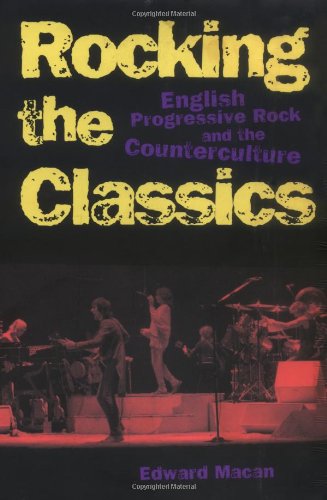
My hands-down favorite progressive rock book is ‘Rocking the Classics’ by Edward Macan.  In my opinion, this is a must-read for any dedicated progressive rock fan.  Make no mistake about it though, this is not a fan-boy book, this is a serious critical study of prog.

What is best about Macan’s book is that he treats progressive rock as serious art – in other words, as it should be.  Macan takes an academic point of view in his study of prog, and views it from several different angles – the music itself, the lyrics, the visuals (both album artwork as well as live presentation), and the culture that gave rise to the initial wave of prog.  A more in-depth study of four different works of prog – ELP’s Tarkus, Yes’ Close to the Edge, Genesis’ Firth of Fifth, and Pink Floyd’s Wish You Were Here (the entire album) is also provided.

Finally, Macan delves into related styles, the sociology of prog’s fan base, the critical reception of prog, and closes with a discussion of prog after 1976, as the first wave subsided.  I particularly enjoyed his dissecting of the critics of prog, as I always found it ironic that they, of all people, were labeling prog as pretentious.  As the old saying goes, projection ain’t just a river in Egypt … (it seems I might have garbled the translation here).

My only quibble is that Macan seems to believe that prog had played itself out following the advent of Discipline-era King Crimson and the neo-prog movement of the 80’s.  Perhaps he can be forgiven though, since the internet was relatively new then, and thus like many of us, he was not aware that we were on the cusp of a second and more enduring golden age of prog.  All things considered though, I cannot recommend this book strongly enough to those of you who haven’t read it.

On a different level, there is ‘The Progressive Rock Files’ by Jerry Lucky.  This book is more of a mini-encyclopedia of prog up to the time of its publication (in the case of my copy, 1998, when the fourth edition was published).  Lucky’s book includes a history, discussion of the definition of prog, a discussion of the critics, and then brings the reader up to date (or at least up to 1998!) with the goings-on of prog.  That chapter, along with the listing of prog bands that follows, was the first realization for me that prog wasn’t dead but was actually alive and thriving, if one knew where to look.

Bill Martin’s ‘Music of Yes’ is a book with which I have a love-hate relationship.  The love part is the analysis of Yes music, with its particular focus on ‘the main sequence’ of Yes – ‘The Yes Album’ through ‘Going for the One’.  This is the period where Yes really made their name as one of the leading lights of the first golden age of prog, and thus Martin’s focus on this area is well justified.  The hate part?  Martin far too often lets his own politics work its way into the discussion, and it becomes very annoying.  Agree or disagree with his views, it seems that their insertion into the discussion is often contrived, and where it occurs, it really takes away from the discussion.

Finally (if you’ve made it this far), there is ‘Pink Floyd and Philosophy’.  I am a sucker for the pop culture and philosophy books from two different publishers (Wiley and Open Court Books) – particularly when it a band like Pink Floyd is the focal point (As a quick aside, there is a ‘Rush and Philosophy’ out there now – has anyone picked up a copy yet?).  For those unfamiliar with these books, they are divided into a series of essays, usually about 15-20 or so, by different authors.  While not every essay is a good one, many are more than worth the time and will make you do the same thing that listening to prog does – think.  Among the essays included ‘Pink Floyd and Philosophy’ includes a series on the topic of alienation – a theme that runs through the lyrics of most of Pink Floyd’s work in the 70’s.  That section alone makes it well worth the price of admission.

There are a number of other prog books out there that I haven’t read, including the aforementioned ‘Rush and Philosophy’, ‘Progressive Rock Reconsidered’, and “Beyond and Before – Progressive Rock since the 1960’s.  If any of you reading this have suggestions, you would be doing many of us a great service if you were to further this discussion in the comments.

Did you make it this far?  If so, let’s go put some Frank Lloyd Wright on the stereo and hit the dance floor.