Bulls on Parade: Rage Against the Machine

Tha triggers cold empty ya purse…

They rally ’round tha family!

With a pocket full of shells…

Album Review: IZZ — Don’t Panic @izzmusic

91y2jie0ngl._sl1500_

It’s hard to resist the proggy captatio benevolentiae of the first two tracks on IZZ’s new album, Don’t Panic. Their unmistakable first impression is that the groovy bass guitar sounds exactly like Chris Squire playing for Yes in the 1970s. It’s so good, you’re guaranteed to smile. Trust me!

The multi-vocalist singing is terrific too, and also quite reminiscent of Yes. And, I don’t know whether to attribute it to Anmarie or Laura (or both), but there is a vocal timbre that reminds me of Neko Case singing with The New Pornographers. It’s really fantastic.

“Don’t Panic,” as the first track and as the title track, places front and center the famous phrase from The Hitchhiker’s Guide to the Galaxy. Very, very cool, and also gracing the prog proceedings with the right dose of whimsy.

Track two, “42,” invokes the number that is famously the Answer to the Ultimate Question of Life, the Universe, and Everything (as we also learned from Douglas Adams). Well, the band didn’t give us a 42-minute song, but they pushed it past 18 minutes; so, how can you not help liking this album, only two tracks in?

Wait, it gets even better. While “Six String Theory” gives us yet more Yes nostalgia, by way of a Steve Howe-worthy (early Yes) acoustic solo guitar piece, suddenly things take an interesting turn with track four, “Moment of Inertia.” There are some nice bits in that track that immediately make you think of King Crimson, but eventually the track becomes what I think is IZZ being very strongly original.

Even better, the album ends with with “Age of Stars,” which also vocally invokes the pleasurable “Don’t Panic” life hack catchphrase yet again, as the album rides out to a perfect conclusion.

Thus, while the album’s first three tracks make things completely irresistible for lovers of early Yes, the best part is when IZZ close out the album with two tracks that present their inimitable selves in all their musical fullness.

It’s a total prog thrill ride, and immensely satisfying. You get the best of both worlds: prog nostalgia about yesterdays (see what I did there?), and yet also a remarkably clever and original musical creation for the present day. Well done, IZZ, and thank you for a first class musical experience.

Track Listing:

1. Don’t Panic
2. 42
3. Six String Theory
4. Moment of Inertia
5. Age of Stars

IZZ:

Paul Bremner: Electric & Acoustic Guitars
Anmarie Byrnes: Vocals
Brian Coralian: Electronic & Acoustic Drums and Percussion
Greg DiMiceli: Acoustic Drums and Percussion
John Galgano: Bass Guitar, Electric & Acoustic Guitar, Vocals
Tom Galgano: Keyboards, Vocals
Laura Meade: Vocals

Album Review: IHLO — Union

a3343889165_10

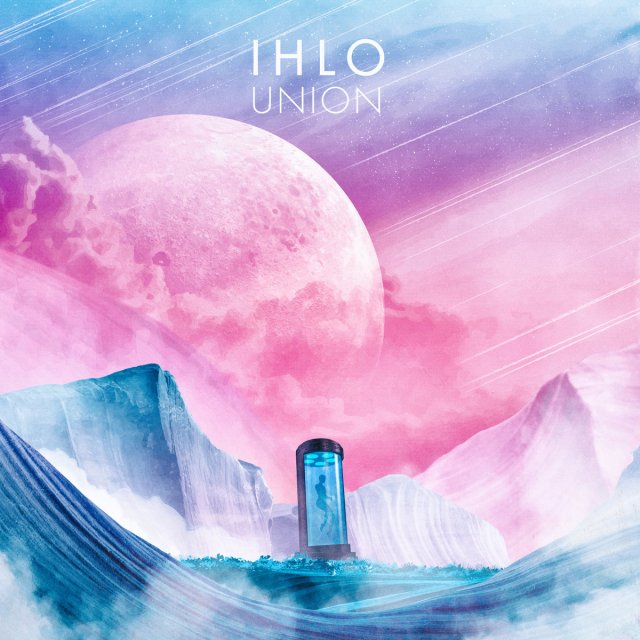
Out today is this stunning new release from UK prog metal band IHLO — Union.

Take a long look at that fantastic album cover. With high quality artwork like that, clearly the band values both attention to detail, as well as the art of the album as a coherent artistic whole.

The album has a notably excellent sound to it. Phil Monro did an amazing job on guitars, production, and mix. Andy Robison contributes the top-notch vocals and also the distinctive sound design. Clark McMenemy lays a solid foundation with crisp drum production.

The first five tracks draw you into a unique sonic universe. Surprisingly, the album takes a sharp turn upwards to undeniable prog excellence in its final two tracks, which are the very best on the album. The first five take time to grow on you, but the last two tracks are knockouts from the get-go.

“Parhelion” (7:26) is arguably the standout track, and if you need convincing that this album is worth your time and effort, this is your go-to track. Then again, the closing ambient prog epic of “Coalescence” (15:14) is a fine summation of this band’s widest capabilities. If you are the patient sort, you can enter through that long and winding prog path.

The promise displayed on this album is evident. If the track listing corresponds to the historical order of recording, then the last two tracks hint strongly that the best from IHLO is still to come. We look forward to future releases, while enjoying this delight that we already have at hand.

Brass Camel: Progressive Funk Monster Rocking The Columbia on June 1

61880988_10161711523200257_2573516834368126976_o

Daniel James’ Brass CamelRead the review of their 2018 Concert of the Year

Canada: Northern Bastion of Heavy Metal

As AMG writes in their review of Riot City’s new disc, “The 80s were the Golden Age of metal. A Pax Romana if you will, and Riot City aim to bring that glorious era back.”

Proof of those glory days, and of their continued existence among the heavy metal Rebel Alliance, is contained in every track of Riot City’s astonishing creation, Burn the Night. So, you better nab it, pronto.

But what AMG fails to note in their otherwise excellent review is that Riot City is from Canada. Location? The mighty West: Calgary, Alberta. And as the band proudly states up-front on Bandcamp: “Screaming Heavy Metal from Canada, recommended for fans of Judas Priest, steel, spikes and leather!

The only flaw I can detect as a critical reviewer lies not in the music, but only in the missing Oxford comma. Oh well, I guess it got burned up in the night.

Indeed, Canada remains a northern bastion of heavy metal. There is no need for me to point out the origin and locale of Rush, is there? In any case, the ongoing ferment yields its riotous rewards, and abundant proof is around for those willing to look for it.

Enjoy Riot City, yes, but be sure not to miss Smoulder’s album, Times of Obscene Evil and Wild Daring, also out this year. It’s an epic combo of doom metal and power metal. Highly recommended, as AMG also affirms. The album art alone should draw you in, never to return for days.

Smoulder began in Calgary back in 2013, and is now based in Toronto. Their sword-and-sorcery narratives are perfectly paired with their chosen musical style. Mark my words, these two bands are headed for my 2019 Top Ten list.

Of course, Canada has no monopoly on the classic heavy metal sound. Also out this year are the truly superb releases from Black Sites (Exile)* and Spirit Adrift (Divided by Darkness)* and Battle Beast (No More Hollywood Endings) and Soen (Lotus).

But that’s why I am content to simply identify Canada as the northern bastion of a classic metal Night’s Watch. Everyone else has their own indispensable international contributions to make. Keep it up, y’all.

Nonetheless I am happy to report that Canada is more than pulling its weight, thanks to the two great bands I have named above. And if you want a third band, how about Unleash the Archers? If you haven’t got Apex yet, add it to your shopping list. Can’t wait to see what they release next.

In the meantime, I have just given you a solid half-dozen of recommendations. So, keep on rockin’ in the free world. Scandinavia is indisputably a northern bastion. But Canada also has your northern flank secure.

*Note for prog lovers: Don’t miss the exceptional musicality on the tracks “Feral Child” and “Cold City” by Black Sites on Exile, and on “Angel and Abyss” by Spirit Adrift on Divided by Darkness. The entire albums are excellent, but these just may be the right introductory tracks for pulling you all the way in.

Ancient Empire has a new album on the horizon

Here’s the preview, “On the Horizon,” taken from the upcoming album Wings of the Fallen, out this summer via Stormspell Records.

NWOTHM = New Wave of Traditional Heavy Metal.

Stormspell Records’ series NWOTHM Full Albums aims to gather the best of Old School Heavy Metal albums by the bands of the new generation. If you like NWOTHM, buy the albums.

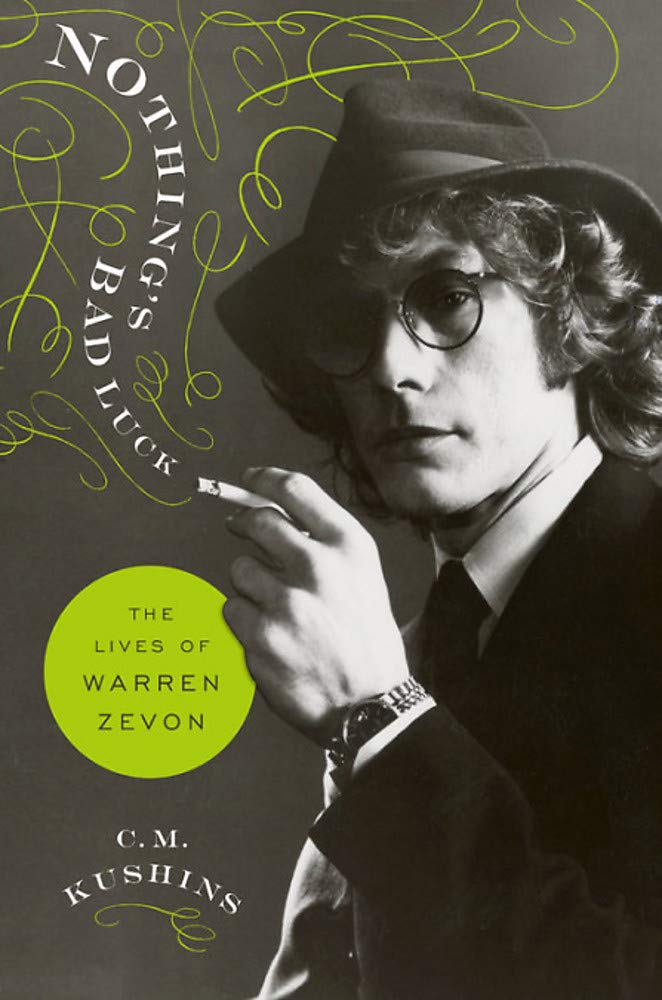
Nothing’s Bad Luck: The Lives of Warren Zevon

It’s essential to read the book review by Joseph Bottum:

Warren Zevon was a minor genius, ridden too hard by his demons to make the move to major genius of the pop-music genres in which he worked. His greatest achievement may be that he was himself and only himself, an artist who had only the smallest of gaps between the on-stage persona he constructed and the off-stage person he lived. In lyric after lyric, he produced songs that could only be by one writer. In performance after performance, he delivered work that could only be by one singer. In episode after episode, he lived a life that could only be by one person—the genius and the disaster that was Warren Zevon.

BBT: Grand Tour (released on May 17th 2019)

Album Review: Amorphis — Queen of Time

cover

I finally made time to explore this acclaimed album from 2018. And it has quickly become one of my very favorite listens over the past few weeks. Yes, indeed, it’s an absolutely superb metal album.

In 2018, it was chosen as Record of the Month for May 2018 by AMG (full review here), and also #5 on the list of Best Albums of 2018 by MoMM (full review here). So, now it’s official over here at Progarchy: I add my voice to the chorus of praise.

My entry point was the amazing song “Amongst Stars,” which features Anneke van Giersbergen joining the vocals. After I had listened to that magical song a half dozen times, I was totally hooked. And I soon downloaded the rest of the album, thus beginning a happy journey of wondrous audio exploration.

If you are skeptical about an album full of death metal vocals and growls integrated into proggy metal that also has stunning clean vocals, this is the album to convert you to the expanded artistic possibilities opened up that sonic palette. For me, it was “Heart of the Giant” that demonstrated what only death metal vocals can effectively accomplish in tandem with epic riffs and big choir arrangements. This is an invigorating song to revel in.

But every song is exciting in its own way. An infusion of world music modalities and folk music influences give a distinctive edge to practically every song on the album. You’ll hear Celtic, Middle Eastern, and much more. But that’s the sharp edge of a very heavy musical broadsword wielded by the band. With finesse, its audio slicing motions frequently deploy virtuoso guitar solos and spacey synth keyboard solos.

Every song is indisputably upper echelon, but we will each have our favorites. In addition to the two I already mentioned above, I would name “Daughter of Hate” (thanks to its unexpectedly effective saxophone solos),  “Wrong Direction,” and then the two bonus tracks, which seem to be most accessible to prog lovers (“As Mountain Crumble” and “Brother and Sister”). But who am I kidding, I also look forward to the powerful one-two punch of the openers “The Bee” and “Message and Amber.” In truth, every track thrills as it comes on over your speakers.

Now that this album has taken pride of place on my daily playlist, I am really looking forward to seeing Amorphis when they visit here on tour with Delain and Anneke later this year.

The Unpopularity of Jazz: On the 90s Shift

Incredible interview by Rachel Olding with Branford Marsalis. The conclusion:

The more jazz has changed, the more Marsalis has gravitated towards classical music. It’s the reason he moved his young family to Durham, an artistic city in North Carolina, 10 years ago; the New York scene wasn’t inspiring anymore. (He’d also had enough of “New York living”, of five-year-olds calling adults by their first name).

Today’s jazz musicians are too mathematical and wonkish, he says. Jazz clubs are half empty, only frequented by other musicians who appreciate each other’s showmanship. Listeners need music degrees to understand what they’re playing. The music has become rigid. Improvisation is mostly over-rehearsed regurgitation.

“[I’m often asked] the question, ‘Jazz is so unpopular, why do you think that is?’ And the answer is simple: the musicians suck,” he says with typical subtlety.

He says the shift started in the ’90s and I can’t help but think the Marsalis family was not immune. While they still wield incredible clout, nothing can compare to the two decades in which Wynton and his siblings seemed to rule the jazz universe. In 2003, the music critic David Hajdu stumbled upon Wynton playing as a sideman with a band in a near-empty jazz club in New York, and wrote a piece in the Atlantic (tartly titled “Wynton’s Blues”) hypothesising that Wynton’s stifling orthodoxy and nostalgia was partly to blame for both his and jazz’s dwindling relevance.

It’s nevertheless hard to see that Branford Marsalis is slowing down in any way. Not in the flood of opinions he wants to impart. Nor in his commitment to improving music or lifting standards. Not in the pace and scope of his work, nor with that bottle of red wine. And especially not with the tempo of Thelonius Monk.

Help us, O prog rock, you’re our only hope…