“I think it’s slightly more complex with Porcupine Tree, which can’t really happen without me instigating it and being the main writer and director of that situation — so, that’s more problematic,” Wilson added. “I don’t have time in my life to do that, and what I’m doing now. So, I guess I have made the decision, right now, to concentrate on the solo career. But that’s not to say that the band has broken up or anything like that. It’s always conceivable that we could get back together in a year or five years, or 10 years. I really can’t say. There are no plans at the moment.”
To paraphrase Wikipedia…a “perfect storm” is a term that can be described as a confluence of different related phenomena that combine to create what can be referred to as the “perfect situation” to generate an event (its first use was allegedly to describe a ‘perfect storm’ of applause).
And yes, things came together pretty nicely on Thursday night.
I have to admit I was a reluctant attendee, not because I don’t like Riverside, far from it. Unfortunately I had undergone a seriously bad day at work, leading to the cancellation of my holiday booked for the next day 😦 I also had a dose of ‘man-flu’. So I didn’t feel that inclined to trudge for an hour plus up to Islington; drink gratuitously (polish vodka maybe?) and get home well after midnight.
Things started getting better as travel connections were good and we (Nigel and I) managed to get to the venue fairly early and caught half of the set of the first of the three bands, Dianoya. Hailing from Poland, like Riverside, they were an engaging and enthusiastic Progressive Metal band and, as the set continued, there were various appreciative nods from some of the ‘older’ members of the audience (me included).
I have always liked the Academy, quite small but never a crush. Even a shorty like me can usually get quite close and get a good view. The acoustics are impressive which is important for an audiophile like me. The bar(s) are very ‘adjacent’ and I like the industrial ‘feel’…the ceiling is full of open girders and ducts; wires and lights. It’s a pretty ‘hip’ place and is used as a late night disco for the ‘younger’ folks after all we oldies are tucked up in our beds. At this point I should also name in dispatches the lighting crew, who added to the ambience considerably with a subtle yet creative lighting display.
Two pain killers taken earlier followed by the quick sloshing down of an (incredibly expensive) pint of lager had given me a renewed vigour. And there was not much waiting required for the second act, Jolly, who herald from the great New York City. They produced a powerful cocktail of heavy, experimental, art rock characterised by slow openings, fast bass lines and high quality guitar playing. They aroused my curiosity and I was quite intrigued to find out more. But please forgive me when I say their Facebook band profile is a load of pretentious twaddle; either that or it’s a very long-winded ‘p*ss take in Spinal Tap style. Nevertheless a strong support act.
A move towards the back (to meet another friend) put me in the perfect listening position, at the apex of the classic ‘audio-triangle’, as Riverside took the stage. This Polish progressive rock band led by the virtuoso bassist and singer, Mariusz Duda, have just released their new album, ‘Shrine of New Generation Slaves’ (SONGS), intelligently reviewed recently by my fellow Progarchists, Nick and Erik here:
The band has been gaining popularity following their critically acclaimed 4th album, Anno Domini High Definition (ADHD) released in 2009. Having gradually veered towards a more classic rock sound from their predominantly metal roots, Riverside have been compared with both Tool and Porcupine Tree. Lyrically far less disturbing than Tool they still retain a heavy guitar riff style and the inclusion of powerful keyboards and potent bass lines give the band an added depth, complexity and uniqueness to their sound.
Mariusz Duda at the O2 Islington
Tonight’s set focussed on the new album and ADHD.
Having just been to one of my Top 10 gigs of all time (Steve Wilson at the Royal Festival Hall, London), how lucky I was to see another band at the peak of their powers. Displaying outstanding musicianship; exemplary timing and an almost telepathic understanding, Riverside are seriously talented. Understated guitar (from a scary looking lead!); extraordinary depth to the keyboards; complex bass patterns weaved by spider-like hands and beautifully sympathetic drumming. Virtually faultless, the only (small) downside was Mariusz’s voice, slightly let down by the flu (I read subsequently that their Sheffield gig the next day had to be cancelled).
There was no showboating; no unnecessary solos; no ego trips displayed. Professional to the last, Riverside were clearly enjoying their evening and showed a genuine desire to engage the audience. And this was reciprocated. How refreshing to see people of all ages. And clearly popular in their home country with plenty of London’s Polish community turning up. Riverside have clearly broken down that difficult barrier that exists for so many Progressive Rock bands…this is not just music for follicly challenged over 50s.
Having been impressed with their last 4 releases, I can say, indubitably, that they sound better live than on record, delivering an electrifying power that is beyond a recorded medium.
Great gigs are not just about the band, they are about the whole experience…the audience; the venue; the lighting; the acoustics.; the beer, absolutely everything ! All these factors combined beautifully to create the ‘Perfect Storm’ and at £19 a ticket it was a steal.
To those interested here is the set-list, with my highlights being tracks 2, 4 and 8:
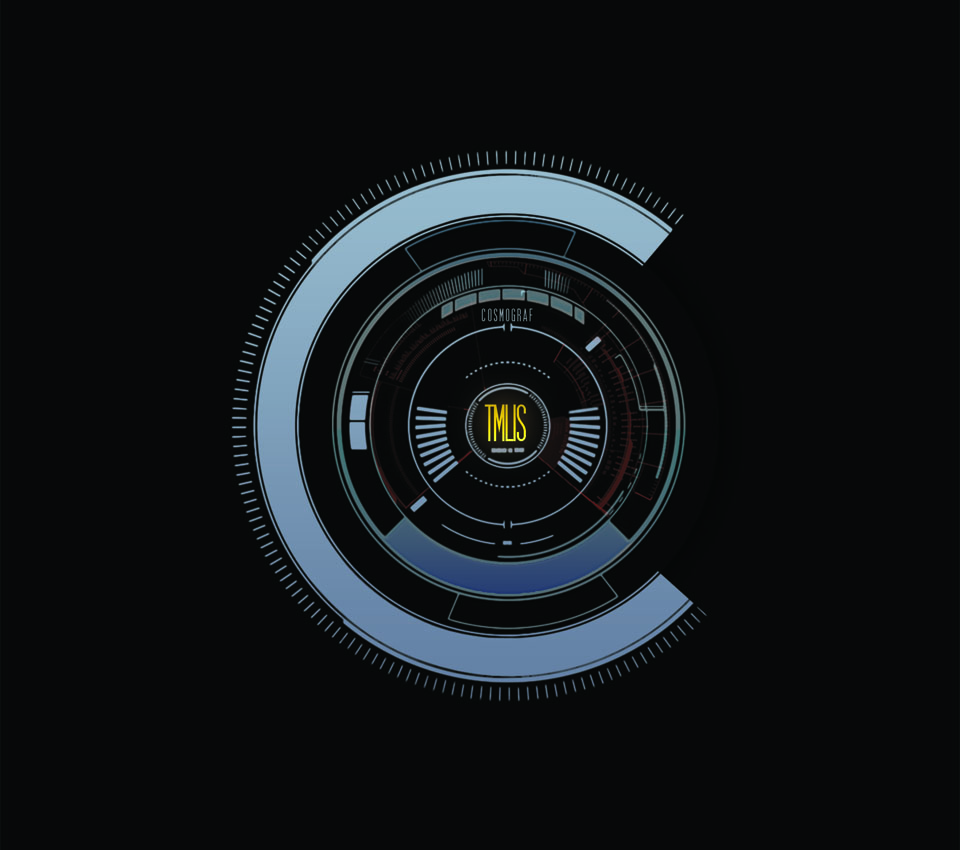
From its cover image reminiscent of the all-seeing camera eye of 2001: A Space Odyssey‘s HAL computer, to the final track “When the Air Runs Out”, Cosmograf’s new album, The Man Left inSpace, is a profound meditation on the tragedy of modern man’s surrender to ambition and technology, and the ensuing isolation that results.
Beginning with a bewildered astronaut, Sam, asking, “How did I get here?”, the listener is transported to the near-future, where Sam is questioning his motives for agreeing to a mission to “change the human race”. Can over-achievement bring satisfaction and happiness?
Ambition brought me here.
A winner in my field.
Dare to be a dreamer.
Find your fate is sealed.
Hidden truths revealed.
Through memory flashbacks, snippets of dialog with the ship’s android, and sampled audio of actual NASA space missions, we share Sam’s growing sense of melancholic disconnection with reality.
I take these pills. They help me numb the pain.
They stop me from feeling blue.
I feel the days getting longer now.
I’d like to dream, but I’ve forgotten how.
He’s even reduced to crooning a love song to his “beautiful treadmill” that will “keep my soul in grace”. Throughout, the ship’s android is monitoring Sam and vainly attempting to create a normal environment. Earth’s Mission Control tries to contact him, but they cannot get through. Sam realizes that without human contact, he will eventually slide into madness. No simulation, no matter how realistic, can replace the touch of another person.
Eventually, the “man left in space” is forced to face his own mortality:
10 minutes more and the air will run out.
This craft will fall into the sun.
My chance of returning is none. None. None.
As the last chords of the final song fade away, the ship’s android repeatedly asks, “Please respond, Sam?”
Robin Armstrong, who is Cosmograf, has constructed a beautiful, allegorical warning for those of us who would replace face-to-face communication with all the technological means at our fingertips: emailing, texting, Tweeting, “liking” on Facebook, etc. Right on cue, Google is coming out with “Google Glass“, which will add even more distractions to our interactions with others. We must resist the temptation to withdraw into self-imposed isolation and foster real relationships, regardless of the risks.
The Man Left In Space would not be the success it is without having superb music to complement its message. Every track is extraordinary, and the album really must be listened to in its entirety. Highlights include “Aspire, Achieve”, which begins with a delicate acoustic guitar melody and vocal harmonies that shift into crunching metal worthy of Ayreon’s best work. “Beautiful Treadmill” has an indelible hook that will have you singing along in no time. The instrumental, “The Vacuum That I Fly Through”, featuring the marvelous Matt Stevens on guitar and Big Big Train’s Nick D’Virgilio and Greg Spawton on drums and bass respectively, rivals anything Pink Floyd ever committed to tape. Trust me, it’s that good.
Finally, some praise for the artwork. In this age of digital downloads, it’s worth it to get the physical CD. The booklet that comes with the album is essential to fully appreciating the album. The illustrations remind me of the incredibly realistic sci-fi artwork Shusei Nagaoka did for Electric Light Orchestra’s Out of the Blue album from the late ’70s. The attention to detail is amazing: every page features readouts of various gauges, creating the feeling that you are involved in monitoring Sam throughout his doomed journey. The ship’s android is named ESA-1410-4MY, which pops up in several places and adds to the sense of technological surveillance and control of Sam.
Even though we have yet to finish the first quarter of 2013, Cosmograf’s The Man Left In Space is certain to be in many Top Ten Albums of the Year lists.
01. The Next Day 3:51
02. Dirty Boys 2:58
03. The Stars (Are Out Tonight) 3:56
04. Love Is Lost 3:57
05. Where Are We Now? 4:08
06. Valentine’s Day 3:01
07. If You Can See Me 3:16
08. I’d Rather Be High 3:53
09. Boss Of Me 4:09
10. Dancing Out In Space 3:24
11. How Does The Grass Grow 4:33
12. (You Will) Set The World On Fire 3:30
13. You Feel So Lonely You Could Die 4:41
14. Heat 4:25
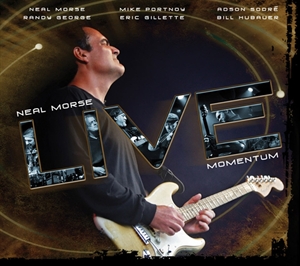
Hot on the heels of his Live Momentum Tour, Neal Morse has released a 5-disc set (3 CDs, 2 DVDs) that is a worthy alternative for those of us who didn’t get a chance to see this band live. You always get your money’s worth when Neal is involved, and this release is no exception. The DVDs (available in Blu-ray, as well) and CDs document the entire 3-hour set, and what a performance it is!
Recorded and filmed in HD on October 11, 2012, at the Highline Ballroom in New York City, Neal and the band turn in an incredibly tight, high-energy set for an enthusiastic audience. Neal’s long-time collaborators Mike Portnoy (drums) and Randy George (bass) are joined by Bill Hubauer (keyboards, violin, sax, vocals), Eric Gillette (guitar, keyboards, vocals), and Adson Sodré (guitar & vocals).
I’ve been a fan of Neal Morse since his days in Spock’s Beard – keeping up with Transatlantic and his solo efforts. He is an amazingly prolific songwriter, but of late his work seemed to be suffering from a “sameness”. Then came last year’s Flying Colors and Momentum albums, where it was clear something lit a roaring fire to his creativity. Momentum is his finest solo work since the Question Mark album.
In the liner notes to this release, Neal mentions that he found Hubauer, Gillette, and Sodré through YouTube auditions, so I before I popped in the first DVD, I was a little apprehensive regarding their ability to keep up with Morse, Portnoy, and George. My fears were completely unfounded, as Adson lays down a jaw-dropping guitar solo in the opening song, “Momentum” (you can see the performance of the song in the promo video below). Eric Gillette shines on guitar, vocals, and keyboards throughout the entire show, and Hubauer adds wonderful depth with his keyboard pyrotechnics and fine violin and sax work.
Basically, what Neal put together is a three-keyboard/three-guitar front lineup that is incredibly versatile. Add in their ability to execute complicated vocal harmonies on songs like “Thoughts Part 5”, and this is one of the best live outfits I’ve ever seen. Mike Portnoy is the hardest working drummer in showbiz, and he is obviously having a blast propelling this group through epic after epic. The avuncular Randy George is the anchor on stage, nimbly laying down rock-solid yet melodic basslines, while eschewing the spotlight.
Neal himself is, of course, the center of attention as he moves back and forth between keyboards and guitar, conducting the band (and the audience) from one emotional peak to another. It’s clear he’s delighted with the tight rapport between himself and the band. They are able to shift from a delicate flamenco-style acoustic interlude to crushing hard rock in the blink of an eye and make it look easy.
The set includes four major epics. “Testimony Suite” clocks in at 21 minutes, and it includes highlights from Morse’s 2003 album, Testimony. Neal is upfront and open about his Christian faith, and it is a genuinely emotional moment for him as he sings this account of his conversion. “The Conflict (From Sola Scriptura)” is 27 minutes long. Initially, I was put off by Sola Scriptura, but this performance illuminated aspects of it that I hadn’t heard before. It’s a beautiful piece. “Question Mark Suite”, at 21 minutes, is an outstanding distillation of Neal’s exploration of the symbolism behind the Exodus and the Hebrew Tabernacle. After a change of pace with the relatively brief “Fly High” (I would have preferred something like “Absolute Beginner” here; “Fly High” isn’t that strong a song, IMO), Neal and the band wrap up the show with the 33 minute magnum opus “World Without End” from Momentum. It’s an incredible performance that outdoes the original, and leaves the audience yelling for more.
The band fulfills that request with a three-song encore: “Crazy Horses” (yes, the Osmonds oldie!) sung by Mike Portnoy while Neal takes over the drums; “Sing It High” (which features every member taking a solo turn), and finally, “King Jesus”. As the exhausted musicians leave the stage, you can clearly hear a member of the audience call out, “Neal! Neal! Thank You!”
The second DVD disc includes an hour-plus tour documentary. Beginning with rehearsals in Tennessee, we follow the band from their first show in Nashville on October 2, 2012 (which, to my eternal regret, I had to miss) to their last in Chicago on October 12. In the space of ten days, they perform shows in Nashville, Jacksonville, Mexico City, Los Angeles, Seattle, Denver, New York City, and Chicago, all the while practicing and continually refining their parts. It’s a marathon run at a sprinter’s pace. There is video footage of every performance, and much of it is quite good. One definitely gets an appreciation for how much hard work and how many hours it takes to make a live performance look easy. As Mike Portnoy says, “This band kicks ass! I mean, the second gig – it’s tight; a really tight second gig.” Neal himself describes them as “A band on fire”. I can’t disagree.
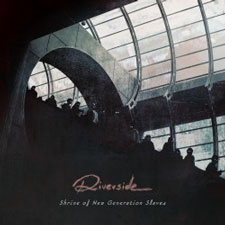
Riverside’s recorded output began with three albums that are collectively known as the Reality Dream Trilogy (‘Out of Myself’, ‘Second Life Syndrome’, and ‘Rapid Eye Movement’). These are all very good albums, although I wouldn’t call any of them great albums. However, in 2009, Riverside took a big leap forward with ‘Anno Domini High Definition’ (ADHD). The music took a noticeably different direction from its three predecessors, and reflected well on the album’s subject matter, i.e. the frenetic pace of modern life and accompanying dissatisfaction that sometimes goes with it. After a two-and-a-half year wait (with the EP ‘Memories in My Head’ thrown in during the meantime), Riverside has returned with ‘Shrine of New Generation Slaves’ (SONGS). And once again, they have taken a big – no, huge – leap forward. Quite simply, this is Riverside’s best album to date.
Conceptually, the album relates to dissatisfaction with modern life, so much so that many people feel that they are slaves to something beyond their control. Thematically, there are some common threads with various lyrics on SONGS predecessor, ADHD (in particular, the lyrics on the excellent ‘Driven to Destruction’). Nevertheless, the lyrical (and thus conceptual) content extends beyond that to into areas such as stagnant relationships, the depravity of celebrity culture, surrender to nihilism, and ultimately, redemption.
Musically, the album is just fantastic. In contrast to its predecessor, it does not feature a barrage of notes and thus gives the listener a little more space to contemplate the lyrics. That being said, I wouldn’t call it dimensionally sparse either, as there is plenty going on. The music is probably the result of a different approach. Bass player Mariusz Duda stated in a recent interview:
I had some problems before as I was a little bit tired of the formula that we had in the past and I didn’t want to do another album with complicated structures. I just wanted to finally focus more on the arrangements and the composition. To focus on some details, like a way for playing drums, a way of playing guitar. I really, really wanted to focus simply on songs. Simply songs, ambitious songs should be the foundation of this album. The metal parts I skip and replace them with hard rock elements.
Confident in the chops honed on previous albums, the band has taken more of a big picture approach to the music on this album – an approach that seems to have served them very well.
‘New Generation Slave’ opens up the album, featuring a heavy guitar riff interleaved with verses of Duda’s protagonist lamenting his life and dissatisfaction with it:
Ain’t nothing more to say
Your Honor
Don’t look at me like that
The truth is
I am a free man
But I can’t enjoy my life
The tempo then picks up, and keyboardist Michał Łapaj announces his presence in this piece by getting in touch with his inner Jon Lord (RIP), and repeats this a number of times throughout the album. The opening track segues into ‘The Depth of Self Delusion’, which is less heavy and a bit slower, but no less good. The use of acoustic guitar and atmospheric keyboards make their first appearance. I don’t recall this much use of acoustic guitar on any previous Riverside release, and it’s great to hear them expand their sonic palette in this manner. The song includes some interesting bass work in the latter half and closes with light acoustic guitar. The band then blasts into ‘Celebrity Touch’ as Duda offers his critique of our Kardashian-ized culture and the pathological need some have for attention and approval from others:
I can’t afford to be silent
I can’t afford to lose my stand
What matters is to be in view
I am seen therefore I am
I can satisfy my hunger
I can satisfy my thirst
What about the feeling of importance
Now I’ve got my chance
…
In the center of attention
TV
Glossy magazines
My private life is public
I sell everything
Days are getting shorter
They’ll forget about me soon
So I jump on the bandwagon
With no taboos
The song includes a nice juxtaposition between a heavy riff that accompanies the above lyrics, to a less heavy, more reflective section:
But what if we start to talk
Not only say out loud
What if we sift the babble
From what really counts
What if we disappear
Go deeply underground
What if we hide away
From being stupefied
‘We Got Used to Us’ follows, and is yet another slower track that has somewhat of a Porcupine Tree-like vibe as our protagonist ponders a stagnant and dissatisfying relationship. This one is pretty emotional.
Next up is the punchy ‘Feel Like Falling’, a song with crossover appeal having upbeat music that belies the lyrics, as our protagonist begins to realize the path he has chosen in life has led him astray and left him wanting to simply give up:
Had allowed that life to drift
For I’ve chosen a different trail
When light fades
I feel like falling into blank space
‘Deprived (Irretrievably Lost Imagination)’ is up next with music that is slower, mellower, and decidedly more melancholy than the previous track. The music includes a nice, Floyd-ian interlude at about the halfway mark leading into a jazz-infused instrumental section in the latter half featuring some excellent sax playing. Our protagonists dissatisfaction seems to be so intense at this point that they have gone beyond the mere desire to give up as in ‘Feel Like Falling’ – now we have a full fledged surrender to despair:
Curled up
Deprived
Curled up
Deprived
I shut away
Please don’t call my name
‘Escalator Shrine’ begins as another slower track, but picks up the pace after a few minutes. Once again we hear the Hammond organ with the Leslie cabinet, some excellent bass playing, and some heavy (but not necessarily metal) guitar. Like the previous track, it includes another Floyd-ian interlude at about the halfway mark. Lyrically, ‘Escalator Shrine’ approaches the new generation slavery from more of an intellectual level than an emotional one, as our protagonist channels Albert Camus and the Myth of Sisyphus:
Dragging our feet
Tired and deceived
Slowly moving on
Bracing shaky legs
Against all those wasted years
We roll the boulders of sins
Up a hill of new days
‘Coda’ is the final track on the album, and maybe the most emotionally heavy, even though it is instrumentally the lightest – a single acoustic guitar. Perhaps our protagonist has read some Epictetus, or maybe the serenity prayer, but it appears he has realized that his happiness and satisfaction with life is ultimately in his control and his own responsibility:
Night outside grows white
I lie faceup in my shell
Open my eyes
Don’t feel like falling into blank space
Indeed, for all of its darkness and all of its sadness, SONGS ends on an upbeat note, as our protagonist casts off his self-imposed chains:
I won’t collapse
I’m set to rise
It’s interesting to note that, although ‘Coda’ is the final track on the album, it is also numbered as Track 1, as is ‘New Generation Slave’. Indeed, our protagonist has hit the reset button and is starting over.
I simply cannot say enough good about this album. As thrilled as I was with ADHD, my response to SONGS is in a completely different realm. Musically, the album has a perfect blend of heavy and light, of complex and simple, emotional and intellectual. Nothing is overdone, nothing is incomplete. The lyrics have a strong message, and as dark as the album’s atmosphere, it’s ultimately a message of hope for those that get it. And if this album is an indication of what we can expect in the future from Riverside, then it’s another strong piece of anecdotal evidence that we are in the midst of a progressive rock golden age heretofore unseen.
Oh, and in case you didn’t get it, I strongly recommend this album 🙂
About 5 or 6 years ago my son’s guitar teacher, a young dreadlocked guy into hard rock and grunge, asked me who was my favourite band. I surprised myself when I immediately answered “The Stranglers”. “Oh” he replied, “The band who sung Golden Brown?” “Yes” said I “but haven’t you heard the early stuff from the punk-era like Hanging Around, Grip, Peaches?”……
I’ve asked a few from the younger generation about the Stranglers and many either haven’t heard of them or they are remembered for some of their 80’s pop hits like the aforementioned ‘Golden Brown’, ‘Strange Little Girl’, ‘Always The Sun’ etc. Indeed they did write some superb ‘pop’ songs but I remember them for their uncompromising attitude; their clear desire to ‘progress’ their musical style and their unique sound, driven along by thumping bass lines and swirling keyboards.
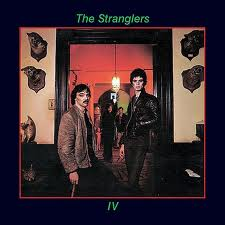
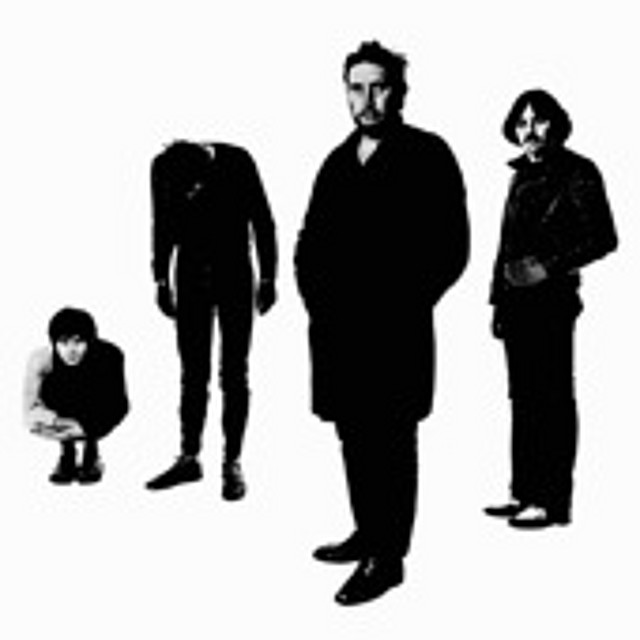
In 1977 and 1978 the Stranglers produced certainly one (Rattus Norvegicus), if not two (Black and White) of the great albums to come out of the Punk Era. Whilst not considered punk, these albums stand alongside the great Punk albums of the period: The Clash and London Calling by The Clash; NMTB by the Sex Pistols; Fresh Fruit for Rotting Vegetables by The Dead Kennedys; Machine Gun Etiquette by The Damned; The Ramones by The Ramones; Love Bites by the Buzzcocks and Pink Flag by Wire, to name a few. But you won’t find Rattus or B&W featuring highly, if at all, on any Top list of Punk albums.
Many at the time said they had jumped on the punk bandwagon. Certainly they had been playing as an unsuccessful pub-rock band for a couple of years as the Guildford Stranglers. But by opening for the 1976 tour of the Ramones and Patti Smith they got noticed and signed a deal with United Artists.
From a punk perspective they were considered outsiders, both in terms of their age, being older than their peers (Jet Black was in his late thirties when Rattus was released) and musically different. Their sound was unusually melodic (helped by the fact they were ‘relatively’ musically accomplished); their lyrics could be clearly heard (!) and even solos were allowed (!).
The band certainly took advantage of the musical zeitgeist but never truly embraced the punk culture. They did adopt the aggressive and abrasive punk attitude on stage; they delivered their lyrics with snarling brute force. Their dealings with the musical press were notorious leading to JJ Burnel punching a music journalist. Some of their lyrical output reflected the punk-spirit. They exhibited a total disregard for political correctness at times, highlighted by bringing strippers on stage at the Battersea festival in the summer of 1978 (strangely the main support act was a man by the name of Peter Gabriel !).
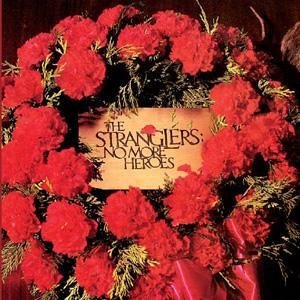
Led by two charismatic front men, Hugh Cornwell on lead guitar and Jean-Jacques Burnel on bass, they delivered an incredibly varied output over the years. From the simply arranged punk anthems of ‘No More Heroes’, ‘5 Minutes’ and ‘Something Better Change’; through the reggae-inspired ‘Peaches’; to the dark more complex and experimental ‘Black’ side of the Black and White album; and they even wrote the 4 part and 8 minute long ‘Prog-structured’ classic, ‘Down in the Sewer’. They broke away from the punk scene totally in 1979, their early success giving them the confidence to release their avant-garde fourth album, The Raven. They followed this with the unusual but ultimately disappointing concept album, The Gospel According to the Men In Black (which lost me and many others as fans for a while). The Stranglers were definitely not derivative and did not want to be pigeon-holed. Their musical and lyrical diversity on a track by track basis is rare and a testament to their originality and innovative skills.
Their signature sound was driven along by the ‘rough’ and a chest-filling bass lines of Jean-Jacques Burnel, usually followed by the swirling Hammond organ and mini-moog keyboards of Dave Greenfield. Unusually the guitar melodies were shared between lead and bass and there are an astonishing number of catchy riffs in their early output. Dave Geenfield’s psychedelic keyboards are hugely inspired by Ray Manzerek of the Doors, particularly on their brilliant cover of Bacharach and David’s ‘Walk on By’. Jet Black’s drums ties everything together nicely with competent drumming. Martin Rushent’s production on the early albums superb.
Their musical style and structure was initially quite basic but over time became more intricate with the use of complex time signatures; effects to slow and speed up sound and, from Black and White onwards, the more frequent use of synthesizers to create weird vocals and soundscapes.
The band’s lyrical themes were hugely diverse. Songs about boring lives, disenchantment, alienation, and the breakdown of political and social order were laced with biting political and social comment and par for the course at the time. But they were also inspired by the writings of Nostradamus, Japanese and Viking culture and even by a Victor Hugo novel.
Their lyrics quite often pushed the boundaries of what was acceptable. ‘Peaches’ is the only song I know that has the word ‘clitoris’ in it (changed to ‘bikini’ for the UK’s Top of the Pops). Clearly their lyrics were at times sexist and whilst unacceptable they were tame compared to today’s rap music and I believe ignore the playful irony and satire inherent in much of the band’s output. Most controversial was the misogynistic ‘Bring on the Nubiles’, about the obsession of older men for younger girls. The song comprises ‘in your face’ vulgarity and alludes to incest. Were they serious or just exploiting the times? What we do know is the band was deliberately antagonistic and courted controversy to increase their profile and this was indirectly supported by their record company who saw no reason to censor their lyrics or curtail their behaviour (it sold records for God’s sake!!!).
Here are some of my favourite lyrics:
From the punk anthem ‘No More Heroes’, the witty:
Whatever happened to Leon Trotsky?
He got an ice pick
That made his ears burn
From ‘Grip’ the truly memorable:
Stranger from another planet welcome to our hole
Just strap on your guitar and we’ll play some rock ‘n roll
Visceral social commentary from ‘Hanging Around’:
I’m moving in the Coleherne
With the leather all around me
And the sweat is getting steamy
But their eyes are on the ground
They’re just hanging around
(The Coleherne was an infamous gay leather bar in Earls Court, London in the 70s and 80s frequented by many famous clientele).
Here’s a typically aggressive live, albeit shortened, version…
Acerbic criticism of the educational system in ‘School Mam’:
In the free-form, abrasive and controversial ‘Ugly’, only the Stranglers could juxtapose a reference to Ozymandias, a poem by Shelley about folly in the pursuit of power, with the shallowness of mankind’s attitude towards aesthetics:
I Could Have
Read A Poem Called
Ozymandias
To Her Instead
I Lived For The Moment
It Was A Futile
Gesture Anyway
I Was Here
And She Was Here
And Being Broad
Of Minds And Hips
We Did The Only Thing Possible
I Guess I Shouldn’t Have Strangled Her To Death But
I Had To Go To Work And She Had Laced My Coffee With Acid
Normally I Wouldn’t Have Minded
But I’m Allergic To Sulphuric Acid
Besides She Had Acne
And If You’ve Got Acne, Well,
I Apologise For Disliking It Intensely,
But It’s Understandable That Ugly People Have Got Complexes
I Mean It Seems To Me
That Ugly People Don’t Have A Chance
It’s Only The Children Of The Fucking Wealthy Who Tend To Be Good Looking
An Ugly Fart
Attracts A Good-Looking
Chick If He’s Got Money
An Ugly Fart
Attracts A Good-Looking
Chick If He’s Got Money
An Ugly Fart
Attracts A Good-Looking
Chick If He’s Got Money
It’s Different For Jews Somehow.
I’d Like To See
A Passionate Film Between
The Two Ugliest
People In The World.
When I Say Ugly
I Don’t Mean Rough Looking
I Mean Hideous.
Don’t Tell Me That
Aesthetics Are
Subjective You
Just Know The Truth
When You See It
Whatever It Is
Powerful stuff indeed.
In 1990 Hugh Cornwell left the band and it appeared to be the end of an era. Over the subsequent years they continued to release albums with little mainstream success but were (and still are) supported by a fanatically loyal fan base. However, with the addition of Baz Warne, whose energy and snarling aggression making him a worthy replacement to Hugh Cornwell, they have become a superb live act. Their latest album ‘Giants’ released in 2012 is a huge return to form, echoing their halcyon period of the late 70s. It seems ironic that I saw them headline a predominantly ‘Prog’ festival, Weyfest, in 2010 but it’s a clear indication of their popularity amongst a wide cross-section of music lovers.
The Stranglers are arguably the greatest and certainly the most enduring band to emerge from the punk era. I look forward to another brutal encounter with them later this year in Guildford, their spiritual home and fortunately only a few miles away from chez moi.
Final words though must go to Hugh, JJ, Dave and Jet from the epic ‘Down in the Sewer’
I tell you what I’m gonna do
Gonna make love to a water rat or two
and breed a family
they’ll be called the survivors
You know why ?
No
Coz they’re gonna survive
Nearly 40 years on and they are surviving remarkably well 🙂
N.B. AP is Andy Poole, DG is Dave Gregory, DM is Danny Manners, GS is Greg Spawton. Progarchy interview conducted by Brad.
***
Progarchy (BB):When you put EE1 and EE2 together, how do you expect the listeners to see the whole EE? Say, 20 years from now, few will have had the experience of getting one, then the other. It will most likely be just EE. Do you expect your listeners–me, for example, or anyone else–interpreting EE1 differently in light of EE2? In particular, I think about a track like Hedgerow. As you probably know, Greg, I consider this the single finest conclusion to any album. Ever. Period. Even better than Abbey Road, which had that position for me prior to hearing EE1. But, when I do get to hear EE2, I will now see Hedgerow as the middle song.
GS: You’ve put your finger on something that has caused us a fair bit of soul-searching Brad. At first, we had a fairly straightforward view on this which was simply: ‘it’s a double album, but we’ll split it into two separate releases’. Our reasoning was that 2 hours of music is a lot for the listener to get their head around which can initially cause under-appreciation of the double album in question. We were also aware that if you release so much music at one time, you get one round of publicity then the world moves on. If you split the release into two, the band is in the spotlight for a longer period of time. The only downside to this release strategy is that English Electric becomes seen as two separate pieces of work and so we always planned to release a special double edition bringing it all together. The thing is though, and as your question makes clear, it’s not as simple as we thought it would be. If you’re splitting an album into two you do have to try to make two satisfying separate halves, which is what we have tried to do. And that isn’t the same as sequencing a whole double album. So, the question we began to ask is: what do we do when we prepare the double Full Power edition? Do we simply stick Part One and Two together or do we start from scratch and re-sequence it as a double album? You mention Hedgerow as being a strong concluding track but we’ve also got Curator of Butterflies which is, we think, another strong end-piece. Which one of those takes precedence and gets to close the double album? And what happens with the three extra tracks we’re including? Where do they fit in? What we now think we’ll do is to start again from scratch and re-sequence Full Power as a double album without any reference to the orders on EE1 and EE2. It may be that we find some of the sequencing on EE1 and EE2 also works for EEFP and if it does, it does. Or it may be that the sequencing is completely different. In any case, the additional tracks will inevitably change the feel of things. The other question you raise is what happens when EEFP is released? Does that mean that EE1 and EE2 should go out of print? If not, will any new listeners buy them or will they go straight to EEFP? This is, I think, something we’ll have to keep under review. If EEFP turns out to feel like a very different listening experience to EE1 and EE2, then it makes sense to keep them all in print. Of course, the extra tracks will also be available on an EP and as downloads to make sure listeners don’t feel obligated to buy a double album just to hear three new songs. So, for many people their experience of English Electric will be as three separate releases.
Progarchy (BB):Tell me about the additional songs added to the full package? Will there be much new artwork?
GS: There are three strong new songs. They are not leftovers from the original sessions but have been recorded specifically for EE Full Power. One of them is a sort of bookend love song to go with Leopards. Another builds on the main album themes of working communities and the English landscape. And the final one is something very different for us.
AP: As regards the artwork, I’m working on a lavish design with a comprehensive booklet telling the stories behind the songs and behind the album.
Progarchy (BB):After EE2, you’ve announced plans to release Station Masters. Can you give us some details about this? Will it be reworked older tunes? Are there some new tunes?
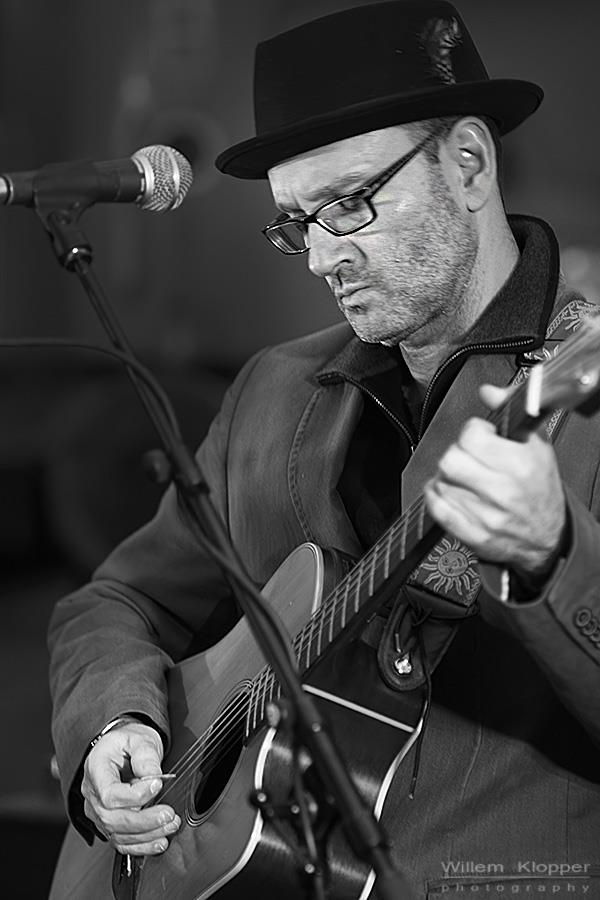
NDV by Willem Klopper.
GS: It’s a triple CD which aims to tell the story of the band. All recordings will be with the new line-up so songs from albums prior to The Underfall Yard will be entirely re-recorded. Some of these are radically re-worked, others are fairly close to the originals but with the strong performances that the current line-up is capable of. Even more recent material may be reworked to some extent. For example, I always wanted to feature violin in The Underfall Yard but we didn’t have a violinist at the time. Rachel Hall will feature on the updated version. Wherever we look back and think something could have been better, we’ll make it better.
Progarchy (BB):Will anything else come with the CDs? Any kind of BBT timeline or a poster? Concert DVD?
AP: There may be some video or other visual material. We haven’t made any final decisions on that yet.
Progarchy (BB):Where do you see BBT’s place the history of rock and the history of prog rock?
GS: I think it’s too early to make an assessment. There are many drafts of history. I hope we’ll find ourselves as more than just a footnote when later drafts are written. However, progressive rock is a fairly contained world and we’re a long way away from making any sort of breakthrough in the broader rock and pop worlds.
Progarchy (BB):You have an immensely large and loyal fanbase. How does this affect you or the band’s approach to music and the music world?
GS: We’re really lucky with our fanbase. They seem to us in all of our interactions to be a thoroughly decent and likeable bunch. The feedback we’ve had over the years has been really important. To hear that what we like to write about resonates with others and particularly that we’ve moved people with our music makes a huge difference.
Progarchy (BB):What is your view on packaging the material? You sell lots of downloads, and we live in a download world (for better and worse), but you also put a lot into the packaging of your CDs. Which I love. As you might remember, after I downloaded all of your albums up to The Underfall Yard, I contacted you because I wanted to purchase physical copies. And, it was worth the investment. Why do you consider it so important for BBT to have such beautiful packaging, especially in day and age? And, would you say such quality packaging should be important for all bands?
Andy Poole by Willem Klopper.
AP: The ideal package for us is a presentation of the words, music & images. The artwork is integral and we have been very fortunate over the years to have teamed-up with Michael Griffiths, Jim Trainer and Matthew Sefton who have each provided inspiring works that both complement & advance the sensory delivery of our albums.
Growing up with vinyl in the 70’s, you had an ingrained sense of interacting physically with an album … the touch, feel & smell of a new gatefold release was savored and an essential part of the experience … quite apart from placing a stylus in the groove and being aurally transformed to a progressive world of music where none of the old rules applied.
The initial advent of hurriedly released compact discs in their horrid plastic jewel cases and Lilliputian inserts amounted to instantly inferior packaging largely forgiven by consumers for the promise of digital sound.
We migrated to digipaks for the enhanced tactile experience, albeit in miniature compared to vinyl, and greater flexibility to represent the visual artists who collaborate with Big Big Train.
Although it is tempting to suggest and hope that other bands disregard the importance of physical product packaging to our advantage, I actually believe that it behooves us all to raise the quality bar up high and to the reasonable limits of affordability.
DG: It was certainly a very important factor with XTC. Andy Partridge claimed that every time he finished writing a song, he’d design a sleeve for it just in case it was chosen as a single! But then, he’s a very talented artist and can’t help himself. I’m certain sales of many of our releases were multiplied as a result of the packaging, as well as boosting the band’s ‘arty’ credentials.
Progarchy (BB):I’m always amazed at what a community BBT is. That is, it’s clear–from the music as well as things such as FB posts, etc.–that you each really like one another. There’s no sense of brilliant radical individuals working next to each other (such as in certain early Yes albums), but a true sense of group brilliance, an organic whole. What do you think accounts for this?
GS: From my point of view I come back to something I’ve said before – surround yourselves with talented people and things start to happen. There is something else as well though, and that is that the guys in the band are all thoroughly good chaps. We’ll all hold strong positions from time-to-time and we say what we think but good manners are important. Speaking of Manners, you’re the new boy, Danny, do you have any observations?
DM: Some of it is simply that there are no huge egos in the band, whether by luck or by conscious or unconscious choice. (Medium sized, maybe, but not huge!) However, one musical thing that strikes me is that the band members aren’t over-specialized – BBT doesn’t consist of “the singer”, “the drummer”, “the guitarist”, etc., all vying for the spotlight. Everyone is a multi-instrumentalist to at least some extent, and everyone also has writing and/or arranging experience, so there’s much more focus on making the music work as a whole.
DG: Don’t forget also that we’re grown men, not ambitious youngsters. We are focused on the music at all times, because we love it. Both Greg and David, as writers, are extremely accommodating in terms of accepting ideas and contributions from all of us; they have yet to display any serious proprietorial tendencies when it comes to protecting their original vision. Which is not to suggest that it’s an open free-for-all; we live with the songs for months, plenty of time to assimilate their essence, so we’re generally united in the common aim, ultimately.
Progarchy (BB):And, how do you see the role of Rob as engineer or any guest musicians you bring in? That is, how integral are they to a BBT sound, if such a particular thing exists.
The Seventh Train and Phill Brown of our age: Rob Aubrey. Photo by Amy Mumford.
GS: It’s an evolving sound and it will continue to develop. We have some really important collaborators at the moment and I envisage we will continue to work with many of them in the long-term. Certainly, Dave Desmond (who plays trombone and arranges the brass band) and violinist Rachel Hall will have significant input into Station Masters. As for Rob, he’s the seventh Train and our dear friend.
Progarchy (BB):Where do you see BBT after Station Masters?
GS: I’d like us to be playing some shows at some stage. It would be good to do something around the time of Station Masters and then something around each release after that. As mentioned earlier, we have another album well underway and have started recording it so that is likely to come out in 2015.
Progarchy (BB):Any final thoughts on the current and future state of rock?
GS: In Britain, the last of the high-street record stores has gone into administration. I guess there are similar issues in other countries. The supermarkets have stepped into the breach and will only really sell music in the pop charts, so the route through traditional music-distribution is closing down to most progressive bands. However, online, the choice is very broad and the issue there is getting noticed amongst all of the competition. Making a living out of music is going to get harder still but it’s been a labour of love for most folk and jazz musicians for years and I don’t see why it should be different for rock bands.
[Well, what does one say after such amazing interview, except—thank you. Thank you to BBT for giving us so much time for this interview. An even bigger thank you for making the world just a little bit brighter.—Ed.]
On 29 January Thieves’ Kitchen release their new album, “One for Sorrow, Two for Joy.”
It’s now available for pre-order. More information at the link below.
On “One for Sorrow, Two for Joy”, the band are joined by Paul Mallyon (Drums – Sanguine Hum), Brad Waissman (Bass – Sanguine Hum), and Anna Holmgren (Flute – Anglagard) to provide a thrilling journey into a musical landscape rooted in a progressive heritage, but not limited by it. Fans of The Water Roadwill hear a continuityof their instantly recognisable sound, but from a band still moving forward, still exploring.
Recorded and mixed by Rob Aubrey at Aubitt studios (IQ, Big Big Train, Spock’s Beard), “One for Sorrow, Two for Joy” is a crystalline document of a band surfing the extremes of dynamics across a mosaic of shifting themes to provide an organic and engaging listening experience.


 Prog Magazine has just reported that Steven Wilson is putting Porcupine Tree on hold.




 Progarchy
