
 Reviewing Slowdive’s eponymous new album, their first in 22 years, Clash’s Robin Murray made a statement bound to pique the interest of progarchists:
“It feels at times like early King Crimson, or Pink Floyd’s post-Syd/pre-Dark Side nexus. It’s the sound of a band forgetting who they were, and embracing who they could become.”
That second statement is undeniably true. Slowdive (released May 5 on the Dead Oceans label) is unmistakably the work of the same quintet that disbanded between 1995 to 2014. But it’s not a reunion record of rehashed old ideas. It would also be correct to say the band’s music has more in common with Floyd than, say, punk rock. Among their signature showpieces is a majestic, slow-burning cover of Syd Barrett’s “Golden Hair.” But Lark’s Tongue in Aspic? Other listeners can judge.
Guitarist/songwriter Neil Halstead grew up in a home where orchestral music was preferred to pop, and that influence is strongly apparent in tracks like the stirring “Catch the Breeze” (1991). While Slowdive can’t be classified as prog, their body of work has occupied spaces progarchists can appreciate: ambient, avant-garde, dream pop, and experimental, all under the broader classification of shoe-gazing. In this vein no other band sounds like Slowdive.
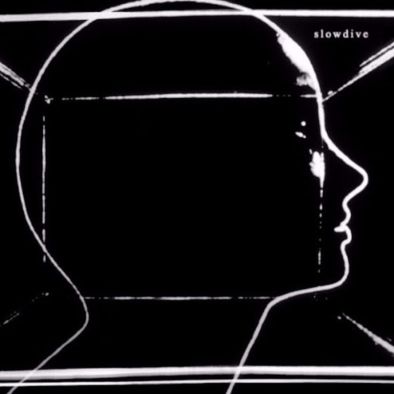
The cover art for Slowdive features a frame from Harry Smith’s 1957 avant-garde animated film, Heaven and Earth Magic. Composed of cut-out figures set in motion, the narrative includes a sequence involving a female patient sedated for a dental procedure. The darkened profile depicts her state of semi-consciousness, or perhaps heightened awareness. Or both.
Shoe-gazing refers not to the contemplative state of the listener (though it could) but rather the guitarists staring down at the array of effects pedals used to achieve other-worldly sounds. None are better at this than Slowdive’s Halstead and Christian Savill. On the new record that prowess is everywhere present.
But Slowdive also contains a refined attention to detail and form. The pace of the songs is faster. Nick Chaplin’s bass and Simon Scott’s drums thunder out front instead of being obscured by clouds of guitar effects, e.g. “No Longer Making Time.” And instead of a metronomic build-up common in earlier work there are tempo and time changes, e.g. “Don’t Know Why” and “Go Get It.” But as on previous records Rachel Goswell’s voice moves through the mix and around Halstead’s vocals like a spirit, e.g. “Sugar for the Pill,” the album’s emotional epicenter.
The closer, “Fallen Ashes,” may be a preview of things to come. Showcasing Scott’s abilities with laptop software, it embellishes and pushes a hypnotic piano riff to sublimity à la Jonny Greenwood.
Overall, Slowdive is familiar but with more sculpted contours and sharper pin pricks than in times past — a welcomed development.
All of this works from a context of two-decades’ old material still very much in view, still relevant, still captivating. I had the great fortune to catch Slowdive in Carrboro, NC at the next-to-last date on the North American leg of their current tour. Blending half the new album with old material, Slowdive overwhelmed the audience with canyons of sound.
I spotted a few fellow 50-somethings in the music hall. But more than a few of the audience weren’t even born when this Thames Valley gang first started making music as teenagers. Having fallen quickly out of fashion years ago with a press enamored to Britpop and cool Britannia, then beckoned back to life by an emerging cult following, Slowdive have a word for souls fearing rejection without redemption: No, this is what we do, and done well time will vindicate it.
After opening with “Slomo” from the new album the band followed with “Catch the Breeze,” with Savill, Goswell, and Halstead leaning toward the floor, wailing guitars swelling to orchestral heights.
The breeze it blows, it blows everything
And I, I want the world to pass
And I, I want the sun to shine
You can believe in everything
You can believe it all…
During the rapturous finale I glanced to my left. A couple of people were actually weeping. Heaven and earth magic, indeed.

 It’s 1975 and I’m nine years old. I’m lying on my back in Reservoir Park, a small city block of grass and oaks next to the University of Utah. In my head is a song that trips and travels as I run and play with friends. It’s a vision of sound, a strong impression of bright sun and moving clouds, a feeling on my skin, a growing chill in the air. Is it October? The song is a constant rhythm of consciousness and motion, a life in itself but also within me, as if I’m one of its many, many tributaries.
 Finding abandon in structure is what rock is about, but it’s rarely approached with such intentional power as on the live sets that Robert Fripp and David Sylvian played in Japan in 1993, which make up the album Damage and the film presented here, Road to Graceland: Live in Japan 1993. It’s not surprising that one of the great live albums in rock would come from a duo whose very distinct songwriting and voices meshed with such ease, but the precious vein they mined yielded such a small set of work and such little attention — after all, art rock/pop in the early 90s was in a far different place in the popular consciousness than it had been a decade earlier — that the record is nearly invisible today even if you’re fairly well-acquainted with the careers of both men. This is neither In the Court of the Crimson King (or Discipline) or Gentleman Take Polaroids (or Rain Tree Crow), but a striving towards something that summed higher, capturing two artists with deep histories and still in their prime. Fripp’s work here, as always, is masterful; a guitarist whose technical ability is matched by a uniquely creative sound and spirit and generosity, he creates space for Sylvian’s profoundly expressive voice and writing. Sylvian, in turn, doesn’t fill the frame either, yielding his significant presence when necessary to the outstanding band he’s playing with. This is my favorite pairing of Fripp with a vocalist, because as much as I like the work he did in King Crimson with Adrian Belew in the 80s and John Wetton in the 70s, he and Sylvian have a chemistry that gets to the center of their strengths, and, appropriately — given Fripp’s brief but incendiary participation in the Berlin Trilogy — summons the work of
  Forty years on it seems like it must have been inevitable, obvious even, the crossing paths of

 Three months after
  One of the great tragedies in twentieth-century music was the death of Simon Jeffes, age 48, in 1997. As leader for 23 years of the classically-pedigreed
 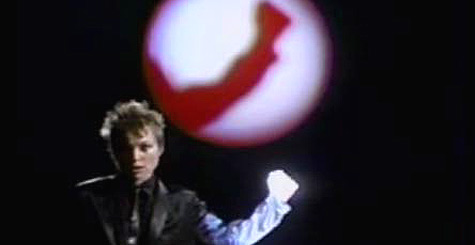 Progressive rock’s avant garde wing has always acted as a kind of disciplined version of its more mainstream cousin, dependent on self-imposed constraints, those kinds of “oblique strategies” that Brian Eno and his expanding circle of collaborators employed to spur, and rein in, their impulses. The cross-pollination of these two (sometimes warring) factions — at least as that dichotomy might have been posed by critics — was most evident in the 1970s, and was particularly expressed in the Venn diagram that was Roxy Music and King Crimson, the kind of built-in tension that ultimately made Eno and Fripp’s projects guilty of indulgence — often too smart for their own good — but also wildly interesting. Within this world landed Laurie Anderson, a New York-based performance artist whose albums in the 80s employed many of the aforementioned Eno/Crimson cast of characters (in addition to the No Wave artists Eno became associated with), and whose songs, due to their melodic charm, could work their way into the popular consciousness to such a degree that rare was the record collection by decade’s end that — if it included a Talking Heads or Belew-era Crimson album — didn’t include at least one of her works. Her influence is inestimable. “Gravity’s Angel” is from the album Mister Heartbreak, and captures her sound and approach: a partiality to electronic instruments, experimentation abetted by first-class Crimon-ish musos (Adrian Belew, Bill Laswell, Peter Gabriel), and an emphasis on finding a relief of humanity against a plane that could be coldly distant, i.e., exploring the human condition in the late 20th century. My understanding via Wikipedia is that she asked Thomas Pynchon if she could musical-ize Gravity’s Rainbow, and he replied, well, yes, if she could do so with only a banjo. That didn’t happen, but this did:
 Progarchy