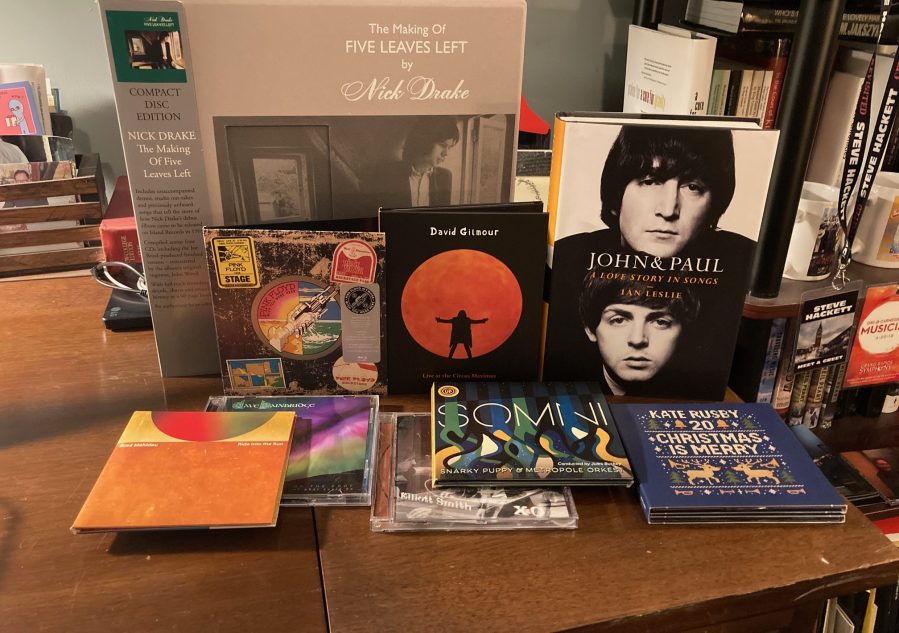
It’s been a good year for music! So good it demanded a slightly different format this time around. You can read my original reviews of my 40 or so favorites from 2025 at the article links that precede each listicle. Listings include the types of release as laid out below, with Top Favorite listings in bold italics (as well as pictured above)!
New Releases:
New Albums
Live Albums (audio and video)
Christmas Albums
Back Catalog:
Reissues
Box Sets (minimum of 3 CDs)
Discoveries (unheard until 2025)
Rediscoveries (heard before, forgotten, loved again in 2025)
Nick Drake, The Making of Five Leaves Left – Top Favorite Box Set! An utter original who died far too young, Drake’s wistful, sturdy, thoroughly unique British folk-rock gradually rose from turn-of-the-1970s obscurity to be embraced by aficionados worldwide. While his three albums (and another disc of studio leftovers) speak for themselves, this lovely box traces his progress over two formative years, from impromptu dorm-room recordings through a breathtaking audition and simpatico sessions (especially those with double bass magician Danny Thompson and master orchestrator Robert Kirby) to the uncluttered, spacious beauty of his debut. If Drake needs any advocacy beyond the sheer communicative power of his songs, here’s all the evidence you need; and as a bonus, long-time fans will find treasures they may not have known they were missing.
No big hoo-hah this year: just a down and dirty list of my favorite releases and reissues of the year, covered in previous Quick Takes or elsewhere on the Web (links are to my original articles)!
Bruce Hornsby, The Way It Is; Scenes from the Southside; Harbor Lights; Here Come the Noisemakers (live); Intersections 1985-2005 (box set); Solo Concerts (live). See my appreciation of Bruce’s career here!
Thanks for your ongoing attention and steadfast support. We at the Rockin’ Republic of Prog appreciate it! Best wishes as we all turn the corner and head into the New Year!
Well – that was a longer break than anticipated. (Sometimes, as John Lennon sang, “Life is what happens to you/While you’re busy making other plans.”) Thanks for your patience and ongoing support as we wave goodbye to 2023 and 2024 begins!
Thanks as well to Time Lord and Bryan for their 2023 wrap-ups. The flow of excellent new and reissued music continued unabated in November and December; below are some further favorites (plus some I didn’t get around to before my last post), with listening links and “micro-quick takes” to match.
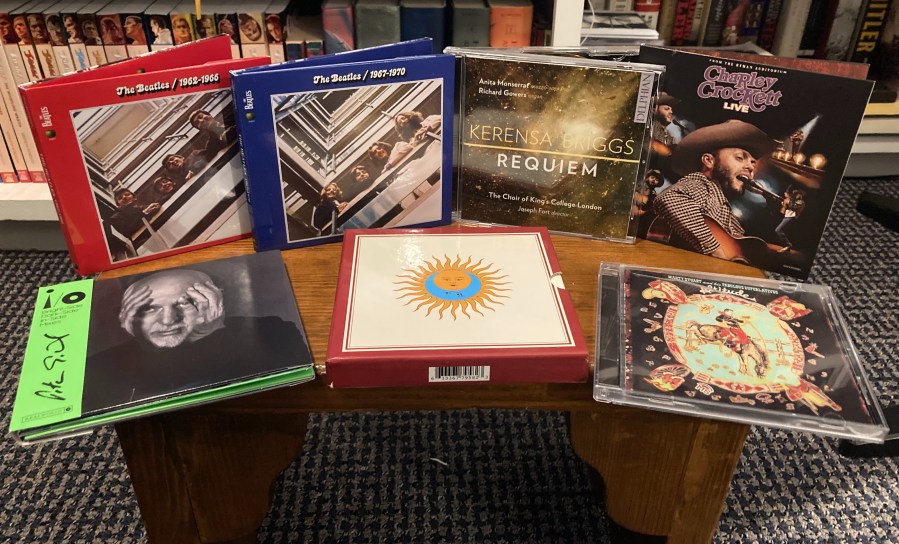
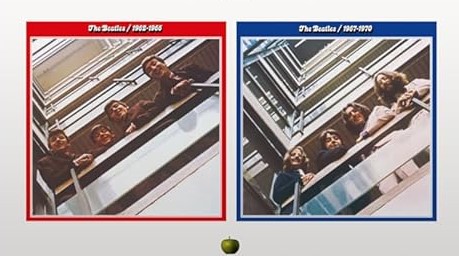
The Beatles, 1962-1966 & 1967-1970: The pioneering 1973 compilations get a cutting-edge makeover. The “Red” album expands by 12 tracks — more covers, more George vocals, more from Revolver — and everything’s finally remixed to breathtaking true stereo by Giles Martin. The “Blue” album broadens the picture of the Fab Four’s later years via 9 more tracks, with the archival swan song “Now and Then” (read Time Lord’s elegiac appreciation here) serving as a lovely, definitive coda. Fifty years on, a reminder of what all the shouting was about – and why Beatlemania has never really gone away.
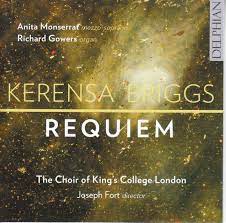
Kerensa Briggs, Requiem: The first new classical piece I’ve fallen in love with in a long time. Briggs is a young British choral composer with formidable gifts and a direct, appealing style; based in chant and ripened with echoes of the French romantics, her Requiem cuts straight to the heart of grief, consoling the listener’s spirit with its rich settings of Scriptural promises. The Choir of King’s College London, conducted by Joseph Fort, responds vibrantly on the major piece and other short works (including a setting of the Taoist text “Inner Light” that George Harrison nicked for a Beatles B-side). Restorative, uplifting and highly recommended.
Charley Crockett, Live from the Ryman Auditorium: A recent Nashville vacation (including a night at the Grand Ole Opry) triggered a deep dive into all things country — traditional, bluegrass, alternative, modern, you name it. Leaning on his Gothic concept album The Man from Waco, Texas troubadour Crockett and his band The Blue Drifters electrify a sold-out Mother Church of Country Music with this generous, rambunctious set. One of the most eclectic artists in the genre today, Crockett flavors his honky-tonk stew with everything from mariachi to Motown (check out “I’m Just A Clown”), from funk to deep blues, with props to Red Dirt forebears like James Hand and Townes Van Zandt along the way — and his thick, chewy baritone sells it all. If you crave some down-home listening, you can’t go wrong here.
Peter Gabriel, i/o:Yeah, PG has been promising new music for twenty years — but, boy, has he delivered the goods! Released a track at a time every full moon, the finished album (available in three different mixes) is a hypnotic, seductive delight all the way. Whether on atmospheric opener “Panopticom”, melancholy meditations “Playing for Time” and “And Still”, or upscale worldbeat anthems “Road to Joy” and “Olive Tree”, killer hooks, arresting soundscapes and neoclassic soul melodies abound. It’s Gabriel as you remember him — including those lyrics that swing wildly between sappy motivational speeches and sage advice — freshly retooled and energized, blazing a hopeful, humanistic path thru this century’s chaos.
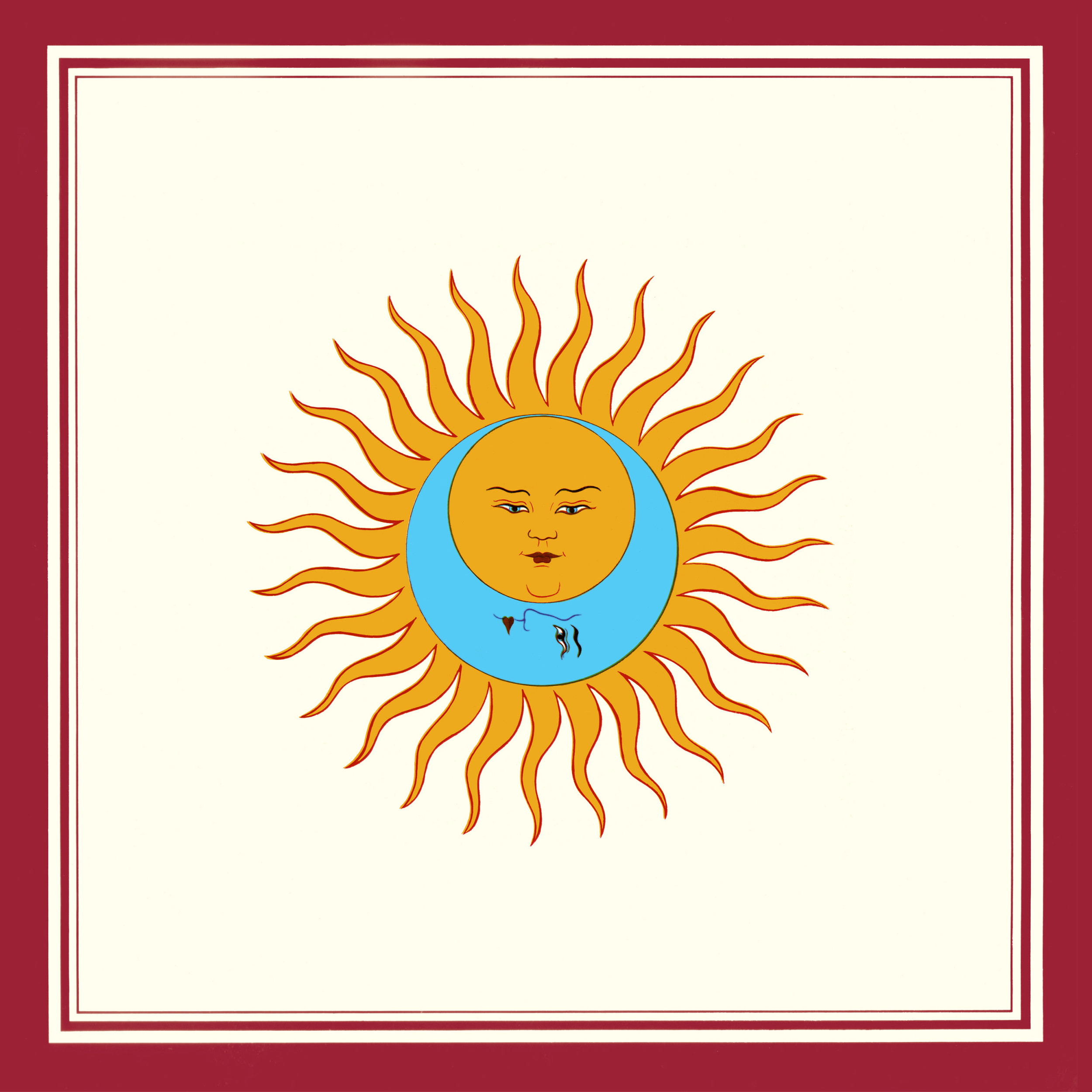
King Crimson, Larks’ Tongues in Aspic XL:Robert Fripp wasn’t kidding when he called the 1972-73 incarnation of Crimson a magic band. John Wetton on bass and Bill Bruford on drums bring the muscle; David Cross on violin and Jamie Muir on percussion add thrills in the moment. Arguably, the crunching Hendrix-meets-Stravinsky title tracks, menacing balladry of “Exiles” and improvised mojo of “The Talking Drum” set the template for the rest of KC’s career. This 2-CD/2-BluRay set includes a new spatial audio mix by (who else?) Steven Wilson, an “Elemental Mix” that spotlights individual contributions and the complete sessions for nerds like me who want to know how the sausage got made. Explosive, unstoppable stuff.
Marty Stuart and His Fabulous Superlatives, Altitude:Whether backing greats like Lester Flatt and Johnny Cash, riding his “hillbilly boogie” to a successful solo career, or charming Ken Burns’ documentary audiences, Stuart comes as close to the living personification of country music as anybody. Here he and his stellar backing band lay down some serious hoodoo: “Sitting Alone” fuses tight harmonies to a Byrdsy guitar jangle, the title track twangs with abandon, “Tomahawk” joyfully calls down the Second Coming in double time, and a hush descends for the haunting “And the Angels Came Down.” A fresh helping of Cosmic American Music as pioneered by The Grateful Dead and Gram Parsons: sleek, gutsy and deeply satisfying.
And in review, the list of my other favorite releases and reissues of the year, covered in previous Quick Takes (links are to my original articles):
Stay tuned, won’t you? With new albums due soon from Neal Morse, The Pineapple Thief, Steve Hackett, The Bardic Depths and Big Big Train (not to mention BBT’s first US tour this March), the Rockin’ Republic of Prog is ready for a banner year!
The title alone may have made you unsure if this is the kind of music for you or weary of any music put out by these apparent galvanic fruits. However, I’m here to tell you that The Electric Prunes have some incredibly notable psychedelic rock opera songs that will quite literally bring you closer to the Heavens. The Electric Prunes are better known for their consistent and classic ’60s rock ‘n’ roll sound; “I Had Too Much To Dream Last Night” is a great example of this through the band’s garage punk vibe. “Onie” is another certified ’60s classic from the group, and a personal favorite of mine because of its iconic, delicate, and melancholic sound.
However, through the name of The Electric Prunes, composer David Axelrod created some of the most unique, spiritual, and coolest psychedelic rock. The songs I’ll be covering are from an EP and album that were sort of unnecessary, but intentional additions to the discography of The Electric Prunes. Personally, I think they are fascinating creations by Axelrod and worthy of praise by fans of psych. The following songs consist of delectable and extraordinary blends of R&B, rock, psychedelica, Gregorian music, soul, and jazz. So, get ready for a spiritual awakening of sorts.
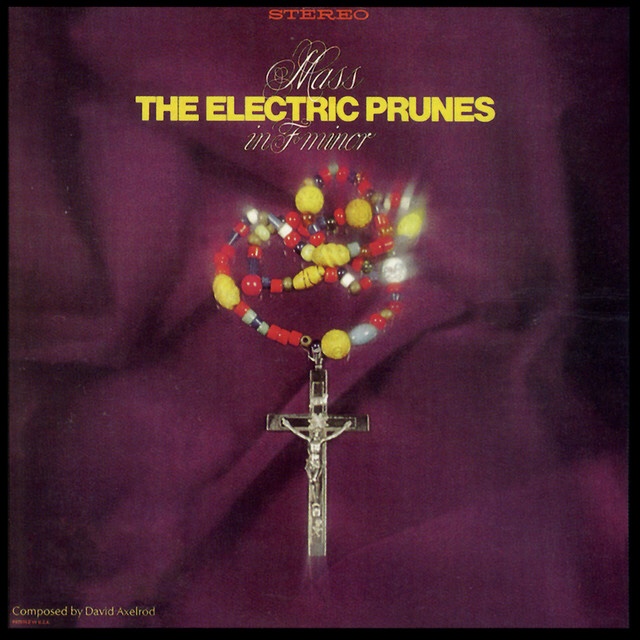
Mass in F Minor was the EP that started this short, but very interesting phase for the band. It consists of six tracks which are entirely sung in Latin, and is almost thirty minutes of a psychedelic mass. What you’ll notice throughout the songs is the authenticity of Gregorian chant and its use of what is known as “stepwise motion”. Stepwise motion is when each note in a melody moves up or down a single note. It creates this singular and uniform sound, making this EP a respectable piece to this medieval craft. In addition, drummer Michael Weakly stabilizes a jazzy feel by holding all of the other musicians’ instrumental parts together. Interestingly enough, this release was sort of the start of the decline of The Electric Prunes due to their inability to keep up with their producer David Hassinger’s demands for the EP. The band played on every track, however, session musicians were brought in and, in a sense, took over the project. As unfortunate as this was for the band members, some great music was created. David Axelrod is really the genius behind this concept and why it works so well; he wrote and arranged everything. Axelrod’s style shines brightly throughout, creating such a solid set of confident and holistic tracks. Stripping it down to the basics: the blend of the vocals, electric guitar, drums, bass, and organ form this cadence that really itches the part of my brain that adores the aesthetics of the past.
Cover art for Mass in F minor EP
The opening track: “Kyrie Eleison”, better known from cult classic film Easy Rider, is sung boldly and outspokenly by lead singer James Lowe. I think Lowe did a great job on all the tracks—he really added so much mystique and graveness. There’s a point in the song when Lowe’s vocals are isolated. You really get immersed in it all because he truly sounds like a man of religious order, strongly citing a sacred chant for a congregation to hear. This song, along with the others, have a signature ’60s rock sound mixed with music that goes back hundreds of years. Without his superb vocals, I would not be transported to a daydream of ancient ceremony and royal garbs. The simple guitar riff and drum combo as soon as the song starts is cool and collected. The guitar reverb is essential in creating that dreamy, psychedelic effect. Every time I hear it, I can’t help but sway. Another cool thing in the song is this brief guitar rendition of the song “My Favorite Things.” Guitarist Ken Williams plays this demented version of it for just a few seconds towards the end of the song.
The song “Credo” is my favorite example of the use of stepwise motion. The song starts off pretty regular and then it jumps to this faster pace cadence with Lowe’s vocals leading a fleet of instruments. It is only a small portion of the song, but it is so catchy. Lowe is surfing off that singular melody with a massive wave of instruments behind him. The rest of the song is pure instrumental rock ‘n’ roll with subtle trickles of allure.
My personal favorite song is the last one off the EP titled “Agnus Dei”. This song starts and ends with so much confidence. I can see David Axelrod’s vision so clearly with how he arranged and directed this piece. This song does not quiver or feel unsure of itself, but instead almost stands on its own as this beautifully written piece. The fusion of stringed instruments and electric guitar blend with grand conviction. In the beginning, Lowe sings the title of the song and after a momentary pause the stringed instruments emerge gracefully. Then, the rock ‘n’ roll begins: Weakly starts things off with a simple groove, and then, the iconic, echoing reverb of the electric guitar takes over. The unification of the orchestra and rock is one of my favorite parts of the song. I can’t help but get lost in the music. Midway through is this instrumental tunnel the musicians take you into. It’s Williams’ guitar and the strings surfing through this cosmic echo chamber that I never want to leave. Ultimately, this song is solid throughout and unwavering.
Listen to “Agnus Dei”—my favorite song from this EP
Not too long after Mass in F minor, their next album, Release of an Oath was released. It is the same concept as its predecessor with its religious undertones intertwined with rock and jazz fusions. This album is centered more around R&B type tunes and is sung entirely in English. At this point, the original Electric Prunes had disbanded. The musicians playing on this album are an entirely new set of people. It was kind of sad to learn that this was not the original band nor was it done in the true spirit of The Electric Prunes, however, some truly unique music was born in the process; there is no doubt about that. Just like the previous release, Axelrod created a solid set of songs that matched one another very nicely. The instrumentals are an easy listen for all fans of psych, so it’s a no brainer to check this album out. My favorite parts of this album are the drums and keyboard.
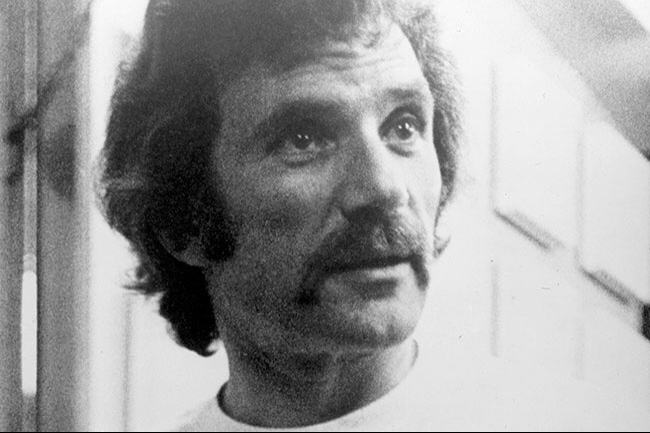
David Axelrod, the man behind Mass in F minor and Release of an Oath
“Holy Are You” is the most recognized song from the album, and rightfully so, because this song is absolutely timeless. The beginning, middle, and end take you on this beautifully mastered journey. Within the first minute of the song we go from a simple keyboard and vocal combo to a groovy R&B beat. The percussion in this track is incredible. It is no wonder this song has been sampled many times by Rap and Hip-Hop artists. (Sidenote, “Respect Mine” by Fat Joe is a perfect example of a great song that sampled “Holy Are You”). Drummers, Earl Palmer, Gary Coleman, and Richard Whetstone elevate the song entirely and are the reason the song is such a contemporary tour de force, in my opinion. With every groove and fill carrying the song to mastery, I can’t help but dance and sing along every time I hear it. A part I really love from the song is when you can hear the percussion, flute, bass, and keyboard create this enchanting jam. The keyboard adds this delightful twinkling sound to the mix that just whisks the listener away into an instrumental dream. And, of course, the insanely awesome guitar solo is another notable feat. Every note and every instrument in this song feels absolutely necessary and purposeful. I can not stress this enough: the unity of the orchestra, R&B, and electric guitar are perfect. This song is simply fantastic and is truly an example of Axelrod’s best.
Listen to this legendary R&B song “Holy Are You” by The Electric Prunes
The other song I want to briefly cover from this album is “Closing Hymn”. As you can tell from the title of the song, it is the final one on the album. I really enjoy the repetition in this track and the tune overall. Again, you have this killer drum beat that holds everything together and makes you want to dance along. Despite being such a simple note change from up to down and vice versa, keyboard Don Randi performs a wistful lulling effect through this. The dreamlike sound of the notes brushes you softly like the touch of flower petals and the subtle reverberation in the ending of the notes are a hollow, ethereal echo. It is such a pretty song and a great close to the album.
I learned a lot while writing this review, but I’m most excited about hearing more of David Axelrod’s works. I listened to a few of his solo works and I have to say I think I found another style of music that deeply resonates with me. He does such a great job blending genres together like I’ve never heard before. Even though this psychedelic gospel wasn’t what the original Electric Prunes had in mind, some truly special melodies were made in the process. David Axelrod did good in the name of The Electric Prunes. Thank you to all the musicians involved in these pieces and thank you for reading.
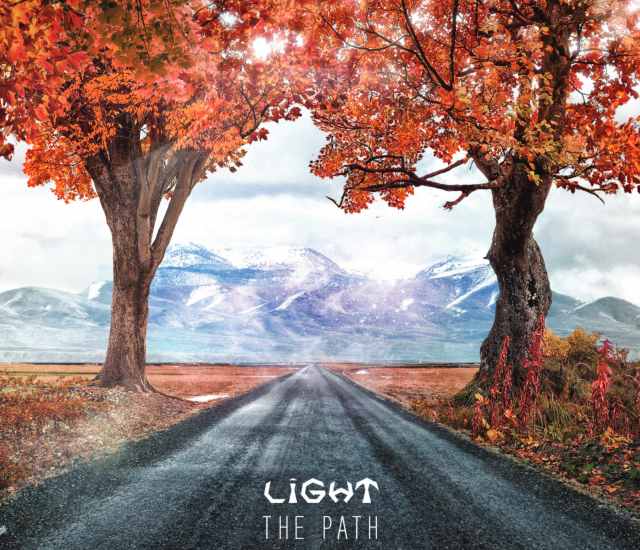
Light, The Path, January 8, 2023 Tracks: Seekness (14:15), Cornua (1:31), The Sweet Release Of Death (5:04), Blue Sun (8:38), Tibia (1:19), Betray (3:13), Newts (6:44), Electris (1:40), The Sublimation Of An Oak (4:13), Tympana (1:23), Dive (13:57), Chalemia (1:47), Mesmerize (3:12), Burning Birds (7:12), Lux Æterna (3:24)
Light is the brainchild of Toulouse, France, based artist Camille De Carvalho, who wrote The Path together with Auriann Rossard, Loup Vaillant, and Paul-Henry Touzac. Carvalho plays an astounding number of instruments on the record, from keyboards to clarinet to duduk and everything in between. She’s joined by a talented cast of other musicians providing additional orchestral work as well as guitar, bass, drums, and vocals. The record is a unique blend of prog, jazz, and classical, leaning most heavily on the symphonic with a distinctly modern flair.
“Blue Sun” perhaps best exemplifies what Light does best. The symphonic overtones dominate, but the overall sound gradually builds adding in the rock elements as it crescendos in a King Crimson-esque wall of controlled chaos. The vocals come in after the midway point, adding further depth to the sound. As the record moves along, the vocals increase, typically in a more classical form than the lead vocals to which rock listeners might be accustomed.
The album’s mix is very lush, with the varied instruments all sounding clear in the mix. There’s a lot of depth to the overall sound as well, making it a very immersive experience.
The Path is an album that will stretch the typical prog fan’s ears, but there is much to enjoy in this album.
Progarchy got the chance to interview Light mastermind Camille about her recent release and what it took to make this project a reality.
You released an album in January 2023 entitled “The Path” How do you feel about the release?
I’m very excited ! I’ve been working on this for 14 years, almost half of my life !
I’ve spent so much time and money in it, it’s really strange to see it done. I thought (and many of my friends too) that I’d never finish it, that I’d always find something to change, to add, to tweak… Having now the CD in my hands feels unreal.
How much of a challenge was it to work on the album?
It was the most challenging thing I’ve ever done. Basically, I wanted to write for orchestra, but I had no orchestra and the ones I contacted were not interested.
I had to learn to play around 100 instruments, spend all my evenings playing, writing, practicing or reading books about how to write for all of these instruments.
And then when I met the first persons interested by the project, I had to manage the recordings, the rehearsals, the writing of the lyrics, the communication…
It was really a lot, but I stayed determined.
Speaking of challenges, did you set any in the early phase of what has become the final result?
Yes, at the very beginning, the challenge was to record an album featuring only keyboards (then I heared White Noise 2, hated it, and decided it was a bad idea)
Also, every piece I wrote was challenging : there’s always a point where I tell myself «and what if, instead, I did this ?» and it’s always some horrible over complicated polyrythm, or scale… the piano part of Dive, for example, is really a nightmare to play. I wrote it in 2010, and managed to play it in 2020, after years of working on my fingers independance and stamina
Tell us about the different instrumental aspects that you explore on these new songs.
I tried to mix a lot of genres, mainly prog rock but also jazz, classical and a little bit of metal. But the main way I see my music is that I want to write impossible things.
Apart from the interludes and maybe one or two simple tracks, all are impossible to play live as is : it can be because of the polyrythms (particularly the infamour 107:100:93 in Blue Sun, or the 48:47 in The Sublimation of an Oak), the time signatures (I used some things like 61/32 and 47/16), or the instruments’ balance : as every instrument is recorded separately, I can make the ocarina sound louder than the trombone for example, and it’d be impossible in real life. I wanted to push the complexity as far as I could, but keep “listenable” by anyone. I don’t want my music to be seen as really harcore to listen to, even though I love some pretty hardcore bands. I want people to groove, in a way, when they listen to it. To think it’s strange, but in a good way.
I love math, and used a lot of formulas or concepts to create a starting point for the tracks. I don’t let math do all the work, because I didn’t like the results obtained by the people who tried it; I only use it as a basis and it’s often a challenge to adapt to what it has created, because it doesn’t follow musical logic. I drew explanation for the things I used and put it in the booklet, you can try to decypher it and find how it has helped me.
Also, all the interludes are inspired from plain chant, a singing technique used by monks in medieval times. I love it ! And it’s so rarely used
What is your opinion about the current progressive rock scene?
I must confess I don’t listen to enough new bands, there are so much things to discover in the past I tend to forget the present ! But still, Auriann, the drummer of the band, is constantly searching for new music and dragging me to shows so I know some, like Ni, PoiL, Piniol, Pryapisme, Sungazer, Haken, Myrath… I think prog rock never died and will never die, and now with modern techniques and instruments, we can push the music further than ever. You have to search for them, but there are really good bands currently.
Let us know about your influences—the artists that in a way shaped and continue to shape the your music.
Haha it’s hard to answer without being boring so I’ll limit myself, but I have to categorize :
In classical music, I’m really fan of the beginning of the 20th Century : Ravel is my first love, Holst the reason why I’m not single anymore, and Lili Boulanger my current obsession.
For rock, my 2 main and most obvious inspirations are Magma and Frank Zappa, and I’m a huge fan of Gentle Giant, King Crimson and all the 70’s era.
For jazz, I’d say that Coltrane, John Zorn, Andy Emler and Louis Amrstong shaped my tastes, even if their influence isn’t as prevalent as Zappa’s or Holst’s in this album
What are your top 5 records of all time?
Hard question, I think it is for everyone. I think the best way to answer it is with rare unknown albums, as they’re better to help understanding the tastes of someone. So yes, I could say Relayer by Yes, or Kid A by Radiohead and sure, they’re great, but it’s also obvious that I love them.
Here is my pick :
1 – “Everywhere At The End of Time”, by The Caretaker : my biggest musical shock, an album about dementia ; you can’t stay the same after you’ve listened to this madness
2 – “Trout Mask Replica”, by Captain Beefheart : well known, but I had to. A lesson in what is freedom, and music. Try again if you hate it : you’ll get it (eventually)
3 – “8”, by Supersilent : it’s an improvisation band, without any planning or concertation. First time I listened to this, I was at work : the walls and roof disappeared and I suddenly was in a cold storm, completely lost. My tasks did not progress after that
4 – “Rire, c’est pas sérieux”, by Raoul Petite : I love Zappa but as english is not my main language, I don’t always understand the lyrics. Well if you love Zappa but speak french primarily, there’s Raoul Petite for you
5 – “Circus”, by Circus : this album taught me something very important : to shut up. Sometimes, there are unexpected silences in their music, and it creates a very peculiar atmosphere that can be mimicked by nothing else. I can’t say I used it in my album, at all, but I will probably in the future
Besides the release of “The Path” are there any other plans for the future?
I’ve already started to write the concept of the next album, which will be greatly inspired by the life of Lili Boulanger (and her music).
Also, a music video will be released with the album, and I have a few covers I still have to finish recording, as they were rewards of the Kickstarter campaign. I’m currently working on Shine On You Crazy Diamond, it’s nearly finished ; it’ll contain no guitar, no bass and no drums… you will see!
It’s been another excellent month for new music. So let’s just cut to the chase, shall we? Purchase links are embedded in the artist/title listing; playlists or video samplers follow each review.
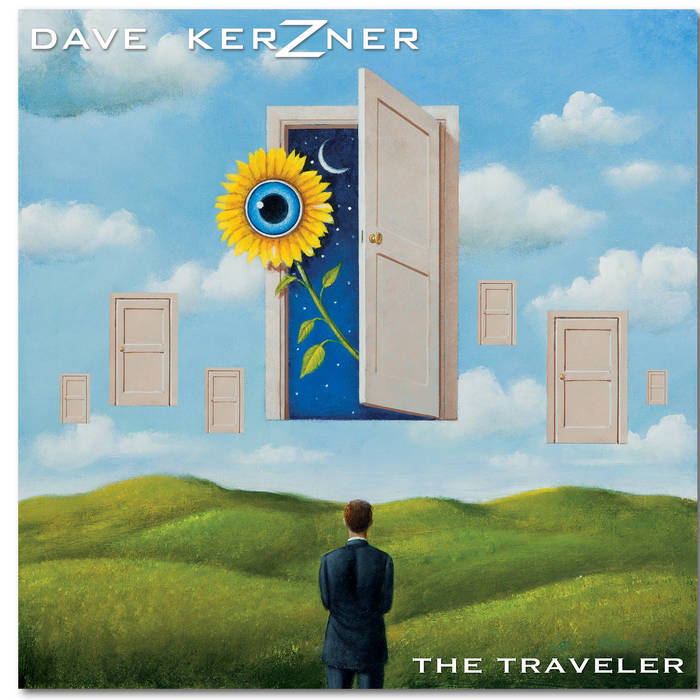
Dave Kerzner, The Traveler: A third concept album from Kerzner, continuing the through line of New World and Static (with nods to In Continuum’s Acceleration Theory lurking about as well). The opener “Another Lifetime” sets out this record’s remarkable strengths: confident, appealing songwriting with hooky yet sophisticated melodies and structures; Kerzner’s best, widest ranging vocals to date; and the perfectly judged contributions of Fernando Perdomo on guitar, Joe Deninzon on violin, Ruti Celli on cello and Marco Minneman on drums (only a smattering of the stellar guest list here). The dry, forward sound and the copious use of vintage keyboards on tunes like “A Time In Your Mind” evokes early-80s Genesis at times (since Kerzner got those keyboards from Tony Banks, no real surprise there), but the power ballad “Took It For Granted” and the closing suite framed by the two parts of “Here and Now” show Kerzner moving his character’s story forward while striking out in fresh musical directions like the sunshine guitar pop of “A Better Life”. Overall, Kerzner exhibits a lighter touch here, and The Traveler is the better for it; by letting his new songs sell themselves and keeping proceedings to the point, he both satisfies us and leaves us wanting more. After repeated listens, this one’s already on my “favorites of ’22” list!
Lonely Robot, A Model Life:John Mitchell has had a rough last few years, and he doesn’t care who knows it. In the wake of a global pandemic, the collapse of a long-term relationship, and a confrontation with his deepest doubts and fears, Mitchell’s done what he does best: slip into his Lonely Robot persona and pour it all out in a fine set of laterally structured, elegantly crafted, fearlessly emotional songs. Writing, singing and playing (especially in his rekindled relationship with the guitar solo) at peak inspiration, Mitchell lays the ghost of his former love (the nervy “Recalibrating”, the forlorn “Mandalay”), skewers our mad world (“Digital God Machine” and “Island of Misfit Toys”), mourns ways of lives and times now in the rearview mirror (the breathtaking ballad “Species in Transition”, the crunching elegy “Starlit Stardust”), and ponders how and why he became who he is (the brilliant final run of “Rain Kings”, “Duty of Care”, “In Memoriam”). Easily his best work under the Lonely Robot banner, Mitchell wears his heart on his sleeve and plays to the gallery at the same time; this is an outright spectacular effort that’s got both all the feels and all the chops. (Check out our latest interview with John Mitchell here.)
Motorpsycho, Ancient Astronauts: the kings of Norwegian drone-prog continue their enviable hot streak on their fifth album in six years. “We’re all a little bit insane,” Bent Saether chirps on the opener “The Ladder”, and as the track spirals upward, mingling the howl of Hans Magnus Ryan’s guitar and Saether’s darkly glimmering Mellotron, you believe him. The edgily abstract interlude “The Flower of Awareness” cleanses the palette for a Crimsonesque workout on “Mona Lisa/Azrael”; Ryan builds towering edifices of distortion over a trademark Saether riff, as drummer Tomas Jarmyr matches their ebb and flow all the way through the shuddering climax and the slo-mo collapse. Astonishingly, all this just serves as prologue to the “Chariot of the Sun: To Phaeton on the Occasion of the Sunrise (Theme from an Imagined Movie)” It’s as if Motorpsycho’s brief for this 22-minute finale was to rival “La Villa Strangiato” in both range and focus; gentle strumming and wordless vocals give way to more menacing bass riffs, fuzz guitar deployed in duet and counterpoint, feral percussive cross-rhythms. It all mounts to multiple climaxes (a mighty unison riff, ominous post-rock minimalism) that circle back to end with the melancholy lyricism that kicked it all off. Ancient Astronauts is a genuinely thrilling ride; strap in and brace yourself for liftoff.
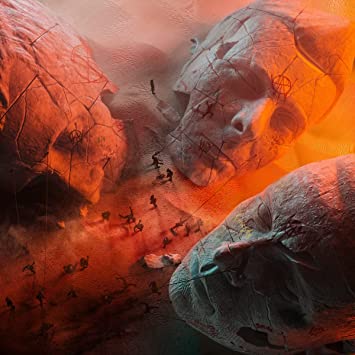
Muse, Will of the People: they’re baaack!!!!!! And as usual, Matt Bellamy, Chris Wolstenholme and Dominic Howard earn every one of those exclamation points. The guitars and drums are turned up to 12, the classical keyboard licks pack double the bombast (including a Bach “Toccata and Fugue” steal), the electronica wallows in creepshow kitsch, the vacuum-packed harmonies are piled even higher, and the gang chants are bellowed louder than ever. All this sound and fury portrays a world on the brink, an elite obsessed with control, and a populace angry that the game is rigged. Still, it’s hard to know who Bellamy is rooting for; at times, his lyrics and driven singing seem equally repulsed by both the leaders (“Compliance”, Kill or Be Killed”) and the led (the title track and “Euphoria”). But in the end, this is quite the slamming album; if you’re in the mood for existential desperation set to one badass, air-guitarable riff and singalong chorus after another — and these days, who isn’t? — this just may be your ticket. Might want to only play that obscenity-laden final track when no one else is around, though.
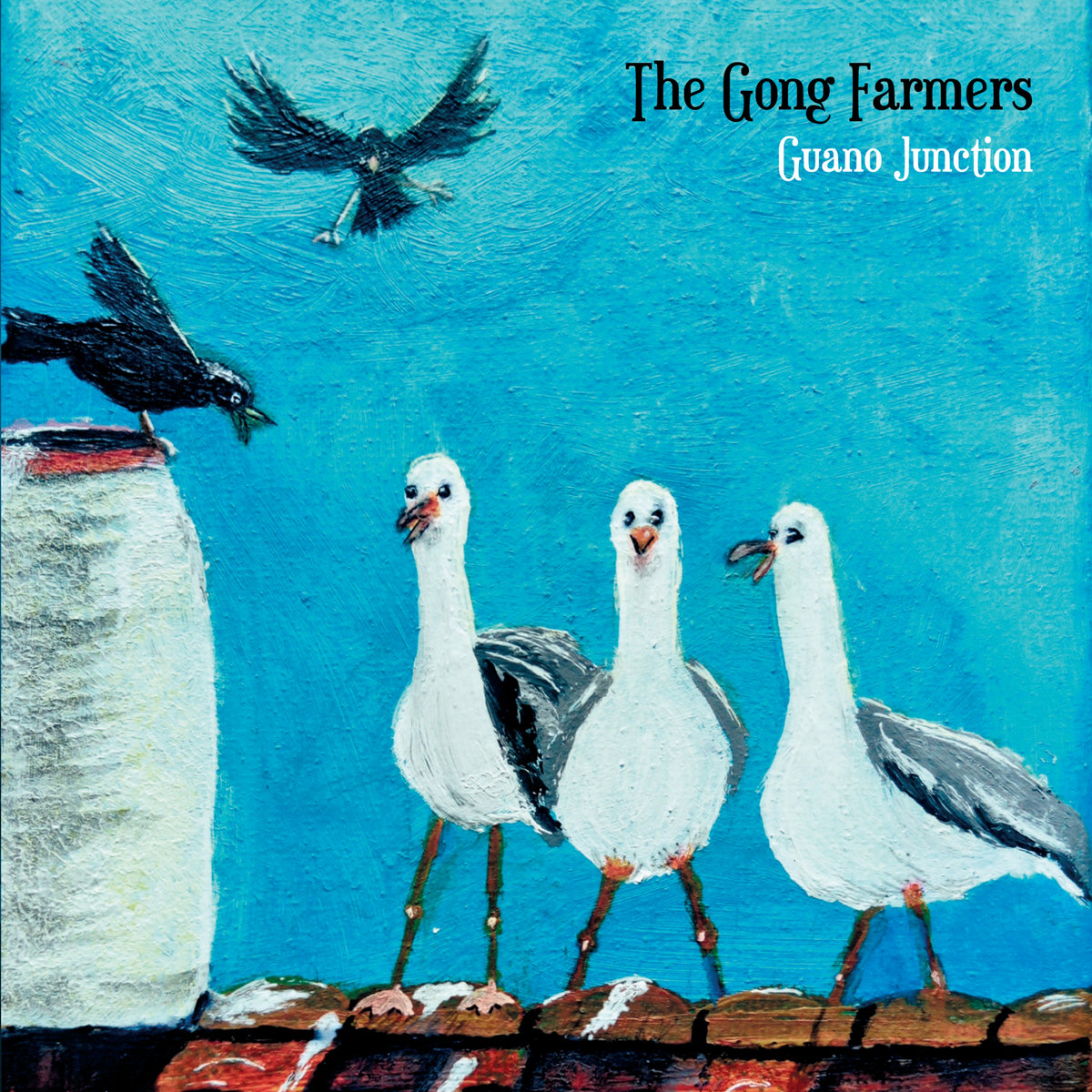
The Gong Farmers, Guano Junction, Spaceward Records, November 5, 2021 Tracks: As Sunlight Falls 1 (2:26), Drive (6:14), Pip, Squeak and Wilfred 1 (3:56), Guano Junction 3 (2:43), Evergreen (4:24), As Sunlight Falls 2 (2:42), Vista de Toledo (3:22), Guano Junction 2 (3:52), Wednesday Afternoon (4:42), SHAVE! (1:41), Winter Hill (3:32), Dark Skies (4:19), Pip, Squeak and Wilfred 2 (3:28)
I have to start off this review talking about the best band name I’ve heard in a while. Before today I was blissfully unaware of what a gong farmer was, having not heard the term before receiving this CD for review. It’s kind of funny, actually, considering one of my main focuses as a history major in undergrad was early modern Europe, but there’s always more to learn. I looked it up, and a gong farmer was someone in Tudor England tasked with cleaning excrement from outhouses. While that might lead you to believe that Guano Junction is a steaming pile of… gong, nothing could be further from the truth. The album is quite good, with a mature sound and a delightful array of influences.
The Gong Farmers are primarily Mark Graham (vocals, synthesizers) and Andrew Keeling (classical guitar, flute, piano, organ), but they are joined by a very talented cast of supporting musicians, including David Jackson, the saxophonist for Van Der Graaf Generator. Here’s a list of everyone else who played on the album:
Alex Che (vocals, synthesizers)
Cliff Hewitt (drums, percussion)
René van Commenée (drums, percussion)
Ricardo Odriozola (violins)
Ben Keeling (electric guitar)
Martin Walker (electric guitar)
Brian Taylor (electric guitar and textures)
Noko 440 (viola and string arrangements)
The array of musicians should give you a hint of the variety found in their music, which bears elements of 1960s psychedelic rock (could be why they are on a label called Spaceward Records). Their sound expands beyond that, though, incorporating electronic, symphonic, jazz, and, of course, prog elements.
“Pip, Squeak and Wilfred 1” and “Pip, Squeak and Wilfred 2” are my favorite tracks on the album. They simultaneously have a strong Moody Blues influence and a huge Muse influence. The vocal effects on the song really bring in the Muse sound, reminding me a lot of “Exogenesis,” the three part symphony that ends Muse’s brilliant 2009 album, Resistance. The lyrics on these two tracks are short and simple, but they make you think.
Today I found my father’s medals in a drawer
And I thought of all the sacrifice,
All the sufferings of war
As you can see from the tracklisting, these songs are on the shorter side. They work together to form a cohesive sound, although the songs stand by themselves. “SHAVE!” is a strange track, being more a collection of various sounds and textures, which would be the psychedelic side of things. I suppose it reminds me a bit of the beginning of “The Waiting Room” off Genesis’ The Lamb Lies Down on Broadway. Speaking of Genesis, the inclusion of flute throughout Guano Junction reminds me a bit of them, although “Guano Junction 3” also has some Jethro Tull to it.
Classical guitar plays a fairly prominent role on the album. At times it reminds me of some of Steve Hackett’s more recent solo work. “Evergreen,” for instance, has that world and classical influence, although I hear some Muse-style sounds towards the end. The gentle and melancholic Spanish-style guitar on “Vista de Toledo” has a very warm and contemplative feel. Lyrically the track is a love song reflecting on lovers apart from each other. The melancholy in the music reflects those lyrics rather well.
“Dark Skies” has a sparse Floydian guitar solo that is played over simple plucked strings with vocal effects swirling around. It’s a simple way to frame a guitar solo, but it works in the context of The Gong Farmers’ music.
For me “Pip, Squeak and Wilfred” parts 1 and 2 are worth the price of admission. They stand out on the album with a compelling symphonic melody and atmospheric vocal effects that take you to another dimension. The flute playing in the background makes it that much better. If you listen to anything off this album, make it those two tracks. But do yourself a favor and check out the rest of the record while you’re at it. It has a compelling blend of psychedelic spaciness with symphonic overtones.
I thought I didn’t have a big list of favorites from this year’s listening — until I revisited my six-month survey from back in June and added in the good stuff I’ve heard since then! The listing below incorporates links to full or capsule reviews, or other relevant pieces on Progarchy and elsewhere; albums I haven’t written about yet get brief comments, along with my Top Favorites of the year. Most of these are available to check out online in some form; if you find yourself especially enjoying something, use that Christmas cash and support your choice with a purchase! And the winners are . . .
As life in these United States opens up, my life finally seems to be settling down — at least for the summer. Which means it’s time to make up for the backlog of excellent albums (new and old) that I’ve heard since January, but haven’t written about here! Links to listen (to complete albums or samples) are included whenever possible.
New Albums:The Art of Losing (The Anchoress’ rich meditation on endurance) and the multi-versionadrenalin rush of Transatlantic’sThe Absolute Universenotwithstanding, most of the new albums I’ve loved so far have migrated towards jazz and classical — frequently with pianists at their center. Vijay Iyer’s Uneasy, made with bassist Linda May Han Oh and drummer Tyshawn Sorey, is a state of the art piano trio effort; blues and abstraction suspended in perfect balance and caught in an intimate, tactile recording. Canadian Bach and Mozart specialist Angela Hewitt shows off her range with Love Songs, a gorgeous confection of orchestral and art song transcriptions assembled in lockdown and performed with undeniable panache. The same goes for Danny Driver’s phenomenal rendition of Gyorgy Ligeti’s hypermodern 18 Etudes — virtuoso pieces whose serene surfaces turn out to be rooted in super-knotty counterpoint and off-kilter rhythmic cells. My favorite new album of 2021 to date? Promises by electronica artist Floating Points, spiritual jazz saxophonist Pharoah Sanders, and The London Symphony Orchestra, which manages to bring all of the above (well, except for the piano!) together in one glorious, 40-minute ambient epic.
Reissues: Big Big Train’s double-disc update of The Underfall Yardhas definitely had its share of listening time, between Rob Aubrey’s rich remix/remaster and the welcome bonus disc (featuring fresh recordings of the title track and “Victorian Brickwork” by the full band and brass quintet). With My Bloody Valentine’s catalog back in print, their masterpiece Loveless sounds as incredible as ever; crushing distortion and lush romanticism collide to channel the sublime. And Pete Townshend has masterminded a comprehensive Super Deluxe edition of The Who Sell Out, the band’s pre-Tommy high point. But my favorite reissues thus far have been It Bites’ The Tall Ships (especially the title track — what a power ballad!) and Map of the Past (a favorite of mine since its original release). With the then-unknown John Mitchell taking over from Francis Dunnery, IB sailed into the 21st century with their 1980s pomp intact, killer hooks, head-spinning riffs and all.
From the Catalog: All the good new stuff above aside, this is where some of my most fruitful listening has been happening this year — frequently inspired by other media. Watching the movie One Night in Miami led me back to Sam Cooke’s Portrait of a Legend: 1951-1964; the resulting dive into soul music ultimately brought me to Marvin Gaye’s classic concept album What’s Going On — 50 years old in 2021! Perusing various “best of 2020” lists turned me on to the avant-garde jazz of trumpeter Ambrose Akinmusere’s on the tender spot of every calloused moment and Maria McKee’s art-pop song cycle La Vita Nuova (inspired by Dante, no less). Jazz/fusion legend Chick Corea’s death prompted a deep dive into his catalog; new favorites included Return to Forever’s Where Have I Known You Before and the fabulous Five Peace Band Live, Corea’s long-delayed collaboration with guitarist John McLaughlin. And after long years of the album doing nothing for me, Radiohead’s The Bends finally clicked when I read Steven Hyden’s fine band biography This Isn’t Happening. (Curt Bianchi’s wonderful new book, Elegant People: A History of the Band Weather Report, is prompting a similar deep dive into that quintessential jazz/rock band’s catalog; I highly recommend their cutting edge debut album from 1971 and their 1976 masterpiece of groove, Black Market.)
So, yeah, it’s taken a while — but at least from my point of view, 2021 has already been a solid year for music — and the prospects for it getting even better are looking up!
There has been a lot of music to wade through thus far in 2021. Most good. Some not so much, depending on who you ask. Despite the title of this post, I don’t think my four favorite albums of the year thus far represent each month, but who cares. Let’s go!
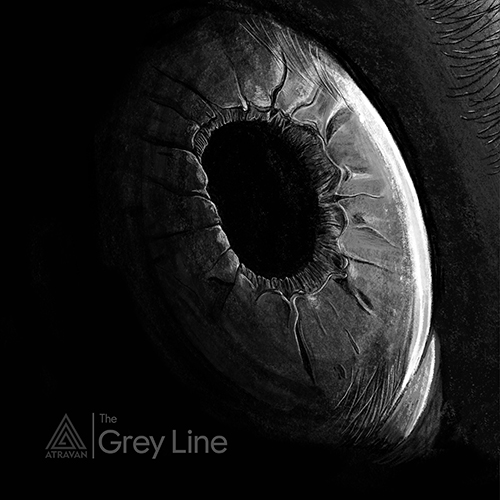
Atravan – The Grey Line
This album was the biggest surprise of the year, so far. Out of the blue back in January, Shayan Dinati of Iranian prog-metal band Atravan contacted us about a review of their album. I gave it a listen and immediately discovered this was worth spending a lot of time with. They dwell in the area of prog metal perfected by Riverside – atmospheric and brooding with thoughtful lyrics. Sure, they’ve got room for improvement to reach the heights of Riverside, but this is a great album in its own right. I was hooked right away, and I highly recommend the album. The Dutch Progressive Rock Page had similar praise for Atravan: https://www.dprp.net/reviews/2021-032
Steve Hackett – Under A Mediterranean Sky
When I heard last year that Mr. Hackett was working on an acoustic album, I was very excited. I’ve really enjoyed his recent solo output. His last three rock albums are some of the best from his entire solo career. But I also really like his acoustic moments, and he doesn’t disappoint on Under A Mediterranean Sky. He takes us on a grand instrumental tour of the Mediterranean, something sorely needed in an age of travel restrictions. The combination of his stunning guitar work, Roger King’s masterfully arranged symphonic notes, and various world instrumentation make this a beautiful and contemplative album. It isn’t rock, but it’s gorgeous. Check out Rick Krueger’s review: https://progarchy.com/2021/02/02/steve-hackett-under-a-mediterranean-sky/
Nad Sylvan – Spiritus Mundi
Nad Sylvan’s latest solo album is a slight departure from his last three albums, but it’s just as good an album, if not better. Putting the poetry of William Butler Yeats to music may not be a new idea, but Nad has done a wonderful job with it. The album has its rock moments, but it also has pastoral tones that haven’t been as prevalent in his work. His voice is top notch with a versatility that shows he is so much more than a Gabriel or Collins sound-alike. Check out Rick Krueger’s recent interview with Nad, and check out my review.
And now for my favorite album of the first four months of 2021…
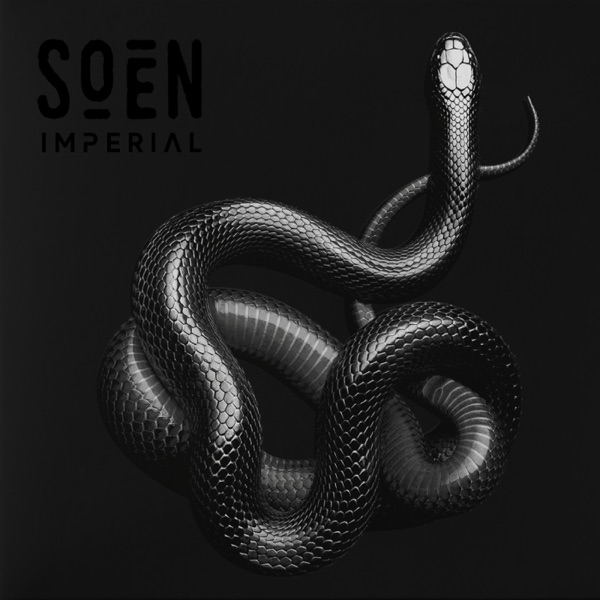
Soen – Imperial
Swedish prog metal supergroup Soen can do no wrong, it seems. I first became cognitively aware of Soen a couple years ago through one of the editors at the Dutch Progressive Rock Page, who frequently sang their praises in reviews and best-of lists. I quickly became a fan of their last couple of albums, and I was pleasantly surprised when I stumbled across their new release back in January. I was listening to their 2019 album, Lotus, one Friday evening when I wondered if they had any new music coming out soon. It just so happened that they released Imperial that very day, so I dowloaded it and have been happily enjoying it ever since. It’s heavy when it needs to be, but it can recede to quieter moments when necessary.
Joel Ekelöf has one of the best voices in metal, and he really sets Soen apart. They have a heavy guitar crunch that’s more typical of mainstream metal and hard rock bands, but the music is distinctly progressive. Their melodies and lyrics are catchy yet intelligent. My only complaint with the album is that it isn’t longer. It’s 43 minutes, but I could easily listen to much more. Great stuff.





 The Gong Farmers, Guano Junction, Spaceward Records, November 5, 2021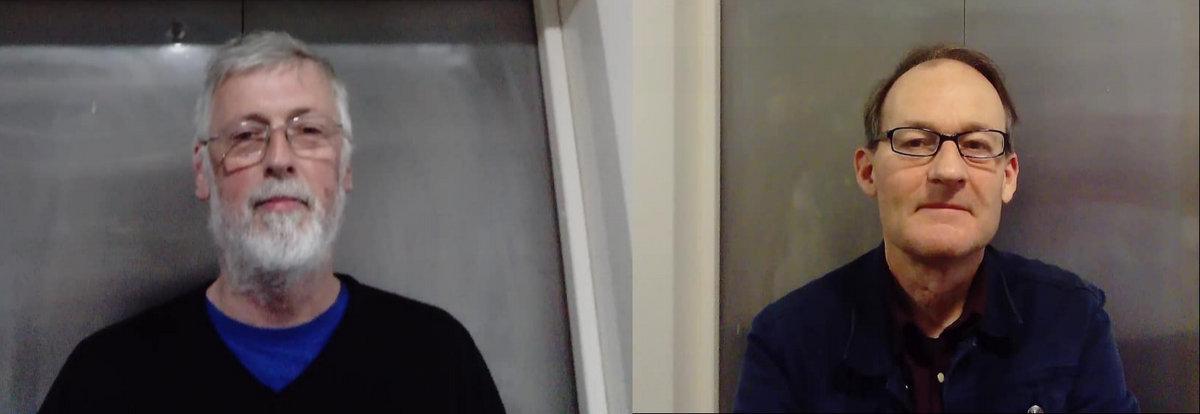
 Atravan – The Grey Line
  Steve Hackett – Under A Mediterranean Sky
 Nad Sylvan – Spiritus Mundi
  Soen – Imperial
 Progarchy