Ran into this Scientific American article on Death Metal.
“Those positive emotions, as reported by death metal fans in an online survey that Thompson and his team conducted, include feelings of empowerment, joy, peace and transcendence. So far, almost all of the anger and tension Thompson has documented in his death metal studies has been expressed by non-fans after listening to samples of the music.”
Probably, psychologists should be studying the non-fans, on why they are unable to decipher that grand symphony.
The most complex of patterns is comfortably buried beneath a wall of rich chaotic sound. So, in spite of being substantive, intellectually and physically demanding, the uninitiated simply may not have the ear. We can appreciate the textures and the grand symphony only with some ability to abstract away that pulverizing sound. Actually mandates higher levels of cognition – sort of the mark of an ageing and civilized genre.
Below write-up is eleven years old, and slightly edited for my present sensibilities.But the album is still timeless.
Opeth’s ‘Still Life’ – that perfect arrangement of death, progression and blues. Always listen to this record uninterrupted from “The Moor” to “White Cluster”, the band simply extends the boundaries of progressive death. There is always that one album which defines the artist and forms the cornerstone of their whole music. But with “Still Life”, Opeth has pushed their own creativity to insane heights — of near impossible emulation.
Here the band actually transcend the normal decorum of mathematics, high (means progressive) and low (means death metal) mixed together isn’t a big nothing. Akerfeldt must have been simultaneously strung up on Alcohol and grass when he wrote ‘Still Life’. Mind you, the record doesn’t hit you hard, instead it methodically seeps into every iota of musical nerve and gets ingrained there. Been listening to this band for over fifteen years and can convincingly claim this is the pinnacle of their prog death years.
“Still Life” has an ambiance which perfectly blends contrasting elements — those dank deathly growls, progressive riffs, bluesy folk acoustic melody, and clean vocals. It’s a sort of a real life musical analogy to Speedball – in other words, these songs simultaneously stimulates and depresses your brain. The beauty of this torment is simply beyond comprehension.
Lyrics are mostly grim, and when combined with the growls create an ambiance of a cold winter morning – probably spent in retrospection about lost life. It might be illegal to make music this inscrutable; it’s not easy when you are unable to comprehend how melancholy “Benighted” can effortlessly transition into the aggressive “Moonlapse Vertigo”, and end in a mournfully poetic “Face Of Melinda”. When the guitar slowly fades, you wonder if it can get any better.
Traces of early black metal are still felt in the last two tracks; otherwise the record sticks to good progressive death and progressive metal. One of the high points is the sheer quality of riffs that literally form the backbone. Compared to their early works, Still Life has lot more clean vocals and acoustic guitar, and integrates even more of a number of transitions between the textures they usually exhibit. This was also a quantum leap in terms of production quality and can perfectly satiate the musical appetite of any progressive metal fanatic.
Could never confront the idea of reviewing ‘Still Life’; no vocabulary prowess can do justice to such a complex form of musical expression. A rather obvious infatuation with this music might just heave me into a cavalcade of clichés, which I have hopefully refrained from ’til now.
8th October marks 27th year of “Effigy of the Forgotten” – the first full-length release from these NY brutal death titans.
As expected, the debut is rife with jarring temporal switches, blistering harmonies and precision drums. Suffocation’s craft is immaculate, and at times insane. From “Liege of Inveracity” to “Jesus Wept”, the album is a pursuit of deathly perfection. Brutal and relentless, both in terms of guttural vocals and complexity, it simply razes all the barriers to the emergence of technical death.
If Tampa and Stockholm scene introduced the framework, Suffocation took an axe to it with their brand of restrained, but even more gruesome, assault. Channeling Immolation, the band introduced layers of sophistication to that unbridled madness of old-school death. All the electric blues hues were now completely subdued, and comfortably buried beneath broad downtuned riffs and incessant double bass. Both typically advancing in tandem, like a grand symphony. Quite reminiscent of later era Morbid Angel.
Undoubtedly, evolution tends to be incremental, and Suffocation is a vital link leading to technical death. Quite like any other searing metal classic, Effigy of the Forgotten is something all the extreme music fans should endure.
Reign in Blood emphasizes Slayer’s nearly complete departure from NWOBHM roots. In fact, the last remaining cross-over imprints are only on the additional track, “Aggressive Perfector”, included in the 1998 reissue. In other words, this album begins the Slayer epoch of dissonance. Here the band march into the margins, with a level of fury steamrolling the genre sideways, inflicting legions of extreme metal imitators.
With aggressive structural progression and a signature speed — Hanneman and King effectively blend conflicting strands from hardcore/punk and heavy metal. Dissecting this intricate chaos mandates schooling in multiple extreme genres. But glad that appreciation only requires an ear for some atonal brew – of genre-bending twin guitar dissonance. The band simply accomplished what they actually state in Raining Blood — “abolish the rules made of stone”—and they did it while remaining grounded in that ever snowballing extreme metal roots.
Released on October 7th, 1986 – so today marks thirty two blood soaked years.
Remembering the days of big metal bands or rock bands seems like a recurring theme:
“Where’s the iconic bands that initially came out with the sounds that you love? I’ve never seen a band that impressed me that looks like they’re going to be the next Judas Priest or Iron Maiden.” “ — Says Exodus Vocalist Steve “Zetro” Souza
“there seems to be no Led Zeppelin for the current generation of music fans” — Forbes
But, we need note that there was no Iron Maiden until there was one. In other words, emergence of The Beatles or a Black Sabbath or an Iron Maiden is sort of non-cyclical. We may assume otherwise, but history itself is non-cyclic. What’s generally cyclic is human behavior. Especially our propensity to repeat mistakes, or ask instinctive questions. Even outside of rock and roll, same questions might arise. For example, who is the Antoine Lavoisier or Adam Smith or Charles Darwin of the last century! But the answer is the same.
We definitely don’t have giant arena filling heavy metal bands anymore, but the question is do we even want to go back to that time? Dialing back a vibrant musical evolution of 40 years seems inane. Back then we just had heavy metal, now it has mutated into hundreds of sub-genres. Instead of arena filling giants, we have an ecosystem and an extended research worthy genealogy. So, do we go back to stadium filling old school purists or just sit back and appreciate a hybrid fragmented mosaic — of Tribulation, Meshuggah and The Dillinger Escape Plan! We definitely cannot have both.
Analogous to Charles Darwin or Karl Marx — Black Sabbath and The Rolling Stones were also originators of powerful ideas. Those ideas were transformative and spawned whole new schools of thought. They were giants because they were at the beginnings — of something captivating and novel. In other words, we simply cannot expect arena filling giants from an aging refined genre, for that we simply might have to look elsewhere.
Chazz: Who’d win in a wresting match? Lemmy or God?
Chris: Lemmy.
Chris: … God?
Rex: Wrong, ********. Trick question. Lemmy *IS* God.
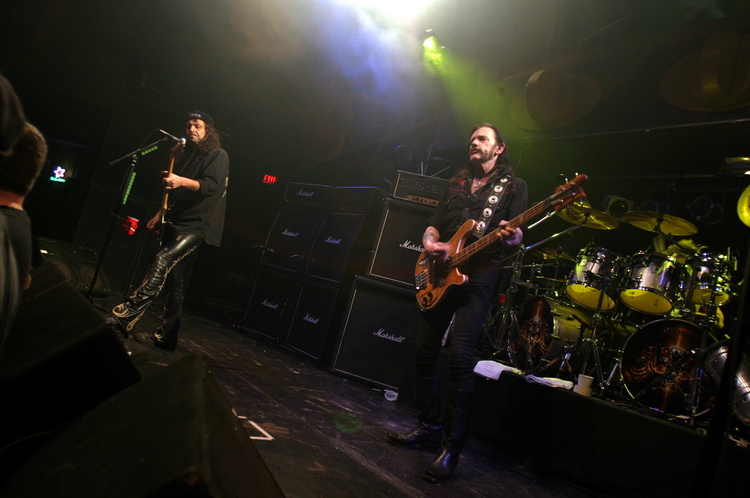
Was at this technical death metal show yesterday, headlined by Obscura, Beyond Creation and Archspire. In short, the most tortuously intricate sounds on the planet, playing back to back at one venue. A sonic feast. But, before tech death, thrash metal, and even before first wave of black metal, there was Motörhead.
When blues based psychedelic and space rock collided with punk riffs, it sparked an uncontrollable causal chain. So dissonant that it consumed the whole planet. Motörhead is probably what they might have termed as extreme metal in the 70s — combining that elegance of Jimi Hendrix with some distracting discordance. Rooted in blues, but playing the riffs loud enough to keep the dainties at a safe distance — essentially crafting that first clear cross-over from proto-punk to metal. In other words, Lemmy accomplished that seemingly impossible task – fusion of polar opposites – of molten lava with freezing ice – of harsh punk sensibilities with elegance of electric blues.
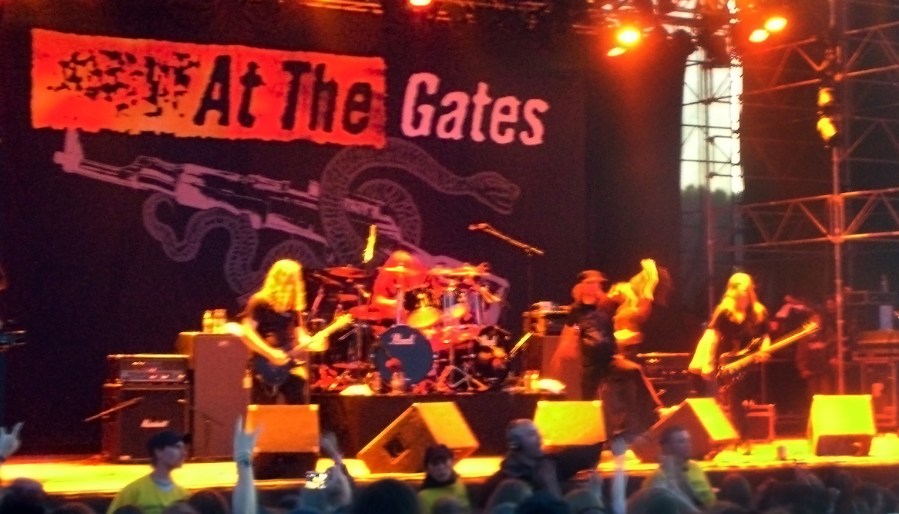
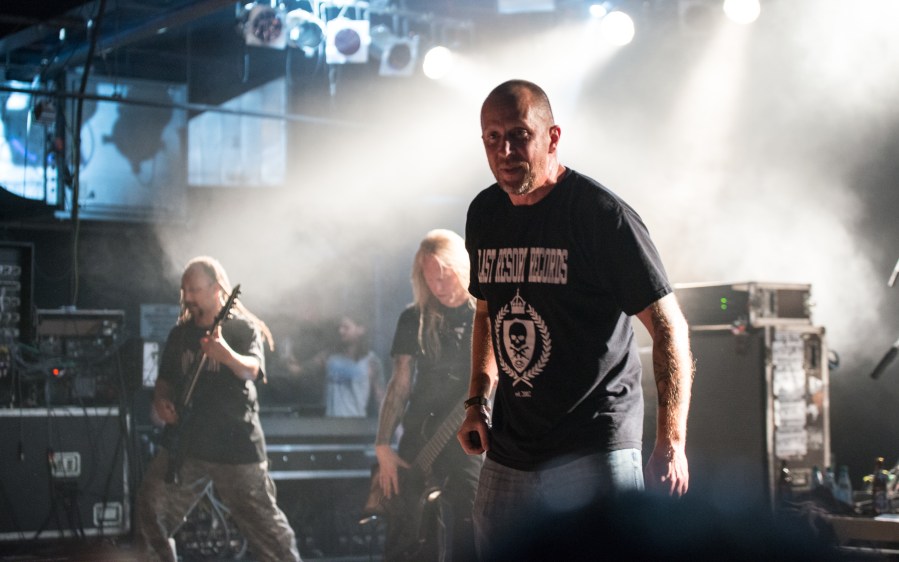
Quite an illustrious Decibel Fest lineup, but one band simply stood out. Dim onstage setting aside, the mere presence of Mayhem itself was unsettling. But once everyone managed to gather themselves, there was a brief and inevitable mass instagraming session.
Setlist was a mix of old, new and their classics from De Mysteriis Dom Sathanas. Couple of songs from ‘The Grand Declaration of War’ too, and here the crowd was not in a perfect harmony with the sound, response to these experimental progressions can be often confounding. Mayhem definitely transcends black metal, and sometimes even metal itself.
Just about half way into the set the real unhinged pandemonium begins; “Deathcrush” sets the stage — for ‘Carnage’, ‘Freezing Moon’ and ‘Life Eternal’ sonic obliteration. But this time there was perfect harmony in the pit – with these classics the crowd knew exactly what hit them. That alloy of elegant atmosphere, technical musicianship and crass aggression is uniquely Mayhem. Again, what’s exquisite tends to be subtle too; there is simply enough substance in these compositions, and they come through without need for any exaggeration whatsoever. To paraphrase an earlier post – ‘very little about Mayhem is instantly discernible’, and even here, ‘the most complex of patterns is comfortably buried beneath a wall of rich chaotic sound.’
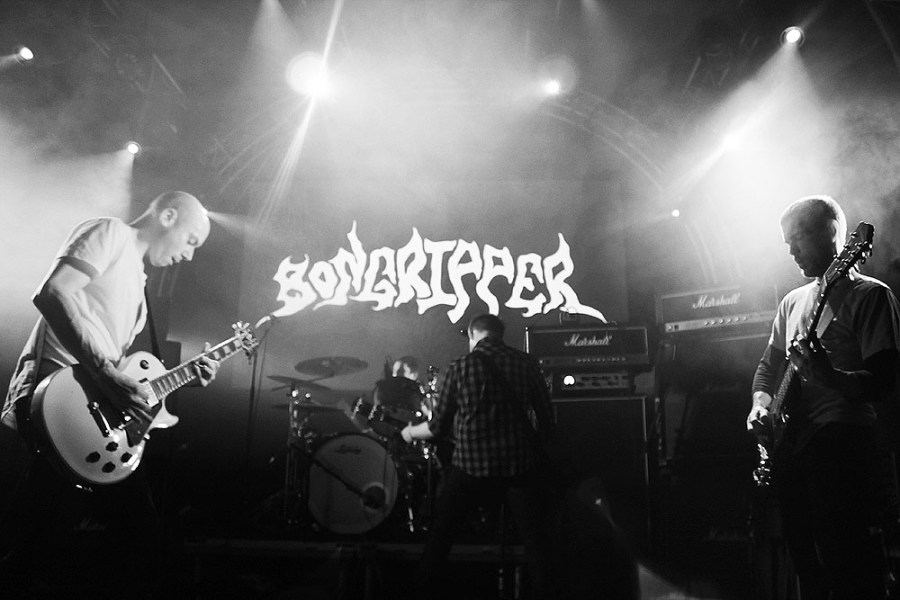
Bongripper simply proves vocals are optional for an idyllic doom atmosphere. For an instrumental sludge/doom album clocking 43 minutes, and with just two songs, it takes stunningly creative song writing directions. Sublime and adequately downtuned, Terminal integrates those dreary elements from doom straight into an atmospheric sludge wall.
With thick bass lines and precision beats interleaved with dreamy solos, at times it’s slow to the point where time itself stands still. Almost like ‘Dance of December Souls’ meets the legendary ‘Odd Fellows Rest’. When this sonic grind of sludge meets doom like guitar hues, it tends to become a perfect introspective complement to a misty weekend evening, probably wasted at a dim tavern, with suitable amounts of your choice for that chilled beverage.
Was reading this write-up on death metal – ironic that the genre itself might be in death bed, but it leaves us with over 30 years of music. We can actually spend a lifetime exploring that aesthetic defying trajectory. From Hellhammer’s punk coarseness to Decrepit Birth and Necrophagist like sophistication — seems like death and its variants were always an acquired taste. Just imagine, Morbid Angel and Obituary still play in basement venues and divey bars. Couple of years ago I saw Entombed with just 30 other metal heads at this venue in San Francisco. And these are like The Beatles of death metal!
It’s inaccessible not just because of the harshness. The main barrier is the subtle aesthetics and musicianship, other than over-the-top aggression there are no exaggerated elements. Absolutely no extended passages – structural progressions are in fact measured, convulsive and precise. In other words, very little about death is instantly discernible. The most complex of patterns is comfortably buried beneath a wall of rich chaotic sound. So, in spite of being substantive, intellectually and physically demanding, the uninitiated simply may not have the ear. We can appreciate the textures and the grand symphony only with some ability to abstract away that pulverizing sound. Actually mandates higher levels of cognition – sort of the mark of an ageing and civilized genre.
Layered and melodic, aggressive and measured — Black Fast is old school extreme metal at its roaring best. Firmly rooted in the late 80s, Spectre of Ruin illustrates German thrash to early Florida death, but with Coroner like progressive riffs and even more sinister old school hooks. Like a melodic variant of early Sodom or Kreator, but with the same turbulent levels of ferocity and intense screams.
With sharp and frequent compositional shifts, the band effectively reconciles progressive sensibilities with extreme thrash. In other words, there are no meandering passages here, just devastatingly precise twin guitar assault and thrashy progressions. Integrating the best of the both worlds, Spectre of Ruin is old-school cross-over at its brutal best. Essentially Black Fast is what they might call as an anachronism, misplaced in time, but undoubtedly channeling the Gods — of metal.








.jpg)