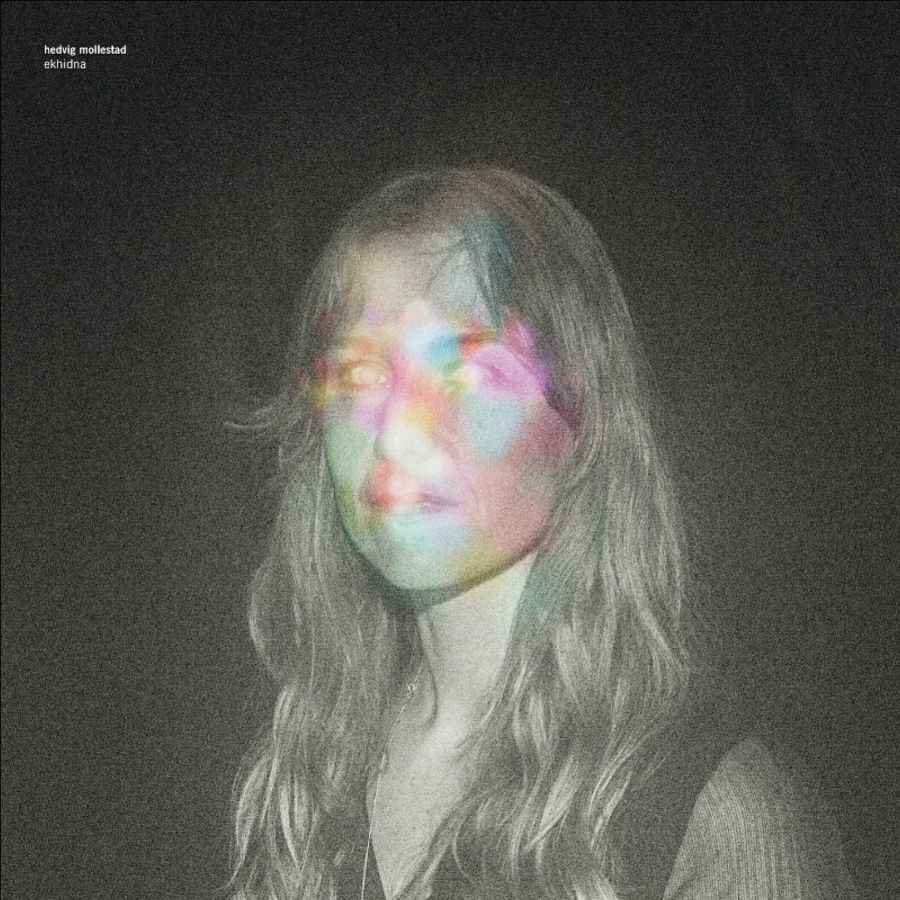
Hedwig Mollestad’s Ekhidna: Heat, Light and Heart

Since 2010, Norwegian guitarist Hedwig Mollestad has been turning heads worldwide with her incandescent fusion of heavy rock and avant-garde jazz. The six albums by her eponymous trio (currently with Ellen Brekken on bass and Ivar Joe Bjørnstad on drums) recall Motörhead as readily as Mahavishnu John McLaughlin — crushing, distorted power chords tangled up with jagged shards of melody, furiously lurching ahead without regard for purist sensibilities of any stripe. Based on work commissioned by Norway’s Arts Council for the 2019 Vossajazz Festival, Mollestad’s latest album Ekhidna breaks fresh, fertile ground, triumphantly meeting the challenges inherent in writing for a bigger band and a broader sonic palette. It’s a bracing blend of tumbling rhythms, killer riffs and brain-bending improv that goes down remarkably smooth, but leaves a fiery aftertaste; this is masterful stuff.

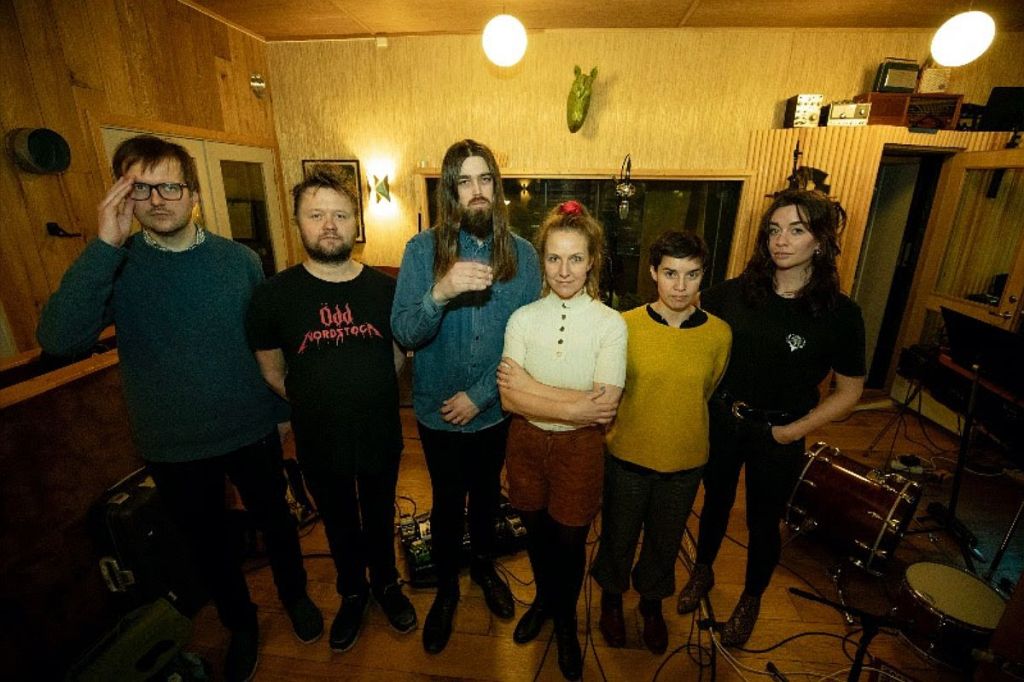
Serious jazz-rock heads will immediately think of Miles Davis’ seminal Bitches Brew when they see this album’s lineup: Mollestad, Susana Santos Silva on trumpet, Marte Eberson and Erlend Slettevoll on electric pianos and synthesizers, Ole Mofjell on percussion and Torstein Lofthus on drums. To her credit, Mollestad’s new music doesn’t avoid expectations raised by that association, sometimes confronting classic fusion strategies head-on, sometimes blithely subverting them — and these players are impressively capable of tackling the challenges Mollestad mounts. Silva’s impressionistic tone and sense of line readily evokes Miles while forging her own path; Eberson and Slettevoll’s chunky chording and grumbling bass lines simultaneously thicken the midrange and sharpen the harmonic contours; Mofjell and Loftus’ churning beds of polyrhythms relentlessly propel the tunes forward while constantly shifting the ground under their collaborators’ feet.
“No Friends But the Mountains” kicks off the proceedings already simmering: Silva floats over clean Mollestad chords that morph into feedback, backed by sparse keys and atmospheric percussion. “A Stone’s Throw” ramps up the energy; the initial hard rock foundation gives way to a unison guitar/trumpet/synth head that struts atop cooking drums and percussion before slamming into an elegant melody that evokes, of all things, Pink Floyd. Then Eberson solos over Mollestad’s splintery, circular lick and the percussionists’ rhythmic curveballs — and when Slettevoll joins the fun with clustered chording, look out! The agitated rhythmic foundations of “Antilone” never quite settle, with change the only constant through slamming ensemble passages, Silva’s spiraling whorls of painterly color, Mollestad’s grinding breakdowns, and a taut, immense ensemble build to the final thematic restatement.

“Slightly Lighter” clears the air with a tentative trio, Mollestad gracefully leading Eberson and Slettevoll through the changes. Then “Ekhidna” serves up more polyrhythmic metal balanced with a melancholy long-note theme, Silva unleashing her inner Miles, Eberson wailing on synth over Loftus’ lightning reactions, the whole thing ending with a satisfying crunch!

But Mollestad and her crew save the best for last: the gorgeous “One Leaf Left.” A muted duet between Mollestad and Eberson evoke Soft Machine’s cyclical, interlocking counterpoint over Slettevoll’s sparse, insinuating bass; then Mollestad and Silva unspool a seemingly endless chain of melody. Silva stretches out long notes like taffy; synth clouds from Slettevoll lead into a final, raging Mollestad tour de force over a grungy ensemble stomp. Juggling downbeats, building outrageous howls of dissonance, confessing the blues like one possessed, she rides the storm that mounts beneath her, ending both the piece and the album with a fiery, climactic cry.

Named for the she-dragon of Greek mythology (also called “the mother of all monsters”), Ekhidna is monstrous in the best sense — a musical rollercoaster ride suffused with heat, light and heart, recombining the raw materials of classic fusion and extending the genre’s reach into realms of vast new potential. This is a real breakthrough for Hedwig Mollestad, and her best effort to date; it shouldn’t be missed! So check it out below.

— Rick Krueger
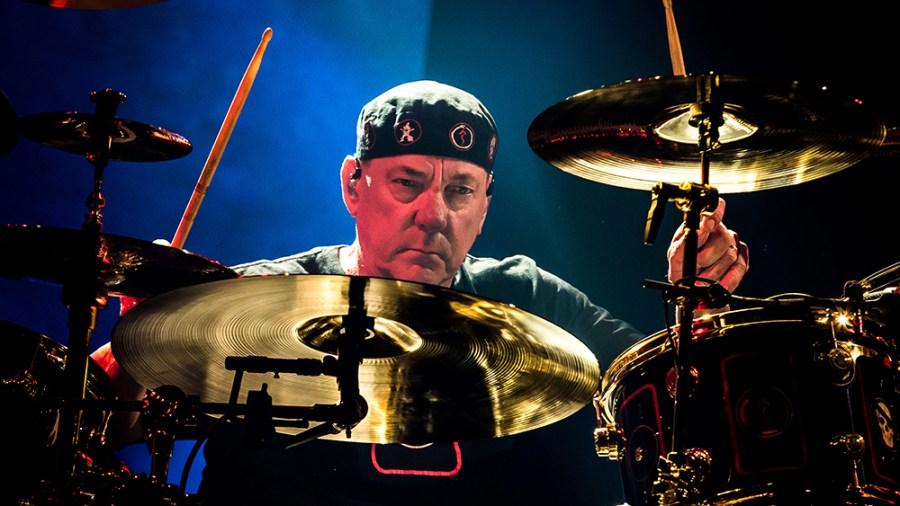
In Memory of Neil Peart (1952-2020)

Unlike so many writing about him in the wake of his passing, Neil Peart didn’t change my life.  By the time I first seriously listened to Rush in college, when I reviewed Permanent Waves for the student newspaper, my tastes were pretty set, and they didn’t lean toward heavy rock.  (Truth to tell, I looked down on “that stuff” back then.)  So while Permanent Waves, Moving Pictures and Exit Stage Left got me into a band my best buddies from high school still raved about — they were using keyboards now! — I basically thought, “hmm … noted and logged.  Buy their stuff from now on”, and kept moving.

So I bought and enjoyed Rush’s albums through A Show of Hands; picked them up again with Roll the Bones (probably my favorite, which I know makes me a schismatic or a heretic); lost track again following Peart’s family tragedies, retirement and comeback.  All the while I dug deeper and wider musically — into classical, jazz, country, folk — and finally embraced the heavy stuff.  (This happens when your stepson digs Led Zeppelin.)

But for me and Rush, 2007’s Snakes and Arrows finally sealed the deal.  An album this good after this many years of active service didn’t just catch my ears; it commanded my respect.  I knew I had to see them live, and my high school buddy Keith obliged with tickets to their 2008 Joe Louis Arena show.  And I saw something like this:

And I was gone.  And I saw Rush four more times before they retired from live performance (usually with those high school buddies); bought Clockwork Angels, all the concert videos and everything else Rush-related I could get my hands on; exulted at their elevation to the heights of Noughties celebrity by the movers and shakers of geek culture; cheered when they made the Rock & Roll Hall of Fame (and took over the induction ceremony), then finally made the cover of Rolling Stone; even grew to appreciate the over-the-top virtues of “By-Tor and the Snow Dog,” 2112 and A Farewell to Kings.

So yes, Neil Peart’s loss moves me.  But what ultimately drew me to him as a musician, a man, an artist, an exemplar?  Some attempts to unpack the mystery follow.

Continue reading “In Memory of Neil Peart (1952-2020)”

District 97, Screens

Impossibly sick drum groove by Jonathan Schang: check.  Heavy unison guitar/bass riff from Jim Tashijan and Tim Seisser: check.  “Yep, that’s District 97. Now where was I?”

But then new keyboardist Andrew Lawrence joins in, steering opener “Forest Fire” in a head-snapping direction with cool, jazzy chords.  Cue Leslie Hunt, riding a thrilling vocal line over a cascade of progressions and textures  — including off-kilter breakdowns from Lawrence and Schang.  By the time the track climaxes with a powerhouse unison lick (all in under five minutes), my head’s where it belongs — in the music.

Screens feels like a fresh start for District 97.  The Chicago quintet’s trademarks — Hunt’s lush tone and oblique, syncopated melodies, Tashijan and Seisser’s thick crunch and odd-time riffage, Schang’s lateral ideas and heady polyrhythms — are all present, correct and on point.  But to me, Lawrence is the secret ingredient that’s taken them to a new level, bringing a love of jazz fusion and a rich sense of harmony to the party.

This edition of the band isn’t afraid to take chances with the new tunes — leaving more space, leaning into dynamic contrast, unexpectedly launching skittery, Zappaesque flurries of noise.  Which enables shorter tracks like “Sea I Provide”, “Trigger” and “Blueprint” to cover lots of ground, and the extended efforts “Sheep”, “Bread & Yarn” and “Ghost Girl” to feel like genuine epics. Everybody contributes to the writing and all the players solo — which makes the overall sound more unified and more expansive at the same time.

And all this gives Leslie Hunt more room to run than ever.  It’s hard to think of a vocalist in progressive music with so many tools at her disposal: a gutsy, versatile sound and technique; deeply expressive emotional range; a fertile, eclectic imagination powering her melodies and lyrics.  On Screens, Hunt simultaneously sounds fully unleashed and fully integrated into the band.  Focusing on the lyrical theme of isolation (self-inflicted in “Sheep” and “Shapeshifter”, imposed by others in “Trigger” and “Ghost Girl”), she makes a meal of it: throughout the album, she reacts, resists, reflects, rages — and when she can, reaches out (especially in the poppy “Sea I Provide” and the gorgeous ballad “Blueprint”).   She’s something else.

For all their obvious love of the genre, talent and energy (I’ve been bowled over both times I’ve seen them play to hometown crowds), I’ve sometimes felt that District 97’s music had trouble standing out in a crowded field, especially when they’ve leaned into the metal.  Trouble with Machines and In Vaults are fine albums, but over the years they  blurred together in my ears.  Gratifyingly, Screens busts out into new territory, stretching D97’s sound and style in refreshing, exciting ways, and setting the table for continued growth.  This one’s a winner that’s worth your time and attention.

Screens is currently available as a signed advance CD from the band.  The digital version (released October 4) can be pre-ordered at Bandcamp.  The regular CD (released October 11 in the US) can be pre-ordered at Amazon.

d97

— Rick Krueger


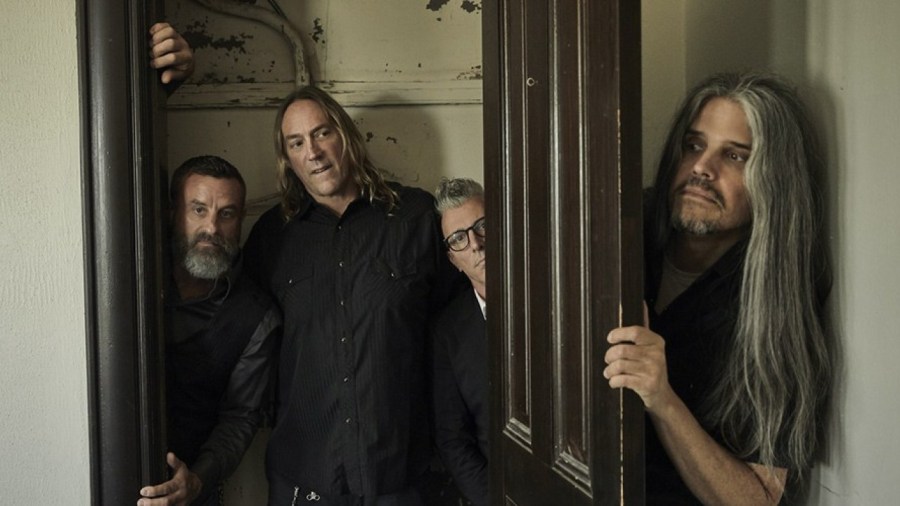
Tool, Fear Inoculum

My history with Tool?  Checkered.  I didn’t tune in during their initial rage-metal period at all; if I had, I probably couldn’t have got past the vulgarity or the in-your-face attitude.  King Crimson opening for Tool (in my mind, Tool closing for King Crimson) got my attention in 2001, and I thought that Lateralus was a nifty hunk of knotty art-metal, with lyrical directions that began to clear a path through the bile.  10,000 Days?  For me, a loooong album that started strong, then meandered through one bizarre, tenuously connected detour after another.  It wound up giving me a headache (also my consistent reaction to The Mars Volta).  So no, Tool has typically not been my cup of tea.

Which is why I’m completely — and delightedly — flabbergasted by Fear Inoculum, Tool’s first album in 13 years.  Beyond being as heavy, brainy and cathartic as one might expect, this is deeply thoughtful, richly layered, compelling music — a satisfying, unified work from start to finish that also rocks like a truck full of bricks.  If this is what Danny Carey, Justin Chancellor, Adam Jones and Maynard James Keenan have been aiming for all these years, it’s been well worth the wait, because they’ve nailed it.

Continue reading “Tool, Fear Inoculum”

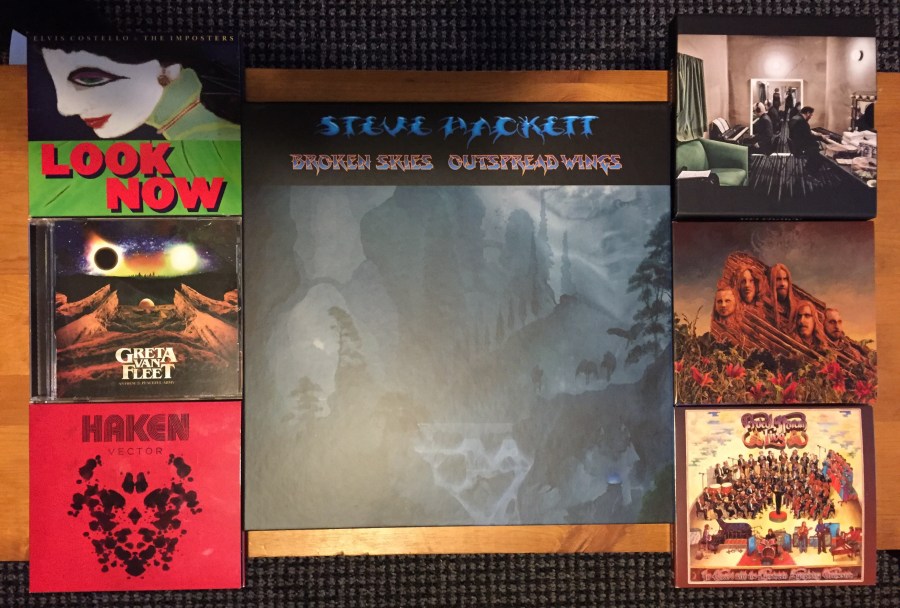
Lightning Round Reviews: November 1-9, 2018

In case you hadn’t noticed, the last quarter of 2018 has put paid to any perceived drought of new releases & reissues.  Capsule reviews of what I’ve been listening to since the first of this month follow the jump; albums are reviewed in descending order on my Personal Proggyness Perception (PPP) scale, scored from 0 to 10.

Continue reading “Lightning Round Reviews: November 1-9, 2018”

Spectre of Ruin

Layered and melodic, aggressive and measured — Black Fast is old school extreme metal at its roaring best. Firmly rooted in the late 80s, Spectre of Ruin illustrates German thrash to early Florida death, but with Coroner like progressive riffs and even more sinister old school hooks. Like a melodic variant of early Sodom or Kreator, but with the same turbulent levels of ferocity and intense screams.

With sharp and frequent compositional shifts, the band effectively reconciles progressive sensibilities with extreme thrash. In other words, there are no meandering passages here, just devastatingly precise twin guitar assault and thrashy progressions. Integrating the best of the both worlds, Spectre of Ruin is old-school cross-over at its brutal best. Essentially Black Fast is what they might call as an anachronism, misplaced in time, but undoubtedly channeling the Gods — of metal.

—- Image Attribution

By paul hudson [CC BY 2.0 ], via Wikimedia Commons