

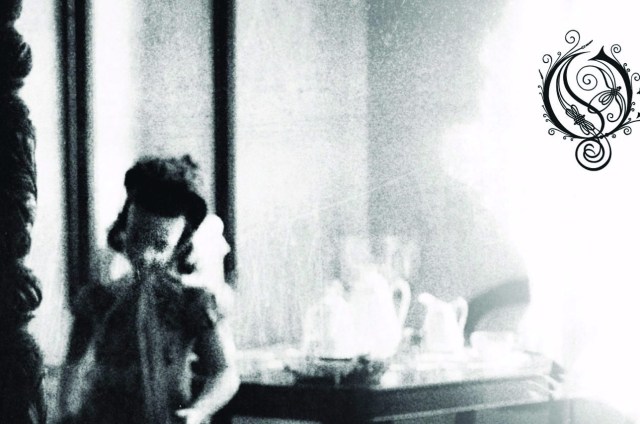
 Turns out the best Swedish death metal band of the 90s and early oughts was listening to those Bert Jansch and Popol Vuh records all along. And such grooves are not as unrelated to Opeth’s charge as first glance might suggest. Having spent the better part of a decade determinedly NOT (no, never) dancing around the DADGAD maypole in the relatively quiet interludes of scorching song suites lasting upwards of 20 minutes, Opeth bookended their 2002 LP Deliverance with 2003’s Damnation, and the acoustic drone floodgates opened. Prog polymath Steven Wilson, who’d helmed the band’s production since 2001’s Blackwater Park, found in Opeth’s singer/guitarist Mikael Akerfeldt a like-minded soul who, after a blistering half-dozen LPs replete with growls, blast beats, and super doom — though never rote, and always smart — needed some wind in the sails. Unplug, let the mikes breathe a bit, leave the distortion pedals at home, I can imagine part of the conversation going, and so it sounds anyway on the recorded evidence. Damnation is a masterpiece, a quiet, spacious death metal record, a grim yet lithe prog album, and with that said and with that description, no, it sounds nothing like the Cure, but it may appeal if Disintegration is your cup of tea. It’s Wilson’s and Akerfeldt’s best and most dramatically pioneering record (although Opeth’s Wilson-less Ghost Reveries, from 2005, is maybe most representative of their work until the band’s real act two began with 2008’s Watershed).
Soon after Damnation‘s release the band took their show to Shepherd’s Bush in London, and there recorded 2004’s live Lamentations DVD, long since a YouTube staple. Just as “Closure” anchors Damnation, its live cousin fills the same role on Lamentations. The show is worthwhile to watch in its entirety, as Opeth takes some giant steps, with jazz-touched atmospherics and restrained but potent jams. The band acknowledges its debts while shrugging off the diehard metal kids who came out for blood (they’d be given their due anyhow in the harder part of the show, and even in the Damnation section it ain’t exactly MTV unplugged). If there’s a point where Akerfeldt became who he is, it’s on full display here, an artist who, as he appeals to his audience, is confident in his direction. Just glorious.
soundstreamsunday presents one song or live set by an artist each week, and in theory wants to be an infinite linear mix tape where the songs relate and progress as a whole. For the complete playlist, go here: soundstreamsunday archive and playlist, or check related articles by clicking on”soundstreamsunday” in the tags section.





 King Crimson appeared in 1969 as an island, on the far side of the bridge joining a tiring psychedelic scene to a studied, if no less freaky (for its age), “progressive” rock. In its nearly fifty years the group’s membership has drifted in and out through orbits around guitarist

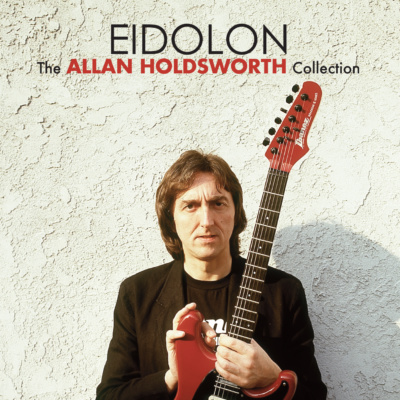

 The art gallery of rock and roll is a rich and welcoming place, with room upon room spinning off into many-directioned distances. There is no entrance fee or warnings to stand back, please, from the piece. And, like at all great museums, any pretense to surface comportment is, if meaningful at all, only a nod of respect to the spark of human creativity. A sign that we don’t stand in willful ignorance. Before the work, within the work, we are all children. It is in rock’s nature to empower its listeners to create, and within this space there is no genre, no boogie no punk no progressive no pop no indie no folk, just an honoring of the empty canvas and the unrestrained fire banked down in humanity. It’s what I love about rock, and it’s what made Van Morrison’s Astral Weeks happen.
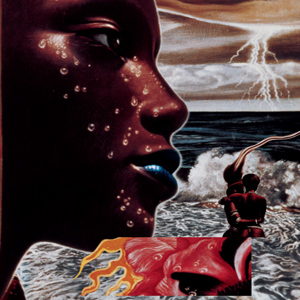 It’s unavoidable. It is impossible to speak of modern music, regardless of genre, and not take note of the critical importance of Miles Davis. Call him what you will or what he called himself — a genius of composition, a dazzling trumpeter/performer and band leader/manipulator, an agent provocateur, a counter-racist, coke fiend, pimp, misogynist — Miles Davis was to musical art what Pablo Picasso was to visual art in the 20th century. It’s so true it’s not even up for debate, and there’s about a kazillion hours of recorded, generous, lovely, dark, funky, bopping proof. By natural extension Davis was the incarnation of what
