
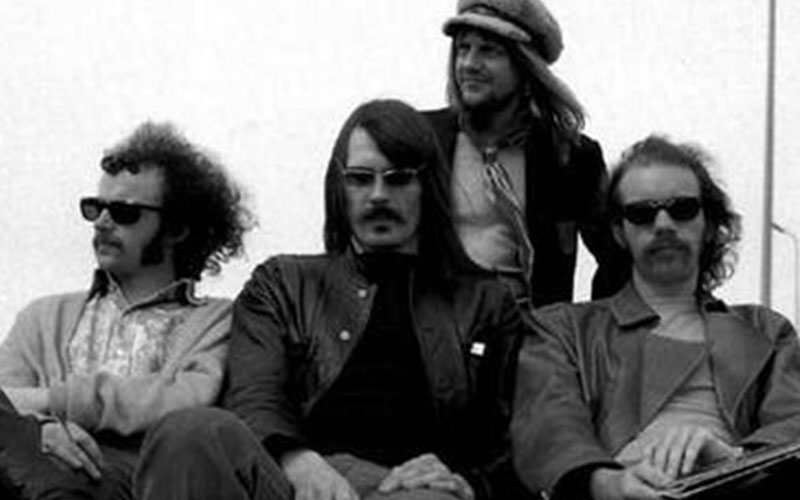
Continuing the saga of Soft Machine, who’ve already kicked off a 50th anniversary world tour (coming to North America this fall), and whose new album Hidden Details can be ordered at Bandcamp. Click here for Part One of this series, covering the band’s psychedelic years of 1966-69.
When last we left our heroes, quoting their website,
The base trio [of Mike Ratledge on organ, Hugh Hopper on bass and Robert Wyatt on drums and vocals] was, later in 1969, expanded to a septet with the addition of four horn players, though only saxophonist Elton Dean remained beyond a few months …
Cuneiform’s archive release Noisette reveals Soft Machine shaping a new sound onstage. Recorded live at Croydon in January 1970, this quintet set is dominated by Dean’s and saxophonist/flutist Lyn Dobson’s uninhibited blowing. The psychedelic song suites have nearly vanished; Wyatt only sings on “Hibou, Anemone and Bear,” where he’s given a completely solo moment, and material from the first two albums is exiled to the end of the show.
With Dobson out, the remaining quartet pulled together live recordings, studio inserts and tape experimentation to produce the four suites (one per side) on 1970’s double album Third — their first for Columbia Records. Hopper’s “Facelift” and Ratledge’s “Out-Bloody-Rageous” sandwich upbeat jazz workouts (asymmetric rhythms, harmonized sax sections, fired-up, skittery solos from Ratledge, Dean and guests) between Wyatt-less intros and codas — avant-garde improvs, classical fanfares, minimalist cycling keyboard riffs. Wyatt’s vulnerable, stream of consciousness epic “Moon in June” was the only vocal piece — and he played most of it (drums and keys) himself, with Ratledge and Hopper tacked on for the playout. Ratledge’s “Slightly All the Time” is the most integrated piece here, with the core group and guests swinging over appealing grooves and ratcheting up the excitement via Ratledge and Dean’s solo work.
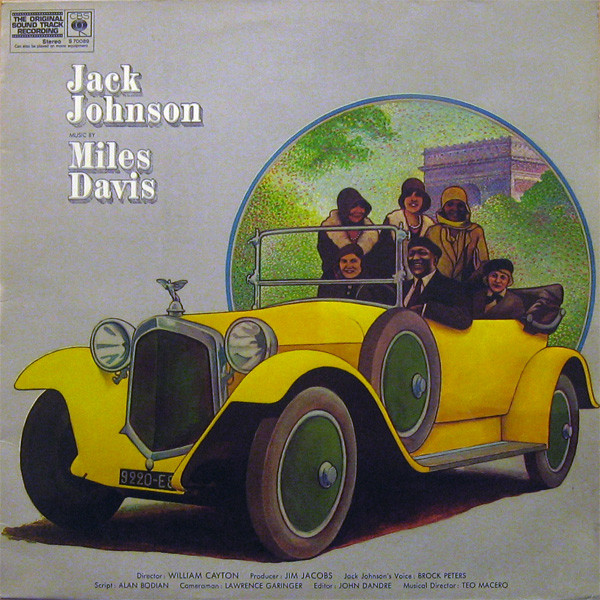
Rough-edged it may have been, but Third was perfectly timed; with Miles Davis’ Bitches Brew pulling jazz toward rock, Soft Machine was heading for the same destination from the opposite direction. The album gained attention, kudos and sales across Europe and the US, and the Softs became the first band to play at the Royal Albert Hall’s classical Promenade Concerts.


 Sonny Sharrock’s Ask the Ages (1991), with its depth-defying groove and meet-up of ambition and gravitas, is the portrait of a maturing artist hitting his stride. Sharrock was 51 and riding a creative wave — one foot in the free jazz he brought his guitar to in the 1960s, one in the “collision music” envisioned by musical partner and producer Bill Laswell — when he made this record with a sympathetic band of jazz leaders: drummer Elvin Jones, saxophonist
  Given his breadth of tastes, it’s reasonable to think that
 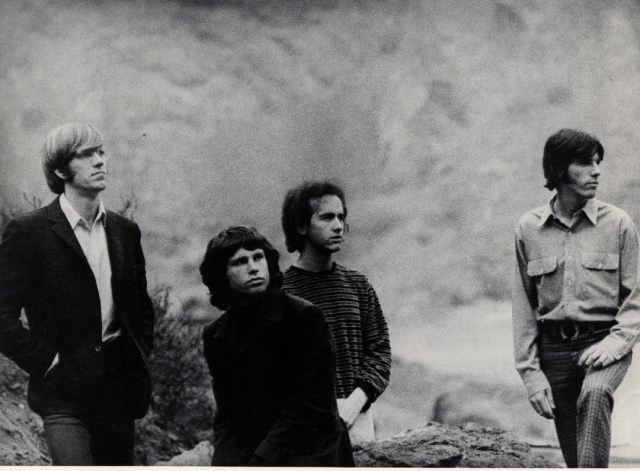 The Doors built its finest work around straight-ahead rock’n’roll, adding a whirling, baroque jazz samba momentum from the alchemy of keyboardist Ray Manzarek, guitarist Robby Krieger, and drummer John Densmore, all schooled in the post-bop cool permeating, by the mid-1960s, the many stripes of a blossoming California pop music scene. Jim Morrison brought the goods of fame, an impassioned thunderhead vocal whether singing his own lyrics or Krieger’s (the band’s most successful writer), and a hip pin-up beauty boosting the band’s pop darling status. (There is great irony here, as the New York Factory crowd crowed over Morrison’s veneer — with appropriate Warhol-esque fascination — and Morrison himself did everything he could to make and then deface his pretty boy shell, revealing the rot within, in one of rock’s most infamous stories of self-creation/immolation.) At the core of Elektra’s push to advance American rock in the wake of the British Invasion, the Doors — along with label mates


