


Back in March 1994, shortly after Soundgarden’s masterful Superunknown was released, Melody Maker‘s Everett True wrote a detailed and often insightful piece about the band on the road (in Tokyo, specifically). Chris Cornell spoke openly with True about his struggles with depression and fear:
“I write songs best when I’m depressed,” Chris tells me. “No one seems to get this, but Black Hole Sun is sad. But because the melody is really pretty, everyone thinks it’s almost chipper, which is ridiculous. Fell On Black Days is another one. Like Suicide is a perfect example.”
We’re they inspired by specific events?
“Fell On Black Days was like this ongoing fear I’ve had for years. It took me a long time to write that song. We’ve tried to do three different versions with that title, and none of them have ever worked. Someday we might do an EP…
“It’s a feeling that everyone gets. You’re happy with your life, everything’s going well, things are exciting – when all of a sudden you realise you’re unhappy in the extreme, to the point of being really, really scared. There’s no particular event you can pin the feeling down to, it’s just that you realise one day that everything in your life is F—–!”
Exhibit A for a “chipper” version of the huge hit is this snappy, big band-ish, “are you kidding me?” version by Paul Anka (yes, the same Paul Anka who wrote the lyrics to Frank Sinatra’s “My Way”—one of the very few Sinatra songs I find annoying, even revolting). And in the past few days, understandably, there have been a number of singers and bands playing the song as a tribute to Cornell, who took his life on May 18th, after a reportedly ragged show at Detroit’s famous Fox Theater.
Continue reading “The best musical tribute to Chris Cornell so far…”
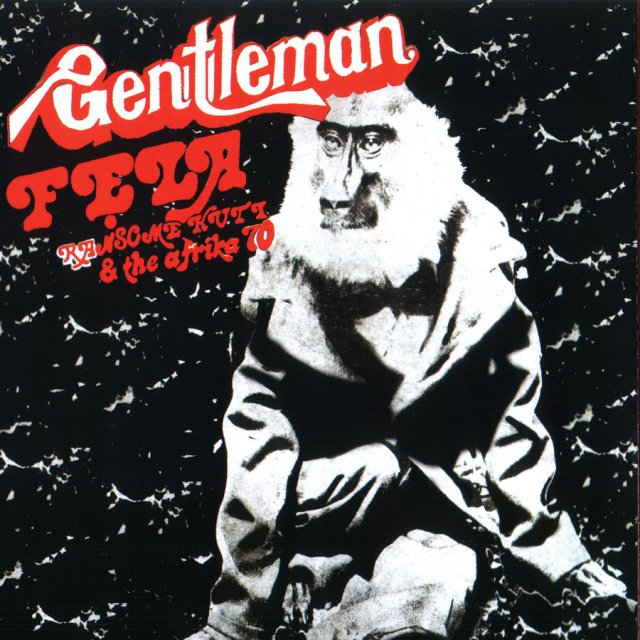 It can look like a conspiracy, from the outside, to know what those of us in middle America grew up with musically in the 1970s. Ensconced deeply in our Yeses and our Styxes and our REO-es and our Kansases, we often missed out on the larger view of the world, despite the delicious depths of what did come delivered over the airwaves. Case in point: Fela Kuti. The Afro beat. I suspect even if you were a jazzbo soldiering on in the post-bop wonderland delivered in the ever-widening sidelong jams of
 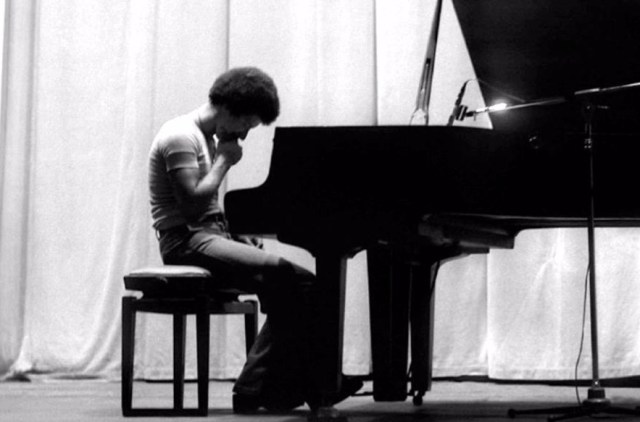 It’s 1975 and I’m nine years old. I’m lying on my back in Reservoir Park, a small city block of grass and oaks next to the University of Utah. In my head is a song that trips and travels as I run and play with friends. It’s a vision of sound, a strong impression of bright sun and moving clouds, a feeling on my skin, a growing chill in the air. Is it October? The song is a constant rhythm of consciousness and motion, a life in itself but also within me, as if I’m one of its many, many tributaries.
 A deep blues, a call to enlightenment, a psychedelic spiritual of epic proportions, Pharaoh Sanders’ “The Creator has a master plan” rings with a disciplined clarity one might expect from a former
 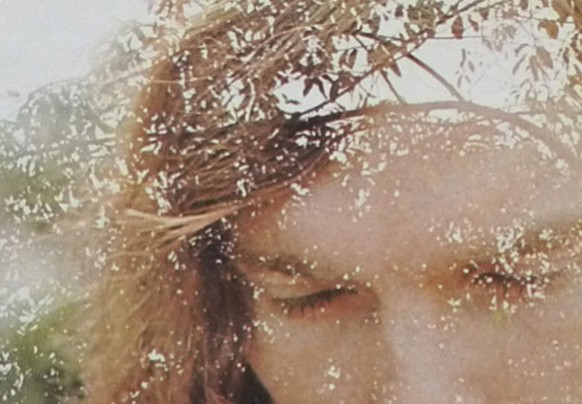 The art gallery of rock and roll is a rich and welcoming place, with room upon room spinning off into many-directioned distances. There is no entrance fee or warnings to stand back, please, from the piece. And, like at all great museums, any pretense to surface comportment is, if meaningful at all, only a nod of respect to the spark of human creativity. A sign that we don’t stand in willful ignorance. Before the work, within the work, we are all children. It is in rock’s nature to empower its listeners to create, and within this space there is no genre, no boogie no punk no progressive no pop no indie no folk, just an honoring of the empty canvas and the unrestrained fire banked down in humanity. It’s what I love about rock, and it’s what made Van Morrison’s Astral Weeks happen.
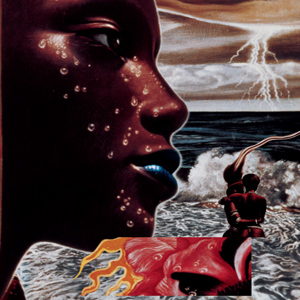 It’s unavoidable. It is impossible to speak of modern music, regardless of genre, and not take note of the critical importance of Miles Davis. Call him what you will or what he called himself — a genius of composition, a dazzling trumpeter/performer and band leader/manipulator, an agent provocateur, a counter-racist, coke fiend, pimp, misogynist — Miles Davis was to musical art what Pablo Picasso was to visual art in the 20th century. It’s so true it’s not even up for debate, and there’s about a kazillion hours of recorded, generous, lovely, dark, funky, bopping proof. By natural extension Davis was the incarnation of what
  If love is one of the most common themes in song, love songs that stretch beyond simple declarations, admitting a type of defeat in the face of defining such an emotion, are remarkably rare. In the past weeks soundstreamsunday has featured
 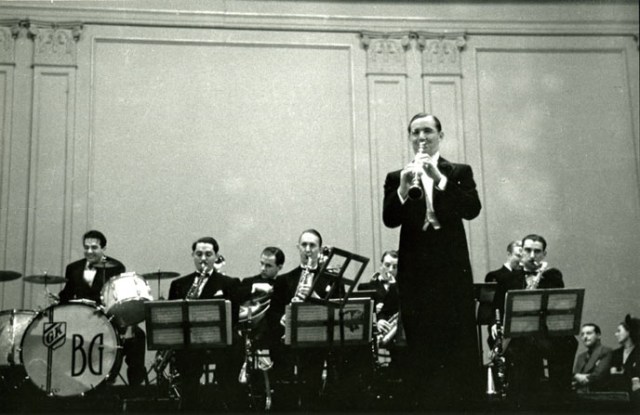 The Benny Goodman Orchestra’s performance at Carnegie Hall in January 1938 has a place in history as the coming out party for jazz, a legitimizing of an art form within the fortress of American (read: white/European) highbrow music. Ripe for irony? Yes. But when we recall this was the era of “race” records, and that jazz in the white American psyche was still an odd conflation of jump-and-jive black culture, blackface minstrelsy, and the carefully staged musical numbers of Hollywood sophisticates, Goodman and company’s triumph was quite real. Bringing an integrated group of musicians that included the best of its day to Carnegie Hall, blowing the collective Depression-era Jim Crow “high culture” hive-mind…. remarkable. This music is fierce, sometimes nasty, less a nod to propriety than a tuxedo-ed finger in the eye, dashing racial and artistic division by sheer force of celebratory musicality. “Sing Sing Sing,” a Goodman Orchestra signature tune written by Louis Prima, was the band’s finale, clocking in at over 12 minutes, and thus recorded, using the technology of the time, on acetate discs using a relay of multiple turntables (while the concert was almost instantly legendary, the recordings wouldn’t be made available for over a decade: see
  Progarchy