Rick’s Quick Takes for Summer’s End

As usual, direct purchase links will follow each album review, along with video or audio streaming where available. Given the potential impact of new US tariffs and regulations on both overseas musicians and the vendors who sell their music, I especially encourage readers to support your favorite prog artists and retailers during this period of transition.
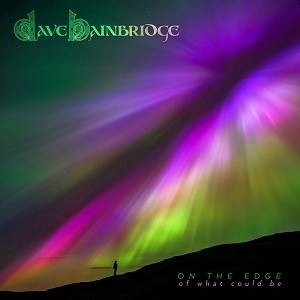
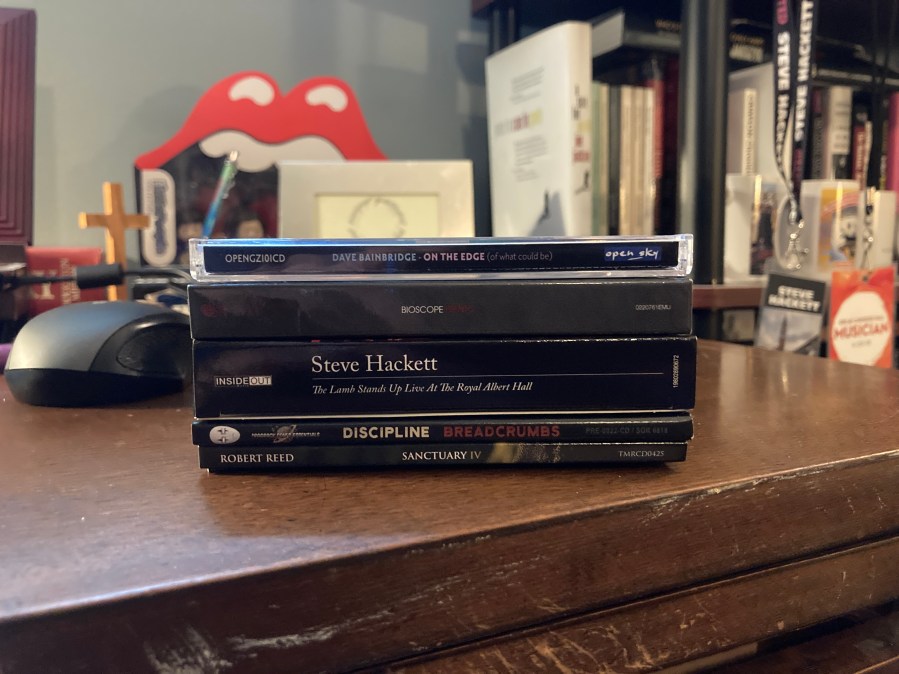
Dave Bainbridge, On the Edge (Of What Could Be): I glommed onto Bainbridge with his fabulous 2021 effort To the Far Away, but every one of his solo albums is crammed full of delights — rocking, rhapsodic and ravishing throughout. On the Edge is no exception: a double album with a self-contained suite on each disc, like Dave’s band Iona it takes listeners on a trip through the beauty of this world to the promise of a life to come. So many highights they can’t all fit here! Up-tempo elegy “Colour of Time” (with Randy McStine’s fierce vocal inspiring Bainbridge to heights of biting, frenzied jazz-fusion); the title track’s multi-sectioned build from triple-time acoustic folkiness to a thrilling electric climax; Simon Phillips’ fleet drum groove on “Farther Up and Farther In”, topped with mind-melting acrobatics from Bainbridge and piper Troy Donockley; Frank van Essen’s evocative violin and Bainbridge’s primal, Santana-meets-Mahavishnu cry on the orchestral “Beyond the Plains of Earth and Sky” are just a few of many great moments. Toss in vocals (in English and Gaelic) from a bevy of fine singers and virtuoso keyboards from Bainbridge, and you have an set that takes you on a genuinely amazing journey, gathering power as it builds to a spectacular culmination. Already a 2025 Favorite and a solid contender for the year-end top spot.
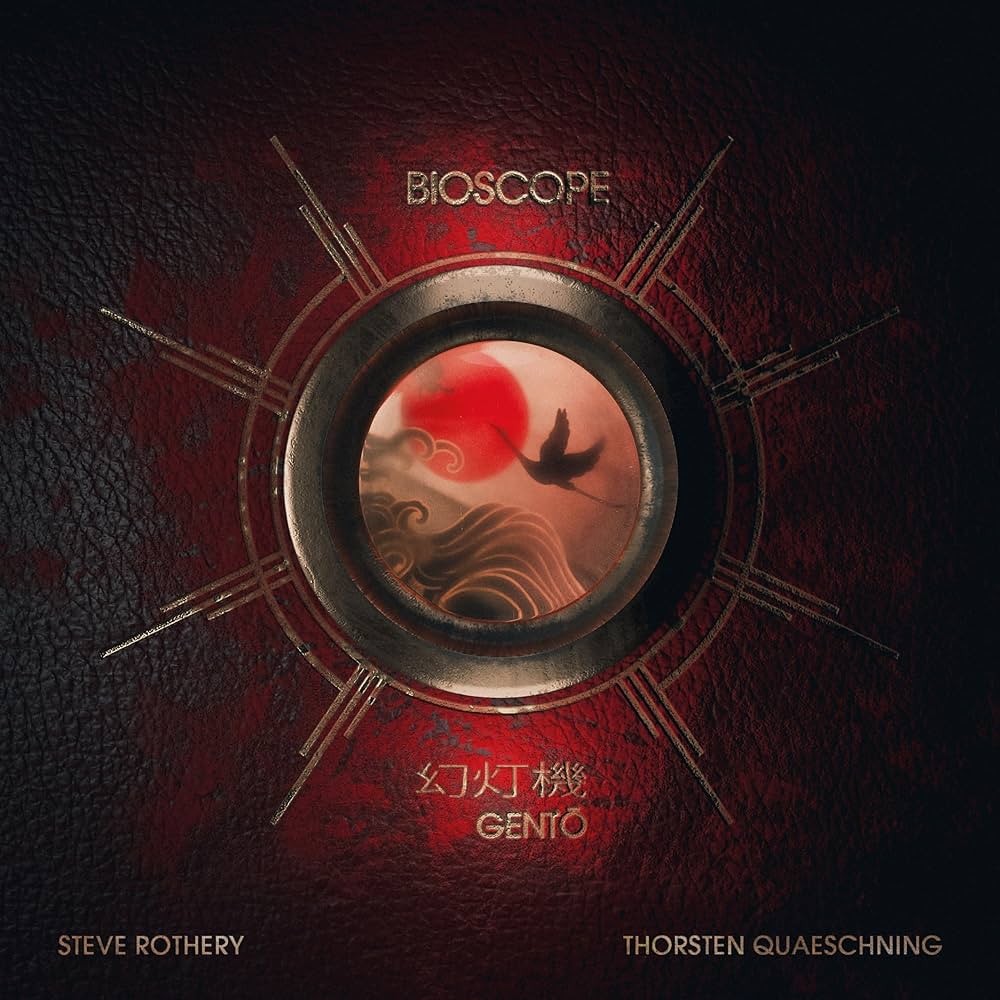
Bioscope, Gento: Steve Rothery’s keening, singing guitar has been one of Marillion’s prime calling cards for more than 40 years; as Edgar Froese’s appointed musical heir, Thorsten Quaeschning has recently propelled synth-rock trailblazers Tangerine Dream to fresh creative heights. Recorded during breaks in their bands’ work, the duo’s debut is a classic example of how two great tastes can taste great together. With the exception of psychedelic-Beatles closer “Kaleidoscope”, the musical elements on Gento repeatedly gather from thin air, coalesce, intensify, interact, react and dissipate — whether driven by Quaeschning (the wispy melodies, luxuriant textures and motorik rhythms of the three-part opener “Vanishing Point”), Rothery (the chiming rhythm guitar, slide/synth duets, fierce fuzz riffing and floating arabesques that shape another trilogy, “Bioscope”), or both in wonderfully organic call and response mode at multiple pieces’ climaxes. Add the rock solid drumming of Elbow’s Alex Reeves, and the results really are magical. Gento has gently, unobtrusively grown on me, all the way to making my 2025 Favorites list; it may take a few listens, but I think it will do something similar for you.
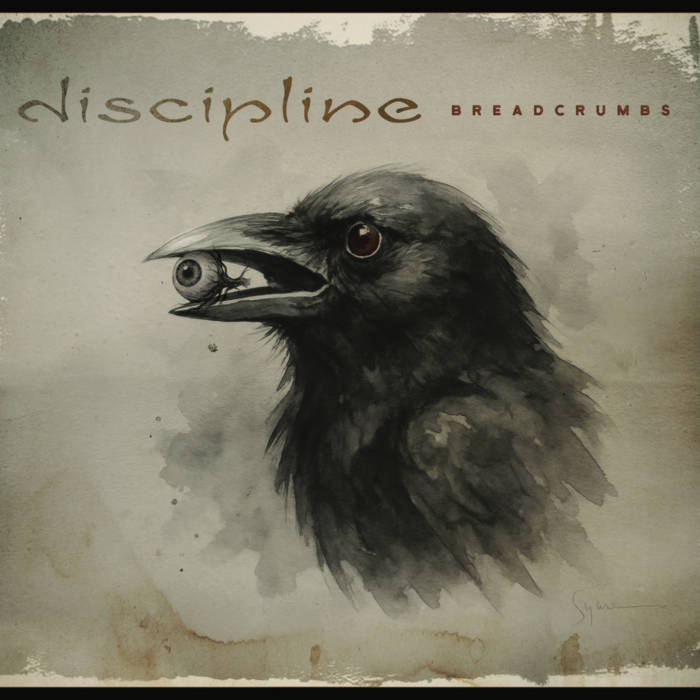
Discipline, Breadcrumbs: Eight years on from their last record, the Detroit proggers serve up another helping of their trademark, stately melancholia. Breadcrumbs proudly mines veins dug by King Crimson, Gabriel-era Genesis, Van der Graaf Generator — even a bit of keyboard-period Rush, with production by Terry Brown and art by Hugh Syme to boot — but as always, the results are a heady, hearty brew all its own. Throughout the intriguing title epic, the measured lament of “Keep the Change”, the relentless, stinging “When the Night Calls to Day/Aloft” and the thwarted, impressionistic “Aria”, Matthew Parmenter’s lyrical rhetoric and harmonically slippery keys take point, with Chris Herin providing pungent, tasty support and comment on guitar. While Breadcrumbs leans away from the slashing theatrics of vintage Discipline classics Unfolded Like Staircase and To Shatter All Accord, it still gives off a chilly intensity that showcases the band at their most spellbinding and cathartic. Through every challenging musical twist and verbal turn. this album is finely crafted and delivered with total conviction — another instant 2025 Favorite!
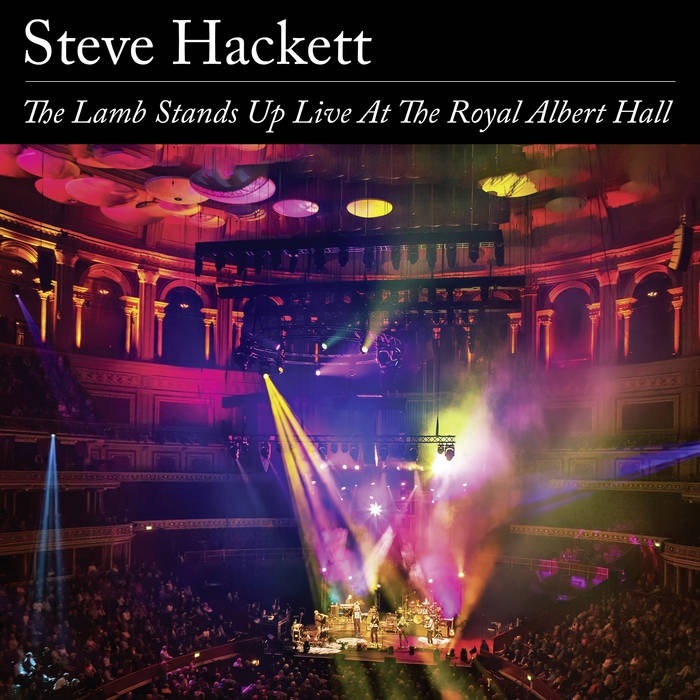
Steve Hackett, The Lamb Stands Up Live At The Royal Albert Hall: Yes, it’s Hackett’s tenth live album of the 21st century, but as usual, fans will find this a must for multiple reasons. Given recent personnel announcements, it’s probably Steve’s last live set with Roger King’s keyboards and Craig Blundell’s drums driving his talented band forward; the first half proves a spirited solo set, with lots of pleasingly vintage material and a thrusting trilogy of excerpts from 2024’s The Circus and The Nightwhale. And it’s hard to conceive of a better anniversary celebration for The Lamb Lies Down on Broadway! Nad Sylvan utterly inhabits protagonist Rael and Peter Gabriel’s other sundry characters; unjustly-forgotten Genesis vocalist Ray Wilson conjures an atmospheric, rumbling take of “Carpet Crawlers”; reflective moments like “Hairless Heart” shimmer, narratives like “The Lamia” and the title track subtly, potently grip your attention, and heavier moments like “Fly on a Windshield”, “Lilywhite Lilith” and “It” slam good and hard. With the super-deluxe box of The Lamb finally coming out at the end of September after multiple delays, sets like Dave Kerzner’s studio tribute and Hackett’s new concert set have nicely filled the gap while reminding both long-time and first-time listeners how ahead of its time the album was, and how vibrant this music still is.
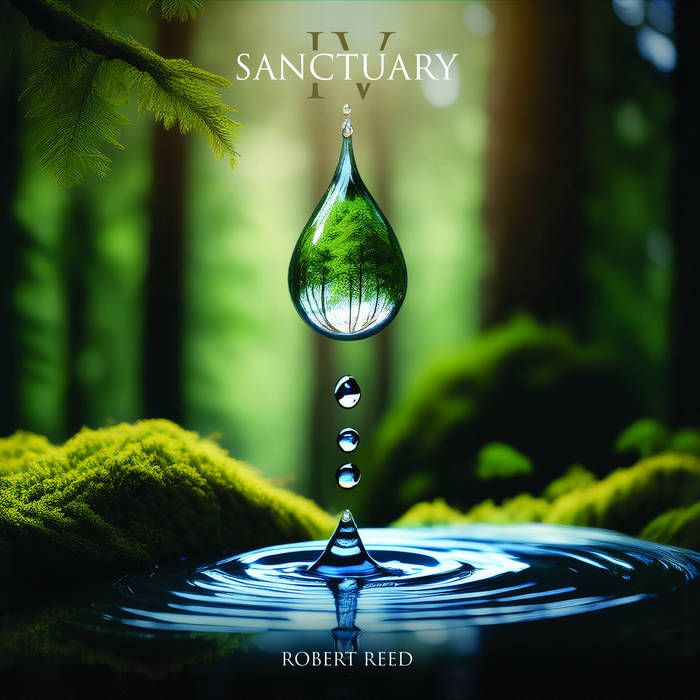
Robert Reed, Sanctuary IV. One of the driving forces behind 1990s neo-proggers Magenta, Reed has branched out impressively in the following decades. Reed’s Sanctuary albums — episodic long-form pieces in the genre pioneered by Mike Oldfield’s Tubular Bells — have evolved far beyond pastiche or even tribute, and here he refines and re-energizes his approach to its peak. Compelling opener “The Eternal Search” races forward, climaxing with an utterly berserk Simon Phillips drum solo; “Truth” bounces vivid instrumental colors off of sampled male vocals, morphs into a nautical shuffle laced with Les Penning’s recorder tootles, then lunges for a grandiose, double-time finale; and the closing “Sanctuary” provides the perfect comedown with its gentle, compact, well-wrought theme. If you’re looking for a sweet spot between Bainbridge’s Celtic maximalism and Bioscope’s kinematic ambience, Sanctuary IV’s shimmering, tuneful instrumentals could be just your ticket.

— Rick Krueger
Rick’s Quick Takes: 4th-Quarter ’24 Lightning Round!

Where have the last two months gone? And how many new releases have I enjoyed in the interim? Enough that I’ll be shooting to summarize each one included below in two to four sentences, max! (Though I can’t guarantee they’ll be short sentences.) Purchase/streaming links embedded as usual, so here we gooo . . .

New Music

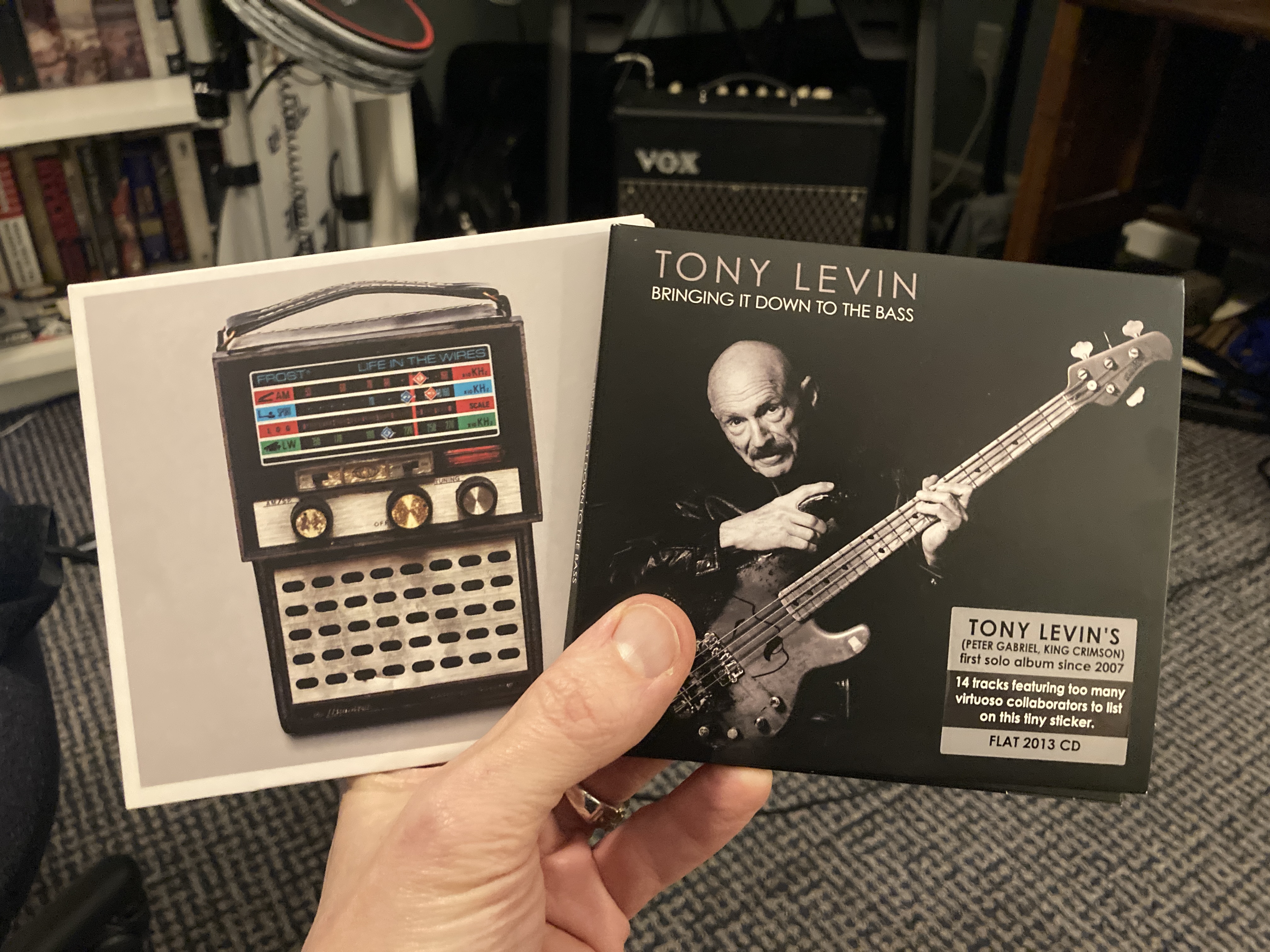
As teased in our October interview with mainman Jem Godfrey, Frost*’s Life in the Wires (listen here) is the conceptual album of a prog fan’s fondest dreams; the storyline is vintage dystopia (1984 meets Who’s Next), the music a full-on sonic assault from the get-go (replete with widdly synthesizer solos). Pitted against the required cybernetic supervillain, in search of freedom out there in the fields, can Godfrey’s protagonist Naio escape permanent lockdown in teenage wasteland? The ultimate answer is well worth the winding journey; powered by the heady backing of John Mitchell, Nathan King and Craig Blundell, Godfrey easily conjures up the equal of previous band high points Milliontown and Falling Satellites.

On his fresh solo album Bringing It Down to the Bass, Tony Levin launches 14 low-end odysseys with (to quote the hype sticker) “too many virtuoso collaborators to list.” But whether proving that “Boston Rocks” with Bowie guitarist Earl Slick and Dream Theater drummer Mike Portnoy, “Floating in Dark Waves” below Robert Fripp’s soundscapes, or reuniting with fellow Peter Gabriel bandmembers on multiple jams, Levin always grabs the ear with his supremely melodic bass, Stick and cello work. And his low-key, half-spoken vocals prove surprisingly effective, especially on dry barbershop throwbacks “Side B/Turn It Over” and “On the Drums” and the moving John Lennon tribute “Fire Cross the Sky.”

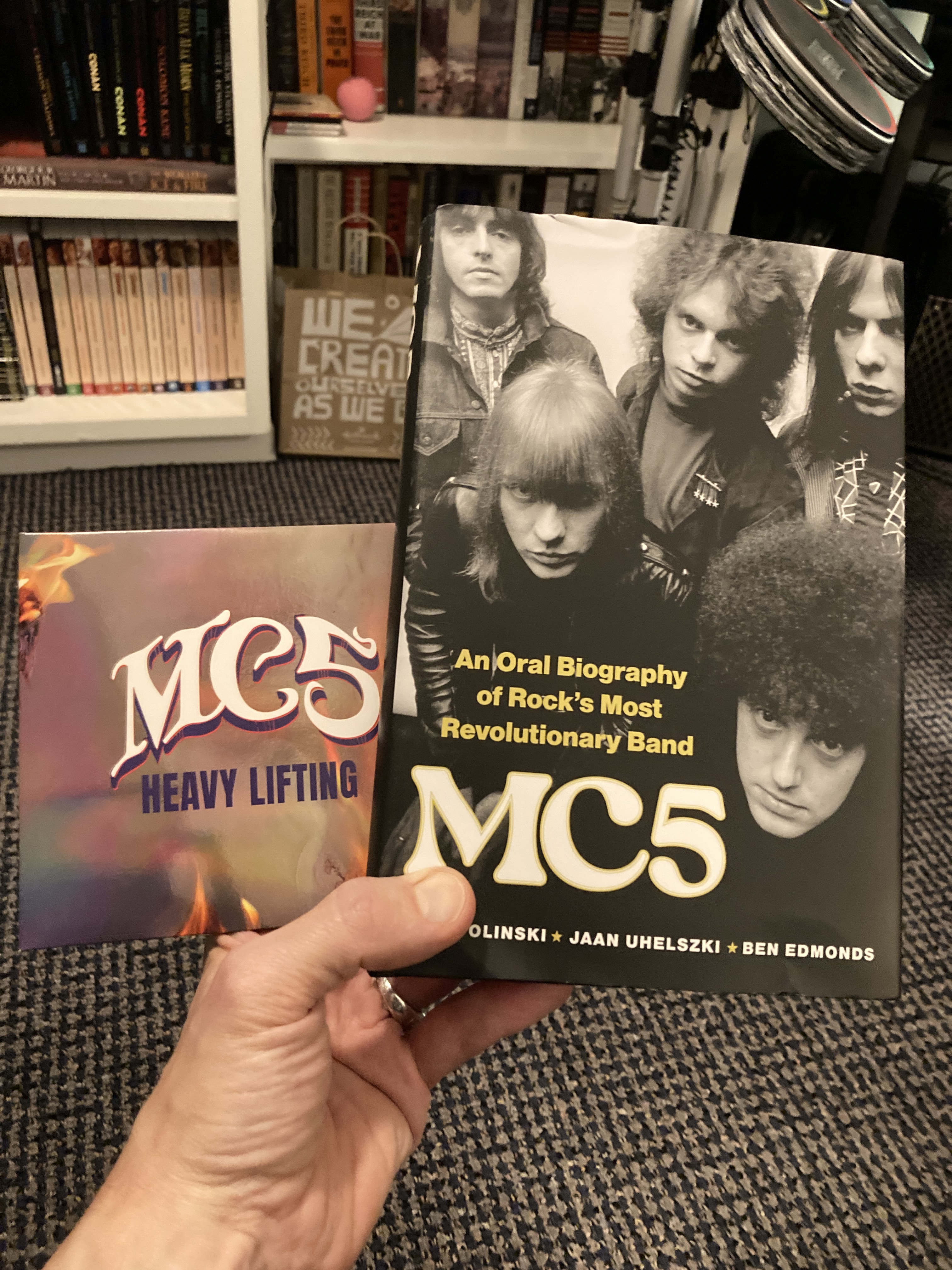
Pioneer garage rock guitarist Wayne Kramer had one more winner in him before his passing earlier this year. Credited in tribute to Kramer’s seminal Detroit collective MC5, Heavy Lifting (listen here) rages against the political and cultural machines still standing since the band’s original heyday, agitating for a better deal with 13 brash, irresistible helpings of punk (“Barbarians at the Gate”), rock (“Edge of the Switchblade”) and soul (Edwin Starr cover “Twenty-Five Miles”). For the full skinny on why Kramer & company finally snuck into the Rock & Roll Hall of Fame through the back door this year, the new MC5: A Oral Biography of Rock’s Most Revolutionary Band is essential reading.

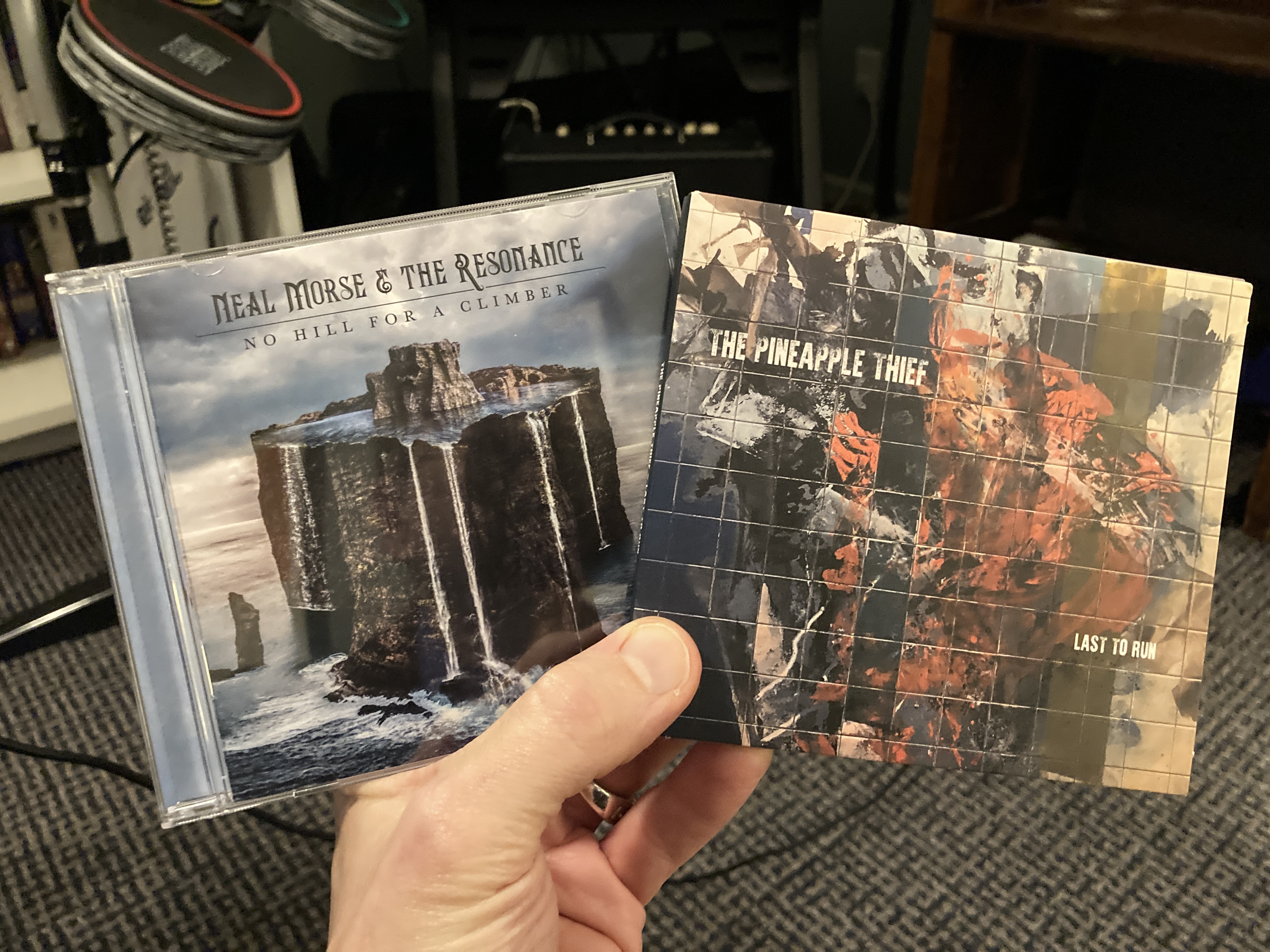
As his long-time collaborators spin off in other directions, Neal Morse just keeps on keeping on! Teaming with The Resonance, a purpose-built quartet of young Nashville hotshots, Morse’s latest No Hill for a Climber (listen here) is a bit of a throwback; instead of full-blown rock opera, Morse builds a multi-faceted album, sandwiching creepy swinger “Thief”, head-down rocker “All the Rage” and melting ballad “Ever Interceding” between twin epics (opener “Eternity in Your Eyes” and the closing title suite). The more straight-on vibe Morse embraced on his Joseph duology predominates here, but with enough detours to keep long-time listeners coming back and intrigue new hearers.

Straight-on is a pretty good description of the new The Pineapple Thief EP Last to Run (listen here) as well; far more than leftovers from the fine It Leads to This, the five songs included here strike hard and deep. As Gavin Harrison weaves enticing rhythmic illusions on drums, Bruce Soord spins up dark, pensive vignettes of personalities in crisis (“All Because of Me”), relationships snarled by dysfunction (“No Friend of Mine”) and societies on the brink (“Election Day”). Another band that mines a familiar vein repeatedly, yet consistently leaves listeners craving more.

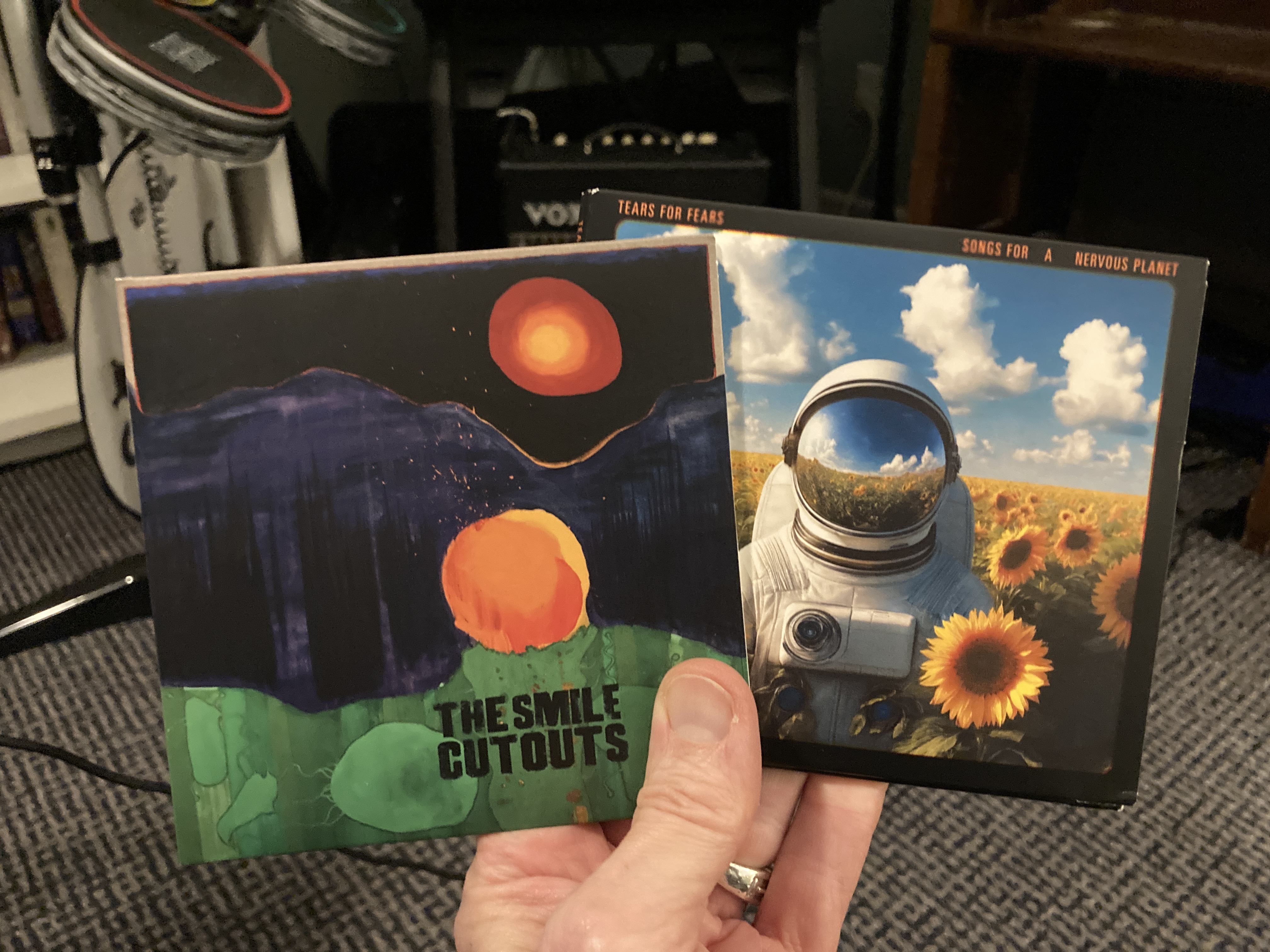
Speaking of dysfunction, The Smile’s Cutouts (listen here) resembles nothing so much as a numbed comedown, trailing the apocalypses unflinchingly depicted earlier this year on their Wall of Eyes. Thom Yorke’s nonsense lyrics and bleached-out vocal affect sound light-years away from the redemption Radiohead intimated even at their most jaundiced; Jonny Greenwood spins up orchestral/electronics, evoking distant, forgotten nightmares; Tom Skinner holds down the spare, spacey beat, blithely driving into nothingness. If not as gripping as this trio’s first two albums, Cutouts can still compel with its chill.

But where The Smile chills, Tears for Fears seeks warmth; the four fresh tracks on TfF’s mostly-live Songs for a Nervous Planet (listen here) home in on healing (“Say Goodbye to Mom and Dad”), lasting love (the lush “The Girl that I Call Home” and the psychedelic “Emily Says”) and self-actualization (the quirkily glib “Astronaut”). And there’s plenty more catharsis in concert, as Roland Orzbaal, Curt Smith and backing band blast out the hits of yesteryear and revisit the highlights of their fine 2022 comeback The Tipping Point, all with plenty of enthusiasm and aplomb.

(Live albums and archival releases – box set time! – follow the jump.)

Continue reading “Rick’s Quick Takes: 4th-Quarter ’24 Lightning Round!”

Rick’s Quick Takes: Come On, Feel the Noise!

This time around, a cross-section of mostly new, mostly instrumental albums that may start in one genre but willfully refuse to stay there — with frequently bracing results. Purchase links are embedded in the artist/title listings, with any additional purchase links for physical media at the end of a review and streaming access following.

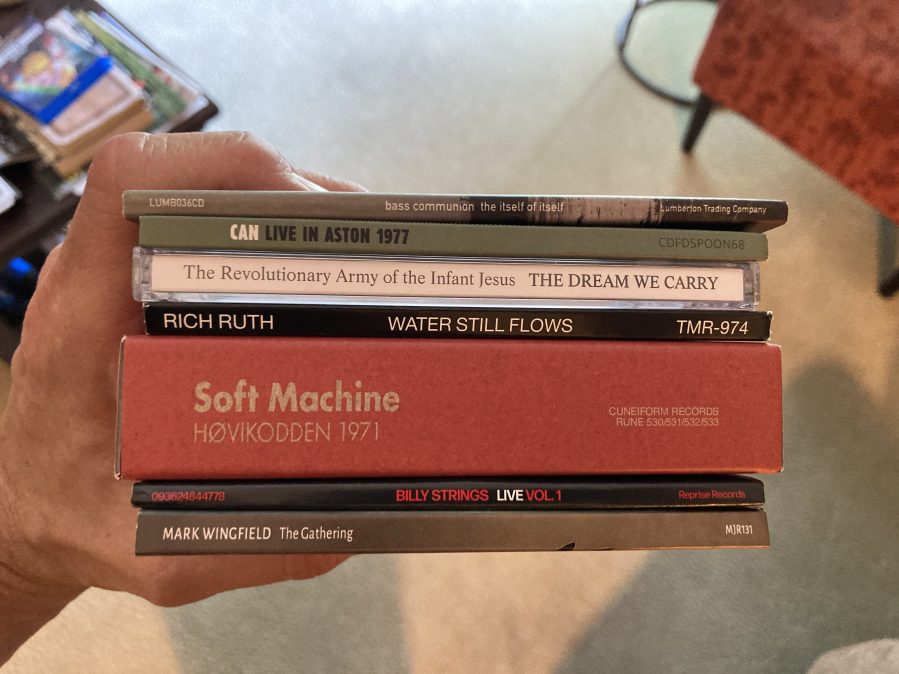
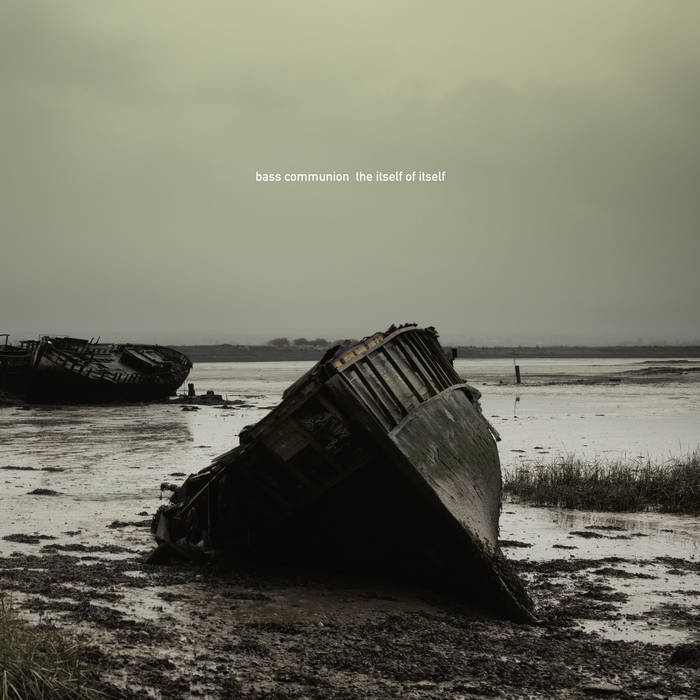
Bass Communion, The Itself of Itself: We can’t say Steven Wilson doesn’t warn us on the album sleeve: “audio artefacts and noise such as tape hiss, wow and flutter, vinyl crackle, distortion and earth hum are (probably) deliberate.” Delving into his longstanding experimental/electronic doom-drone persona, Wilson once again abandons melody and rhythm to slap down raw sonic textures and grind them together across extended time spans. The results range from arresting (the relentless build of horror-soundtrack opener “Unperson”, the uneasy, alarming stasis of the title piece) to utterly forgettable (when my dehumidifier kicked in during “Study for Tape Hiss and Other Artefacts”, I really thought it was part of the track). Am I finally sussing out (as some have theorized) Wilson’s extended con of the prog world? Getting a sneak peek of his 2025 solo album The Overview? Or hearing the latest from an artist who just does whatever he wants and doesn’t particularly care how possessive fans get about him? I’m a diehard Wilson fan, but when it comes to Bass Communion, your guess as to his motivation is probably as good as mine. (Order the CD from Burning Shed here.)

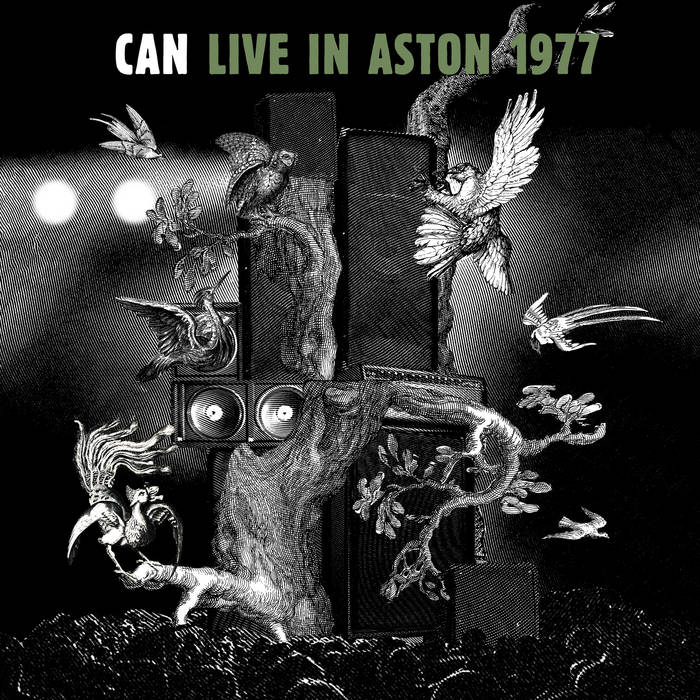
Can, Live in Aston 1977: Krautrock’s most thoroughly improvisational outfit got thoroughly funky in the late ’70s, courtesy of Rosko Gee, Jamaican bassist of no mean ability. With Gee powering the beat and previous bassist Holger Czukay dialing up snippets from shortwave radio and tape libraries, this version of Can is rhythmically tighter and tonally looser at the same time. That means Michael Karoli has more room to howl on guitar, Irmin Schmidt can conjure thicker clouds and launch edgier thunderbolts from his keyboards, and drummer Jaki Liebezeit can drill down into his unstoppable, drily metronomic groove. The clangorous solo section of “Drei” (enticing in its ambiguity – who’s playing this crazy thing that sounds like a bell choir in hyperdrive?) and the insistent, stonking, organ-led groove of “Vier” are high points. A solid addition to this fine archival series of vintage concerts.

The Revolutionary Army of the Infant Jesus, The Dream We Carry: RAIJ’s 2020 effort Songs of Yearning was my Top Favorite album of that strange year; I called it “a sacramental transmission from, then to, the heart of creation.” The Liverpool “experimental arthouse collective” has reduced its core personnel and pared back its weirdness ever so slightly, but their inviting mélange of reflection and insistence, sacred and profane persist. Jesse Main’s vocals and Eliza Carew’s cello gracefully arc over Paul Boyce and Leslie Hampson’s lush instrumental backing; on multi-track suites like “Les Fils des Etoiles” through “Object of Desire”, fragments of multilingual poems, songs and spoken word rise from nowhere, become incarnate, declare their tidings, then disappear into a wistful bed of chamber and orchestral tone color. Like RAIJ’s entire catalog, The Dream We Carry testifies to mystery tucked within the mundane, exemplified by album ender “The Song of Wandering Aengus”; it’s an eloquent yet elusive invitation to encounter the Spirit active at the heart of the fields we know.

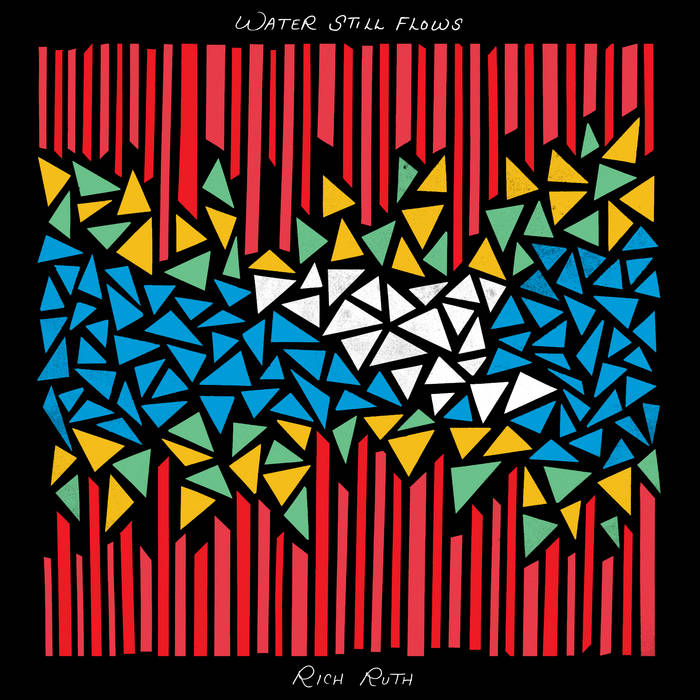
Rich Ruth, Water Still Flows: Reviewing 2022’s I Survived, It’s Over, my thumbnail sketch of Nashville guitarist Rich Ruth pointed to him as RAIJ’s American counterpart — but on the evidence of his latest, that assessment sells him short. For Water Still Flows, Ruth adds massive slabs of dark metal riffage to his already potent mix of cosmic ambience, celebratory spiritual jazz, and slow-crawling post-rock. Opener “Action at a Distance” feels like a heftier “Won’t Get Fooled Again”; marauding power chords choke off the luxuriant strings of “God Won’t Speak”; the blissful comedown of “Somewhere in Time” sticks a soft landing after the devastating climax of “Aspiring to the Sky”. With an eclectic ensemble of sax, harp, and pedal steel plus Ruth’s frenetic axework anchored by Reuben Gingrich’s crashing drums, this album is a mighty, impeccably shaped tone poem that once again journeys through pain and catastrophe to refreshment and renewal. (Order the LP or CD from Third Man Records here.)

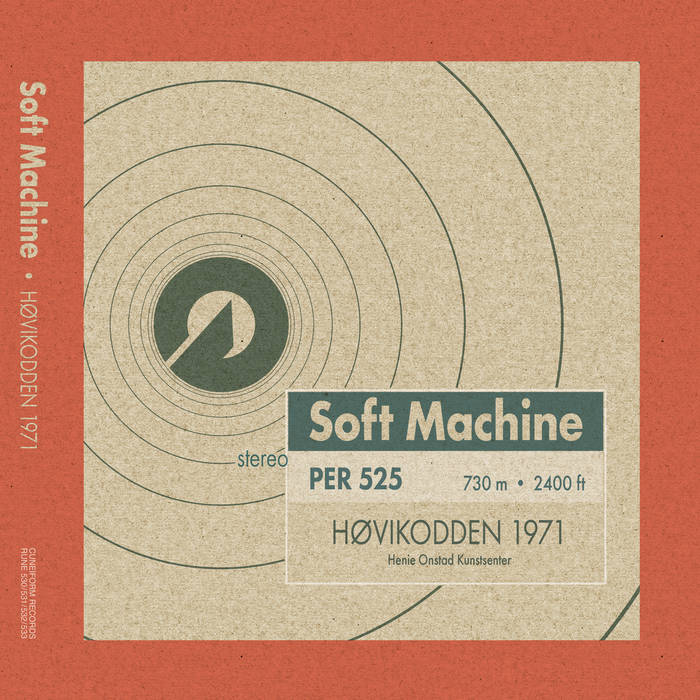
Soft Machine, H​ø​vikodden 1971: The seminal British jazz-rock band at its creative peak, recorded over two nights at a Norwegian arts center. At each show, Mike Ratledge’s inimitable fuzz organ takes command; multi-saxist Elton Dean lets loose with an unending stream of raucous Coltrane licks; Hugh Hopper’s bass swarms, clambers and climbs, refusing to stay on the low end; Robert Wyatt’s limber drumming seethes, weaving through the tonal murk at will. Sometimes locking together in breathtaking unison, sometimes scattering to widely separated corners, the Softs approach classic material like “Facelift”, “Fletcher’s Blend” and “Out-Bloody-Rageous” from vastly different perspectives at different shows; the first night is a anarchic fireworks display, gobsmacking in its sweep, while the second night channels the quartet’s energy into a thrilling, thrusting sense of unified drive (albeit with laid back interludes). There’s tons of live Soft Machine available, but this newly released box set is a genuine high point of their already formidable discography.

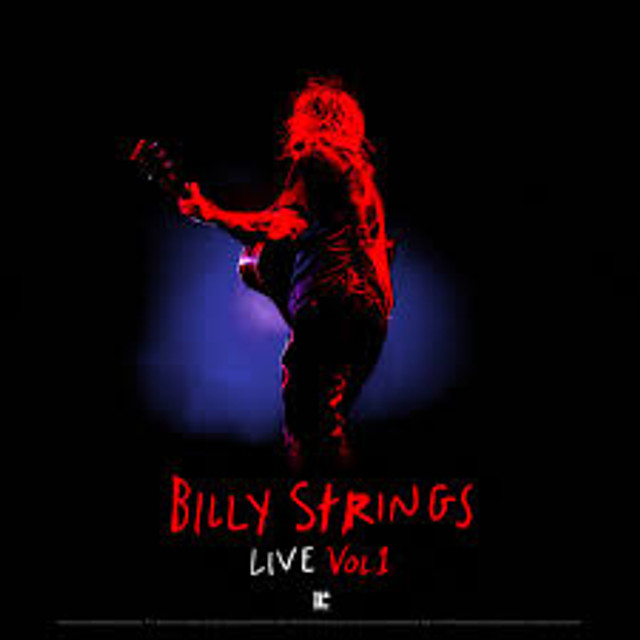
Billy Strings, Live Vol. 1: I’ve gotta admit, I’m late to the party here; before a recent sojourn in Nashville and a resulting reacquaintance with all things Americana, I had missed out on the mightiest musician to hail from Michigan in a long, long time. Strings is, without a doubt, the real deal: a virtuoso guitarist, a first-rate singer and a songwriter who’s already shown signs of true, durable greatness. On his first live release, he and his band turn gritty evocations of small-town vice (“Dust in a Baggie,” “Turmoil and Tinfoil”) and poetic contemplations of the bigger picture (“Long Forgotten Dream”, “Fire Line/Reuben’s Train”) into unabashed, dynamic bluegrass brilliance, stirring in proggy interplay and psychedelic seasoning, stretching out their jams for maximum tension and impact, but with nary a wasted note or a thoughtless lick. This is an absolutely smashing major label debut, a snapshot of a phenomenon in perpetual motion, the music grounded in Strings’ heart as well as his fearsome chops, and already on my Favorites list for this year. (Strings’ next studio album, Highway Prayers, has just been announced for a September 27 release.)

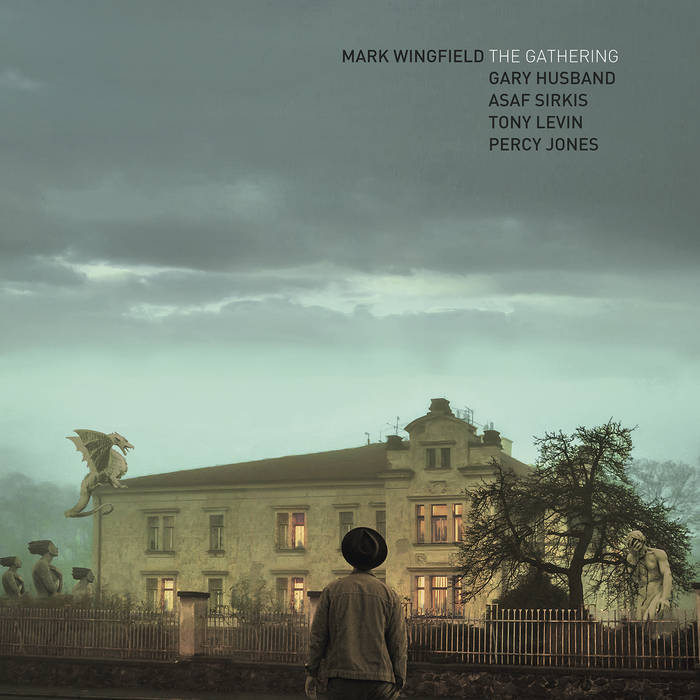
Mark Wingfield, The Gathering: Nightmarish complications severely curtailed MoonJune Records’ ability to sell this beauty on CD — which is a shame, because it may be British fusionist Wingfield’s most accomplished and focused effort to date. Languorous, enticing compositions like “Apparition in the Vaults”, “A Fleeting Glance” and “Cinnamon Bird” consistently take flight here: Wingfield’s guitar traces ecstatic melodic parabolas and sparse changes; Gary Husband colors the soundscape with juicy pads, inspired atmospheres and choice accents on piano and synth; Asaf Sirkis lays down a spacious, unshakeable polyrhythmic grid to propel things forward. What makes this even more of a killer session is the overdubbed bass contributions of King Crimson’s Tony Levin (focusing on active, rich-toned counterpoint) and Brand X’s Percy Jones (bubbling under with his unique tone and angular comping). It’s daring and delightful from start to finish, as an all-star lineup of truly great players work with total concentration and dedication, and make this sophisticated yet accessible music their own.

— Rick Krueger
Rick’s Quick Takes for Spring

For your consideration, recent releases from the worlds of prog, jazz, folk, country and marvelously unclassifiable music. As usual, purchase links are embedded in the artist/title listing, with streaming previews below the review.

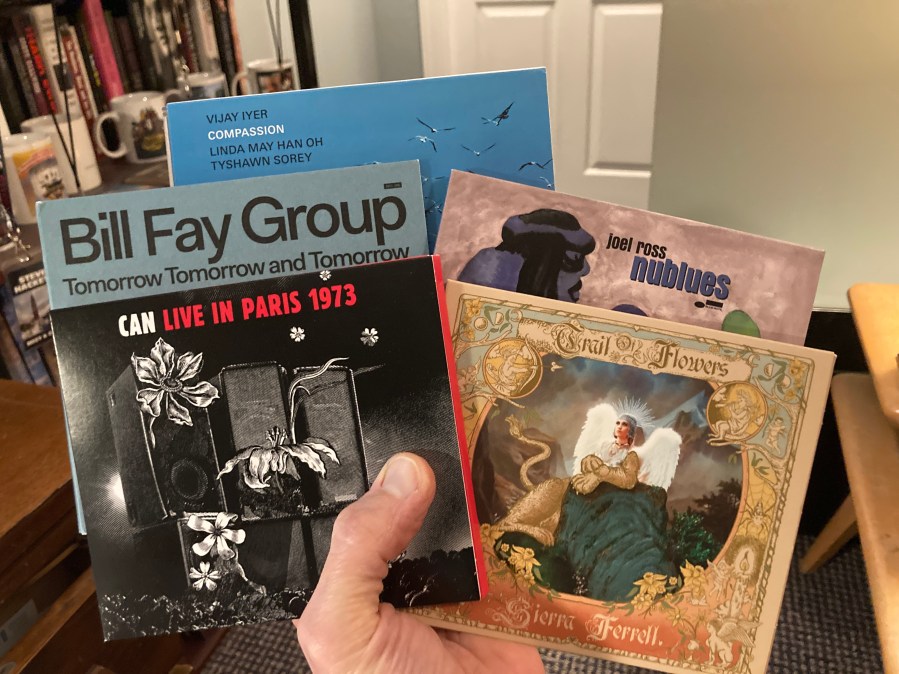
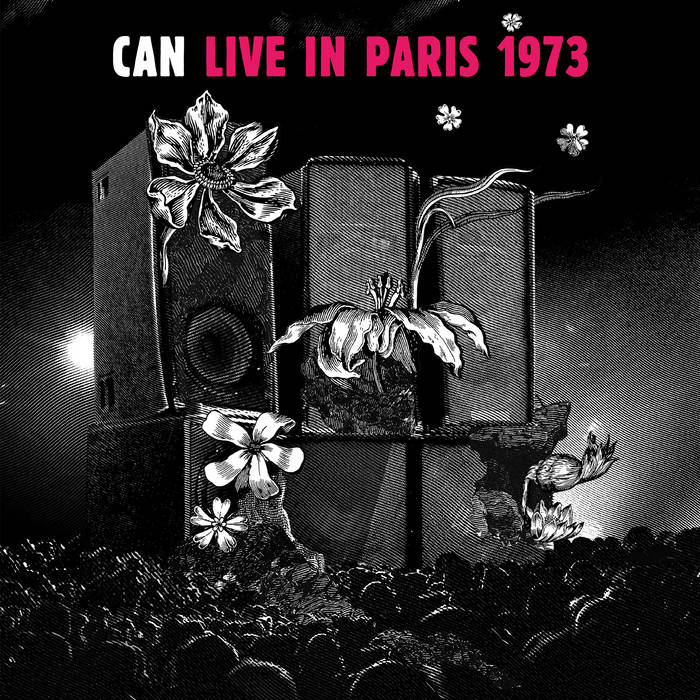
Can, Live in Paris 1973: Another immensely enjoyable archive release from the guys who sent krautrock into orbit with a winning combination of tight grooves and freeform jamming. The fresh angle this time around is the presence of late vocalist Damo Suzuki; locking in with Jaki Liebezeit’s propulsive percussion, the throbbing bass of Holger Czukay, and Michael Karoli and Irwin Schmidt’s guitar/keyboard interplay, Suzuki burbles, banters, bickers – a daffy, devious jester who pulls improvised melody and lyric from thin air as he goes along. Oh, and forget about sounding “just like the records” – studio tracks “One More Night” and “Spoon” are touched on to kick off the jams, then abandoned or deepened, stretched like taffy to the point of sonic hypnosis, mannnn . . . Five gripping examples of Can’s live prowess; whether they could actually stop time or not (it may have been the psychedelics), these ninety minutes of unbridled creativity go by in a flash.

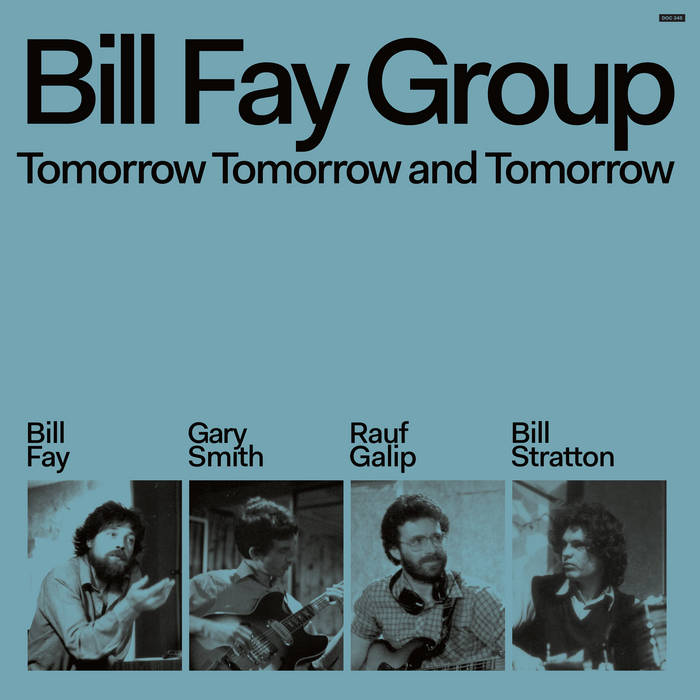
The Bill Fay Group, Tomorrow and Tomorrow and Tomorrow: Ignored in the late 1960s and early 70s, British singer-songwriter Fay achieved cult favorite status after Wilco covered his hymnic “Be Not So Fearful” in the wake of 9/11. Utterly unlike the manneristic Dylan-meets-Kinks pop of his debut or the bleak rock crunch of 1971’s lost classic Time of the Last Persecution (both well worth seeking out), these vibrant demos from 1977 capture the gentle Christian mysticism at the heart of Fay’s songs, executed with grace and empathy by the three-piece Acme Quartet (?). The multiple versions of meditations like “Strange Stairway”, “Isles of Sleep” and “Life” radiate understated grace and power, foregoing apocalyptic panic to embrace simple, jubilant confessions of faith (“So that the world might believe/That Life has risen/That Life has conquered”). Prayers and hypnotic invocations that invite and welcome without rancor or hectoring, couched in song that’s timeless yet vividly in the moment.

Sierra Ferrell, Trail of Flowers: Widescreen mountain music for the anxious generation, this went straight to my 2024 Favorites list. In West Virginia native Ferrell’s sure grasp, her second album mounts to melodramatic heights on the wings of old time country. Ferrell’s sly, witty songwriting whiplashes between Americana subgenres to perfection; her opening run of originals – yearning road dog anthem “American Dreaming”, cautionary honky-tonk stomp “Dollar Bill Bar”, giddy fiddle reel “Fox Hunt”, and string-swathed heartbreaker “Wish You Well” left me astonished in the wake of their range and breadth. There isn’t a dud track here (check out jaunty Latin-tinged romp “Why Haven’t You Loved Me Yet”, murder ballad “Rosemary”, hybrid gospel/love song “Lighthouse” – oh heck, all of ’em); when you add in Ferrell’s beguiling voice (spanning the spectrum of twang from Janis Joplin to Dolly Parton and all points between) and gutsy fiddle work, plus producer Eddie Spear’s rich gothic ambience, the result is thoroughly winning. Believe the hype – if anybody can save country music from Greater Nashville’s ongoing torrent of processed pop, artists like Sierra Ferrell and Charley Crockett (both playing my local outdoor amphitheater this summer) are your best bet.

Vijay Iyer, Compassion: Building on the near-telepathic teamwork they established on 2021’s Uneasy (one of my faves from that year), pianist Iyer, bassist Linda May Han Oh and drummer Tyshawn Sorey come out swinging with this full-on follow-up. The impressionistic title tune shimmers into focus, with the trio relying on space and silence as much as sound; a luscious take on Stevie Wonder’s “Overjoyed” doubles as a tribute to Chick Corea, inspired by Iyer’s opportunity to play the late legend’s own piano. Whether on the angular, driving “Ghostrumental” or the rugged throwback blues “It Goes”, Oh pulls gorgeous melodies out of the air, Sorey whips up a seething percussive stew even as he grooves, and Iyer stirs in one heady, pensive idea after another. Iyer characterizes the music as “a reminder, an assurance, a plea, and perhaps an inspiration – to find each other in this together”; it’s a tribute to these exceptional musicians that, with what seems like maximum grace and minimum sweat, Compassion tangibly conjures up the empathy it advocates in sound.

Joel Ross, nublues: Chicago-born vibraphonist Ross impressed me to no end when I caught him live as part of the Blue Note 85th-Anniversary All-Star Band this past January. His fourth album is of a piece with his previous three: a soundworld of abstract yet delightfully contemplative jazz, soaked in the blues, always tumbling and turning with a non-stop flow of invention. Ross’ interaction with young saxophone lion Immanuel Wilkins (also an All-Star), Jeremy Corren on piano and bass/drums duo Kanoa Mendenhall and Jeremy Corren are the secret sauce at the music’s heart, whether putting their own spin on Thelonious Monk’s “Evidence” or John Coltrane’s “Equinox” and “Central Park West”, conjuring the title track from thin air – Mendenhall shines on bowed bass here – or building “Bach (God the Father in Eternity)” into a steamrolling surge of gospel-soaked eloquence. It’s like crashing a conversation already in progress and discovering you were invited all along.

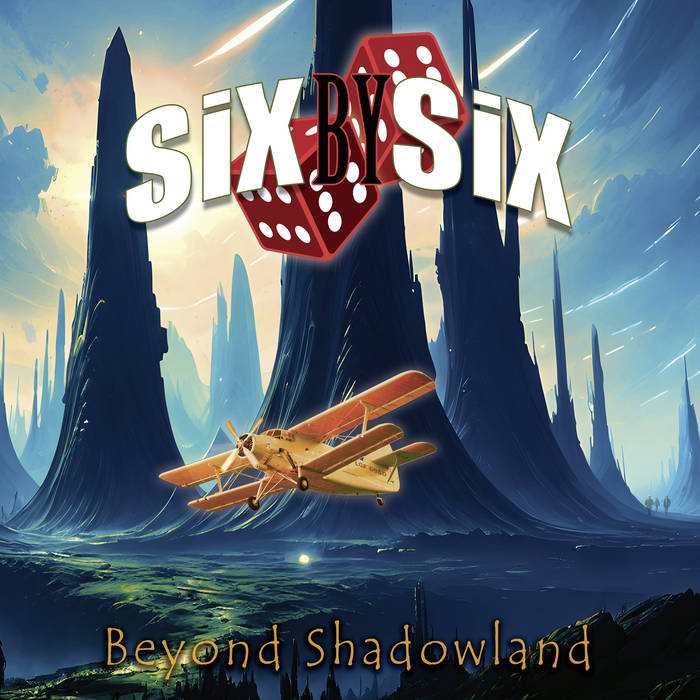
SiX by SiX, Beyond Shadowland: Robert Berry, Ian Crichton and Nigel Glockler hit hard and strong, blasting past Difficult Second Album Syndrome to craft a wild and wooly extension of their first-rate debut. Sonically, this one comes across hotter and crunchier, as multi-instrumentalist Berry corrals Crichton’s hypercreative guitar licks into decidedly unconventional song structures, then layers in heaping helpings of lyrical positivity, while Glockler lays down rock solid percussive foundations. The result is a record that gets stronger as it goes, with head-turning surprises that stack up thick and fast: the acoustic-based sci-fi narrative “Obiliex”, the slashing, tribally funky “Titans”, the fuzz-toned flutter of “Sympathize” and, in “One Step”, an epic that progresses from yearning balladry through a proggy midsection to a hip-hop shuffle that works! Add in the relatively straight-up singles “Arms of a Word” and “The Mission” and you have a sophomore effort that oozes both mass appeal and maximum creativity. Check out the new Progarchy interview with Robert Berry here.

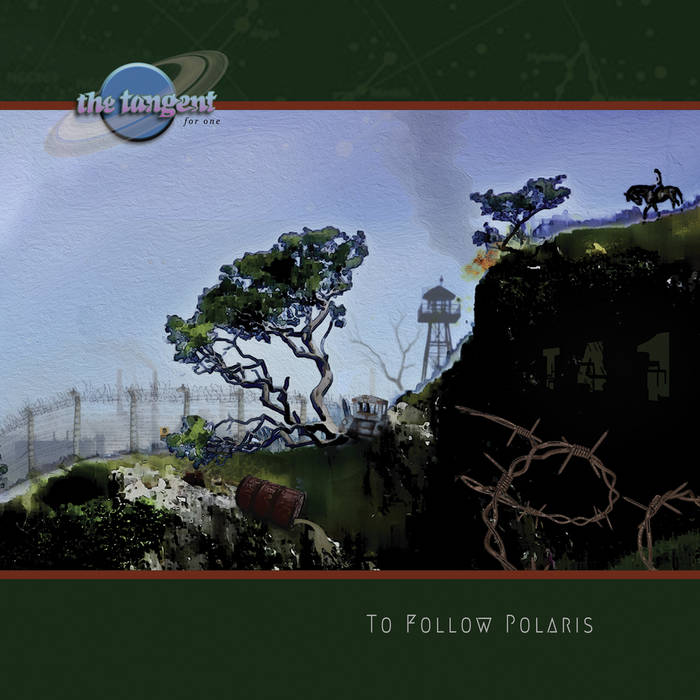
The Tangent, To Follow Polaris (released May 10): On which Andy Tillison takes off the gloves. Playing all the instruments himself (the album’s labeled “Tangent for one”) with style and panache, Tillison sails confidently through textures ranging from glitchy electronica to vintage soul and funk, with generous lashings of his trademark organ and synthesizer throughout. Kaleidoscopic overture/mission statement “The North Sky” lays down Tillison’s lyrical marker on graspable truth; brooding ballad-of-the-algorithm “A Like in the Darkness” paints a genuinely creepy portrait of online life; “The Fine Line” muses on the commodification of journalism, “destroy[ing] the world to sell the story”. Then on “The Anachronism”, Andy lets it rip – a furious jeremiad calling out both the ineffectual monocracy that’s lost its grip on events and the self-absorbed masses who watch it all happen on their phones. The whole thing builds to a crashing, anarchic climax – only to return to Tillison’s beginning, “follow[ing] the North Star/(When all around me seems to be going South)”. Be warned: something Tillison sings on this audacious, accomplished effort will probably cheese you off – but only because, in a world of grinning provocateurs, shameless attention whores and cynical game players, he’s a genuine idealist, with no other agenda than speaking his mind and wondering why we can’t have a better world.

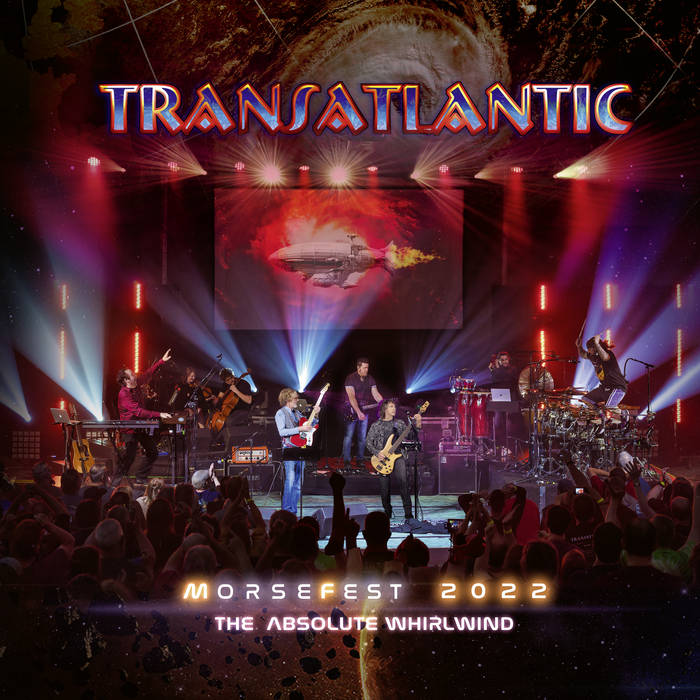
Transatlantic, Morsefest 2022: The Absolute Whirlwind: Or should this be subtitled, “More Never Is Enough . . . Yet Again, Still”? Transatlantic’s second live set off the back of 2022’s The Absolute Universe, this five-CD, two-BluRay set certainly doesn’t skimp on the quantity. There’s five hours of music here from two consecutive nights: the twin album-length epics that provide the release’s title, three elongated ballads, a side-long Procol Harum cover, and bits and bobs of five more extended extravaganzas from the back catalog. It’s not all gravy; there are brief instants where the energy flags and, as Neal Morse and Roine Stolt strain to sing the high notes, I’m reminded that it’s been 25 years since this supergroup first crashed into the prog world’s consciousness. But these are far outnumbered by the moments where Morse, Stolt, Pete Trewavas, Mike Portnoy and “fifth Transatlantic” Ted Leonard fire up the afterburners and launch into startlingly tight ensemble passages, awe-inspiring solos, pin-sharp vocal counterpoint (often backed up by a real choir), dizzying transitions and over-the-top, orchestrally augmented climaxes. Too much of a good thing? It’s possible – but, with the recent news that Portnoy’s resumed the drum chair in Dream Theater, Transatlantic isn’t a good thing to be taken for granted.

— Rick Krueger
Rick’s Quick Takes for January

Big Big Train, Welcome to the Planet: Yet another stellar addition to BBT’s discography, their latest effort consolidates the widened horizons of Grand Tour and the intimate subjects of Common Ground, casting an epic light on the everyday glory of family, community, love and loss. With Nick D’Virgilio, Rikard Sjöblom, new guitarist Dave Foster and new keyboardist Carly Bryant all involved in the writing, rockers like “Made of Sunshine” and “The Connection Plan” hit with maximum impact; ballads like “Capitoline Venus” and “Oak and Stone” are masterfully expressive; instrumentals like “A Room with No Ceiling” and “Bats in the Belfry” unleash the requisite nifty twists and turns — not forgetting less easily classified delights like the multi-sectioned “Lanterna” and the woozy dreamland wash of the title track. Throughout, Greg Spawton’s firm hand on the tiller and the late David Longdon’s vocal authority are rock solid, their partnership the beating heart of this music. In the wake of Longdon’s untimely passing, we can’t know if Welcome to the Planet is the last stop on Big Big Train’s journey or a way station before what might come next. But such considerations pale in the face of what we’ve been given; this one — easily my favorite BBT effort since the English Electric days — is a real thing of beauty, an album to be treasured and listened to again and again. (Check out Bryan Morey’s detailed review here.)

Continue reading “Rick’s Quick Takes for January”

Kruekutt’s 2021 Favorites!

I thought I didn’t have a big list of favorites from this year’s listening — until I revisited my six-month survey from back in June and added in the good stuff I’ve heard since then! The listing below incorporates links to full or capsule reviews, or other relevant pieces on Progarchy and elsewhere; albums I haven’t written about yet get brief comments, along with my Top Favorites of the year. Most of these are available to check out online in some form; if you find yourself especially enjoying something, use that Christmas cash and support your choice with a purchase! And the winners are . . .

Continue reading “Kruekutt’s 2021 Favorites!”

The Big Fall Prog (Plus) Preview, Part 2: Box Set Bonanza!

Since the initial installment of our fall preview, deluxe box set announcements are coming thick and fast. This article includes those mentioned in the preview, plus new announcements that may appeal to our readers. I’ve included approximate list prices in USA dollars (not including shipping), as well as lower-cost options for those who want to hear and support the music without breaking their personal bank. Links are to the ever-ready folks at Burning Shed unless otherwise noted.

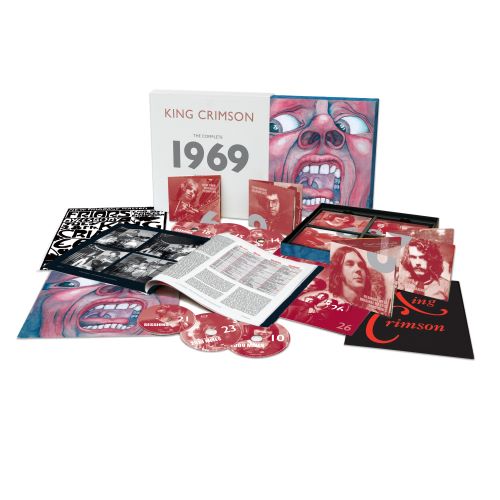
King Crimson, Complete 1969 Recordings: 20 CDs, 4 BluRays and 2 DVDs include every surviving note Crimson played in their first year — the seminal debut In the Court of the Crimson King plus the complete studio sessions, extant live bootlegs and BBC recordings. The crown jewels here are new stereo, surround and Dolby Atmos mixes of Court by Steven Wilson. Available October 23 ($210 – $240 list price, depending on your vendor); slimmed-down versions of In the Court on 2 CDs + BluRay (with the new stereo and surround mixes, alternate versions and additional material ; $40) or 2 LPs (with alternate versions and additional material; $35) are already available.

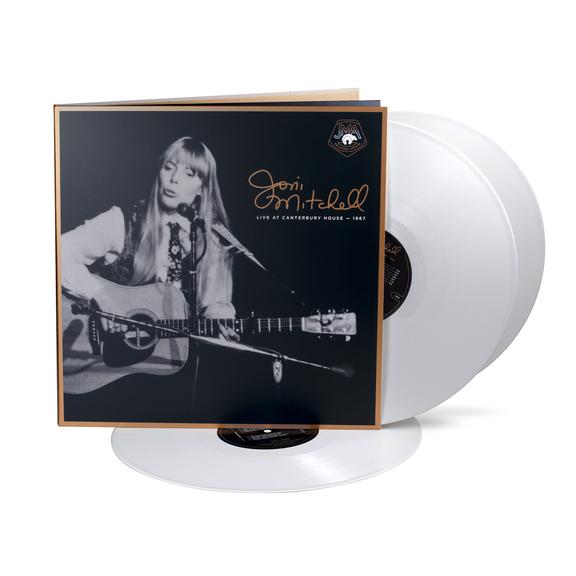
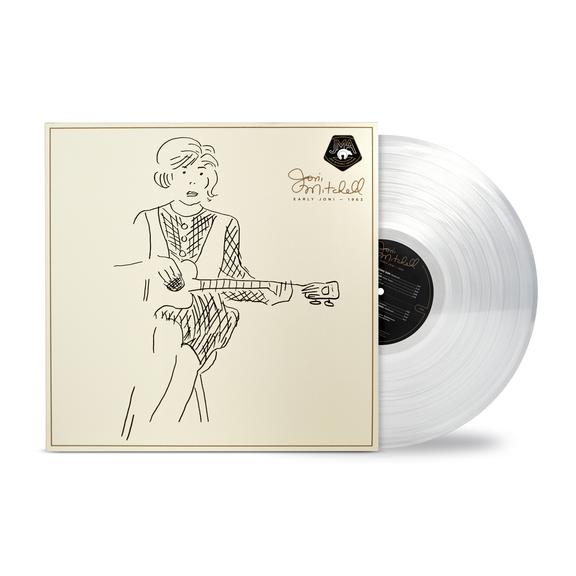
Joni Mitchell, Archives Vol. 1 – The Early Years (1963-1967): Nearly six hours of recordings from before Mitchell released her first album — home recordings, radio broadcasts, and live shows, including 29 songs not previously released with her singing them! Available from Mitchell’s website October 30 as follows: complete on 5 CDs ($65); Early Joni 1 LP (1963 radio broadcast; $25, black or clear vinyl) and Live at Canterbury House 1967 3 LPs (3 sets recorded in Ann Arbor, Michigan; $60, black or white vinyl).

More from Porcupine Tree, Tangerine Dream, Tears for Fears and others after the jump!

Continue reading “The Big Fall Prog (Plus) Preview, Part 2: Box Set Bonanza!”

soundstreamsunday #88: “Oh wie nah ist der Weg hinab” by Popol Vuh

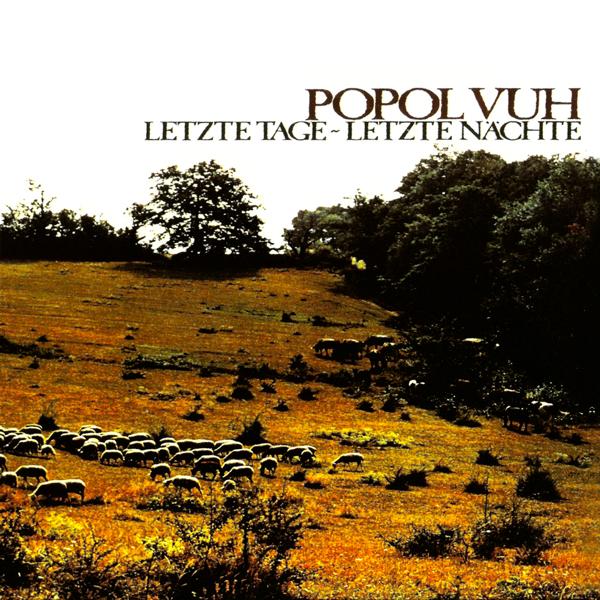
pv_letztetage.jpgIn the last few years, David Eugene Edwards has taken Wovenhand — soundstreamsunday #85 — in an increasingly heavy direction, towards drone metal underpinning an utterly unique and dead serious frontier circuit preacher mysticism.  The drone as tribal, the ancient tool of ascension to the Common One, and so Wovenhand’s thunderous droning riffs on 2012’s Laughing Stalk and 2014’s Refractory Obdurate relate to themes steeped in Native American and old time music, eastern desert whirlwinds and western desert stoner rock.  It is a vast music carrying a mad sensibility:
In its gothic-ness and existential riddles the music of Wovenhand is tied to bands like Siouxsie and the Banshees, early Cult and, going further back, Popol Vuh.  The masters of acoustic and electrified devotional drone and chant music, Florian Fricke’s Popol Vuh were for decades known mostly for their Werner Herzog film soundtracks and often, mistakenly I think, identified as New Age.  The krautrock revival of the 1990s put them on a proper map and made their records — ranging from drifting synth meditations to acoustic chants — widely available, while their celebration by bands like Opeth (who often play Popol Vuh prior to coming on stage) have given them a certain hip cred.

By the mid-1970s Popol Vuh’s association with fellow Munich-based rock band Amon Duul II opened their music to harder electric exploration, and when drummer/guitarist Danny Fichelscher left ADII to join Popol Vuh following Connie Veit’s departure (Veit played on Popol Vuh’s stunning classic, 1972’s Hosianna Mantra), he brought with him the Teutonic heaviness that was ADII’s stock-in-trade.  What followed was a string of records where Fichelscher gave form, importantly, to Fricke’s east-meets-west devotional exercises.  Among these albums was 1976’s Letzte Tage Letzte Nachte, an electric monument joining dark guitar figures with Popol Vuh’s trademark mantras.  Renate Knaup, also from ADII, contributes vocals along with Dyong Yun, the band’s primary singer.  “Oh wie nah ist der Weg hinab,” though, is an instrumental, and is representative of the shadows and light found in the set.  Darkness builds and thunder cracks, and then the storm breaks, the world made new.  There is an intended spiritual drama unfolding here, as it does in Wovenhand’s music, and, wordless as it is, the message is clear.

https://www.youtube.com/watch?v=qVQvbWaafiw

soundstreamsunday presents one song or live set by an artist each week, and in theory wants to be an infinite linear mix tape where the songs relate and progress as a whole. For the complete playlist, go here: soundstreamsunday archive and playlist, or check related articles by clicking on”soundstreamsunday” in the tags section.

soundstreamsunday: “Spoon” by Can

Can2
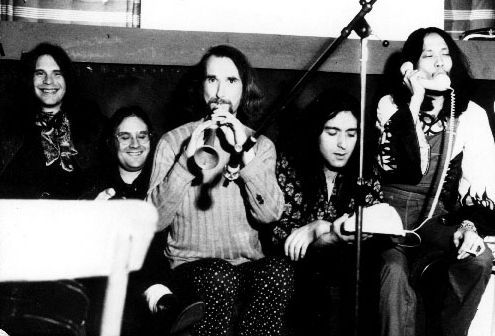
Michael Karoli, Irmin Schmidt, Holger Czukay, Jaki Liebzeit, and Damo Suzuki, circa 1972.

Across five albums and five years Can rendered the categories meaningless and set the bar for the kind of rock future that would make stars out of bands like Radiohead; there’s probably an argument that theirs is still the standard.  Like the better so-called “krautrock” bands of the era, Can’s music sounds like little else, and the environment supporting such freedom became a magnet for American and British artists looking to stretch (Keith Jarrett, Brian Eno, David Bowie).  But for such a self-styled experimental rock band, Can’s music is as accessible as it is confounding, a beautiful cut-and-paste mess controlled by disciplined musicianship (and editing).  Noise, psychedelia, jazz, funk, world, new and no music vie for space in the grooves, battling, more often than not, to equal victory.

By the time Can came to make 1972’s Ege Bamyasi they’d navigated a path through narcotic claustrophobia (Monster Movie‘s V.U.-summoning “Father Cannot Yell,”), cling-clang guitar trance (Soundtracks‘ “Mother Sky”) and long-form boogie freakout (Tago Mago‘s “Halleluwah”) butted up against concrete pieces that, to paraphrase Julian Cope, were guaranteed to clear the room at parties.  On Ege Bamyasi they tighten the bolts — at least on record, as live footage from the time shows vocalist Damo Suzuki doing everything to not play along, with varying degrees of success — and come up with an album that contains, in the context of Can’s musical universe, a slew of pop-shaded nuggets.  “Spoon” distilled all previous impulses into a succinct 3-minute masterpiece of Suzuki no-sense, Jaki Liebzeit clockwork, and Michael Karoli string-slinging wizardry, with Holger Czukay and Irmin Schmidt binding it all together.

It’s the perfect mixtape “link” song: rhythmic, catchy, weird.  It was a hit in Germany, adopted for a TV thriller and selling hundreds of thousands of copies.  Successful bands have named themselves after it.  It was and is — attractively to young, arty and ambitious Americans — roundly ignored in the States along with the rest of Can’s stunning catalog.  And even unto itself it’s a marvelous thing.

soundstreamsunday presents one song or live set by an artist each week, and in theory wants to be an infinite linear mix tape where the songs relate and progress as a whole. For the complete playlist, go here: soundstreamsunday archive and playlist, or check related articles by clicking on”soundstreamsunday” in the tags section.

soundstreamsunday: “Sowiesoso” by Cluster

cluster2Keith Jarrett‘s success in his tours of Germany in the early 70s owed some debt to the burgeoning, radical art scenes taking over that country’s larger cities.  German audiences supported a fiercely independent free rock culture that drew heavily from American jazz — particularly the extended, disciplined jams of In a Silent Way-era Miles Davis — and that pushed Hendrix‘s electric sorcery into giant drifting icebergs of sound (Tangerine Dream) on the one hand or an infinitely dissected, atomized funk (Can) on the other.  In between lay the devotional music of Popol Vuh, the blues-less Zep power of Amon Duul II, the world jazz of Embryo, the enormously influential “motorik” tic-tic-tic of Kraftwerk, and the organic electronic excursions of Cluster.  With its origins in the Zodiak Free Arts Lab, Hans-Joachim Roedelius’s and Dieter Moebius’s Cluster shared roots with Berlin’s Tangerine Dream and Ash Ra Tempel, but, in collaborating with guitarist Michael Rother in the group Harmonia in the mid-70s, also had close ties with Dusseldorf bands Kraftwerk and Neu!.  Cluster wore these associations — along with very fruitful collaborations with Brian Eno — meaningfully but lightly, maintaining in its mid-period albums a distinctly warm electronic-ism flush with melody.

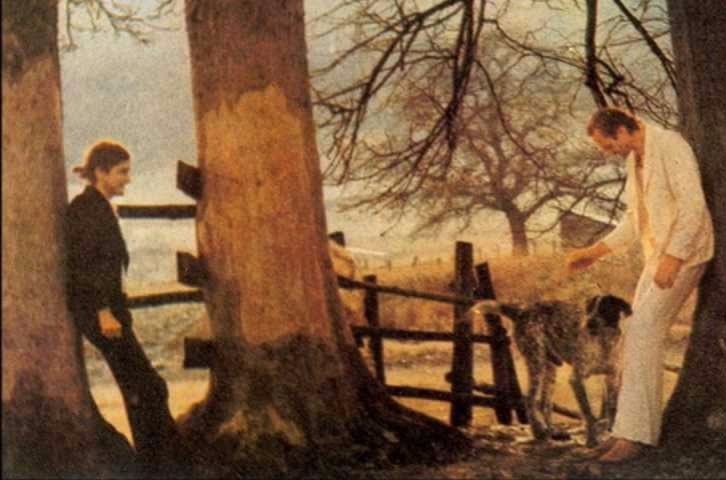
With 1976’s Sowiesoso, Cluster hit its stride, creating in its sunny, languorous intimacy a 37-minute treatise on laid-back ambient techno whose mood echoes across the work of Penguin Cafe Orchestra, Air, Tortoise, and most recently Schnauss and Munk.  The title track’s soft pulse and gently looping themes conjure in music the album’s cover: Moebius, Roedelius, dog, countryside, sprays of sunlight.  Where Kraftwerk consciously and brilliantly used electronic music to cast in relief the human/technology divide, Cluster on “Sowiesoso” shows that separation to be meaningless.  Electronic music of the heart.

https://youtu.be/GAVFQ2gaf8k

soundstreamsunday presents one song or live set by an artist each week, and in theory wants to be an infinite linear mix tape where the songs relate and progress as a whole. For the complete playlist, go here: soundstreamsunday archive and playlist, or check related articles by clicking on”soundstreamsunday” in the tags section above.