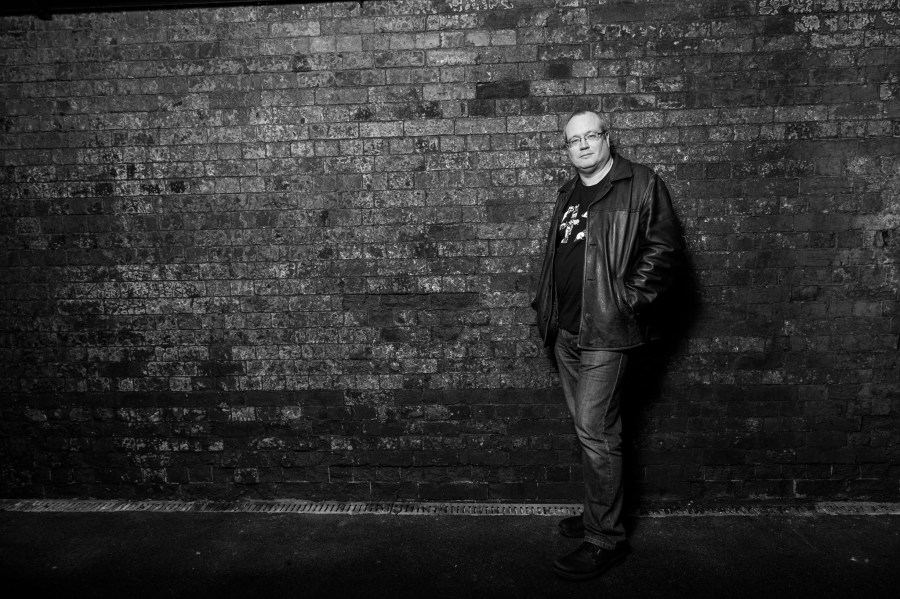
What Lies Beneath – Bad Elephant Special part 2, an interview with Mike Kershaw.

Hello Progarchists, welcome back to the second part of my look at the current releases from our friends over at the naughty pachyderm, today I have a review and an interview with Mike Kershaw.

Self taught singer songwriter Mike Kershaw has been working solo for several years now putting out releases that have got better and better, and more acclaim with each release, and his latest album What Lies Beneath (the follow up to 2014s critically acclaimed Ice Age) is Mikes first full length album since signing to Bad Elephant, and Mike was kind enough to chat to me about the album, before we hear from the man himself, lets see what I thought of What Lies Beneath.

Mike Kershaw4

This is the second release that Mike has made using guest musicians, and like the previous EP (Departure) signposts a new direction of Mikes working, instead of being fully solo, he has opened the doors and invited in a list of talented musical collaborators and label mates, including the inimitable Tom Slatter, who adds his unique sound to Wounds, whilst Leopold Blu-Sky of Unto Us adds his bass,guitars,keys and drum programming to the mix as well as producing the record, Gareth Cole plays guitar on the album whilst Fractal Mirrors Frank L Urbaniak drums on a few tracks and Leo Koperdraat co-wrote and guests on Two Eyes.

Continue reading “What Lies Beneath – Bad Elephant Special part 2, an interview with Mike Kershaw.”

2015, a musical review

Hello Prog Pickers, happy 2016, where the hell did last year go?

It feels a bit bittersweet really sitting here and compiling this, as I am writing this the same day that I heard that David Bowie died, and I am sure that by the time I am writing next years review that Blackstar will be up there amongst the releases of 2016.

Time to reflect on a year full of personal changes and successes as well as the loss of a close friend that hit me hard.

Throughout the highs and lows and in-between bits that make up life in the 21st century music has been one of my constant companions, and trying to whittle down the best (in my humble opinion) albums of the last twelve months is no easy business, with such a slew of strong releases from new names and existing bands, trying to get this list into shape has been like trying to herd cats, and there have been some great albums by artists like Steven Wilson, Guapo, District 97, Dave Sturt, John Hackett, Jeff Lynne’s ELO, Tim Bowness and Guy Garvey that didn’t make the cut, not to mention releases by artists like Bruce Soord and Arcade Messiah that I haven’t even heard yet.

The only criteria for this list is that the album had to be a new release from the last year, so the wonderful 5.1 Yes remasters, the 5.1 Jethro Tull boxes, Esoterics excellent Anthony Phillips reissues, King Crimsons Thrak box and the Steve Hackett Premonitions set and David Bowies Five Years (1969-1973) all fall by the wayside.

Maybe when I get to the point where in one year I’ve listened to more new old music than new music I may redefine the criteria, but as the joy of experiencing new music is one of lifes pleasures I hope that year is a long way off.

So, this here list is it A) chronological? No. B) Alphabetical? No. C) All my own personal opinion? Totally and irrefutably.

So any typos, artists missing or albums you think should have been included, that’s all the authors fault!

Lets dive in and see what 2015 left me with…
tregeagle


Napier’s Bones

Tregeagles Choice

www.napiersbones.bandcamp.com

A new name to me, UK prog duo Napiers Bones released their second album, and Nathan Jon Tillett and Gordon Midgley have a definite vision of storytelling, that fits comfortably in the classic prog mould.

With its roots in Cornish Folklore, the album has lots in common with folk rock operas like Fairport Conventions Babbacombe Lee or Peter Bellamys The Transports whilst neatly slotting into the prog storytelling genre occupied by artists like Ayreon or Rick Wakeman.

The mood from start to finish mirrors the story as it mixes it blends of folk themes, with some fantastical musical highs as it runs the gamut of classical prog, heavier guitar based tracks, and beautiful piece of guitar soloing over some of the most atmospheric keyboards I have heard for a long time. This is musical double hander as the story drives the music, and the songs are more performed rather than sung. I think that this epic performance would work wonders as a musical.

The way the music, the story and the vocals pull you into the record are a testament to the vision of Napiers Bones, and both Tillet and Midgley should rightly be proud of this musical achievement.

.raging silence
This Raging Silence: Isotopes and Endoscopes

www.thisragingsilence.com

Bristol based progressive quartet, This Raging Silence released their debut album earlier this year, and the 6 epic tracks on here are just sublime to listen to.

Formed by Jeff Cox, John Tyrer, Dave Appleford and Garry Davies the sound is very much towards the darker end of the prog sound as heavy riffs and driving bass flow through the album. In fact this album is beautifully performed as whole, the mood changes deftly and intricately and the way the band bounce off each other throughout is a delight to listen to. Sitting at the more atmospheric and darker end of the prog spectrum, this is a rare old treat and an album that anyone who gives houseroom to Porcupine Tree, District 97 or Trojanhorse will enjoy.
magnet

The Fierce and the Dead: Magnet

Bad Elephant Music

www.badelephant.co.uk

I know it’s an EP but there are more musical ideas crammed onto these 4 tracks than some bands have in a lifetime and astonishingly it’s been two years since experimental instrumental noiseniks The Fierce and the Dead released the acclaimed Spooky Action album, having seen them live several times in that period, the new music here on the Magnet EP shows how far they have travelled and evolved musically since then.

Magnet in Your Face is just short of two minutes worth of intense guitar duels hooked on a mighty riff that takes your breath away and as an introduction almost leaps out and says ‘Hello, did you miss us??’ the four piece of Kevin Feazey, Matt Stevens, Steve Cleaton and Stuart Marshall never stand still, they’re sound is continuously evolving over every release, whilst remaining true to their ethos. The interplay between all four members here is key to their success, they are in the truest form a group, there is no one dominant member, and that’s what makes this music work so well, they know each other so well that they can bounce off each other and drive the music on. There is no ego here, there is only art. If you haven’t joined the Fierce and the Dead cult yet, then you need to buy Magnet, its pull is irresistible.
halotora

Halo Tora: Omni/One

www.halotora.com

Another band I hadn’t heard of before this year this is Halo Toras debut album, and having heard good things about them from other friends I was intrigued as to what they would sound like. They have worked hard on the road and as a result their debut is as strong a piece of atmospheric post prog that I have had the pleasure to listen to.

The band, Chris Alexander (guitar/vocals) Ian McCall (guitar/vocals) Mark Young (bass) Chris McKeown (drums) and Ryan Connery (keyboards) use all the musical tools and skill at their disposable to intricately layer dense and subtle musical soundscapes, which like on Permanent revolution build and build as their vocals and guitars intertwine. This is a fantastically well-written debut album, and works on so many levels from the music, the lyrics and the deft interplay between the band.
dodson and fogg

Dodson & Fogg: Warning Signs

http://wisdomtwinsbooks.weebly.com/dodson-and-fogg-cds.html

Warning Signs, is one man musical revolutions Chris Wades strongest musical statement to date, hinting at a very different approach, gone are the striking paintings and images that normally adorn the albums, instead the cover is a moody photo of Chris, showing for the first time on the album cover the man behind the music. The songs are more intimate and feel more like a singer/songwriter album of the early 70’s, than a psychedelic project.

More personal and with a wonderful production, that sounds like Chris is singing in your front room and the album is imbued with warmth and charm, from the Beatle esque title track to the wonderfully guitar heavy Following the Man, with its great lyrics and chord driven sound its another wonderful slice of 70’s rock, with a great solo, reminding us how great a guitarist Chris is. This is an exciting and interesting slight change of direction for Chris, and adds so much more to the Dodson and Fogg sound, being a superb example of the singer songwriter genre.
sanguine hum

Sanguine Hum: Now We Have Light

Esoteric Records EANTCD21042

www.esotericrecordings.com

Third album in and Sanguine Hum are continuing to fulfil their musical promise that last studio album the Weight of the World delivered, and not only that they have delivered us a genuine contemporary prog magnum opus in the process.

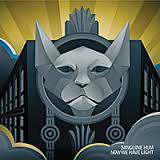
Now We Have Light, with it’s startlingly eye-catching artwork that is intrinsic to the story is a double album of majestic proportions.

Running the whole gamut of classic prog, via rock, jazz and some beautifully layered sounds, amazing vocal harmonies, and intense musical sections like on Bubble Trouble that will blow your mind, this is an astonishing album.

From the introduction of Desolation Song, nicely setting the musical scene, and carried through tracks like Getting Warmer, and the brilliantly titled ‘Shit!’ the Hum are a musical powerhouse, welding their influences together to create a coherent, immersive whole.

Add in the driving rock and funk of Cat Factory with it’s array of real synths, and superb musical interplay with a propelling bass and a great big crunchy riff is an instrumental highlight, whilst the sublime End of the Line carries through the narrative into the centrepiece of Disc 2, the 5 part Spanning the Eternal Abyss, which pulls in so many musical styles, and weaves them together beautifully, that by the time that Settle Down with its great synth work has finished, you are blown away by the power of Sanguine Hum.

This multi-layered and exciting record proves beyond a shadow of a doubt that Sanguine Hum are one of the best progressive bands on the planet.
71R0HHLaiqL._SY355_

Lonely Robot: Please Come Home

www.insideoutmusic.com

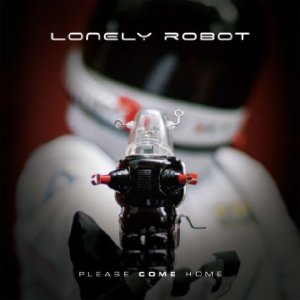
This is John Mitchells latest musical project, having contributed to Frost*, Arena, It Bites and many other projects over the years Johns talents as a guitarist, vocalist and producer are undisputed. This album reaffirms the stamp of quality that John brings to any album he works on, and is a fantastic piece of work from the opening instrumental power of Airlock, featuring the unique talents of Jem Godfrey to the closing The Red Balloon; this is a powerful album of amazing musical moments and haunting beauty. Dealing with alienation, loneliness and the human condition the lyrics are never short of genius, and the music is atmospheric, haunting and elegiac throughout.

As albums go this is a stunningly original record, with some majestic songwriting from John Mitchell, and like all great producers he knows how to cherry pick the best collaborators to bring something of themselves to his album, and still maintain his overall identity.
Grand Tour

Grand Tour Heavy on the Beach

www.grandtourmusic.org

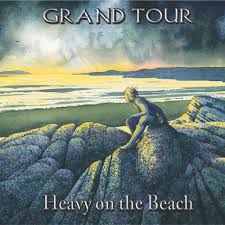
This wonderfully evocative concept album is the culmination of years of work from former Abel Ganz man Hew Montgomery, and is based around his fascination with all things Cold War and Nuclear, and seems unnervingly contemporary with the challenges the world is facing today with a resurgent Russia and the rise of Islamic State. Joined by the vocal talents of Joe Cairney, and Mark Spalding on guitar and Bruce Levick on drums, this is a band of no mean talent, and this album delivers the goods time after time.

With swathes of vast Floydian keyboard work, and real epic movements, this is a slice of classic concept prog, with wonderfully direct lyrics from Cairney that reference the beach time after time, and with motifs that crop up throughout the album, this is a piece of art that has to be listened to all the way through.

Like all the best concepts from Dark Side of the Moon, to Le Sacre du Travail, this isn’t an album to dip into. It’s all or nothing, and with the devastatingly powerful instrumental Little Boy and the Fat Man, referencing the two nuclear devices that devastated Hiroshima and Nagasaki and the two part track The Grand Tour which almost bookends the album, and the superb title track that is classic prog given a contemporary twist, this album is magnificent in every sense of the word.

The hard work that Hew has put into this pays off magnificently and I would say this is his crowning musical achievement so far.
psb

Public Service Broadcasting The Race for Space

www.publicservicebroadcasting.net

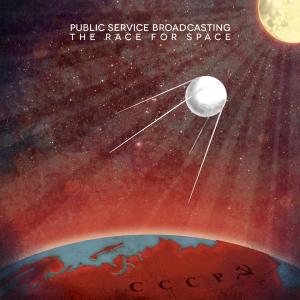
English musical duo Public Service Broadcastings raison D’Etre is creating musical soundscapes based around old film footage. Taking as their concept for album number 2 is the Space Race between the USSR and the USA and their starting point is setting John F Kennedy’s speech about The Race for Space to haunting choral music, (with motifs that reoccur throughout the album) and ending with the last manned moon landing.

The artwork for this album is wonderful, two different covers on either side of the record showing either the American or the Russian perspective, and a beautiful booklet in the vinyl edition, which I had to have.

From the driving Sputnik, the jazz funk of Gagarin and then the haunting tribute to the astronauts killed in the Apollo 1 disaster (Fire in the Cockpit) and the celebration of Valentina Tereshkova who became the first woman in space (Valentina, with guest vocals from the Smoke Fairies) and the elegiac closing Tomorrow (when Apollo 17 became the last manned flight to leave the Moon), this album sets itself as referencing a specific period in time, when, with space flight anything seemed possible.

The beauty of Public Service Broadcasting is their use of archive recordings, and matching the music to the mood to evoke a golden era of interstellar travel when everything seemed possible, and it’s 43 minutes plus brings that period back to life and reminds us musically of a time when we spent looking at the stars in optimism, instead of gazing down at our feet.
The Dead Astronaut

The Dead Astronaut

www.thedeadastronautuk.bandcamp.com

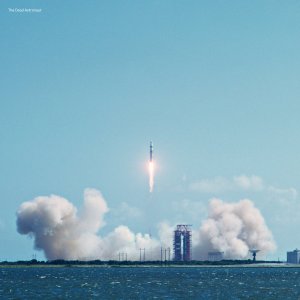
Hi-Fiction Science guitarist and songwriter James McKeown recently released his latest solo album under the sobriquet The Dead Astronaut, a hauntingly beautiful and occasionally uncomfortably personal record, it s a triumph of the songwriting craft.

From it’s haunting and sparse artwork by highly regarded designer Carl Glover, to the musical contents, the album is as different from Hi Fiction Science as is possible to get, and has a loose narrative written around some highly personal and emotional issues experienced by James.

With a small core of collaborators, including HFS band mates Aidan Searle and Jeff Green and guitarist Paul Bradley, one of the sounds that is at the heart of this record, and believe me, this is a record that is full of heart and soul, is the cello of Charlotte Nicholls, which, when coupled with the emotionally raw and confessional style of songs that James presents here, adds so much to the texture and the tone of the record, and yes, I am talking about a record as I opted for the vinyl edition, which is a pure immersive experience to listen to.

The word bleak comes up again and again when describing the themes on this album, and this shouldn’t ever put you off, there is beauty in this darkness, and whilst James is pouring out his heart, the production and the music adds warmth, almost like the song is giving him a big hug as he’s singing it.

This album has a very English sound to it, and the pared back sound allows the songs to breath and the lyrics to shine, it’s like the difference between early Pink Floyd records and Syd Barrett solo records.

You can hear the humanity and the raw emotions on display throughout this album, and again you can feel it, through the music, the lyrics and the sparse packaging, this isn’t an album that can be ignored.

Once it’s in your heart and in your head it takes over the room you are listening to it, and it’s one of those albums that demands your attention, and rewards your listening time and time again.
wearekin

We Are Kin: Pandora

Bad Elephant Music

www.badelephant.co.uk

Every so often a record drops through the door (or in this case on email) from a label who are kind enough to let us review their latest offerings, and you know nothing of the band, nothing of what to expect from the album, and you put it on with a sense of anticipation, and excitement (as I still get a massive buzz from hearing new music, and hope I always do) and then as you immerse yourself in the record, and listen to it, you find you’ve found the sort of record that stays with you forever.

This is one of those records. I listened to it once, then again, and again, and again each time getting more and more out of it.

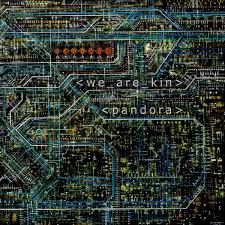
Manchester based band We are Kin (Dan Zambas and Gary Boast, now fleshed out by newer members Lee Braddock, Lauren Smith and Adam McCann) are purveyors of the sort of atmospheric prog rock that grows layer on layer, subtly and intelligently. Pandora is a very specific sound and style, and the overall concept is that of artificial intelligence, and its uses, and this is what drives the sound along, with original vocalist Hannah Cotterill in fine form on opener Home Sweet Home, and the music here has space to breathe and grow. Nothing is forced, nothing jars, everything ebbs and flows like a good story or album should do. As Soul builds and builds to a magnificent climax, then we head deep into concept territory as Scottish poet Alex Dunedin guests on the impassioned and exceptional The Speech, which leads into the magnificent The Hard Decision, whilst Zambas vocals shine throughout the album, especially on The Weight of the World, whilst the closing Breathe Out is as fine a piece of music as you are likely to hear anywhere this year.

This record from start to finish, from concept to execution, and from production to performance is as close to perfection as you are going to get. The music, the lyrics, the story all flows together and it transcend genre and sound to become something timeless and original and new. If I were to nominate a record that sums up 2015 for me, this would be it, it’s become part of the fabric of my musical life and a record that I can’t recommend enough to everyone.
slatter

Tom Slatter: Fit The Fourth

Bad Elephant Music

www.badelephant.co.uk

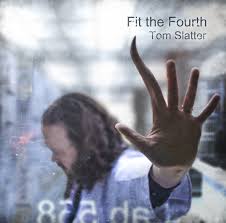
Tom Slatter is a unique beast in the world of contemporary music, in that he doesn’t, in any way sound like anyone else, or fit neatly into a pigeonhole or pre-determined genre. This makes my job a little harder, but his music a lot more exciting.

This is Tom’s fourth full-length release, and his first under the wings (or trunk) of the Bad Elephant boys, whose musical taste is set to eclectic, and whose first vision is do we like it? And then, if we like it, someone else will!

Tom is considered steam punk prog, and is probably the only one in that genre, he’s one on his own this lad, not just a multi-instrumentalist, but also a weaver or worlds and teller of tales, Toms narrative comes from the dark nights round the campfire where you would try to scare each other, or weave more fantastically intricate stories into your narrative. The brilliant opener Some of the Creatures have Broken the Locks on the door to Lab 558 sets the imagination racing with just the title, and the post apocalyptic science fiction story that evolves is reminiscent of early Doctor Who or Quatermass, and sets the tone for the rest of this darkly compelling album. Seven bells John is to the fore on The Steam Engine Murders and the trial of Seven-Bells, which is gothic noir, mixed with music hall and penny dreadfuls, With his mix of Victoriana, steam punk, prog and narrative drive, this is a wonderful album that deserves to be listened to and appreciated, as a record unlike any other you’ll hear this year.
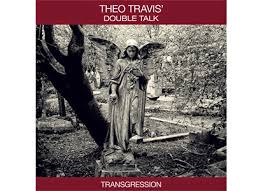
transgression

Theo Travis Double Talk: Transgression

Esoteric Antenna EANTCD1052

www.esotericrecordings.com

British saxophonist, flautist and clarinettist Travis is the go to man for many artists including and this new album produced by Steven Wilson, showcases why Travis is the premier jazz rock saxophonist of his generation. With his taut band Mike Outram (guitar) Pete Whittaker (organ) and Nic France, Transgression showcases the versatility of the man himself, with a mixture of new material and reinterpretations of classic pieces (like Robert Wyatt & Phillip Catherine’s Maryam). The line between the type of jazz that Travis is proficient at, and progressive rock is a very fine one, and this crosses those borders with style and aplomb. A particular highlight and stand out track here is the reworking of Travis and Tangent main man Andy Tillison’s co-write (and title track of 2006 Tangent album) A Place in the Queue, with the subtle reworking of Travis sax, the organ of Pete Whittaker and the deft and intricate interplay between the band, it takes the original and goes somewhere new and exciting with it, and I have no doubt that Andy Tillison would approve. Elsewhere the co-write with Dave Sturt the fantastic Everything I Feared, and the epic title track that showcases the best of Theo Travis and his tight band, his versatility, his power and his dextrous musical performances are a joy to behold. I find, as I am getting a little older I am starting to really get into the grooves and the places that well played sax jazz takes you, and this album is wonderful. In fact I would go so far to say its probably more progressive than most of the progressive releases I have heard all year.
ostinato

Stephen W Tayler: Ostinato

Esoteric Antenna EANCT1054

www.esotericrecordings.com

Not a name many will be familiar with, however Stephen W Tayler is a versatile and talented producer, engineer, sound designer and mixer who has worked with such talents as Peter Gabriel, Underworld, Howard Jones, Rush and most recently Kate Bush (on her latest records and her recent live performances).

Here, his musical vision unfolds through an intense, exciting and beautiful journey, mixing the minimalism of Terry Riley or Phillip Glass with the electronica of John Foxx or Tangerine Dream. With powerful metronomic rhythms, subtle and haunting electronics and distorted electronic voices, the album starts with the powerful trance like Euro Star (reminiscent of the more ambient stylings of Rob Duggan), whilst the percussive power of Peripherique is an astonishing musical tour de force, the driving percussion, the electronic sounds, the pulsing beat throughout, propel the track into your mind, and it’s not hard to imagine chilling out to this in a club scene.

Drawing on his 40 years of experience in the music industry and experience working with many great artists, this album is full of beautiful sonic sounds, and the tracks insinuate themselves into your head and take you on a musical journey, the pulsating Metro is like taking a ride on the ubiquitous train, whilst the wonderful final track The Boy Who Said Yes features a sample of the 13 year old Stephen W Tayler performing Breet/Weills Der Jasager, and works beautifully in the context of the album.

This is a refreshing, exciting and absorbing piece of contemporary electronica.
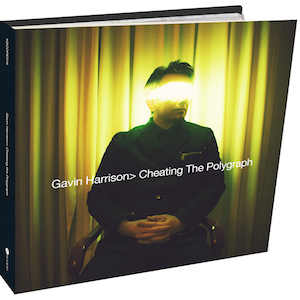
Gavin Harrison

Gavin Harrison: Cheating the Polygraph

www.gavharrison.com

The effect of Gavin Harrison’s rather spectacular new album is an astonishing, intelligent reinterpretation of Porcupine Tree songs, and whilst the song remains the same, the sound really doesn’t.

Instead of the sonic experimentations and haunting undertones that you get from a great Steven Wilson song, this is the pinnacle of the art of reinvention (and one other artists can learns from) because Harrison (who I assume everyone knows – if not, he’s one of the finest drummers in the world today, heir apparent to Bill Brufords jazz prog throne) and collaborator Lawrence Cottle have skilfully and adeptly produced a damn fine jazz album. And man, does it swing!

This covers the whole gamut from Porcupine Tree’s mighty back catalogue, and the skilful swing driven funk adaptation of The Pills I’m Taking (from Fear of Blank Planets Anaesthetize suite) is mighty to hear, and takes the track so far from the original, that you do have to jump back and listen and compare. It’s like the Baz Luhrman Romeo and Juliet film, the original source material is there, you just have to dig a little deeper to find it.

The sinewy bass drives the inspired combination of Lightbulb Suns Hatesong with Deadwings Halo, and it’s like the two were meant to be together, as the sinister undertones and the brass mix together to create a piece that could have fallen off a 1970’s film noir soundtrack, and then the funk kicks in. With a skilful jazz orchestra and of course Harrisons taut powerful drumming underpinning the whole affair, it allows Cottle and Harrison to go out there in reinterpreting and rearranging these classic songs, as trumpet, trombone and sax duel with each other as familiar riffs appear and sneak off into the ether, as the full band kicks in with some mighty power, and of course Harrisons glorious drumming and some amazing bass work.

This is a covers album like no other, and with the way these Porcupine Tree songs have been remained and so expertly dissected and reassembled, it is one of the most progressive releases (and the most enjoyable) you’ll hear so far this year!
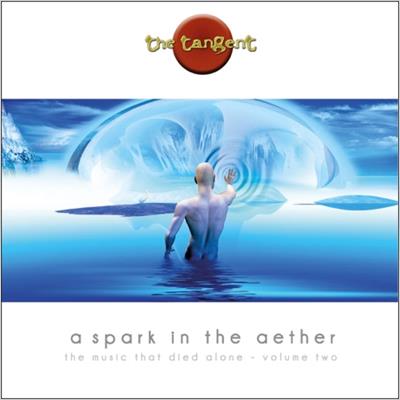
tangent1

The Tangent A Spark in the Aether

www.thetangent.org

On this epic release Andy has swapped the realism of Le Sacre du Travail for escapism, and the sometimes-introverted imagery of Le Sacre for what can only be described as a full on prog rock album, with the emphasis firmly on rock.
Instead of the view from the windscreen, this is far more the view from the widescreen.
Starting with the wonderful title track with its mammoth keyboard riff, and lyrics looking at the current state of the prog scene (in rude health currently) the lyrical theme of this (and several other songs) is a musical equivalent of those TV documentaries that revisits communities after a period of time to see where they are now, and is revisited as a coda on the album as a gargantuan keyboard based musical celebration, with the wonderfully catchy chorus rounding the record off.
This revisitation of themes from The Music that Died Alone is continued on the unashamedly prog Codpieces and Capes, covering musical bases from Yes to Tull and all points in betweens, it reflects on themes originally riffed on during Suppers Off, about the fact that there are many fantastic bands including the Tangent who are out there still making relevant albums, whilst 5.1 reissues get more sales and coverage.
This opening quartet is closed off by the epically Floydian Aftereugene, with its epic slow build, and then a barely muttered “careful with that sax, Eugene”, before Theo Travis is let loose on his Saxes in a manic jazz explosion.
The centrepiece of the album, the 21 minutes plus The Celluloid Road, is an Andy Tillison Disk drive-through that takes us travelling through mythical America as seen on the big screen. Really letting loose and rarely letting up it covers more genres than your average HMV, with the band firing on all cylinders as the Tangent V8 drives us coast to coast, and finishes in the brilliantly funky pounding rock of San Francisco.
As evocative as the movies and shows that are name checked it makes me want to go on a stateside road trip, with Andy as my tour guide. This album is big, bold, and loud and demands to be played live.

Hope you enjoyed my list and a big thank you to all the artists and creative types who helped brighten up 2015 with some amazing records, concerts and videos, here’s to 2016.
Me


Frank Sinatra: Grandfather of Prog Rock?

I originally posted this a year ago, to mark the 99th anniversary of Sinatra’s birthday on December 12th. After reading this USA Today article on Sinatra’s influence on “the world”, I thought it made sense to re-post it to mark the centenary of his birth.

sinatra_studio
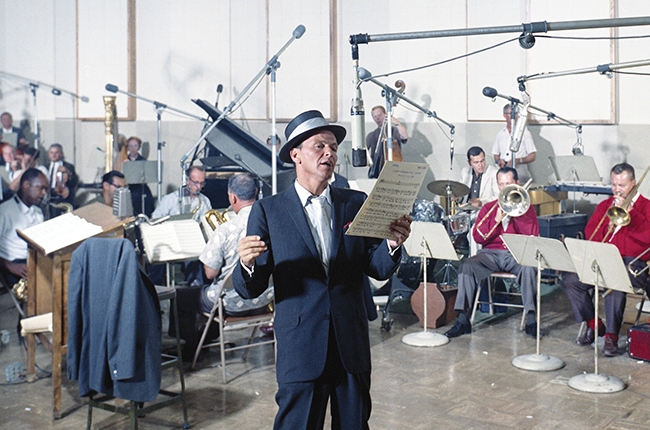
Sinatra in studio in the 1950s, during his Capitol years.

“Well, yes, of course,” you said, upon reading the headline. “Everyone knows that Old Blue Eyes was not just a crooner, but a prog crooner, and thus the grandfather of prog rock! Does it really need to be said again?” Yes, it probably should, despite the abundance of articles on the topic (ahem). Especially since today marks what would have been The Chairman of the Board’s 99th birthday if he was still among us. Sinatra was born on this day in 1915, in Hoboken, New Jersey, and would go on to be one of the best-known, best-selling musical artists of the 20th century, rivaled in sales and popularity by only a handful of artists and groups.

Now, to be clear, I’m not saying that Sinatra was a “prog rocker”. I might be a Sinatra fanboy—I have over 1,200 Sinatra songs in my iTunes library and listen to some of his music nearly every day—but I’m not insane. At least not that insane. What I am saying is that Sinatra did a number of things on the musical front that were either quite unique or very notable (and probably little known to most people), that pointed toward key elements and attitudes making up what we now call “prog”.

Here, then, are five things that make The Voice the Grandfather of Prog: Continue reading “Frank Sinatra: Grandfather of Prog Rock?”

Miracles (and Music) Out of Kansas

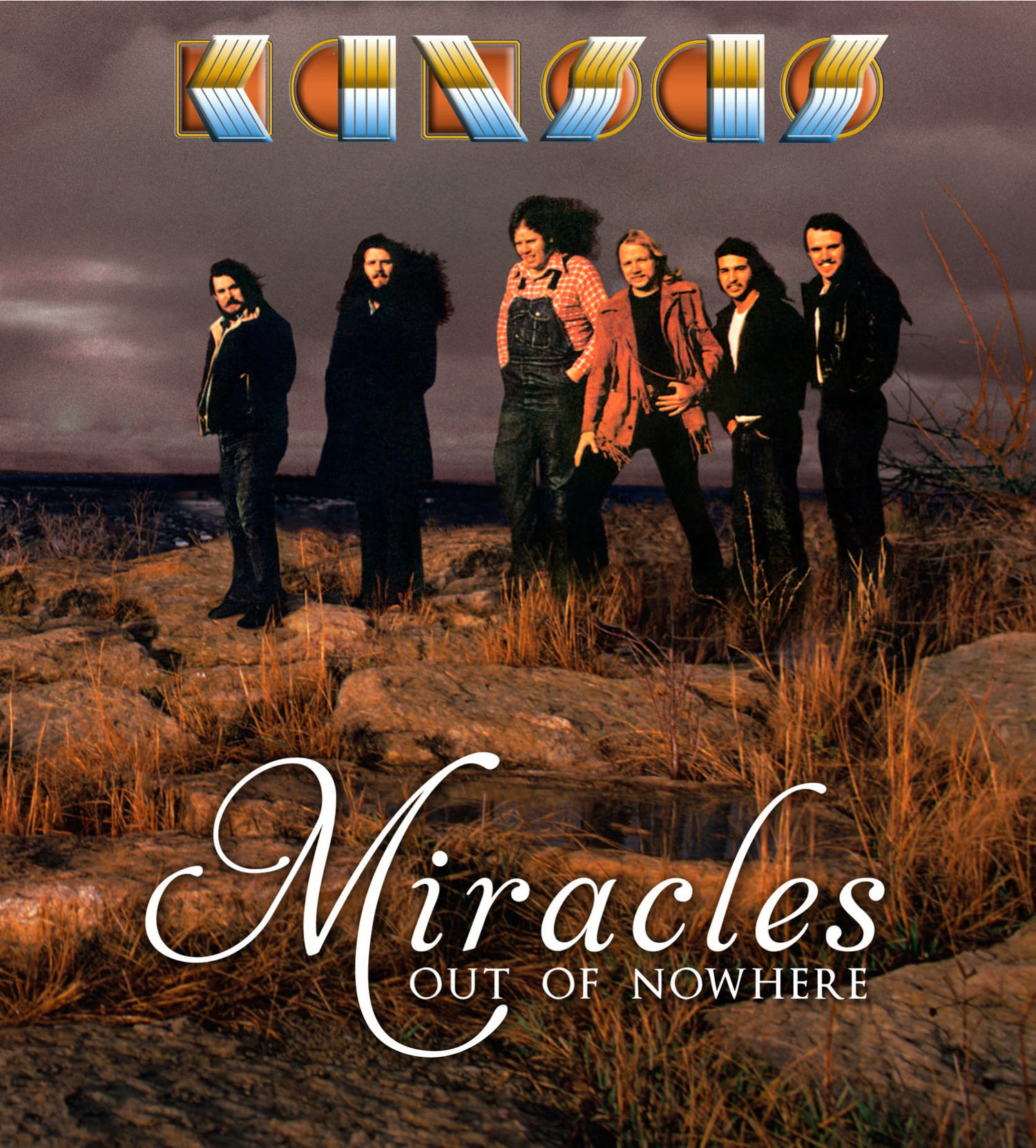
kansas_miraclesIn one of my first posts here at Progarchy.com–“A Pilgrim’s Prog-ress”–I wrote about the key role that Kansas (the band, not the state) played in opening the doors to prog for me:

Around 1985 or so, I bought a copy of “The Best of Kansas”. That opened the door to prog. There was something about the mixture of Livgren’s lead guitar, Steinhardt’s violin, and Steve Walsh’s amazing voice, along with lyrics soaked in spiritual longing and Americana, that grabbed me by the scrawny neck. Over the next three or four years, I ended up collecting everything by Kansas, Kerry Livgren (solo and with AD), and Steve Morse (solo, Dixie Dregs, etc.). My favorite Kansas albums are “Song for America” and “In the Spirit of Things”, although they weren’t the chart-toppers that “Point of Know Return” and “Leftoverture” were.

Early on in the documentary, “Miracles Out of Nowhere”, which was released in March, drummer Phil Ehart emphasizes that it was Livgren’s song writing, Steinhardt’s violin, and Walsh’s vocals that made Kansas such a distinctive-sounding band in the 1970s. He is surely correct about that, but he also, in saying so, humbly passes over another key to the band’s steady rise and eventually rather surreal success (or miraculous, a consistent theme in the documentary): he own unassuming, balanced personality and rooted, yet deeply musical, drumming. As Garth Brooks, one of several rather surprising guests, marvels in recalling his first Kansas show: “It was the first time I’d seen a drummer play actual notes!”

Miracles and music: those are the two constant themes throughout the documentary, which begins with childhood memories and concludes with 1977’s “Point of Know Return”, Kansas’ fifth album and the apex of the band’s commercial success (it hit #4 in the U.S. and featured the band’s biggest hit and best-known song, “Dust in the Wind”). That album is, arguably, a fitting conclusion to the documentary as the band would soon learn there really are points of no return; or, in the words a certain young lady, “Toto, I’ve a feeling we’re not in Kansas anymore”. It wasn’t long, in fact, before Walsh departed, then Livgren, and then the band entered into the post-classic-Kansas era (I provide some details here). Continue reading “Miracles (and Music) Out of Kansas”

An Esoteric Recordings Review Special

One of the best independent labels currently operating within the progressive and beyond genre Esoteric recordings are not only experts at reissuing and remastering, having been behind the impressive Hawkwind and Man catalogue reissues, but they are also adept at finding new talents like Schnauser, Sanguine Hum & Hi-Fiction Science amongst many others, a couple of which are featured here.

This is review round up of a selection of the fine records that they released or reissued last year.

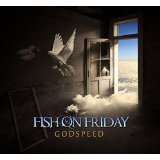
 Fish on Friday

Fish on Friday: Godspeed
EANTCD1037

Before cracking on with the re-issues I thought I would have a look at one of the new records Esoteric released last year on their Antenna label.
Hope to artists like Matt Stevens, Schnauser, Van der Graaf Generator and Andy Jackson amongst many others, their Antenna label is the home to new prog bands that they discover and promote.
Fish on Friday is one of those new talents, a Belgian band who released their third album Godspeed through the Esoteric Antenna label last autumn.
Featuring the bass & vocal talents of Nick Beggs, the band, William Beckers on keyboards/percussion, Frank Van Bogaert keyboards/vocals/additional guitars, Marty Townsend electric/ acoustic guitars and Marcus Weymaere on drums and percussion are a superb musical unit, very talented and inventive songwriters.
It’s the measure of how good the band is, by the company they keep, and Fish on Friday are very good with guests of the calibre of Theo Travis, who enhances the beautiful Ghost Song, with it’s stunning musical work, and some fantastic bass work from Beggs underpinning the majestic 6 minute epic as Travis goes to work with his sublime sax work, and haunting interludes, as well as Theo’s flute work on the brilliant Calling Planet Home.
The stand out track on the album for me is Radio, with it’s wonderful couplet ‘And the Buggles Killed the Radio Star’ and it’s beautifully evocative lyrics and the driving rock, it would be a shoe in for a single, as it’s got catchy lyrics, a great sound, and it leads almost seamlessly into 8 minutes Sanctuary, with its great female backing vocals and some beautiful guitar work.
In fact the musical interplay between the band is sublime on this album, and the songwriting is superb, as they blend seamless rock into atmospheric prog and back into catchy hooks effortlessly, and with some vocal harmonies and musical moments to die for, this is a fantastic record.
If you love new progressive music, and lets face it who doesn’t? Then this is for you, a superb piece of music, mixing the finest songwriting, the best performances and utilising some superb guest musicians.
Another fantastic find from Esoteric.

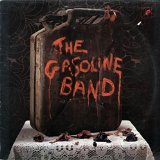
The Gasoline Band

The Gasoline Band
Esoteric ECLEC2467

This is a mighty record, the only record from the British based, ten piece blues, jazz rock band The Gasoline Band, formed mostly from American servicemen who had been stationed in Germany and led by keyboard player Fred Schwartz whose vision helped meld the Gasoline Band into the unique outfit that they were.
Originally released back in 1972 on the Cube Records label, it didn’t shift many copies, and whilst the band were popular live, as is often the way, particularly with larger bands, they drifted apart and that was it. Which is an almighty shame, as there is so much power on this record, and when you think of a traditional band with guitar, drums, bass, keyboards and the excellent vocals of Brian Bevan, then you add in two sax players, two trumpet players, a trombone and a conga player. The sound combinations suddenly explode into life.
From the astonishing opening of The Bitch, with it’s guitar soloing, it’s stabbing brass and jazz rock influences, it packs more ideas into it’s punchy 5 minutes than some bands ever manage in a career.
The German influence can be heard in the driving Ein Grosses, and the music is a blend of progressive blues and jazz, creating a unique sound, with such power and a taut groove that you can’t help but get drawn in and tap your feet, as the guitars and brass duel throughout. Tracks like the magnificent Shrapnel and the groove driven World What You Gonna Do, showcase a mighty band at the peak of the powers.
It’s such a shame that they fell apart after this impressive debut, as it would have been fascinating to hear where they took their muse next.
If you love blues and brass driven rock then this is a rare old treat for you.
A sublime record.

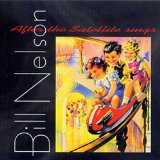
Bill Nelson

Bill Nelson: After the Satellite Sings
Esoteric/Cocteau COCD1010

Another classic from the expansive back catalogue of enigmatic musician Bill Nelson makes its welcome reappearance here on CD.
Originally recorded and released in 1995, this sees the ever-restless muse of Bill Nelson taking his unique writing style, and working with the then contemporary sound of drum and bass. The result is an interesting hybrid of an album that mixes nelsons languid vocals, his exemplorary guitar playing and some well performed and well mixed beats and spoken word, almost beat poetry, almost rap to create an explosion of sound.
On tracks like Streamliner with its great keyboard work and vocals about the American dream his semi spoken word raps sound a little like Neil Tennant, whilst there are elements of music concrete throughout the album, with the church bells on Memory Babe, with its driving beat and pounding keyboard work.
With its mixture of sci-fi sounds, and retro artwork it invokes the past and the future, with Nelsons songwriting as sharp as ever, and his guitar work scything through the sounds. According to the sleeve notes this was an influence on David Bowies later foray into Drum and Bass on Earthling, and the two albums have similarities. However Nelson was here first, and this is another exciting release from an artist not content to rest on his laurels, from the work he did with Be Bop Deluxe in the 1970’s to his ambient soundscapes, Bill Nelson is a restless intelligent talent and impossible to pigeonhole.

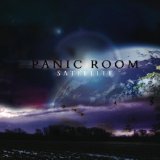
Panic Room

Panic Room: Satellite
Esoteric Antenna EANTCD21033

Originally released back in 2010 this is a remastered and expanded edition of Prog Award winners Panic Rooms 2nd album, the last to feature their original line up.
Much more song orientated than their debut, Visionary Position.
With the line up being the remnants of live powerhouse Karnataka, and with the sublime vocals of Anne-Marie Helder, this is an amazing album.
From the opening Freedom to Breathe, with its fantastic guitar work from Paul Davies, and the keyboard interplay with Jonathan Edwards is great, particularly as they create the soundscapes for Anne-Maries voice to soar. With tracks like I am a Cat, Muse and the epic title track, this was a definite statement of intent from Panic Room and is strong today as it was when first issued.
The musicianship is top quality on here, whilst the vocals and lyrics are fantastic, there are no weak links in this musical chain, and listening to this you can see why Panic Room are one of the hottest live bands around.

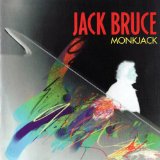
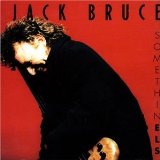
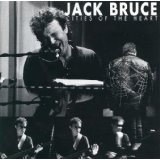
Jack Bruce Monk Jack Bruce Somethin Jack bruce Cities

Jack Bruce: Somethin’ Els
Cities of the Heart
Monkjack

Esoteric Records ECLEC2427
ECLEC22428
ECLEC2429

A trio of remastered albums from one of the most influential blues bassists and rock legends the late great Jack Bruce come from the mid 1990’s, when following a period of personal turbulence he was starting to get his career back on track, and his addictions dealt with.
1993’s Somethin’ Els, sees him reunited with his old Cream sparring partner Eric Clapton on a large number of the tracks, and the old magic is still there throughout, older, and wiser, but they still spark off each other, like great musical partners often do, and age or time hasn’t diminished their impact. Surrounding himself with a band of including Stuart Eliot on drums, Peter Weihe and Clem Clempson on rhythm guitar and with guest appearances from artists like Dick Heckstall-Smith who adds his unique sax sound to the wonderful G.B Dawn Blues, and the wonderful vocals of Maggie Reilly who provides a beautiful foil for Jack on the superb Ships in the Night, and the brilliant Peaces of the East. This album is a tour de force for Jack, his vocals and playing are on top form, and his tight band bounce off each other and there is a real spark here. A fine return to form.
1994’s double live Cities of the Heart album is a musical celebration of Jacks career, and features an absolute whose who of musicians, from a reunion with Ginger Baker, with Gary Moore playing the Clapton role on some fantastic versions of NSU, Willie Dixon’s Spoonful, Chester Burnett’s Sitting on Top of the World and the wonderful Politician (lets not forget that shortly afterwards this trio released the hard to find, but worth hunting BBM album) whilst Maggie Reilly adds her vocals to Ships in the Night, whilst other guests like Dick Heckstall-Smith and Simon Phillips add their magic. As a pause and a celebration of Jacks career so far as he celebrated his 50th birthday, this is a great live album, and a wonderful retrospective covering his career to date, the closing finale of Sunshine of Your Love is as brilliant as you would imagine.
1995’s Monkjack is a different approach to the Blues from the previous albums, instead of being the full on blues/rock attack Bruce is known for, this showcases his piano and vocal performances in partnership with Bernie Worrall on the wonderful sound of the Hammond Organ, and is as exciting as you can imagine.
Sometimes less is more, and here, with piano and organ there is nowhere to hide, and Bruce’s voice is amazing, not just singing the material, but actually living it. Revisiting older material like Folk Song and Weird of Hermiston in radically different arrangements, as well as great interpretation of the Willie Dixon song Third Degree, this features some great new material like Shouldn’t We and Tightrope, and with Bernie Worralls Hammond mixing with Jacks piano, this is the sort of sound you expect to hear in late night blues clubs or jazz bars, and is the forerunner to the sort of thing Hugh Laurie is currently doing. This is a fantastic record and cuts right to the heart and soul of Jack Bruce, and out of the three remastered gems on offer, is definitely my favourite. Sadly Jack died last year not so long after the release of these records, so not only do they stand as a strong part of a great mans musical catalogue, but also as a testament to his brilliance. RIP Jack.

Kongos

John Kongos: Kongos

Esoteric ECLEC2466

If all you know of John Kongos is his hit single Togoloshe Man being used in Life on Mars, or his other hit He’s Gonna Step on You Again being borrowed and sampled by popular beat combo The Happy Mondays for their big hit Step On, then you really need to get yourself a copy of this fantastic reissue of his second album, originally released on the Fly records label in 1971.
Born in Johannesburg, John Kongos moved to the UK in the mid sixties, and was on the periphery of something big until he was signed to the Fly label, with label mates like Marc Bolan. Mixing in rhythms from his native South Africa, and produced by Gus Dudgeon and engineered by Roy Thomas Baker (who later helped shape Queens unique sound) and utilising session musicians like Ray Cooper and Caleb Quaye who had worked so successfully with Elton John, and Mike Moran on keys and piano, they crafted a perfect album, which seems to have slipped behind the sofa of popular culture.
From the opening driving beat of Togoloshe Man to the beautifully elegiac Tomorrow I’ll go, via the wonderful Jubilee Cloud, Johns vocals are superb, his songwriting exemplorary, and his musical accompaniment is spot on every time. He can mix and match moods from ballads to driving pieces like Try to touch Just one, with nods to his native South African beats and rhythms throughout (over 20 years before Paul Simon). With songs that seem spiritual like Come on Down Jesus, or the bonus Higher than Gods Hat, there is a deep intellectual spirituality at work here, along with a songwriter on top of his game, and rounding the original album off with the rousing He’s Gonna Step on You Again (which is far better than the Happy Mondays version) is a touch of genius.
Fleshing out this immaculate package are 8 single a and b-sides, plus the single edit of Togoloshe Man, which is enough to create another album, and tracks like Ride the Lightening and Great White Lady are superb, and it’s a mystery to me after listening to this album why it isn’t held in as high a regard as other early 70’s singer/songwriter albums like Elton’s Madman Across the Water, George Harrison’s Living in the Material World or Richard Thompson’s Henry the Human Fly, as it has great emotion, real power and some of the finest tracks you’ll hear this side of a George Harrison album.
I hope this reissue reminds the world of what a fantastic record Kongos is.

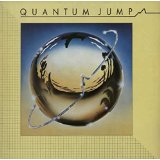
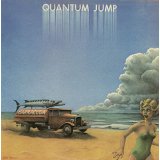
Quantum Jump Barracuda

Quantum Jump: Quantum Jump
Barracuda
Esoteric ECLEC2472
Esoteric ECLEC22477

Formed in Farmyard Studios in 1974, Quantum Jump coalesced around Rupert Hine (vocals and keyboards) former Caravan bassist and vocalist John G Perry, guitarist Mark Warner and drummer Trevor Morais.
This debut album newly remastered and repackaged to the usual high standards by Esoteric Records is a fine blend of jazz, rock and hints of prog sneaking in their as well.
Underpinned by the fine songwriting sensibilities of the band, and their innate musical dexterity, Quantum Jump is an overlooked classic, with some fantastic pieces on here, the great opening Captain Boogaloo, the brilliant No American Starship, and the closing 7 minutes plus of Something at the Bottom of the Sea, which showcases all of the bands versatility, from Warners fluid guitar, Perry’s subtle and intense bass playing, the dextrous drumming from Morais (reminiscent of Billy Cobham at points) and Hines superb keyboard style all brought together to create a magnificent album.
The bands most famous song The Lone Ranger is here as well, in its original album form, and the 1979 remix which hit the top 5. Originally released in 1976 it was named Tony Blackburns record of the week, and was starting to sneak into the top 30, when the BBC banned it due to its drug references and homoerotic lyrical content. Then due to Kenny Everett using its distinctive opening on his various radio and TV shows, the song was remixed and released where it achieved its full potential. Also included are the single b side Drift, and several remixes from 1979’s compilation album Mixing, which subtly updated the jazz fusion sound of Quantum Jump with some more sophisticated synthesisers.
Come 1977 and Quantum Jump reconvened for the follow up to their debut, the brilliant Barracuda, beautifully reissued here in a double disc set including a complete BBC Radio One in concert from 1977, previously unreleased on CD and the mopping up of the tracks from the Mixing compilation.
Down to a core trio of Hine, Perry & Morais, this picks up where the debut left off, with a similar vibe on the record, and of interest to Caravan fans Geoffrey Richardson adding viola, guitar and flute amongst others, whilst Elkie Brooks adds her familiar vocals to the record.
The air of sophistication surrounds Barracuda, and it’s an incongruous record for the time (1976) it was recorded in, of course punks impact is often overstated (after all Disco was bigger than punk, and one of the biggest selling bands of the period were the immaculately produced ELO) however it undoubtedly had an impact on Quantum Jump who weren’t big enough to not be caught up in punks year zero approach.
However the loss at the time is our gain, as what we have here is an immaculately produced, intelligently written album, with some fantastic use of brass and strings, as well as fantastic lyrics from Martin Hall & Jeanette Obstoj, which by dint of having a huge element of care over the production means it sounds timeless and hasn’t dated anywhere near as much as some of the original punk sounds.
The vocal harmonies, particularly on the opener Don’t Look Now, with it’s smooth blend of funk and rock are superb, whilst the strings on The Séance (too Spooky) are hauntingly perfect and the fine blend of funk and rock that is the Quantum Jump trademark is sublime.
The title track features some great keyboard work from Hine, whilst throughout the record the drums and bass from Morais and Perry is superb as they bounce off each other and work as the lynch pins to the record.
Bonus tracks include a sublime single version of Summer in the City, which is a fantastic cover.
Disc 2 is taken up by the BBC Radio One live in concert, where Roye Albrighton from Nektar joins the Quantum Jump trio on guitar and Geoffrey Richardson renewing his working relationship with John G Perry.
The concert is a fantastic testament to Quantum Jumps live prowess and features a great mix of material from both albums, with Barracuda well featured by a blistering version of the title track, Don’t Look Now, Starbright Park and a great version of The Séance (Too Spooky) whilst their signature track The Lone Ranger gets a great live workout and tracks like No American Starship (Looking for the Next World) and Over Rio show their versatility and great songwriting skills.
These two albums beautifully remastered and with some great liner notes tell the complete Quantum Jump history, and are a fantastic couple of records with a real groove and some stunning musicianship.
If you’ve never heard of Quantum Jump then now is the time you discovered them.

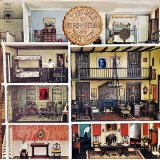
Cale

John Cale & Terry Riley: Church of Anthrax
Esoteric ECLEC2448

Fresh from the Velvet Underground CBS Masterworks signed John Cale to a two-album deal, one was his debut solo album, the rather wonderful Vintage Violence, and the other was this, his collaboration with underground minimalist composing genius Terry Riley (whose A Rainbow in Curved Air & In C were both highly acclaimed)
Taking Cales compositional style and mixing it with Rileys was an inspired idea, as the two men both worked in similar vein, and their styles are complimentary. Despite Riley leaving the project at mixing stage, there is still a lot of Terry Riley within this record.
It makes it’s overdue reappearance here on CD, newly remastered and with incisive notes from Sid Smith, and at points throughout the record it sounds so far ahead of it’s time it is unbelievable.
The opening title track with it’s pulsating and clashing keyboards and insinuating metronomic riffs is an opening statement of intent, and takes Cales musicality out of the Velvet underground, and into a new playground, and with both men operating in a similar vein it is hard to tell where Cale ends and Riley begins as it’s 9 minutes plus musical power sounds like a proto-krautrock epic.
The Hall of Mirrors in the Palace of Versailles, like most of the tracks, are all built round improvisations, and its wonderful to hear them pushing each other out there, as Cale and Riley trade riffs and piano sounds.
The Soul of Patrick Lee, the only track on here with vocals provided by Adam Miller, is the only song provided by John Cale, it foreshadows Cales solo career, with its superb lyrics and great musical performance, and could have easily fallen onto Cales albums like Vintage Violence or Paris, 1919.
Ides of March is another superb musical collaboration, with the stereo phasing being put to good use, and the insistent piano and percussion counterpoint working wonderfully together.
Closing with the short guitar driven The Protégé, which of all the compositions on here sounds closet to Cales work with the Velvet Underground than any of the more minimalist stylings of Riley, the piano is still to the fore and the sound here is taut and powerful, finishing off an immense record in style.
This is a fantastic collaboration between two intelligent and visionary musicians and composers and it is fantastic that it is now available again, providing the missing link between John Cales Velvet Underground work and his impressive and inventive solo career.

Mantwang Manmoon

Man: The Twang Dynasty
Call Down the Moon
Esoteric ECLEC32455
Esoteric ECLEC2456

Continuing their remastering and definitive edition reissue of the Man catalogue, and to prepare us for the new Man album later on in the year, Esoteric have reissued two of Mans late period studio albums, 1992’s Twang Dynasty & 1995’s Call Down the Moon.
The Twang Dynasty was their first studio album in 16 years, and is expanded here with the addition of the complete Live at Glastonbury show they did in 1994 over two extra discs.
The band, at this point Martin Ace, Micky Jones, Deke Leonard and John Weathers had been touring constantly since a 1983 reformation, and ended up as the Manbands longest serving incarnation, and in terms of getting down to recording a new album, a 9 year wait is par for the course for the Manband.
However the twang Dynasty was well worth the wait, and mixing their twin guitar sound and vocals, the album is a fantastic piece of rock, opening with a powerful trio of songs A feather on the Scales of Justice, Mad on Her and Jumpin’ Like a Kangaroo, all of which remained as staples in their live set (listening to the versions of Mad on Her and A Feather on the Scales of Justice on Disc 2 & 3 of this set respectively shows why)
The songwriting and performance here is top notch, with the band on top form, but then as they had been touring together for so longer they were on fine form.
Tracks like The Chinese Cut, the rather splendid Out of the Darkness and the closing rocker The Wings of Mercury (which again made it into the live set) are sublime, and show that despite the gap since the last record Man hadn’t lost their Mojo or power.
Discs 2 & 3 come from surprisingly enough their first performance at Glastonbury, and alongside the Twang tracks, it features some blinding performances of tracks from their 70’s heyday, versions of Many are called but few get/the Strom, Bananas and Romain prove that they still cut it as an almighty live band, and provide a fantastic companion to one of the great comeback albums of all time.
1995’s Call Down the Moon was the second album in a row from the same line-up, and the confidence from The Twang Dynasty is obvious to hear, as this album follows on from where that left off, with some sublime musical moments, building on their past the ten minute title track developed from an improvised riff used during their classic song C’mon, which was so good they built on it, and the title track was born seamlessly blending the old and the new, and creating a contemporary Man classic as they went along, yet this was still a departure from the classic sound as Deke Leonard focused more on keyboards than guitar, and so some of the twin guitar sound that was classic Man had snuck away. The improvisational way of writing worked on here, as this is an incredibly great album, with some fantastic tracks on here, like the wonderful piano driven Blackout, the funky Heaven & Hell with some classic Deke Leonard lyrics, and has some fantastic musical interplay between the whole band.
With some classic Man tracks like The Girl is trouble and the original album closer Burn my Workin’ Clothes which gives John Weathers a chance to sing and has some fab slide guitar all over it. The two bonus tracks are the original version of Dream Away and an unfinished piece known as Micky Buys a Round, which show the genesis of the work on the album.
These two remasters are a fine return to musical form for the Manband, and make a welcome return to CD, sounding as great as Man ever did, and are worth getting hold of.

Sanciousforest Sancioustrans

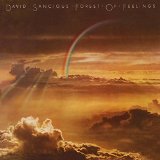
David Sancious: Forest of Feelings
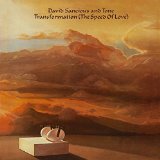
David Sancious & Tone: Transformation (The speed of Love)

Esoteric ECLEC2457
Esoteric ECLEC2458

Take the prodigious keyboard talent David Sancious, who had been a lynchpin up til 1974 in Bruce Springsteens E Street Band, add his old sparring partner drummer Ernest Carter from the E-Street band and Gerald Carboy on bass, add the production skills of one of the greatest drummers around Billy Cobham, who also contributes to Suite Cassandra, The Forest of Feelings & Further into the Forest of Feelings, and let them loose into the studio, and what do you get?
You get Forest of Feelings, originally unleashed on an unsuspecting world back in 1975, bear in mind when you listen to this, that the immensely talented Sancious was only 21 when this was made, and it blows your mind that a record this assured, this well performed, and this damn fantastic was his debut solo release.
Cobham’s production was a masterstroke, as it allows each performer to breathe, each note to resonate, and this falls somewhere between the prog work of keyboard players like Dave Greenslade, and the more full on jazz of Cobham, and is a million light years away from the working man rock of Springsteen.
From the opening Suite Cassandra, with its mix of classical, jazz, and progressive themes all building and flitting from one mood to the other. With Cobham producing of course there’s going to be comparisons with the Mahavishnu Orchestra, which is inevitable, but Sancious is very much his own composer. One of the stand out pieces on here is Sancious obvious reworking of Dixie, into a far more contemporary piece with nods towards the race relations movement, and turning it into a darker piece.
With some superb performances throughout from Carter & Carboy, this is a true power trio at work, particularly on some of the moments within title track as Carters drumming is relentless, and ably complimenting Sancious stunning playing.
Nicely rounded out with the bonus track Promise of Light, which offers a melodic contrast to what, has gone before, this is a stunning debut from Sancious, laying down a marker as to what will follow.
What did follow was 1976’s Transformation (The Speed of Love) where the band was now called Tone, and Sancious was keen to progress his sound from the debut album, also the band had been working together as tight unit, so there is a lot of confidence and power about the band on this ambitious second album.
Produced by another musical alumni Bruce Botnik, who also worked with the Doors, the progressive influence is also shown here, on the title track, which takes up the whole of what would have been side two, but more on that later.
Coming to the fore on this album alongside his keyboard skills is Sancious ferocious guitar playing, particularly on the tremendous opener Piktors Metamorphosis, whilst the 8 minute plus majesty of Sky Church Hymn #9 is inspired by Jimi Hendrix, and features some astonishing slide guitar, and the work of Carter & Carboy cannot be praised enough, their style and tone works so well with Sancious, and live I can imagine they would have blown anyone away.
The fourth track on the album, the 18 minute epic Transformation (The speed of love) manages to distil all the disparate influences and styles that Sancious and Tone were so adept in into one long piece of music, that is effortless in its beauty and majesty and the intensity of the piece, with the trio all bouncing off each other, is an art form in itself. The way that Sancious works the keyboards and drives the piece along is wonderful to hear whilst the drumming of Carter and the subtle insinuating bass of Carboy is a joy to hear.
When the power trio works well it is indisputably the finest combination in music, and here we have a jazz/prog/rock power trio at the peak of their game, giving us some phenomenal music.
These two albums are an absolute must own for any fan of early to mid 70’s keyboard work.

All these releases can be found at http://www.esotericrecordings.com

My favorite Album of 2014, Redux

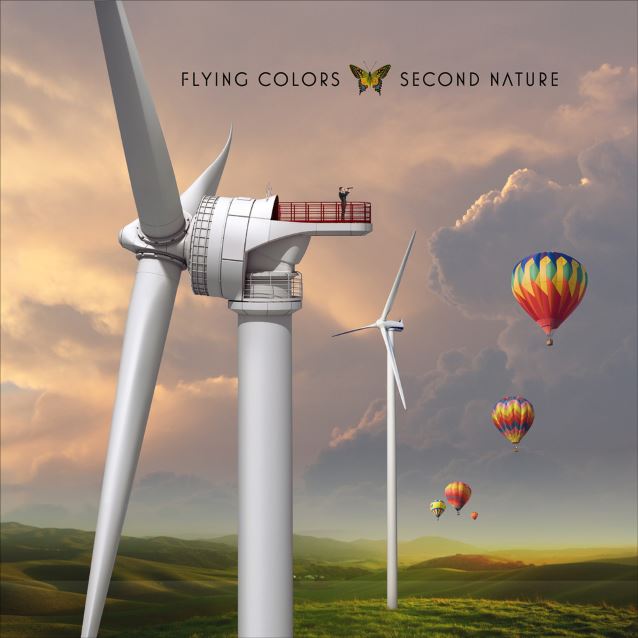
flyingcolors_2ndnaturecoverAt risk of annoying those who waded through my New Year’s Day post on my favorite prog/rock albums of 2014, I’m (re)posting my #1 pick from that list, as I think it stands alone just fine as a review. And because I think so highly of this album. Oh, and because I don’t post nearly enough on this fine blog, so maybe this can count toward my post total! By the way, a recent issue of PROG magazine (Issue 51 2014) raved about this album—but didn’t get into the lyrical content as I do below.

“Second Nature” by Flying Colors. Every once in a while—perhaps once every few years—I hear an album that I listen to again and again…and again: Jeff Buckley’s “Grace”, “OK Computer” by Radiohead, and Soundgarden’s “Superunknown” come to mind. I’ve now listened to this album 75 times or so (according to my iTunes), and I’ve not tired of it at all. Not even close. If anything, I like it more than ever, and I’m confident I’ll be listening to it for years to come. There are numerous reasons for my obsession with “Second Nature,” but I’ll note just a couple of big ones. It begins with the album title, “Second Nature,” which certainly references that this is the group’s second studio album and the fact that making music, for these five masters, is second nature.

But it finally points to the intertwining, overarching theme of the album, which is that of spiritual awakening, ascent, and transformation, the movement from putting off the “old nature” and putting on the “new nature,” spoken of by Paul the Apostle in his letter to the Ephesians (4:22-24). The arch can be seen in the opening and closing lyrics. “Open Up Your Eyes” is a song of self-examination and spiritual assessment:

Dream, empty and grey
A story waiting for a place to begin
Hands, laying all the best laid plans
But where do we leave our mark
In this life?

There is reference to original sin, echoing Eliot’s “Four Quartets”: “Torn, wearing the disease you mourn/Like a deep freeze it burns.” And then the promise and the hope is proffered: “Open up your eyes and come awake/You will be created now”—itself a reference, I’m quite certain, to the Apostle Paul’s various exhortations to rouse oneself from spiritual slumber and to be made a “new creation.” The language of redemption and salvation are shot through the entire album; in many ways, this is the most open and covert Christian album I’ve ever heard (up there with early King’s X), and the approach is perfectly balanced and executed.

“Mask Machine” laments the layers of deception inherent in the dominant, de-sacralized culture, “With love for sale and gold for dirt/I’ll worship every fleeting aching.” The song “Bombs Away” furthers the lament and confesses the sad state of the first and fallen nature: “Run by my instincts/I’m high on the freeway/And I’m scared I’ll come down.” But there is a recognition of the vocation to transcendence: “I’d love to be found” and, “I need to find a way beyond.”

The next four songs, “The Fury of My Love”, “A Place In Your World”, “Lost Without You”, and “One Love Forever” are love songs—but for whom? Or Whom? There is a certainly ambiguity in the first two, as if nodding to the face that earthly love is itself a reflection of heavenly love: “Singing I surrender/I surrender/Tearing all the walls away/I’m giving you a place.” but by “One Love Forever” the ambiguity is gone, replace by clarity and knowledge of the God-sized hole in the human heart: “One love forever/For one consuming hole inside/One love forever/… One love for all time/Is calling/Our eyes contain eternity.”

The final two songs, “Peaceful Harbor” and “Cosmic Symphony”, mark the apex of the redemptive ascent: arrival and contemplation. And the music, amazingly, more than matches the rather mystical topic at hand. “Peaceful Harbor” is a soaring, ecstatic hymn: “I’ll look beyond/With this bedlam behind me/And I embrace the sky/My soul will cry/May your wind ever find me.” The final song is both prog heaven and, well, a hopeful glimpse of heaven: “I’m searchin’ for the air but I’m stuck here on the ground … And when I get to walk the streets/Without this burden on my feet/I know I’ve been called home…”

The monumental final, three-part track, “Cosmic Symphony,” is deeply emotional but resolute in nature. Once again, Eliot comes to mind (“Preludes” and “The Hollow Men” in particular), with references to scarecrows and cigarettes, with descriptions both abstract and apocalyptic: “Shrinking violet wounded by her mother/Old men sleep while porcelain screams take over/And the wolf disguises her undying lover.” There is a recognition, it seems, that redemption comes through acknowledging our limits in this temporal realm: “I’m searching for the air but I’m stuck here on the ground now…” But the conclusion, again, is one of hope in the world beyond: “And when I get to walk these streets/Without a burden on these feet/I’ll know I’ve been called home…”

Secondly, as indicated, the music perfectly carries and conveys the rich lyrical content. We all know that these guys can play anything; what is especially striking to me is how they play as a band, for the sake of the music. There are no solos for the sake of solos; everything is at the service of the songs. Steve Morse, who I’ve been listening to for 30 years now, continues to amaze with his ability to play with such precision and economy, yet with such soulfulness. See, for example, his solos in “Peaceful Harbor” and “Cosmic Symphony”. Morse is always distinctly Steve Morse, and yet he has an uncanny—humble, really—ability to serve the music at hand (I also think of his masterful work on Kansas’ criminally underrated “In the Spirit of Things”). Neal Morse and Carey McPherson have apparently mind-melded as vocalists; at times it is hard to say who is singing, nor does it matter. The amount of energy and love they have poured into this album is obvious. Dave LaRue is the epitome of virtuoso bass playing that is rooted and melodic; his brief solo near the beginning of “Cosmic Symphony” is a piece of sheer beauty—again, at the service of the song. And Mike Portnoy’s playing is so very tasteful, with all sorts of meticulous detail.

In short, this is, for me, a magical album. Thank you, Flying Colors!

From Carl’s Critical Kitchen: A Baker’s Dozen of Tasty Prog/Rock from 2014

guitar-and-music-paper-1927
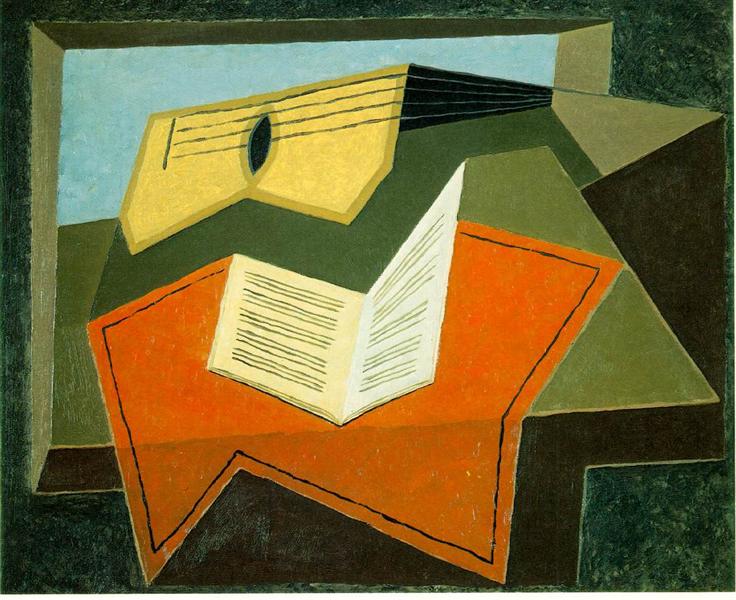
“Guitar and Music Paper” (1927) by Juan Gris

In the process of putting together an end-of-the-year book list for CWR, I came upon my 2004 post on my favorite books and music of 2004. The music list is quite interesting, with just one overtly prog album (Pain of Salvation’s “Be,” which is, in hindsight, one of my least favorite POS releases), and a fair amount of jazz (no surprise) and country (some surprise). I’m glad to say I still listen to much of the music on that list.

This year, I’ve decided to break my music picks from 2014 into three categories: prog/rock, jazz, and the kitchen sink (country, electronica, weirdness). I want to emphasize “favorite” here because there were so many releases I simply didn’t get to, despite uploading over 6500 songs in the past 12 months. Ah well!

And I’m going to try to keep it short and simple, with the exception of my thoughts on my #1 pick in prog, which is also my Favorite Album of the Year. What is it? Read on!

Favorite Prog and Rock Albums of 2014:

12. “Live at Rome Olympic Stadium” by Muse and “Tales from the Netherlands” by Mystery. Muse is about as proggy as a mega-selling, world-famous band can be, known for putting on live performances that are equally energetic and well played. This July 2013 performance is no exception, with the trio ripping through nineteen of their eclectic songs, ranging from from electro-tinged funk (“Panic Station”) to Queen-ish pomp (“Knights of Cydonia”) to Floyd-ish slyness (“Animals”). The DVD is very impressive, not only because it was filmed with HD/4K cameras but also because the band is at the top of their game.

Mystery is fronted by Benoit David, who was lead singer for Yes for a short time a few years ago, before illness led to his firing. David never seemed comfortable with Yes, but his work with Mystery is of the highest caliber. The Montreal-based group is lead by multi-instrumentalist Michel St-Père  (guitars, keyboards, bass, production) and has an epic, soaring sound built on fabulous melodies and exquisitely structured songs. The production, for a live album, is excellent, and David (who has since left the group) is in top form; this is not easy music to navigate vocally, yet he nails it at every twist and turn.

11. “Magnolia” by Pineapple Thief. Bruce Soord has more talent in his toes than most alt-bands have in their entirety, whether it be as a writer, producer, player, or singer. I’ve enjoyed everything from Pineapple Thief, but this collection of incisive, beautifully burnished tunes is Soord’s best work yet, the sort of intelligent, catchy, and detailed modern rock that deserves to be all over the airwaves. Classic Rock magazine sums it nicely: “Small but perfectly formed pockets of 21st century prog.”

10. “The Ocean At the End” by Tea Party. I was thrilled that this Canadian trio (now based in Australia) got together again after several years apart; I still listen to their early albums (“Splendor Solis”, “Edges of Twilight”) which feature an overt Led Zep vibe with a brooding, even epic, melancholy, rooted in Jeff Martin’s powerful voice and bluesy guitar playing. The latter quality is more in evidence here, and the rocking cuts (“Brazil” and “The Cass Corridor”) are the least enjoyable for me. The highlights are the dark cover of “The Maker,” the aching “Black Roses”, and the tour de force “The Ocean at the End”. Distinctive, powerful, emotive rock.

9. “Beyond the Visable Light” by Ovrfwrd. This album made a late charge on my playlist, as each listen revealed deeper layers of detail, melody, and interplay. The four-man group from Minneapolis is instrumental only, with an emphasis on group dynamics and song structures that are complex but very accessible. There is a lot of territory covered in the 5-song, 48-minute-long album, with grungy, propulsive passages melting into subtle, jazz-ish sections, and then giving way to Deep Purple-ish organ, and so forth. Great use of piano throughout, which brings a distinctive detail to the entire, enjoyable affair. Continue reading “From Carl’s Critical Kitchen: A Baker’s Dozen of Tasty Prog/Rock from 2014”

Rush 40: Happy Anniversary RUSH!

In case you didn’t know, 40 years ago today:

On this day in history 40 years ago, a young drummer from St. Catharines named Neil Peart officially joined Alex Lifeson and Geddy Lee in RUSH… which is the line-up that has remained the same for the last four decades.

Happy Anniversary RUSH!

Virtual high-fives to all the fans for the last 40 years!

Mike Oldfield Man on the Rocks

ManOnTheRocks
I am a huge Mike Oldfield fan, and have been for over 20 years. My first exposure to Mike’s work was in 1992, when Tubular Bells II was released, and the copy of the live premiere in Edinburgh taped from the telly was an oft rewatched video. So discovering my Dad had Mike Oldfield boxed on vinyl, with the quadraphonic remixes of Tubular Bells, Hergest Ridge (which is probably my favourite album by Mike) and Ommadawn, complete with a bonus 4th record of unreleased or rare material, was a revelation for me, and since then I have collected all of Mike’s releases as they have come out. In fact Mike Oldfield is the only artist whose complete back catalogue (both studio and live) I own. I can’t abide silence, wherever I am there has to be music on for me, it helps me think, keeps me motivated and there’s so much of it out there that you never have enough time to listen to all of it. Mike is a very English composer, his pastoral pieces like Hergest Ridge, Tubular Bells and the later albums like Music from the Spheres or Voyager, follow a line from Elgar or Vaughan Williams. When studying and trying to concentrate for exams, Mike’s beautiful pieces like Hergest Ridge, Incantations, and Amarok were perfect to lose yourself in. Through working backwards I have come to appreciate the work of Vaughan Williams, his Lark Ascending comes from the same idea in England that the mighty Hergest Ridge came from. When I discovered Mike he was embarking on creative resurgence and a mighty purple patch in the late ‘90’s that spawned some fantastic albums like Guitars, Tubular Bells III, The Millennium Bell, as if, freed from his shackles at Virgin he was happy to be creating again. Through his more atmospheric ambient pieces at the start of the century like Tres Lunas, and Light and Shade, Mike has never disappointed, constantly moving on and expressing himself musically. There are very few artists of Mike’s calibre and longevity who can consistently produce great albums. However it’s been a very long wait for this new album Man on the Rocks, his first complete collection of songs since 1989’s Earth Moving, and his first rock album since 2005’s Light and Shade. He’s not been quiet though, in the meantime Mike has released Music of the Spheres, a classical album, performed live at the 2012 London Olympics opening ceremony and has overseen the impressive remastering and reissuing of his back catalogue (currently up to 1983’s Crises, which in its 5 disc set is a beauty) with his first real vocal album Discovery (1984) due soon, which I am really looking forward to.
I mention Discovery because on first glance, Man on the Rocks has a lot in common with its illustrious predecessor, which is my favourite of all Mike’s ‘vocal’ albums.
Mike Oldfield
It has a consistent set of musicians, the same vocalists, and instead of being the man behind all the instruments, we’re getting Mike the band member, rather than Mike the ringmaster. This time however there are no instrumental tracks (unless you buy the deluxe 2 disc set, which features the whole album sans vocals, and is an interesting alternative to the original-guess which set I bought?) and instead of two vocalists alternating leads, or duetting, we have one vocalist, the singularly superb Luke Spiller, frontman with The Struts whose vocal performances are an ideal foil to Mikes music.This album has been out a while (nearly three months to be honest) but as I have been a Man in the rocks myself, instead of writing based on first impressions, this is more of a road test than a review (apt seeing as though the album has spent a lot of the time in the car with me, as I travelled between Kent and Bristol in the midst of a house and job move) and as such the album is a real grower. It also marks a return to the Virgin label for Mike, for the first time since 1991’s Heavens Open (due to his current label, Universal buying Virgin EMI & merging it with Mercury!)
Comparisons will inevitably be made between the opener, Sailing, to Mikes big hit Moonlight Shadow, mainly due to the presence of an acoustic guitar and catchy tune, with lyrics about taking the day off and going sailing, it’s a superb opener, and is reminiscent of the sentiment expressed in On Horseback from Ommadawn nearly 40 years ago, the need for freedom is still the same, the mode of transport is different.
Moonshine, (the second track in his career that’s been called Moonshine) with Davy Spillanes superb whistles, and Paul Dooleys violin, is an emotive track similar in vein to Fairport Conventions My Love is in America, all about the Irish émigrés to American looking for a new life and a taste of freedom, and again Luke’s vocals shine. We then come to the first true classic on the album, the title track, with it’s heartfelt lyrics, Lukes stunning vocals wrench every inch of emotion out of the track, whilst freed from multitracking and long compositions, Mikes guitar absolutely sings, well known for talking through his music, Man on the Rocks is one hell of a personal statement, and the power unleashed through his soloing is probably Mikes best guitar work since his Guitars album back in 1999. With little notes in the booklet about what has inspired the songwriting, I would suggest that the work Mikes been doing on his back catalogue has also given him inspiration, as I haven’t heard his music this fresh, this inspired, this involved and this contemporary since Tres Lunas from 2002.
The band Mike has assembled are also on fire, with John Robinson on drums and Lee Sklar on bass giving the music the solid base on which Mike, who only performs on guitar, keyboards and bass on this album, can build, with the help of Matt Rollings on piano and acoustic guitars from Michael Thompson and co-producer Stephen Lipson, whose deft touch works really well with Mikes music, and means the sound is uncluttered and clear. Working within a band environment is clearly beneficial for Mike’s music, as the strong musical interplay on tracks like Castaway and Dreaming in the Wind showcase the best of all involved. Nuclear, again looking at the darker side of emotions, with Lukes vocals again raging with the lyrics, and Mikes guitar cutting through the track like a scythe is superb. The rocking Chariots, with a great chorus and Lukes great vocals is a gem, and Following the Angels is a beautiful musical tribute to the spirit of the 2012 Olympics. Irene is inspired by the power of Hurricane Irene that passed over Mikes base in Nassau in the Bahamas, and has Luke giving his best Robert Plant throughout. The final track, the beautifully performed and excellently interpreted is a cover of William McDowell’s gospel track I give myself Away, which rounds off a superb collection of tracks. This will be compared to Mike’s previous musical outings, and if you are expecting some of his longer instrumental pieces then you will be disappointed, this isn’t the essence of this album. These 11 tracks are a statement that Mike wanted to make, and with one vocalist, the brilliant Luke Spiller, who is a real find, it hangs together as an album far better than it’s only comparison point in Mikes catalogue Earth Moving, which was a touch disjointed due to the different vocalists on each track. In fact you would have to go back to Discovery to find the last set of Mikes ‘vocal’ works that were this consistent, and this bloody good. This doesn’t sound like the work of a Man on the Rocks, it sounds like the work of a musician at ease with his legacy (which Mike hasn’t always been) and who has his creative juices fired up and ready to show the world what he’s capable of. Lets face it, if you can create Tubular Bells when you are 19, you can pretty much do anything you want to set your mind to doing! In conclusion then, Man on the Rocks is the best Mike Oldfield album since Guitars in 1999, and when taken in context with his entire back catalogue, will rang alongside Discovery, Hergest Ridge, Platinum,Tubular Bells and Amarok as one of the greats.

The Beginning of a Beautiful Friendship – Rush’s “Tom Sawyer” and “Moving Pictures”

mp

I don’t know how many people can actually point to a single moment that changed their lives forever and for the better.  Yes, many would point to traditional milestones such as a graduation, wedding day, the birth of their children, etc. All valid events and experiences, to be sure.

I’m talking about something different. Something that might be best termed, to quote Robert Fripp, a “point of seeing.” A singular experience that truly alters your life’s course, where you can look back on that point, that one moment in your life where “your earth” seemingly moved under you. Everything in your world, everything you know, the very lens in which you viewed the world forever changed because of that moment.

Many might cite a religious experience as fitting the bill described above. For me, it was a musical experience.

First, a little backstory…

As a pre-teen kid from around 1978 to 1980, my musical “sun” rose and set with KISS, a band I spent hours upon hours listening to, reading about and talking about. I drew their iconic logo on anything I could find, thumb-tacking any poster of them I could come across on my bedroom walls and ceiling, playing air guitar and drums to them, dressing up like one of them (Ace, circa “Dynasty”) for Halloween, and just staring at their album covers for hours on end. As a beginning drummer, I first picked up the basics of rhythmically separating both hands and feet playing along to “Strutter” while on a family vacation.

Despite this level of fandom, my level of music appreciation probably wasn’t too different from most kids growing up at that time. Having been born in the late 1960’s to parents who parents who kept a couple dozen albums  – “Meet the Beatles” and “Elvis: Aloha From Hawaii Via Satellite” among others – in the record bin of their furniture-sized record player/stereo (yet didn’t really use it), I cut my musical teeth on late-70’s pop, AOR and disco that came across AM radio. Artists such as Styx, Foreigner, The Bee Gees, Cheap Trick, AC/DC, and a couple others were among my first active musical experiences as opposed to passive ones.

That all changed In the spring of 1981 in a Northern California suburb, when a kid two doors down from me invited me over one afternoon following school to hear some music from a band called Rush. I knew nothing of Rush save for an entry in a late-70’s World Almanac that showed a number of their albums going gold or platinum. That was it.

I walked into my friend’s parents’ family room, sat cross-legged on an off-white, plush carpet floor as he took out an album, placed on the turntable and sat down near me.

The next 4 minutes and 33 seconds changed me forever.

rush-ts

It was “Tom Sawyer,” the leadoff track from Rush’s new album, “Moving Pictures.”

The blend of instruments, how every instrument fit perfectly into this new (to me) music, the spacey sound that triggers throughout and, of course, a level of drumming I hadn’t heard before. It was rock and roll, yes, but the sound that spilled out of the stereo speakers was on a level of which I had no prior knowledge.

Without knowing anything about Rush, without knowing anything about the genre of music I was experiencing for the first time, I was hooked on this music.

I hadn’t even begun to decipher what was sung, but no matter; to paraphrase another quote of Fripp’s, “…music leaned over and took me into its confidence. I honestly can’t remember if my neighbor played it again after the first listen or not; for all I know, I probably went home in a daze.

Whenever I “came to,” I’m certain my first order of business was to ask my parents for some money so I could go to my small town’s record shop and see if they had “Tom Sawyer.” Despite it not quite being a Top 40 single in the U.S., it had been released as a single and the store had a copy in stock.

So, for the next month or so, I proceeded to listen to my “Tom Sawyer” 7-inch single over and over (not so much the B-side, “Witch Hunt,” at the time), never tiring of it and surely wearing out my family who heard the same song from my bedroom every weeknight and weekend.

Later, with school out and with some half-decent grades, I was rewarded with the opportunity to buy a couple albums and “Moving Pictures” was, of course, the only album I really cared about owning. The rest of my summer was mostly spent holed up in my bedroom, playing one side of “Moving Pictures” and then the other, over and over, every day.

With what was possibly my first album lyric sheet, I first memorized the lyrics to the six songs with vocals and later began to draw mental pictures of what Neil Peart wrote (with Pye Dubois’ help on “Tom Sawyer”) and what Geddy Lee sang, most of those pictures still vivid all these years later, available simply by playing any of the songs on the album…the “repeatable experience” that Peart has commented on.

I’ve never been able to recreate that first-listen experience, no matter how many hundreds times I played it again that year and the (likely) thousands of times I’ve heard it in the last 33 years. It was almost like the Nexus in “Star Trek Generations,” where Guinan explained to Captain Picard that being in the Nexus was like “being inside joy,” prompting one to do ANYTHING to get back to that place.

“Tom Sawyer” gave me my first exposure to a philosophy put to music:

“No his mind is not for rent…to any god or government.” 

What a WAY of thinking for an impressionable teen! Only years of maturity keeps me from determinedly thrusting my fist into the air any time I hear that line sung.

“Red Barchetta” was the first telling of a short story put to music I had heard, “YYZ” was my first rock instrumental (rock bands PLAY instrumentals?) and “Limelight” seemed like the perfect side closer. Really, is there a better album side (of songs) in progressive rock? In all of rock?

“The Camera Eye” was the first epic I ever heard; the intro to it remains one of my all-time favorite intros. “Witch Hunt” initially served as a perfect soundtrack to drawing up AD&D adventures in my bedroom – yes, I was THAT kind of kid – and much later I came to really appreciate Alex Lifeson’s riffs on that track. Finally, while reggae was an unknown genre to me, I came to like “Vital Signs” as something different, more “digital” in the sequencers, shimmering chords and tight snare in the track – and boy, would we be treated to something different on their next album!

The front and back covers of “Moving Pictures” are legendary images to me, as are the sleeve notes, lyrics (down to the fonts) and the images of the band playing their instruments; until that point, the only pictures of them I saw were the ones from the “Tom Sawyer” single and I didn’t who played what!

Aside from being exposed to a couple Rush classics such as “Fly By Night” and “Working Man” – both doing almost nothing for me as they lacked the modern sounds and playing of “Moving Pictures,” my next Rush album was “Exit..Stage Left,” then I moved backwards to take in – in order – “2112,” “Permanent Waves,” “Hemispheres” and “A Farewell To Kings,” all before “Signals” came out in the fall of 1982.

“Moving Pictures” turned out to be the first of four albums that would define and dominate the soundtrack of my life: 1982 brought me “Asia,” in 1983, Yes’ “90125” was released and soon after I got my first listen to their previous masterwork, ‘Drama.” While these albums might not carry the same level of adoration for many that numerous progressive rock albums of the ’60’s and ’70’s do, they set me on a musical journey that continues today, pointing me towards a genre of music where MUSIC is valued above all else.

IMG_6080

However, I can trace my love of music in general – which, to me, is like breathing – as well as anything I do musically, back to those 4 minutes and 33 seconds on a spring day in 1981, when I experienced “Tom Sawyer” for the first time…

…because you never forget your first time.