When Beck walked a talking blues over a sample of Johnny Jenkins’s cover of Dr. John’s “I Walk on Gilded Splinters” for “Loser,” his giant 1994 hit, there was an aesthetic purpose lurking underneath its vibe of off-the-cuff spontaneity that, 25 years later, continues to infuse his work with vitality. While “Loser” itself is marked by the wild west feel of early 90s indie rock, with all its many faces, Beck’s subsequent work shapes that freedom into something beyond any particular rock and roll era — his catalog reflects possible trajectories across time rather than a simple series of destinations.
Morning Phase, released in 2014, is Beck’s ninth, an “acoustic” record that ran away with a clutch of awards and praise from critics. All deserved. He makes a pallet on the floor in support of his considerable vocal power and melodic finesse (things he’s not always interested in showing off), rich strings and rolling rhythms stacked beneath a lyrical prowess speaking of a talent well-nurtured: if he’s not always successful in his endeavors, Beck is an active creator not inclined to coast.
In its length, in its lyrics, “Wave” appears a slight, slip of a thing. But in its undertow it is a song of deep release, a beautiful orchestration of removal, isolation, perspective; and so reminds me of King Crimson’s Starless and John Wetton’s treating the lyric as if he’s singing an emotionally interior “Jerusalem” — the land falls away, and you are at sea.
soundstreamsunday presents one song or live set by an artist each week, and in theory wants to be an infinite linear mix tape where the songs relate and progress as a whole. For the complete playlist, go here:soundstreamsunday archive and playlist, or check related articles by clicking on”soundstreamsunday” in the tags section.
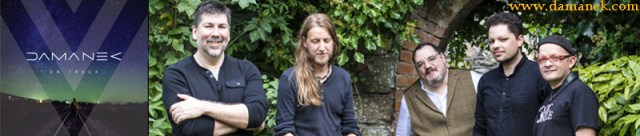
One of the most satifying things a music fan can do is make a new discovery. That happened to me lately as I was given a review copy of Damanek’s debut album, On Track. Lucky me. On Track is one of the best releases I’ve heard in what has been a pretty good year for prog releases.
A little background here is in order – Damanek is the brainchild of Guy Manning, who among other things is a veteran of The Tangent. For this release, Manning is the chief composer and lyricist. Beyond that, there are numerous contributors to the album. Among them, Manning borrows from his former band to tap Luke Machin on the electric guitar, Marek Arnold contributes on a number instruments (his sax figuring prominently), and numerous other musicians play their part.
The first track, Nanabohza and the Rainbow, sets the tone for the album. Beginning with some native-sounding beats, the song evolves into a jazzy looseness (the latter being very pervasive throughout the album). The aforementioned saxophone makes its first appearance toward the end of the song, along with some superb piano, with the song closing on some motifs that could be described as mid-Eastern. That’s quite a palette, and it’s only the first song.
Long Time, Shadow Falls follows next, and has a bit more of a new-agey feel to it, with some African rhythms to drive the point home. Lyrically, the song is a commentary on poaching and preservation (or more precisely, the lack of the latter), and the music is most effective in underscoring the message.
Track three, The Cosmic Score, is largely piano driven and is the most relaxing track on the album. Arnold’s sax makes an appearance midway through, playing off the piano, followed by a synth solo that harkens back to first golden age of prog in the 1970’s. Lyrically, The Cosmic Score is sung on a grand scale; musically, it invites you to kick back and relax as you contemplate.
The musical palette widens even further on the next track, Believer – Redeemer. If you have ever been looking for some funk/R&B influence in your prog, then this is the track for you. The Santucci Horns (as they are known in the album credits) provide some brass here with trumpet and trombone to further accentuate the dominant influence here.
The following track, Oil over Arabia, begins with some jazzy piano and guitar before the saxophone once again joins in the fun. Midway through, the pace picks up and the song begins to rock out a bit more, and eventually Arnold provides some excellent clarinet to the song as well. Lyrically sparse, this is almost an instrumental track, and a damn good one at that. As with all the songs, the playing is top notch, but this one really stood out to me.
The Big Parade has a somewhat Beatle-esque sound to it, and it’s not hard to imagine John Lennon circa 1968 writing or singing a song like this. The fact that it is an anti-war song makes this all the more so. This song qualifies as the most quirky diversion on the album, and despite its protesting nature, it’s a fun listen.
The melancholy Madison Blue is up next. This is a relatively simple track musically, primarily driven by the piano. Here, however, what sounds like a small string section and the flute beautifully underscore the mood of the piece, which lyrically concerns the loss of someone dear.
Saving the epic for last, the album closes with the 13 minute plus Dark Sun. The first five minutes or so feature a slow groove with Arnold’s clarinet adding some nice color at various points. Midway through, the pace picks up dramatically, with excellent guitar work by Machin, some jazz-tinged electric piano and more of Arnold’s clarinet (come to think of it, I can’t think of many prog albums where the clarinet played such a prominent part). Some very proggy organ is also included before the song slows down and eventually returns to the same groove with which it began. It’s a quite-satisfying musical journey.
In closing, On Track has some of the best musicianship of any album I’ve heard in quite some time, and that’s saying quite a bit given the plethora of outstanding progressive rock releases we’ve seen this year and for several years running now. Overall, the music is a, well-balanced mix of styles, including classic and modern prog, jazz, and various world music styles, tastefully and seamlessly combined. As debut albums go, this one is a smashing success.
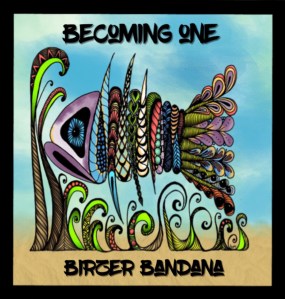
As some of you might remember, fellow progarchist Dave Bandanna (of the English prog band, Salander) graciously asked me a year ago to write lyrics for a new band/project, called Birzer Bandana. We released that album, BECOMING ONE, earlier this year.
I’ve now written the lyrics for the second album–a concept album revolving around the mystery of a man trapped somewhere and in some way on a starship heading into a black hole. As with the first album, this new one explores existential questions of life, love, loss, and hope. For better or worse, these are themes I, personally, can’t escape, and, frankly, it’s really healthy for me to write them down in lyric form.
Dave just sent me a working version of the 14-minute track, “The Void.” To my mind, this is Dave’s best craftsmanship as a composer.
To write “I’m excited” would be the grand understatement of the day. Dave’s work is nothing short of brilliant. I’ll be equally excited to share it with everyone someday. . . .
Pensive, deep, and resonating strings eagerly invite listeners to immerse themselves utterly, fully, and completely in the album. From there, keyboards swirl in anthemic Emerson-esque majesty until the entire orchestra begins what is nothing less than an all-encompassing and fetching fanfare.
We the listener feel not the abstraction of the music, but its tangibility. We might very well be able to touch it. We are not “fans” witnessing a spectacle from afar, hoping to catch a mere glimpse from our balcony seats the smiles that pass between Susie and Fred, the nods between Aaron and Steve, or which guitar Alan is using on this or that tune. No, nothing like any of this. With UNTOLD TALES, we the listeners are members of the artistic endeavor as a whole, as much a part of the band as those on stage, and just as fundamental to the artistic success of it all.
King Crimson appeared in 1969 as an island, on the far side of the bridge joining a tiring psychedelic scene to a studied, if no less freaky (for its age), “progressive” rock. In its nearly fifty years the group’s membership has drifted in and out through orbits around guitarist Robert Fripp, his steady hand and heart dissolving and reforming Crimson as there is music for it to play. As Fripp assembled the band’s third incarnation, Crimson was riding a wave of popularity the rewards of which didn’t settle entirely well with him, and in promising a more difficult, rockier terrain he was able to lure drummer Bill Bruford, looking for a similar fresh start, from megaprog juggernaut Yes. With violinist David Cross and bassist/vocalist John Wetton, the band created three albums in quick succession, ranking among their diverse best. 1974’s Red, the last of the trio, is an able summation of Crimson to that point, before Fripp forcibly retired the band (he would let Crimson lie dormant until a brilliant, left-field return in 1981). The music is a metallic, abrasive take on contemplating the dying of the light, its mood no doubt reflecting Fripp’s, and his band’s, growing uneasiness.
In its lyric, “Starless” is an extension of the previous album’s title, Starless and Bible Black, but the resemblance more-or-less ends there. It has more in common with the grandeur of Crimson’s first record, In the Court of the Crimson King, mellotrons drifting into Fripp’s signature sustained tones, with Wetton’s vocal part an overtly dramatic (such was Wetton’s m.o., but here it works) preamble to a long instrumental passage as heavy a piece of jazz metal fusion as has ever been created. For all his professorial demeanor and seriousness, Fripp loves a good stoner riff, and the tension he can build around such beasts — harmonic, exploratory — separates him from the pack. Brainy, yes, but beguiling, gorgeous, devastating.
soundstreamsunday presents one song or live set by an artist each week, and in theory wants to be an infinite linear mix tape where the songs relate and progress as a whole. For the complete playlist, go here:soundstreamsunday archive and playlist, or check related articles by clicking on”soundstreamsunday” in the tags section.
Though best known in the prog community for their actual albums–such as SONGS FROM THE BIG CHAIR or EVERYBODY LOVES A HAPPY ENDING–Tears for Fears is also the master of the single. Perhaps this is an artifact of the innumerable remixes of the 1980s, the decade of their origins, or, perhaps, the ideas of Roland Orzabal and Curt Smith just never stop and cannot be contained by an album. Looking over their history as a band and as individuals, I think I’ll choose the latter explanation. Throughout the band’s thirty-four year career, amazingly enough, Tears for Fears has only released six studio albums. In that same period, though, the band has released dozens of singles, each different in style, theme, and genre. While their albums tend toward the progressive pop of PET SOUNDS by the Beach Boys or SKYLARKING by XTC, their singles range all over the place, traversing and, at moments, transcending, both space and time.
One can, however, effectively divide the singles into three types: covers; rock and pop cinematic outbursts; and prog and electronica experimentalism. The band has released these in a variety of forms: box sets; cd singles; one compilation album; and as bonus tracks.
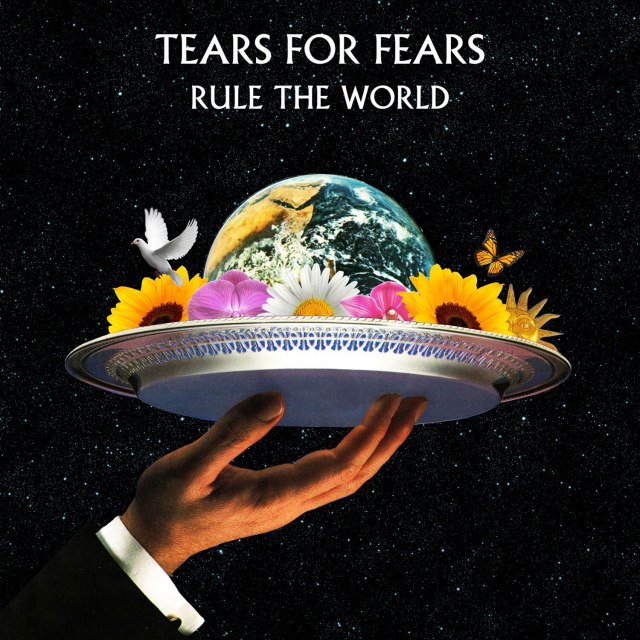
The new greatest hits compilation from Tears for Fears. Available November 10, 2017, from Mercury Records.
As I’ve had the opportunity to argue many times over on Progarchy, Tears for Fears is my favorite pop band, and I consider Roland Orzabal the greatest living writer of pop music. Huge claims, I know. But, then again, I’m from Kansas, and I’m a Birzer. If I didn’t speak with apparent hyperbole, my brain and soul might just very well explode.
My feelings toward TFF have been with me since I first heard SONGS FROM THE BIG CHAIR, 32 years ago. If my convictions about TFF and Orzabal have wavered, I’ve not been aware of such.
Seeing them live has only further convinced me in my claims.
The new single–while, to me, surprising in the direction taken–does nothing to alter my previous claims. Now available on iTunes, the new single is the first music the band has released since the 2014 Record Day exclusive EP of three covers, READY BOYS AND GIRLS? Before that, the band had released two new songs as bonus tracks on its 2005 live album, SECRET WORLD.
The new single is a rather direct pop-dance single, with rave-like keyboards, high-pitched vocals, and an anthemic refrain.
For those of us hoping for a brand new album, we’re a bit disappointed, as the new single comes with a new greatest hits package, RULE THE WORLD. A second new single, “Stay,” also appears on RULE THE WORLD (itself, available on November 10, 2017, from Mercury Records).
Let’s hope and pray that the rumored album, THE TIPPING POINT, is still forthcoming.
Lucky are the few to have seen the masterwork Heterotopia live!
Here’s an excerpt from an excellent review of Schooltree’s September 29th concert:
Ladies and gentlemen, I’m here to attest that Lainey Schooltree has chased that Holy Grail and brought it back to the land of the mortals in the form of [a] 100 minute epic called Heterotopia. She has kept her covenant with the ancient gods of progressive rock and delivered a work that deserves a place in the pantheon. After seeing Heterotopia in its embryonic state, I was especially excited to see how it translated in a proper live setting in its final form. Not only did it exceed my already high expectations, but I left having the sense that I had witnessed the launch of a significant work that demands to be judged on the global stage.
…
Decked out in goth chick glam, Schooltree herself seemed content to let Heterotopia speak for itself. And that’s exactly as it should be. While so many are eager to confer automatic legitimacy and priority to “womyn in rock” these days, Lainey Schooltree has simply thrown down a gauntlet of stone cold artistic achievement. Heterotopia is a musical monument that stands tall in the valley of its ancestors and demands to be judged alongside them. I may not have seen Yes, Pink Floyd and Genesis back in their heyday. But I did see Heterotopia at Oberon in 2017. As far as I’m concerned, that’s a perfectly comparable experience.
Meet me at the mead hall in winter (Set the world to right) With songs, science and stories (Hold back the fading light) Artists and dreamers and thinkers (Right here by your side) Finding truth in those travellers’ tales (On this brief flight of life)
Here with science and art And beauty and music And friendship and love You will find us The best of what we are The poets and painters And writers and dreamers
“A Mead Hall in Winter” from the CD “Grimspound”
Music by Rikard Sjöblom and David Longdon
Words by Greg Spawton
“A Mead Hall in Winter” is a song from Big Big Train’s “Grimspound” album released earlier this year. A reference to St. Bede’s analogy of a man’s life to a sparrow’s brief flight through a feasting hall, the song pays tribute to the age of Enlightenment that the band fears we are losing sight of. As…
The illustrated libretto book publication and the 2nd edition CD digipak are now both available for Schooltree’s incredible concept album, Heterotopia.
You can buy them online at schooltreemusic.com with Apple Pay (or pay by credit card). Don’t miss your chance to own this magnificent souvenir of one of 2017’s greatest artistic achievements!


 When Beck walked a talking blues over a sample of Johnny Jenkins’s cover of Dr. John’s “I Walk on Gilded Splinters” for “Loser,” his giant 1994 hit, there was an aesthetic purpose lurking underneath its vibe of off-the-cuff spontaneity that, 25 years later, continues to infuse his work with vitality. While “Loser” itself is marked by the wild west feel of early 90s indie rock, with all its many faces, Beck’s subsequent work shapes that freedom into something beyond any particular rock and roll era — his catalog reflects possible trajectories across time rather than a simple series of destinations.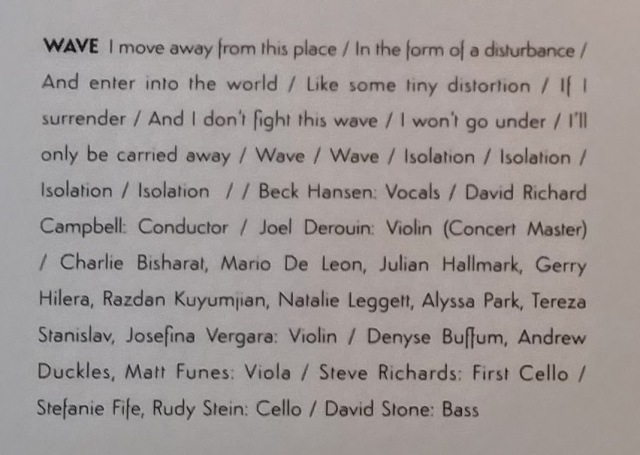
 As some of you might remember, fellow progarchist

 King Crimson appeared in 1969 as an island, on the far side of the bridge joining a tiring psychedelic scene to a studied, if no less freaky (for its age), “progressive” rock. In its nearly fifty years the group’s membership has drifted in and out through orbits around guitarist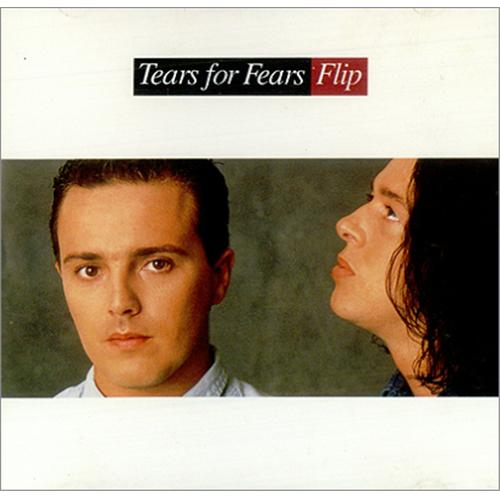









 Progarchy