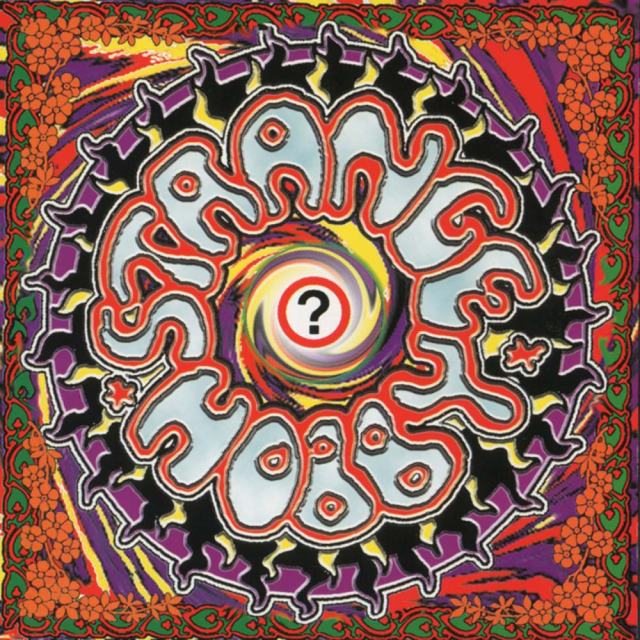
A little over twenty years ago, Arjen Anthony Lucassen anonymously released an album named, STRANGE HOBBY. The artist spot on the CD was left as a “?” A love letter to the psychedelic-pop era of music, 1965-1970, STRANGE HOBBY was recorded in Abbey Road studio and contained a total of eighteen covers.
It came out at roughly the same time that his ACTUAL FANTASY did. A totally different style, though, one that allows the perfectionist to let loose.
“Fronting up a band as a bass player and vocalist is a tough gig – one with which I’ve had some experience. Geddy shows how it should be done. In a power trio, every little helps and additional duties on bass pedals, double-neck guitar and synths made for a fulsome sound in his stadium filling band Rush.”
2. JACO PASTORIUS
“Also often cited as the most influential player ever, his approach to Jazz and the fretless instrument was ground breaking. It’s hard to find someone Jaco didn’t influence. The 80s music charts were populated with hits featuring many Jaco clones – and for good reason.”
1. CHRIS SQUIRE
“My biggest musical influence ever. His sound and tone inspired a legion of players. Chris’ own inspirations were Paul McCartney and John Entwistle, two players who probably influenced more than most. But for me, Chris will always be top of the list. Sorely missed.”
The new Big Big Train album, Grimspound, will be released on April 28th 2017. Pre-orders of the album are now available at our official stores at Burning Shed (for vinyl and CD’s)
All LP versions feature double, 180g vinyl with a gatefold cover and 4 page booklet featuring lyrics and the stories behind the songs. A complimentary code for a high-resolution download version of the album is provided with each vinyl order. There is a limited edition clear vinyl version alongside the standard black vinyl version and orders of this limited edition version will include a postcard signed by all band members.
The CD version comes in a gloss laminated softpack and features a 24 page booklet with lyrics and the stories behind the songs.
The hi-res download version includes a PDF of the CD booklet.
A limited edition blue vinyl version of the Folklore is also available at Burning Shed (orders will be shipped with a complimentary hi-resolution download code).
Big Big Train are playing three shows at Cadogan Hall, London, in the autumn. The first two shows are sold out and only a few tickets remain for the third show (a Sunday matinee performance.) http://www.cadoganhall.com/event/big-big-train-2016/
          Out of the mouth of the Mother of God,
          More than the doors of doom,
          I call the muster of Wessex men
          From grassy hamlet or ditch or den,
          To break and be broken, God knows when,
          But I have seen for whom.

          Out of the mouth of the Mother of God
          Like a little word come I;
          For I go gathering Christian men
          From sunken paving and ford and fen,
          To die in a battle, God knows when,
          By God, but I know why.

          And this is the word of Mary,
          The word of the world's desire
          'No more of comfort shall ye get,
          Save that the sky grows darker yet
          And the sea rises higher.'

          Then silence sank. And slowly
          Arose the sea-land lord,
          Like some vast beast for mystery,
          He filled the room and porch and sky,
          And from a cobwebbed nail on high
          Unhooked his heavy sword.

          Up on the shrill sea-downs and up
          Went Alfred all alone,
          Turning but once e'er the door was shut,
          Shouting to Eldred over his butt,
          That he bring all spears to the woodman's hut
          Hewn under Egbert's Stone.

          And he turned his back and broke the fern,
          And fought the moths of dusk,
          And went on his way for other friends
          Friends fallen of all the wide world's ends,
          From Rome that wrath and pardon sends
          And the grey tribes on Usk.--G.K. Chesterton
Only through the Grace of the Word Incarnate, sacrificed on the Hill of Skulls on a Friday afternoon, three hours past noon, to be precise. . . .
Oh, Thomas, what would the world of modern and post-modern slime be without you? Impoverished, to be sure, to be sure, to be sure.
May you bring comfort to as many in the twenty-first century as you did in the twentieth century. May your white leopards continue to confound us and your words turn us—convert us—to Truth, Beauty, and Goodness and especially to the One through whom all good things come.
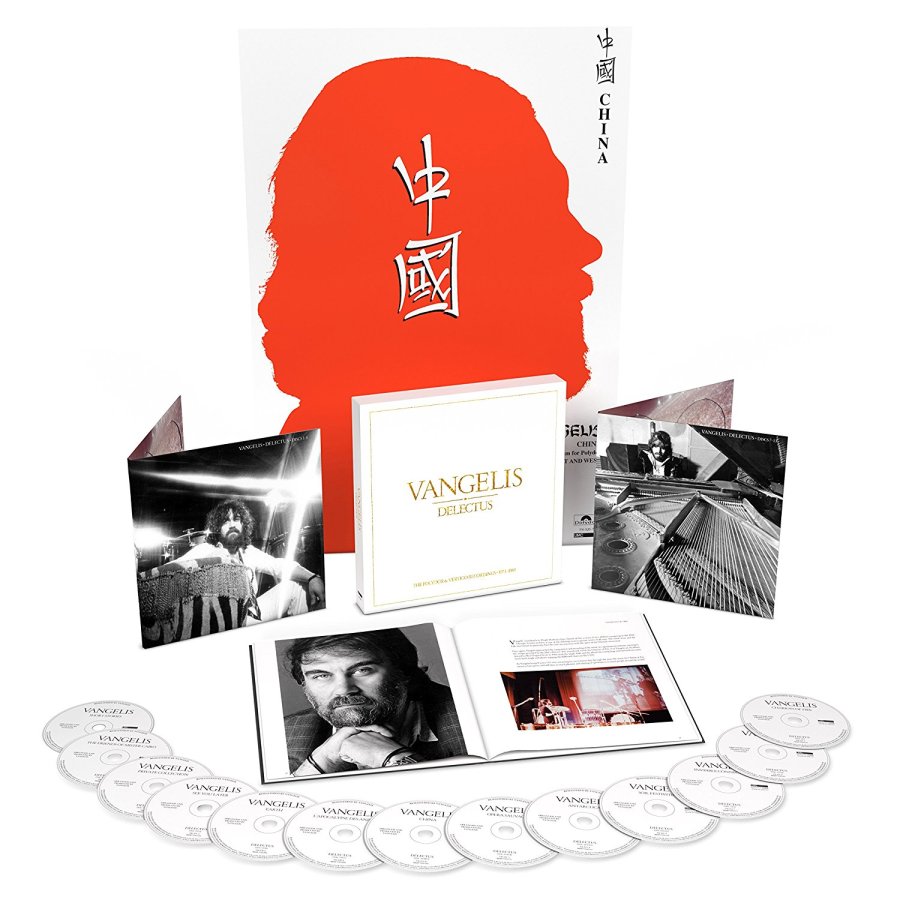
Delectus: A book of passages from Greek or Latin authors used for study.
When you hear the name Vangelis, depending on your age and musical affinity, you think of different things.
You think of the keyboard player of Aphrodite’s Child whose astonishing album 666 has to be heard to be believed, you think of the pioneer of electronic music whose albums were all groundbreaking in their own way, you think of the soundtrack king, in particular the unforgettable Chariots of Fire, or you think of the fact he was once invited to join Yes, and then produced three fantastic albums with Jon Anderson.
Bass Player magazine recommends the new Sting album, and I heartily concur. Here’s the review by Chris Jisi:
Sting’s first rock album in 13 years, 57th & 9th (named for the Manhattan intersection near the recording studio), is a first-rate, ten-song collection that touches on all phases of Mr. Sumner’s broad musical career. The first single, “I Can’t Stop Thinking About You,” has a heavy Police presence—with its chugging-eighths groove, arpeggio guitar parts, and shifting key centers—while “Petrol Head” pivots between the Police and roots rock. “50,000,” dedicated to such departed greats as Prince, Glenn Frey, and Lemmy, rides a muted verse (with Sting tuning the E string on his ’53 Fender Precision down to D) before bursting into a stadium-ready classic rock hook, a formula present on “Down, Down, Down,” as well. Sting’s Celtic persona emerges on the 6/8 “Pretty Young Soldier” and the guitar-and-vocal ballads “Heading South on the Great North Road” and “The Empty Chair” (for journalist and ISIS victim James Foley).
Summoning the jazzy, solo Sting side is the Middle Eastern-tinged, European refugee-focused ballad “Inshallah,” and the exotic “If You Can’t Love Me,” with descending bass notes creating harmonic colors against a repeated four-note pattern, set to Vinnie Colauita’s 7/8 drum figure. Finally, there’s the somber topic of climate change presented via the upbeat, super-catchy rock bossa “One Fine Day,” which, with its Latinlike pushes in the bass line, make it Sting’s best 4-string work on the album.
It’s precisely the Police-like opening track, “I Can’t Stop Thinking About You,” that first hooked me, along with the magnificently smoldering meditation on mortality, “50,000,” where Sting muses on the “what is it all worth?” factor of stardom.
My favorite part of the post-Police side of Sting is exhibited on the guitar-and-vocal pairings on “Heading South on the Great North Road” and “The Empty Chair.” So also on “Inshallah” which is both haunting and catchy.
Skip the bonus tracks version, which offers nothing additional worth hearing, but do be sure to grab hold of the ten-track album version. Sting should keep returning to that corner of NYC, if only to remind us how great music could be when record companies allowed it to be smart.
The past is the push of you, me, all, precisely the same,
And what is yet untried and afterward is for you, me, all, precisely the same.
I do not know what is untried and afterward,
But I know it will in its turn prove sufficient, and cannot fail.
~ Walt Whitman, from Song of Myself, Section 43.
Unlike bluegrass, where one can point to Bill Monroe’s “Mule Skinner Blues” (1940) as the discrete start of a new musical genre, progressive rock’s emergence was gradual. With Revolver and “Eight Miles High” the boundaries of pop music were expanded; 1967 would see the arrival of free-form or fusionist jam tracks likes Pink Floyd’s “Interstellar Overdrive,” Buffalo Springield’s “Bluebird” (the hard to find long version), and Jefferson Airplane’s 24 minute epic “Spare Chaynge” (pared down to its last 9-1/2 minutes for After Bathing at Baxter’s).
Fifty years ago this month Country Joe & The Fish entered the studio in San Francisco to record their first LP. The last track of side one may be the most proto-prog recording of the ’60s. “Section 43” reminds us that prog rock got its biggest push from the counter-culture’s psychedelia and acid rock. Whereas the aforementioned jam pieces are largely improvisational, this multi-part mini-epic displays as much attention to form as freak out.
Now, I have a confession to make. I had never heard “Section 43” until a few weeks ago. In 1967 I was a first-grader, and the greatest rock band in the world was The Monkees. When I later watched the Woodstock documentary I associated Country Joe with the Vietnam war gallows humor of “I Feel Like I’m Fixing to Die Rag.” I didn’t look into the band further. It wasn’t until I watched Jack O’Donnell’s documentary on the Summer of Love, Revolution, that I caught the music on the soundtrack and went on a quest to know who performed it. Thankfully, the person who posted a print of the film on YouTube was ready with the answer.
Watching the film I thought I might be hearing some previously uncovered Floyd track. The Farfisa organ and bass line put me in mind of Rick Wright and Roger Waters. Upon learning it was Country Joe & The Fish my mind was blown — and impressed.
The piece follows a verse-chorus-verse-verse-chorus structure. The choruses build tension waltzing slowly through minor and dissonant chords. The first and third verses showcase interplay between Barry “The Fish” Melton’s Gibson SG and David Bennett Cohen’s keyboard. The middle verses are bisected by what Richie Unterberger calls “an unexpected, almost circus-like atonal passage.” Up to that jarring break our ears are treated to a bracing harmonica solo from bassist Bruce Barthol, as salient on that instrument as with the heavy strings, while Gary “Chicken” Hirsh’s cymbals crash and tom-tom’s dance all around.
But it’s Melton’s note-bending, Near Eastern inflection on the second guitar solo that’s the highlight of this track. Country Joe McDonald? Why, he wrote the thing, and his ringing hollow-bodied Gibson keeps the whole contraption aloft.
The band opened with “Section 43” on the final morning of the 1967 Monterey Pop festival, an event memorable for Pete Townshend smashing his guitar and Jimi Hendrix setting fire to his. But Rolling Stone rated “Section 43” among the 15 greatest musical moments captured on film. Not so much for the shots of the band themselves (though Melton’s army jacket and blue jean combo would be a look emulated on school buses for years to come). It was the yawning, scratching youth summoned from slumber by Country Joe’s yell, and stumbling to the stage front that were the real stars of the clip.
Barthol’s harmonica solo isn’t present in this version. Country Joe blows the last dying notes on the harp as the camera cuts to the tapping feet of a sleepy and spacey young woman, too tired or too high or perhaps too deeply moved to clap, but whose bleary-eyed, Mona Lisa smile tells us that we have might have just passed a key signpost on the road to Proghalla.





 Progarchy