
A huge thanks to Geoff Banks for letting me know about this. Very cool.
Category: progressive rock music
The Magical, Versatile Mandolin
I like a variety of instrumentation in my music. In addition to the usual guitar, bass, and drums, I’m quite fond of a variety of keyboards, enjoy orchestral arrangements added where appropriate, and on occasion, woodwinds and brass. One of my favorite “unconventional” instruments is the mandolin.
However, the impetus for this piece is not itself the fact that I like the mandolin. Rather, somewhere back in time I remember someone (I can’t remember exactly who) telling me the mandolin wasn’t a versatile instrument. I balked at this assertion then, and I still do now. Having a forum as I do here at Progarchy, I’m now going to debunk that assertion, using different pieces to demonstrate the versatility of this wonderful instrument. While each of these songs feature the mandolin to one degree or another, by the time you have progressed from the beginning to the end of the list, you will have encountered several different musical styles that are markedly different from one another. Despite that, I will have barely scratched the surface of the mandolin’s versatility.
So, let’s get to the list.
Ian Anderson, Water Carrier
This song appears on Ian Anderson’s solo album ‘The Secret Language of Birds’. As many know, Anderson’s main band, Jethro Tull, features the mandolin prominently on a number of songs (‘Fat Man’ is one of my favorites in that category). This song features an uptempo mandolin front and center from start to finish. Underneath though are some very prominent Middle Eastern motifs – not exactly the kind of music you initially think of when you think of the mandolin. And yet, here it is, integrated perfectly.
Led Zeppelin, The Battle of Evermore
This is one of two songs on Led Zeppelin IV featuring the mandolin (‘Going to California’ is the other). Like our previous entry, this song has a somewhat mystical feel to it. However, instead of the Middle Eastern influences, this piece is more folk-inspired. Throw in Sandy Denny’s vocals, some Tolkein-esque lyrics, and you’ve got yourself a great song.
Heart, Sylvan Song/Dream of the Archer
There are a number of songs by Heart that I like, but these two (or this one, depending on how you look at it) are by far my favorite. This is basically one song divided into two parts each having its own title. The first part is instrumental, the second part includes Ann Wilson’s incredible vocals. This song remains somewhat within the realm of folk music as the previous entry, but has more of a “renaissance” feel to it, right down to the sounds of the forest at the beginning before the mandolin quietly makes its entry. It’s quite different from our first two pieces on the list, and yet it’s probably not a stretch to say that it was influenced by ‘The Battle of Evermore’ … as witnessed by Heart’s performance of the same here.
Drive-By Truckers, Bulldozers and Dirt
Now we make a big, big shift. Geographically, we’re moving from the Pacific Northwest where Heart originated down to Northern Alabama, from where the Truckers originally hailed. Genre-wise, some people call this band southern rock, others call it alt-country, and still others call it Americana. Whatever you call it, it’s a great song. Steel guitar appearing later in the song gives it a bit of a country feel, but the mandolin remains the dominant instrument. The strong ties to its geographic region are evident throughout, as is the bright, upbeat tone. From their album entitled ‘Pizza Deliverance’ (one of my favorite album titles of all time), this mandolin-driven song about what amounts to an overgrown kid that likes to play in the dirt is a gem.
Black Oak Arkansas, Digging For Gold
Now we move from Alabama to Arkansas, and there isn’t much debate about whether or not Black Oak Arkansas or their music falls under the umbrella of Southern Rock. The song begins with a chirping bird, an acoustic guitar, and a barking dog before Jim Dandy’s raspy voice makes an entry. The mandolin enters at about the 0:51 mark and is persistent through the remainder of the song. As a bit of unrelated trivia, lead vocalist Jim Dandy, he of the long, blonde locks and flamboyant presence was alleged to be the inspiration for the stage persona of David Lee Roth. Watch any live video of these guys from the 70’s, and you’ll believe it.
Led Zeppelin, Boogie with Stu
Now we’re taking another significant shift in musical style – from Southern rock to the blues. Here Led Zeppelin brings us one of two blues songs from Physical Graffiti that utilize the mandolin, the other being Black Country Woman. The mandolin is more persistent in the latter than in the song posted here (it doesn’t enter the picture until the 2:38 mark). That’s beside the point though – in both cases, the mandolin – an instrument invented in Italy of all places – is being featured in blues songs, and fitting in as seamlessly as a harmonica.
Arjen Anthony Luccassen, When I’m A Hundred Sixty Four
We started this list with one of the giants of the classical period of progressive rock, now we’ll end it with one of the giants of prog’s current renaissance. Luccassen here gives us a nice little romp that includes the mandolin and acoustic guitar with some strong Celtic influences adding extra flavor. This is a great song, possibly my favorite off of this album, ‘Lost in the New Real’, which is chock full of great songs. And speaking of great songs, Luccassen pays homage to another song on this list by doing an excellent remake of ‘The Battle of Evermore’, which you can listen to here if you are so inclined.
So let’s recap the list a little bit here. We started with music that had some strong Middle Eastern influences, moved to a couple of different folk songs, then took a journey down South with some Americana/Alt-Country/Southern rock, moved onto some blues, and finally to some full-blown progressive rock. Quite a variety, and as I said predicted above, I’ve barely scratched the surface of different musical styles into which the mandolin can be easily integrated. So does anyone still want to tell me that the mandolin is not a versatile instrument? I didn’t think so … 🙂
My Top Favorite Fifteen Albums (from a decade ago)
As I was going through some files, I came across an annotated list of my top favorite albums of the rock era (that is, after 1955). I broke the list into seven prog albums and eight non-prog albums. Considering how much has changed in the last decade, my list would look quite different now. Still, it’s fun to reminisce. Enjoy.
[A quick addition, just to clarify. Anyone who knows me, knows my first real love was and, to a great degree, remains Rush. I intentionally left Rush out of this list, as it would’ve distorted it too much.–BjB, November 18, 2013]
My Top Seven Progressive Rock Albums (in no order after the first three)
Kevin McCormick, Squall (1999). Some of the best music ever written—but tempered with very serious classical sensibilities and lacking the bombast present in even the best of progressive rock. McCormick incorporates his profound poetry as lyrics. Each word—and the way Kevin sings it—seemed utterly filled with Christian grace and conviction. This is part two of trilogy (he’s working on number three). And, it’s hard to listen to Squall without listening to its equally fine predecessor, With the Coming of Evening (1993).
Talk Talk, Colour of Spring (1986). I could certainly regard this as either my top album of all time (though interchangeably with Squall and Spirit of Eden; depends on my mood), or close to it. I couldn’t even count how many times I’ve listened to it. I bought it on a whim—because I liked James Marsh’s cover. My whim paid off, as it opened a whole new realm of music to me. But, what’s not to like: impressionist 1950’s Jazz and 1960’s Stevie Winwood mixed with intensely Christian lyrics.
Talk Talk, Spirit of Eden (1988). Every note and word is perfect. Mark Hollis and Tim Friese-Greene spent 14 months in a church recording this album. Hard to beat the 20+ minute opening to the album. And, the lyrics—better than most hymns I hear in church, to be sure. Side two even has a song with St. Ignatius of Loyola’s prayer asking for the grace to surrender one’s will to God.
Yes, Close to the Edge (1972). Ok, I’m noticing a pattern as I write out these descriptions—this album, as I understand it, is about the Reformation. Anderson and co. incorporate high-church Anglican music and choral arrangements as they sing about Christ the Word.
Genesis, Selling England by the Pound (1973). Heavily influenced by the poetry T.S. Eliot, Peter Gabriel soars on this album.
Pink Floyd, Animals (1977). Continuing the fantasy and science-fiction themes of their earlier albums, Roger Waters and David Gilmore seriously challenge the right of one human to exploit another in this George Orwell inspired album.
Flower Kings, Space Revolver (2000). Lyrics range from weird to wacky, as does the music. Pro-Christian themes abound, but placed within a rather Scandinavian pastoral setting.
My Top Seven non-Progressive Rock Albums (in no order)
Thomas Dolby, Golden Age of Wireless (1982). This was my introduction to New Wave. Wild arrangements and very Bradbury-esque lyrics. It became my anthem during high school debate and forensics.
Sarah McLachlan, Fumbling Towards Ecstasy (1993). I can’t explain why this album means so much to me, but it does. I love McLachlan’s voice and use of organ. And, this first album lacks the nasty anti-Christian and pro-feminist cant of her later work. When I worked at the Organization of American Historians in graduate school, we would play this CD as we played Quake on the network (after business hours, of course).
Echo and the Bunnymen, Ocean Rain (1984). Beautiful and bizarre—musically and lyrically. Probably the most Doors’ inspired album of the New Wave movement. While the lyrics don’t quite rival those of Morrissey (in the Smiths), the music surpasses anything Johnny Marr wrote. A staple for me in college. I’m just sorry that some of the lyrics are heretical.
Traffic, John Barleycorn Must Die (1970). What can I say about Stevie Winwood, Jim Capaldi, and Chris Wood? Jazz-rock with Anglo-Saxon folktales thrown in. Lots of Traffic is excellent, but this surpasses all of their other albums.
Van Morrison, Astral Weeks. Introspection without pure naval gazing. And, no body writes better about the beginnings of love than Van Morrison. Must be something in the Irish soul. As I understand it, the album was done in one take with the jazz musicians being given the music when they entered the studio. Perfect for a spring day.
The Cure, Disintegration (1990). From the beginning to the end, a masterpiece. Perfect pacing, and fascinating arrangements. The Cure’s flaw is their tendency to write hyper, bouncy pop songs. While Disintegration has a few of these, they remain tempered by the more serious, gothic moments on the album. And, hey, the album begins with early medieval plainsong.
Radiohead, Kid A (2000). Intense lyrics about the problems of post modernity and scientism. Though Ok, Computer has better moments, Kid A has no real flaws. The lyrics, however, remain unimportant, ultimately, as Thom Yorke’s voice serves as another instrument on the album. The producer, Nigel Godrich, deserves credit for being an equal member of the band. The opening track, “Everything in its right place” sums up the production.
Prog Magazine Reader Poll, 2013
 Jerry Ewing, everyone’s favorite Prog editor, has just announced the 2013 Reader Poll. Please take the time to vote as soon as possible.
I must admit, I’m far more excited to vote for this than I was either for the 2013 local elections or the 2012 national (here in the U.S.) elections. I’d be pretty happy to have Greg Spawton as my mayor or my president.
http://www.progrockmag.com/news/vote-now-in-the-prog-readers-poll-for-2013/
Chthonic Journey by Ezekiel Graves
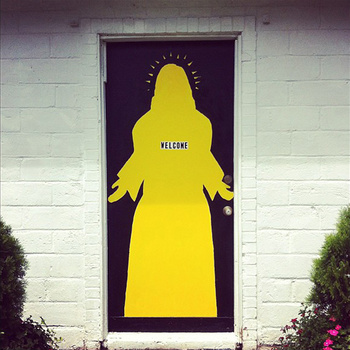 The blues moves like a river. It rolls deep, and long ago breached the banks of its Mississippi creation myth. If you ask where the real blues lives today, you’ll find as many answers as there are street corners, but I see one version as a line running through the Kinks, Miles Davis, Captain Beefheart, the Ramones, shouting back at Charley Patton, hollering towards Dock Boggs — anyone drawn to its punky bones, the rattlesnake shake embedded in its progressions.
Ezekiel Graves approaches his electric blues along this continuum, through the drones embedded in the banjo and guitar tunings he grew up around in western North Carolina, and these blues are all over Chthonic Journey, his new record of solo electric guitar available on bandcamp (http://ezekielgraves.bandcamp.com/). The songs are meditations, skeletal structures where rhythm lazily lopes after the beat. There’s no hurry, though the pieces are short, and the relaxed progress of the album satisfies and stirs. If you’ve ever wished Richard Thompson’s intro to Calvary Cross lasted longer than its fifty seconds, then this might be your record. Thompson is a key here, and Graves’s other work has shown his influence more directly — on Chthonic Journey, though, Thompson only occupies a room adjacent to a distinctly American blues.
But while I think there’s an honest authenticity of experience to Chthonic Journey, I’d hesitate to call the record or Graves’s playing American Primitive or Old Weird America or whatever the hell America was before it became less apparently interesting — that’s gazing on this music from a remove, an imagined distance of something past (and which plagues so-called “oldtime” music) — and besides there’s way more here that snaps and buzzes and denies, reminding me of the way Miles Davis played off Pete Cosey, snake charming riffs and using electrical wah itself as a voice and a texture, conjuring memories deeper, more present, than nostalgia. And still calling it blues.
Records like Chthonic Journey are elemental because they capture an artist in motion. It reminds me of the Billy Joe Shaver lyric, “moving’s the closest thing to being free.” I think Zeke Graves is moving, putting an edge to his map.
Some gracious insight from the artist himself:
What was the genesis of the songs?
I had been trying to adapt Southern old-time fiddle tunes to electric guitar–as an exercise and a way to introduce some new patterns and phrasing into my playing, but also as a jumping off point for improvisation. I liked the idea of starting with something very traditional and taking it to a completely different and out-there place. Fiddle tunes are typically comprised of two alternating sections (that can potentially cycle endlessly)–each a melody or riff that is enhanced by drones played on open strings. I thought this would translate well to guitar in an open tuning. It’s enough musical raw material to keep things interesting, but harmonically simple and static enough that you can go in a lot of different directions without worrying about a lot of chord changes or things getting too cluttered. This led to the first piece, “Twin Sisters” which is a haunting, modal fiddle and banjo tune from Southwestern Virginia.
I kind of abandoned the fiddle tunes thing at that point (although it will be popping up again from time to time), but I kept the idea of starting with simple, modal themes and improvising from there with an emphasis on space and dynamics. I wanted to hear how sounds began and ended, the attack and decay. Once I had that approach in mind, I would just get my guitar into a tuning I liked (mostly ones used by country blues artists of the 1920s and ’30s or modifications thereof), play around until I had a riff or two to start with, and let it spin itself out from there. I tried to be patient and be as much a listener as a player.
How did you record the album?
I did it all in my little studio loft at home. Initially, I was using a Tascam stereo portable recorder to capture things, just because it was easy to grab it and press record whenever I had an idea. I would record for as long as I felt like, and then transfer that over to my computer/audio workstation for listening on studio monitors. Once I realized I was working on a project, I switched over to recording with a Shure SM57 microphone running into Cubase software. As simple as things can possibly be.
Once I had a large batch of recorded material to work with, I had a few sessions where I would listen and take notes–marking down beginning and end times of sections that sounded compelling with brief descriptions of the sounds. I pulled those shorter sections out (there were maybe 20 or 30) and then did the listening process over again and whittled them down again to 9 or 10. I liked the extreme spareness of what I was hearing, but felt that some of the selections could use additional sounds. Not because I wanted to fill up the empty space or I thought something was missing, but because I thought another tonal color would actually cast things into sharper contrast and make the initial guitar tracks pop out at you even more starkly (to use a visual metaphor). For these overdubs, I would quickly get a sound I liked with my guitar, amp, and effects and then play along with as little premeditation as possible, focusing on texture, letting accidents happen. That’s pretty much the whole process.
Tell me about the title of the record.
I was reading some fiction that used a lot of mythological allusions. In researching those a bit further, I came upon the word “chthonic” (as in “chthonic deity”). It means “subterranean” or “having to do with the underworld”. I liked the strangeness of how the Greek word translates into English–it just looks and sounds wrong. It also sounds like a mispronunciation of “sonic”, so it’s kind of a pun. More associations came to mind. The trope of blues as the devil’s music or the fiddle as the devil’s box. Blues and folk as “low” music as opposed to “high” culture. “The underground”, as in underground music or movements. The idea that you have to go beneath the surface to find what is really there. So I ended up with “Chthonic Journey”, kind of a quest to find something that was lost or stolen. This is my first attempt in a while to actually release any recorded music, and I have been through some weird places during that gap…so maybe that has something to do with it.
Six of the tracks are called blues. Definitions, inspirations?
I overused the word “blues” in the titles to call attention to it and question whether any of this stuff could possibly be called blues, or whether a person like me in this day and age could play something you could call blues, or whether that genre name could mean anything so far from the social and historical conditions that created it. I wanted to show some self-awareness and a sense of irony or humor about my appropriation of these gestures, idioms, and techniques that I use in my playing. But I also wanted to leave open the possibility that blues is just an expression of life and feelings, and that sounds can go beyond anything material, political, or worldly.
There’s a lot here to think about, musical roots and branches. Are you working in a tradition?
I think so, or at least engaging it in different ways. I grew up hearing a lot of what you might call very traditional Appalachian music and still play it with my family and some different groups of friends. You could see it as being limited or anachronistic from the outside, but once you get inside it it opens up and you see how strong and deep and regenerating it can be. I learned to play banjo and some fiddle in the last few years and it has completely changed how I play and think about guitar. I’m particularly interested in these points where the traditional and the experimental music worlds overlap: raw and gritty timbres, drones, modality, open tunings, the spaces in between the intervals of equal temperament, rhythmic complexity rather than harmonic development. I don’t feel any conflict in bouncing between those two worlds and feel like I draw a lot of energy and inspiration from that dynamic.
Who would you consider your musical contemporaries?
Really, anyone who is filtering the traditional (or more broadly, American Music) through a personal prism and coming up with something of their own. In the past five years, I’ve played shows with Marisa Anderson, Chuck Johnson, Daniel Bachman, Glenn Jones, Jack Rose, The Black Twig Pickers, Steve Gunn, and a bunch of others who are roughly scratching in the same dirt. That is the kind of company I aspire to musically. I always want to play with and dip my toes into other sounds and scenes though, and am somewhat wary of pigeonholing myself into what is increasingly being written about as a sort of new “American Primitive” scene. That’s a whole other piece of fat to chew on though. When it comes down to it, I am just suspicious of genre names and always want to question why and how they’re being used.
What’s next?
Well, I have a bunch of songs that I’ve written over the past few years (like with singing and chord progressions) and I’ve started working with some other musicians to arrange those and have an electric band that can play out. The idea is to merge the original songs with the kind of guitar playing you hear on “Chthonic Journey” and also bring in some traditional tunes and motifs too. So I want to develop and then record that. It’s been a lot of fun so far and I’m excited to see where it leads.
A powerful and moving piece of work ……
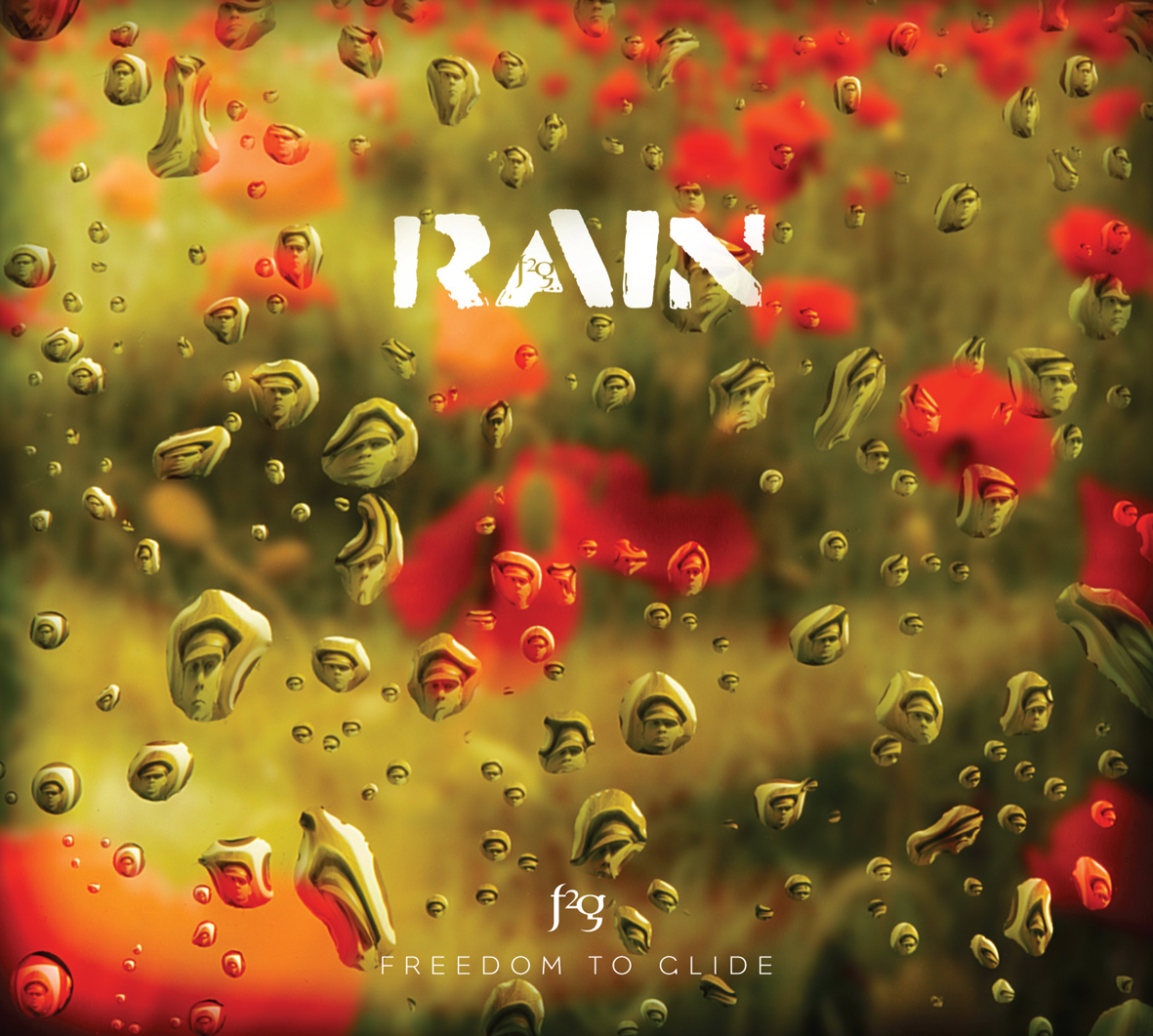
Freedom to Glide – “Rain”
Review by John Deasey
If you look careful at the album artwork above, you can see the faces of soldiers in every rain drop.
So my brothers fell like rain
Every rain drop bears a name
The storm will rise, the sky will fall
A bitter lesson for us all.
“Rain’ is the culmination of 3 years work by Pete Riley and Andy Nixon, both members of a Pink Floyd tribute band who realised they had more than a shared interest in the music they were playing.
As they explain on their website, musically they just clicked and before long they were exchanging ideas, laying down tracks and realising they were on to something outside of the tribute band.
And my, how they were on to something.
Taking a step back for a moment, I remember when Roger Waters released “Amused to Death” and being totally floored by the opening track ‘The Ballad of Bill Hubbard’. The beautiful, subtle guitar fills from Jeff Beck, the mournful backing to the spoken word of a British veteran soldier describing the horrors of war in a gentle, frail, breaking voice …… very moving indeed.
Other tracks such as ‘It’s a Miracle’ and the closing title track are similarly outstanding and have stood the test of time.
Admittedly some of Waters’ anti-war tirade gets a bit tiresome and a little bit theatrically obvious on that album, but there is a stunning tone and feel to the overall piece of work that stays long in the mind.
It is no surprise, given the background of Freedom to Glide, that there is a distinct Floyd / Waters vibe to ‘Rain’, but it avoids any of the cheap shots or crassness of ‘Amused to Death’ and instead infuses the whole piece of work with an elegance and subtlety that is perfectly in keeping with the respectful air for the subject matter.
My copy of the album arrived at 10.50am on release day, 11/11/2013.
So apt. So appropriate.
The sweeping keyboards of the title track immediately set an atmosphere and within a few moments we are taken into a magnificently moving piece of work that absorbs, transfixes and takes us on a journey that I, for one, found hard to let go off.
Seldom have I played a new album on repeat so many times.
We have clear, crisp production, with lyrics that can be heard clearly.
We have background sounds of radios, soldiers speaking, swathes of gorgeous keyboards, Middle Eastern sounding woodwind, military drumbeats low down in the mix and the beautiful Floydian textures of strummed guitar whilst a delicate lead guitar adds shimmering tones …..
We also have rockier tracks such as ‘Path of Reason’ which roll along with a strident beat but even these sections are done with class and quality – nothing is out of place and there are no sudden distortions or jarring distractions to annoy.
Tracks such as ‘Riders on a Wave’ display superb, uncomplicated song writing that is a joy to listen to with a subtle depth that adds to the unfolding and building atmosphere.
This takes on a more dramatic and sinister turn as we head into ‘Price of Freedom’, which recounts a soldiers journey on a vessel from Liverpool to “…halfway round the world, a universe from home” and really sets the scene for the second half of the album.
From here, this is where the music becomes powerfully emotional and at times, incredibly moving without ever becoming maudlin or crassly over-sentimental.
‘Angels and Stones’ is a case in point. A steady beat with gorgeous textures weaving in and out underpinned by a forbidding deep rumble whilst the vocal refrain mournfully tells us :
Fly like an angel, fall like a stone
Whilst the subject matter of the album could have led to a bitter tirade of rhetoric and barely concealed anger, we are instead treated to a beautifully restrained, elegant and respectful tone as exemplified on ‘When the Whistle Blows’.
This is a stunning track about the young men answering the call. Unaware the rain would fall. Not knowing the rivers would turn red.
Lyrically, musically and atmospherically this is a minor masterpiece.
The spoken words of the soldier are reminiscent of ‘The Ballad of Bill Hubbard’ with a similar hauntingly sad feel.
It is actually difficult to put into words how moving the final part of ‘Rain’ is, whether or not you agree or disagree with the whole Remembrance issue, but to hear the veteran soldier on ‘Home Again’, speaking, whilst warm keyboards wrap his elegant words like a shroud, is something else.
As you sit in silence, taking in what you have just heard, the album closes on a fitting note with an uplifting and reassuring track that despite the horrors, wounds and damaged minds of war, we can emerge ‘Not a Broken Man’.
So there we have it – a majestic and beautifully judged piece of work from Pete Riley and Andy Nixon who should be proud of what they have achieved. This is certainly one of the most enjoyable and moving albums I have had the pleasure to listen to for a long long time.
Highly recommended
http://www.freedomtoglide.com/home
http://freedomtoglide.bandcamp.com/
Take an emotional, brilliant ride with Caligula’s Horse
I have, to the best of my knowledge, all of the less than two hours of music produced by the Australian group, Caligula’s Horse (website)—an hour and 44 minutes, to be exact, the sum total of their studio output so far. But whatever is lacking in quantity is more than made up for in outstanding quality. The group’s first, full-length album, Moments From Ephemeral City (2011), was attention-grabbing and quite memorable, featuring the virtuosity of guitarist (and band founder, producer, songwriter, etc.) Sam Vallen, and the powerful, soulful Jeff Buckley-ish vocals of Jim Grey, who apparently hails from the U.S. The two combine to create alternative prog that brilliantly marries technical prowess with emotional potency, compelling melodies, and lyrical mystery—always a winning combination in my book.
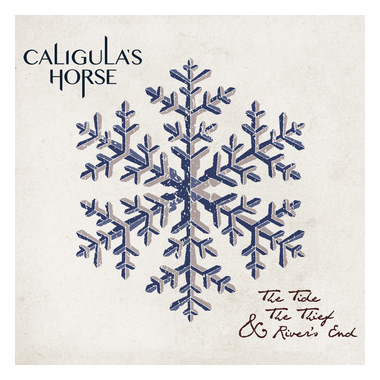 While Moments was, again, exceptional—check out the song, “Alone in the World”, for example—the band’s new offering, The Tide, The Thief & River’s End, goes beyond exceptional. It is, as the reviewer at Murder the Dance rightly concludes, an “11/10” album: “Caligula’s Horse’s sophomore record is an exhilarating listen; the band in its entirely channel the emotions of their instruments throughout, and the structural dynamics here are constructed intelligently. However, it’s Grey and Vallen that truly shine on ‘The Tide, the Thief and the River’s End’. Their collective arsenal alone is enough to earn the band a perfect score.” I cannot improve on what another reviewer, over on the ProgArchives.com site, says about TTTTRE:
I put it to you that it does indeed compete and then some with this album and is sure to make my top albums of 2013 with Steven Wilson’s ‘The Raven that Refused to Sing (And Other Stories)’, Tesseract’s ‘Altered State’, and Haken’s ‘The Mountain’. But to those who haven’t heard the band before, what can you expect to hear? Caligula’s Horse possess the juggernaut riffing of Periphery, the delicate emotional sensibility of Pain of Salvation, the perfectly tasteful and never over or understated rhythm section of Porcupine Tree, all cast to the harmonic ingenuity of Steely Dan. Some of you may be reading this and getting a little excited, it is exciting – it’s downright awesome and executed flawlessly by a cohort of young yet seasoned masters.
The album is a concept album, but is not obvious or direct lyrically; an apparent theme is the oppression of women by religions, yet specifics are difficult to apprehend. All the better, in my opinion, as I prefer ambiguous, expressionist lyrics when it comes to rock music in general. That said, there is undoubtedly a deep sense of tension, urgency, and conflict within the lyrics, intermixed at times with glimpses of hope and a deepening resolve, as evidenced in the final lines of the concluding song, “All Is Quiet By the Wall”:
Hand in hand with our own
This is our home. This is our home
Let our sign say: “Let them come and meet their end”
Now the world is quiet, this is where we make our stand
My favorite cut is probably the second song, “Water’s Edge,” which has a bit of everything:
The band’s site states that Caligula’s Horse are influenced by “such artists as Devin Townsend, Opeth, Steely Dan, Jeff Buckley, Frost, Muse, Karnivool, Meshuggah, Rage Against the Machine, Pain of Salvation, Steeleye Span, the Beatles, Foo Fighters, Frank Zappa, the Dear Hunter, Steve Vai, Fair to Midland, Tori Amos, Lunatic Soul, Katatonia, Tracey Chapman, A Perfect Circle and many others…” I’m familiar, to one degree or another, with all of those groups/artists, and I can hear bits of most of them in the music. (Beatles’ fans can check out Vallen and Grey performing “Across the Universe”.)
Certainly Opeth, Karnivool, Pain of Salvation, Dear Hunter, Katatonia, and A Perfect Circle are readily evident, and any fan of those artists should check out Caligula’s Horse. Vocally, Buckley’s ghost is right in the ear, as this acoustic version of “Silence” (from Moments…) aptly demonstrates: “I want to be ignorant to the frailty of my life/Days are grains of sand in a disciple’s hand/Looking out my window/Through the grey and lifeless sky/I know what I am…”:
Highly recommended!
3RDegree Remastered 1996 “Human Interest Story”
3RDEGREE re-release their seminal 1996 CD HUMAN INTEREST STORY as a re-mastered digital download exclusively available immediately through 10T Records’ online store. HUMAN INTEREST STORY will be available through all major mainstream online download outlets (iTunes, Amazon, etc.) on December 10, 2013. This is the very first time the album has been available digitally anywhere except the band’s own website.
Before American progressive rock band 3RDegree came to the consciousness of the worldwideprog rock press with the 2008 album NARROW-CASTER and its follow-up release, 2012’s THE LONG DIVISION, the band knocked around the New York City area from 1990 to 1997 with little notice. They put out 2 albums during this timeframe, the second of which, 1996‘s HUMAN INTEREST STORY, was a particular milestone.
Having just added lead vocalist George Dobbs the summer before, the album’s April release was the culmination of 3 solid years of writing and recording to which Dobbs added his golden pipes in the 11th hour, taking over the spot from bassist/keyboardist Robert James Pashman. ”I was more than happy to relinquish the lead vocals in exchange for a better band and a less busyme!” says Pashman.
For listeners familiar with the band’s more recent albums, HUMAN INTEREST STORY does not sound a decade away from it’s follow-up. Patrick Kliesch explains, “Since Narrow-Caster consisted of many songs or ideas started in ’95-’97 but not finished, there’s a connection between the albums despite the 8 year break-up in the band”.
“Perhaps because of the band’s now more masked 90’s influences of Soundgarden, Jellyfish, and King’s X, Human is more guitar heavy, with keyboards in the background as more of a garnish than a main course” adds Dobbs.
“Never mind a second chance, HUMAN INTEREST STORY never got a first chance really. Marketing an album such as this in the mid-90’s was beyond frustrating!” notes now occasional drummer Rob Durham. Many songs from this 1996 collection have appeared in recent 3RDegree set lists. “There’s a bunch of songs that sit very nicely next to our newer material and are very much a part of us, so we keep playing them” says Pashman.
Songs like the title track with it’s memorable melody sailing on top of the start-stop rhythm section and its Jerry Springer-inspired subject matter (sister song to The Long Division’s “Televised” about reality shows), the heart-on-sleeve delivery of the vocal on the Todd Rundgren-inspired “Ladder,” and the snarky tone by Dobbs on the intense “Top Secret” (the NSA flavored ditty written the year Snowden was entering kindergarten). This song, from the point of view of a spy laughing at “the little people,” shows Dobbs doing something he would reprise on THE LONG DIVISION’s “Incoherent Ramblings,” delivered in the voice of a TV political strategist.
Additionally, anyone who purchases the new collection via digital download directly from10TRecords.com will be emailed a code for an exclusive download of a new song from the band called “What It Means To Be Human” (no relation!). This is 3RDegree’s first new music since the summer of 2012.
While a new album is forthcoming in 2014, 10T Records president Steve Carroll says, “Anyone thirsty for new 3RDegree who hasn’t delved into material from their 90’s incarnation is really missing something special. This material from the 20-something version of 3RDegree is no less interesting or polished!
All tracks from HUMAN INTEREST STORY are now available to preview in their entirety on the 3RDegree artist page at 10T Records. Downloads are immediately available in MP3, M4A (Apple Lossless) and Hi Def 16-bit WAV formats.
After December 10th, HUMAN INTEREST STORY will be available through all major mainstream digital download outlets.
You can leave a response, or trackback from your own site.
Totally Unprofessional Video Review #5: Gazpacho, NIGHT
My praise of one of the greatest albums of third-wave prog, Gazpacho’s NIGHT (2007).
Cinematic, emotional, uplifting, coruscating, life-affirming …..
65 Days of Static – “Wild Light”
Review by John Deasey
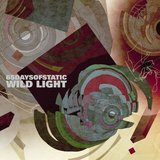
I was smitten by 65DOS when I first heard The Fall of Math many years ago. A joyous cacophony of jagged beats, storming riffs and crashing walls of layered sounds that were simply astonishing.
Anyone who has heard ‘Retreat Retreat’ from that album will know what I mean.
Even back then, I always thought there was a cinematic quality to their epically conceived mini-meisterwerks. The only nagging thought was how they would develop this sound over the next few years.
Well, hear we are, several years later with a beautifully constructed and totally cinematic collection of tracks that are, frankly, brilliant.
Art and media students must be salivating at the prospect of putting images to this music and I wouldn’t be surprised if many of these tracks end up as backing music to television photo montages or as the backdrop to moody, gritty northern European detective series’.
I see city lights, rain, romantic liasons in doorways and dramatic edgy moments of violence. But I also see mountain vistas, euphoric ascents, stormy skies and sunbursts ……
This album is like a huge slab of urban edgy artistry taking on the Icelandic beauty of Sigur Ros and slaying it with slabs of guitar-laden, techno-filled post-apocalyptic grandeur.
The opening track ‘Heat Death Infinity Splinter’ starts proceedings in stately style with a glorious swathe of keyboards swirling around a steady beat, with that typical electro-tinge so typical of 65DOS. As the track builds there are clues to the band’s past – clicks, whirrs, that amazing metallic beat tone they get – and then, and then …… the release !! The release that lets it all out and we finish before we know what has happened. Immense.
‘Prisms’ has already been doing the rounds with a stunning video clip and this track reminds me of a gritty, cellar-based version of something Craig Armstrong might have been involved with had he taken something during recording of his outstanding ‘The Space Between Us’. The track is driven along by an ace beat, that breaks up, distorts and brings it all back together again for a belting finale of pulsating electro-synth rock.
‘The Undertow’ , as it’s title suggests, is a gentler track and allows us some breathing space as a gentle piano motif soothes us, but before long we are lifted, arms raised, yet again by a stunning crescendo to a sea of feedback, crackling fires, echoes and …silence.
I’m a big fan of dramatic, instrumental music as it can fit so many scenarios – there are no lyrics to fix a story or suggest a mood, Instead, your mood is created by when and how you are listening and this can change with every play.
For example, ‘Blackspots’ has me one minute in mind of bowling along the motorway at 90mph, in the style of Kraftwerk, then the next minute it brings to mind a city back-alley with rain lashing down, blood seeping into the gutter from a slain body ….
This album builds and builds, as if somehow during recording, the inspiration just kept on coming. ‘Sleepwalk City’ does the impossible and raises the bar higher yet again with a driving, urgent, city-beat with a vaguely New Order feel but awash with layers of huge keyboards and the undercurrent of crunchy techno-sounds.
‘Taipei’ begins with less techo-trickery and we have a lovely piano led introduction with jangly guitars that uplift and entrance with that typical surge of optimism until we have a huge swell of amazing sound that bursts out of the speakers and overwhelms all who may be in its aural path – although this is almost in standard post-rock territory with the build up and release, it is so well done and just so typically 65DOS it is breathtaking.
There is a real sense this album is soaring into a place where it will be difficult to come down from.
The penultimate track, ‘Unmake the Wild Light’ snakes into life with a sinuous bass pattern that sets a marvellous platform for the intricacies laid upon it – strings, guitars, synths, keyboards moving with a simple chord progression to lift, inspire and take us on some epic journey for which the destination is never known. As the track builds, the beat drives, and the wave of crashing sound becomes almost unbearable we are thankfully released from the tension and allowed to breathe again ….
…but only for a moment, as we head towards ‘Safe Passage’.
A fitting title for a closing track to an epic album. It is as though we have made it safely through the emotionally uplifting journey, not caved in to its majesty and not cowered at the questions it asks of us. It has become our friend and is one we can now trust.
‘Safe Passage’ finishes off a truly epic piece of work in a style worthy of some of the best pieces of instrumental music I have heard for a long while.
Cinematic, emotional, uplifting, coruscating, life-affirming.
Essential
 Progarchy