Warmth, Wit & Fabulous Music: An Evening With Andy Tillison

Regular readers will know that The Tangent’s Andy Tillison is a firm favourite with many of the contributors to this site, myself included. You’ll not be surprised, therefore, to see some words from me about his most recent live outing – a special “Evening with…” show last Saturday at Wesley Hall in Crookes, just on the outskirts of Sheffield.

Wesley Hall is part of a Methodist church and not the most obvious location for a prog gig – until you learn that the minister there is none other than music-loving Progarchy contributor John Simms! Anyway, it’s a charming place and in many respects a good venue for an intimate show like this one – although I’ll admit the hill-top setting made me feel somewhat foolish for deciding to walk up from the city centre.

When I arrived, just a little bit sweaty and out of breath from the climb, a handful of people were standing outside, chatting amiably with Andy himself and his partner Sally. This relaxed and friendly atmosphere pretty much set the tone for the rest of the evening. There was no particular hurry to start and an understandable willingness to wait until fellow Progarchist Alison Henderson and partner Martin had managed to find something to eat, given the very lengthy drive they had undertaken to be there. Eventually, we made our way into the hall and found seats, and soon enough, when all had been fed and watered, the show began.

IMG_20150620_201253

Andy had admitted beforehand to a certain degree of nervousness about this, his first proper solo gig, but it really didn’t show as he ran through an almost bewilderingly diverse repertoire, mixing classics from The Tangent and Po90 with an unexpected rendition of Rory Gallagher’s Bullfrog Blues and a hilarious Berlin School-inspired homage to classic UK kids TV show The Clangers – incorporating the theme from Vangelis’ Chariots Of Fire, no less! As if that weren’t already enough, we also enjoyed the incongruity of seeing a drum solo played on a keyboard and heard a raw, powerful performance of In Earnest preceding a jazzed-up version of The Commodores’ Three Times a Lady. Threaded through this intoxicating mixture were the anecdotes and dry self-deprecating wit of the man himself. A case in point would be the delightful tale of how GPS Culture‘s leitmotif was constructed by splicing the theme tune of soap opera East Enders onto the jingle from a PC World TV advert!

Thank you, Andy and Sally, for a joyous evening that will live long in the memory. And thank you, John, for hosting it!

Metal Mondays: The Darkness, “Last of Our Kind”

Here’s the title track from the new album out this year from The Darkness, “Last of Our Kind”…

It’s pretty darn great, and the whole album’s not too bad as well…

Check out the guitar solo starting at 2:34, which is very tasteful and nicely paced with a little bit of flash sprinkled in at just the right moments (like around the 3:00 mark)…

Of course, the track’s secret weapon is that nifty falsetto vocal work…

Advent News: August 2015 Release

a3483105424_16

***

For those of you who love Chestertonian Prog as much as I do, we don’t have to wait much longer.   I just received a very kind and interesting email from Mark Ptak of the prog band, Advent.

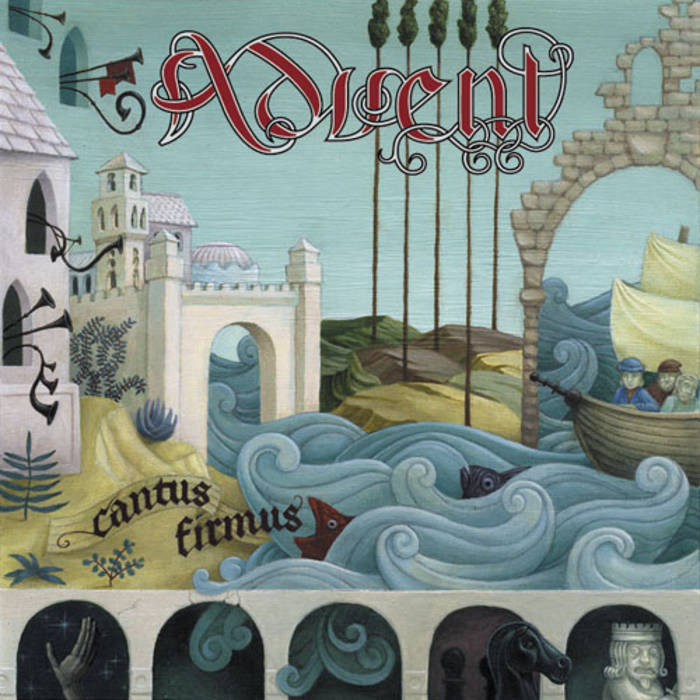
I just wanted to make you aware that (after what seems like an eternity, I know – especially for us, with all the various unavoidable delays) we’ll finally be finishing mixing this weekend (woo-hoo!) and entering the mastering stages of Advent’s new release, “Silent Sentinel,” hopefully starting next week, I believe, with Bob Katz over at Digital Domain in Florida. (http://www.digido.com/) Bob is one of the most sought after mastering engineers out there, and we’re very pleased to have the fruits of our laborious efforts in his capable hands again. Cover artwork will be done once more by the extremely talented artist, Michael Phipps, who previously did “Cantus Firmus” for us. We’re looking to have the album ready for purchase by August, so please feel free pass the word around that the album will soon be made available. I’ll have more details in the not too distant future, but for now, thanks, and be prepared for one helluva musical ride when this thing is released – as there’s almost a double album’s worth of material coming at ya! Talk again soon…

Best,
Mark

Nothing to make a June day even better.  Very excited about this.  To order the first album, Cantus Firmus, please click here.

Metal Mondays: Revisiting Dream Theater’s “Black Clouds and Silver Linings”

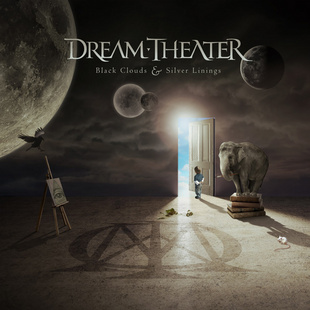
04blackcloudsAs Dream Theater celebrates its 30th anniversary this year, it seems only fitting to take an in depth look at some of their music. 2009’s Black Clouds and Silver Linings marks a huge turing point for the reigning kings of progressive metal, for it was Mike Portnoy’s last album with the band. It is clear that no one knew that at the time of recording, not even Mike, because this album finds the band at the height of their technical ability and creativity. In fact, this album was probably their best output since 1999’s Metropolis Pt. 2 Scenes From a Memory, which is one of the greatest albums of all time.

For all those that complain that Dream Theater “lacks soul” or “sucks,” I have a question for you: have you listened to Black Clouds and Silver Linings? I mean actually listened to it, and not just once, because this album has more “soul” than a gospel singer at a revival meeting! It also has enough head banging, window shattering, old-people enraging heavy metal to please even the most obsessive of metal enthusiasts. It has enough prog to fascinate the proggiest of prog fans. It has enough heart wrenching lyrics and moving solos to make a man weep, as I’m sure it did to those who wrote them.

Interestingly, the first time I listened to this album, I didn’t think all that much of it, apart from “The Count of Tuscany.” The whole thing seemed too overly loud and inaccessible. However, I soon became hooked by “Wither,” and then by the moving “The Best of Times.” Soon, I gave the whole album repeated, thorough, listens, and it was like a revelation! I finally realized this album for the brilliance that it is, and it is one that I now regularly return to.

The album gets off to a rather dark start, with the 16 minute long “A Nightmare to Remember,” a story about someone getting into a horrible car accident during a bad thunderstorm. The story ends well enough, with the band revealing that “its a miracle he lived; its a blessing no one died.” Supposedly, this song, which was written by guitarist John Petrucci, is based upon a childhood experience. Nevertheless, it sets the album with a dark tone, which only makes sense considering the circumstances. Mike Portnoy’s father was dying of cancer during the process of making the album. Mike wrote “The Best of Times” as a tribute to his Dad before he passed away. The band has never performed this song live, because it was too painful for Mike to play after his father passed. The song features what is arguably John Petrucci’s best guitar solo. Long, epic, and soaring, it is everything a rock fan could want in a guitar solo. It is like David Gilmour’s “Comfortably Numb” solo on steroids. He combines his technical shredding capability with the soul of the late, great BB King. It is awe inspiring to listen to. Petrucci also thrills the listener with a quiet, moving acoustic guitar piece at the beginning of the 13 minute song.

The entirety of the album contains the best elements from all of Dream Theater’s previous albums. The album contains conceptual pieces, driving metal songs, and heartfelt rock ballads, something Dream Theater is incredibly gifted at crafting, albeit underrated. “Wither,” is the shortest song on the album, at 5:26. It is a ballad written by Petrucci about his personal process of songwriting. “A Rite of Passage” is, strangely enough, about freemasonry, and “The Shattered Fortress” completes Mike Portnoy’s twelve-step suite spread across several albums. The twelve-step suite is about Portnoy’s earlier struggles with alcoholism, and it references Alcoholics Anonymous’ twelve-step program. The songs in the suite are: “The Glass Prison,” “This Dying Soul,” “The Root of All Evil,” “Repentance,” and “The Shattered Fortress.” In their entirety, all the songs were originally supposed to create a single concept album across multiple albums.

When listening to the album, “The Best of Times” seems like the natural end of the record. However, as soon as that song ends, Dream Theater blows us away with the nearly 20 minute long “The Count of Tuscany.” This song is like Rush’s 2112, in that it is both brilliant, conceptual, and around 20 minutes long. While the concept is nothing like 2112, and it didn’t have nearly as great an effect on Dream Theater’s career (at that point, DT were firmly established, while it can be argued that 2112 was a make-or-break album for Rush), it contains many similar elements of musicality. The song is supposedly about an actual encounter Petrucci had while visiting Tuscany, in Italy. I won’t make an effort to describe the song, because I would never be able to do it justice. All I can say is, it is brilliant.

Black Clouds and Silver Linings finds Dream Theater at their musical best. They perfectly balanced their heaviness with their technical skill. At many points in the album, the band utilizes the jazz staple of members performing individual instrumental solos before passing the solo off to someone else. It is almost as if they are playing live on the album. The band shows off their thundering bass, outstanding drum work, blistering guitars, and wizardly keyboards, and it is a thrill to listen to. Portnoy’s drums are just so good that words cannot describe them. It doesn’t seem humanly possible that he can be doing so much at one time, but he does it! Outstanding.

James LaBrie’s vocals are good, with some points stronger than others. His voice is definitely better on their 2013 album, Dream Theater. It is remarkable how long it has taken for his voice to completely heal from that incident in the 90s. He stated during their last tour that his voice feels better than it has ever felt, and it showed on their last album. On Black Clouds and Silver Linings, there are points where he chooses to sing in a more violent manner, rather than his more natural high notes. That can likely be attributed to the heavier nature of the music, along with his lack of confidence in his voice at that point. Never fear, though, because it doesn’t detract from the album at all. If anything, it simply adds to the heaviness of the music. I must add that Portnoy and Petrucci offer excellent backing vocals to the album. They are probably more involved vocally than on any other album.

Black Clouds and Silver Linings sadly marks the end of the Portnoy Dream Theater era, but he went out in style. The album finds the band on a musical high note. They created one of the best records of their career, demonstrating the maturity of their musicianship and the creativity of their songwriting. It is a long album, but it never drags on. Everything is just as it should be, and the hidden nods to Rush throughout the album are a treat for the careful listener. This album demands repeated listens, and it demands them loudly.

Rock on, Progarchy, and enjoy your metal Monday.

A Tears for Fears Book Proposal (Withdrawn)

As it turns out, I had to withdraw this (as I’d written two, and the press only accepts one submission at a time), but I was pretty happy with it.  I hope to expand it and try it elsewhere.

***

Bradley J. Birzer

progarchy.com

6 West Montgomery

Hillsdale MI 49242

progarchy@gmail.com

Dear 333Sound,

Please consider this a formal submission for your series, 33 1/3.  My proposal: a 30,000 word book, SONGS FROM THE BIG CHAIR, examining every aspect of this 1985 Tears for Fears album.  In many ways, it is THE album of the MTV generation and certainly one of the best albums of its decade.

It is also, interestingly enough, hard to categorize in terms of genres.  It clearly comes out of the Beach Boys/Beatles tradition of symphonic pop, but it also contains elements of theater, electronica, and progressive rock.

Part of the album’s charm, though, is not merely that it came out in the exact middle of the decade, but that it’s very intelligent—in terms of music and lyrics.  It captured, I think, the spirit of an entire generation: the John Hughes generation.

Biography

I am attaching a full C.V.  I’m 47, a full professor of history, author of five biographies, and founder of the music website, progarchy.com.

Projected Table of Contents

Introduction

A brief introduction to the themes of the book, outlining it, and offering some personal thoughts on why TFF and SONGS FROM THE BIG CHAIR matter.  I would also include a background to the album—that is a kind of “life and times,” a context.  In this, I will discuss the vital themes of the 1980s: its politics; the Cold War; the rebellion of the John Hughes generation; MTV; etc.

Chapter 1: Tears for Fears

This chapter would ask and answer the following questions.

Who are Roland Orzabal and Curt Smith?  What was their purpose?  What did they hope to accomplish?  Why were they so interested in psychology and angst?  What were their thoughts on religion, politics, culture, life?

Chapter 2: Ruling the World

Please see my sample writing piece (below) for a guide for this chapter.  In it, I will look, in depth, at the lyrics and music of SONGS FROM THE BIG CHAIR, Side 1.  I will especially focus on the recording process.  Though the two biggest hits from the album, “Shout” and “Everybody Wants to Rule the World” appear on this side, the other two songs are critical to the success of the side and the album, providing exactly the perfect atmosphere for the entire song cycle to work.

Chapter 3:  I Believe

The sequel to chapter two, chapter three will look at the music and lyrics of side two.  Again, please see the sample writing at the end of this proposal for a guide to this chapter.  This side, unlike the first side, is a complete story.  It begins with doubt, but it ends with resignation, acceptance, and, maybe, hope.

Chapter 4: Pharoahs

As with many bands of the 1980s, Tears for Fears wrote and produced a number of songs that did not end up on the album.  These b-sides would almost certainly have been included in the era of CDs and downloads.  But, in 1985, there were still rather serious restrictions on what vinyl could hold.  The songs that TFF wrote that didn’t make the album are every bit as interesting as those that did.  The standouts are Pharoahs (a very experimental piece, anticipating much of the electronica of the early 1990s), The Big Chair, Empire Building, and Sea Song.  This is TFF at its most creative, experimenting with every kind of genre.  In this chapter, I will also look at the other musicians who helped make the album.

Chapter 5: Past and Future

For chapter five, I’d like to explore the context of the album in the broader scheme of music history.  This album clearly descends from PET SOUNDS by the Beach Boys and SGT. PEPPER’S by the Beatles as opposed to the blues tradition of the Rolling Stones and Led Zeppelin.  It also anticipates XTC’s SKYLARKING.  In essence, SONGS FROM THE BIG CHAIR is progressive pop.

Conclusion

A summation of why all of this matters, and what it tells us about the history of music, about the 1980s, and about ourselves.

A sample of writing 

(placed at the end of this proposal—a piece I wrote for progarchy.com)

Concise summary of book

Along with XTC, Kate Bush, and Peter Gabriel, Tears for Fears was the quintessential 1980s band/act for those who thought differently from the mainstream.  Their second album, SONGS FROM THE BIG CHAIR, became the anthem of an entire generation of Americans—those who came of age in the 1980s, watched the movies of John Hughes, suspected their elders might not be so wise, and wondered if the Cold War would go nuclear.  Combining elements of New Wave, electronica, jazz, theater, progressive rock, and Beatle’s-style pop, with a song cycle of intelligent lyrics and stories, SONGS FROM THE BIG CHAIR touched on the most important themes of the 1980s: power; honesty; integrity; love; confusion; and loss.

It is also one of the best-selling pop albums of all time, and remains just as relevant today as it did in 1985.

Competition

Amazingly enough, considering how many copies SONGS FROM THE BIG CHAIR has sold, there is no book specifically about it or Tears for Fears.  A solid piece of analysis, Mad World, does a nice job of explaining the appeal of New Wave.  This book, however, would be a help rather than a competitor.  Roland Orzabal has written an autobiographical novel, but, again, this will help rather than hinder a book on SONGS FROM THE BIG CHAIR.

Why me?

From a personal standpoint, I fell in love with SONGS FROM THE BIG CHAIR the day it arrived on the shelves of my local record store.  I’ve been playing it non-stop for thirty years, and I love it today as much as I did in 1985.  I have written five biographies and co-authored or edited two other books.  The biographies have especially done well—in terms of critical acclaim and sales.  I write weekly blogs for one major website (the site receives 150,000 reads/month), and I founded a popular website dedicated to music, progarchy.com.  I’m also quite active on/with social media.  I have a sizeable reading audience, overall, and I have connections with record companies, musicians, and publishers.  And, I’m obsessed with writing!  Hypergraphia.

Which 33 1/3 books?

I’m a fan of the series.  It reminds me very much of the types of books published in the interwar period—the books such as those in Essays in Order (ed. by Christopher Dawson) and in the Criterion Misc. Series (ed. by T.S. Eliot).  Short, intelligent, crisply-written books meant to be read in an evening or two.  Of the series itself, my favorite is ACTUNG BABY.  I think that the author does a perfect job of mixing his own ideas (theological as well as philosophical) and his own voice with the ideas and voice of Bono.

Audience

Any person who is nostalgic for the 1980s.  This means, of course, a whole slew of folks in their forties and fifties, each in the middle of her or his career and most with disposable income.  That Mercury has just released the definitive six-disk box set of SONGS FROM THE BIG CHAIR, overseen by master audiophile, Steven Wilson, will help as well.  But, also, anyone interested in good music—whether jazz, rock, or classical—will like the book.  My music website, progarchy.com, will promote this book as much as possible.  Progarchy.com has over 3,000 permanent subscribers, and we receive anywhere from an additional 500 to 8,000 reads per day.  Finally, Tears for Fears is about to release a new album, and this will add to the interest of SONGS FROM THE BIG CHAIR.

I also have an extensive background in public speaking and radio (some TV).  I will promote this book with a happy and professional intensity!

Date

I’m flexible.  I’m a fast writer (serious, though), and I could have this to you as early as January 1, 2016.  You set the date that’s best for you, and I will meet it.

Series

As mentioned above, I love the series.  I wish more publishers did this kind of series, and I would be deeply honored to be a part of it.

Sample writing

[N.B.  This is taken from a retrospective I wrote for progarchy.com.  It’s a bit more personal than I would make the book on SONGS FROM THE BIG CHAIR, but I think it will give you an idea of why I like the album as much as I do.  Also, it’s worth noting that PROG magazine (Issue 53; February 2015), used my piece as the basis of an article by Paul Lester, “How Prog Were Tears for Fears?”]


Title: About As Good as Pop Gets

As I finished my junior year of high school, Tears for Fears released its second album, the first to make it huge in the U.S., Songs from the Big Chair.

The first album, The Hurting, proved the sheer brilliance of Orzabal and Smith, but it also felt very, very, very, very (ok, I’ll stop–but, really, very) constricting.  As Orzabal and Smith released their primal screams and healed their own hurts, the listener entered into a sort of padded but rhythmic asylum for 41 minutes and 39 seconds.

Possibly the breath would simply disappear if that album went on 21 more seconds.  Imagine Andy Summers shouting “mother!” or Phil Collins begging for his “mama” but with serious prog sensibilities.  Well, you get The Hurting.

Enough.

In contrast, Songs from the Big Chair, though still thematically dealing with emotional and mental trauma, sends the listener into realms of openness and euphoria.  The entire album is full of possibilities, full of what might have beens–all of them good, a cornucopia of aural pleasures.  For the listener, Songs from the Big Chair is one huge intake of morning air in the Rocky Mountains.  This is pop at its purest, achieved, really, only by the Beatles and XTC.  Rarified.


Side one (yes, I’m old enough to remember sides).  Frankly, the two American hits, “Shout” and “Everybody Wants to Rule the World”, are the weakest tracks on the entire album.  But, that said, they’re still brilliant.  “Shout” is righteous pop, filled with a soaring guitar that might fit nicely on a Big Country album.  “Everybody Wants to Rule the World” is a clever dig at oppression and imperialism, dressed in a sunny tune.

Both of these songs played so often on radio and MTV in the mid 1980s in the United States that it’s impossible for me to avoid thinking about Apple Computer, Ronald Reagan, the Icelandic summit, or John Hughes when hearing even a few notes of either.

“The Working Hour,” track two, rings with jazz flourishes and an urgency lyrically and musically.  It begins with pure taste, as brass and keyboards gently dance around one another.  Though only one second shorter than “Shout”, the song has much more depth to it.  It’s Orzabal’s guitar work, however, that makes the song so beautiful.  That, and his voice–the depth and anguish of it all.  It all ends up being a song that never ages, never becomes tiresome.

Track four on side one, “Mother’s Talk,” has the percussive feel of much of The Hurting but without the claustrophobia.  Indeed, it feels far more Latin American and than it does European.  Or, perhaps, it has a bit of Peter Gabriel in it.  Whatever it is, it works wonderfully, a perfect way to end side one.  As with The Hurting, the lyrics are gut-wrenching and desperate, dealing with the fears of conformity and the inability to resist what is clearly dangerous in a community.  In the end, the weak person destroys not only his own soul but the very integrity of society as well.


Side Two, a dramatic tale from beginning to end.  Starting with ominous notes from a grand piano, Orzabal picks up lyrically from the previous album.  “I believe,” he cries in his best croon, an affirmation that the therapy expressed in The Hurting has accomplished something.  Well, at least that’s his hope. By the end of the song, however, Orzabal expresses nothing but doubt.  Who are you to think that you can shape a life?  No, too late.

The song slides perfectly into “Broken”–less than three-minutes long, but full of 80s production–with big and angry guitar, a relentlessly driving bass, and intricate keyboards.  “Between the searching and the need to work it out,” Orzabal laments, he deceived himself by believing all would be well.  Impossible.  “Broken.  We are broken.”Then, the haunting line: a moment only between being a child and being a man, seeing one’s life in continuity, all that is good and all that is wrong.  Tempus fugit.  A moment.

Back to full-blown, over the top, crooning pop: “Head over Heels.”  Sheesh, Orzabal explains, I just wanted to talk, to enjoy your company.  I didn’t realize this was going to get so deep, so quickly.  He then explains that his family desired so much of him and for him.  He.  Well, he just wanted some freedom to find his own path and his own creativity.  So hard to do.  “I’m on the line, one open mind.”

As the song fades out with a chorus of “la-la-la-la (repeat x20),” Orzabal’s voice twists and the album returns to “Broken,” ending, strangely, with a live audience cheering wildly.  As the audience’s applause dies down, swirling, psychedelic keyboard and hypnotic voices emerge.  Again, with the tasteful guitar of side one.  The final six minutes of the album seems like something that might have appeared on a pre-pop Simple Minds or a Tangerine Dream album.  Electronica not for dance, but for centering and psychic probing.

The lyrics to the final song, “Listen,” conclude nothing but add a certain mystery to the whole album.  Only a few lines repeat: Russia attempts to heal, while the pilgrims head to America.  Meanwhile, Orzabal chants his desire to soothe feelings and bring mercy.  Spanish voices cry in bewilderment.

The final noise of the album: percussion that sounds as though an ocean wave has overcome all.

*** 

For me, the album is the sound track to my senior year of high school.  My debate colleague and one of my life-long friends, Ron Strayer, and I listened to the album over and over again, adding the b-side “Pharaohs.”

Frankly, I think the overwhelming popularity of Tears for Fears in the 1980s and some of the pretentiousness of their lyrics has relegated them merely to 80’s status, locked in that decade as though a museum piece.  They deserve more applause and attention from those of us who love music.  I never particularly liked The Seeds of Love (1989), but I think Elemental (1993) and Raoul and the Kings of Spain (1995) are some of the most creatively crafted rock/pop albums ever made.

Though, the final Tears for Fears album, Everybody Loves a Happy Ending, could be an XTC-style Dukes of Stratosphere paean to the Beatles, it works.  It has some of the best pop written. . . well, since Abbey Road.  “Who Killed Tangerine?” especially has to be one of the most interesting pop songs of all time.

But, these are topics for other posts.  For now, enjoy a rediscovery of Songs from the Big Chair.

RochaNews: Earthside

EARTHSIDE, LOUDWIRE LAUNCH NEW SINGLE “MOB MENTALITY” FEATURING LAJON WITHERSPOON (SEVENDUST), MOSCOW STUDIO SYMPHONY ORCHESTRA

Debut album “A Dream in Static” to be released later this year

NEW HAVEN, Conn. – New Haven-based progressive ensemble, Earthside, has teamed up with Loudwire to launch a new track, “Mob Mentality,” the second song to be released from the band’s upcoming debut, A Dream in Static, due out later this year. The nearly 10-minute track features guest vocals from Sevendustfrontman, Lajon Witherspoon, and a full orchestral arrangement composed by guitarist Jamie van Dyck and performed by the Moscow Studio Symphony Orchestra (MSSO). Stream “Mob Mentality” exclusively at: http://loudwire.com/earthside-lajon-witherspoon-mob-mentality-exclusive-song-premiere/.

“‘Mob Mentality’ was a four-year undertaking that became an epic journey that took us all over the world,” van Dyck told Loudwire. “It connected us with all sorts of collaborators and new friends. The song began as my senior composition to complete the undergrad music major at Yale, and has since led my bandmates and me to record the Earthside tracks in Stockholm, the Moscow Studio Symphony Orchestra in Russia, and Lajon’s vocals in Iowa with 3 Years Hollow vocalist Jose Urquiza at the helm engineering the vocals session and performing some of the backing vocals on the song.

“Working with LJ and composing for a full orchestra are each lifelong dreams that have been fulfilled, and I’m very grateful to the contributions from them, my bandmates, and so many others who allowed for such a stupidly ambitious vision to actually be realized.”

For further insight on “Mob Mentality,” the band has released two teaser videos discussing the “Mob Mentality” recording process and inspiration on YouTube here: https://www.youtube.com/watch?v=zHpxsYs-YUw and here: https://www.youtube.com/watch?v=8hdI6aHHB7I.

An inherently collaborative cross-continental project, A Dream in Static was recorded in Stockholm, Sweden under the watch of renowned producer and mix engineer, David Castillo (OpethKatatoniaBloodbath), and additional mix and mastering engineer, Jens Bogren (OpethSoilworkThe OceanDevin Townsend).

van Dyck further elaborated on the album recording process: “New surroundings and collaboration are two of the best catalysts for inspiring creative energy. Living in Stockholm and recording with David Castillo was the opportunity of a lifetime for us. We were immersed in such a vibrant musical space and passionate group of people that ultimately made this record what it is. That inclusive spirit in working with David and the guest musicians on the record brought out that energy in each of us.”

Through organic layers of living, breathing orchestra (courtesy of the Moscow Studio Symphony Orchestra), and an eclectic arsenal of world music-influenced instrumentation, Earthside fashions an ever-changing sound that is equally engrossing alongside a work of cinematic art as it is resonating throughout a densely packed concert venue.

A Dream in Static, the group’s conceptual mission statement, is a story of purposeful sacrifice and existential yearning told across sweeping instrumental movements, interwoven with adventurous vocal compositions featuring premier voices from across the rock and metal worlds.

“Our music aims to evoke the full range of human emotions,” van Dyck added. “Having those emotions and themes expressed more directly through the voices of some of our favorite singers and musicians was an unbelievable experience and something we cannot wait to share with everyone.”

The first single, “The Closest I’ve Come,” can be streamed on YouTube at: http://youtu.be/AL_v5U2AeIs.

A teaser video for the album can be seen on YouTube at: https://www.youtube.com/watch?v=wG5rMe3KTV4.

Live dates and additional album details will be announced shortly. Stay tuned for more information.

-###-
Earthside online…

http://earthsideband.com/

https://www.facebook.com/EarthsideMusic


Earthside is…


Jamie van Dyck – Guitar
Frank Sacramone – Keyboards
Ben Shanbrom – Drums
Ryan Griffin – Bass

RochaNews: The Receiver

THE RECEIVER, ALLMUSIC.COM STREAM UPCOMING ALBUM “ALL BURN”

Kscope debut “All Burn” out June 23

COLUMBUS, Ohio – Midwest symphonic dream-prog duo, The Receiver, has teamed up with AllMusic.com to stream the band’s forthcoming album, All Burn, before it hits stores next week via Kscope. Stream All Burnexclusively at: http://www.allmusic.com/blog/post/album-premiere-the-receiver/.

The band commented: “This is our first self-produced album, and we’re very excited to share it. We’ve aimed for a dreamy, lofty aesthetic, rich in synthesizer textures, with songs that flow nicely as a cohesive album, but are also able to stand on their own. We’ve drawn inspiration from classic progressive rock (Pink Floyd, Yes) as well as current alternative acts (Blonde Redhead, Mew, Radiohead). Lyrically, we’ve tried to be honest with content that focuses on the peaks and valleys of relationship, and the aftermath. We hope our fans and new listeners will find something here that resonates with them.”

All Burn can be pre-ordered now digitally at: http://smarturl.it/TR_AllBurn_Download and physically through the Kscope web-store at: www.kscopemusic.com/store.

Comprised of brothers Casey (vocals, synths/keyboards, bass) and Jesse Cooper (drums & vocals), the siblings call All Burn their “best material to date which focuses on a dreamier aesthetic than our earlier work.”

All Burn is also the first self-produced Receiver album, with mixing handled by Danny Kalb (Beck, Ben Harper, Foster the People, Karen O) and mastering by Brian Lucey (Sigur Ros, The Shins, The Black Keys, Arctic Monkeys).

1. Drift

2. Transit

3. To Battle an Island

4. Collector

5. Dark Matter

6. April Blades

7. The Summit

8. Let It Dry

9. All Burn

10. How to be Young

11. These Days

Formed in 2005 at The Ohio State University, The Receiver released its debut album, Decades, in 2006 on the New York-based, Stunning Models On Display Records. The duo returned with the sophomore offering, Length of Arms, in 2009 through Vital Music Records.

The Receiver is an incredibly active touring partnership, having played throughout North America and sharing the stage with notable acts such as St. Vincent, Midlake, The Album Leaf, Mono, Dawes, Royal Canoe, Maserati, Telefon Tel Aviv, Mr. Gnome and Operators to name a few, as well as performing at 2014’s CMJ Festival in New York.

The brothers have been featured on MTV2’s “Bands on The Rise,” and have songs included on the FX Network’s series, Dirt, as well as a number of independent shorts and films.

Stay tuned for more information on The Receiver and All Burn, out next week on Kscope.

-###-
The Receiver is…

Casey Cooper – vocals, synths/keyboards, bass

Jesse Cooper – drums, vocals

The Receiver online…

www.thereceivermusic.com

http://www.facebook.com/thereceiver

Compilation of Praise – Tears for Fears Denver, CO 2015

IBCE's avatarTears for Fears Travel Fans

The amazing Terri Nunn of Berlin snags a photo w/the Good Sir Orzabal backstage. The amazing Terri Nunn of Berlin snags a photo w/the Good Sir Orzabal backstage. We’ve been sharing the thoughts of many different writers and fans of Tears For Fears these past 3 days. Below is a short compilation of thoughts and images on the “Kool Koncert” featuring Berlin plus The B52s and Tears for Fears. The latter being two bands that we have had the pleasure of following closely for many years (especially now). As mentioned,  AA now lives not too far from Cindy of the B52s and it’s just exciting to see them and be near. Several fans from the East Coast (NYC, NC, Atlanta, etc) attended this show and boy oh boy were fans overwhelmed at how animated, beautiful and overall outstanding the band performed. Special attention was paid to Curt and Roland’s liveliness on stage as well as Roland’s dancing around. Fans uploaded many videos from various…

View original post 98 more words

Covers From Our Two NEW 33 1/3s out September!

333sound's avatar333sound

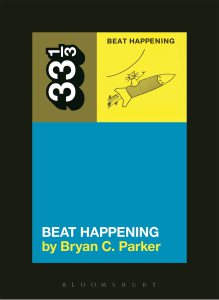
In September, we will be publishing two BRAND NEW 33 1/3s: Bryan C. Parker’s book on Beat Happeningand David Masciotra’s book on Metallica(The Black Album)! September is so far away, but console yourselves with a look at these two beautiful covers. What will it be in the ultimate battle of K Records v. Elektra? 

Just kidding. You’re all obviously reading both.

Happy Wednesday!

71N0a2CA5lL

This is the album that sent a shockwave of empowerment through the nation’s cultural underground. In 1985, Olympia, Washington band Beat Happening released their eponymous debut of lo-fi pop songs on K Records and challenged every conception held about music. At the center of the group was the enigmatic Calvin Johnson and his revolutionary vision of artistic creation. His foresight and industriousness allowed him to recruit to the K Records roster other free-spirited artists like Beck, Modest Mouse, and Built to Spill long before they gained widespread acclaim.

View original post 339 more words