Start your day right and make this blazing little instrumental the overture to your entire week.
It has one of those dazzling, unexpected moments of supreme metal transcendence when, after a perfectly executed build-up has established the preparatory musical foundation, the guitar comes sailing in majestically at 2:17 and plays a mellifluous, face-melting solo until 2:44.
This is one of my favorite guitar solos ever. It’s so perfectly thrilling, it just doesn’t get any better than this in the world of inspiring power prog metal. Glorious!
There are many inspiring performers who play prog for fun and for a living, but very few can tug at the heartstrings the way that Christina Booth can. Possessor of one of the most beautiful voices in or out of prog, Christina will be back in action again with Magenta on Saturday 27 June at the Borderline in London and on Sunday 28 June at the Robin 2 in Bilston.
Joining Christina and the band for both dates will be Big Big Train’s David Longdon so it is safe to say that one of the highlights of the evening will be their rendition of Steve Hackett’s classic Spectral Mornings, four versions, two with voices, which were released on an EP in April to raise money for the Parkinson’s Society UK. Lyrics for this extraordinary reading of the song were also written by Longdon.
However, it was Magenta’s main man Rob Reed who put forward the idea of revisiting the song which first appeared in 1979 on the immaculate eponymous album, Hackett’s third solo outing with the great man himself endorsing the project by contributing some mind-melting guitar.
To hear Christina and David sing together was something implicitly transcendental as here, we have two of prog’s most distinctive, impeccable voices coming together and blending so perfectly. The live performances going to be one of the musical highlights of the year.
Here’s the video in case you missed it. https://www.youtube.com/watch?v=U49cwM7b1Wk
Music is powerful. C.S. Lewis wrote: “The books or the music in which we thought the beauty was located will betray us if we trust to them; it was not in them, it only came through them, and what came through them was longing. These things—the beauty, the memory of our own past—are good images of what we really desire; but if they are mistaken for the thing itself they turn into dumb idols, breaking the hearts of their worshippers. For they are not the thing itself; they are only the scent of a flower we have not found, the echo of a tune we have not heard, news from a country we have never yet visited.” [The Weight ofGlory]
Music is transcendent and truly exists only among man (whales, wolves, and birds notwithstanding.) who use music to imitate and re-create the ontological, above and beyond the emotions of pain, loss, or even temporary contentment.
As much as I/we may like and enjoy rock and pop music (I do love the Ramones, Beach Boys, and Abba. to name but a few) the true worth of progressive rock music, “prog,” is that it not only frustrates the mere commercial designs of FM station managers and music directors (3-minute bites and bottom line revenues $) but that its subject matter soars above cars, girls, booze, and rebellion.
The greatest prog bands and performers have always opened the listener to challenging vistas of speculative fiction, socio-economic dynamics, and the very heart of man itself—sin and redemption; self-sacrifice and self-reflection; and grace. Whether it’s RUSH with 2112, DREAM THEATRE with Scenes from a Memory, or MARILLION’s Brave, the best of progressive lyrics and engaging musical composition, always enrich, and makes one more human than just about any other genre of current musical fare.
And as much as I love science fiction concept albums or cosmic themed instrumental tone-pieces, there is one theme that touches something very deep inside all of us—the stories of our homes, families, neighborhoods, towns and shires. The idea of place is both nominal and real. We all come from some place and we all want to go back to those special places of the heart—our past and our future—that bring reunion and safe haven.
There are some seminal bands that have addressed these topics of land and earth, i.e.PLACE, and its inextricable connection, at least hitherto, with the wandering and prodigal pilgrims of the age of impermanence. JETHRO TULL gave us the criminally underrated Heavy Horses (and other classics on most of their discography) and Ray Davies & The KINKS produced the greatest of the 1960s musical manifestos to agrarian worth and the encroachments of modernity for modernity’s sake with The Kinks Are The Village Preservation Society. Some of early GENESIS also taps into the vanishing pastoral Britain (parts of Selling England & Wind and Wuthering might be examples). BARCLAY JAMES HARVEST also explored these themes in their 1970s and 80s recordings. John Lees specifically addresses his own background of growing up in Manchester in his 2013 album North.
It doesn’t matter whether one grew up in East London, Birmingham, Bournemouth, Glasgow (Al Stewart’s 45 year career is sprinkled with nods to not just his love for “general” history but to his own roots), Dublin (Horslips) or Topeka, Kansas (Kerry Livgren’s career with and without KANSAS bespeaks a loving and nostalgic nod to his home town and state).
All of the above is my way of saying that progressive music has found its penultimate, if not ultimate, purveyor of music of “place” with BIG BIG TRAIN.
I just listened to my copy of Wassail (which finally arrived from amazon.com) and in a heightened state of “enthused” tranquility wanted to pen a review that wasn’t a review. Nobody can say it any better than Brad Birzer did in his own superb review a few days ago right here ( https://progarchy.com/2015/06/05/a-good-little-truth-bbts-wassail/ ) but I wanted to share just WHY BBT touches so many of us.
The best music, like the best literature, art, and food is not abstract, ethereal, and free-floating in the aether. BIG BIG TRAIN grounds their brilliant songs in their own mother Muse of England; not England of the silver-screen or modern television, but England of the docks, quarries, factories, row houses, back alleys, family tables, and gravesides. BIG BIG TRAIN is the soundtrack to contemplating the “higher things.” Though Wassail is only a four song ep it continues their passage through the seas of brilliance to the Grey Havens of musical Proghalla.
And as much as I love hearing Joey singing “Beat on the Brat,” BIG BIG TRAIN elevates us all in ways that Southern Agrarians, British dock workers, West Virginia coal miners, and families of faith not only understand, but believe in their souls. While BBT writes the truth that the hymnist penned in the words “change and decay in all around I see…” they also place us at the family table of peace and community.
Most proggers regard side two of Hounds of Love as Kate Bush’s greatest work. I love it as well, and I have since I first heard it thirty years ago this coming autumn. Who wouldn’t be moved by the invocation of Tennyson’s Ninth Wave, by Kate as an ice witch, and by the observation of it all from orbit? The entire album, but especially side two, is a thing of beauty.
A vision of the Natural Law itself: Kate Bush, ca. 2005
Equally gorgeous to me, though, is Bush’s 2005 album, Aerial, and, in particular, side two, “An Endless Sky of Honey.”
No one, no one is here
No one, no one is here
We stand in the Atlantic
We become panoramic
The stars are caught in our hair
The stars are on our fingers
A veil of diamond dust
Just reach up and touch it
The sky’s above our heads
The sea’s around our legs
In milky, silky water
We swim further and further
–Kate Bush, “Nocturn”
Indeed, let me blunt, it’s not only my favorite Bush song, it’s probably one of my top ten songs of all time. All 42 minutes of it—an examination of the beauties and creativities in one twenty-four hour period.
Birdsong.
The song is without a flaw, to be sure, and it’s the interplay of Bush’s ethereal vocals, the adventuresome grand piano, and the tasteful upright bass that makes this song such a gem even with nothing more than a superficial listen. The drumming, too, does much for the music. It’s not varied, it’s consistent in a Lee Harris fashion. In it’s consistency, it allows every other instrument to swirl in a varied menagerie.
But, even more than this, it’s Bush’s use of birdsong that makes this song nothing less than precious in the history of music. If music at its highest reflects the turning of the spheres, as Plato believed, then Bush has mimicked nature with perfection. It’s as though Bush embraced the Natural Law in all of its mysterious rhythms and held the entire delicate thing in a shaft of sunlight, that moment when the twilight sun peers into stained glass revealing not just the spectrum and the mote of light, but the unpredictable oceanic dance of freed dust particles.
Not atypical for prog epics, Bush broke the song in multiple parts: Prelude; Prologue; An Architect’s Dream; The Painter’s Link; Sunset; Aerial Tal; Somewhere in Between; Nocturn; and Aerial. Again, not atypically, there exist no moments of silence between the parts, each part lushly flowing into what follows.
Whose shadow, long and low
Is slipping out of wet clothes?
And changes into the most beautiful iridescent blue
Who knows who wrote that song of Summer
That blackbirds sing at dusk
This is a song of color
Where sands sing in crimson, red and rust
Then climb into bed and turn to dust
Every sleepy light must say goodbye
To the day before it dies
In a sea of honey, a sky of honey
Keep us close to your heart
So if the skies turn dark
We may live on in comets and stars
Who knows who wrote that song of Summer
That blackbirds sing at dusk
This is a song of color
Where sands sing in crimson, red and rust
Then climb into bed and turn to dust
–Kate Bush, “Sunset”
If side two of Hounds of Love, “The Ninth Wave,” reached deeply into Celtic myth, disk two of Aerial, an “Endless Sky of Honey,” reifies the thoughts of Aristotle, Cicero, Thomas Aquinas, and Thomas More, calling upon the rigorous reflection of creation itself.
Nature makes nothing in vain, but only grace perfects nature.
Last night, as I was getting ever closer to sleep, I decided to check out the website for Rocket 88 Books.
I’ve been reading and throughly enjoying their book on the history of Dream Theater, LIFTING SHADOWS.
Lo and behold, what did I find on the website? That Rocket 88 will soon be releasing a paperback version of the 2012 coffee-table book, THE SPIRIT OF TALK TALK.
For those of you who know me, you know how much I adore Talk Talk. But, even with my normal lack of frugality and my love of the band, I just couldn’t bring myself to pay the price that was being asked for that hardback–no matter how beautiful–three years ago.
And yet, here it is.
So, of course, I ordered it. Immediately. Here’s the response I awoke to from the press:
Hello Bradley,
Congratulations, you were the first person to pre-order the new paperback edition of the Spirit of Talk Talk book! And before we have even told anyone it is avalable, impressive work
The email that was sent to you to confirm the order bounced back though, that address you gave us was bradletbirzer@xxxxxxx.com
We have taken a high level executive decision and reckon it should have been bradleybirzer@xxxxxx.com and have updated it.
We can also confirm we have your order, reference number: xxxx.
We will keep you updated along the way on progress we can tell you that books are planned to be in the UK in October but will take a little longer to get to our warehouse in the US, so you should expect to have your book in November.
It sounds like you’re very, very good at executive decisions.
Yes, bradleybirzer@xxxxxx.com is correct. I can only blame large, clumsy fingers on my typo. I don’t want to badmouth my fingers too much, though, as they’ve served me well in handshakes, eating, opening doors, etc.
I just happened to be on the Rocket 88 website and saw the new books. Great press, by the way. I’m just finishing up the LIFTING SHADOWS about Dream Theater.
Again, thanks for taking the time to clarify. No worries on October or November. Either way, I’ll be happy.
Yours, Brad
And, finally, their response to my response to their response:
Ha! Yep keep those fingers handy.
Thanks for your kind words and great to hear you’re also enjoying Lifting Shadows. We have a couple more titles coming in that area too which may interest you as we are presently working feverishly to finish books from Devin Townsend and from Opeth.
Ok, so I know that I wasted some poor person’s time. But, you know what? They now have my total loyalty. If every one in the world brought this kind of excellence and humor to what ever it is they do, we’d have a pretty great world.
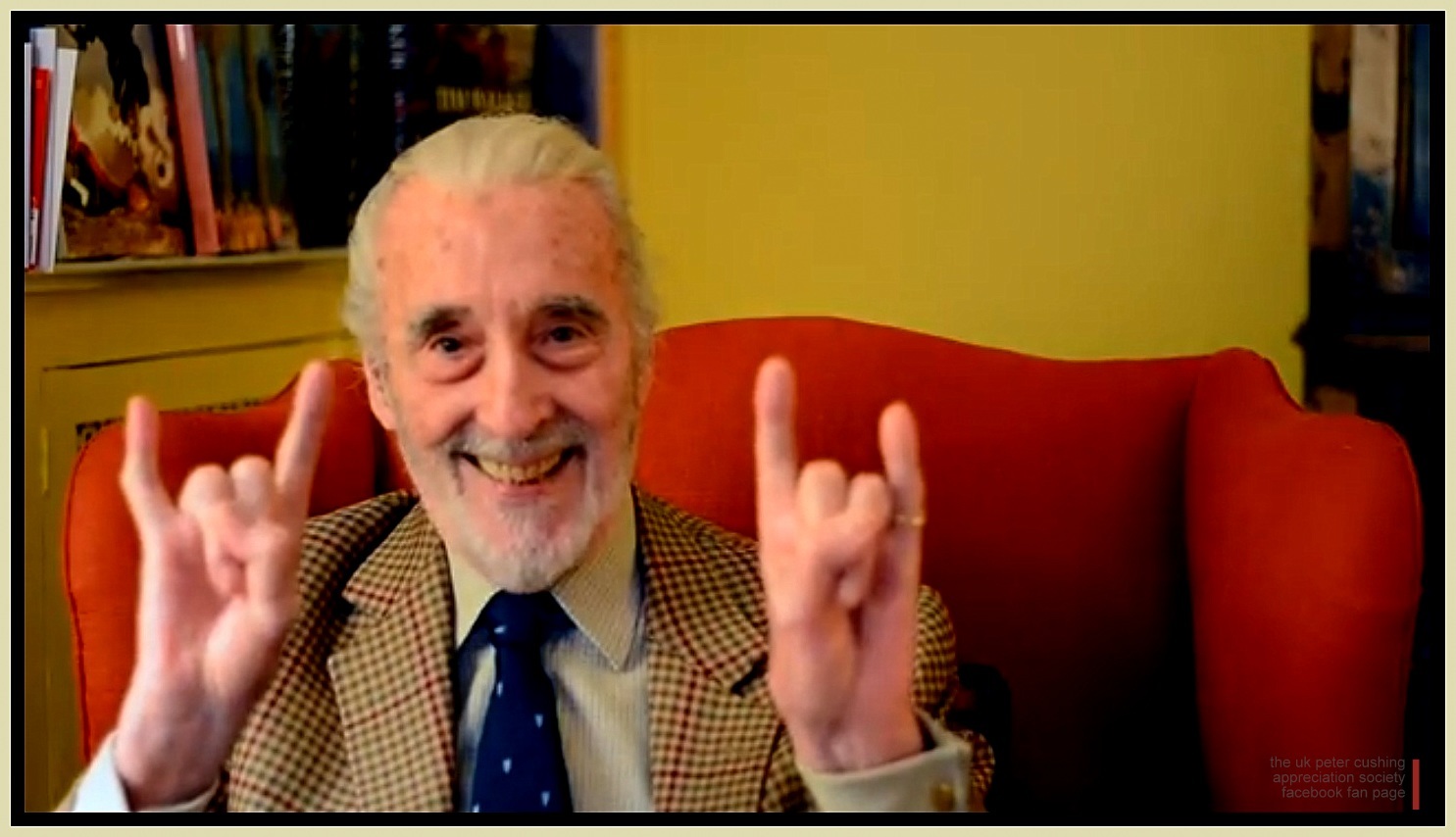
Sir Christopher Lee, the renowned British actor best known for playing Dracula in countless films, Francisco Scaramanga in the James Bond film The Man With the Golden Gun, and Saruman the White in TheLord of the Rings films, passed away Sunday, June 7, at 93 years old. Although many know him as an actor, we here at Progarchy also appreciate Lee for his musical talent. An imposing man who possessed an extraordinary voice, Lee proved an adept heavy metal singer late in his life, releasing a Christmas song as recently as December 2014. He was a great talent, and he will be sorely missed.
Muse finally released their seventh studio album Drones this week after months of releasing individual singles – six to be exact.
Fully, it’s 12 (let’s just call it 10) songs are not as inventive as 2012’s The 2nd Law but is certainly awash with Matthew Bellamy’s soaring vocals and guitar chords, Chris Wolstenholme’s thumping bass and is just about everything you’ve come to expect from Muse. It’s arena rock in some areas, keyboard heavy in others, a touch of pop in one and a couple of surprises in some.
Muse is not shying away from their political commentary either as Drones gives plenty of discourse starting with the album cover clearly illustrating mind control. It’s a concept album they pull off well because what else could it be once you hear what’s inside?
Drones starts off with “Dead Inside” which is such a Muse song complete with Dominic…
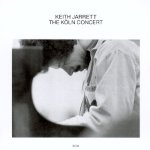
Keith Jarrett is 70 years old, and his best known album — The Köln Concert — is 40. I still remember the first time I heard Köln. It was about 1978, in a college radio studio on a good set of JBL monitors. It was a religious experience for me. That feels like a lame thing to write, but there are ultimately no words. Yes, I even love the vocalizations, the grunts, the groans, the stomping. I probably shouldn’t get started. For some readers it may be off-putting enough that this is not “prog” in any standard sense. But I can’t let pass the opportunity to tell Keith happy birthday when I have the platform from which to do it, or to call your attention to his latest solo piano disc. I’m banking on (my prog guru) Brad Birzer’s championing of a broad tent in these matters. Jarrett’s solo piano music seems to me genre-defying and epic enough, at any rate, for prog sensibilities.
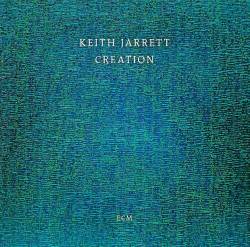
The title of this latest entry, Creation, is not particularly a surprise from Jarrett, who is primarily known for the lack of distinction in his work between creation and performance. But there is a surprise here, as Jarrett departs from his whole-concert-uncut approach. Creation’s movements are selected from several different 2014 concerts, arranged after the fact into a whole. Jarrett thus “had to become a producer,” as he explains in an interview on NPR. But it’s still Jarrett as creator, as composer, performing as he produces.
As I listen to Creation, I’m reminded how consistently Jarrett’s work draws my listening beyond what I ordinarily think of as listening. I hear the music, I drink it in as I do any good music. But my listening is also pushed to hear itself, to hear in some sense what listening is. Good listening is an interesting mix between impatience and patience. Impatience because it needs to be eager, voraciously anticipatory, and open to mystery. Patience because it wants to trust the artist, to wait for what takes careful preparation and painstaking development. All of us who listen probably develop comfortable listening styles, familiar ways of moving along the border where impatience and patience meet. Keith Jarrett has long struck me as one of those artists who play up that border, reminding us that it is a fault-line of a sort, that we can still be knocked over when the ground shifts violently enough.
If you know Jarrett’s work, but have trouble with patience on his longer solo piano outings, I would especially urge you to give Creation a try. The shorter-time format of his recent solo efforts tends to concentrate the development and give food to the impatient appetite, but (to my ears) without sacrificing any of the artisan’s craft and care.
Kudos to you, Keith, as you celebrate threescore and ten! May our gift to you be (im)patient listening!






 The title of this latest entry, Creation, is not particularly a surprise from Jarrett, who is primarily known for the lack of distinction in his work between creation and performance. But there is a surprise here, as Jarrett departs from his whole-concert-uncut approach. Creation’s movements are selected from several different 2014 concerts, arranged after the fact into a whole. Jarrett thus “had to become a producer,” as he explains
  If you know Jarrett’s work, but have trouble with patience on his longer solo piano outings, I would especially urge you to give Creation a try. The shorter-time format of his recent solo efforts tends to concentrate the development and give food to the impatient appetite, but (to my ears) without sacrificing any of the artisan’s craft and care.
 Progarchy