Rush: My Essential 10 Albums

Image

The game is ON!

Chris Morrissey and our Fearless Leader, Brad Birzer, have issued a “Top 10 Rush Albums” challenge. In fact, Brad’s was pointed right at me via Twitter, so how can I say no?

This assignment was so easy, it was done on my lunch hour.

In order:

1. Moving Pictures (1981).  Two months ago this week, I penned what this album means to me. I’ll add no more here.

2. Permanent Waves (1980). Released on January 1, 1980, the album that thrust Rush into the mainstream grabbed my upon my first listen and never let go. Rush managed to blend epics and epic playing with a modern, urgent sound to remind everyone thinking they were just another bloated, long-song prog band that they were instead a progressive, HARD ROCK band.

3. Hemispheres (1978). The group’s most progressive album, sporting just four tracks in the vein of “Close To The Edge,” is fantastic from start to finish. They just played their asses off on this one. While most will point to “La Villa Strangiato,” the oft-played “The Trees” or even the album-side sequel to “Cygnus X-1” as the best tracks, I’ve always been partial to “Circumstances” the same way I’m fond of “Entre Nous” on “Permanent Waves” (both side two openers, by the way).

4. A Farewell To Kings (1977). Yes, I’ve now listed my top four Rush albums in reverse chronological order of release, but for me, 1977-81 was truly the band’s landmark period. “Xanadu” alone makes this a great album for me, as does “Cygnus X-1”, but while I rarely – which is to say, never – make a fuss of lyrics on albums, the sad truth is that Neil Peart’s lyrics in the title track ring true more and more with each passing year.

5. Power Windows (1985). While some may give “Signals” and Grace Under Pressure” a hard time for various song-related reasons, my issue with both of those albums wasn’t the songs…it was the production.  Both sounded either flat and/or muddy to me, but all that changed in the first few seconds of “The Big Money,” the opener to “Power Windows.” Heck, they could have just called it “The Big Album,” because producer Peter Collins – referred to by the group as “Mr. Big” – and his team just made this album shine.  Huge tracks and big themes populate this gem of a release.

6. Roll The Bones (1991). After the synth and sequencer-heavy “Hold Your Fire,” producer Rupert Hine was determined to get Rush back to its power trio roots and certainly did so with “Presto,” but for me, “Roll The Bones” took it one step further. Yes, there are songs on “Roll The Bones” that probably rival those on “Presto” – “Show Don’t Tell” vs. “Dreamline” and “Superconductor” vs. “The Big Wheel” – but in “RTB” we got our first instrumental since “YYZ” with “Where’s My Thing,” plus “Roll The Bones” features not one, but two brilliant tracks that tug at the heartstrings in “Bravado” and “Ghost of a Chance.” Those more than make up for the last two tracks on the album – “Neurotica” and “You Bet Your Life,” which I can do without.

This brings me to the point when I have to really think about what the last four are and in what order. Thinking…comparing…contrasting…okay, here goes:

7. Counterparts (1993). I can’t believe I’m putting this before the album at #8, but aside from a production superior to the previous two releases – “Presto” and “Roll The Bones” – and despite a bunch of standout tracks, Rush saved it’s best for last with the highly-emotional “Everyday Glory.” Prog bands rarely get points for squeezing emotion out of songs, but Rush just nailed it with this sad-yet-hopeful track.

8. Signals (1982). Certainly one of the biggest 180-degree turns made by a prog band between albums – rivaled by the “Drama” to “90125” succession – Rush’s first attempt to wedge its formidable musicianship into an album’s worth of shorter tracks was a triumph. We can point to the beautifully-structured “Subdivisions” and the band’s only U.S. Top 40 hit in “New World Man” – written only to balance out the lengths of the two sides as bands were still considering vinyl back then – but how about Alex Lifeson’s blazing solo in “The Analog Kid?” How about Geddy Lee’s and Peart’s work in “Digital Man?” How about Rush’s first attempt at a four-on-the-floor track with “The Weapon?”  Owwwwooooo! Scaddddy! 🙂

9. Grace Under Pressure (1984). A somewhat muddy production mars Peter “Hentor” Henderson’s time with the band, and if you read Peart’s notes from the GuP tourbook, this one was certainly recorded under pressure, but Rush continued to explore how to fit their chops into shorter tunes and mostly succeeded with gems such as “Distant Early Warning,” “Red Sector A,” the jazz-tinged “Red Lenses” and “we can still fit 5/4 into a song” with “Kid Gloves.” Once again, the band saved its best for last with the amazing “Between The Wheels” with its haunting intro and verses, giving way to a gorgeous, big chorus (note: I’m a sucker for a big chorus).

10. Snakes and Arrows (2007). The batch of “new millennium” Rush albums have been a bit of a mixed bag for me. “Vapor Trails” was the album the band simply had to make (and get through) in the wake of Peart’s personal tragedies, and it was reflected in that fragile recording. While many welcomed the first full concept album from Rush in “Clockwork Angels,” I guess I was well past the point where I wanted to absorb a concept album, plus I find myself skipping through a lot of the tracks save for “Caravan,” the title track and the magnificent “The Garden.” In between those two albums is the best of the bunch, and while there are some forgettable tracks for me, I do love works such as “Far Cry,” “Bravest Face,” “Armor and Sword,” “Workin’ Them Angels,” and “The Way The Wind Blows.”

Well then, I’m sure to be lambasted for ignoring “2112,” let alone the releases before it. They all have their respective places in Rush history and in moving the band towards what they’d become, but they just don’t do a ton for me. If it makes anyone feel better, though, “2112” would have come in at #11.

So…there. Back to work(in’ them angels). You can lambast me for that.

My Top 10 Rush Albums–Ranked

rush at 40.001 - Version 2

Just today, our own progarchist and professional classicist and philosopher, Chris Morrissey, challenged us to name our top ten Rush albums.  Not alphabetically, but actually in the order we love them.

So, I feel up to the challenge.

As I hope I’ve been clear in my writings here and elsewhere—I love Rush, and I have without interruption since I first heard MOVING PICTURES back when I was in detention in 7th grade!  Yes, that was the spring of 1981, only a month after the album came out.

I can never offer enough thanks to my fellow junior high detainees, Brad and Troy, for introducing me to this band.  At the time, they were shocked I knew everything about Genesis and nothing about Rush.  Thank God for their evangelism.

Now, thirty-three years later, I would give much to call Neil Peart my older brother.  That said, I can state unequivocally that in my own life, Peart’s lyrics have shaped me as much as any other great artist and thinker.  Really, he’s up there with St. Augustine for me.  As a Catholic boy (well, middle-aged, graying, Catholic man), this is saying a lot!


gup

Of course, such a list is subjective, and I might be tempted to follow up tomorrow with a slightly different list.  Regardless, here it is: as of June 30, 2014.

Grace Under Pressure.  Coming out in 1984, this album has ever since defined the meaning of excellence and seriousness for me.  I love the music, the flow, and, especially, the lyrics.  Not only have the lyrics prompted innumerable great conversations with friends, but I proudly wrote my major liberal-arts core paper (sophomore year in college, 1987-1988) using nothing but the lyrics from this album.  I argued that Neil Peart was a modern stoic, a philosopher of antiquity born in the modern world.  I earned an A!

Moving Pictures (1981).  I’m sure this isn’t controversial, except that most Rush fans would probably rate it number one.  It means a great deal to me, and it has formed me—for better or worse—in my own understanding of integrity.

Clockwork Angels (2012).  What a feast for the mind and the ears.  The flow of the album is gorgeous as are the lyrics.  Really, a great story—more of a fairy tale than anything else.  The story is essentially the story of Hemispheres, but it’s told with much greater finesse.  That it came at 38 years into their career is astounding, and it proves that the desire of each member of Rush to improve himself and his skills has not been a pipe dream.  Highlight, the single most un-Rush like song, is “The Garden,” a statement of republican liberty and individualism.  And, “Wish Them Well,” is the closest Rush will ever get to hippie/Beatle lyrics.  Let the air drumming commence!

Power Windows (1985).  As someone who loves both prog and New Wave, I heartily approve of Power Windows.  Lifeson’s guitar has much more in common with The Fixx than it does with Rush’s output in the 1970s, but it demonstrates and reveals a real willingness to explore new areas of music.  It’s fusion of New Wave and Prog was rivaled only by Yes’s Drama.  And, the lyrics. . . sheesh.  Neil is at his best.

Signals (1982).  I know a lot of old-time Rush fans think little of this album, as they see it as a betrayal of the “true Rush.”  But, schnikees has it meant a great deal to me.  The lyrics, especially, have given me great comfort.  Even this spring as I had make a major life decision, Peart’s words, “there are those who sell their dreams for small desires.”  The entire first side is masterful musically as well.  I don’t think side two is as strong, but it’s still quite good.

Caress of Steel (1975).  Man, is this album wacky or what?  And, in large part, I love it for being so weird.  Musically, it’s unlike almost anything else out there—by Rush or anyone else.  There’s as much acid folk on this album as there is hard rock and prog.  But, really, By-tor?  Snowdog?  The Necromancer?   I have no idea what Geddy, Alex, and Neil were thinking or smoking when they made this, but, wow, does it all work.

Vapor Trails (2002).  This album is nothing if not a pure statement of life.  “I’m alive,” Neil screams in every beat and every lyric of this album, especially after the horrific tragedies he suffered.  And, he most certainly is a live.  From the opening drums to the massive swirl of guitars and Geddy’s vocals throughout, this is a work of artistic brilliance, meaning, and drive.  I never tire of this album.

Snakes and Arrows (2007).  Again, this is part of Rush 2.0, the band that remade itself after Neil’s double tragedies.  Everything in Snakes and Arrows is perfect.  Again, the flow of the album just works brilliantly.  And, the fusions and various styles are just fascinating.  Neil’s lyrics are a bit angrier than usual, but still quite a effective.

A Farewell to Kings (1977).  What’s not to love?  The entire album reeks of integrity.  Kevin McCormick, on this site, has explained in loving and intricate detail the musical importance of the album in ways I never good.  But from the first notes of the guitar to the dire plight of Cygnus, I’m in!

2112 (1976).  As Drew commented on Chris’s original challenge, 2112 is a tough one to rank because side one is so radically different from side two.  I agree.  But, side one is so incredible that it makes up for any flaws in the album.  Who can’t just start head-banging when the Overture begins?  Who doesn’t want to just hate the priests?  And, who isn’t disheartened when the Solar Federation reassumes control.  Sigh. . . sci-fi loveliness.

2112

***

Long to longish progarchist posts on Rush
Hold your Fire -Rush’s finest? by Tad Wert (*progarchy’s single most popular post ever)

https://progarchy.com/2014/04/24/rushs-finest-album-hold-your-fire-until-youve-read-my-analysis/

***

Erik Heter on Moving Pictures as Synergy

https://progarchy.com/2014/04/27/synergistic-perfection-first-and-lasting-impressions-of-moving-pictures/

***

Discovering Rush on their 40th anniversary by Eric Perry

https://progarchy.com/2014/04/25/discovering-rush-the-40-year-old-virgin/

***

The first Rush album reviewed by Craig Breaden

https://progarchy.com/2014/02/22/rushs-first/

***

A review of A Farewell to Kings by Kevin McCormick

https://progarchy.com/2013/01/21/rush-a-farewell-to-hemispheres-part-i/

***

A review of Power Windows by Brad Birzer

https://progarchy.com/2013/12/14/power-windows-rush-and-excellence-against-conformity/

***

Kevin Williams on Clockwork Angels Tour

https://progarchy.com/2013/11/24/rushs-clockwork-angels-tour-straddles-the-80s-and-the-now/

***

Brad Birzer on Clockwork Angels Tour

https://progarchy.com/2013/11/27/rush-2-0-clockwork-angels-tour-2013-review/

***

Erik Heter on Clockwork Angels Tour Concert in Texas

https://progarchy.com/2013/04/24/you-can-do-a-lot-in-a-lifetime-if-you-dont-burn-out-too-fast-rush-april-23-2013-at-the-frank-erwin-center-austin-texas/

***

A review of Vapor Trails Remixed by Birzer

https://progarchy.com/2013/10/05/resignated-joy-rush-and-vapor-trails-2013/

***

A review of Grace Under Pressure by Birzer

https://progarchy.com/2013/02/21/wind-blown-notes-rush-and-grace-under-pressure/


And, our favorite Rush sites

(please support these incredible sites and the fine humans who run them!)

***

Power Windows: http://www.2112.net/powerwindows/main/Home.htm

***

Rush Vault: http://rushvault.com/

***

Rush is a Band: http://www.rushisaband.com/

***

Cygnus X-1: http://www.cygnus-x1.net/links/rush/index.php

Going the extra mile for Aisles

aisles

One of the most challenging parts about being a prog reviewer is trying to ascertain how many times you need to listen to a particular album before you feel confident enough to deliver a balanced, fair appraisal of what it is all about.

I have never reviewed an album on the strength of one listen, no matter how discordant or lacking it may be. A lot of work goes into every release so I feel a sense of responsibility and respect for the artiste(s) in giving their work a thorough listening before committing my thoughts to type.

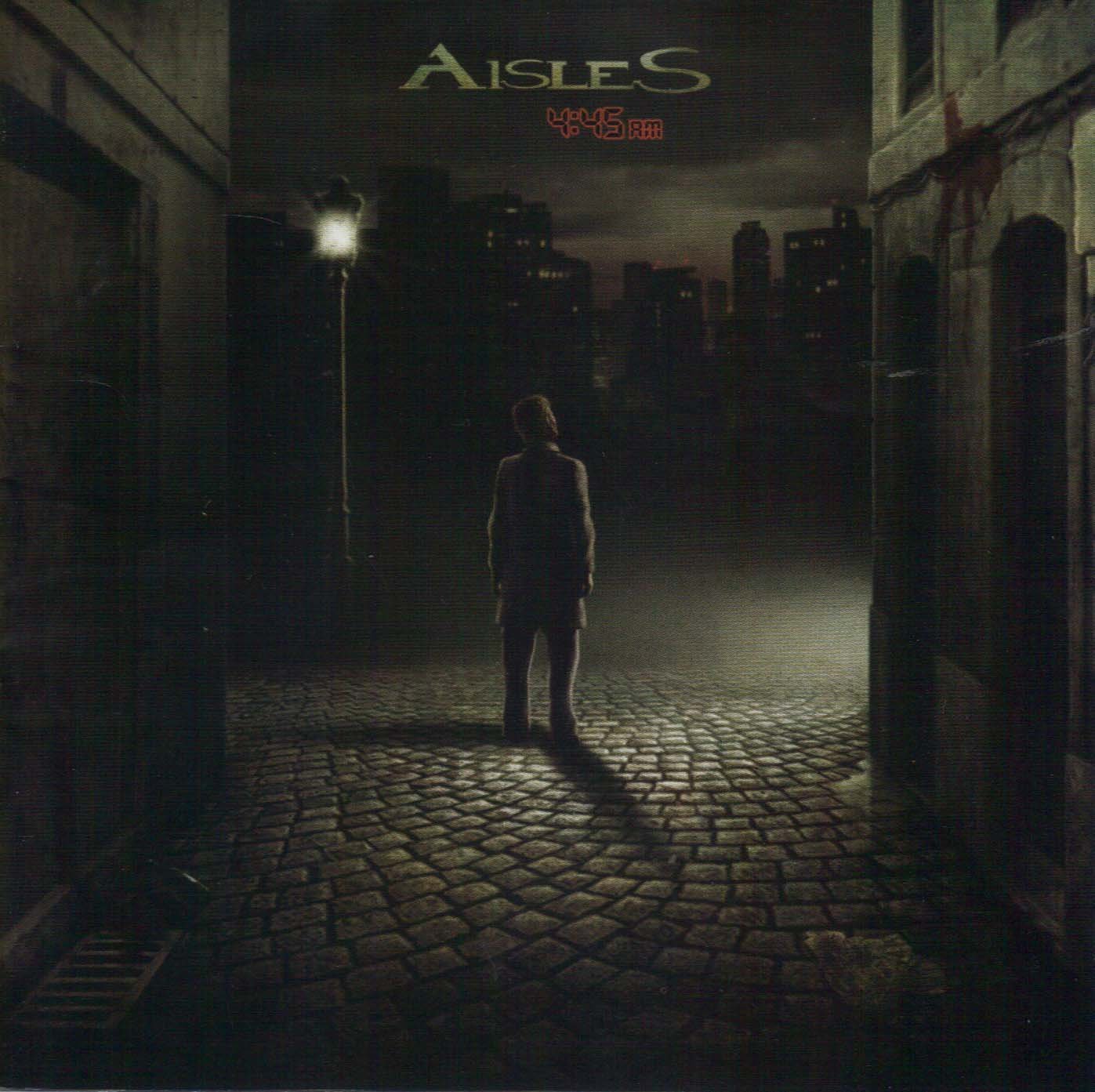
On the other hand, some of the most interesting albums are the ones where you feel no matter how many times you play them, there will be something more for you to discover the next time you give it a run-out. One example came in the post in the spring all the way from South America. It was the new album 4.45am by a Chilean band called Aisles and I am always up for hearing the work of a band I might not have encountered before in my prog travels and travails.

Aisles have been in existence for 11 years and this is their third album following The Yearning in 2005 and In Sudden Walks in 2009. The band line-up currently comprises brothers Sebastián Vergara (Vocals) and Germán Vergara (Guitars), Rodrigo Sepúlveda (guitars), Alejandro Melendez (Keyboards), Daniel Baird-Kerr (Bass) and Felipe Candia (Drums).

Now regarded as one of the best prog bands in South America, Aisles are deeply influenced by bands such as Marillion, Genesis, Pink Floyd and if you listen carefully to 4.45am, you might even hear echoes of Queen, a touch of 80s electronic pop and shades of Radiohead, another of their favourite bands. However there is no mistaking the strong Latin American vibe, especially from some beautiful acoustic guitar work and subtle rhythms, that run seamlessly through their music.

There is another paradox in that I was going to recommend this as essential summer listening because it is an ideal album to which to soak up a sunny afternoon with its sultry Latin American atmospherics (which it is).

However, the actual concept of the collection is very much on the dark side, the worst day of your life in fact. The songs centre on exploring and challenging what motivates people to get through the day, starting with the title track 4.45am, the time perceived as being on the cusp of night and day.

The clues as to who is the central character in the song can be found in the album’s stunning artwork by Omar Galindo with Gallarda Yarura a beautifully pitched instrumental which starts with a scolding mother, the piece focusing on her small but rather menacing-looking son.

There are some clever touches in the infectiously catchy Shallow and Daft about a popular radio DJ which questions his motives in return for the love his listeners send him. There’s personal fear and loathing in Back My Strength in which Germán Vergara turns up the vocal intensity to great effect.

Delicate acoustic guitar and ethereal vocals are the hallmarks of The Sacrifice, again another cry for help gazing out to sea, the lyrics show. No surprises then that the next track is the brief crashing waves of The Ship which blasts straight into the mesmeric instrumental Intermission, its insistent riff overlaid with artistic sonic effects.

At this point, Aisles take a slight fork in the road, with three slightly longer compositions, Constanza Maulen joining Sebastián on vocals for the heart-rending Sorrow, full of despair and lost hope over a gentle Latin rhythm.

Instrumental Hero shows how they have mastered the art of atmospherics, building gently, shifting through a few gears with the help some subtle synths and deft guitar work.

The ten minute long Melancholia brings the album to an end, again the piece being a closely woven but haunting piece with plaintive harmonies which is dedicated “To my mother.”

This is not an album I could have reviewed properly after just a few plays. It was worth going the extra mile for Aisles as it needed a lot of careful listening and understanding, but in the end, it passes muster as a real “dark horse” album. Give it a go below and see what you think.

What Matt Cohen and Eva Brann Have in Common

Image borrowed from The Imaginative Conservative.

For regular progarchy citizens, please forgive this unusual post.  As some of you might know, the founding editors of progarchy are also each deeply immersed in the world of the Liberal Arts, the greats of Western Civilization, and liberal education.  It’s what we do when we’re not progging out.  Promoting liberal education by day, prog by night.

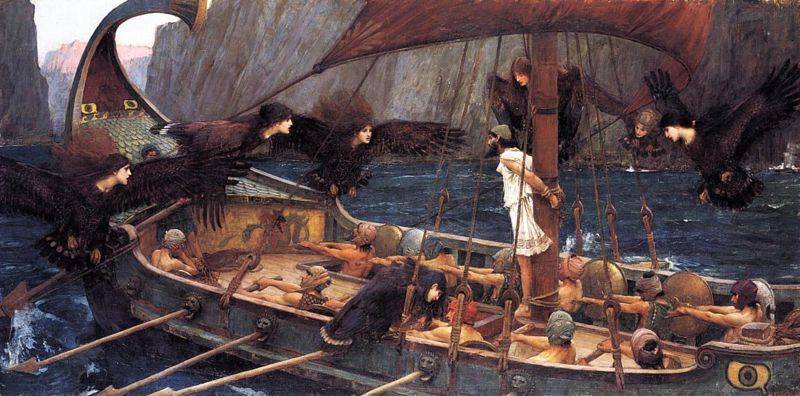
Every once in while the world of antiquity and the world of progressive music meet and harmonize.  Here is one such example.  Two weeks ago, I had the incredible privilege of seeing Dr. Eva Brann, tutor at St. John’s College, Annapolis, and widely regarded as the foremost proponent of liberal education in the world.  No exaggeration.

Here’s her talk–well worth reading.  http://www.theimaginativeconservative.org/2014/06/odysseus-patron-hero-liberal-arts.html

But, of course, how could I think of Odysseus and not think of my favorite The Reasoning song, a song I’ve listened to at least weekly since it came out?  “A Musing Dream.”

So, a huge salute to Homer, to Eva Brann, and to the Cohens for advancing so much beauty, truth, and goodness.

Jacob’s Ladder

Jules Evans in a recent post — “Is pop music bad for your soul?” (June 25, 2014) — has some interesting observations. For example:

For ordinary people, pop music was our equivalent of Jacob’s Ladder. It was our way to climb up and see beyond our lives, to connect with the deeper and darker emotions which the shiny world of capitalism did not allow us to express during the week. Our way to express our loneliness and longing for togetherness, our way to express our hope for a better world. Pop music, not classical music, kept spirituality alive in the dry decades of the 20th century, and (to quote Dylan) it ‘got repaid with scorn’.

Read more at: Philosophy for Life

The Art of Brian Watson

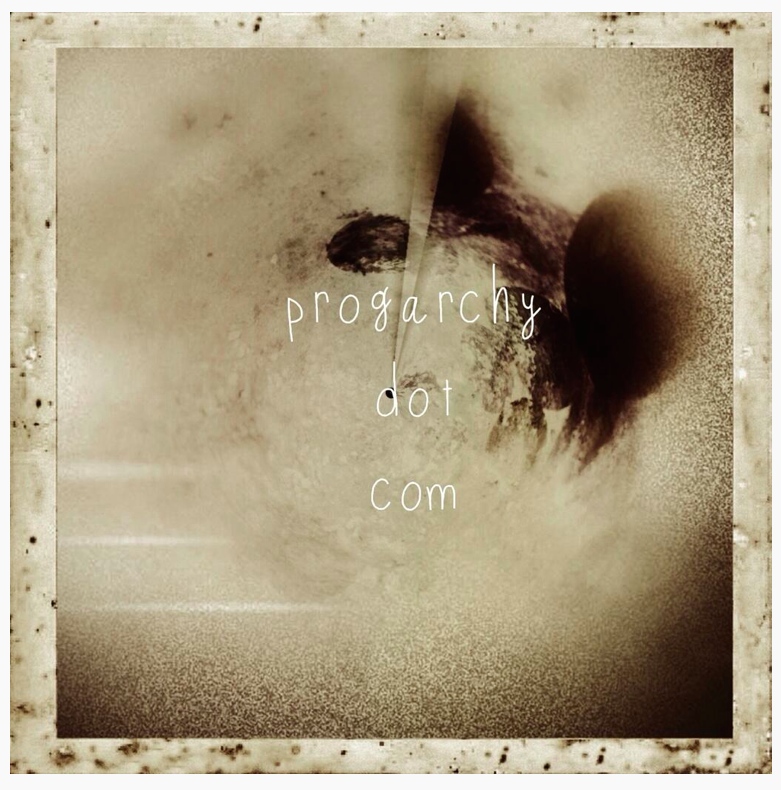
Many of you might know (and you should!) Brian Watson from his excellent reviews over at the Dutch Progressive Rock Page.  He also, happily, reviews for us.  Indeed, he’s an extraordinary progarchist.  A man of law and order, he’s also a man of high writing and artistic talents.  He’s also a genuinely great and interesting guy (guy is Kansan for “real person”).  So glad he created this for us.  To check out Brian’s other works, check out his Facebook page, Plan A Art.

***

"Progarchy Dot Com" by Brian Watson.
“Progarchy Dot Com” by Brian Watson.

Vote for The Train

Make Some Noise is nominated in the Anthem Category. Lets make it a winner
Vote here
http://awards.progmagazine.com

Prog Magazine Wants You to List Your Top 10 Prog Albums Ever

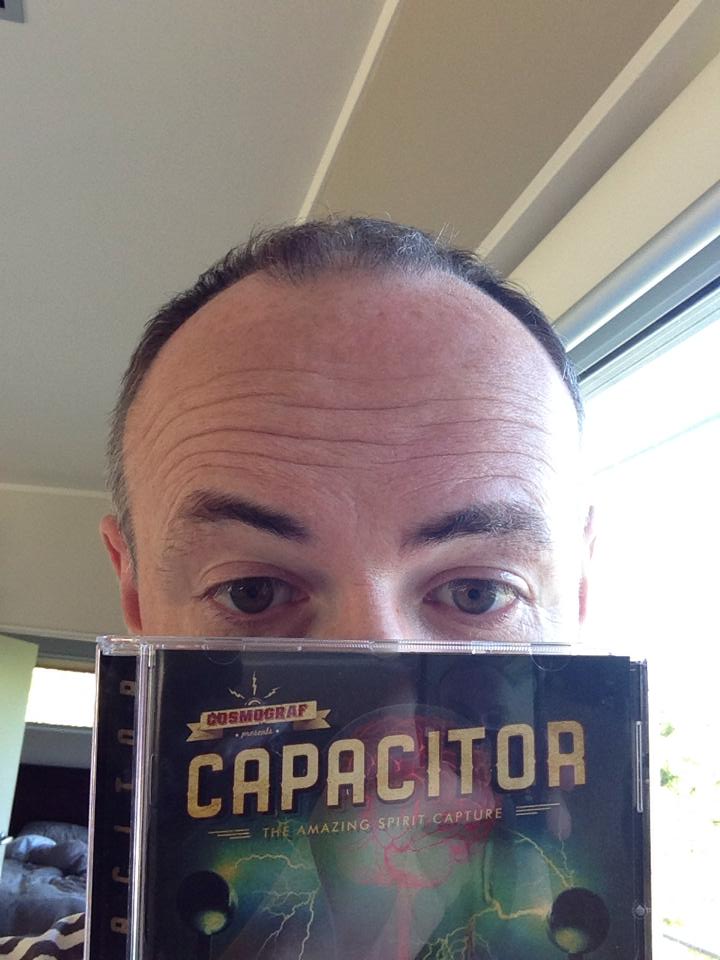
Progarchist and quasi-Kiwi Russell Clarke receives his copy and is quite elated.

Mastereditor Jerry Ewing has asked all good people to list their ten favorite prog albums of all time and submit them to PROG by July 4.  Jerry, I assume is thinking about the American founding.  Ha.  Well, probably not.

So, all time?  Back to Pet Sounds by The Beach Boys?  Without giving any real thought to the parameters, I jotted down my favorite albums.  I followed only three rules: no duplication of bands; listing them in alphabetical order; and writing down what immediately came to my mind.

So, please consider this tentative at best.  And, of course, subject to revision.

For Jerry Ewing: My Top (10) Prog Albums—EVER.

  • Ayreon, Universal Migrator
  • BBT, EEFP
  • Cosmograf, Capacitor
  • Flower Kings, Space Revolver
  • Gazpacho, Night
  • Genesis, Selling England by the Pound
  • Glass Hammer, Inconsolable Secret
  • Kansas, Leftoverture
  • Nosound, Lightdark
  • Porcupine Tree, Fear of a Blank Planet
  • Riverside, Second Life Syndrome
  • Rush, 2112
  • Talk Talk, Spirit of Eden
  • The Reasoning, Dark Angel
  • The Tangent, Down and Out in Paris
  • Yes, Close to the Edge

The Voting Begins: 2014 Progressive Music Awards

prog-banner


Mighty Jerry Ewing, editor extraordinaire of PROG, has just announced the opening of elections for the 2014 Progressive Music Awards.

As Chicagoans might state: vote early and often.

But, in the republic of progarchy, we encourage you to vote only once and with appropriate gravitas.

To vote, go here: http://awards.progmagazine.com

Half-Way Through 2014 – The Best So Far – Part 3

manofmuchmetal's avatar

Today I bring you the third instalment of my half-way round-up of some of the best albums released so far in 2014. So far, this year has been a strong one with a number of albums catching my attention and garnering positive reviews where applicable.

If you missed parts 1 and 2, they can be accessed via the following links:

Half-Way Through 2014 – The Best So Far – Part 1
Half-Way Through 2014 – The Best So Far – Part 2

But here now, is Part 3:

Anathema – distant satellites

Distan_SatellitesRegular readers of this blog will not be surprised to read that this album features in this list. I absolutely adored ‘Weather Systems’ and it finished at the summit of my ‘Best of 2012’ top 20. Clearly, based on the quality of the follow-up, ‘distant satellites’, Anathema didn’t feel any pressure. Instead, they have matched the brilliance…

View original post 826 more words