
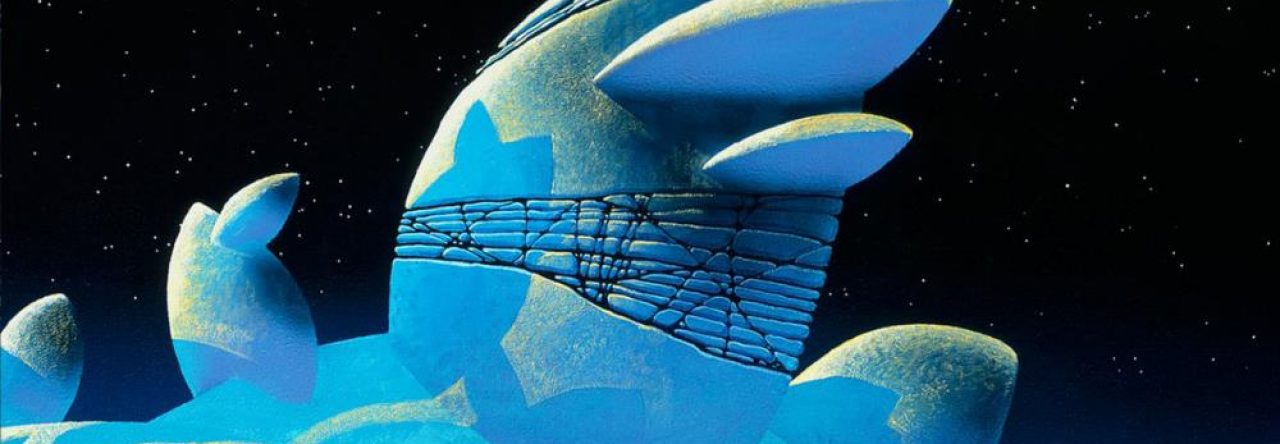
VIRUS’ 4th full length album, Memento Collider, is set for a June 3rd release via Karisma Records.
Category: Progressive rock
Review: Frost* – “Falling Satellites”

No matter their level of activity, all’s right in the prog world when the on again/off again ensemble known as Frost* is in “On” mode. Many of us have closely – and happily – followed the twists and turns of writer/keyboardist/vocalist Jem Godfrey’s group since they released the landmark album “Milliontown” back in 2006.
For those who may not have been exposed to the band back then, “Milliontown” was something altogether new, or at least sounded altogether new – an accessible, expertly-produced, keyboard-heavy, dense, dynamic, and at times industrial-sounding blend of prog rock not for the faint of speaker cones. It was not to be mistaken for yet another prog band channeling the 70’s with all the cliches that go with that era (band names withheld to protect the guilty). As a fan of modern prog, “Milliontown” easily became one of two of my favorite albums of the last 15 years – the other being It Bites’ “The Tall Ships” – and not a week has gone by in the last decade when I haven’t given at least some of “Milliontown” a listen (no, really).
Steven Wilson – “Hand Cannot Erase”
Steven Wilson – “Hand Cannot Erase”
Live film for the title track of Hand. Cannot. Erase., one of several clips Lasse Hoile created especially for the HCE shows.
Filmed and edited by Lasse Hoile in February 2015, starring Carrie Grr.
New Cosmograf Album
 The Unreasonable Silence
Cosmograf release a new album on 13th of June. It is available to pre order as a digital download now from Bandcamp
https://cosmograf.bandcamp.com/album/the-unreasonable-silence
Cosmograf’s fifth studio album release is an existential concept album with an alien theme, based on the essay ‘The Myth of Sisyphus’ by the French philosopher Albert Camus.
Radiant Records: Kristoffer Gildenlöw
|

|
This week’s Monday Spotlight is
Kristoffer Gildenlöw’s newly released album
The Rain
Born in Eskilstuna, Sweden, Gildenlöw made a name for himself in the progressive rock scene during his eleven year career (1995- 2006) as bass player for world-renowned Swedish band, Pain of Salvation. His skill as a bass guitarist granted him the endorsement by Mayones guitars for more than a decade. In addition to bass guitar, Gildenlöw studied: piano, drums, double bass, guitar, classical vocals and music design; all of which have served the artist well in his transition to a solo career. He left Sweden and PoS to move to the Netherlands, but remained very active working as a session musician in live performances, touring, and recording bass lines on over thirty prominent albums for various artists all over the world. Gildenlöw’s solo career took flight with release of his debut album, RUST (2013). He released charity single, Pass The Torch (2014) and critic’s response to previews of The Rain (2016) have been very positive.
The deep tones of how the mind fights against itself resonate throughout this powerful and poignant work by Kristoffer Gildenlöw. A brilliant effort after his highly acclaimed first solo release: Rust (2013); a thematic album which delved into the realities of aging and one’s perspectives on past, future and ultimately reconciliation with life choices. Again, Gildenlöw has chosen a heavy subject for the theme of The Rain; which is a concept album that examines the life of a man in later stages of dementia who struggles with his own reality, perceived through the metaphor of rain and clouds.
The gentleness of the piano passages oppose the angst and turmoil which lie beneath. The gentle pace at which the album progresses is reflective of the destructive force of the disease upon the man, and you find yourself at the tipping point with the track, ‘Breath In, Breath Out’. It is through this lyrically beautiful song that the realization of the end becomes apparent; leaving the listener grasping for the beauty captured in the mind’s eye.
Never have I been so moved by an album. Put your phone on silent, so you will not be disturbed. It is best to listen with good headphones. Then you hear every detail and is the album the best advantage.
Esther Kessel-Tamerus – Rock Musizn
It’s a beautiful album which rewards further with repeat listening.
Kevin Thompson – Progradar
It is one of those albums that come along once in a generation and has such profound effect on the lives of the listener. It would not surprise me that this shows up as a Top 5 album of 2016
Robert Brady – Power of Prog
Get your copy of this AMAZING album here!
|


|
Radiant Records| info@radiantrecords.com |radiantrecords.com
|
soundstreamsunday: “Futureworld” by Trans Am
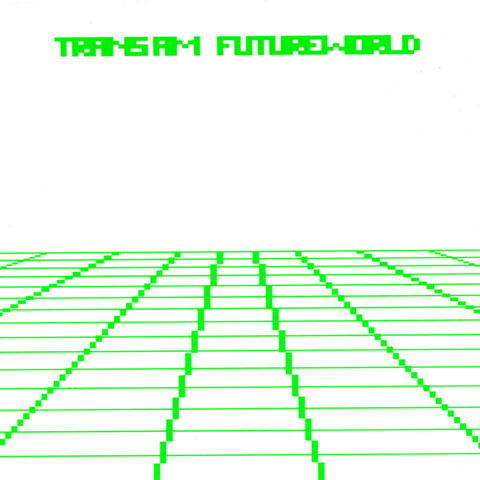 The relentlessness of TransAm’s album Futureworld is a darkly beautiful thing, a fist-waving ode to personal alienation in the late 90. Its Germanic vocoder nods to Kraftwerk, its post-rock distortion and, above all, Sebastian Thomson’s drumming, set a tone so consistently, yet energetically, brooding that it simply will not be denied. It fits neatly in the set of movies and music (thinking Fight Club, Boards of Canada…) directly pre-9/11 that captures the crumbling of 90s tech optimism, the cold distance occasioned by staring at a screen rather than reading a person’s face. This is where the digital shit hits the fan. When I listen to the song “Futureworld” I think these things and I also rock out. Its structure is all about the dynamics of momentum, its breakneck launch ending as a ship with rockets disengaged, a pulse along a motherboard, an incredible downshift punctuated by unlikely but perfect Bonham-esque pounding.
Anderson/Stolt: The Invention of Knowledge
Release date: June 24, 2016, from InsideOut

Two masters from different eras working together? That’s one way of looking at the combination of Jon Anderson and Roine Stolt. But this isn’t just two giants from the progressive world pooling their considerable natural resources. But a project with a fresh sound, in the process making music that spans the ages.
For me, this is an album that will prove to be timeless,” says Stolt. “In the way that you can put on a Yes album from the ’70s now and it still sounds fresh, so I feel people will be able to listen to what we have done here in 10 years’ time and it will still make an impact.
The idea to bring together the Yes legend and The Flower Kings/Transatlantic maestro actually came from InsideOut owner Thomas Waber.
It was Thomas who originally told me that I should work with Jon Anderson,” recalls Stolt. “But at the time, Jon was just so busy that I couldn’t see any way this might happen.
But fate, as it can sometimes do, already had laid plans for this alliance. So, in February 2014, the pair were brought together on the Progressive Nation At Sea cruise.
Mike Portnoy suggested Transatlantic should do a couple of songs live with Jon, when he agreed to join the cruise. It was meant to be a surprise for everyone, and no more than a 20 minute set. But then Jon emailed and suggested we should also do the first side of the ‘Tales From Topographic Oceans’ album. Now, I love that music, but it was an extra 20 minutes to learn. But we were all really keen to do this. So, we spent three hours on board the boat rehearsing, and then performed for an hour or so with Jon, doing ‘The Revealing Science Of God (Dance Of The Dawn)’ (the aforementioned ‘…Topographic Oceans’ piece), ‘Long Distance Runaround’, ‘And You And I’ and ‘Starship Trooper’. That was the first time I had ever met Jon, but we got on very well.”
“Roine and I had a wonderful instant connection when we met on that boat out of Miami two years ago,” adds Anderson.
From this beginning, Anderson and Stolt began exchanging musical ideas across the world.
The foundation of the songs started many moons ago via the internet,” explains Anderson. “Even though we are at opposite ends of the world, we have been able to co-create this very special album, thanks to the modern technological world we live in.”
“Jon began to send me through files with ideas he had,” adds Stolt. “And I took these, chopped them into bits and began to assemble the tracks for the album. This process began in the summer of 2014 and over the next six months or so, everything came together. Because of the time difference, Jon would get up in the morning and send me over demos he had been creating with musicians out there, and I would then take these and develop them.
And Stolt was delighted with the way things worked out.
It was like going back to the ’70s in one way. Because there were no rules. We were drawing inspiration from all sorts of musical heritages across the world. There were no restrictions. Jon said he didn’t want us to do a traditional progressive rock album, but rather wanted it to be progressive music. It took me a little while to understand what he meant. However, the point was that we didn’t need to aim at producing a rock record. We should be prepared to bring in any musical elements we wanted. And he was right. We took inspiration from anywhere and everywhere. There is so much music out there to be excited by, so why deny yourself that possibility?”
However, there is still a familiarity in the way the music sounds, something Stolt was keen to keep at the core of what has been achieved.
Yes, I felt we should keep it all on recognisable territory. Both of us have a history of music behind us. To take on something completely new wasn’t really something either of us wanted to do. However, this is definitely the most complicated and detailed music that I have ever done. And that’s so exciting.
The recording process began a year ago, with Stolt going into the studio with three old friends to record the basic tracks.
I worked with The Flowers Kings duo of Jonas Reingold on bass and Felix Lehrmann on drums, with Tom Brislin on keyboards. Tom had done the Yes Symphonic Tour, and I knew him well. It was important for me to be comfortable with the musicians at this stage, because that way I was more relaxed about telling them how we wanted it all to sound. If I had been in the studio with people who were strangers, then I might have felt more restricted.
Stolt of course handled all the guitars parts, and subsequently other musicians were inveigled into the tapestry. These included Nad Sylvan plus Pain Of Salvation’s Daniel Gildenlow both on backing vocals, joined by female singers Anja Obermayer, Maria Rerych and Kristina Westas.
I also did some of the backing vocals,” reveals Stolt. “But none of the lead ones. Jon did all of those, as well as writing the melodies and lyrics. And he was happy with me to work with the musicians I chose in the studio. He trusted my instincts.
“Jon recorded his vocals in California, and I constructed these parts of the songs from the files he sent me.
The album, which is titled ‘Invention Of Knowledge’, has been co-produced by the two main protagonists. And Stolt was very impressed with Anderson’s attention to detail.
He was very specific in what he believed was needed. I have never worked with anyone who had so many creative ideas. I loved it. For instance, he might suggest that there was a need for a tribal rhythm at 12 minutes and 43 seconds into a track. Or, that his vocal needed a little effect at seven minutes and 12 seconds. It was so easy working with him. Not in the least what anyone might believe.
The album has just four tracks – ‘Invention Of Knowledge’, ‘Everybody Heals’, ‘Know’ and ‘Knowing’. “As you would expect, these are very long,” suggests Stolt. “It is difficult to describe the way they sound. You’ll have to hear for yourself. There is so much going on musically. As I said earlier, it does reflect the attitude in the ’70s, when artists didn’t allow their creativity to be confined to a linear dimension.”
Working with Roine has been such a musical mystical journey for me,” muses Anderson. “I’ve had so many musical adventures in music over the past decade, and feel the time is just right to release some of the songs that came to me with the help of fellow musicians. Roine has proved to be an excellent producer, as well as a very soulful guitarist and all round musician. We decided to create long-form musical journeys for people to take time to relax, listen and enjoy the results of our labours.
Source: InsideOut
Piling on Dream Theater

There’s a great new comment over on our review “The Astonishing Pile of Crap from Dream Theater” :
I have been a DT fan from the beginning. This review is spot on. Astonishing was the biggest pile of crap I ever heard. I too got tickets to the show before listening and trusting my fav band would deliver. I was so wrong. They played the entire pile of crap for hours. I was looking around and everyone in audience was trying so hard to get into but just couldn’t. Fan’s faces looked so confused. All the applause was sympathy in my opinion. I think the only way to save this train wreck is for Portnoy to come back and grab the steering wheel!
Algerian Metallers LELAHELL Seek Help for Funding New Album
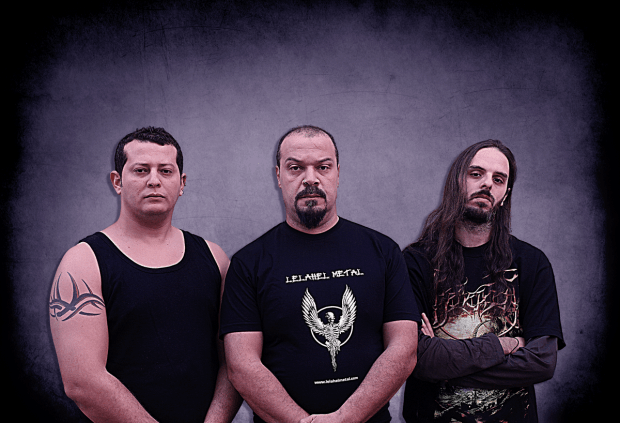
Alif is the title of the second studio album by Algerian death metal trio Lelahell, for which the band recently launched a crowdfunding campaign on Indiegogo. The campaign is active for three weeks; you can head to the campaign’s page and support the band in reaching the goal what will allow them to raise the funds for the album artwork, album’s production, production of a music video and a band merchandise.
The founder of the band, singer and guitarist Redouane Aouameur commented: “Our campaign is running since 5 weeks and will end in 3 weeks. We expect to get at least 50% of the requested amount this will help us to have a very good quality record mixed and mastered in the Hertz Studio, the sound that will perfectly feet to this album.”
The title of the album is inspired by the first letter of the Arabic alphabet. In Arabic, alif is the first letter in the alphabet, and it is used in Arabic calligraphy to determine the size of the following characters. Lelahell say they chose the title as this album “will be the main musical reference of the next upcoming releases.”
The trio’s new album, Alif, is slated as the group’s second full-length album and third release since the band’s formation in 2010. Lelahell are set to record at Hertz Studio in Poland under the guidance of well-known producers — the Wiesławscy brothers.
Support Lelahell by donating through the Indiegogo campaign, and follow them on Facebookfor future updates.
About Lelahell:
Founded in 2010 by metal veteran Redouane Aouameur, Lelahell is an Algerian death metal band hailing from Algiers. The trio comprises of Redouane “Lelahel” Aouameur (guitars, vocals), Ramzy Curse (bass) and Slaveblaster (drums). Lelahell have released one EP, Al Intihar(Goressimo Records, 2012), and one full alubum, Al Insane… The (Re)birth of Abderrahmane(HPGDP, 2014). The band also launched a documentary in 2016 titled Highway to Lelahell – An Algerian Metal Documentary, available for streaming on YouTube, presenting viewers with a solid history lesson on Algeria’s metal scene. The band have also embarked on three European tours, and also participated in festivals in Europe.
A Concise Review: Shiny Eyed Babies
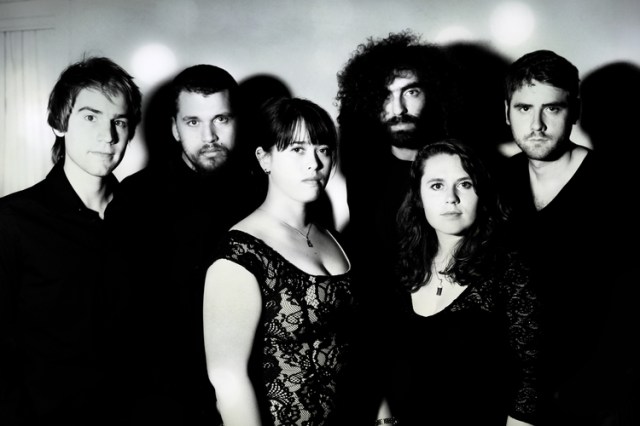
Here is my brief review of the recent Bent Knee album, Shiny Eyed Babies. Here goes:
Imagine if Peter Gabriel, Pink Floyd, Van der Graaf Generator, Radiohead, Soundgarden, and any other avant-garde band you can think of got together and produced an album. And the product was wonderful. This is Bent Knee’s Shiny Eyed Babies in a nutshell.
All the members, from the violinist to the drummer, are top-notch musicians, but frontwoman and lead singer Courtney Swain really stands out. Her vocal range is incredible, and she can play keyboards pretty well, too.
Bent Knee, whose members hail from the Boston area (my neck of the woods), will release a new album, Say So, next week. Check these guys out. It will be worth your time.
 Progarchy