An appreciation of PHIL COLLINS: You’re not worthy

Allister Thompson's avatarMake Your Own Taste

2642616by Allister Thompson

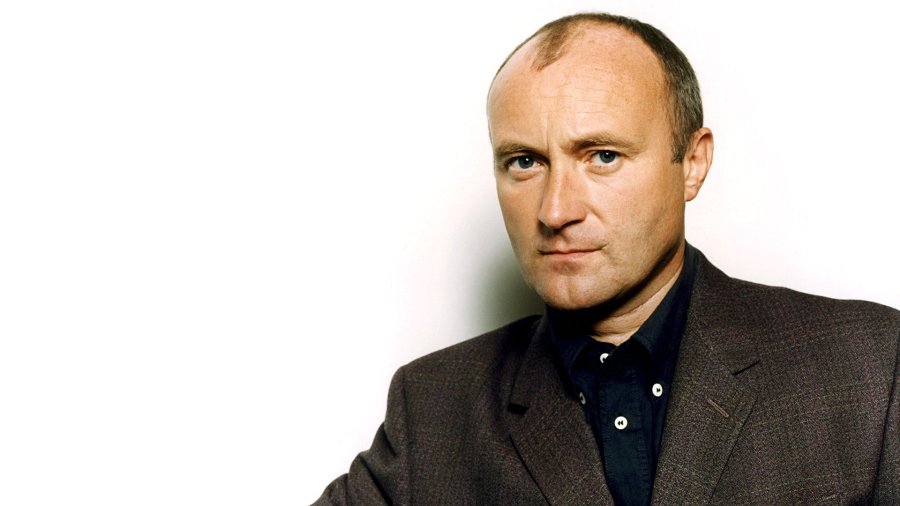
I retired from blogging about music in July of 2015, after many years of frequent posting. My fingers and brain were tired. However, I am coming out of retirement for this one special post, one which I feel compelled to write. Anyone with an ethical bone in his or her body knows that we have entered a really weird cultural period, dominated by the Internet’s insidious role in life, every fool’s newfound outlet to spew whatever crap he or she wants, no matter how idiotic or hurtful. Cyberbullying, cyberracism, cybersexism, hey, call whoever whatever names you like. No one can stop it. One thing making the rounds this week was some jerk’s petition to demand Phil Collins not make a comeback to music. While this is not on the same level as insulting people’s race or sexual orientation, it still says something about the catty, superficial nature…

View original post 1,674 more words

Interview with SPLIT BEARING

Split Bearing

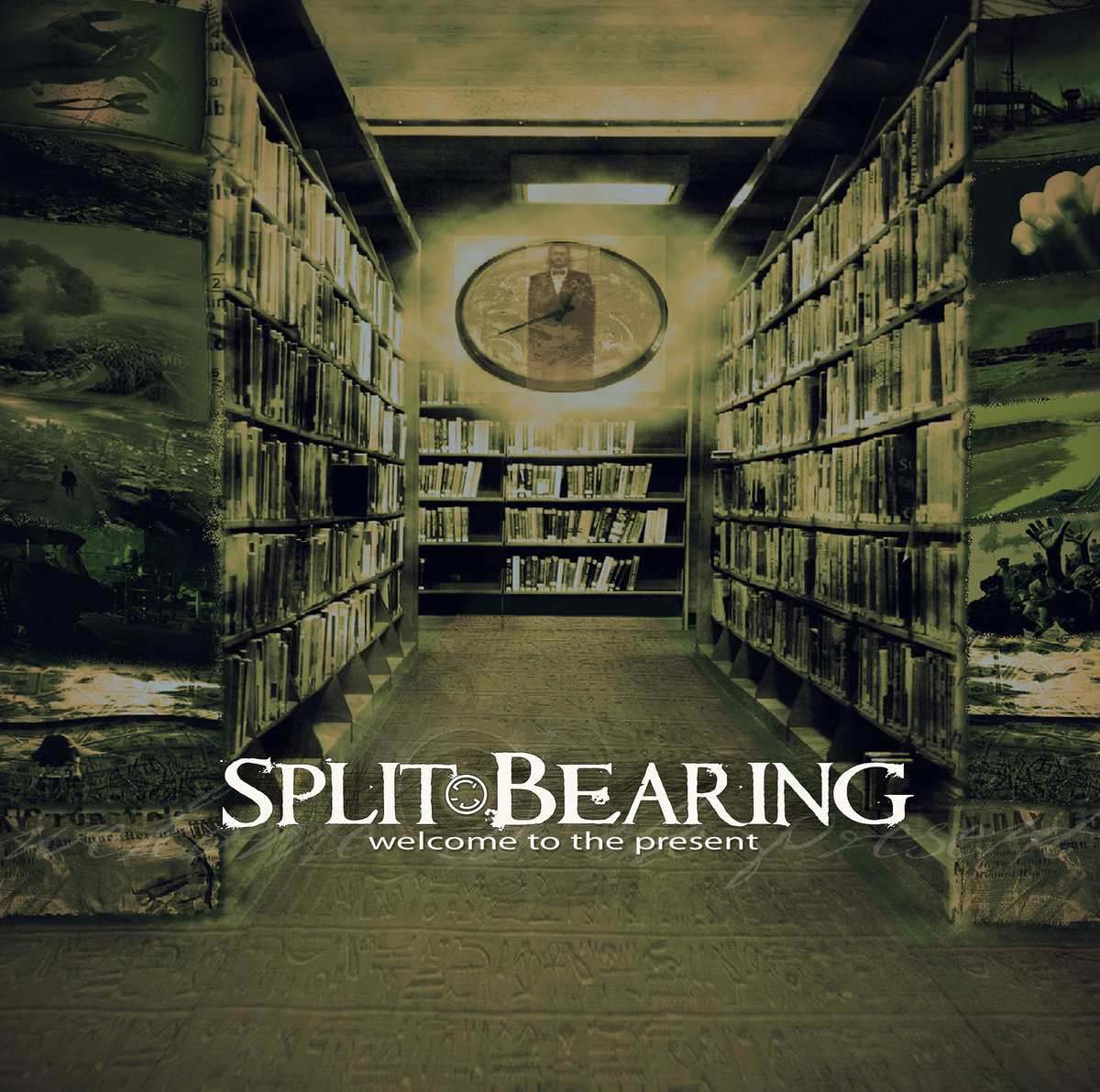
Split Bearing from Olomouc in Czech Republic are active since 2002, and last year they released their second studio album “Welcome to the Present.” Guitarist Mirek Reznicek and singer Petr Duliskovic talk about their work, playing live and more.

Your latest album was released in 2014. Is there any new material you are working on at the moment? What is comes next in the sound and history of Split Bearing?

M. R.: Yes, we are working on new material…

There is quite a lot of stuff we need to brush up on, review, innovate and compose.
In the second half of 2015 a new member came to the band – bassist Honza Duliskovic, who is a great asset for us. Not only gaining a player – but I think he is inventive too as well… so hopefully the new songs will be served soon.

Welcome to the Present
Let’s talk about playing live. How does Split Bearing look on the stage? What can you tell us about your performances?

M.R.: The concept of SB live performance regarding the songs, corresponds with the type of event.

When we played with Deep Purple, certainly our performance was not about rougher songs and conversely – when we share the stage with some power metal band, then we play a bit harder. 🙂 But the playlist is mostly universal for all.

SB love to perform live, we really enjoy every minute on stage, but still we have to try hard to gain more opportunities to appear at rock/metal gigs.

Are you satisfied with the reaction of audiences on your shows?

M. R.: Progressive metal is still marginal thing. Most of the time, when we perform at the festival or play at the club, mostly only the other bands are staring at us.

Unfortunately, we still do not have enough of a name to that can draw hundreds of fans, but we are happy beyond a few 🙂
 
Are there any plans for a European tour in the close future?

M.R.: Almost none… We really wish to get a chance to perform in abroad, we are working on it and hopefully something interesting will come in our way soon.

What are some of the issues you guys have come across before, during and after your live performances?

M.R.: Phew….the basis of the issue which we normally face to is that we are leaving concerts with “one pocket leaking and spilled second”…

Simply no celebration in terms of return.

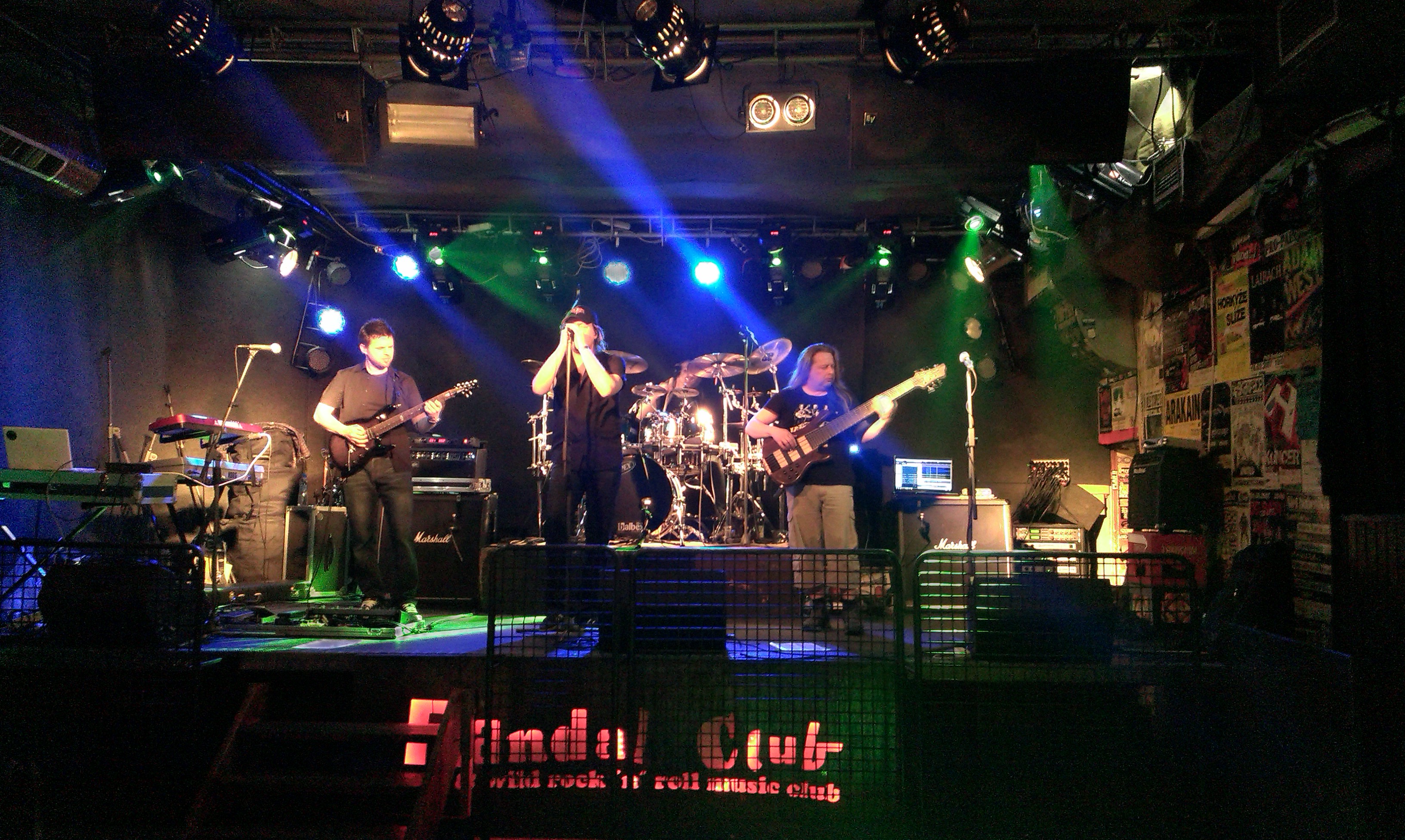
Randal Club_Bratislava_2015
As you describe what you do as progressive metal, what is your opinion about the progressive metal scene today?

P.D.: There are a lot of bands playing this style nowadays and they are pretty good but for me personally not every band has “something” that will really catch you and force you to listen to it from beginning to end. So it’s not always only about great musicians but also the music they are able to create.

For example Anubis Gate or Circus Maximus – their songs are heavy, powerful, technical, catchy but mainly very melodic, one of the elements which I like the most.

What is your opinion on the new subgenres of progressive metal that are based on the term “modern”? Do you think that this makes the sound better or does it corrupt it?

M.R.: I like what new brings USA for example Periphery and their last double album… bambastic, heavy, and a modern sound.

It is true there were nordic Meshuggah with a math metal before Periphery, but this fusion of Periphery is awesome.

Maybe less of screaming, but that is just my opinion. 🙂
 
What is the progressive metal scene like in your country?

P.D. Unfortunately it is quite weak… In fact you can count them on fingers of one hand.  It is a pity and I am so sad about the music situation in our country.  That is why you must be really a big fan and dedicated to create a prog metal band here.

Recommend us some great bands from Czech Republic that we should check out.

Personal Signet.

Are you satisfied with where Split Bearing currently stands? What would you love to improve?

We are mainly satisfied with a new band management. In fact we never had a proper management.

I think this part is neccesary element and our fantastic Vilma really helps with PR and support us as much as possible.

And what would we love to improve? Definitely expand the scope of audience and fan base. Maybe one day we will succeed 🙂

Follow Split Bearing on Facebook.

Backstory to The Tangent’s PYRAMIDS AND STARS (2005)

2005.  Very rare.
2005.  The Tangent’s first live album.

Ian Oakley posted this fascinating backstory on Facebook and very kindly gave me permission to repost here.  Thank you, Ian!

 Ok I may be totally biased as I tour managed the week and financed the CD – but this really is a remarkable live album – There was just something magic that night, it just seemed that for one reason or another that night everything came together at once and the band were firing on all cylinders. Then we had the enormous good fortune to have a venue sound engineer who was sympathetic to the music; because what you are hearing on that CD is basically a direct feed from the desk into a portable 4 track machine – which only really worked once on the whole tour – this night. No overdubs – just a raw live band doing only the 5th date of their entire career! Atmosphere wise there is only one other live ‘Prog’ album that I think captures a time and a place so well – Twelfth Night’s ‘Live and let Live’. So I totally agree with you Bradley, this is a real 3rd wave classic and I would go as so far to say it contains a far better performance of the material from ‘The World That We Drive Through’ than the studio album itself. . . .  I would add that this was also recorded just a week after some members of the band had actually physically met for the very first time – let alone played together! (I remember having to introduce Andy to Jonas at a TFK gig after TMTDA was recorded: “Hi Jonas” – “Hi you are?” – “Ahh I’m Andy we just recorded an album together”…

The Tangent’s PYRAMIDS AND STARS, 10 Years On

There are few bands that perform as well live as they do in the studio.  And, of course, there are some for which the opposite is true.

One band that only gets that much more interesting live is Andy Tillison’s ever-evolving The Tangent.  This year, amazingly enough, is the tenth anniversary of the first live The Tangent release, PYRAMIDS AND STARS.  Looking at the line up for that tour, one has to wonder if one is caught in some kind of heavenly time-loop or fantasy prog game.  Andy Tillison, Roine Stolt, Jonas Reingold, Sam Baines, and Zoltan Csorsz.  The lineup could be for a Flower Kings album or, perhaps, a Steven Wilson album.

2005.  Very rare.
2005. Very rare.

The ever, endlessly talented Ed Unitsky painted the cover, and, of course, it’s gorgeous.

Only six songs make up this 77-minute feast: The World That We Drive Through; The Canterbury Sequence; The Winning Game; The Music That Died Alone; In Darkest Dreams; and the only song under six minutes in length, a cover version of (ELP) Lucky Man.

The songs—all of which come from the first two The Tangent albums—sound as gorgeous as Unitsky’s cover art would suggest.  This is The Tangent, but it’s The Tangent fully alive.  What happened in the studio is merely prologue.  That the embryo, this the fine young man come of age.

Andy and Roine are especially playful and open to the spirit of the muses.  Their love of this music is palatable.

Sadly, this live album is extremely hard to find, and I made it a point several years ago to dig deeply across and through the internet to find a copy.  It was well worth the hunt, for I treasure this album like no other.  It’s a precious thing to behold.

CRAK-ing open the THRAK BOX

John Kelman writes regular reviews at my favorite jazz site, AllAboutJazz.com–and he appears to have probably forgotten more about King Crimson than most of us know about the legendary (and still very active) prog band. Here is the opening of his detailed and excellent review of King Crimson’s THRAK BOX: Live and Studio Recordings 1994-1997:

King Crimson: King Crimson: THRAK BOX - Live and Studio Recordings 1994-1997

After three years spent extensively focusing on its 1972-’74 lineup—documented over a massive 66 CDs, DVDs and Blu Rays (plus some additional downloads) on Larks’ Tongues in Aspic (40th Anniversary Series Box) (Panegyric, 2012); The Road to Red(Panegyric, 2013); and Starless (Panegyric, 2014)—King Crimson turns the clock ahead 20 years to an almost completely different lineup, a radically different sound and a far more unwieldy six-piece incarnation dubbed “the double trio” on THRAK BOX: King Crimson Live and Studio Recordings 1994- 1997. Like its predecessors, the box is part of the group’s ongoing 40th Anniversary Series, which began in 2009 with the release of new stereo and surround sound mixes of the progressive rock progenitor’s earth-shattering 1969 debut, In the Court of the Crimson King, its highly influential 1975 studio swan song for the ’72-’74 group, Red and the divisive album that series remixer (until now) Steven Wilson dubbed “the album that stereo couldn’t contain,” 1970’s now more recognized classic, Lizard. As usual, alongside the box sets come CD/DVD-a sets with the new mixes, original mixes, and a smaller collection of bonus material.

Unlike the three boxes from the past three years, however, THRAK BOX was constructed with a different purpose in mind. Those previous boxes—while each containing the studio (or more accurately, in the case of Road to Red, studio/live conglomeration) or live album that was its core raison d’être—focused more heavily on live recordings: largely audio only and ranging from low to high fidelity, and sourced from audience bootleg cassettes, soundboard recordings and full, professional multi-track tapes.

Recording technology had come a long way, in terms of portability, ease and cost in the two decades separating the ’72-’74 lineup from the double trio that expanded the ’80s Crimson lineup of guitarist Robert Fripp, guitarist/vocalist Adrian Belew, bassist/Stick player Tony Levin and electro-acoustic drummer/percussionist Bill Bruford with two younger newcomers: Stick/Warr guitarist Trey Gunn and another electro-acoustic drummer/percussionist, Pat Mastelotto. Both newcomers came to the group through associations with Fripp: his Guitar Craft classes and/or the King Crimson co-founder’s collaboration with singer/songwriter David Sylvian on 1993’s The First Day and/or its live follow-up, ’94’s Damage. Every note the group made was recorded…and in high fidelity. Releasing a box like the Larks’ Tongues box—which included every known note played by the band (more to the point: every known note recorded by the group, which was far from all-inclusive)—would not just be an absurdly oversized box that would dwarf those that came before, it would have served no real purpose.

The double trio represented a more decided return to being an improvisational band after King Crimson’s largely form-focused ’80s incarnation, of which only one of its three studio recordings has, thus far, received the 40th Anniversary treatment: 1981’s groundbreaking Discipline, which introduced an entirely different Crimson, featuring the group’s sole remaining founding member (Fripp) and the only holdover from the ’72-’74 group, (Bruford). But the double trio was still heavily predicated on structure—whether it was blistering instrumentals or some of the most radio-friendly songs Crimson had released to date—and so a box containing a large number of live recordings would simply have been overkill.

And so, instead, THRAK BOX is a set of 12 CDs, two DVDs (one audio, one video) and two Blu Rays (also one audio, one video) that tells as complete a story of the 1994-1997 King Crimson as any pathological Crimhead would need, ranging from the early early studio recordings that resulted in, as Fripp called it, the 1994 calling card VROOOM EP, which also suggested that this new incarnation was going to be, quite possibly, the densest, most angular and most flat-out aggressive Crimson yet, to (in addition to the 2002 remaster of the double trio’s only full-length studio recording) new stereo and surround sound mixes of 1995’s THRAK—this time done by current Crimson guitarist/vocalist/flautistJakko M. Jakszyk, with input and approval from/by Fripp.

Purgatorial Prog?

A purgatorial prog album?  I have no idea.
A purgatorial prog album? I have no idea.

For Christians, today is the Feast of All Souls, a day dedicated to praying for those trapped in a purgatorial state, somewhere between this existence and the next.

Yesterday, I posted “Calling All Angels” for the Feast of All Saints.

Try as I might, however, I can’t for the life of me think of any prog songs directly related to purgatory?  Am I missing some?  The closest I can think of would be Glass Hammer’s album, PERILOUS.  I don’t think Steve Babb, however, would see this album as purgatorial.  Maybe Big Big Train’s THE DIFFERENCE ENGINE?  Gazpacho’s NIGHT?  Maybe LIGHTDARK by Nosound?

Maybe “Arriving Somewhere But Not Here” by Porcupine Tree comes the closest.

Or, possibly, Anathema’s “Dreaming Light”?

Thoughts?

KINETIC ELEMENT at Terra Incognita

Great news from Kinetic Element’s Mike Visaggio:

I guess we can let the cat out of the bag since Michel up in Quebec has posted on the website. We are the Church of Prog for next year at Terra Incognita! Our first festival on a main stage after doing the Prog Day Pre-Show twice. What else might happen between now and then!

http://www.terraincognita.quebec/english.html

Keep an eye on this because the lineup is pretty awesome.

For up to date information, go here: http://www.terraincognita.quebec/english.html

Calling all academics of Progarchy: The American Journal of Semiotics wants you!

The American Journal of Semiotics (TAJS) is a peer-reviewed academic journal that is currently seeking contributors to a special issue on Music and Semiotics to be published in 2016.

TAJS has some contributors lined up for the topics of:

Grunge
Punk
Post-Punk
Alternative
Progressive Rock
Heavy Metal

TAJS invites your manuscript submissions, on these (or other) musical topics, by the deadline of January 1, 2016.

All submissions should be directed to the Managing Editor at: https://www.pdcnet.org/ajs/Editorial-Team

Source: The American Journal of Semiotics