Remembering the Genius of Porcupine Tree

2018 release
The 2018 release.  2 CD/1 Blu-ray from Kscope.

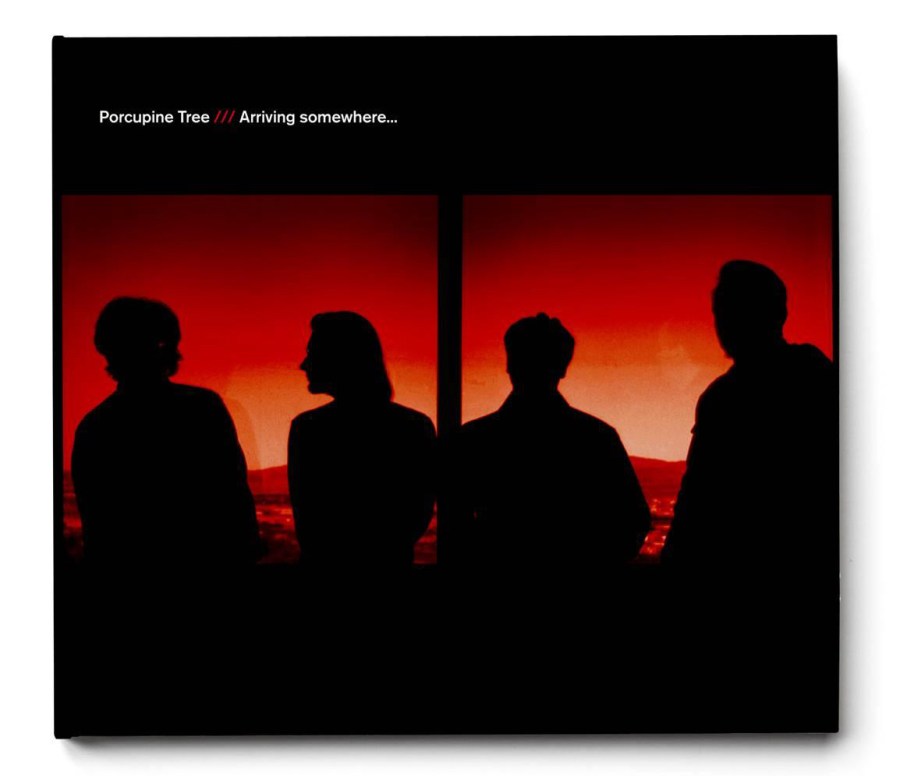
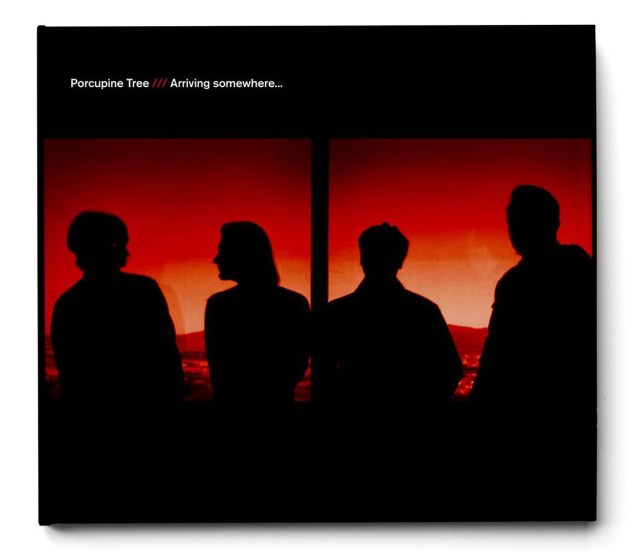
Porcupine Tree, ARRIVING SOMEWHERE. . . (Kscope, 2018).  2 CD/1 Blu-ray package.  A re-release of the 2007 title on DVD.

Though it originally came out over a decade ago, Porcupine Tree’s ARRIVING SOMEWHERE . . .–its live show from Chicago, October 11-12, 2005–has just been re-released by Kscope in a very nice 2 cd/1 blu-ray book.

When it first came out on DVD in 2007, I had purchased it immediately. Of all the concerts I own on varous forms of video, ARRIVING SOMEWHERE . . . has been in constant play, rivaling only Rush’s TIME MACHINE and Talk Talk’s LIVE IN MONTREUX for most played.

Now, having it on CD and blu-ray reminds me yet again how incredible Porcupine Tree was in the first decade of this millenium. Admittedly, between 2001 and 2010, I was rather obsessed with the band. To me–all pre-2009 and, thus, pre-UNDERFALL YARD–no other band had reached as far and as perceptively as had Porcupine Tree. The band seemed the perfect fusion of prog, pop, and psychedelia–in its music as well as in its lyrics.

Continue reading “Remembering the Genius of Porcupine Tree”

Rick’s Retroarchy — Procol Harum, Still There’ll Be More: An Anthology, 1967-2017

Take a Dylanesque verbal collage by lyricist Keith Reid; marry it to instantly appealing melody and harmony — passionately sung and played by R&B pianist Gary Brooker, drawing equally on Baroque grandeur (Bach’s “Air on the G String”) and dramatic soul (Percy Sledge’s “When A Man Loves A Woman”).  Then garnish with Matthew Fisher’s Hammond organ counterpoint.  The result: “A Whiter Shade of Pale,” Procol Harum’s first single, a defining hit of 1967, and one of progressive rock’s most influential precursors.

You can argue Procol Harum (Brooker, Reid, drummer B.J. Wilson and a shifting supporting cast — notably Fisher and guitarist Robin Trower) never topped their debut, either artistically or commercially.  But they made excellent music for a decade, with reunions every 12-15 years after that — thirteen fine albums that consistently engaged the mind, gut and heart. The latest installment in Procol’s current reissue campaign, Esoteric Recordings’  Still There’ll Be More: An Anthology, 1967-2017 , is the long-overdue box set this band richly deserves.

Continue reading “Rick’s Retroarchy — Procol Harum, Still There’ll Be More: An Anthology, 1967-2017”

Time Has Shown The Wiser: Fairport Convention at Fifty

It came about this way: I received a 180-gram reissue of Genesis’ Trespass for Christmas. In a documentary on the making of the album Tony Banks said the band’s first truly progressive work had been inspired by listening to groups like The Nice, Family, and Fairport Convention.

fairport_convention.jpg

Fairport Convention? I think I once saw a passing reference to “progressive folk” applied to their work, and was familiar with their definitive album, Liege & Leaf — a statement on their growing affinity with the English folk tradition. While Trespass has some folk-inspired moments it’s anachronistic to say Liege influenced Genesis’ 12-string arrangements and composite chords. I went back to Fairport’s debut, Fairport Convention, recorded in November 1967 (man, something about British bands and fall recording sessions) and released in the spring of ’68.

Oh my.

Continue reading “Time Has Shown The Wiser: Fairport Convention at Fifty”

soundstreamsunday #88: “Oh wie nah ist der Weg hinab” by Popol Vuh

pv_letztetage.jpgIn the last few years, David Eugene Edwards has taken Wovenhand — soundstreamsunday #85 — in an increasingly heavy direction, towards drone metal underpinning an utterly unique and dead serious frontier circuit preacher mysticism.  The drone as tribal, the ancient tool of ascension to the Common One, and so Wovenhand’s thunderous droning riffs on 2012’s Laughing Stalk and 2014’s Refractory Obdurate relate to themes steeped in Native American and old time music, eastern desert whirlwinds and western desert stoner rock.  It is a vast music carrying a mad sensibility:

In its gothic-ness and existential riddles the music of Wovenhand is tied to bands like Siouxsie and the Banshees, early Cult and, going further back, Popol Vuh.  The masters of acoustic and electrified devotional drone and chant music, Florian Fricke’s Popol Vuh were for decades known mostly for their Werner Herzog film soundtracks and often, mistakenly I think, identified as New Age.  The krautrock revival of the 1990s put them on a proper map and made their records — ranging from drifting synth meditations to acoustic chants — widely available, while their celebration by bands like Opeth (who often play Popol Vuh prior to coming on stage) have given them a certain hip cred.

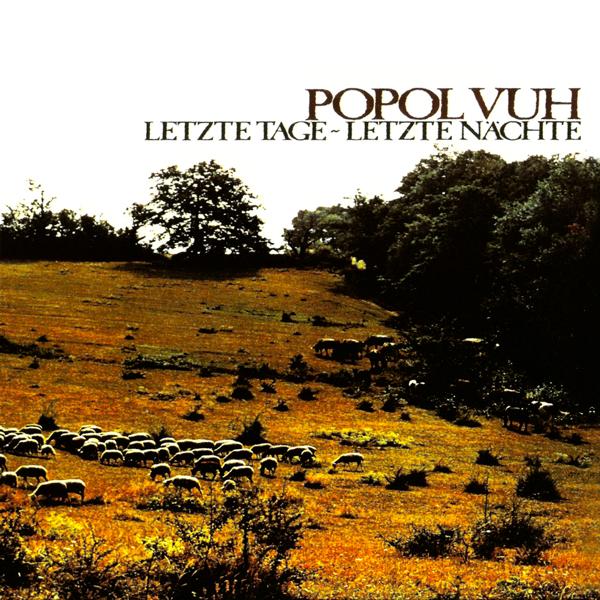
By the mid-1970s Popol Vuh’s association with fellow Munich-based rock band Amon Duul II opened their music to harder electric exploration, and when drummer/guitarist Danny Fichelscher left ADII to join Popol Vuh following Connie Veit’s departure (Veit played on Popol Vuh’s stunning classic, 1972’s Hosianna Mantra), he brought with him the Teutonic heaviness that was ADII’s stock-in-trade.  What followed was a string of records where Fichelscher gave form, importantly, to Fricke’s east-meets-west devotional exercises.  Among these albums was 1976’s Letzte Tage Letzte Nachte, an electric monument joining dark guitar figures with Popol Vuh’s trademark mantras.  Renate Knaup, also from ADII, contributes vocals along with Dyong Yun, the band’s primary singer.  “Oh wie nah ist der Weg hinab,” though, is an instrumental, and is representative of the shadows and light found in the set.  Darkness builds and thunder cracks, and then the storm breaks, the world made new.  There is an intended spiritual drama unfolding here, as it does in Wovenhand’s music, and, wordless as it is, the message is clear.

https://www.youtube.com/watch?v=qVQvbWaafiw

soundstreamsunday presents one song or live set by an artist each week, and in theory wants to be an infinite linear mix tape where the songs relate and progress as a whole. For the complete playlist, go here: soundstreamsunday archive and playlist, or check related articles by clicking on”soundstreamsunday” in the tags section.

soundstreamsunday #86: “Ocean Rain” by Echo and the Bunnymen

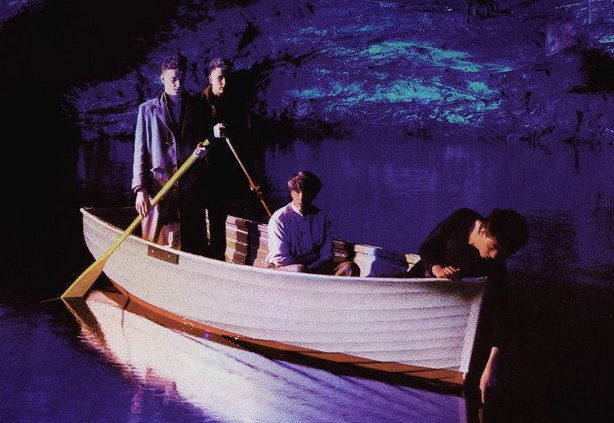
echoIt’s like they couldn’t help it, all the British bands that invented themselves in the wake of the Sex Pistols.  As hard as they tried not to, they created some of the loveliest pop music one can imagine, with smarts and restraint and pretension, lots of pretension.  In their willful endeavor to be a serious, art-y band in an evolving psych-goth-pop scene, Liverpool’s Echo and the Bunnymen were not the equal of Siouxsie and the Banshees or the Cure or even Simple Minds, but they had it in them to produce one of their era’s best records in 1984’s Ocean Rain.  As unique as it is in its genre for its use of an orchestra the album nonetheless captures the period, as romantic impulses toward grand gestures infused particularly British music with a youthful, surrealistic poetry — it didn’t always work, of course, and didn’t always need to work to be successful: if you were to ask me to name an album that summed up 1984, I’d point to, among others, Ocean Rain, even as I was a teenage metalhead.  But it’s not a perfect album.  Singer Ian McCulloch’s reach as a lyricist at times exceeds his grasp, and two of the record’s tracks (“Yo Yo Man” and “Thorn of Crowns”) threaten to bring down Ocean Rain‘s otherwise glistening pop dramas and diminish the band’s full flowering.

The title track closes the album, and “Ocean Rain” is a study in building pop ballad tension across five minutes of orchestra and guitars, with McCulloch and the band finding peaks and shifting down, delivering lyrics perfect for 80s college angst.  Echo and the Bunnymen would never be this good again, but they really are so good on Ocean Rain that nothing else compares to this jeweled and flawed masterpiece.

soundstreamsunday presents one song or live set by an artist each week, and in theory wants to be an infinite linear mix tape where the songs relate and progress as a whole. For the complete playlist, go here: soundstreamsunday archive and playlist, or check related articles by clicking on”soundstreamsunday” in the tags section.

soundstreamsunday: “How Do You Sleep” by LCD Soundsystem

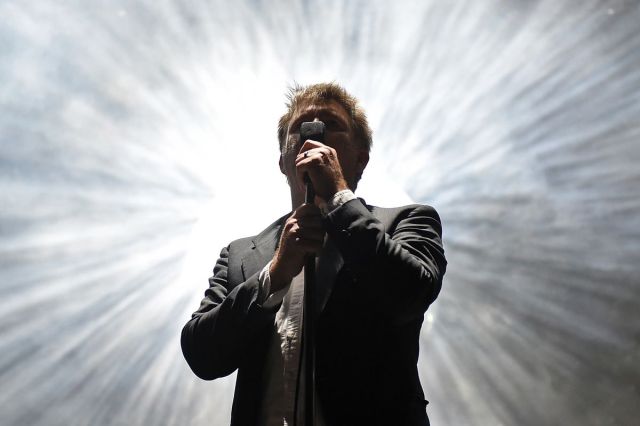
LCD soundsystemJames Murphy made no bones about the hipster cred accorded Can on “I’m Losing My Edge,” LCD Soundsystem’s 2002 dancefloor-meets-Weird Al hit.  “I was there, I was there in 1968, I was there at the first Can show in Cologne,” he sing-speaks ala King Missile, going on to target Suicide and others in the pantheon of removed, white boy cool.  It’s idolatry and idol-destroying at once, and it’s a lot of fun to listen to.  Murphy never shies from the obvious or expected, scratching musical itches and quoting hosts of precedents within his long-ish form constructions.  He makes big beats, giant basslines, and his meta smarts about the music he creates enlivens his work rather than reducing it to a nostalgia trip. Precocious, yeah, precious, no.

Murphy wrapped up his LCD Soundsystem project in 2011, but revived it last year with some shows and this year (this month in fact) with American Dream, a double LP epic that continues an obsession with Adrian Belew-era Talking Heads, Tom Tom Club, New Order, Depeche Mode, Modern English, Kraftwerk, and on and on and on….   Songs as dessert, and dessert with every meal.  And yet the lyrical content carries some heft, and whether or not you think Murphy is saying anything new or real or whatever, you can take his songs in a lot of different ways, luxuriating in all the analog richness  and the cracking drums, or thinking, as I do when listening to the lyrics of “How Do You Sleep?”, of something that relates on a personal level (in this case, there’s a Stevie Smith “Not Waving But Drowning” vibe going on).  These aren’t simply tossed off words so people who aren’t comfortable with instrumentals have something to chant, or words made to fit or counterpoint melody, which was Can’s m.o.  The lyrics crystallize, emotionalizing the epic weight of the central, insistent riff and Murphy’s all-in vocal.

soundstreamsunday presents one song or live set by an artist each week, and in theory wants to be an infinite linear mix tape where the songs relate and progress as a whole. For the complete playlist, go here: soundstreamsunday archive and playlist, or check related articles by clicking on”soundstreamsunday” in the tags section.

Bank Holiday Beats

paperweight

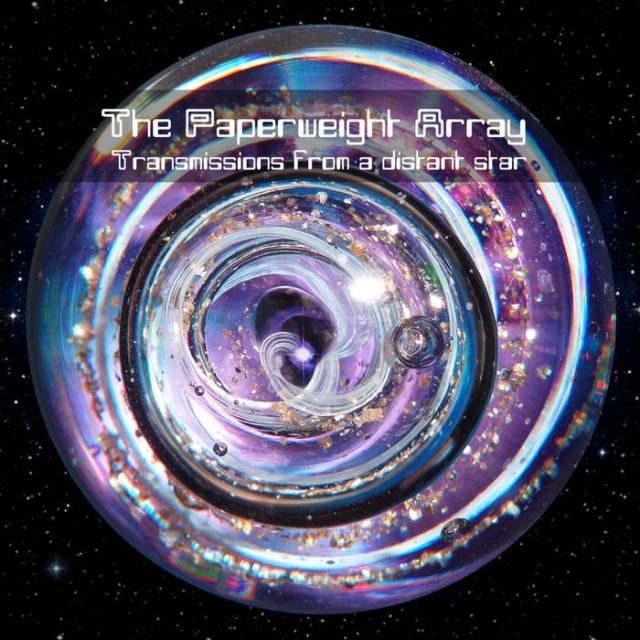
Every genre has a holy trinity, for prog it’s Yes, King Crimson and Pink Floyd, metal is Led Zep, Deep Purple, Black Sabbath, NWOBH is Iron Maiden, Saxon, Def Leppard, neo prog has IQ, Marillion and Pallas and now Rushdenbeat has it’s trinity, you have the Fierce and the Dead, Orange Clocks and now presenting their debut EP, The Paperweight Array, the third leg to the mighty sound that is Rushdenbeat, which is, to my mind the defining sound of 2017.

After my review for Progarchy about Orange Clocks, I inadvertently coined the phrase ‘Rushdenbeat’ and suddenly it took a life of it’s own on, with a Facebook group and a # as well!

Following this Aaron Hemmington got in touch and sent me a copy of the bands debut EP Transmissions from a Distant Star, a three-track introduction to their psychedelic world.

For those who aren’t aware Rushden (as per our good friend Professor Wikipedia) is part of the county of Northamptonshire, and was home to such luminaries as H E Bates, darts player James Richardson, and of course (although Wikipedia needs updating) Matt Stevens.

What is it about small English towns that can be the epicentre of something new and exciting?

I grew up in Rotherham, where the best thing going for it was the road to Sheffield where all the decent record stores were, and yet from 1991 onwards Rotherham had been home to the Classic Rock Society, and a Northern pulse for progressive rock, handy if you happened to be 17, into prog and on a bus route into town!

It seems as Matt Stevens himself has questioned on Facebook, that pre-internet, when you were in a small town, certain things either passed you by, or you found yourself in a particular group of friends where certain locations and musical tastes influenced you.

I remember saving all my money from my summer job for a trip down to London because the record stores there would have far more rare and esoteric albums, and I wasn’t able to just log in using my smart phone, search them and then buy them.

I think the mid 90’s were the golden days of record collecting, where finding music was much more of a hunt, more of a chase, and you appreciated listening to it more because you had put so much more effort into it.

That is the same with bands from smaller towns, Rushden I would imagine, like Rotherham would be bypassed by all the big names, and so if you wanted to hear the music you liked, then the only way to do it would be to form a band and play it yourself.

That is the ethos that runs through Rushdenbeat and so many other small town bands making a big noise.

Transmissions from a Distant Star, starts with the title track, some fantastic spiky guitar work and then a wonderfully spacey chorus that brings to mind a whole mix of sounds, there’s elements of XTC, some Canterbury scene and a whole summer of ’67 vibe carrying through the sound.

A perfect way to introduce yourself and it makes a massive impact as you listen to it.

Going Back, showcases how the band works with each other, the Paperweight Array being an old school power trio, with Aaron on guitar, vocals and keys, Just on bass and keys and Dunc on drums and percussion.

Listening to the mighty sound they make you wouldn’t think there were only three of them!

Again there is a lot of power in the riffs and the interplay between all three of them is one of the EP’s strengths, you can tell these guys know how to play, and more importantly know how to play with each other to bring the best out of them.

Corporal Cameo is a neo gothic old school psychedelic story, with some fantastic lyrics, and some wonderfully trippy keyboard sounds, and another one of those brilliant guitar riffs.

Listening to their sound and performance on this one, and you’d think Corporal Cameo was a lost 60’s psych classic that Stuart Maconie had dug up for his Freak Zone on BBC Radio 6.

This is a fantastic introduction to where the band are coming from, and it has to be said encapsulates in the most positive way the small town atmosphere that has led to the creation of some of the most exciting music in the UK, and indeed probably throughout the world. Whilst it’s wonderful in this digital all connected age to be able to see beyond your horizons at the touch of a button, I wonder how much of an impact that will make on all the small town musicians sat in their bedrooms, using music as an escape?

Transmissions from a Distant Star is available here

https://thepaperweightarray.bandcamp.com/releases


Sgt. Pepper: It was 50 years ago today …

by Rick Krueger

It’s official: Sergeant Pepper’s Lonely Hearts Club is now my 5th-favorite Beatles album, determined scientifically as follows:

Continue reading “Sgt. Pepper: It was 50 years ago today …”

Section 43 Turns 50

country-joe-2
The past is the push of you, me, all, precisely the same,
And what is yet untried and afterward is for you, me, all, precisely the same.
I do not know what is untried and afterward,
But I know it will in its turn prove sufficient, and cannot fail.
~ Walt Whitman, from Song of Myself, Section 43.


Unlike bluegrass, where one can point to Bill Monroe’s “Mule Skinner Blues” (1940) as the discrete start of a new musical genre, progressive rock’s emergence was gradual. With Revolver and “Eight Miles High” the boundaries of pop music were expanded; 1967 would see the arrival of free-form or fusionist jam tracks likes Pink Floyd’s “Interstellar Overdrive,” Buffalo Springield’s “Bluebird” (the hard to find long version), and Jefferson Airplane’s 24 minute epic “Spare Chaynge” (pared down to its last 9-1/2 minutes for After Bathing at Baxter’s). 

Fifty years ago this month Country Joe & The Fish entered the studio in San Francisco to record their first LP. The last track of side one may be the most proto-prog recording of the ’60s. “Section 43” reminds us that prog rock got its biggest push from the counter-culture’s psychedelia and acid rock. Whereas the aforementioned jam pieces are largely improvisational, this multi-part mini-epic displays as much attention to form as freak out.

Now, I have a confession to make. I had never heard “Section 43” until a few weeks ago. In 1967 I was a first-grader, and the greatest rock band in the world was The Monkees. When I later watched the Woodstock documentary I associated Country Joe with the Vietnam war gallows humor of “I Feel Like I’m Fixing to Die Rag.” I didn’t look into the band further. It wasn’t until I watched Jack O’Donnell’s documentary on the Summer of Love,  Revolution, that I caught the music on the soundtrack and went on a quest to know who performed it. Thankfully, the person who posted a print of the film on YouTube was ready with the answer.

Watching the film I thought I might be hearing some previously uncovered Floyd track. The Farfisa organ and bass line put me in mind of Rick Wright and Roger Waters. Upon learning it was Country Joe & The Fish my mind was blown — and impressed.

The piece follows a verse-chorus-verse-verse-chorus structure. The choruses build tension waltzing slowly through minor and dissonant chords. The first and third verses showcase interplay between Barry “The Fish” Melton’s Gibson SG and David Bennett Cohen’s keyboard. The middle verses are bisected by what Richie Unterberger calls “an unexpected, almost circus-like atonal passage.” Up to that jarring break our ears are treated to a bracing harmonica solo from bassist Bruce Barthol, as salient on that instrument as with the heavy strings, while Gary “Chicken” Hirsh’s cymbals crash and tom-tom’s dance all around.

But it’s Melton’s note-bending, Near Eastern inflection on the second guitar solo that’s the highlight of this track. Country Joe McDonald? Why, he wrote the thing, and his ringing hollow-bodied Gibson keeps the whole contraption aloft.

The band opened with “Section 43” on the final morning of the 1967 Monterey Pop festival, an event memorable for Pete Townshend smashing his guitar and Jimi Hendrix setting fire to his. But Rolling Stone rated “Section 43” among the 15 greatest musical moments captured on film. Not so much for the shots of the band themselves (though Melton’s army jacket and blue jean combo would be a look emulated on school buses for years to come). It was the yawning, scratching youth summoned from slumber by Country Joe’s yell, and stumbling to the stage front that were the real stars of the clip.

Barthol’s harmonica solo isn’t present in this version. Country Joe blows the last dying notes on the harp as the camera cuts to the tapping feet of a sleepy and spacey young woman, too tired or too high or perhaps too deeply moved to clap, but whose bleary-eyed, Mona Lisa smile tells us that we have might have just passed a key signpost on the road to Proghalla.


soundstreamsunday: “1983…(A Merman I Should Turn To Be)” by the Jimi Hendrix Experience

jhas02Jimi Hendrix’s mystery is something not quite capture-able as an iconographic or intellectual thing.  Even knowing some of the details of his background — from his emergence on the chitlin circuit to his being shepherded to London by Chas Chandler — doesn’t explain the lightning the man conjured.  The scant year and a half that Hendrix and his Experience released their three albums (May ’67-October ’68) encompassed a sea change in rock music that saw a full embrace of Dylan’s lyrical approach and of Hendrix’s instrumental creativity.  It went beyond the firepower, to the belief, the true faith, in what the electric guitar could ultimately offer to rock and other music.  Hendrix refracted his surroundings, adding to his electric soul and blues the emerging British fascination with distortion and eastern scales, and beamed them into the very brains of rock and jazz.  Since September 18, 1970, his is a persistent ghost, THE example of a technically skilled player and writer who, as importantly, brought imagination and soul and heart to the act of making music.

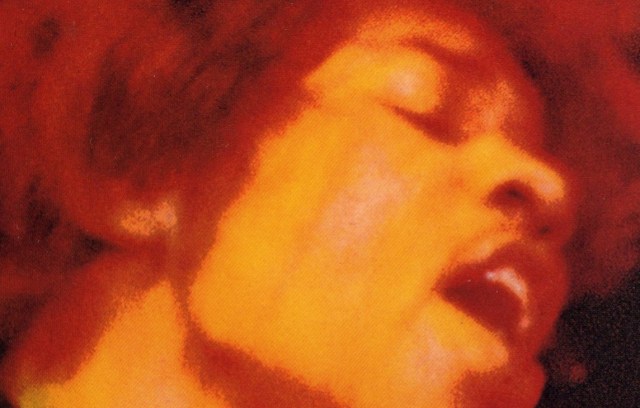
Electric Ladyland is Hendrix’s great work, mid-wifed by hard-won artistic and financial independence.  As double albums of that era tend to, it sprawls, spinning with ambition, noble failures, and grand successes.  He’s using the studio as an instrument, stretching the ideas cycling through him.  Some of his most radio-friendly hits appear on Electric Ladyland (“All Along the Watchtower,” “Voodoo Chile (Slight Return),” “Crosstown Traffic”).  But buried in the middle, on side 3, is the album’s jewel and centerpiece, “1983…(A Merman I Should Turn To Be),” a proto-prog epic on the art of walking away from the nonsense humanity inflicts upon itself, “not to die but to be reborn, away from the land so battered and torn.”  The music is a wild, left-field, Bolero-paced march where Hendrix overlaps his guitars and basses like a string section, affecting oceanic waves and surf, with sympathetic playing by steadfast Experience drummer Mitch Mitchell and flautist Chris Wood (on loan from Traffic).  In it are sonic echoes from “Third Stone from the Sun” (from 1967’s Are You Experienced?) and thematically Hendrix continues to mine the problem of Earth-boundedness.  Of being contained in a place that doesn’t seem to fit.  And even as Hendrix’s music transcends and transports, his real and continued gift is the mirror he holds up to those of us listening.

https://vimeo.com/78819718

soundstreamsunday presents one song or live set by an artist each week, and in theory wants to be an infinite linear mix tape where the songs relate and progress as a whole. For the complete playlist, go here: soundstreamsunday archive and playlist, or check related articles by clicking on”soundstreamsunday” in the tags section above.