Song Reflection: A Boy in Darkness

In the liner notes for English Electric (Part One), Big Big Train’s members offer us this comment on “A Boy in Darkness”:

Uncle Jack told David the true stories of how children suffered in the mines in the 19th century. Although there has been considerable progress there are still plenty of dark corners where children may suffer. This song is about shining light into those dark places.

Darkness.  I listen to this song, and questions bubble up from somewhere deep, dark, and hot.  I think of another song about darkness, with what I’ve always taken to be an allusion to the turning off (loss?) of a television:

Tube’s gone, darkness, darkness, darkness
No color no contrast
(Joni Mitchell, “The Hissing of Summer Lawns”)

It seems lame, making more words here from their already complete sonic poetry.  (“Lame” as my daughters pronounced many things when they were teenagers, but even more as in “the halt and the lame.”)  Will you forgive me this?  If it gets to be too much, and you stop reading, I’ll understand.
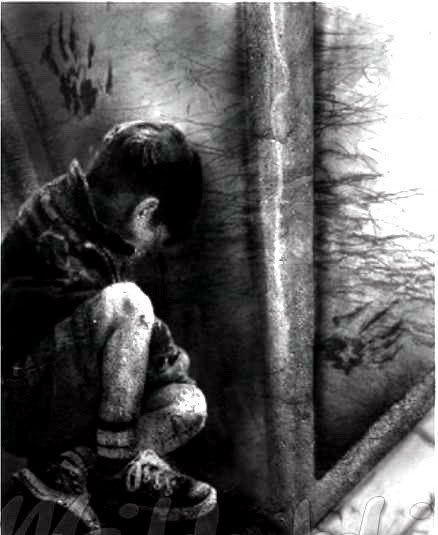
“Little Boy in Darkness”
(from photobucket.com)

Comparing one darkness with another is always such a problematic endeavor.  But here in this song we can hear more than one darkness, if we will listen.  If “progress” brings light to any darkness, it is always to some particular bit of darkness at a given time.  Even the light itself — the light that we literally see, anyway — makes shadows when it shines.  Shadows somewhere.

David Longdon’s voice rings in my ears with a pain that I don’t fully know myself.  But I have known well some who have known that pain, and so I am never more than one step away.  A friend, a family member.  I don’t know Godfrey Fletcher, but I do know this one, that one, and another one whom I cannot name here.  I cannot name them because their pain has in each case become a part of who she or he is, a self-shadow that will always follow.  It seems as though they must wear it like a kind of shame, even though the shame is really that of someone else.

Dark places.  A sense of place should be a sense of home, a sense of belonging.  One’s hearth.

Dark corners.  Corners are where one must stand, having been naughty.  When the darkness is brought by an Other, it becomes a verb, and one is cornered.

As I listened to this song this time, I heard an insistent silence that asked me what I might give to fuel the light.  I can watch news programs (“no color no contrast”), read online reports, furrow my brow and shake my head gravely for abstract children.  But how can I help to shine this light that is so desperately needed?  I KNOW persons — real, breathing, potentially bleeding friends, relatives, acquaintances — who must deal with darkness that is in no way abstract.  Could I be to them a light, yet also some relief from the heat?  A cooling light?

Mines are dark places where not everyone goes, where many did (and still do) avoid going.  Will I take this song as a call to go into some mine?  Will I know which mine I should enter?  Will I be able to see it as a mine?  Can I love a structure, call it home, if this means owning its dark corners?

Does something of me need to burn in order to bring some light?  Do I dare to face a part of myself that might have turned out not as father, but as “this hunter”?

Heart(h) of Darkness?

“The horror!  The horror!”
Hugh Howey Is A Gracious Man – A Brief Interview

Following my review earlier today of Hugh Howey’s Wool Omnibus, I sent him a note letting him know I had posted it (this was really his idea — he encourages his readers to review his books and get in touch with him, so I had no choice).  He sent me a nice note back, thanking me for the comparison of Wool to Ayn Rand’s Anthem and feeling honored to be, in my review, in the company of that book and Rush’s 2112.  I asked if I could post his response, and he said sure but that he’d also be happy to give a more structured response or answer a few questions.  So here are my “oh my god I have to come up with questions for Hugh Howey” questions and his thoughtful responses.  Hugh Howey is indeed a gracious man.

You’ve told me that you’re a fan of Ayn Rand’s Anthem and Rush.  Do you have a favorite Rush record? What are some other musical and literary favorites?
My favorite overall album is Moving Pictures, and I think that’s because of my age. My older brother got into their music, and I wanted to be as cool as he was. I remember hearing those drum solos go on forever and thinking to myself that these guys must not be interested in being on the radio at all, and that made them even cooler. In a way, I think Rush became commercial without trying to. And that appeals to me. Wool was written and published in a way that never should’ve led to commercial success.
 
Anthem is one of the grandaddies of post apocalyptic fiction. It gets left out of many discussions because of the controversial life and philosophy of its author, but I think art deserves to be critiqued independent of the artist. I didn’t think about the underground nature of Anthem until you mentioned it, but now I want to go back and read it again.
In the world of the Silo,information technology and mechanical technology play a huge role, and are described in very readable detail without killing the narrative.  Can you describe how you approached your description of these technologies in Wool?
I don’t enjoy science fiction when it gets bogged down in the details of how things work. The great thing about end-of-the-world stories is that the technology is often less advanced than what we have today. That allows the characters to stand in the foreground, which is what draws readers in. My approach is twofold, really: I respect the reader’s intelligence to figure things out as they go, rather than blast them with info dumps. And I don’t have characters marvel over aspects of their own worlds that really ought to be banal to them. Science fiction can do this sometimes: characters appear to be wowed over things that are everyday. That always feels jarring to me.
When you wrote the first novella, did you have an idea of how Wool 5 would end?
Not at all. It was just the one story. But when I set out to write Wool 2, I sketched out the entire saga, which includes the SHIFT and DUST books. I didn’t want to fall into the trap of Lost, where the creator has no idea what’s going on, and the reader/viewer can begin to sense this. I wanted to foreshadow events miles in advance. 
There are elements of wool that seem particularly well-suited for dramatic interpretation.  Are we going to see a movie of Wool?
I hope so! Ridley Scott and Steve Zaillian optioned the film rights. The screenplay is in the pipeline right now. I’d say the odds are 1 in 10 that a film gets made, which is pretty damn good by Hollywood standards! 
What are you currently writing, and how can we keep up with it?
I’m working on the end of the SHIFT series. After that, I’ll start the third and final act, DUST, which is where things really go to hell. My website is a good place to keep up with my writing. I even keep my word count updated, so you can see how far along I am in any draft. I try to think of the things I wish my favorite authors would do, and then I do them. Just makes sense to approach things that way.
 
Best,
Hugh 

A sprawling, highly subjective review of Soundgarden’s “King Animal”

“I’ve been away for too long …” — “Been Away Too Long”, opening song from King Animal
“Don’t know where I’m going/I just keep on rowing” — “Rowing”, closing song from King Animal

I suppose that first lyric could, alas, be applied to my postings on this fine blog. The past few weeks have been incredibly busy, with each day passed the cause for more muttering on my part about all of the brilliant, world-changing posts I should be foisting upon Progarchy readers. But since brilliant, world-changing posts are difficult to write, I’ll settle for writing a long and highly subjective review of the new Soundgarden album, King Animal, to be followed later this week with my “Favorite Music of 2012”, which I’ve now narrowed down to less than a hundred releases.

But before the review, a note of thanks. First, to the amazing Brad Birzer, the Sleepless and Tireless One, whose leadership and energy have really made Progarchy.com into the fabulous, progressive site that it is (and, yes, that’s the only time I’ll write “fabulous, progressive site” in my life). Thank you, Brad. You took the flimsy whim of my fleeting brain drizzle and turned into a lively, robust, and darned fun site. Hat’s off! And, secondly, to everyone who has contributed, thank you. I’ve tried to read every single post, and I’ve never been disappointed. The variety of perspectives, insights, tastes, eccentricities, and musical journeys has been fabulous to behold. Kudos!

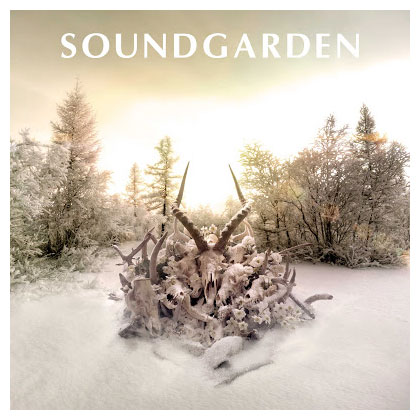
One problem I have writing a review of King Animal is that I am tempted to turn it into something far more: a rambling, semi-coherent tribute to one of my favorite bands ever, late discovered (c. 2005) but perpetually played since; a sprawling rant about the word “grunge” and why Nirvana is (ahem) an incredibly overrated band and Pearl Jam leaves me completely cold (although I acknowledge that group’s abilities); a circling soliloquy about how Soundgarden—despite not being “prog”—has managed to do something that great prog bands do: create music that is soundgarden_kinganimalrestless, impossible to pin down either musically or lyrically, and incorporate a bazillion different influences and styles while producing a sound that is so distinctive that any rock fan worth their salt will shout, “Soundgarden!” after hearing just a handful of notes of any given song.

I’ve now listened to King Animal over three dozen times, and here, in short, is my take: it is not a perfect album, but it is a great album (a 9 out of 10, if I used such a system). And when you consider the thirteen-year long break (sixteen years between new albums), the fact that most reuniting bands play it safe and easy, and that the band members have always had quite different musical perspectives and approaches, it is a really great album. And, in fact, it has received solid to glowing reviews, as it should. I won’t bother pointing to this or that review, although there have been some good ones. However, if you want a great track-by-track description, here the place to start. And if you want to listen to the album online, here you go. Or, if you just have time for a single, defining moment from the album, be sure to here the song, “Bones of Birds”, which is perhaps the most stunning track among several stunning tracks.

Chris Cornell, the legendary voice and primary lyricist for the band, said recently, “The album is a story. It has a lot of twists and turns.” That jumped off the page (well, screen) at me because as I’ve listened to the album and reflected a bit on the lyrics, I keep coming back to (ready for it, Brad?) my favorite T. S. Eliot poem, “Ash Wednesday”. That poem is about spiritual struggle and ascent, the tension between the past and all of its failures and demons, and the future, which is filled with hope (ultimately eternal and God given) as well as fraught with peril. It refers to twists and turns, to the mystical ladder of ascent:

 At the first turning of the second stair
I turned and saw below
The same shape twisted on the banister
Under the vapour in the fetid air
Struggling with the devil of the stairs who wears
The deceitful face of hope and of despair.

At the second turning of the second stair
I left them twisting, turning below;
There were no more faces and the stair was dark,
Damp, jagged, like an old man’s mouth drivelling, beyond repair,
Or the toothed gullet of an aged shark.

One of the reasons Soundgarden has fascinated me over the past few years is because so many of their songs explore and reflect the spiritual struggle and existential crisis so evident in the modern/post-modern world. And rather than being trite, didactic, preachy, posturing, or narcissistic, those songs have tended to be both very honest and very fragmentary, as if Cornell (primarily) is looking into a shattered glass and trying to put it back together, like a mosaic both broken and coveted. Think, for example, of their huge (and unexpected) hit, “Black Hole Sun”, from the masterwork, Superunknown (1994):

In my eyes,/Indisposed,
In disguise/As no one knows.
Hides the face,/Lies the snake,
And the sun  …
In my shoes,/A walking sleep,
And my youth/I pray to keep.
Heaven send Hell away,/No one
Sings like you anymore.

Like who, exactly? The brilliance of such lyrics is, again, the shard-like ambiguity and artful lack of full resolution. But there is no denying the longing, and how that longing is rooted in a quite Catholic perspective, even if it resists any and all systematic explication. Cornell was raised in a Catholic home, and while he had, by all accounts, a fairly miserable childhood (alcoholic father, etc.), he has repeatedly used Catholic motifs and more generally theistic language in his songs. Some of more overt references can be found on the first Audioslave album, as in the song, “Show Me How To Live”: Continue reading “A sprawling, highly subjective review of Soundgarden’s “King Animal””

Hugh Howey’s Wool

ImageI just finished my Christmas reading, Hugh Howey’s Wool Omnibus, having bought it on special for $1.99 (for my Kindle) based on one of those Amazon emails:  “CBreaden, here are books we think you might enjoy!”  Always a leap of faith, going with this kind of marketing, but in a heat-haze brought on by recently finishing Joe Abercrombie’s Heroes and having nothing at hand I wanted to read, I took that leap.

About halfway through the collection of five novellas, I realized I needed to alert the prog world to it, thus uncovering my not-so-hidden geek love (limited as it may be) for sci-fi and prog rock’s connection to it.  I think like a lot of us I first fell under this spell with Rush’s 2112, which I didn’t hear until several years after its release but, when I did, quickly turned to Ayn Rand’s Anthem for the text on which Neil Peart based some of his story.  Rand’s most succinct novel, and to me her most powerful, coupled with Rush’s record, raised a fairly high bar.  Alternate worlds are frequently the stuff of prog, but only on occasion are they expertly wrought in song.

Wool immediately struck me as one successor to Rand’s Anthem, but with a less severe political bent, characters more like the regular people you and I know, and little reliance on metaphor.  What it has in common is a lean narrative and concise style, although the five novellas collected together in the omnibus are far longer than Anthem.  The similarities don’t end there:  like Anthem, Wool has at its center a people being kept from the truth.  It tells the story from the perspective of several characters among a large population who have for hundreds of years inhabited an underground “silo,” which as readers we understand to be an enormously deep, hugely broad, completely self-sufficient bomb shelter.  The only connection to the world beyond the silo is a series of screens that project images of the outside.  These images are produced by cameras mounted to the exterior above-ground portion of the silo, the lenses of which need regular cleaning due to the howling nuclear-desolate wastewinds whipping the landscape.  This task is given to individuals who commit crimes in the silo, which include having dangerous ideas like wanting to know what the outside is like or how we came to be in this blasted silo anyhow.  Okay, so maybe there is some metaphor.

What strikes me about Wool and Anthem, and the reason I bring Wool to Progarchy with a big recommendation to read it, is the imagination of an alternate world, not just by the author, but by his characters.  What happened outside the silo? What are our origins? Is what we see on the screens real? (Plato, anyone?) Howey’s characters are not unsubtle, one-dimensional creatures.  They struggle with these questions with both trepidation and reluctance for committing a crime, and for the mind-bending possibility embedded in “what if?”  This also strikes me as core to the experimentation necessary to successful, progressive music.

– Craig Breaden, December 27, 2012

P.S. Howey has been writing like a madman.  Initially, he self-marketed Wool, beginning in late 2011, almost entirely as an e-book on Amazon.  He’s now been picked up by print publishers, but continues to offer his books online for cheap.  He’s already two volumes in to the prequel to Wool.  Check his site here: http://www.hughhowey.com/. Buy his books here: http://www.amazon.com/Hugh-Howey/e/B002RX4S5Q/ref=ntt_athr_dp_pel_1

Chanson d’infini (a poem)

CHANSON D’INFINI

I hear the sweetly palpable texture there,
As if, like hands, my ears could bathe and splash
In each new note he plays, in each new word
He sings, or rather, vocally caresses.

Betwixt his tones, in interstitial mystery
There lies a deep, unsingable sort of tune.
Between two notes, infinity, unbroken
Sleeps, content with natural, sharp, or flat,
All alphabetical, until an unbound voice
Can bend between and wake the pure durée.

Singers often sing their songs, and we
The hearers, listen near as often too;
But when it is a song that sings a singer,
Then…
Then we have Heard.

.

(Originally written in 1996, I think this was when I had first really gotten hold of that wonderful word, ‘interstitial,’ in relation to hearing music.)

Frost*Bites

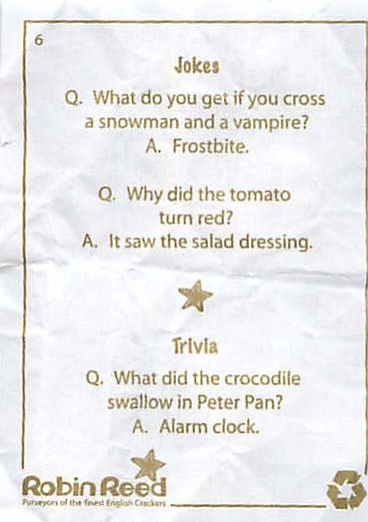
This was inside of a Christmas firecracker we popped last night.

frost bite

Nick’s Best of 2012 (Part 3)

And finally, after my ‘Top 5 Contenders‘, we have (drum roll please!) my Top 5 of 2012:

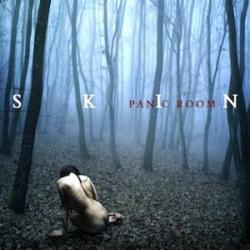
5. Panic Room – Skin

panicroom

A real surprise, this. I like Panic Room well enough; I admire their previous release, Satellite, both for its fine production values and for the two or three stand-out tracks on it. It is a good album, but not a great album. So I wasn’t expecting them to have raised their game quite so much with the follow-up. Production-wise, Skin sounds every bit as good as its predecessor, but the quality of the songwriting is higher and more consistent. The rockier tracks, Song For Tomorrow and Hiding The World, are as good as anything they have done, but it is the slower, quieter songs that really shine. There’s a wonderful mellow, chilled vibe to these quieter songs, and the liberal use of strings adds a degree of sophistication. Anne-Marie Helder’s voice is simply heavenly. This isn’t music that will challenge you, unlike some of the albums in my Best of 2012 list; rather, it is the sonic equivalent of a silk shirt or satin sheets: smooth, elegant and luxurious.

4. Kompendium – Beneath The Waves

kompendium

Another surprise entry. Being a fan of Magenta, I pre-ordered this purely on the strength of Rob Reed’s involvement and he hasn’t disappointed. Magenta’s distinctive take on prog pervades Beneath The Waves, but this is an altogether more epic piece than anything done by that band, bigger in scope and bigger in its production. A ‘cast of thousands’ has been involved over the album’s three-year gestation period: Steve Hackett, Francis Dunnery, John Mitchell, Nick Barrett and Jakko Jakszyk on guitar; Gavin Harrison and Nick Beggs providing the rhythm section; Mel Collins, Troy Donockley and Barry Kerr on sax, pipes and whistles; Dave Stewart and the London Session Orchestra; The English Chamber Choir; Tina Booth, Shan Cothi, Rhys Meirion, Angharad Brinn and Steve Balsamo providing solo vocals.

The result of all this labour is a lush and richly atmospheric album, successfully blending classic prog with symphonic and celtic/folk elements. At times, it sounds uncannily like something Mike Oldfield might have produced in his heyday – a most welcome resemblance to an Oldfield fan like me! In places, it has the feel of a film score, in others the drama and impact of musical theatre or opera – and the vocal and choral work is quite stunning. The packaging of the album, in a mini-gatefold sleeve with an 18-page colour booklet on the inside, also deserves praise.

3. Rush – Clockwork Angels

rush

I have to admit that I idolise this band, but if they had produced another Snakes & Arrows, they wouldn’t be featuring in my Top 5. Not that there’s anything particularly wrong with S&A; it is undoubtedly a good album, but there’s a certain ‘sameness’ to the tone and texture of the individual tracks. It feels densely-layered rather than loose and free-flowing, safe rather than adventurous. Clockwork Angels addresses these issues head-on. For starters, it’s a full concept album – their first, shockingly (the concept pieces on Caress Of Steel, 2112 and Hemispheres being one side of an LP only). And what a concept! The familiar dystopian themes beloved by Neil Peart, but set in a Steampunk universe, and tied into a novel by Kevin J Anderson and Peart.

The music is also a delight. The concept lends it a greater sense of urgency and purpose. The sound is a bit more stripped down than on S&A and there are subtle nods to classic 70s Rush – such as the Bastille Day bass riff that creeps into the opening of Headlong Flight. The latter is a beast of a track, one of several real rockers on this album – the title track and The Anarchist being the other prime examples. Changes in tone and pace come from a delightfully loose section of the title track featuring slide guitar and from a couple of slower, more reflective numbers: Halo Effect and The Garden. The latter ends the album in uncharacteristically emotive fashion. Could the subtext really be a farewell to fans? Let’s hope not, but if this is their last bow then they have taken it in fine style.

2. Marillion – Sounds That Can’t Be Made

marillion

Even the most hardened Marillion fan would probably admit that the band’s muse has proved elusive since they basked in well-deserved acclaim for 2004’s masterful Marbles. Sure, they have served up some memorable music for us in the eight years since then – musicians with their talent, dedication and integrity could hardly fail to do so – but somehow it hasn’t had quite the same spark or level of consistent brilliance found on Marbles. With Sounds That Can’t Be Made, however, I feel that the magic is back. STCBM doesn’t quite scale the heights achieved by Marbles – which may well prove to be their career-defining highlight – but it comes close.

Album opener Gaza is a brooding monster of a track that courts controversy with its position on the conflict between Israel and Palestine. Whether you agree with Hogarth’s take on the issue or not, you have to admire the band’s boldness here. The album’s other ‘epic’, Montreal, is less successful, feeling to me like a collection of music ideas that don’t quite gel. The quirky Invisible Ink is likewise not really my cup of tea, but everything else is wonderful: the synth pop and soaring Rothery solo of the title track, the cool sophistication of Pour My Love, the laid-back groove of Power, the painful honesty in the tale of relationship break-up that is The Sky Above The Rain. This is Marillion doing what they do best: always reinventing themselves but always finding that intellectual and emotional connection, making you think but also making you feel.

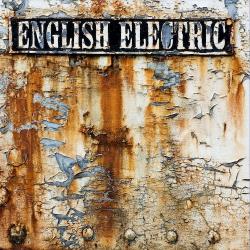
1. Big Big Train – English Electric Pt 1

bigbigtrain

Yes, another Progarchist with English Electric Part 1 as his No. 1 of 2012, I’m afraid! And the fact that a self-confessed Marillion and Rush fanboy like me has placed this ahead of great albums by those bands tells you just how good this is. I can’t do better than the erudite and rather beautiful analysis of EE1 by Progarchy’s very own Brad Birzer (which I urge you to read), so I’ll simply say that it stunned me from the very first listen. As you’d expect from Big Big Train, this is an album suffused with a love of the English landscape, its rich history and its industrial heritage. It is less classically proggy than its excellent predecessor The Underfall Yard, leaning instead towards pop and folk music influences – there’s more of XTC in here than there is of Yes. Don’t let that put you off (not that it should), because the result is utterly sublime.

It’s difficult to pick out highlights when so much of the music is exquisite, but at the moment I’m particularly fond of joyous opener The First Rebreather, the elegaic Summoned By Bells and the dramatic A Boy In Darkness. Judas Unrepentant is wonderfully uplifting as well. And Uncle Jack is just so lovely, light and summery… Damn it, it’s all brilliant! And the cover artwork is rather special too. Could Part 2 possibly match, or even exceed, this? We will know soon enough!

A glimpse of the past ….

I was out with some old friends recently – friends with whom I grew up listening to Rush, camping out to see them at Manchester Apollo, enjoying carefree days of 2112 and Hemispheres.

The memory of seeing Rush close-up, from the front row, as the dry ice trickled out at the start of Xanadu will stay forever. 

We reminisced about school days and about concerts, about girlfriends and what we got up to, and then one of the lads said “Hang on – I’ve got a photo from 1980 of us all when we were camping”

Then he flipped this photo on his phone and there we were, 30 years ago, youthful, hairfull, optimistic, happy, thoughtful, serious.

Suddenly 30 years melted away in a moment …… it was a very atmospheric moment as we silently reflected ….

Image


I’m on the left by the way and you can just see my 2112 t-shirt.

To think we are all still in contact, sat next to each other in a Manchester bar – older, not much wiser, still into music, still the same people …..

Memories.

Focus – Hocus Pocus

I post this for the simple reason than that every time I watch it, it makes me bellow with laughter. I hope it tweaks your brains similarly, dear readers.

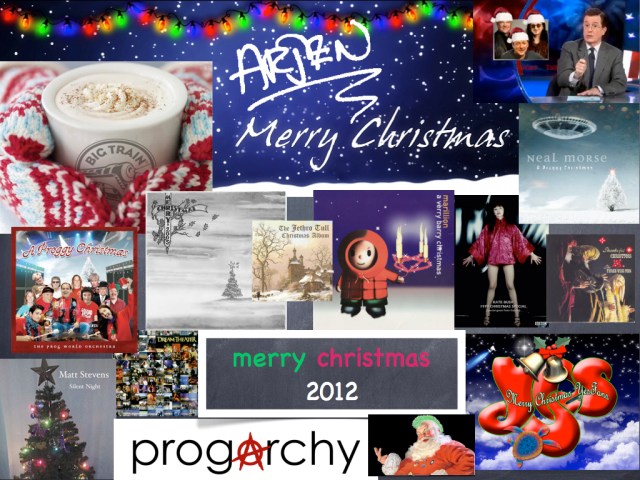
However you choose to celebrate or ignore the season, have a splendid one!