Islands of Sound, Sea of Silence

Islands Trifid Nebula

King Crimson, Islands (1971)

When I think of silence as a part of sound, I often think of this specific album.  Its “silence” was in fact the hiss of a pirated tape.

For a while in the early 1970’s, I remember being able to buy 8-track copies of “popular” albums at the grocery store.  They resembled the early “generic” food products, with the plain white label and black printing.  (I remember how compelling those white cans looked, with only the word “BEER” on the side.)  This was before changes in copyright law of the mid-70’s, and the tapes were simply recorded from the albums and sold, presumably always without permission or payment.

I probably only ever had a small handful of these, and now I only remember one of them.  I had picked up Islands by King Crimson, not yet knowing anything about them at that point, but finding myself intrigued by both the band name and the album title.

Now, this was still very early in my awakening to prog.  Imagine this naive young American teen from rural Ohio, listening to “Ladies of the Road.”  Then listening to it again.  Then again.  As many critics have suspected, it probably didn’t help with my intensely awkward, ignorantly misogynistic adolescent confrontations with my sexuality.  But oh man, that saxophone entrance!

I think it was at least a week before I really listened to the whole album with the same level of attention that I gave to LOTR.  (If I use that abbreviation, it will probably drive Brad Birzer crazy, which will be totally worth it.)  The second song on the album that began to reverberate deeply was “Song of the Gulls.”  What’s up with this?  All strings?  Like a “classical” piece?

Remember how those 8-tracks worked?  If I remember right, at that point I could just listen to the third section of the tape over and over.

By the time the entire album had me entwined in its tendrils, I had repented and bought a legitimate copy.  Removed the shrink wrap, so there was no band name or title, and it was another one of THOSE covers: Peter Sinfield’s original “Islands” painting.  My third (second legitimate) copy eventually had the Trifid Nebula cover.

Once I had immersed myself in the remainder of the album’s tracks, I began to feel the importance of pauses, of “silence” (I would learn a bit later from John Cage the relativity of “silence”).  It was this album, as much as any early “prog” album, that got me to notice the role of silence in music, of “negative space” in aural texture.

It was also a bit later when I went back to the earlier King Crimson, once I had made the connection that this was where Greg Lake had come from.  The transitional character of Islands gave its music greater depth for me.  It prepared the way for the coming adventures with Wetton, Bruford, and Cross, which are actually my favorite Crimson albums overall.  But Islands remains my point of entrance, and so inescapably a sort of benchmark for my sojourn with Robert Fripp.

Listen again to Islands, and notice the surrounding sea.

The Tangent: Le Sacre Du Travail

A brief update on Brad’s post from yesterday, regarding Andy Tillison’s new project for The Tangent.

The new website is up and running at http://www.thetangent.org/ as of today and is taking ‘pre-pre-orders’ for the new album, entitled Le Sacre Du Travail. According to Tillison, the new work is The Tangent’s “deepest foray yet into the world of classical/orchestral music” and draws inspiration from Stravinsky’s The Rite Of Spring. Intriguing, to say the least – and when you consider that Andy is hoping to involve the likes of Theo Travis, Jakko Jakszyk and Big Big Train’s Dave Longdon, the prospect becomes positively mouthwatering!

The notion of pre-pre-orders is an interesting one and mirrors what Magenta did with their last release, Chameleon. Essentially, you pay more for the album up-front and, in return, get access to digital versions of the tracks as they develop. Andy is right to point out that this isn’t for everyone, but if you are a music nerd then what better way to get inside the head of a musician you admire?

Andy has posted an 8-minute clip of his initial demos for the new work:

I’ve pre-pre-ordered and have already received a link to a longer 22-minute demo. When I’ve had the chance to have a proper listen, I’ll post some thoughts here.

The The: The Real Article

Remember the days when there were a few artists whose albums you would buy, no questions asked, before you heard a single note? They were so consistently good that you rushed to the record store on the Tuesday the new album was released, and finding it in the bin made your heart skip a beat. The The was that kind of artist for me.

The The was/is one person: Englishman Matt Johnson. I first became aware of him in 1982 when the 12-inch single (that’s vinyl, for you youngsters) of “Uncertain Smile” showed up at WRVU where I was a college-radio DJ. The artwork was attention-grabbing, and I put it on the turntable. The most amazingly catchy tune poured out of the monitors, and I was soon bopping round and round the tiny studio. For months afterward, whenever I made a mixtape (that’s a cassette, for you youngsters) for a friend, “Uncertain Smile” was always included.

“Uncertain Smile” was a track off of Johnson’s debut US album, Soul Mining, which is a mother lode of earworms. Every single song burrows its way into your brain with an irresistible hook that won’t let go. However, beneath the surface of these new wave/pop masterpieces, turbulence was brewing.

Johnson’s next album, 1986’s “Infected”, while maintaining the high hook-to-song ratio, was also chock-full of bile and bitterness. The title track’s chorus included the line, “So infect me with your love”. Love is a disease? Hmm…. “Heartland” comes across now as surprisingly prescient, as Johnson bemoans his country’s loss of independence: “The ammunition’s been passed/And the Lord’s been praised/But the wars on the televisions/Will never be explained/All the bankers getting’ sweaty/Beneath their white collars/As the pound in our pocket/Turns into a dollar/THIS IS THE 51ST STATE OF THE USA.”

For 1989’s Mind Bomb, Johnson put together a real band, including Johnny Marr on guitar, whose Smiths had recently imploded. Once again, the lyrics convey Johnson’s fury at religious conflicts: “But if you think that Jesus Christ is coming/Honey you’ve got another thing coming/If he ever finds out who’s hijacked his name/He’ll cut out his heart and turn in his grave/Islam is rising/The Christians mobilizing/The world is on its hands and knees/It’s forgotten the message and worships the creeds.” (Armageddon Days Are Here Again) However, alongside those rants are beautiful ballads like “Gravitate To Me”, where he croons, “I am the lighthouse/I am the sea/I am the air that you breathe/Gravitate to me.” And, as always, it all goes down easy, thanks to the gorgeous melodies wrapped around the words.

1993’s Dusk is the last of The The’s “classic” albums. It starts off with the sound of a needle dropping onto a vinyl record, and the listener is suddenly in the middle of a monologue by Johnson that sounds like it was recorded live in a comedy club. Except what he’s saying isn’t particularly funny – he sounds like he’s on the verge of being totally unhinged – and just when things begin to get really uncomfortable, he strums an acoustic guitar and sings, “Well, I’ve been crushing the symptoms/But I can’t locate the cause/Could God really be so cruel?/To give us feelings/That could never be fulfilled/Baby…” and we are off on a rollercoaster ride as Johnson explores his frustrations with love, lust, God, personal isolation, and the evil that every human is capable of .

Instead of railing against countries’ foreign policies and various religious doctrines, Johnson gets intensely personal in Dusk: “Everybody knows what’s going wrong with the world/But I don’t even know what’s going on in myself.” (Slow Emotion Replay) In the song “Lung Shadows”, a beautiful, jazz-tinged theme plays while he softly begs repeatedly, “Come closer to me”. In “Bluer Than Midnight”, he echoes Paul as he laments, “One sin leads to another/Oh, the harder I try/I can never, never, never find peace in this life.”

The album closes with “Lonely Planet”, which features a cathartic, uplifting melody, and the chorus, “If you can’t change the world, change yourself.” It’s a powerful song that reflects the wisdom gained from looking at a fallen world with unblinking eyes, and realizing, “The world’s too big and life’s too short/to be alone .. to be alone.” In the end, simply loving someone is the greatest thing we can hope to accomplish.

One last note: in 2002, Epic/Legacy rereleased Soul Mining, Infected, Mind Bomb, and Dusk in remastered versions that are excellent. If you get all four, the slipcases form two portraits of Matt Johnson when placed side-by side (which I think is pretty cool):

And here is “Uncertain Smile” performed live:

Latest from Matt Stevens/Tangent

Photo © TheChaosEngineers. For information: info@thechaosengineers.com

Great news this weekend.  First, from Matt Stevens:

Hello Brad

Hope you’re good. It’s been crazy here, a weird kind of post gigging come down. The Jazz Cafe gig was great fun, they treat you well there, blimey. Dressing rooms and beer!

I made a Spotify playlist with a “best of” my solo stuff. Is there any chance you can share it on your Facebook, Twitter, Groups or on any Forums you are a member of? This stuff makes a MASSIVE difference to obscure/DIY artists like me. The URL is:

http://open.spotify.com/user/1117036918/playlist/0uecTVxzs6d4dIBdWiOYDc

I know Spotify is controversial but for me at the moment the important thing is to grow the audience for the music. Your help is really appreciated, thanks loads.

Also if anyone is voting in the Prog magazine reader awards at:

http://www.progrockmag.com/news/vote-in-our-2012-readers-poll/

And fancies voting for for Fierce and The Dead or me it would be really appreciated 🙂 Exposure in these sort of polls really helps 🙂 Hopefully all the gigging this year has raised the profile a bit…

I’ve no more gigs booked now so the next months will probably be a bit quiet while we write and record  the new Fierce and The Dead record and plan my new solo record. Busy busy. The new Fierce And The Dead demos sound really good. They may be some sort of Pledge Music type pre-order. I’ll let you know.

Also we’re planning to tour outside the UK so please let us know where you’d like to see us. Thanks 🙂

Speak soon,

Matt Stevens

News from the invisible world

http://www.mattstevensguitar.com

http://www.spencerparkmusic.com

mattstevensguitar@btinternet.com

 ***

And, I had the great privilege of listening to about 75 minutes of Geoff Banks’s Prog Dog Radio Show this afternoon.  He announced some exciting news from The Tangent.  Pre-sales for their next album will be open beginning tomorrow afternoon.

On Friday, The Tangent released this on their Facebook page:

OK Folks the wait is over here is the very first chance to hear BRAND NEW work (in progress) from THE TANGENT. email workday@thetangent.org to get updates and find out how you can be part of a pre-pre order campaign to support this project. http://www.youtube.com/watch?v=wkOgivtLy_U

So much good coming out of the progressive rock community right now, it’s more than a bit overwhelming.  Of course, it’s the kind of overwhelming any lover of the genre craves.


Beneath The Waves

Cover art for Kompendium's "Beneath The Waves"Fellow Progarchists, may I commend to you the newly-released Beneath The Waves, by Kompendium? I’ve had this on pre-order for a while. The CD/DVD arrived this weekend and it’s truly wonderful.
Kompendium is a side-project of Magenta’s Rob Reed. Beneath The Waves has been under development for three years – which comes as little surprise when you consider the ‘cast of thousands’ involved in making it. Amongst the players, we have: Steve Hackett, Francis Dunnery, John Mitchell, Nick Barrett and Jakko Jakszyk on guitar; Gavin Harrison and Nick Beggs providing the rhythm section; Mel Collins, Troy Donockley and Barry Kerr on sax, pipes and whistles; and Dave Stewart providing string arrangements for the London Session Orchestra.

Vocal contributions are no less impressive: the English Chamber Choir; Synergy Voices; Magenta’s Tina Booth; soprano Shan Cothi and tenor Rhys Meirion; Angharad Brinn and Steve Balsamo filling the lead vocal roles.

So what’s it like?

If you are familiar with Magenta, you will recognise Rob Reed’s handiwork, but Magenta’s classic prog sound has been blended very successfully with symphonic and celtic/folk elements. At times, it feels almost as if Mr Reed has been channelling Mike Oldfield – not a bad thing if, like me, you are an Oldfield fan. There are big, dramatic soundscapes here, worthy of a film score. The vocal and choral work is very fine indeed. There are many layers to explore, and I’m going to enjoy peeling them back over the coming weeks!

There are several tracks up on Youtube that will give you a good feel for the music, but a good place to start is the EPK video:

Gig Review: Anathema & Opeth, 15 November 2012

This was an event that I almost missed, because I was in a pretty sorry state on 15 November. I had been feeling fuzzy-headed and a bit shivery throughout the day; as gig time approached, I even thought about heading straight home from work to my bed.

Thankfully, I didn’t bail – but I was definitely questioning whether that was a sensible decision as I stood near the front of the crowd at Leeds Metropolitan University Student Union. And then Anathema took to the stage. Right from the start, the atmosphere was electric, with Danny Cavanagh geeing up the crowd even before they launched into their first song – I think it was Deep, from the Judgement album, although I’m not sure my fever-addled brain can be completely trusted on that. I clearly recall the next three songs, though: Thin Air, from 2010’s excellent Steven Wilson-produced We’re Here Because We’re Here, followed by Untouchable Parts 1 & 2, the opening tracks of latest album Weather Systems.

A remarkable thing happened as the band began to play these three songs. Those earlier feelings of illness and discomfort dwindled into insignificance beside the strong emotions stirred up by the music: a sense of absolute joy, of being exactly where I ought to be, witnessing this. And there was a tear or two, as well – an inevitable response to the achingly beautiful and poignant Untouchable Part 2. Isn’t the transformational power of music a wonderful thing?

That euphoria persisted for the remainder of their 45-minute set, which seemed to come to an end far too soon. There was another track from We’re Here Because We’re Here, the powerful A Simple Mistake (Steven Wilson’s favourite, apparently); a failed attempt at playing Closer – thanks to an equipment failure, which the band took in their stride; a couple of other old tunes whose titles escape me. And then it was over, leaving me wishing fervently that they had another hour to play.

Now the fuzzy head was back with a vengeance. As the temperature rose and the crowd pressed in anticipation of Opeth’s set, I wondered how long I could last before passing out and began considering my options for an early exit. But again the discomfort subsided as I became increasingly absorbed by the music.

Let me admit at this point that I’m not an Opeth devotee. I have three of their albums, so I was able to recognise songs such as The Devil’s Orchard and Famine from latest album Heritage, or Burden from Watershed – but that left at least 50% of their set unfamiliar. Yet this didn’t seem to matter, in the end. I found myself enjoying simply being there, soaking up the atmosphere, admiring the power, precision and intensity of their performance. I had a great view, and the civilised volume levels meant that it was possible to hear how well they played, something that can’t be said for many of the gigs I’ve attended in the past.

In summary: an excellent evening, despite its inauspicious beginning.

Mini-review: “Deaf, Numb, and Blind”

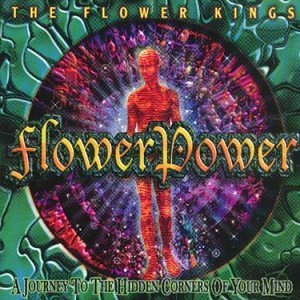
Over a decade ago, one of my brightest students introduced me to The Flower Kings.  He lent me his copy of the two-cd “Flower Power: A Journey to the Hidden Corners of Your Mind” over a Thanksgiving break.  I was rather blown away from the first listen.  And, not just because of the truly psychedelic cover or the name of the band (those hippie Swedes!).  I fell in love with the whole concept and packaging of the album.  Since then, I’ve been a rather faithful fan of the band, searching out every track ever recorded by them and by the various members in each of their associated bands.

This post, though, is not meant to be a retrospective or analysis of The Flower Kings.  Just a small appreciation.  Despite the fact that I have a field day listening to disk one of “Flower Power” (the concept part of the concept album), I’m quite taken with a track that seems to have gotten lost in memory, even among fellow Flower King fans.  That track, the first song of disk two, is one penned by Roine Stolt, “Deaf, Numb, and Blind.”

For several years after I first heard it, I considered it the finest and most perfect prog song ever written.  Yes, I’m comparing it–as a song–to any single prog song written up to roughly 2000.  So much has happened in the prog world since then, that I wouldn’t place it quite this high.  But, still, it’s a nearly perfect song.  If any non-progger ever asked me what progressive rock is, I wouldn’t hesitate to introduce them to “Deaf, Numb, and Blind” first.

The song builds for the first three minutes, with symphonic guitars, driving drums, keys, and bass swirling.  I’m especially taken with the bass playing, though all of it is good.  Stolt’s voice fits perfectly with the urgency of the song when he first comes in at 3:30.  The song lyrics appear to be a plea to put away delusions and embrace the highest things in life.  The consequences for maintaining the delusions seem apocalyptic–with the dogs of war and nuclear weaponry being loosed upon the world.

At 5:45, the song pauses.  We breath.  It slowly comes back in, with Stolt proclaiming the things lost, offering a tone of immense regret but perhaps resignation as well.  “There’s so much we could’ve learned. . . .”  But, we failed.

By 8:20, we’re in the demented, twisted world of Led Zeppelin’s Kashmir.

Learn how to rebuild Babylon

Where the whores will drain our blood

Where the giant mushrooms grow

Where the truth is left untold

Where the ravens rip your soul

Where the poison rivers run

where the deadly game is gold

We find ourselves in no paradise, but in the realm where “the dead don’t dance.”  We are in Hell, having earned it through our delusions and our pride.

The song ends with more soaring guitar, but the tempo has slowed down considerably, and the urgency of 11 minutes ago is gone.

As an aside, I recently saw The Flower Kings labeled somewhere on the web as “Retro-prog.”  Admittedly, I laughed.  I have no idea what this means.  They use guitars, bass, drums, and keyboards.  They tend to focus on rather positive topics (sometimes poetically religious and mythic), despite the lyrics just quoted.  And, they make beautiful music.  I tried to use common English in this post, inheriting a gorgeous medium from the Anglo-Saxon peoples of the British Isles.  Does this make my language retro-English?

Back on topic: here’s a youtube link to “Deaf, Numb, and Blind.”  Enjoy.

http://www.youtube.com/watch?v=72b5h7rWGCY

My student who first loaned me his copy of “Flower Power,” by the way, is now one of my colleagues in the philosophy department.  I owe you a lot, Lee.  Thank you.

Steve Adey – ‘All Things Real’ – a personal highlight


 Image


As a long time Blue Nile fan, and in particular their wonderful, evocative, rain-swept masterpiece that is ‘Hats’, their later recordings were something of a disappointment as Paul Buchanan moved towards an almost cabaret style of pared down and rather drab songs seeming to rely on past glories. Their earlier recordings told micro-stories of moving ordinariness of wet, dreary Glasgow streets and city life in winter with characters struggling against day to day life.

One the best pieces of music bar none to listen to whilst driving along a city street, in the dark, in the rain is ‘Headlights on the Parade’ – I could quite simply have this on repeat for hours on end it’s that good.

‘The Downtown Lights’ is a must-listen with the stunning semi-spoken section driven along by the synths and electro-drum beats a real highlight: 

The neon’s and the cigarettes

Rented rooms and rented cars

The crowded streets, the empty bars

Chimney tops and trumpets 

The golden lights, the loving prayers

The colored shoes, the empty trains

I’m tired of crying on the stairs

The downtown lights


What made me notice Steve Adey’s magnificent album several years ago was the producer – none other than Calum Malcolm who mastered the Blue Nile albums.  I’m a bit of a sucker for good production and have often followed the producer rather than the artist.  Daniel Lanois being a good example as I remember the fantastic sound of the Joshua Tree by U2 which he produced.  He then added the same magic to Emmylou Harris’ ‘The Wrecking Ball’ which led me onto his own albums and a brief sojourn with Creole music.  The way music trails twist and turn and take you down, sometimes blind, alleys never ceases to amaze me.

The other startling thing about ‘All Things Real’ is the similarity to the Blue Nile sound, not surprising considering the producer, and in particular the vocals.  Steve Adey’s voice has the same timbre as Paul Buchanans but also has a deeper warmth – both sharing the same knack for extracting every ounce of emotion from each note.

‘All Things Real’ is a beautifully produced piece of work. The sound is very ‘close up’, you can hear fingers scrape on guitar strings, you can hear the air in the harmonium, you can hear breathing between words – you can almost hear the creak of wood in the chairs as the musicians shuffle around whilst recording.

The album has a very organic feel as though it was laid down with only a few takes,  if not just one take in some cases, and it resonates with a sombre, seriousness that to some ears could come across as maudlin.  To my ears it is beautiful, deep and rewarding.

There are elements of Talk Talk in the hushed drama and great swathes of the Blue Nile in the vocals and production qualities. But the overall feeling is of high quality, structured songs put together with absolute love and care.

Take the two cover versions that bestride this album – ‘I See a Darkness’ and ‘Shelter From the Storm’.  Adey does not just play it by the book, he strips these two classics down, re-builds them and makes them entirely his own.

Dylans ‘Shelter From the Storm’ takes on epic proportions as Adey slows it down to an almost funereal pace with each verse adding extra layers as the drama of the song unfolds – at one point you can sense him almost spitting out the words in barely controlled emotion.  This is a stunning track.

A re-working of Will Oldham’s ‘I See a Darkness’ is no less stunning and is my personal favourite on the album – a brooding, dark masterpiece that is quite frankly a huge improvement on the original and also on the Johnny Cash version. This is a sweeping and emotional tour-de-force and being the second track on the album makes you wonder how it can go on. The power is quite intense as he sings …..


         Many times

            We’ve been out drinking

            Many times we’ve shared our thoughts

            But did you ever, ever notice

            The kind of thoughts I had


Well go on it does – there is not a weak track.  There is a rolling version of a sea-shanty with ‘The Lost Boat Song’ which carries on the mournful feel throughout the album and there are also very intense moments of simple personal feelings, ‘Tonight’ being a good example.


Tonight

This very silent night

I give it all to you

I render it to you

Through love and war and hate

And tomorrow I must fight

Amazed and bleeding child

I send my love to you


This is one of those albums I find hard to categorise when someone says ‘what type of music is it ?’. In many respects it is folk, with the same home-spun vibe as, say, King Creole & Jon Hopkins’ ‘Diamond Mine’.  In other respects it has the sweeping panorama of earlier Blue Nile which is definitely not folk.

The best thing is to simply recommend it and let you, the listener, decide which, if any category it sits.

I hope you are rewarded as much as I have been over the last six years.


Caveat Emptor: Future Media Publications

One of the last things I want to spend time on (mine or yours) is writing about things I don’t like on Progarchy.  Simply put, there’s too much good in music to waste on trash.  And, not surprisingly, I’m generally not very good at criticizing anyway.

But be warned, the packaged magazine now available in the U.S. at Barnes & Noble’s entitled “The Cure and the Story of the Alternative 80s” is a complete waste of printing materials.

I came across it this past weekend while in Grand Rapids, and I was quite taken with the title.  Coming from Future Media (makers of the excellent PROG) and complete with 15 track cd, I’d assumed this would be good.  It’s not.  The cd has absolutely nothing from The Cure, and the magazine devotes only five pages of text (out of a total of 130 pages) to The Cure.  None of the information is new to any one who has even the slightest interest in The Cure.

I’d assumed Future Media packaged and sealed their publications to keep the magazines and the cds in good form.  As it turns out, Future Media seals the magazines to present its products in a false fashion.

So, take my advice, and avoid this magazine like the plague.  A complete and total waste of $15.

Rant over.

A Beginner’s Guide to Big Big Train

Dear Progarchists,

My apologies for the absence of posts yesterday, November 15.  I’m in the middle of round two of grading freshmen papers and midterms, and life overtook me this week.

It’s late Friday afternoon as I type this in Michigan, but I still have one more academic event today.  At six (in about 2 hours), I’m giving a lecture on The Killing Fields, the sublime 1984 movie about the holocaust in Cambodia, 1975-1978.  As I think about watching that movie for the first time, I get chills.  What horrors humanity creates for itself.  But, that’s a different topic.

As the sun streams into my office window, I’m in the mood for much more pleasant things.

In particular, I’m thinking about the majesty and wonder that is Big Big Train.  I saw a Twitter post two days ago from a friend who expressed shock at the intensity and greatness of BBT.  In a way, I’m incredibly jealous those who have yet to experience BBT for the first time.  So, for those who have not had the grand pleasure that is listening to BBT, here’s a guide.

And, just so I make myself as clear as possible: the new BBT album, EEP1, is the equal in greatness of Talk Talk’s 1988 “Spirit of Eden” and Genesis’s 1973, “Selling England By the Pound.”  This is, without question, a must own for any lover of music, progressive or otherwise.

As many times as I’ve heard it, there are several tracks that still make me what to blaze a path toward social justice and there are several that just make me smile, for the opening note to the last.

But, certainly, nothing on this album is frivolous.   Each track is fraught with meaning.

***

On September 3, 2012, Big Big Train released its latest best studio album, English Electric Part One.  It is a thing of truth, beauty, and goodness in every way.  Part Two arrives in March.  From what I’ve seen on the web and through brief correspondence, it looks as though Part Two will be every bit as intense and glorious as Part One.

Thank to the good will of webeditors, Winston Elliott, Josh Mercer, and Carl Olson (the last, being a full fledged citizen of Progarchy), I’ve had the joy of writing about BBT a number of times..  Last summer, the band released an epic single dealing with the life of St. Edith.  To see this, click here.  http://www.catholicvote.org/discuss/index.php?p=19315

If you’re new to the genre of progressive rock, which its fans rightly consider every bit as good if not better than the best of jazz (equal in musicianship, but superior in inventiveness and, of course, lyrics, since jazz is generally without vocals), I’ve tried to explain and defend the genre to specialized audiences here: http://www.nationalreview.com/articles/299126/different-kind-progressive-bradley-j-birzer

And, here: http://www.ignatiusinsight.com/features2011/bbirzer_progrock_may2011.asp

On my personal blog, Stormfields (www.bradleybirzer.com), I’ve had the great pleasure of writing about some of my favorite bands: Big Big Train, Matt Stevens and his The Fierce and the Dead, Talk Talk, the Cure, Rush, The Reasoning, Arjen Lucassen, Tin Spirits, and XTC.

At my main professional site, TIC (founded by Winston Elliott, the main editor and brain behind it), I’ve also had the good fortune of writing extensively about Big Big Train:http://www.imaginativeconservative.org/search/label/Greg%20Spawton

While I couldn’t even come close to calculating how many words I’ve employed in writing about progressive rock over the years, the same would be even more true regarding my favorite, Big Big Train.

The latest BBT release, English Electric Part One, is not only BBT at its best, it is art at its absolute best.  Best described as pastoral, Georgian, and bucolic, the new album is also eccentric (without ever losing its center), intense, brooding, meandering, reflective, joyous, and deeply vernal.  This is something new, as BBT has traditionally explored the more autumnal aspects of life.

It’s also simply hard not to love these guys on a personal level.  I started corresponding with Greg Spawton several years ago, and he responded immediately and with what I quickly discovered was his characteristic wit and kindness.  After all, who was I–just some goofy guy from the U.S. who happened to fall over myself explaining why I loved BBT.  I once wrote something similar to Neal Peart.  I got a nice postcard back two years later.  But, from Greg, a friendship emerged.  Now, my kids even color pictures for him and ask how my “English rock star friend” is doing.  I have found that all of the members of this band are similar in this regard, and it’s very, very clear by their art that they love one another in a way only brothers can.  Indeed, they face the world not as individual artists, each pulsating with radical individuality, but as a band, ready to leaven all that is good in the world.

A quick look at the wide-ranging debates on the BBT FB page shows how many wonderful and meaningful folks gravitate toward this band and remain to talk some more!  Some of these people have also become good friends, though I’ve yet to meet a single one, face to face.

Greg Spawton and Andy Poole formed the band in the early 1990s, and they’ve since added some of the absolute finest musicians of our day: American drummer Nick D’Virgilio (rivaled in drumming only by Neal Peart of Rush and Mike Portnoy, formerly of Dream Theater), guitarist Dave Gregory (formerly of XTC and currently of Tin Spirits) and flautist and singer, David Longdon, a music professor and folklore and folk music expert.  Augmented by a professional team, in particular engineer and producer, Rob Aubrey, BBT makes music that reflects not only the woes, sufferings, and glories of this world, but without timidity, of the next world.  Imagine the three parts of The Divine Comedy come to life, and you’ll get a sense of what BBT is doing.

Spawton and Longdon, the two main writers of the lyrics, are clearly well read and articulate.  Listening to a 2-hour interview with David “Wilf” Elliott (no relation to the famous Texan cultural critic, Winston Elliott) this past weekend reminded me once again how excellent true conversation among friends and professionals can be.  I would give much for our loud talk show (Mike Church excepted, as always) and TV show hosts in this country to take notice of what educated and purposeful English gentlemen can do.  To here the interview, go here: http://www.theeuropeanperspective.com/?p=1764.  I would not be surprised if these five would’ve been welcomed in the Thursday evening discussion in the 1930s in C.S. Lewis’s rooms at Oxford.

It’s also worth calling Rob Aubrey, who engineered the album, a sixth member of the band.  Aubrey is the Phill Brown of our generation.

To conclude this late Friday afternoon piece, let me encourage you to purchase a cd from Big Big Train. http://www.bigbigtrain.com/ This is a band that not only pursues, as mentioned above, the Good, the True, and Beautiful, but they are entrepreneurs, each trying to make his way in this rather fallen world.  For over twenty years, they have chosen not to pursue the commercial path of pop culture sensations and corporate conformity.  Every writer for and reader of Progarchy knows too well that the once successful system of patronage is long gone.  We must be willing to support culture and art where it emerges.  I promise you, the music of Spawton, Longdon, and Co. will not disappoint, and the band is well worth supporting.

If you’re still not convinced, try one of their many songs for free here: http://www.bigbigtrain.com/main/listen

They’ve certainly changed my life and only for the better.