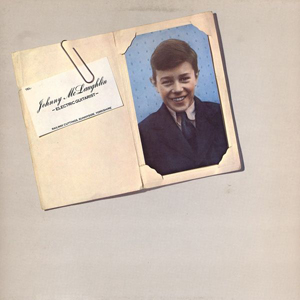
John McLaughlin, Electric Guitarist (1978)

A “gateway drug” is what I’m tempted to call this album.  It was that in my experience, anyway.  I bought it when it was released, during the period when my musical tastes, rooted in 70’s prog, began really to open out.  Here was my first encounter with a solo album from John McLaughlin, who had amazed me via televised appearances of the Mahavishnu Orchestra (was it on Don Kirshner’s Rock Concert?  The Midnight Special?  Both?), and the appropriately legendary Birds of Fire (1973).  That limited exposure set my expectations, and pushed me to buy the album “blind,” as we used to say.

I listened.  So much for my expectations.  As I look back now at the remarkable list of musicians playing with McLaughlin on this album (you can see that list here on Wikipedia), it stands out as a landmark in my gradual awakening to the wonders of artists who refused to be confined by a genre.  Sure, the jazz elements are often prominent, but always — in every song — in the service of a work of art, and never simply subservient to defined protocols that I was associating with jazz at the time.  I did not really come to understand the term “fusion” until later; Coryell, for example, was for me a taste more slowly acquired.  Appreciation for the importance of Miles Davis in this historical trajectory also came later.

Such appreciation did indeed come, but it was in no small measure through a McLaughlin threshold.  His skills and stylistic range are breathtaking in general, and if you’ve not partaken deeply before, Electric Guitarist is a mighty fine place to begin.  The music curves in an irresistible arc, beginning with the amazing “New York On My Mind,” and culminating in an extraordinarily subtle and moving rendition of “My Foolish Heart.”  If you remember it, go listen again; if you haven’t heard it, I would urge you to add it to your queue.

A Prog Awakening (Part 1)

I suppose it is inevitable that kids encounter music first through the filter of parents’ or siblings’ tastes. That was certainly true in my case. In the early 70s, the meagre set of records owned by my mum and stepdad was my only window onto the world of music. I remember several LPs by Elton John and Rod Stewart, the odd one or two by The Beatles and The Stones, also The Carpenters, John Denver, Mama Cass…

At some point, I began to assert my musical independence and sought out new sounds. At that time in the UK, the main channels for hearing new ‘popular music’ were Radio 1 and the TV show Top Of The Pops. Like most kids, I listened to ‘The Charts’ and had little awareness of anything else. Glam rock and disco had no appeal, but then punk and ‘New Wave’ came on the scene. Like many young people of that era, I found the energy and non-conformist attitude of these new genres incredibly exciting. For the first time in my life, I starting buying my own music: 7″ singles by The Clash, Buzzcocks, The Stranglers, Siouxsie & The Banshees…

Yet the signs were there that I would soon move on to other things. In amongst all that punk were singles by rock acts such as The Who, Queen and Nazareth. Further clues were to be found in my fascination with three albums from my stepdad’s otherwise middle-of-the-road collection. The first of these was a cassette of Pink Floyd’s seminal Dark Side Of The Moon. I forget when I first heard this, but it was before I started buying singles: probably 1975, certainly no later than 1976. I used to sit in the corner of the living room with headphones on, bewitched by the stereo sound effects as much as the epic qualities of the music. I hadn’t realised just how well-crafted music could be until that point.

The second of these intriguing albums was a Focus ‘greatest hits’ compilation – one of Polydor’s ‘Rock Flashback’ series. The cover was awful – fluorescent yellow with the band name spray-painted in green above a skewed, oddly-tinted band photo – but the music more than made up for that. There was so much to enjoy here: Jan Akkerman’s incredibly fluid and inventive guitar playing, Thijs van Leer’s unhinged, operatic performance on Hocus Pocus… In its own way, this was every bit as exciting as the punk that would very soon inspire me to start buying records. Focus remain a favourite of mine to this day, and Sylvia would almost certainly feature as one of my ‘Desert Island Discs’.

And the third of these influential albums? None other than Tangerine Dream’s Atem, completely unlike anything else in my stepdad’s collection. I suspect he saw it going cheap somewhere and bought it on the strength of the artwork. I doubt that he liked what he heard! He played the track Wahn for me, probably in the expectation that I would be shocked by its weirdness. I certainly found it challenging, but it was also strangely compelling. It was a tentative start to what would eventually become an infatuation with TD’s 1970s and 1980s material.

The transition period for me can be roughly dated as late 1978 to early 1979. Before that period, I was a chart-listening, single-buying slave to musical fashion who occasionally managed to reach beyond such superficiality and touch something deeper and more meaningful in music; after that period, I considered myself a serious music fan – album-focused, interested in seeking out new music for its own sake rather than its popularity, ready for the transcendent experiences of witnessing my favourite bands performing live.

That daunting leap from punk to prog was made via the convenient stepping stone of hard rock, principally in the form of Led Zeppelin and Deep Purple. The first rock album I owned was, in fact, Zeppelin’s The Song Remains The Same – a present from Christmas 1978, I think. I no longer recall the precise chronology of my musical discoveries, but I still remember all of the vinyl LPs that were added to my burgeoning collection over that period from Christmas ’78 to my fourteenth birthday in July ’79: the first post-Hackett Genesis album, And Then There Were Three; Pink Floyd’s Wish You Were Here; Paris by Supertramp; Mike Oldfield’s Exposed; and 2112 by Rush. The latter, in particular, had a profound effect on me. I think Side 1 of 2112 was probably my first encounter with a true prog epic. Rush have been one of my favourite bands ever since.

Coming up in Part 2: My own musical ‘Cambrian explosion’ of 1979-1981, and my first gigs…

A journey that continues…..

My earliest recollection of being ‘into’ music was as a young teenager and listening to the Beach Boys. I loved their stuff when everyone else was into T-Rex, Roy Wood, Wizard the Slade and all those other 70’s icons. 

As much as liked the happy surf vibe I remember being drawn to the sadder and minor-chord tinged tracks such as ‘Don’t Worry Baby’ and ‘In My Room’ – a particular favourite to this day. Even back then I would delve into an artists catalogue, God knows how back then, but I did.  I recall searching in record shops for albums that were less popular and seeing the cover for ‘Surfs Up’ – a haunting figure of a wilted man on a tired horse in sepia-blue tints.

This was a major discovery.

Dark and dense, involving and difficult, the music was stunning and the definite weirdness of the title track, ‘Feel Flows’ and ‘A Day in the Life of a Tree’ would define my musical journey in the coming years. Odd time signatures, raw emotion, depth of feeling and musicality would all surface on most of my discoveries.

The re-emergence of Brian Wilson in the past few years has been a welcome sight and it is good too see his genius recognised whilst at the same time another genius of the same surname is making his mark in the modern prog world. 

I remember the day I was listening to a stunning track (‘Leaving This Town’) on the Beach Boys’ less well-known album , Holland, when my older brother popped his head round the door and said “Hey, titch, listen to this..” 

The next few moments were to define the rest of my teenage years and were probably responsible for me making a complete mess of my Grammar school education !

‘Dark Side of the Moon’ was playing, can’t remember which track, but I remember standing there thinking how stunning yet strangely familiar this music was.  Needless to say the whole Floyd thing was huge – they are still one of my favourites and recently seeing Brit Floyd live (and doing more than justice to the original band) just reminds you how strong and involving this music is 30 years later.

‘Animals’ stood out for me as it was released at the height of punk in the UK and created a huge stir, even to the extent of NME (New Musical Express) eulogising about it at a time when the Floyd, Genesis etc were seen as dinasours.

Perhaps the next milestone was the Rush era.

As ever, I seemed to be into something only a few other ‘chosen’ people understood but the chancing upon ‘2112’ was as strong a feeling as the Pink Floyd moment. I’ve mentioned this on tweet before, but we even queued outside Manchester Apollo overnight, on the pavement, in sleeping bags to get tickets for their ‘Farewell to Kings’ tour. We had races across the road to keep ourselves entertained, hopping like idiots in our sleeping bags.

We got tickets for the front row for the first three nights and also tickets for the front row of the circle for the last two nights so we could watch the lightshow !!  Five nights in a row – and I remember being amazed by ‘Xanadu’ each time.

Brilliant times and again,  glad to see them doing so well now even if my enjoyment of them now is not quite the same.

The dead years intervened when kids, career and growing up got in the way of music but not without regular forays into post-rock (Godspeed You Black Emporer, Mono, Explosions in the Sky et al) and more avant-garde stuff like Sigur Ros in their earlier days (Aegetis Byrun and ()  ).  Even trips down alt-Americana way proved fruitful with magnificent artists like The Willard Grant Conspiracy, The Walkabouts and others showing you don’t need to stick rigidly to one genre.

And so to the present, and what a bloody fantastic present time it is with an overflowing and wonderfully euphoric progressive rock scene.

A chance reading of a Sunday Times article which mentioned someone called Steven Wilson led to the Pandora’s Box of Porcupine Tree which is about as good a back-catalogue as you will find. A massively deep collection of stunning tracks with wide-ranging influences that just get better with each listen.  A whole scene has been re-discovered and a scene that is lively, modern, relevant yet harks back to the days when music was made for music’s sake and not just to fill stadiums and top the charts.

I recently saw The Pineapple Thief live in Manchester, standing on the front row, about two feet away from them, and was stunned by how skilful, committed and talented the people in this scene are.

And finally, in this brief whirlwind tale of JD’s musical journey, we come to what is quite simply the best music I have ever heard – Big Big Train.

Those who may know me from Twitter will probably know that I run, bike and hike on the hills in my area and I have never known music that connects so sublimely to what I do and what I like.  ‘The Underfall Yard’ has a collection of tales that paint a gloriously evocative picture of the engineers that built England. Heroic characters propping up cathedrals and teams of men digging tunnels through the landscape, set to the most note-perfect and emotion-wrenching music you can imagine. 

Their recent masterpiece ‘English Electric Pt 1‘ has been detailed enough in these pages (and by a certain Bradley J. Birzer) that I cannot improve on the reviews or details provided by better people than me !

So there you go, a snapshot of 35 years or so condensed into a few words.

Thanks for listening !  There will be more to come ….. J


The Divine Ascension of The Fierce and the Dead


While the varied Progarchists have every right to be as critical as each so desires about music, books about music, art, etc. on this site (after all, a world that seeks conformity is already a dead and failing world), I will freely admit my profound if not also extreme fanboy love for several current acts: Big Big Train, Neal Morse, Gazpacho, The Reasoning, Cosmograf, Tin Spirits, The Flower Kings, The Pineapple Thief, and Arjen A. Luccasen.


I happily add older (meaning pre-1992) acts such as Rush, Talk Talk, and The Cure to this list.


Catching up quickly for me: IZZ, Coralspin, and Roswell Six.


But, certainly among the best of the best stands The Fierce and the Dead and every project (solo or otherwise) of Matt Stevens.  Prog magazine recently promoted Stevens as a future “prog god.”  I would declare him, happily, already a member of the pantheon.  But, of course, I remain a mere priest, having no power to change the inner workings of the heavens, only to declare who resides there!


I originally wrote the following article last May.  If I changed it,I would only more descriptives and more praise of Matt.  Happily, in the last several months, I’ve gotten to know Matt through correspondence a bit.  I can assure the readers of Progarchy that Matt is every bit as kind and witty as he is piercingly talented.


Rumors from good sources abound that The Fierce and the Dead might make their way to North America in 2013.  I can guarantee Matt, Kevin, Stuart, and Steve that Progarchy will do whatever it can to promote them to every North American possible.  The New World not only welcomes you, Matt, it beckons with fulsome praise.


***


About a year ago, Facebook recommended that I “like” a progressive rock band called “The Fierce and the Dead.”  Rarely do I follow such suggestions.  A few months ago, I liked “Jesus,” then I had to defriend him, as the relationship got awkward very quickly.  This Jesus kept claiming the words of St. Paul or St. James as his own, and I began to doubt this Jesus as a being of high moral character.  Where I teach, a student can plagiarize twice before being set adrift, permanently, from the school.  I actually gave this Jesus three chances.  Then, he was gone.


Well, anyway, you get the drift.


But, when FB asked me to “like” The Fierce and the Dead, I did so out of curiosity.  I immediately loved the name.  The Fierce and the Dead (TFATD) reminded me of my saying the Creed throughout my life: “He shall come again to judge the quick and the dead,” a personal favorite use of language.  I also thought of my hero Sam Gamgee, wielding the elven blade Sting against Shelob: no onslaught more fierce was ever seen, Tolkien wrote.  Two wonderful associations for me.  Whether the members of TFATD had either of these things in mind when coming up with the band name, I have no idea.  They might not have  a religious inkling in their blood.  They might not even like Sam Gamgee!


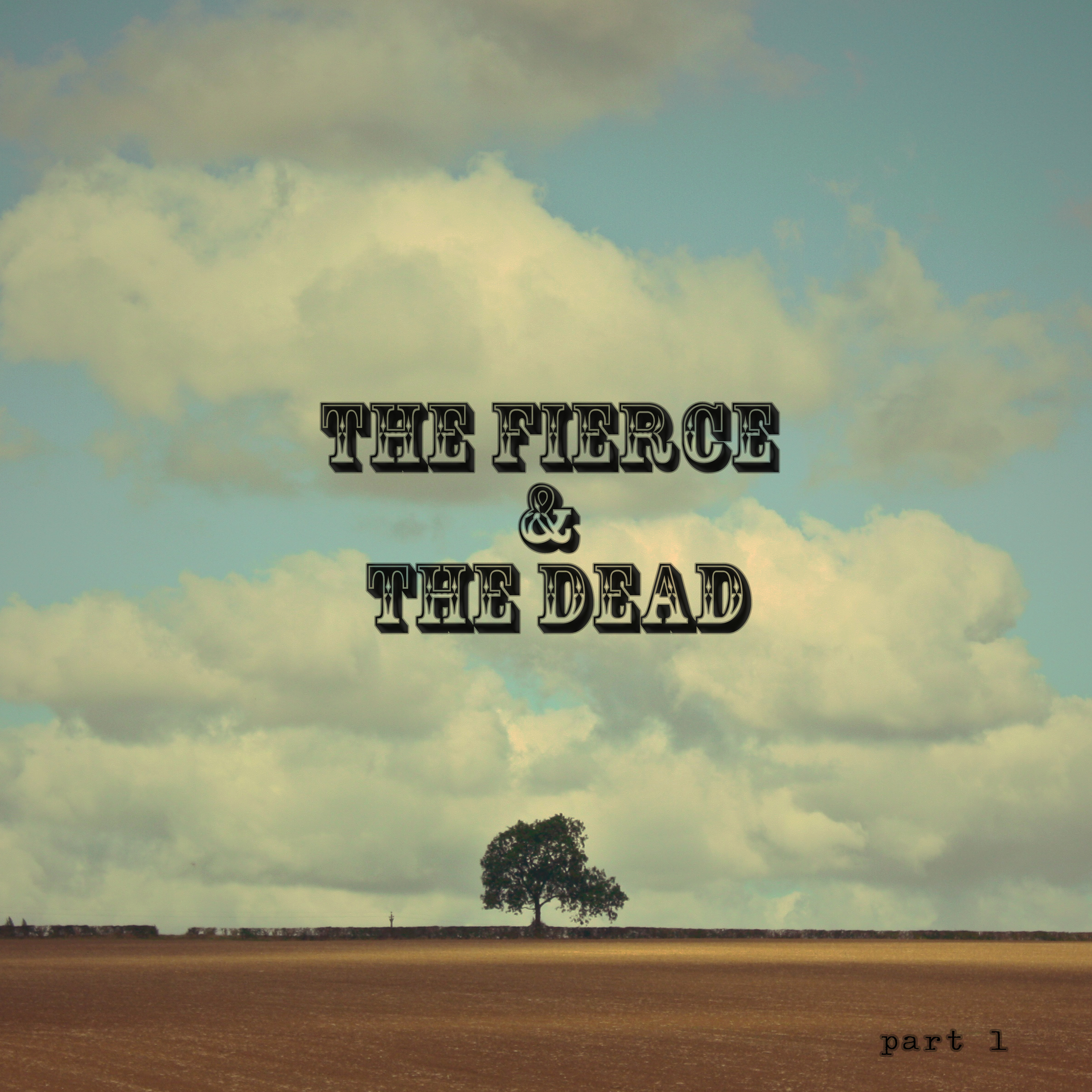
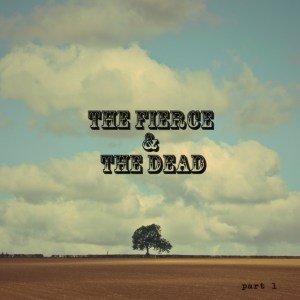
The picture associated with the group on FB was an image of a lone tree out in the plains.  It could’ve been taken anywhere near where I grew up.  It might be a hanging tree.  Regardless, at the moment I saw the picture, I’d assumed they were from my neck of the non-woods, somewhere near Kansas.  As it turned out, I was off by several 1,000 miles.


Most importantly, the song, “Part I,” was a song out of a dream.  Nineteen minutes of prog bliss–soaring, circling, hovering, and spacey guitars, moods and moods and moods, steady, hypnotic drumming, more moods, an aggressively supportive bass, and still more moodiness.  I have no idea how many times I’ve listened to the song over the past twelves months, but I’ve never grown tired of it, and it continues to reveal new things to me with each listen.


“Part I” is also just really inspiring.  From this first song, the listener knows this band is out for art–real art–not commercialized and superficial art, but true and good and beautiful art.


Needless to write, from the name to the music, I was immediately taken with TFATD, and I knew that relationship would continue no matter what the band released.


I then found out that the leader of the band, Matt Stevens, was not only equally talented and gifted on his own, but that–through FB and Twitter–he was an incredibly nice, intelligent, and witty guy.  Indeed, I’ve not only heard his playing, but I’ve seen his prose writing.  I’ve also read his commentaries on commerce, art, and the unholy alliances that often go on in the music world.  From everything I’ve seen, the man is terribly gifted!  He’s also loaded with integrity, and, as a father and husband, he worries about being able to support his family.  Yet, if I can be religious for a moment (not in the mocking way up above with FB Jesus), Matt Stevens was meant to be a guitarist and produce some of the most interesting art of our times.  Yes, he was MEANT to do this.


I now proudly own the first three solo albums Matt made: “Echo,” “Ghost,” and “Relic.”  Each is quite profound, variegated, and eccentric.


The first proper TFATD LP, “If it carries on like this. . .” is less spacey than the “Part 1,” but equally good.  The more I listen to it, the more I think this must be some kind of supergroup.  Imagine Robert Fripp and David Gilmour on guitar, Geddy Lee on bass, and Mike Joyce (from The Smiths) on drums.  That’s what “If it carries on. . .” seems to be.  A prog/post-New Wave supergroup, but without the pretensions of most supergroups.  Needless to write, these four members of TFATD–Matt Stevens, Kevin Feazy, Stuart Marshall, and Steve Cleaton–play as one very tight unit.


Brilliantly so.


In the last several months, TFATD released a new EP, “On VHS,” an excellent successor to their previous releases.  Just as punctuated in its energy, “On VHS” hits the listener with a meaningful intensity from the first listen.  While it’s obvious that these are the same guys who did everything else under the TFATD name, it’s equally obvious they want to keep their music moving in new directions.  In this sense, they are progressive at that noble term’s best.


As the name of the title of the opening track, Six Six Six.Six, suggests, the introduction is deceptively spacey.  For a few moments, the listener might well imagine a sequel to “Part I.”  That spacey-ness ends as quickly as it begins, and the song drives deep into the eternal; guitars, drums, and bass each drilling with a logical madness toward some uncertain and illogical end.  It is madness, but it is Ken Kesey-type of madness,  appreciated and respected and perhaps more real than what we see around us at any moment of our lives.


The second song, “Hawaii,” is nearly as driving as the first track.  While there’s an element of progressive surf music in this, the song is beautiful in its execution.  This seems the most King Crimsonish of the songs (not that it’s in any way derivative; it’s original.  Frankly, I can’t imagine Matt and gang doing anything that didn’t have meaning in and of itself).


The third song, “On VHS,” is probably my favorite of the EP (and, this is saying a lot, for all of the songs are excellent).  While there’s still a King Crimsonish feel on the guitar work, the rest of the band could be playing a really great Smith’s instrumental.  Indeed, the whole song feels a bit like a progressive version of a post-New Wave song by the likes of Echo and the Bunnymen or Simple Minds (before they went bad).

 

The final original song, “Part 3” is the longest on the LP.  Grumbling bass becomes spacey and, at times, soaring guitar, awash in colors of sound.  The drums hold everything together, as the listener floats and drifts away before a real determination emerges about two minutes into the song.  As this point, I feel I could be enjoying a Tin Spirits song.  There’s an American Western kind of feel to the middle section, especially.  That is, I can envision Clint Eastwood or John Wayne slowly coming to the conclusion that justice must prevail.  At a bit past the midpoint of the song, justice now rages, and evil is being taken out.  The EP concludes with an immensely satisfying feeling of truth and goodness prevailing.


While I’m merely guessing, I would assume this final song is meant to be a sequel of some kind to “Part 1.” [And, yes, it is: Parts I, II, and III).


For those reading this review, I hope you’ll forgive me for the comparisons to other groups.  TFATD is definitely its own band, and I can’t imagine them any other way.  Their TFATD-ness is a huge part of what makes them lovable.  It’s also what make the listener (dare I say the fan?) want to support them in anyway possible.


Matt and Co., please keep fighting the good fight for art with meaning and integrity.  I’m already eagerly awaiting the followup.


DPRP: Interview with Edgar Froese of Tangerine Dream

Excellent interview at DPRP.net with Tangerine Dream’s Edgar Froese.

http://www.dprp.net/wp/interviews/?page_id=3212

Enjoy.

Dancing About Architecture

Some of you reading this might be old enough to remember that the actor Steve Martin also made a name for himself as a stand-up comic, releasing two albums of stand-up in the late 1970’s.  On one of those albums, Martin remarked that “talking about music is like dancing about architecture.”  Martin may indeed be a wild and crazy guy, but I must respectfully disagree with him.  After all, what would we be doing here on a blog dedicated to progressive rock if we agreed with him?  Are we not here to have a conversation about prog (and other music as well)?  The only difference is that our conversation here is not in real time, but instead is conducted through the written word.  This brings me to the main topic of this post: books about prog.

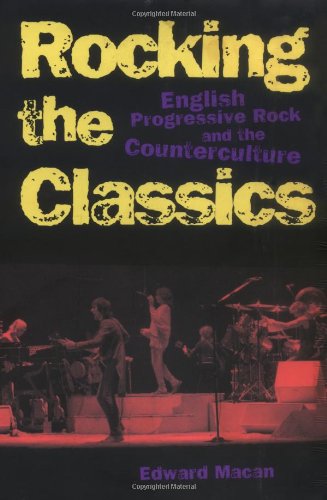
My hands-down favorite progressive rock book is ‘Rocking the Classics’ by Edward Macan.  In my opinion, this is a must-read for any dedicated progressive rock fan.  Make no mistake about it though, this is not a fan-boy book, this is a serious critical study of prog.

What is best about Macan’s book is that he treats progressive rock as serious art – in other words, as it should be.  Macan takes an academic point of view in his study of prog, and views it from several different angles – the music itself, the lyrics, the visuals (both album artwork as well as live presentation), and the culture that gave rise to the initial wave of prog.  A more in-depth study of four different works of prog – ELP’s Tarkus, Yes’ Close to the Edge, Genesis’ Firth of Fifth, and Pink Floyd’s Wish You Were Here (the entire album) is also provided.

Finally, Macan delves into related styles, the sociology of prog’s fan base, the critical reception of prog, and closes with a discussion of prog after 1976, as the first wave subsided.  I particularly enjoyed his dissecting of the critics of prog, as I always found it ironic that they, of all people, were labeling prog as pretentious.  As the old saying goes, projection ain’t just a river in Egypt … (it seems I might have garbled the translation here).

My only quibble is that Macan seems to believe that prog had played itself out following the advent of Discipline-era King Crimson and the neo-prog movement of the 80’s.  Perhaps he can be forgiven though, since the internet was relatively new then, and thus like many of us, he was not aware that we were on the cusp of a second and more enduring golden age of prog.  All things considered though, I cannot recommend this book strongly enough to those of you who haven’t read it.

On a different level, there is ‘The Progressive Rock Files’ by Jerry Lucky.  This book is more of a mini-encyclopedia of prog up to the time of its publication (in the case of my copy, 1998, when the fourth edition was published).  Lucky’s book includes a history, discussion of the definition of prog, a discussion of the critics, and then brings the reader up to date (or at least up to 1998!) with the goings-on of prog.  That chapter, along with the listing of prog bands that follows, was the first realization for me that prog wasn’t dead but was actually alive and thriving, if one knew where to look.

Bill Martin’s ‘Music of Yes’ is a book with which I have a love-hate relationship.  The love part is the analysis of Yes music, with its particular focus on ‘the main sequence’ of Yes – ‘The Yes Album’ through ‘Going for the One’.  This is the period where Yes really made their name as one of the leading lights of the first golden age of prog, and thus Martin’s focus on this area is well justified.  The hate part?  Martin far too often lets his own politics work its way into the discussion, and it becomes very annoying.  Agree or disagree with his views, it seems that their insertion into the discussion is often contrived, and where it occurs, it really takes away from the discussion.

Finally (if you’ve made it this far), there is ‘Pink Floyd and Philosophy’.  I am a sucker for the pop culture and philosophy books from two different publishers (Wiley and Open Court Books) – particularly when it a band like Pink Floyd is the focal point (As a quick aside, there is a ‘Rush and Philosophy’ out there now – has anyone picked up a copy yet?).  For those unfamiliar with these books, they are divided into a series of essays, usually about 15-20 or so, by different authors.  While not every essay is a good one, many are more than worth the time and will make you do the same thing that listening to prog does – think.  Among the essays included ‘Pink Floyd and Philosophy’ includes a series on the topic of alienation – a theme that runs through the lyrics of most of Pink Floyd’s work in the 70’s.  That section alone makes it well worth the price of admission.

There are a number of other prog books out there that I haven’t read, including the aforementioned ‘Rush and Philosophy’, ‘Progressive Rock Reconsidered’, and “Beyond and Before – Progressive Rock since the 1960’s.  If any of you reading this have suggestions, you would be doing many of us a great service if you were to further this discussion in the comments.

Did you make it this far?  If so, let’s go put some Frank Lloyd Wright on the stereo and hit the dance floor.

Thick As A Brick: A Confession

Here’s a quick recounting of my introduction to prog. In 1972 I was 11 years old, and my parents had asked the teenaged son of good friends what would be a nice album to buy me for Christmas. Apparently, he convinced them that the only possible choice was Jethro Tull’s “Thick As A Brick”. So they dutifully wrapped it up and put  it under the tree.

I was already well on my way to my obsession with music, having saved every spare cent I could get to buy Creedence Clearwater Revival’s “Green River”, and Simon and Garfunkel’s “Greatest Hits”. However, “Thick As A Brick” was a different proposition altogether. How weird could you get, making an entire album that contained one song? And who exactly was this Jethro Tull guy? I admit it was quite awhile before I realized that “Thick As A Brick” was not done by a solo artist.

The newspaper cover – I spent hours poring over every article in the St. Cleve Chronicle, until I felt I personally knew the inhabitants of that English borough. In the front page photo, Gerald Bostock’s friend, Julia, intrigued me. Why was she holding her skirt like that? And imagine the embarrassment and confusion I felt when I finished Fluffy Duck’s connect-the-dots puzzle! I quickly realized that I probably shouldn’t leave the album near the family stereo where Mom and Dad could pick it up and peruse the cover’s contents.

But the music – wow. I’d never heard anything like it. I could listen to it dozens of times and find new things to appreciate with each hearing. To this day, I can replay the entire “song” in my head from start to finish. After I became comfortable with mp3 digital technology, one of the first things I did was use Audacity to edit the two LP sides into one seamless song. Now I can listen to it the way Ian Anderson must have intended it to be heard.

Thanks Mom and Dad, for your willingness to introduce me to new music, and your long-suffering patience as I played my progressive rock albums during many family dinners!


Mini-review: Radiohead, “Kid A”

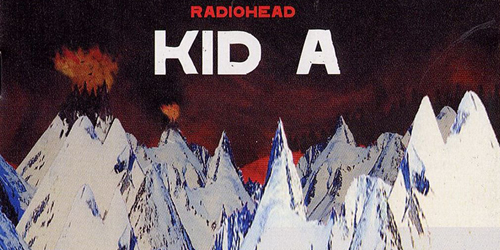
ImageRadiohead, Kid A (2000).  While I don’t worship at the altar of Radiohead or Thom Yorke, I very much appreciate them.  While Ok, Computer did a wonderful job of bringing a 1990s feel to 70s Alan Parsons and other proggish-bands of the mid 1970s, Kid A offered something radically new and mesmerizing in the world of music.  Intense lyrics about the problems of post modernity and scientism only add to the haunted and haunting quality of the album.  Though Ok, Computer has better moments, punctuating the imitative proginess of two decades earlier, Kid A has no flaws as it explores a fascinating new realm of bleak soundscapes.  The lyrics of Kid A, however, remain unimportant, ultimately, as Thom Yorke’s voice serves as another instrument on the album.  The producer, Nigel Godrich, deserves credit for being an equal member of the band.  The opening track, “Everything in its right place,” sums up the production, the album, and its place in history.  A masterpiece.

A 14 year old atheist “among these dark satanic mills”

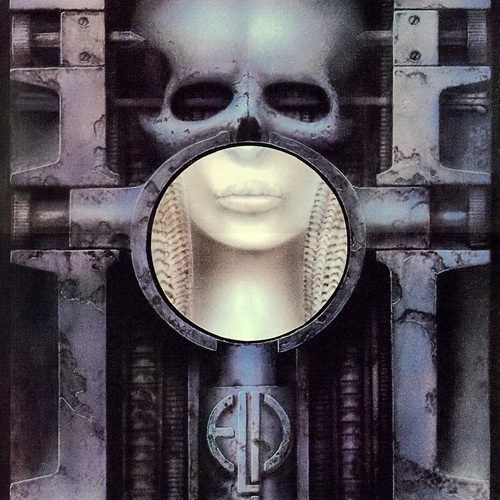
I remember still being an atheist when I procured my first copy of ELP’s Brain Salad Surgery when it came out in 1974.  I had spent my middle school years saying that I was an atheist, for reasons not completely clear to me in retrospect.  It was probably partly because I had read Erich von Däniken, and was very taken with what would eventually become known as “ancient astronaut theory.”  It was probably also partly because I was just rebelling against my perceptions of the small-town midwestern Methodism in which I was raised.

But whatever else it might have been, I’m quite sure that it was partly from listening to Greg Lake sing “The Only Way” (on Tarkus).  In other words, it seemed cool to be an atheist.  My mother (who was certainly no atheist, but was quite open-minded), instead of trying to convince me to abandon my supposed conviction, warned me that I would need to be aware that openly discussing this could lead to VERY negative reactions from others.  Fairly wise advice, given that I was just coming out of junior high school, and was already frequently persecuted for being a “queer” (i.e., I read a lot, was overweight and bespectacled, was not at all athletic, and had only recently put together the broad outlines of the whole “birds and bees” thing).

It was into the midst of that ostensibly “cool” youthful atheism that ELP’s recording of “Jerusalem” was dropped like a dirty bomb.  It remains THE single ELP track that can almost immediately liquefy my spine and reduce me to a puddle of awe.  Here was Greg Lake, singing about Jesus (albeit in England).  I was not previously familiar with the poem or its hymn setting.  Since becoming familiar with the hymn, my sense of the near-perfection of arrangement and of sonic texture has only been confirmed.

The reverberations of “Jerusalem” followed me through high school, which is to say that they followed me from my “cool” atheism of early adolescence to the Bible-thumping obnoxiousness of my later adolescence.  What were some of those reverberations?

One was that savory but unsettling phrasing, “dark satanic mills.”  Even after I dove head-first into fundamentalism, the sense for the importance of darkness haunted me.  It was only much later that I actually found believers in God who seemed willing to approach it.  Most notably, Canadian singer/songwriter Bruce Cockburn would later grab at the same region of my heart, singing about how we’ve “got to kick at the darkness ’til it bleeds daylight.”

Another reverberation was the triumphalist feel of the song, which was delivered with such arresting aesthetic sincerity, while also being…  I don’t think that the word ‘ironic’ quite covers it; that’s the word that comes to mind right now.  The building of a New Jerusalem has seemed so central to Christianity, both as I have at times rejected it and at other times embraced it. The sort of Christianity that I drifted into over time (Anabaptist/Mennonite) questions the triumphalist, empire-building feel of some major streams within Christianity more broadly.  Thus, I still listen to “Jerusalem” and hear this resonance as a friendly one.

A third, and (for purposes of this post) final resonance is that the darkness of these mills (I didn’t know at first what “mills” were being referenced; I still can’t hear the song with the emphasis on that word) desperately call for something that is not darkness.  This is now how I understand the “religious” feel of “The Only Way” as well as of “Jerusalem.”  Perhaps this is part of what made Genesis’ “Supper’s Ready”–released earlier, but not on my radar until a bit later–another revelatory listen.

No, I’m not going to present some kind of argument that this music should push you in a certain direction religiously (or spiritually, if you prefer).  I share this vignette from my path, hoping that you might nod with understanding, remembering and treasuring the resonances that such rich music and poetry have had along your path as well.

New progarchy Logo.

New progarchy Logo.

A huge thanks to the ever-creative and witty Progarchist, Mark Widhalm, for designing this. Hoping to make t-shirts soon.