Music and Me

Me, sophomore year of college, fall 1987.

A few days ago, Progarchist and classical philosopher Chris Morrissey asked about our first introductions to music.

The youngest of three boys, born in the summer of love (September 6, 1967—only 3 months and five days after the release of “Sgt. Pepper’s Lonely Hearts Club Band” by the Beatles), and coming of age in the late 1970s and early 1980s, I grew up on progressive rock: Yes, Kansas, Genesis, and the Moody Blues.  We faithfully shunned the 3-minute pop format and we sought mightily the 20- and 30-minute epics of European (usually liturgically derived) symphonic music with rock instrumentation and bizarre time signatures.

I remember hearing lots of longish, prog songs as early as 1971 or 1972.  Though I’ve never played an instrument with any degree of passion, I’m assured by my mom and two older brothers that I was obsessed with music even as a toddler.  Somehow, I figured out how to crawl out of my crib and down the stairs to the family stereo.  Even as a one-year old, I would wake the entire household up, blaring the Banana Splits or Snoopy and the Red Baron at 3 in the morning.

My first great awakening came, though, from seeing the sleeves of YesSongs.  I spent hours trying to figure out how the animals made it from one floating island to the next.  And, I’ll never forget the first time I played side one of YesSongs—I was overwhelmed by the depth and complexity of it.

As is now well recognized, the prog lyrics as well as the cover art tended to be fantastic, pretentious, overblown, and theological.  There have even been some interesting scholarly articles about progressive rock thriving in the western and midwestern states of America, mostly among middle-class, conservative kids.  And, of course, we, with great confidence, derided disco and top-40 music through junior high, high school, and college.  Disco and top-40 music, as we understood it, were decadent and vacuous.  As far as we were concerned, progressive rock artists (and some New Wavers) were the only real musicians outside of the classical and jazz world.

In many ways, progressive rock helped define my own childhood and teenage years.  I will never forget seeing abolitionist John Brown on the cover of a 1974 Kansas album (it sparked all kinds of historical questions re: Kansas, abolitionism, and the American Civil War); hearing Pink Floyd’s “The Wall” at the University of Notre Dame in the fall of 1979; being introduced to Rush’s 1981 “Moving Pictures” in the Liberty Junior High School library in Hutchinson, Kansas; or listening to Yes’s “Fragile” over and over again and trying to figure out the “deep” meaning of the lyrics.  In high school, I worked as on overnight D.J. at a local rock station (KWHK), which doesn’t exist anymore.  And, while in college at Notre Dame, I had a Friday-night progressive rock show (WSND) my junior and senior years, often playing two hour blocks of Rush or other groups.

As powerful as any of the albums just mentioned, though, was my first listen to Talk Talk’s Colour of Spring in the spring of 1987 and, even more so, my first listen to Talk Talk’s Spirit of Eden in September 1988.

My comrade in arms in college was the singer of the most popular band on campus, St. Paul and the Martyrs.  They even opened for Phish when Phish played on campus, spring 1990.  The leader singer, Kevin McCormick, even became my oldest son’s godfather!  Now, he’s a well-known classical guitarist and even a Progarchist.

But, I’ll never forget the two of us listening to Spirit of Eden for the first time.  We were just stunned and in complete silence as we explored every note and every silence of the album.

Having turned 13 in the autumn of 1980, I also, of course, grew up with New Wave: Thomas Dolby, Kate Bush, The Police, The Cure, Oingo Boingo, XTC, Siouxie and the Banshees, and Echo and the Bunnymen.  Over the Wall!

Our local Kansas radio station—KWHK—had briefly been formatted for New Wave, so I was able to get every new album sent by the record labels.  The one that hit me hardest was XTC’s Skylarking.

My college radio show at Notre Dame focused on progressive rock, as mentioned above, but I threw in a lot of New Wave.  New Wave just seemed the more radio-friendly version of progressive rock.  And, by the early 1980s, progressive rock seemed to have run its course.  Could Asia really claim to be the successor of Yes?  Or, could Genesis without Peter Gabriel or Steve Hackett really be Genesis?  We answered with a resounding “no.”  That left us with New Wave.

After all, in 1990, we still had a few years before Dream Theater and Spock’s Beard re-introduced—in the states—a new wave of Progressive Rock.

A quarter of a century later, I realize that music took on religious significance for me and my friends.  Those who embraced disco, pop, or top 40 music were heretics, and we supporters of progressive rock were the orthodox.

***

A year or so ago, some former students asked me to write about my listening tastes in the 1980s.  Here’s what I wrote for them:

High School was a long time ago for me, but I still remember it well.  During the summers, I had one of the best jobs in the world–I was a DJ at our local AM-station, KWHK.  Not only did I DJ, but I also got to write and produce commercials, and I served as a liaison between the sheriff’s department and the National Weather Service.  I grew up in central Kansas, so we had tornados and tornado warnings quite frequently.  Great job.  I’ve also been into collecting music (mostly progressive and alternative rock, some jazz, and a bit of classical) since second grade.  I started young, and, for better or worse, I’ve never stopped.  My kids (13 and under) can name bassists, singers, and drummers of the major progressive bands.  And, yes, I’m proud of them.

Freshman year of high school, 1982-1983.  It was freshman year that I really discovered New Wave.  I had been listening, almost exclusively, to progressive rock and what’s now called classic rock during the 1970s and earliest part of the 1980s.  The father of a friend of mine owned a record store, and we were introduced to all kinds of music through the store in 9th grade.  In particular, I listened to Thomas Dolby’s Golden Age of Wireless (favorite song: One of Our Submarines is Missing).  I had this on one side of a tape and ABC’s The Lexicon of Love (favorite song: 4 Ever 2 Gether).  Also lots of U2’s War (favorite song: Sunday Bloody Sunday).  Progressive Rock was never far from my heart, and I listened to Rush’s Signals (favorite song: Subdivisions) pretty much non-stop, Peter Gabriel’s IV (favorite song: Lay Your Hands on Me), and Roxy Music’s Avalon (favorite song: Take a Chance with Me).

Sophomore year of high school, 1983-1984.  This was a huge year for music.  Genesis released their self-titled album (favorite song: Home by the Sea, Parts I and II); the Police released Synchronicity (favorite song: Synchronicity II); and Yes released 90125 (favorite song: Cinema).

Junior year, 1984-1985.  Rush’s Grace under Pressure (favorite song: Between the Wheels) dominated every other album that year.  Frankly, this was THE album.  If I had to name a favorite album of high school, this would be it.  My sophomore year in college, I wrote a paper using only the lyrics from the album.  I even got an A.  I also listened a lot to The Smiths’ Hatful of Hollow (favorite song: Please, Please, Please), Oingo Boingo’s Dead Man’s Party (favorite song: same as title), and Thomas Dolby’s second album, The Flat Earth (Favorite song: same as title).

Senior year, 1985-1986.  Another great year for music, but mostly for former proggers going pop.  Albums that year included, at the top of the list: Sting, Dream of the Blue Turtles (favorite song: Fortress Around Your Heart), Peter Gabriel, So (favorite song: In Yours Eyes), Tears for Fears, Songs from the Big Chair (favorite song: Broken), and XTC, Skylarking (favorite song: The Man Who Sailed Around His Soul).  The other album I played constantly was the soundtrack to To Live and Die in LA (a pop band, Wang Chung, playing a very proggy style).  Lots of Kate Bush, Hounds of Love, too (favorite song: Hello Earth).

It wasn’t until my freshman year (1986-1987) of college that I really got into Talk Talk, the Cure, and Echo and the Bunnymen.  I also really liked Blancmange (kind of a really smart Talking Heads) and New Model Army and a few others.  That year, U2 released “The Joshua Tree.”  I’ll never forget sitting in the car with a friend, being about 1/2 through the album and just breaking down (not something I did very often) because of the beautiful intensity of the album.  Crazy.  At the time, I was horrified by RATTLE AND HUM.  Now, I think The Joshua Tree as a whole is really good, not brilliant.  Side two, maybe, is brilliant.  Side one has a brilliant moment–bullet the blue sky.  And, RATTLE AND HUM seems better than it did to me then.

In high school, I also remember listening to some A-ha, B-Movie, b-52s, Erasure, Depeche Mode, and Communards.  I don’t think I would’ve chosen to listen to these groups, but they would’ve been pretty hard to escape then.  I would’ve always preferred something prog–unless we were dancing.  Had an all night party at my house once my senior year when my mom was out of town.  Late, late into the evening, a group of us were trying to analyze a 1977 Genesis concert we’d taped off of PBS!  I’ll never forget that night.  Lots of analyzing Pink Floyd, too.
On The Futility of Genres

OK, confession time. After seeing this admission, you might decide to stop reading, thinking that I’m a little odd (and in that you’d probably be right). It’s my hope that some of you will be kindred spirits. Here goes:

After purchasing digital music from iTunes or Amazon, the very first thing I do, even before my first listen, is to right-click on the downloaded files and delete the genres that have been assigned to them. I do the same thing when ripping a CD; my first move, after CD details have been acquired from Gracenote or some other media identification service, is to delete the genre information.

There, I’ve admitted it. Is that weird? Do you do something similar?

In my case, this behaviour stems from early frustrations with digital music purchases. I would buy some Tangerine Dream and would be baffled by its classification as ‘Dance Music’, or I would download some classic Mike Oldfield and be astounded to see it labelled ‘New Age’. Besides such obvious travesties, I’ve downloaded many tracks where there is genuine ambiguity: a track labelled ‘Pop’ that I would tend to think of as ‘Rock’, or vice versa.

Just what is the difference between ‘Pop’ and ‘Rock’, anyway? I’ve never been clear on that; indeed, I no longer think it is possible to be completely clear on that.

The Amazon/iTunes model of music classification would have us believe that genres are an orderly array of rigid boxes, into which any given piece of music can be neatly placed. As prog fans we know better than anyone how flawed this model is. The boxes, such as they are, are not rigid. Their boundaries are fuzzy, very fuzzy – and these ill-defined boundary zones are precisely where the most interesting and rewarding music is to be found!

It is a familiar problem for any prog fan. Prog, with its tendency towards experimentalism and the effort it makes to draw upon many influences, invariably seems to lie at the intersection of some weird multi-dimensional Venn diagram of genres. And that point of intersection is difficult to pin down, as if a musical version of the Heisenberg uncertainty principle were at work, affecting our observations. The easy way out is just to define prog as its own genre and abandon any attempt to relate it to anything else – but that’s a question I shall explore in another blog post!

In my more facetious moments, I often think that there are only three meaningful genres of music: stuff you like, stuff you don’t like and stuff you haven’t heard yet. Or perhaps Tim Hall (@Kalyr) had it right when he suggested on Twitter and his blog that genres should be regarded as recipe ingredients rather than pigeonholes.

I’m not sure what the answer is, but for now I’m going to keep on deleting.

The Future Belongs to Neal Morse, aka “Rev. Prog.”

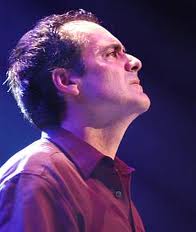
Thanks to http://www.rocktimes.de/gesamt/m/neal_morse/interview08.html for the image.

Neal Morse just completed the Flying Colors and Momentum tours, and, from everything I saw and read regarding the various shows, they were all spectacular.

Watching Morse and his band play in St. Charles, Illinois, last Friday (a week ago tonight) with my wife, Dedra, and the Widhalms will serve as a great moment in my adult life.  Morse and the band gave everything they had, and what they had to give was beyond ample.  Indeed, had I enjoyed hearing them play any more than I did, I would be bordering on sheer decadence, demanding far more in this world than I have a right to.

Given Morse’s abilities–as a brilliant songwriter, a lyricist, a book author, multi-instrumentalist, and great show-man–we have a lot to expect from him in both the near and distant futures.

In addition to releasing the two major albums mentioned above in the last several months, he has also just released A Proggy Christmas, featuring Mike Portnoy, Steve Hackett, Steve Morse, Roine Stolt, Pete Trewavas, and Randy George.  The cover even has a Sgt. Pepper’s style image with a photo of the head of Ray Bradbury included.  Of course, it also looks like UFOs are invading a snow covered earth, but, hey, it’s all in good fun.  We hope.

Of course, three albums simply wouldn’t be enough for Morse, aka Mr. Prog.  Ok, how about “Reverend Prog”?  Oh, I like this. . . .

So, in addition to what by any standards of output is beyond the natural, Morse is releasing an album of keyboard parts cut from the Flying Colors album.  Entitled Island of the Lost Keyboards, it will be released for his Inner Circle fanclub in November.  Should be excellent, and we’ll make sure to review it at Progarchy.  We are, after all, huge fans of Radiant Records, Rev. Prog, and Chris Thompson.

And, if you’ve not yet gotten enough Morse (because More is Never Enough), here’s a great interview with John Wenlock-Smith, posted at DRPR.  http://www.dprp.net/wp/interviews/?page_id=3240

Never enough Rev. Prog.

High Praise, Indeed. From a Master.

English gentleman, bassist, and lyricist Greg Spawton offered some very kind words regarding Progarchy today.  Thank you, Mr. Spawton!

Progressive rock has a very vibrant presence on the internet, with a number of communities and sites all with their particular strengths and idiosyncrasies. Over the years, I have probably visited Progressive EarsProgarchives and DPRP more often than most, but there are many others, including sites hosted by individual bands (such as the BBT Facebook Group.)

Now, there is a fine new prog site called Progarchy which I strongly recommend. The site functions as a blog and includes reviews and articles. The number of contributors and readers is expanding very rapidly and I forecast that Progarchy will become an essential resource for prog listeners. The site can be found here and followed on Twitter here.

Label Spotlight: Kscope Music

One of my favorite labels in the current prog scene is Kscope Music. Its first release was The Pineapple Thief’s Tightly Unwound in 2008, and it has rapidly become a force to be reckoned with. Steven Wilson has released all of his solo work on Kscope, as well as Porcupine Tree’s The Incident, and several PT reissues.

Everything Kscope does is top-notch, both musically and visually. They favor quality over quantity, and as a result, prog fans eagerly anticipate their releases. Their site is one of the most informative on the web, incorporating minisites for new and upcoming releases, music videos, artist’s tour dates, Soundcloud samples, Twitter feeds, desktop and mobile wallpapers, and a monthly podcast.

They have put together an impressive stable of artists, promoting what they call “post-progressive” music. Here’s a quick rundown of my favorites (in alphabetical order):

Anathema began as a very dark and heavy metal band, but now they are full of light and beauty. Their songs grapple with issues of life, mortality, and spirituality. Here’s a sample from their latest album, Weather Systems:

Engineers are what would happen if Pink Floyd and Crosby, Stills, & Nash decided to team up with My Bloody Valentine. Lush vocal harmonies on a bed of multilayered guitars. Gorgeous stuff, in my opinion. Here’s a link to an audio stream of their album In Praise Of More.

Gazpacho are from Norway, and, like Anathema, they aren’t afraid to tackle serious topics in their music. Here’s the video to “What Did I Do”, a song about P.G. Wodehouse’s being accused of treason after he made some naïve German radio broadcasts during WWII:

Lunatic Soul is essentially a solo project of Mariusz Duda, bassist for the excellent Polish prog-metal band Riverside. Their two albums tell the story of a soul in limbo who is given a choice of returning as a reincarnated person with no memory of his past life and loves, or keeping his memories and remaining a shade (at least that’s what I think it’s about!). There is a third Lunatic Soul album consisting of instrumental tracks based on the first two albums’ songs. Duda’s music is mostly acoustic, very melodic, and has a world music feel. Here’s a sampler:

North Atlantic Oscillation is a duo from Scotland. Their latest album, Fog Electric, is one of my top 5 albums of 2012. Imagine Beach Boys mashed up with shoegazers. Here’s a montage from the album:

As I mentioned earlier, both Porcupine Tree and Steven Wilson’s solo music are now on Kscope. I love his work, and if you’re reading this blog, I probably can’t add anything to what you already about him!

Finally, we have The Pineapple Thief. Bruce Soord has been making wonderful music for more than ten years. As I wrote in a review of their album Variations on A Dream, “Depending on your listening temperament, his songs can either be maddeningly long and repetitious or seductively beautiful. I fall into the latter camp, and it might be because I enjoy the music of Philip Glass, Arvo Part, and Steve Reich – minimalist composers who write tonal pieces that rely upon a lot of repetition.”

Here’s “Last Man Standing” from their recently released album All The Wars:

Kscope is a label that is creating its own distinctive style, like ECM and Blue Note did with jazz, and 4AD did with, well, whatever you want to call 4AD’s music in the ’80s. By taking full advantage of social media, Kscope is spreading the word about post-progressive music worldwide.

Anxious to bag, tag, and play “King Animal”

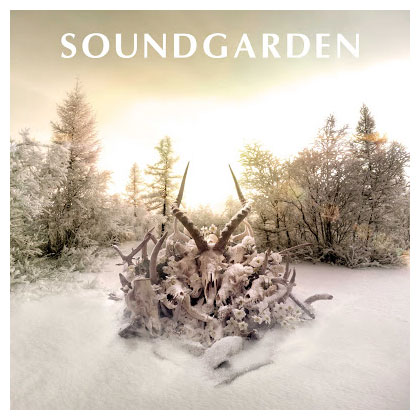
(I wrote an incredibly deep and moving intro to this, but it all disappeared when I posted it. So, here is the shorter version.) I came to Soundgarden very late, just a few years ago, having (wisely) mostly dismissed the meaninglessly named “grudge” movement of the early 1990s. The only Seattle group I listened to c. 1991 was Queensrÿche, whose brilliant “Empire” came out around the same time as Nirvana’s overrated album, the very aptly named “Nevermind” (exactly right, boys). I am now a staunch Soundgarden advocate, convinced that Chris Cornell is not only one of the finest rock vocalists of the past thirty years, but also one of the finest songwriters of the same era. He also has some proggy tricks up his sleeves. More on that in future posts. For now, here is a fine preview/review of the band’s new album, “King Animal”, due out in early November; it was written by Clare O’Brien and posted on the “Chris Cornell News” blog:

The cover of Soundgarden’s new album depicts a pile of bones, arranged almost ritualistically within a snowy forest clearing. And although rock music is no stranger to the gothic, this doesn’t come over as the usual kind of heavy-metal art cliché. It suggests not so much the trophies of an unseen hunter as something unearthed by an archaeologist – something powerful left underground, now brought to the surface and bathed in the light of a new winter’s morning.
It’s a good enough metaphor for a creative entity that’s been invisible for fifteen years. Although its individual members continued to work and make music during the band’s absence, there’s been much speculation about what kind of album they’d choose to make in 2012.  Would they do as others have done and try to recreate their own past? Or would they strike out in a new direction?
The answer isn’t a clear-cut one.  All four members of the band compose (Kim Thayil and Ben Shepherd even contribute a lyric each) and the songs are as varied as that might suggest. Hearing ‘King Animal’ is a bit like tracking a mysterious beast through a wilderness, encountering all kinds of different terrain, changing light and changing weather on the way.
The search begins with ‘Been Away Too Long’, which seems at first like a crowd-pleasing slice of AC/DC inspired rock triumphalism. On the surface, it screams “we’re back”, and it was the obvious choice for a first single. But look a little closer at this white-knuckle ride through the band’s origins, and disorientation and dysfunction aren’t far away. “You can’t go home, no I swear you never can….and no one knows me, no one saves me, no one loves or hates me.” Cornell has described this radio-friendly track as a “door” to what follows, and in spite of its accessibility, its violent riffing and oddly dreamlike middle section hint at the jagged complexities beyond.
What follows is one of the most varied musical explorations you’ll hear for some time. ‘Non-State  Actor’ has lyrics [mostly] by Kim Thayil which ooze an angry scepticism, riding uneasily on Shepherd’s restless musical undertow. It’s a thorny song, difficult to grasp, its twitching rhythms evoking a sense of paranoia and suspicion.  ‘By Crooked Steps’opens with a dreamy Beatles canvas of backwards tape effects and then hurls you under a furious jackhammer riff which never relents, while Cornell spins a looping, questioning melody – in a different time signature –  seamlessly over the top.
Read the entire review. And how about that cover art? Phew!

Krautrocksampler

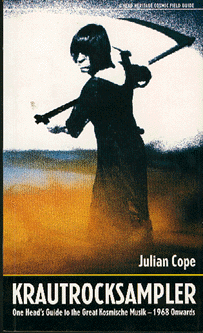
I first became familiar with Julian Cope’s music through his being associated with other cracked heads who worked in the wake of original famous British acid casualty Syd Barrett. He first came to prominence in the late 70s and early 80s, as singer for the Teardrop Explodes, one of those bands, like Simple Minds and Echo and the Bunnymen (contemporaries and both of which Cope alternately respects and dismisses in his excellent autobiography Head On), that at the time were constantly being compared to the Doors. I never got this point of comparison, though others couldn’t let go of it, to the point that Echo and the Bunnymen couldn’t either, to their detriment.  Following the collapse of Teardrop Explodes, Cope went solo and slowly seemed to disintegrate, Syd Barrett-like, into pastoral psychedelecisms.  Then came Peggy Suicide, a double album with a refreshed and matured Cope confidently leading his long-suffering and new fans on a garage pop narrative of environmental and political disorder at the twilight of the century.  It’s a masterpiece and I became a fan, seeking out his old records (Fried, the most immediate Barrett knock-off, became a favorite) and keeping a line on him.  I moved to New York in 1995, and one day I was browsing the book section of the Virgin Record Megastore in the heart of Manhattan, and happened upon Krautrocksampler by none other than Julian Cope.  I knew next to nothing about the genre, although I owned a Can compilation and had heard of some of the groups, like Popol Vuh and, of course, Kraftwerk.  But sheesh, I thought, this has to be good.  It was a beautiful, compact book, with glossy full-color photos and text everywhere.  The cover, as I later learned, was the same image adorning Amon Duul II’s album, Yeti.  I put down my $10 and walked out with a copy.  I couldn’t put it down.  Cope was a passionate writer, and this, a passionate subject for him, bubbled with enthusiasm, humor, serious asides, and deep observations.  I could see him writing it and not being able to keep up with the flood of thoughts and emotions.  Over the next months I spent hundreds of dollars on import CDs of krautrock legends, some of which, in Cope’s patois, was shite, some of which glimmered with genius.  I left New York considerably wiser, and considerably poorer, as regarding krautrock.

Fast forward a few years, and I’m in North Carolina, again perusing the music section of a book store, this one at UNC Chapel Hill, when I spy the Modern Antiquarian, by none other than Julian Cope.  Apparently in his spare time, Cope developed another passion, for British stone circles, becoming something of an authority.  Inspired, I got on Amazon thinking I’d find it cheaper, and I didn’t.  I think it may have already been out of print. And, as it turned out, so was Krautrocksampler.  The kicker was that people were selling their used copies of Krautrocksampler on Amazon for over $100.  Sheesh, I said again, if only I’d bought two copies.  Then I found the link below, and sold my copy for $175 (I am not kidding).

http://www.swanfungus.com/2006/10/krautrocksampler.html

You might call this copyright infringement, and “swanfungus” is quick to note the out-of-printness of the book, something Cope doesn’t seem to care about anymore, as his reason for posting.  I call it a public service.  The best book on music I have ever read.

Jeff Green

Thanks to my friend, Phil Chelmsford, for letting me know about Jeff Green and his rather personal album about the loss of his daughter, Jessica, in 1996.  I’ve been listening to the music at bandcamp for the past several days, and I’m thoroughly enjoying it.  We’ll have more about Green at progarchy soon.

In the meantime, here’s his personal website: http://jeffgreen.org.uk/

And, here’s a link to his album, Jessica, at bandcamp: http://jeffgreen.bandcamp.com/

New Enid

Wow, if you’re in the mood for some pure drama, some serious symphonic prog, here it is.  Wow, again, wow.  I’m rather blown away by this.

http://www.youtube.com/watch?v=9dVf35B22mw&list=UL9dVf35B22mw

N.B.  A huge thanks to Philip Lort for letting me know about this.

Richard Schwartz, Prognosis Radio

If you’re looking for a wonderful internet radio prog show, look no further today than Richard Schwartz’s always excellent and enthusiastic program, Prognosis.  It starts at 9am EST.  Enjoy!

www.shmusicmedia.com