New Big Big Train Releases Announced

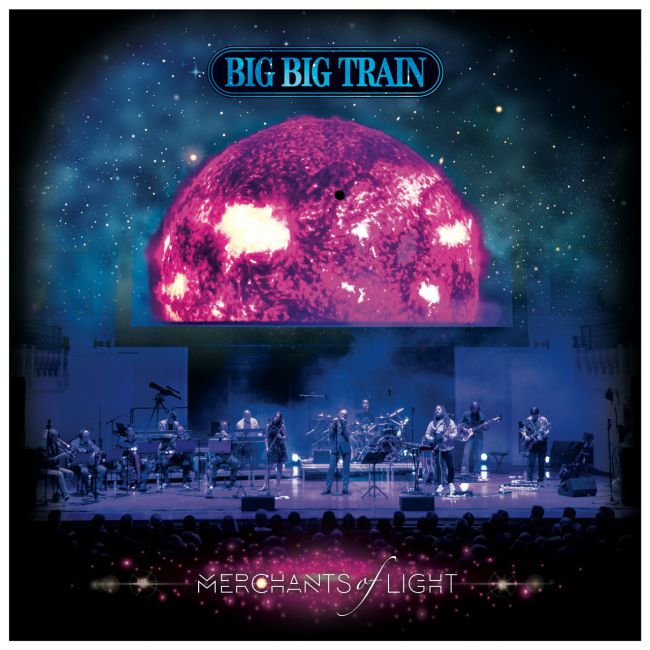
merchants of light bbt
One of two new BBT releases coming July 27, 2018.

According to Louder (formerly Teamrock), Big Big Train will be releasing a single as well as a live album on July 27 of this year.  Interestingly, Tim Bowness will appear on one track as well.

Burning Shed and The Merch Desk are each offering pre-orders of the various BBT releases.

According to Burning Shed, the single (or EP), SWAN HUNTER, will feature the following songs:

  • Swan Hunter (radio edit)
  • Swan Hunter (2018 remix)
  • Swan Hunter (live at Cadogan Hall, London, October 2017)
  • Seen Better Days (the brass band’s final piece, featuring Tim Bowness)
  • Summer’s Lease (live at Real World Studios, April 2017)
Again, according to Burning Shed, the live album, MERCHANTS OF LIGHT, will including the following:
  • Folklore Overture
  • Folklore
  • Brave Captain
  • Last Train
  • London Plane
  • Meadowland
  • A Mead Hall in Winter
  • Experimental Gentlemen part two
  • Swan Hunter
  • Judas Unrepentant
  • The Transit of Venus Across the Sun
  • East Coast Racer
  • Telling the Bees
  • Victorian Brickwork
  • Drums and Brass
  • Wassail
MERCHANTS OF LIGHT will be available as 1) a cd boxset; or 2) vinyl box set (with high-res download).
Cheers!

Marillion’s Glorious BRAVE (TAC)

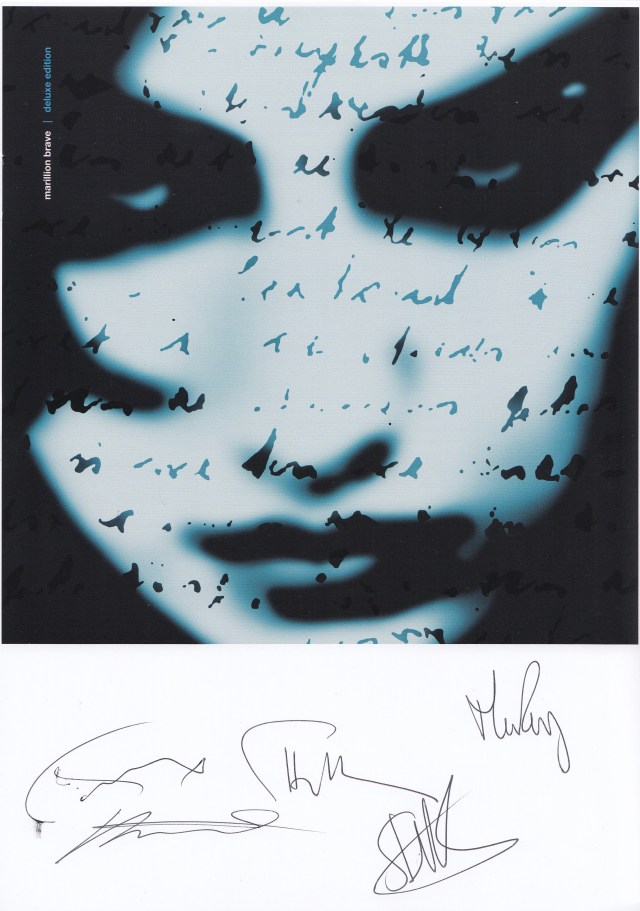
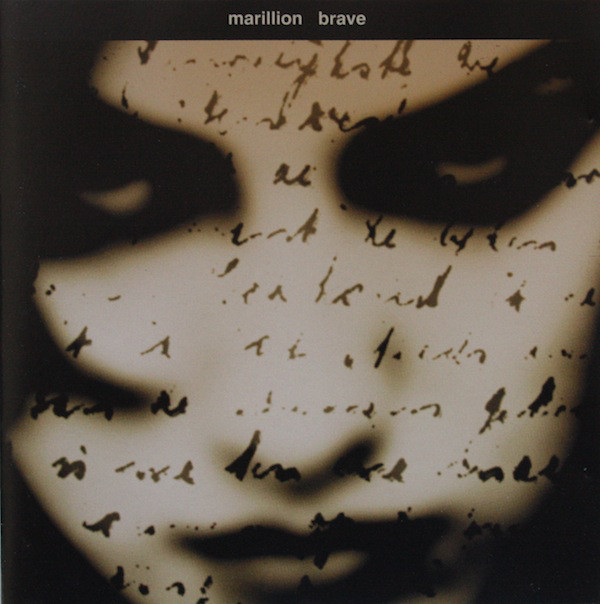
IMG_20180506_0001The good folks of The American Conservative allowed me to indulge one of my greatest loves and write about the 2018 re-release of Marillion’s BRAVE, remixed by Steven Wilson.  Whatever your politics, please head over there to check it out.

“The Cold War is done, but those bastards will find us another one.”

This cry might have come from any current reader of The American Conservative alive in the early 1990s—well, maybe without the bastard part. But still, an anguished expression from Russell Kirk or Pat Buchanan? Why not? After all, as TAC editor Bob Merry recently and wisely noted, so many so-called conservatives of the early 1990s “kicked Reagan to the curb” the moment they inherited the Republican Party. And it seems they kept kicking, mutating a military that came into existence solely to defeat the Soviets into a world peace-keeping force, a new Delian League. The bastards did find us another one.

And then: “They’re here to protect us, don’t you know. So get used to it. Get used to it.”

James Bovard or Virginia Postrel? Or some other grand libertarian of a quarter of a century ago? Why not?

Actually, the words are prog rock lyrics from Marillion’s album Brave (1994).

http://www.theamericanconservative.com/articles/marillion-prog-rocks-bards-of-alienation/

Review: Remark – Keep Running

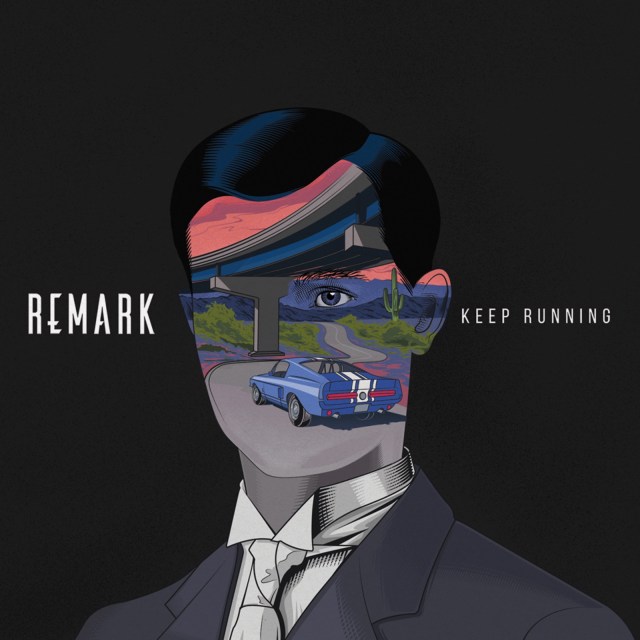
Keep Running

REMARK’s second offering Keep Running is an affirmative new chapter in a book already filled with trials and tribulations. You only need to look at the striking album cover to gain a sense of what you’re in for – grunge that bounces from heavy to soft, to everything in between. You’re in for a ride.

Whilst you may typecast the realm of grunge to bands such as Soundgarden and Alice In Chains, from the outset, REMARK put a modern twist onto an already formidable genre to dip into. ‘Comeback’ opens with your stereotypically sexy distorted guitars, before plunging into elements of alternative rock that bring it bang up to date. The same can be said for its partner ‘Purple Haze’. Its emotionally thirsty in lyrical content, which is backed up by self-assured punk-like guitar tones.

Although the 1990s nostalgia is laid so bare it could slap you in the face, the EP’s lead lines and riffs are contemporary additions that create a positive genre bending journey.

REMARK have truly come up trumps with this record, with two closing songs — both covers by Tears for Fears and Alex Clare — supporting that statement. Keep Running is infinitely catchy and brings back a genre that the original greats still hold the crown to, but rethinking it in a way that makes it accessible to the masses.

Honest, compelling and obsessively alluring, Keep Running is a masterpiece in post-grunge. Head over to Bandcamp to stream / download the EP. REMARK are also on FacebookYouTube, and Instagram.

Bill Bruford on Creativity

I really was going to write about hearing Bill Bruford’s scintillating lecture “Give the Drummer Some: Distributed Creativity in Popular Music Performance” with a packed house at the University of Michigan’s School of Music.  But stuff happened.

As previewed here, two days after the Bruford lecture I traveled to New York City to perform at Carnegie Hall with the Grand Rapids Symphony & Chorus.  (How’d it’d go? 15 seconds of singing Beethoven’s 9th Symphony on The Today Show, 2300 in attendance on the night with multiple standing ovations, and a solid review from the New York Timesso it was cool.)  This was followed, not just by the renewed demands of workday life, but also by ten days of the death flu (from which I’ve finally recovered).

With all this intervening, the best thing is for you to do is check out Dr. Bruford’s lecture, as delivered last year at Edinburgh Napier University.  My impressions and photos will follow the jump:

Continue reading “Bill Bruford on Creativity”

U2’s sad descent into self-pastiche

John Waters pens a scathing indictment of U2’s sad decline over at First Things:

U2 were not natural-born rock ’n’ rollers. Raised in middle-class estates in an area of Dublin where the rivers had been concreted over to build houses, they went in search of the roots of this music that entranced them, scrambling in the mud of the Mississippi for the blue notes that would resonate with the ineffable parts of themselves. They had no particular skills, just raw instinct, street smarts, and five loaves and two fishes’ worth of inchoate talent. They couldn’t play other people’s songs, so they wrote their own, strange lolloping tunes that sounded like they had been made by teenagers from outer space.

They were gauche and naïve. The British rock press hated them, so they went to America, read their way into the spirits of the originals, finding tones and harmonies to match their hearts’ desire and writing songs around them that were like the missing links of the rock ’n’ roll story. Within a few years, they fetched up on the cover of Time as the Greatest Rock ’n’ roll Band in the World. The four Dublin neophytes became the darlings of the dinosaurs, like Bob Dylan, Johnny Cash, and B.B. King. And they really had broken the code, producing two of the greatest albums to grace the pantheon, The Joshua Tree in 1987 and Achtung Baby four years later.

In the beginning, three of them had been born-again Christians. The exception was Adam, at the time the band’s Dionysian token, now the saintly one abed with his cocoa while Bono burns the candle down the dens of Bacchanalia, his arm around Noel Gallagher.

It’s hard to say where they stand with Jesus these days. He’s still there in (some of) the lyrics, but sometimes you get to thinking that the U2 trajectory looks more and more like a belated discovery of the delights they eschewed in youth, a front-loading of the piety of age followed by an eruption into delayed adolescence.

In the beginning they wore their hearts on their album sleeves, unabashedly proclaiming their faith in songs like “Gloria,” “Tomorrow,” and “40.” After their third album, War, the Christian element became more subtle, and remained so. With Achtung Baby, they went ironic, adapting the Berlin industrial harmonic clangor developed by Bowie and Eno for Low, Heroes, and Iggy Pop’s masterpieces The Idiot and Lust for Life.

But Achtung Baby was the beginning of a Faustian pact, struck at the end of a very tricky tightrope. Next, U2 entered an experimental phase that threw up numerous distinct possibilities. Pop, their 1995 album, was too diverse to be a popular hit, though it contained some of their finest work, and possibly their best song, the psalmsesque blues hymn “Wake Up Dead Man,” a blast of rage at God in the hope He might show Himself in His own defense. And perhaps it was the lukewarn response to that album that caused U2 to steer back into the mainstream in search of the essence of whatever it was that had worked for them in the first place. Panic set in, leading to U2’s creative descent into self-pastiche, while commercially they surged forward in leaps and bounds.

In the end, all you could say is that they settled for less than they promised. Having become themselves by remaining aloof from rock’s narcotics and narcissism, they gradually settled deeper into the embrace of the vacuity they had eschewed. More and more, their public stances seemed to be about attitude, about being cool, about remaining top of the league.

U2 has settled so determinedly into the mainstream of contemporary rock culture that it has now finally waived the role of re-evangelizing the music’s sacred roots, and is accordingly all but redundant. Once a band uniquely capable of standing against the seduction of the material, U2 has become indistinguishable from the herd it has latterly so assiduously courted, volunteering for enslavement to fashion, cool, and emptiness.

The Madeira’s Second Live Album

madeira center of the surg
Double Crown Records (2018).

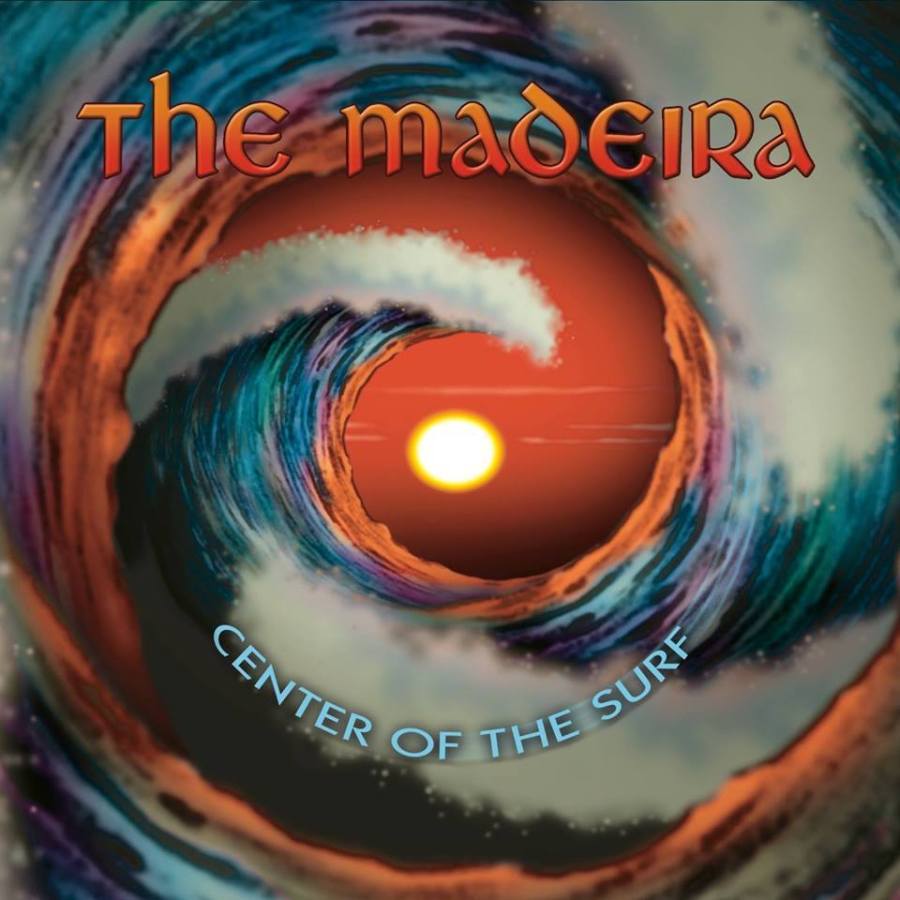
It’s ready, coming tomorrow.  The very best of surf rock–The Madeira, CENTER OF THE SURF, featuring Ivan Pongracic, economist, professor, human extraordinaire!

To order, click here: https://www.doublecrownrecords.com/the-madeira-center-of-the-surf-cd/

And, for a taste, here’s Leviathan.

ARMONITE Sign With Cleopatra Records

Armonite_Library

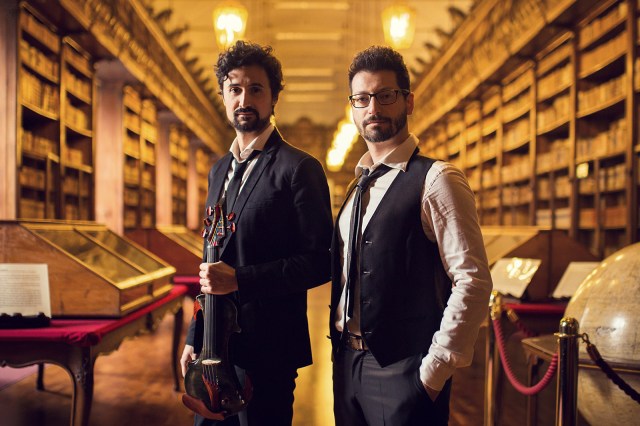
Armonite, the instrumental rock collective led by composer Paolo Fosso and violinist Jacopo Bigi, signed with LA-based indie label Cleopatra Records for the release of their new album, And the Stars Above.

Armonite‘s instrumental music is perfectly in line with the spirit of the label, especially now that Cleopatra expanded in the movie industry.

With the film division Cleopatra Entertainment, the company has distributed, developed, and produced several films most of which have a strong horror and/or music component, including The Devil’s Domain(starring Michael Madsen), The Black Room (starring Lin Shaye), Halloween Pussy Trap Kill! Kill! (featuring the voice of Dave Mustainefrom Megadeth), The 27 Club (featuring Todd Rundgren), England Is Mine (Steven Morrissey bio-pic), A Street Cat Named Bob.

Continue reading “ARMONITE Sign With Cleopatra Records”

Stephen Humphries on Marillion’s BRAVE

I recently had the chance to ask my friend, Stephen Humphries (Boston Globe, Prog, Christian Science Monitor), about his thoughts on Marillion’s BRAVE.  He graciously responded with this beautiful reply.  Enjoy.

brave cover
Arguably the first album of third-wave prog.

***

I was a sophomore at Hillsdale college the first time I heard Marillion’s Brave. I’d been aware of the band since its 1985 breakthrough album, Misplaced Childhood, because I’d heard the hits on the radio. But I only became an ardent fan following the release of the band’s landmark release, Season’s End, with new vocalist Steve Hogarth in 1989. (Perhaps the only time in rock history that a replacement singer has bettered his excellent predecessor.)

Continue reading “Stephen Humphries on Marillion’s BRAVE”

Review: Forest God – Back to the Forest

Peter Kiel Jørgensen

From the recommendation of the PR wire who provided this album for listening and reviewing, I decided to listen to this second EP by Forest God, a project by Aalborg, Denmark-based composer Peter Kiel Jørgensen. Forest God is definitely hard to peg in terms of genre. The project’s style is heavy, but not in the way of normal tech metal or progressive rock/metal bands. There isn’t much in the way of riffing or pretentious, cheesy cliches. Forest God is completely different, really, and they are here to win an uphill battle. 

“Back to the Forest” is an affair that is always interesting and spell-binding. Indeed, I think that is the most impressive aspect here: the music grabs, holds and doesn’t let go. The EP builds a wonderful wall of sound using offbeat drumming with amazing fills, a refreshing bass work and plenty of atmospherics by keyboards and Melotron. One of the things you will notice right away is the fact that Forest God is very comfortable with odd time signatures. “The Long Night” is an easy example of this, as the song never quite feels “right” the first time through, but then your mind will grasp the beat in all of its intangible glory in subsequent listens. In the end, the composition is genius, beautiful and absolutely mind-boggling to perform.

FG

The EP never really stops, though. “Solveig,” “The Promise” and “Brother” continue the incredible composition, though I feel that they are slightly more accessible. Track after track full of instrumental fireworks passes by, and the listener is blown away time and again by the fullness of the sound and the ease with which Forest God establishes a groove. This project has a penchant for creating ethereal atmospheres that blow right over your head, but then come back and smack you in the spine with their genius.

soundstreamsunday #109: “O Fortuna” by Carl Orff

carminaburana_wheel-1When your local symphony wants to fill seats, a good bet after the annual Star Wars night is a performance of Carl Orff’s Carmina Burana. Its pop power lies in a percussion both brawny and nuanced, and the clean melodic lines of the 23 songs bracketed by the thunderous chant of the opening and closing piece, “O Fortuna.” Orff’s success with Carmina Burana (1936) made his career, but its legacy is — must be — shaded by Orff’s less than courageous behavior in the Nazi era. The piece is thus endowed with a taint, a stink, and some feel this extends to its overt distillation of Stravinsky’s thornier Les Noces (1923) into symphonic ear candy.  Historians have judged Orff’s cowardice and originality to an uncomfortable draw, but listeners remain enthusiastic, sensing in it I think the same elements enriching Orff’s and Gunild Keetman’s Schulwerk project:  a simplicity of melody empowered by a rhythmic focus accenting drama.  Smart but not brainy, easy on the digestion but also moody around the edges, maintaining enough emotional mystery to keep things interesting.

Orff’s adaptation of the Goliardic text was in itself a meditation on life’s uncertainties — his successes were few at this point — and a statement of non-conformity in a fairly heavy-handed academic music scene.  The resulting hour’s worth of songs, combining the words of punk drunk monks and a faux medieval vibe, carries an anti-authoritarian ethic embraced years later by rock.  If you first heard “O Fortuna” waiting for your band to come onstage you’re not alone.  Goths and metalheads love this stuff, and Ray Manzarek, god bless him, went so far as to actually attempt the entirety of Carmina Burana on record.  Oh, fortune, indeed….

O Fortune,
like the moon
you are changeable,
ever waxing
and waning;
hateful life
first oppresses
and then soothes
as fancy takes it;
poverty
and power
it melts them like ice.
Fate – monstrous
and empty,
you whirling wheel,
you are malevolent,
well-being is in vain
and always fades to nothing,
shadowed
and veiled
you plague me too;
now through the game
I bring my bare back
to your villainy.
Fate is against me
in health
and virtue,
driven on
and weighted down,
always enslaved.
So at this hour
without delay
pluck the vibrating strings;
since Fate
strikes down the strong man,
everybody weep with me!

There is no lack of recordings of Orff’s masterwork, and this primer by Jeremy Lee is highly recommended.  Including here the last two songs in the cycle, “Ave formosissima” building to the return of “O Fortuna,” as recently rendered live by the Munich Percussion Ensemble under Adel Shalaby.  It has a lean, un-stuffy quality that I think complements the spirit of the work.

soundstreamsunday presents one song or live set by an artist each week, and in theory wants to be an infinite linear mix tape where the songs relate and progress as a whole. For the complete playlist, go here: soundstreamsunday archive and playlist, or check related articles by clicking on”soundstreamsunday” in the tags section.