Given that my series on The Albums That Changed My Life has stalled, it’s good that I never started the parallel series I contemplated last year: The Books About Music That Changed My Life. (Yeah, clunky title.)
I’ve mentioned some of these before. Nicholas Schaffner’s The Beatles Forever shaped my teenage Fab fandom; John Culshaw’s Putting the Record Straightserved up vignettes of classical composers and conductors — quintessential concert musicians — in the “artificial” environment of the studio; Joe Jackson’s A Cure for Gravity is a sharp, sardonic memoir by an uncannily observant musician, warily treading the path to pop stardom. And there are more: Glenn Watkins’ passionately encyclopedic Soundings: Music in the 20th Century (which I read in pre-publication form for his class at the University of Michigan School of Music); Greil Marcus’ giddy, eccentric cultural study Mystery Train: Images of America in Rock ‘n’ Roll Music; Sid Smith’s frank, definitive band biography In the Court of King Crimson.
A worthwhile imaginary history: Eric Clapton doesn’t leave the Yardbirds in March 1965. He stays, compromised but successful, and the band’s psych-garage boilerplate “For Your Love” is the first in a clutch of similar vocal-fronted hits that eventually morph the band into a second string Moody Blues. Jeff Beck and Jimmy Page never join the band, thus there is no Jeff Beck Group (thus no Rod Stewart, no Faces), and no Led Zeppelin. Clapton’s presence in the Yardbirds corks those possible future bottles. And, of course, there’s no Cream, and as such possibly no Jethro Tull or Black Sabbath, and, most definitely, no Mountain. There’s an argument here against Hendrix as well….
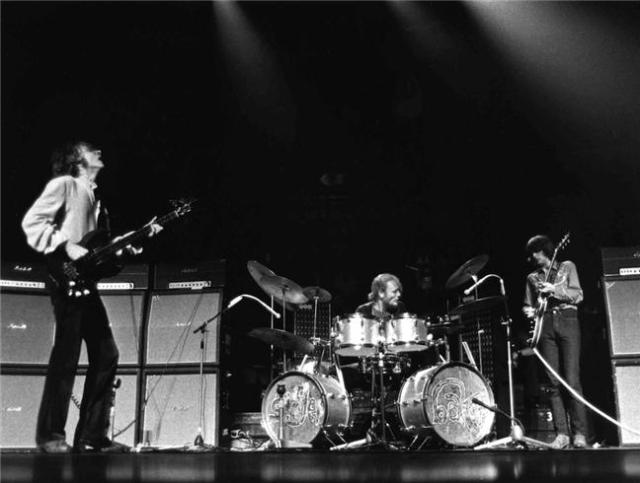
Such are Great Man theories of alternate history. Easily corruptible, but fun as thought experiments, and this one makes as much sense as any. Cream’s influence on rock is so profound, their catalog so fundamental, that their absence would have set transatlantic rock down a very different path. Cream backgrounds and informs every subsequent in-unison bass’n’guitar heavy hook (read: stoner rock), every song where a tom-obsessed drummer plays a rhythmic lead, every power trio, and every rock-based long form live jam (growing out of the “rave ups” that made the Yardbirds the scenemakers they were in Clapton’s day). Even if you’re not a huge fan of Eric Clapton — and I’m not — and you could create similar wouldnahappened scenarios with his Cream co-pilots (and geniuses in their own right) Jack Bruce and Ginger Baker, it was Clapton who was the tortured searcher, who saw the productive warring of Baker and Bruce as a positive, and was the driver of Cream with its wheels of fire, perpetually in a state of just passing through.
When they issued their last proper album in August 1968, Cream were so popular that their twin LP swan song went platinum, the first double rock album to do so. Its studio disc summed in spirit Cream’s first two efforts, Fresh Cream (1966) and Disraeli Gears (1967), while the live disc showcased Cream’s already legendary, and loud, performance prowess, and the tensions banked therein: it’s a sly joke when at the end of their cover of Robert Johnson‘s Crossroads — a song still played on rock radio 50 years after its recording — we hear Jack Bruce say, “Eric Clapton, please, for vocals.” Yes, Clapton’s vocals were integral to Cream even as they were secondary to Bruce’s, but it’s his guitar playing that’s the thing, never more so than on “Crossroads,” and Bruce’s toast could just as easily be a wheedling needle as props. It’s as if Bruce was continuing a conversation that moments before he was playing on his bass: whaddya got, and where else can you go?
The dense, thick battle lines of Cream’s live show were the Mr. Hyde to their studio work, where interpretations of electric blues standards sat next to original songwriting cutting directly to proto-prog poetics, the product of Bruce and his songwriting partner, Pete Brown. The combination of forms made for a catalog that could put “Spoonful” or “Outside Woman Blues” or “Born Under a Bad Sign” back to back with weirdly beautiful non-blues like “I Feel Free” or “World of Pain” or “Those Were the Days.” These last were intrigue, fanciful psychedelic flights, for the young Clapton, the blues purist whose work would never again be so adventurous or influential as with Cream, his traditionalism reconstructed by the Band’s Music from Big Pink (July 1968), which left him awestruck. Playing go-between for Bruce and Baker, in the wake of Big Pink, must have seemed an almighty chore whose fruit was withering.
Of artfully told lost love, “Deserted Cities of the Heart” is Cream ’68 in full studio flight, a richer sound afforded by rapidly advancing recording technology (although still short of the breathtaking step Led Zeppelin would make just months later on their first album) and the psychedelic mood further defined by producer Felix Pappalardi, whose string contributions add dynamic breadth and sweep to the dramatics and roadmap his work with Mountain. Three versions here: the original studio recording, with its dark and perfumed paisley fully intact; the original live version pulled from the same set of songs the band used to put together Wheels of Fire‘s live disc (and which appeared on Live Cream II in 1972); and its last incarnation, from 2005’s reunion show, before things turned bad again between Bruce and Baker and Clapton got bored, containing an interesting energy, as Bruce brings the goods in the wake of his liver transplant, and Clapton and Baker play with a subtle restraint retooling the song’s psychedelia towards a jazzier, bluesier roll. The spark is still clear, igniting the air, and we fall to our knees thankful that Clapton left the Yardbirds.
soundstreamsunday presents one song or live set by an artist each week, and in theory wants to be an infinite linear mix tape where the songs relate and progress as a whole. For the complete playlist, go here:soundstreamsunday archive and playlist, or check related articles by clicking on”soundstreamsunday” in the tags section.
An Easter weekend music fest might seem whimsical – but it’s heavy metal – and it is Decibel fest. Except for some metalheads and lost travellers, an otherwise crowded Philadelphia streets were absolutely deserted by Sunday. At the Gates on Easter Eve and those picturesque Old City images on a drizzling Sunday morning – Decibel fest Day 2 had the best of preludes.
Spectral Voice, with an absolutely dim stage lighting and a matching sound is an ideal opener. Dial down those doom metal like qualities and we pretty much get the sound created by New York City death metallers — Incantation. The final three bands seek no introduction or picturesque settings. They would simply make their mark even in the void. The calmness with which Repulsion vented dissonance might have defied all the laws of physics. These grindcore veterans, perfectly composed on stage, wrecked pandemonium below.
Needless to say, Mayhem would simply double down. After that initial intimidating stage presence, an unprecedented frenzy befell. The Fillmore has seen its performances, but here the decibels were off the charts. Only the fittest survived to finally face Carcass. Two days of beer and dissonance ending with an unyielding train — of grindcore and melodic death — riffs which simply explain metal as we know it.
Prog/Heavy metallers from Belgium, 23 Acez, have been around since 2010, and they have recently returned with their third album “Embracing the Madness.” Why the hell didn’t I know about them earlier? Now, thanks to the PR wire, I got a promo copy of the mentioned release, which is a real t(h)reat.
The style that 23 Acez plays is pretty standard, comparing somewhat with more traditionalist ‘80s metal throwbacks, yet they manage to sound different and fresh when compared with a lot of the other bands that attempt to play in this particular style.
Benny Willaert’s vocals are gravely and rough, standing at the very center of the counter-tenor wails of Rob Halford and the husky baritone of Blaze Bailey. During the choruses of such catchy anthems as “Cellbound” and “Embracing the Madness” the vocal work almost punches past the rest of the arrangement. While he doesn’t soar into the higher stratosphere in the manner that most in the genre do, he more than compensates with sheer power.
Although the voice alone gives this album a heavy yet melodic edge, the entire arrangement pounds the sonic threshold of the listener into submission. Whether its faster songs like or down tempo stomping machines, there is a consistent picture of a mighty fist slamming itself down on a stone table and commanding your undivided attention.
“Embracing the Madness” is a powerful statement from a band that is hungry to show what their abilities are, and according to this they have much more to offer. Grab this record, you’ll not regret.
The latest in an occasional series about the wild woolly world of rock’s double albums. Todd Rundgren has got to be one of rock history’s great chameleons. He’s gone from a paisley pop wunderkind as leader of the Nazz in the late Sixties, to a sensitive piano balladeer to a guitar-slinging metalloid, prog rocker and […]
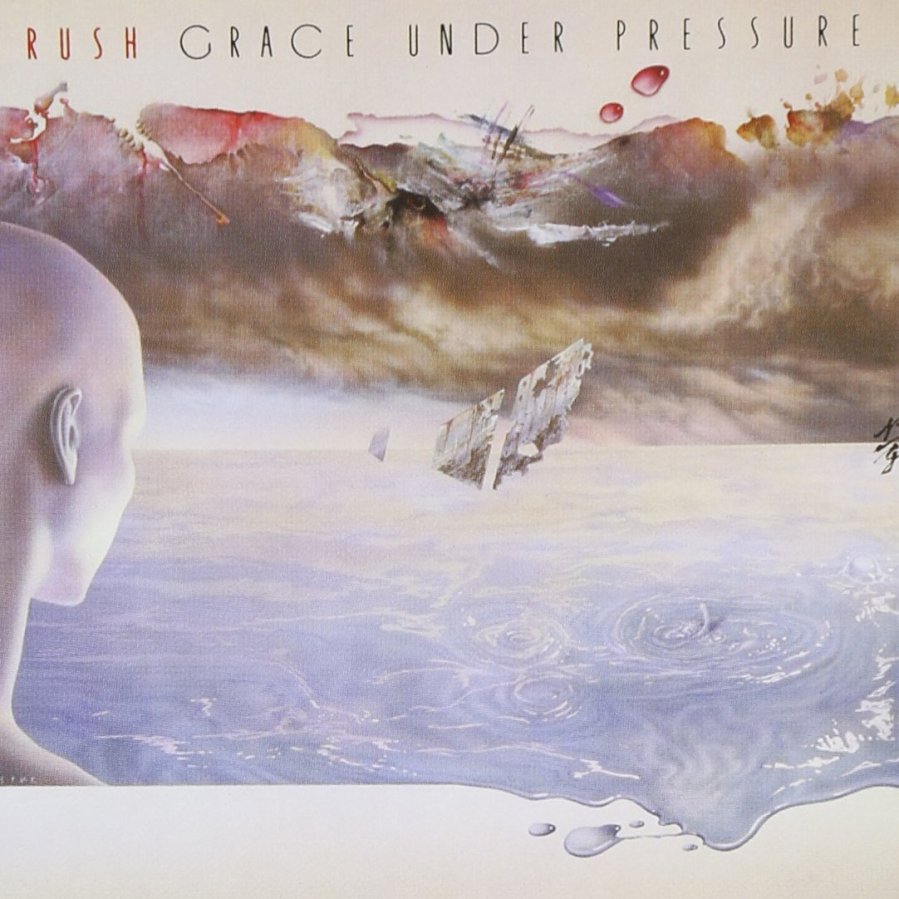
My favorite Rush album has been, at least going back to April 1984, Grace Under Pressure. I realize that among Rush fans and among prog fans, this might serve as a contentious choice. My praise of GUP is not in any way meant to denigrate any other Rush albums. Frankly, I love them all. Rush has offered us an outrageous wealth of blessings, and I won’t even pretend objectivity.
I love Rush. I love Grace Under Pressure.
I still remember opening Grace Under Pressure for the first time. Gently knifing the cellophane so as not to crease the cardboard, slowly pulling out the vinyl wrapped in a paper sleeve, the hues of gray, pink, blue, and granite and that egg caught in a vicegrip, the distinctive smell of a brand new album. . . . the crackle as the needle hit . . . .
Ayreon Universe (Blu Ray) – Ayreon Introduction… Well Arjen Lucassen is back with another new release only this time it’s a live concert and not a new album. I have to say this is quite a spectacular show that the guy as put on and arranged with Joost van den Broek. It must of took […]
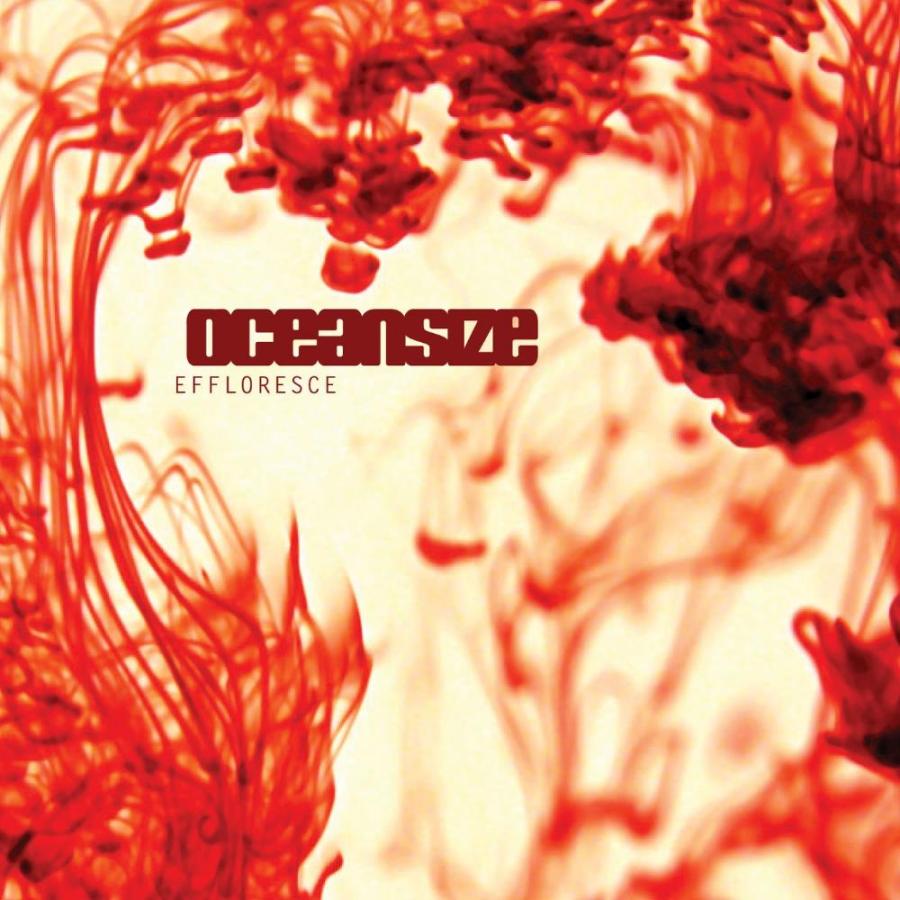
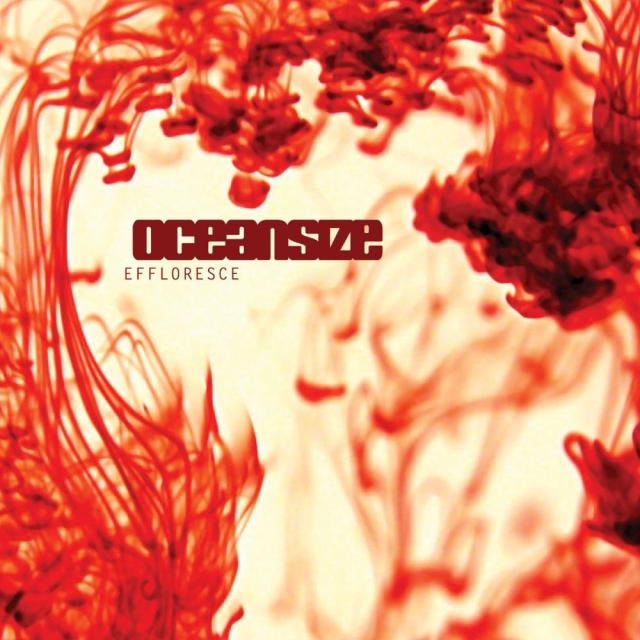
I will admit, I find it rather hard to believe that this song is already fifteen years old. Stunning. For an all-too-brief moment, Oceansize was it. The ultimate prog, space rock, space prog (labels!!!) band in the world. Combining psychedelic and often nonsensical lyrics with heavy rock and atmosphere cords and walls of sound, Oceansize seemed far far removed from its namesake–the song of by the utterly bizarre Jane’s Addiction.
Oceansize jumped into the music without trepidation. Nothing from the band felt forced or contrived, though the lyrics and the music shouldn’t have worked most of the time. But, it always did.
If you’re part of the Grand Rapids Symphony and Chorus, here’s how:
“We submitted a proposal, and Carnegie got interested in us,” [music director Marcelo] Lehninger said. “There was one specific program in the season that they really enjoyed, and they had a date available, and we could go there the week after we performed the programming in Grand Rapids. So, it was just all the stars aligning,” he laughed. “We said ‘you know what, let’s go now.’”
So a week from tomorrow, I’ll be on a plane for New York City, one of nearly 250 instrumentalists and singers making the pilgrimage. We settle in Thursday, rehearse Friday morning, let it rip on April 20th at 8 pm, then head back home on Saturday — hopefully basking in the satisfaction of a job well done!
(And yes, everybody’s practicing, practicing, practicing these days.)
Vikrit is a progressive metal band from India influenced by variety of different styles. The band has been together for over seven years, but earlier this year they put out their debut EP The King in Exile.
It could easily be said that Vikrit plays progressive metal with elements of heavy metal/hard rock and extreme take on the prog metal genre, and fans of likes such Lam of God, Pantera, Periphery, Mastodon, and Opeth are apt to find something familiar in their sound. Tracks generally consist of simple dominating metal chord patterns with more complex underlying melodies. Instead of focusing on technical musicianship, each track of The King in Exile attempts to evoke a certain mood or feeling – and it does this quite well. Most tracks revolve around a central musical theme, but they manage to repeat themselves without feeling repetitive. Though the music is never too heavy or too relaxed, it still manages to span a wide range of musical styles, with tracks that are equal parts dark, calm, angry and passionate. It is vibrant with emotional quality, and the music is very refined – The King in Exile certainly has a high production quality, and the members of Vikrit know how to complement each other well.
That is, in fact, the album’s greatest strength. The music and the vocals suit each other very well, and combine to create the emotional experience that is the album’s best quality.
Ultimately, The King in Exile is very well made for what it is. While those who prefer more complex melodies won’t find it enthralling, it is clear that Vikrit’s members are quite talented, and the simple nature of the music is more of a stylistic choice than an indicator of poor musicianship. The King in Exile left quite a good impression on me. It is subdued but expressive, with little technicality but a lot of feeling.