Did Beethoven steal tunes from his older contemporary for the “Eroica” Symphony, the Ninth Symphony, and for his most popular and beautiful song?… It is one of the most popular tunes in all of classical music, nay, in all of music, period. 1,085 more words
March 23: Unplugged at the Walls (1999) and Tumbling Down the Years (2010)
May 25: Smoke and Mirrors (both 2006)
July 6: Happiness Is Cologne (2009) and Popular Music (2005)
September 21: Live in Glasgow (1993) and Brave Live (2013)
Merch copies of the “Limited USA Tour Edition” of FEAR (which includes a sampler of the live reissues) sold out at Marillion’s recent Grand Rapids show, but it’s still available from Amazon at this writing.
For the first time in 32 years, performer/producer Todd Rundgren is reuniting his band Utopia for an extended tour of the United States.
Founded as a progressive septet specializing in synthesizer-heavy, instrumentally-oriented wigouts, Utopia served as both Rundgren’s dedicated live band and an outlet for his more experimental music. However, as Rundgren’s solo albums kept getting wilder, Utopia went a different way, shedding two of three keyboard players, picking up Kasim Sulton as bassist and co-vocalist, and morphing from the proggy hard rock of Ra (including the tongue-in-cheek epic “Singring and the Glass Guitar — An Electrified Fairy Tale”) to sleek power pop with cooperative songwriting, tight harmonies and a high-tech sheen.
With Roger Powell on keyboards and Willie Wilcox on drums, Utopia hit a commercial peak on the albums Oops! Wrong Planet (including “Love Is the Answer,” later a pop hit for England Dan & John Ford Coley) and Adventures In Utopia (intended as the soundtrack for a Monkees-like TV series that never happened). The band’s highest visibility may have been as the backing group for Meat Loaf’s Bat Out of Hell album, which Rundgren produced.
True to Rundgren’s restless musical tastes, Utopia then veered off into the commercial dead ends of Deface the Music (an album of Beatles pastiches) and Swing to the Right (a concept record slamming early Reaganism). Rundgren’s pioneering video work for the band gained extensive play on the fledging MTV, but the quartet petered out in 1985, only reuniting for a 1992 tour of Japan.
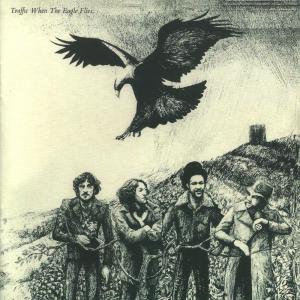
Purely by chance (if such a thing as chance exists), Fidelia played Traffic’s “Dream Gerrard” from WHEN THE EAGLE FLIES, then Gazpacho’s “Vera” from LONDON.
From such “chances” emerge the stuff of dreams.
What hit me hard–in fact, for the first time–is how similar the style of the two bands is.
Separated by decades as well as countries of origin, Traffic’s epic “Dream Gerrard” blended stunningly into Gazpacho’s “Vera.” Same style of bass, keyboard swells, and atmospherics.
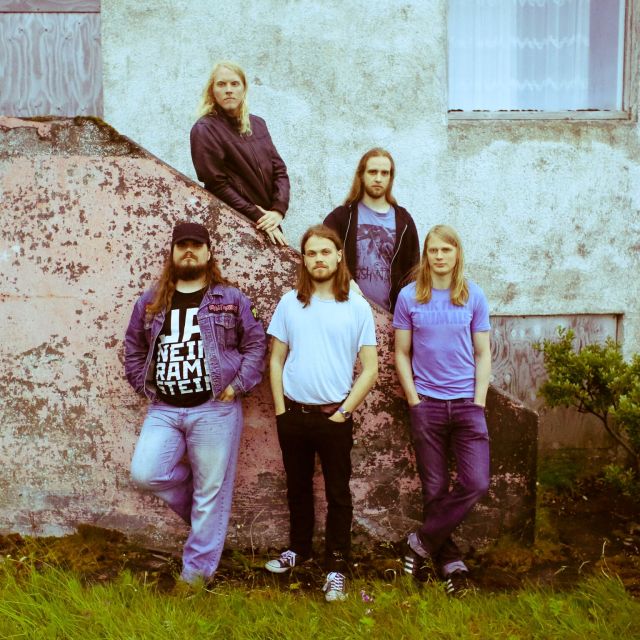
Iceland has been very active when it comes to the Progressive Rock genre in the recent years. It could be said that Ring of Gyges is one of the bands that represent this wave of the Icelandic Prog very well. Formed in 2013, the quintet released an EP titled “Ramblings of Madmen” in 2015 and a single “Witchcraft” in 2016, before launching their debut full-length release “Beyond the Night Sky” in November last year.
Vocalist and guitarist Helgi Jónsson told us about the band’s beginnings, new album, the Icelandic Prog scene, and more.
Let’s start from your early music beginnings. How did your musical career begin? When did you start playing? Which groups have been your favorites as a young man? Please tell us something more about your early life.
I come from a musical family, my dad plays bass and my parents raised me with their old vinyl records; Queen, Pink Floyd, The Beatles, that kind of stuff. I started learning classical guitar when I was a kid, probably around 9 or 10 years old, though I wasn’t really interested in that kind of music. I grew up in the countryside and the music school I went to wasn’t very good so the only proper tutoring I was getting at the time was from my dad, who taught me my first chords on the guitar (the power chords were particularly interesting to me!). When I was 13 I scraped together some money out of birthday cards and bought my very first electric guitar and amplifier, both shitty no-name brands, but I was ecstatic. I quickly formed a band with two of my schoolmates. We were mostly playing covers but I wrote one original song as well. Later on, my parents gave me an American Fender Stratocaster as a confirmation present, which remains to this day my favorite guitar and a good portion of our album was recorded with it. In high school I started to really get into prog, Rush, Dream Theater and Focus were some early favorites, but Blackwater Park by Opeth is probably the album that really sealed the deal for me on this whole prog metal thing.
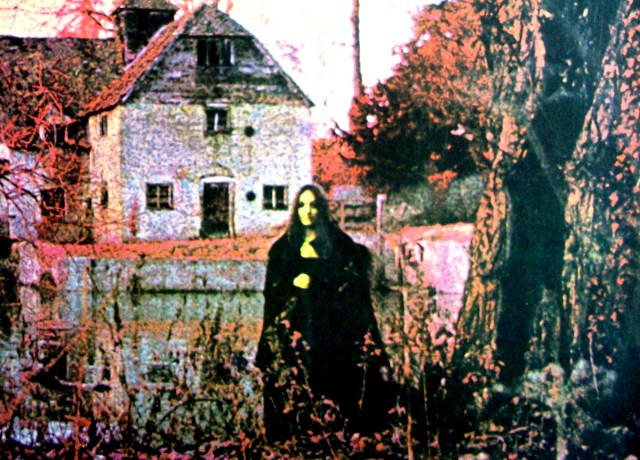
If they’re the only band on the infinite linear mixtape to be featured twice, and back-to-back at that, it’s because of the singularity of their two lead singers, who so influenced their respective versions of Black Sabbath that each iteration of the band made a distinct impact on rock and metal. Sabbath guitarist Tony Iommi has stated that the difference lay in writing for Ozzy Osbourne, who sang the melody of the riff, versus writing for Ronnie James Dio, a far more technically accomplished singer, who sang around the song’s chords. But even with Dio’s vocal expertise stretching Sabbath’s range, the core of Black Sabbath’s legacy really does belong to Ozzy, whose shakily intoned shriek conveyed — at least across their first six records, and before it became Ozzy’s schtick — the terror of a man trapped inside a nightmare.
When Sabbath took to the studio in October 1969 to make their first record, they were like dozens of other post-Cream British blues rock bands struggling to find their own voice. But, they had some advantages that maybe weren’t immediately apparent. Iommi’s short and ultimately unsuccessful stint in Jethro Tull in 1968 was an education, as that band was finding its own, heavier feet following the departure of Mick Abrams (Martin Barre, the definitive Tull guitarist, would be hired shortly after Iommi filled in, with a thunderingly loud but finessed guitar style not unlike Iommi’s). And Ian Anderson provided an object lesson for Iommi when Iommi went back to his band Earth: success would largely depend on the labor you put in. Tull worked for its fortune. As Earth transformed itself into Black Sabbath, Iommi demanded the band become a workhorse, and the group began developing a set of songs around bassist Geezer Butler’s night frights, a fascination with horror movies (e.g., Black Sabbath), and two significant technical issues that became key to a conceptual breakthrough: the tips of Iommi’s fingers on his right (fretting) hand had been shorn off in an accident in 1965, and it was while developing his newly renamed band’s sound and songs that he down-tuned his guitar to make it easier to play with the plastic tips he adhered to the tops of his fingers; also, Butler’s facility on bass was limited in their early days, so he ditched melodic runs and just mimicked Iommi, also down-tuning his bass. The result was literally diabolic. From the opening notes of “Black Sabbath,” the sound sends shivers, and it is here that heavy metal was born, out of imaginative use of limitation — such is Art — and the doom-laden tritone, the diabolus in musica, that Sabbath employed as its calling card. Iommi, riffing on Butler’s attempt to mimic Gustav Holst’s “Mars: The Bringer of War” from The Planets suite, produced a metal manifesto so potent that it resonates almost 50 years on, remaining a rock touchstone of its era as significant as Velvet Underground & Nico, Astral Weeks, Forever Changes, or Funhouse, ever begging the question: What is this that stands before me?
Studio version here but also the Paris ’70 version, with Ozzy jumping like Iggy.
There is, in fact, none more black.
soundstreamsunday presents one song or live set by an artist each week, and in theory wants to be an infinite linear mix tape where the songs relate and progress as a whole. For the complete playlist, go here:soundstreamsunday archive and playlist, or check related articles by clicking on”soundstreamsunday” in the tags section.
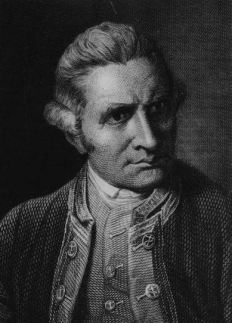
“Ambition leads me not only farther than any other man has been before me, but as far as I think it possible for man to go.” JAMES COOK
This adventurer and explorer certainly lived up to his words back in the 18th century when he set out on three voyages to the uncharted Pacific regions of the planet to initially record the 1769 transit of Venus across the Sun for scientific research onboard the HMS Bark Endeavour. The sheer excitement of his voyages across thousands of miles around this region captured our imagination in school classes at a young age, as we recalled the man and his crew, not forgetting his wonderful sailing ship that literally, put us on the map down here in New Zealand. It is a name very familiar to all of us, and yet is but a sheer glimpse to the life of a man who even outlived all of his six children to Elizabeth Cook.
But that is his greatness and his doom that we mostly measure and recall. The sum total of who he was and what he did beyond the decks of the Endeavour show us more of the man and those around him, and to that mind, both Frederick McKinnon and Tim Hunter have created and produced a three volume recording around a play they’ve written on this amazing explorer titled: “JOURNEYS: CAPTAIN JAMES COOK.” 2018 is an auspicious time to release these as they mark the 250th year of Cook setting out to the Pacific realms and of course the 239th anniversary of his fatal demise in Hawaii, 14th February, 1779 over a stolen cutter.
But we’re ahead of ourselves. This is a mammoth task both Frederick and Tim have set for themselves, and make good use of the 3 volumed digital release to start off with Cook at 17 standing on a cliff overlooking Whitby Harbour in North Yorkshire contemplating a life at sea. The first volume covers the highlights of the arc of his life, including service in Canada with the British Navy and his relationship with his wife, Elizabeth, and following sojourns to the South Pacific. The other two volumes go deeper into some of his seaward adventures and also a change in perspective of those in Cook’s orbit who share their own feelings about him.
As said, it is a full length musical play with music composed by Tim Hunter, and lyrics and dialogue penned by New York playwright Frederick McKinnon. At the time of writing Tim reported, “I’ve been interested for a while of working on a musical project about James Cook, I was particularly fascinated in Cook’s connections with East London, where I lived for a while.” He went on to add, “I joined forces with Fred, who was a fellow Cook enthusiast, and we’ve been working on the project for about a year now.”
Prog artist and fan, Tim not only plays the part of Captain James Cook he also provides guitar and keyboards throughout. Cook is a subject dear to his heart. “We’re very proud, in North Yorkshire, of James Cook, who spent the early years of his life here. Cook rose from humble origins to become one of the world’s greatest explorers. On his three great Pacific voyages, he re-drew the map of the world and paved the way for the peoples of Hawaii, New Zealand, Australia, French Polynesia and British Columbia to no longer live in global isolation.” The albums were released under his label Northern Soundscapes. Tim is also a member of Anglo-French group, ‘Silver Hunter’ who play Marillion-style Prog. He also aired the popular ‘ProgYes’ Radio show on Phoenix FM for two and a half years.
One of the interesting and memorable tracks from these albums is “Let Peace Prevail (In New Zealand)” which Tim sings as a relieved Captain Cook who has found a viable connection with the indigenous Maori and hopefully building a continued relationship between the two countries of Britain and New Zealand. Cook would be please to see this bonding has lasted all these centuries.
London-based actress and singer, Sarah Lipman was cast as Elizabeth Cook and provides through her vocals a pivotal insight into her relationship with James. Two of the tracks from the first album focus on her coping without her husband and raising their family.
“So Long Gone“:While James Cook is still away at sea, Elizabeth returns home after burying their baby daughter and reveals her emotions concerning her husband, who has been gone for two years and eight months.
“I Am the Man I Have to Be“: Despite Elizabeth’s misgivings, James is about to leave on what would be his last great adventure. He and his wife sing a duet sharing their intimate, but sometime conflicting, feelings.
Phil Smith as Lt. James Burney, and Phil Dean as William Hartwig complete the cast. Tim also included in these production a whole raft of sound effects to capture the times and environment of a sea-going voyage and ambience of a play setting for your enjoyment.
‘Journeys: Captain James Cook is not only a historical labour of love for both Tim and Frederick towards the legacy of one of our most treasured explorers, it’s also their homage to the ever so humble concept album merging both play and Prog for your enjoyment. Cook once said, “The man who wants to lead the orchestra must turn his back on the crowd…” so here’s your chance to ride the waves of the Pacific Ocean with Cook and his crew who did turn his back to the crowd and sailed into eternity.
As Marillion tours the United States (stopping at my home town this coming Sunday night! SQUEEEEE!!!), I’ve found the mechanics of marketing this band in a country where they’re at best a cult act fascinating. How do you sell albums beyond your core fanbase, especially at retail, when your last album came out 16 months ago? And, what else might that core fanbase want, or have missed? As Marillion manager Lucy Jordache commented in the group’s North American Fan Page on Facebook, “Many retailers wanted something ‘new’ to sell and therefore advertise the tour and also press didn’t really want to cover any tour dates unless they had a ‘new product.'” So Marillion and their retail distributors earMusic (the rock division of Germany’s Edel Group) have responded with a twofold strategy.
To celebrate this 14th of February–the Feast of St. Valentine–here are fifteen tracks to enjoy. All about love, but not necessarily romantic love. Blessings, Brad



 If they’re the only band on the infinite linear mixtape to be featured twice, and back-to-back at that, it’s because of the singularity of their two lead singers, who so influenced their respective versions of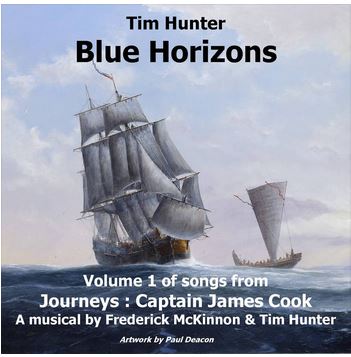
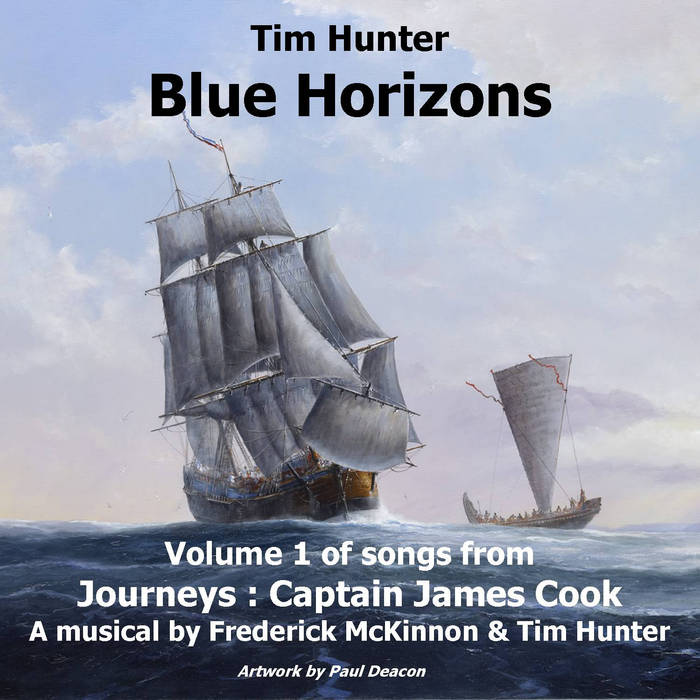
 d him, and to that mind, both Frederick McKinnon and Tim Hunter have created and produced a three volume recording around a play they’ve written on this amazing explorer titled: “JOURNEYS: CAPTAIN JAMES COOK.” 2018 is an auspicious time to release these as they mark the 250th year of Cook setting out to the Pacific realms and of course the 239th anniversary of his fatal demise in Hawaii, 14th February, 1779 over a stolen cutter.
 and dialogue penned by New York playwright Frederick McKinnon. At the time of writing Tim reported, “I’ve been interested for a while of working on a musical project about James Cook, I was particularly fascinated in Cook’s connections with East London, where I lived for a while.” He went on to add, “I joined forces with Fred, who was a fellow Cook enthusiast, and we’ve been working on the project for about a year now.”
 Prog artist and fan, Tim not only plays the part of Captain James Cook he also provides guitar and keyboards throughout. Cook is a subject dear to his heart. “We’re very proud, in North Yorkshire, of James Cook, who spent the early years of his life here. Cook rose from humble origins to become one of the world’s greatest explorers. On his three great Pacific voyages, he re-drew the map of the world and paved the way for the peoples of Hawaii, New Zealand, Australia, French Polynesia and British Columbia to no longer live in global isolation.” The albums were released under his label Northern Soundscapes. Tim is also a member of Anglo-French group, ‘Silver Hunter’ who play Marillion-style Prog. He also aired the popular ‘ProgYes’ Radio show on Phoenix FM for two and a half years.
 through her vocals a pivotal insight into her relationship with James. Two of the tracks from the first album focus on her coping without her husband and raising their family.
 Progarchy