
The Most Artful of Pop: Natalie Merchant

ACCORD, NY - January 23, 2016 - Natalie Merchant 
credit: Jacob BlickenstaffNo one would ever confuse the music that Natalie Merchant writes and produces with prog.  Not in the least!  Well. . . ok, maybe a bit in the least.  That is, while Merchant is firmly in the folk and pop tradition of American songwriting, she’s also willing to take grand chances.  It would certainly not be out of the realm of reality to call what she does artful pop.  And, artful it most certainly is.

Most recently, Merchant released a rather glorious 10-cd collection of all (almost) of her solo material.  This package from Nonesuch, The Natalie Merchant Collection, is a thing of joy.  The sound of the music is so crisp and the packaging is just perfect.  I will admit, I’m a sucker for good presentation and packaging.  The box is sturdy and the 100-page booklet that comes with the set is just stunning.  This, my friends, is the way to release music.

I must also state—somewhat of an embarrassing admission that might be perceived as sexist by some—that I find Merchant one truly beautiful woman.  When she was younger, she was what one would’ve called in the 1980s, “cute.”  As she has aged, however, she has allowed her hair to grey, and she doesn’t hide the few wrinkles of age.  Thus, I find her absolutely stunning as a middle-aged woman.  Thank you, Merchant for NOT succumbing to the disgusting and plastic culture of “forever young.”

In addition to the solo albums Merchant has released, she also includes in this package a new studio album, Butterfly, and a final disk of “rarities.”  At amazon, you can purchase this package—116 tracks!—for a mere $40.  Quite a bargain, especially given the beauty of the package itself.

The new album, Butterfly, is quite good, but I need a bit more time to absorb it.  I hope to do an in-depth review of it soon.

Of everything Merchant has done, however, I find her 2010 double album—Leave Your Sleep—not only her best, but one of the best albums of the rock era.  Certainly, it should rank in the top 100 of all time.  On it, Merchant playfully yet intelligently reconsiders children’s stories and poetries.  The songs range from the most intense pop to the most whimsical.  It’s pretty much perfect.
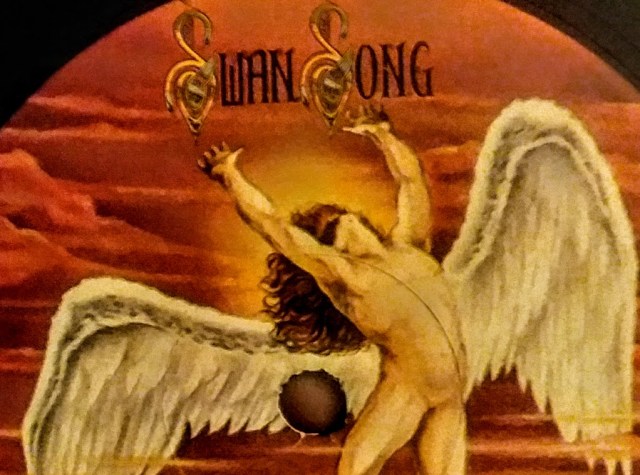
soundstreamsunday #92: “Kashmir” by Led Zeppelin

kashmirConsider Blueshammer.  Fictional, yes, short-lived, definitely (seconds at most).  Daniel Clowes and Terry Zwigoff made no bones in their film Ghost World (from Clowes’ graphic novel) about white blues musicians — that is, Blueshammer — who drowned out the source of their inspiration through sheer volume, and the thoughtlessness of the fans who followed them.  It’s easy pickings, sure, but there’s also some truth there, and as practitioners of the art of the blues hammer, it wasn’t the first time Led Zeppelin and their peers were skewered in pop culture (see Spinal Tap), nor would it prevent other very capable white bro’ blues artists from on the one hand shredding and posturing, and on the other (and doubly suspect I think) donning the Ray-Bans and porkpie hats and a-how-how-howing through thousands of dollars of instruments, cables, amps, etc. to legions of adoring fans.  Shall we name names? No.  You and they and I know who they and I and you are.
Even at their emergence, many rock royalty decried the bludgeoning the mighty Zeppelin gave the blues, and certainly their excesses were as clear as their achievements.  But, they achieved a lot:  between their approach to traditional music of all stripes (they bludgeoned everything equally, often with finesse), their revolutionary production techniques, Jimmy Page’s ability to find the sweet spot between technique and feeling (and Robert Plant’s cock-of-the-walk wail, and John Bonham’s pounding, and John Paul Jones’s rock steady everything else), and their marketing prowess, it’s hard to sell Led Zeppelin short.  As they would have it, it might be blues hammer, but it was blues hammer of the gods, straight outta Valhalla.  And they were pretty much right, the most powerfully potent rock band of the 1970s, so successful that the only thing they risked was radio fatigue from overplay — a risk that proved all too real for a lot us (I’d never surrender my Zep LPs, but do I listen to them….?).  When Bonham drank himself to death it probably wasn’t the worst thing to happen to the band in terms of its own legacy: across eight seamlessly consistent studio albums they managed not to make one dud, as they threw most everything against the wall.  It all stuck.  Their apex was 1975’s Physical Graffiti, a double album opus that sprawled and summed, peaking with the epic “Kashmir.”  It was a landmark of progressive hard rock, an ego-driven nod to world music in all its variegated unfolding, and even as Zep dressed their song in the North African and eastern themes that captured their imaginations as strongly as the Mississippi Delta or the Welsh hills had, there was never any doubt that this music was completely theirs, and that it was nobly and spiritedly done.

Here is “Kashmir” from Celebration Day, the concert Zeppelin gave in 2007 in honor of Ahmet Ertegun, Atlantic Records founder.  It may be their greatest live moment, even minus their legendary drummer, as the band (with Bonham’s son Jason ably thundering), healthy and aged and all in, describe why they were worth listening to in the first place, and why, really, they were never just a hammer of the blues, but indeed a hammer of the gods.

soundstreamsunday presents one song or live set by an artist each week, and in theory wants to be an infinite linear mix tape where the songs relate and progress as a whole. For the complete playlist, go here: soundstreamsunday archive and playlist, or check related articles by clicking on”soundstreamsunday” in the tags section.

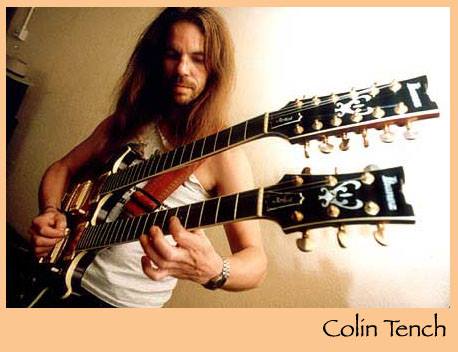
Colin Tench, RIP

Colin Tench
Taken from Tony Romero’s Facebook Page (hope you don’t mind, Tony!)


I just found that Colin Tench–Colin Tench Project, Corvus Stone, etc.–has passed away.  It looks like he died on December 29.  I didn’t know Colin personally, but when we founded  progarchy back in the fall of 2012, he was one of the first two or three major musicians to take us seriously.  I could not–nor would I–ever forget something like that.  When you’re just coming of age, it means everything to know that those you respect are willing to let you play in the playground.  And, not just tolerate your presence, but welcome you as an equals.

There are others at progarchy who could speak much better and more eloquently about his music, but it was clear to me that Colin valued his independence, having no time for conformity or uniformity or much of what passes as culture in our tapioca whirligig of a world.  He cared, first and foremost, about the art and about those who practiced the art and those who recognized the art for what it was.

I did have the privilege of emailing with Colin several times.  I found, even in our brief correspondence, that he was as hilarious as he was humble.  One of my favorite moments in being an editor at progarchy came when Colin sent us a review copy of CORVUS STONE II.  One look at the cover, and I replied, “Holy Moses, Colin, now I’m going to have to go to Confession!”  We both laughed at that over a couple of emails.

I have no idea what Colin’s religious beliefs (if any) were, but I pray that he is happy now, resting in peace eternal, or, perhaps, more given his nature, dancing and performing happily in peace eternal.  Earth’s loss is, to be sure, Heaven’s gain.

RIP, Colin.  You clearly did everything to use the outrageous gifts God gave you, not for yourself, but for the good of creation itself.  No one can do more in this fallen world.

The Analog Kid

CBC reports that the CD is not dead yet, because records execs are trying to keep whole album sales alive by any means necessary:

CD sales were boosted this year by a trend that saw some concert tickets for big arena shows — including tours by Arcade Fire, Shania Twain and Pink — bundled with a copy of the band or artist’s latest album.

Many concertgoers were offered the choice between a digital download or a CD sent through the mail. Whether those CDs were ever unwrapped is anybody’s guess, but each ticket sale helped rocket those performers to the top of the album charts in their first week of sales.

Preliminary numbers from Nielsen Music Canada show that while CD sales fell 18 per cent over the past year, still selling roughly 10 million units, they were relatively strong compared to the more dramatic erosion of digital album sales through stores like iTunes.

Digital album sales tumbled nearly 25 per cent for the year to 6.2 million units, extending what is expected to be a steep downturn as more listeners embrace streaming services.

David Bakula, who oversees Nielsen’s industry insights operations, said the changes in digital habits mean the CD is representing a larger share of the declining album sales market.

He believes that writing the obituary for the CD is premature as labels look to bolster album sales however they can, while older listeners stick to their usual buying habits.

“We’re not seeing this flight from the format,” he added.

Walmart also dramatically scaled back its CD selection while fellow retail giant Best Buy recently scrubbed music from its stores entirely.

All of this certainly hasn’t boded well for boosting sales figures, but music historian Alan Cross is confident record labels will follow the dollar.

“If they can’t get people into the store to buy a CD, well then (they’ll) just send the CDs directly to them, whether they want it or not,” he said, pointing to expectations that the success of ticket bundles will only lead to other artists experimenting with the strategy.

“By nature a lot of music fans are collectors and that means they need a physical thing to collect.”

It’s possible an established act like Bruce Springsteen or the Rolling Stones could try to up the ante by pairing scarce concert seats with an exclusive CD box set.

Kruekutt’s (Re)Discoveries of 2017

by Rick Krueger

This article rounds out my “best of 2017” series, focusing on older albums that I discovered  — or rediscovered in one case! — in the course of the year.  They’re listed in alphabetical order by artist after the jump:

Continue reading “Kruekutt’s (Re)Discoveries of 2017”

E

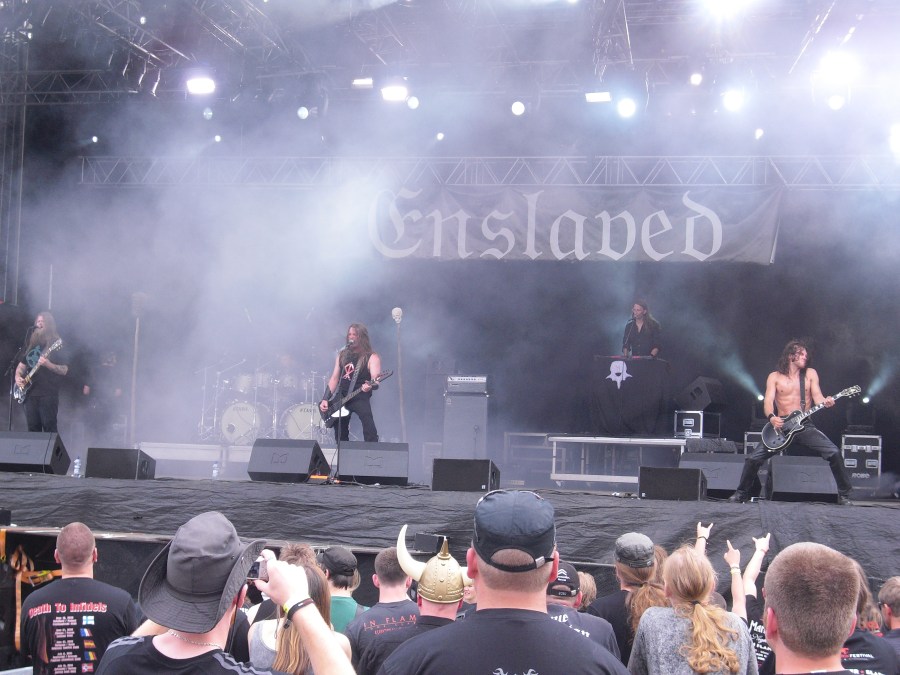
‘E’ becomes the most brazenly progressive Enslaved record. Experimental keyboards, abrupt temporal shifts and frequent bursts of aggressive riffs — all reminding us of their Viking metal roots. Basically, art rock to symphonic prog to post-metal atmosphere effortlessly brewed with some inhuman screams. Add the use of flute, a surprising jazz segment and a Norwegian electronic synth-pop cover — Enslaved has never been more firmly rooted in both extreme and avant-garde territory.

Without completely abandoning black metal, they has carefully adopted some unproven experimetal progressiveness. Within these uncharted fields, it’s not surprising that they sometimes lurch between sheer greatness to downright peculiar. But, for long time listeners there is nothing unexpected here. The band continues to walk their chosen path – constructing a curiously rich, polarizing, and at times uneven mosaic of progressive black metal symphonies.

Dark Apostrophe at English Wikipedia [CC BY 3.0], via Wikimedia Commons

Bryan’s Best of 2017

Here we are again, folks. We find ourselves at the end of another great year for prog. Sadly, we’ve had to say goodbye to some amazing artists this year, including John Wetton, but we at least have their music by which to remember them.

I know I’ve been a bit quiet here at Progarchy lately due to beginning graduate school this fall. Hopefully things settle down going forward, and I’ll be able to contribute more. For now, here are my favorite albums from 2017 in vaguely ascending order.

Continue reading “Bryan’s Best of 2017”

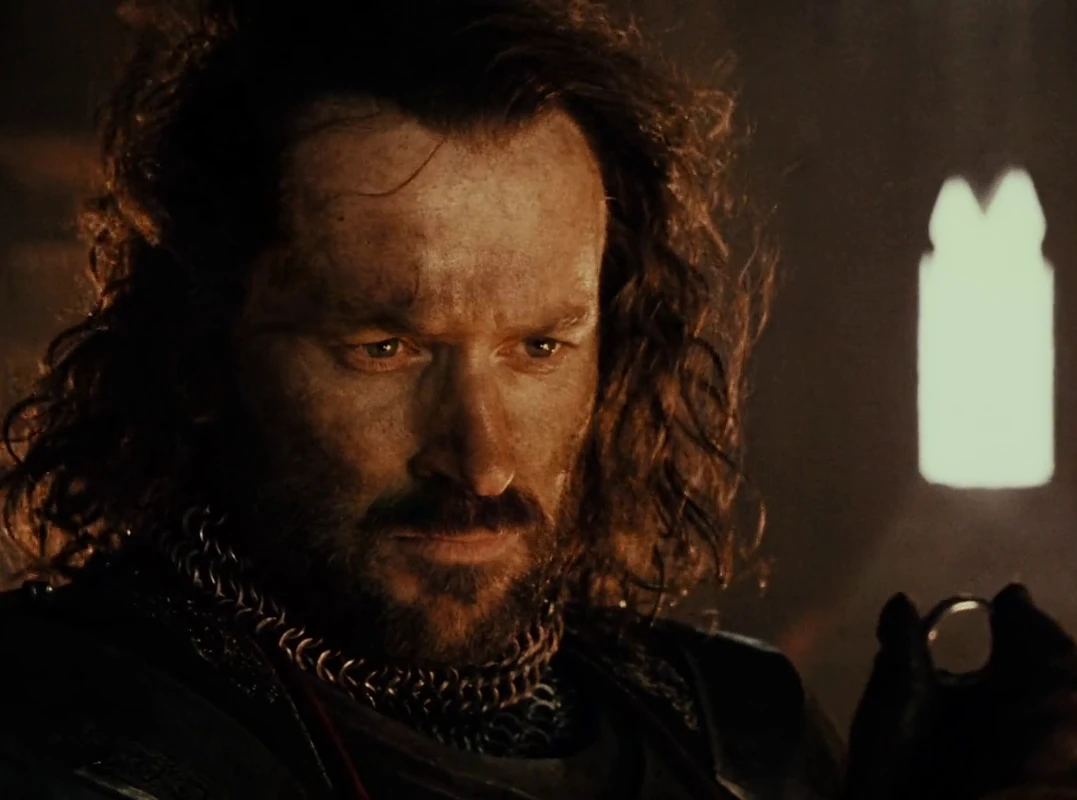
“Behold Isildur’s Bane!”

Image result for Behold Isildur's Bane lord of the rings

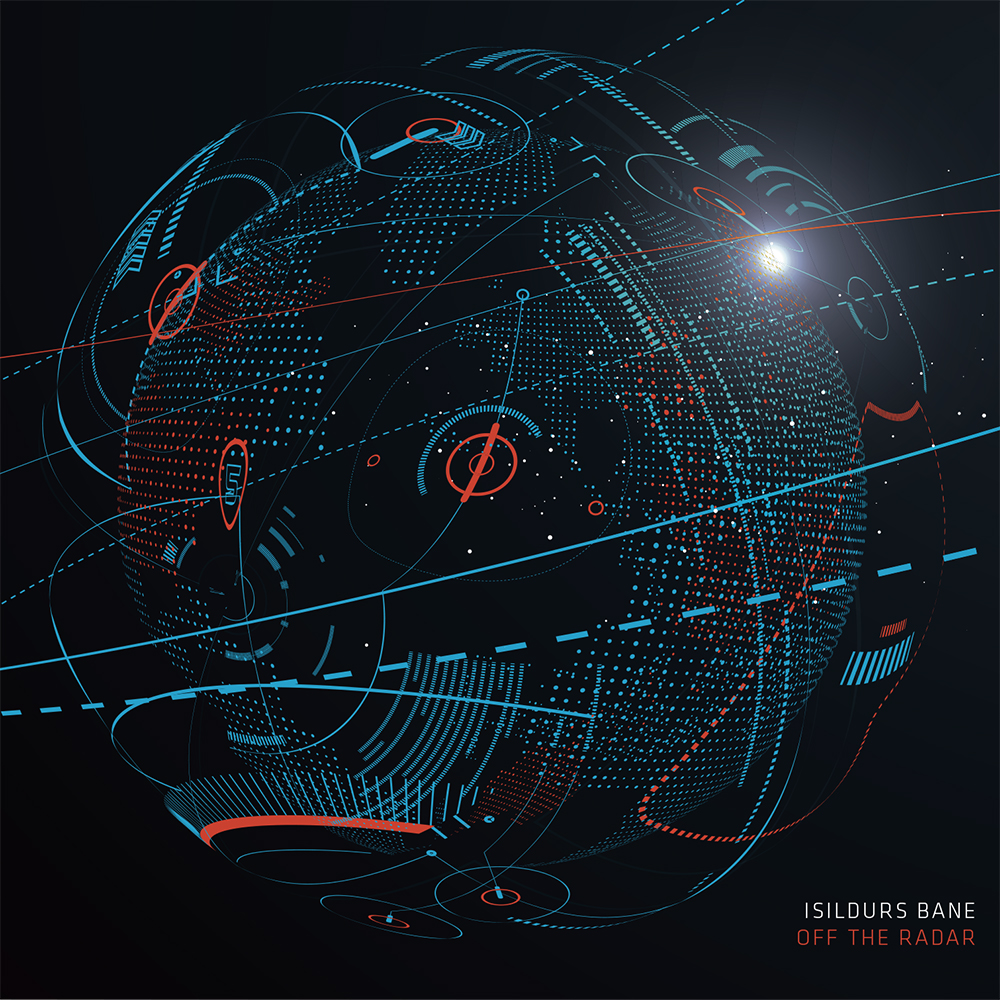
Of course Elrond was talking about the one ring, but equally so, he could have been recommending the band with almost the same name’s (give or take an apostrophe) new album titled, “Off the Radar.” If you’re not familiar with this Swedish group then you’re in for a very pleasant surprise. Pigeon-hole Isildurs Bane at your peril.

Image result for off the radar

There are so many layers to this to ponder on and encompass; so many ‘Colours Not Found In Nature’ as was aptly titled from their previous album with Steve Hogarth onboard.  Each track deserved of your attention with so many talented musicians finding their place within to infuse a delicious pattern of sound joined or blended, but never dulled or confusing, even though sometimes you feel there is madness to their avant garde method, no borders left unturned, they have created an orchestral fusion of shifting melody which works wonderfully.

It all depends which direction you follow, and you’d be hard pressed finding a chorus on any of the six listings including a live bonus classically inspired track titled ‘Uvertyr / Open (Live 2016)’ at the end, but that is the beauty and charm of this band who are now well into their 41st year of “changes in personnel, straying far from their symphonic rock origins to become a rock-based chamber ensemble.” Or so they represent themselves claiming their very own niche in Prog along paths the likes of Frank Zappa or perhaps a jazz-inspired Gong have walked. It’s a sound they’ve reinforced over the years, and I have to admit I’ve only heard a couple of their albums in the past including the ever haunting ‘The Voyage – A Trip to Elsewhere’ released in 1992. just listen to the oh so brief ninth track ‘Picassiette – Third Walk’ and you’ll know where I’m coming from.

So here is a run down of the ensemble for this new album: Continue reading ““Behold Isildur’s Bane!””

Review: Heyoka’s Mirror – Loss of Contact with Reality

Heyoka's Mirror - Loss of Contact with Reality

Hailing from Calgary, Alberta in Canada, a progressive metal trio Heyoka’s Mirror has earlier this month launched their debut EP “Loss of Contact with Reality,” available as a name-your-price download and CD from Bandcamp.

“Loss of Contact with Reality” places Heyoka’s Mirror to the art-metal vanguard, but the three-song EP does find the band on surer footing from which to make their next leap forward. The last track in particular, “Chronovisor,” gets surprisingly good mileage from an unlikely source: melodic metal, maybe the least reputable of metal subgenres. It’s the metal niche that has least renounced the campy excesses of new-wave Brit metal a la Iron Maiden and Judas Priest, but it’s also the most melodic, its tell signs being clean-sung harmonies and dramatic synths that tend to blast out from behind the guitars. It turns out the style makes a good segue between the sections of “Chronovisor” that are rooted in math rock and those that are rooted in thrash metal, and the effectiveness with which Heyoka’s Mirror employs those soaring melodies suggests they may yet develop their own mutant pop sensibility.The first two songs are dynamic; they’re also wildly uneven, with very cool ideas alternating, often in rapid succession.

More than anything else, Heyoka’s Mirror is dependent on their ability to generate momentum here, by virtue of which they can keep listeners engaged in these unwieldy but ultimately rewarding compositions. By that standard, “Loss of Contact with Reality” is a success, though its true significance will be determined by how the band capitalizes on that momentum when they come up with their forthcoming full-length.

My Favorite Non-Prog Pop/Rock of 2017

nomusicnolifeI’m not sure that I’m the most non-proggy of the many esteemed Progarchist contributors, but I do tend to run a bit hot-and-cold when it comes to my prog listening. So much so, I am almost hesitant to offer up my Favorite Prog of 2017 (forthcoming!), but since it contains the all-important adjective “favorite,” I think I’m on safe ground. As usual, most of my listening this past year was in the realm of jazz and other instrumental music, but that list is also forthcoming. Between those two wide, general genres is my current list, which I think has a couple of interesting twists and turns. Here then are my Favorite Pop/Rock albums that cannot, in good conscience, be called “prog”.

• Top of the Glorious, Musical Heap: “Grace Street” by Big Wreck. Ian Thornley and Company continue to impress and dazzle in big ways, producing a sprawling but incredibly masterful collection of songs that are, as I wrote in my February review, notable for being “defiant” and “hopeful” in equal measure, reflecting the aftermath of Thornley’s divorce. This album stood out to me because, despite having nearly a full year to marinate in its musical flavors, it never became tiring or dull; on the contrary, I continue to listen to it on a regular basis. The songs are varied but cohesive; the playing is stellar; the vocals are unreal; the guitar solos are stunning. And, despite not being prog, even the most die-hard progarchist will nod in admiration at extended, complex cuts such as “A Speedy Recovery” and the instrumental “Skybunk Marché”. Recommended without reservation.

• “Live at the OT Arena/B-Sides and Rarities” by Alter Bridge. This 3-CD set is a gift that keeps on giving, especially for the price. The third disc (b-sides, rarities) is so good, I’ve only listened to the two live discs a few times. In fact, I think it easily holds its own among the many exceptional Alter Bridge albums; the first three songs—”Breathe,” “Cruel Sun,” and “Solace”—are astonishing examples of slow-burn brilliance, with echoes of Soundgarden and Chris Cornell, both musically and lyrically. The guitar is, of course, stellar, and Myles Kennedy demonstrates again his broad range, remarkable control, and emotional vibrancy. And speaking of Kennedy, his much anticipated and long awaited solo album “Year of the Tiger” is being released on March 8, 2018; here’s the title cut: Continue reading “My Favorite Non-Prog Pop/Rock of 2017”