Bruford: Seems Like a Lifetime Ago, 1977-1980 — A Review

by Rick Krueger

I think it’s fair to say that this 8-disc set is going to be my reissue of the year.  It’s pure delight from first to last, covering three brilliant studio albums, two distinct live sets (one previously unreleased) and a fascinating batch of rough-draft outtakes — all spearheaded by paradigmatic progressive rock drummer Bill Bruford.

Continue reading “Bruford: Seems Like a Lifetime Ago, 1977-1980 — A Review”

Jerry Ewing’s WONDROUS STORIES

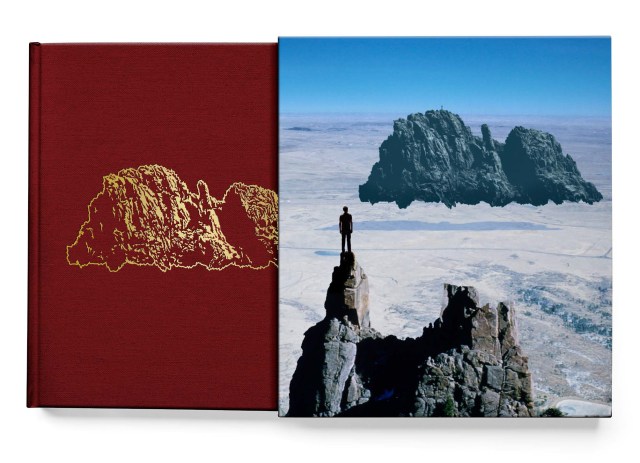
The price is a bit steep for those of us in North America, but Jerry Ewing’s latest book (out in December) looks quite gorgeous.

DELUXE PROG PACKSHOT.jpg

https://burningshed.com/jerry-ewing_wonderous-stories_book?filter_tag=jerry%20ewing

Concert Review: Dweezil Zappa (Zappa Plays Zappa) @ The Tower Theater, Fresno CA 05/03/17

Better late than never. I apologize for the delay in posting, but 2017 has been very eventful for me.

The first Frank Zappa song I ever head was “Don’t Eat The Yellow Snow.” I was attending college at the time and broadening my musical horizons. This introduction to the Zappa Universe was thanks to a certain infamous file sharing program. The first time I heard this bizarre, hysterical and musically acrobatic “song,” I think I stared at my computer screen and blinked, not knowing what the hell just happened. I dove into this music thanks to the likes of Steve Vai, Warren Cuccurullo and Dream Theater. And any song that begins with “Dreamed I was an Eskimo” had to be crazy special and deviously clever. It was, and it was merely a preview of the eccentric brilliance that was out there in the Zappa catalogue. Several purchases later and a couple chance encounters with Mike Keneally and Steve Vai (a Martin Guitar Clinic and NAMM appearance), I found myself itching to somehow experience Zappa’s music in a live setting. Behold, Zappa Plays Zappa is born, brainchild of Dweezil Zappa.

This leg of the tour was in part a celebration of the Freak Out! album and entitled “50 Years of Frank: Dweezil Zappa Plays Whatever the F@%k He Wants – The Cease and Desist Tour.” The name of the tour is a response to the trademark dispute that has occurred between Dweezil Zappa and the Zappa Family Trust (Ahmet Zappa/Executor). The trust ordered that Dweezil cease using the “Zappa Plays Zappa” moniker and to cease using images of his father, Frank Zappa, on all merchandizing. The details of this dispute can be found elsewhere and it’s a very sad read. Frank Zappa passed away in 1993 and left a mountain of a musical legacy behind. He was regarded as a genius, an avant-garde innovator that was never afraid to break the rules. He was also one hell of a guitar player. Dweezil Zappa has carried on this legacy by presenting the music of Frank Zappa at his live shows. It is only fitting that Dweezil, an accomplished guitarist in his own right, honor that heritage and with stellar musicians, many of whom were part of incarnations of Frank’s touring bands. For this touring cycle, the group would present selections including songs from Freak Out!, the debut album by The Mothers of Invention, Frank Zappa’s first rock combo.

The Freak Out! tracks are the wackiest, and yet some of the most brilliant music pieces you’ll ever experience. It didn’t sound like anything that was around at the time and still doesn’t sound like anything that’s out now. It’s freaky, complex, intricate, fun, jazzy, zany, it grooves, it boogies, it rocks, it sways, and it’s just one giant amalgamation of bizarre sound and eccentric brilliance. The vocals dart from spoken word narration, to lounge singing, to doo-wop, to soulful crooning, and on and on and on. It’s madness. But there’s something amazingly entertaining and musical about it. Only a certain breed of power musicians can pull off this crazy, impossible to play music with heart AND expert precision. The current line-up is no exception. They’re like musical super heroes. The Zappa musicians have always been untouchable players and unusual characters: Odd, weird, funky, freaky, cool, but above all…freaking geniuses. And at the core of this line up is a mellow and low-key guitarist in jeans and a black V-neck, armed with a gentle smile and a Gibson SG. There’s a calmness and serenity to Dweezil when he’s onstage, it’s spellbinding watching him, seeing him lay down his parts with nurturing care, then seeing how he glances over at his bandmates with equal parts pride and a quiet joy.

Zappa Plays Zappa is no stranger to Fresno. Fortunately for us, the group has performed in this area once or twice previously. Kudos to the group and booking agents for not forsaking our little neck of the woods. From the moment the group came onstage we knew we were in for an unmatched experience, variety and virtuosity. From the netherworldly bounce of “Transylvania Boogie,” to the vocal hilarity and madness of “It Can’t Happen Here,” the soulful “How Could I Be Such a Fool?” to the creepy waltz of “Who Are the Brain Police?,” it was an insanely wild roller coaster ride. During a pause, many in the audience began shouting song titles. Someone shouted “Watermelon!” Dweezil with a playful smirk said something like “Requests? You’ know what we’re gonna do?…We’re gonna stick to the fucking setlist, that’s what we’re gonna do,” and with a smile he and the group powered on. David Luther on lead vocals, guitar, keys, and bary sax, was an eerily perfect match for this group. That deep voice is a striking resemblance to Ike Willis, Napoleon Murphy Brock and Frank Zappa’s vocal style. “It Can’t Happen Here” is a great example of that zany vocal delivery. “What Will This Evening Bring Me This Morning?” saw vocalists Cian Coey and Scheila Gonzalez harmonize and sing the hell out of that song. It was an exercise in power soul. The set had transitioned from Freak Out! era tracks to 200 Motels. And then the band reduced itself to a power trio, with Dweezil, Ryan Brown and Kurt Morgan ripping into a bitchin’ version of “Apostrophe,” the title track of the same album. You could feel and hear the great Jim Gordon and Jack Bruce in their playing. Bassist, Kurt Morgan, was awesome to watch. His facial expressions, nonverbals, mannerisms, his movements onstage. The way he curled his lips and bobbed his head when he locked into a tight, thunderous groove. And damn, no one, I mean NO ONE can rock cargo shorts and orange socks like that man. Throughout the concert, Kurt was playing insane bass parts, singing backgrounds, AND having an incredibly euphoric time while doing it. You could see the musical joy on that man’s face. And the way he played that bass during “Apostrophe,” I’m amazed those strings didn’t fuse onto the fretboard with all the kinetic energy and heat going on. About drumming power-house Ryan Brown, wow, everyone in this group has a legacy of big shoes to fill. The drummers in all the Zappa groups have always had the distinction of being an “it” guy, drummer’s drummers. One has to continue a legacy built upon and including Jimmy Carl Black, Ansley Dunbar, Vinnie Colaiuta, Terry Bozzio, Ed Mann, Chester Thompson, Chad Wackerman and Joe Travers. Bottom line, the drummer had better be a bad ass drummer. Ryan was able to easily channel the spirits of all the Zappa alums that came before him, and laid down a kicking groove while keeping all the intricacies and nuances needed to pull off those complex parts. And then there’s the striking Scheila Gonzalez, who can’t be a real person.She has to be some kind of musical virtuoso android fem-bot sent from the future. She’s an accomplished, award winning multi-instrumentalist, able to play flute, sax, keys, and sing like her life depended on it. She possesses a powerful voice, husky and throaty, and it gels well with Cian Coey’s raspy yet soulful diva vocals. Main keyboard player and violinist Chris Norton brought it all together, gluing the group together and anchoring it with complex leads and great background singing as well. KILLER line-up. At one point during the set, Dweezil made reference to these songs, the bizarre qualities of the music and how it all must have freaked out parents in the 60s. Dweezil expressed “This isn’t music from the past, it’s music from the future. We just haven’t caught up with it yet.” The group continued to faithfully execute pieces like “Inca Roads,” “Zomby Woof,” “Doreen/You Are What You Is,” “Keep It Greasy,” “Packard Goose,” and of course the lovely and tender closer to Joe’s Garage (and my biggest reason for attending this concert), “Watermelon in Easter Hay.” It gently murmurs its way into the world, delicate and dreamy, with a guitar tone that borders between space rock and surf rock (think of Santo and Johnny’s “Sleepwalk”). I have this deeply sentimental connection to that song. When I think of that melody, I think of my young kids, and snapshots of the joy and color of their growing up comes to mind, I’m not sure why. The song is regarded by many, including Dweezil, as Frank Zappa’s greatest guitar solo. There are several videos showing a composed yet emotional Dweezil Zappa, performing that song with great care and reverence as tears roll down his face. I think this Fresno gig had him just as nostalgic. Side note: Duran Duran performed a version of this song during a 1994 New York City concert, with Warren Cuccurullo on guitar (a Zappa alumnus, kind of young, kind of wow). The show continued with encores and the final closer, “Muffin Man.” This was an insanely great concert, performed by master musicians. It deepened my appreciation for Zappa’s brand of weird but devastatingly awesome music. I’m so fortunate I was able to see these guys close to home. If you have even the slightest inclination to go see this group, please do, you won’t regret it. Just watch out where the huskies go.

BARRY WEINBERG Launches “Beyond the Astral Sky” Single

BW

South Florida based musician and songwriter Barry Weinberg is set to launch his Prog Rock influenced album Samsarana in January 2018, but the musician is today announcing the imminent release of the first single.

The single, “Beyond the Astral Sky,” is an anthem, gorgeous track with soaring vocals. The song is the first in the series of singles taken from Samsarana, a release that sees the musician exploring through a number of styles evolving around Prog Rock.

About “Beyond the Astral Sky” Weinberg says: “This song is very personal to me and actually one of the first songs I had ever written for the album.  For years, this was purely a classical guitar piece with lyrics that I would play on my acoustic, but as I started to record it, I started experimenting with electric leads over the acoustic phrases and vocals and it evolved into what it is today.

Lyrically “Beyond the Astral Sky” is about hope in the face of despair. As Weinberg explains:

It’s about that experience when you look around yourself, your life and the world you’re in, and get overwhelmed by the chaos, destruction, darkness, confusion, stress, hardship… and yet, in that moment of utter despair, you can look up at a star or into a child’s eyes, and although surrounded by darkness, you can begin envisioning a different world, a different life, a different future that’s inspiring, joyful, empowering. This is how we make change in our lives. This is how we make change in the world. Acknowledging and owning the darkest parts of ourselves and our lives that we hate and shifting our attention to a new intention, our ideal, our vision. It’s the light dot in the center of the dark part of the Taoist yin/yang symbol. This is where I was at when I wrote this song and this where the main ‘character’ is at in the story of ‘Samsarana.’

For more info visit Barry Weinberg’s official website.

Other links:

YouTube

Soundcloud

ReverbNation

Facebook

RTFact Life Is Good. A Review

a1323079994_2

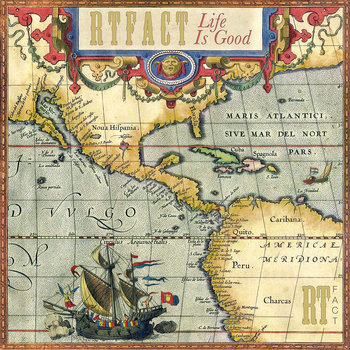
RTFact are a new project headed by Yuri Voladarsky, a composer originally from Russia. The band consists of Russian and American musicians with a few special guests thrown in for good measure.  It is an interesting album.  It takes in a lot of styles and influences. There is a lot of Hammond B3 organ on it so the ELP reference is always going to be there but ELP orchestral styles also pop up on the album. There are numerous Gentle Giant influences along with King Crimson, but there is also some hard rock, some jazz, some funk, prog and classical orchestral. It replicates the 70’s era rock scene very nicely. Personally it reminded me of a band called If and their album Tea Break Over Back On Yer Heads. By the end of the album you have listened to a cornucopia of styles and influences and herein lies the problem. Who is this album aimed at?  Yes, its mainly the prog fan but if you only heard the track Money In My Pocket with its rock and funk groove and bought the album you would be a little surprised to hear the classical workings of Gotika. Disney anyone? Hail To The Winner will satisfy.

This really is an album of something for everyone and as long as you realise that then there is a lot to enjoy. The musicians on the album are fabulous players and create a large and expansive sound. The recording and production is crisp and clear. It needs to be. There is a lot going on. Jeff Scott Soto provides vocals on the title track which is instrumental apart from a Spock’s Beard type vocal interplay. He also sings the aforementioned Money In My Pocket with Nad Sylvan. Will Champlin provides the rest of the vocals . The other musicians are Oz Noy – solo guitar, Jeff Kollman – solo guitar,Rafael Moreira – guitar, Josh Smith – guitar, Gary Meek – flute, sax, Edward Tsiselsky – keyboards, Dmitry Ilugdin – synthesizers,  Eugene Sharikov – bass and Joel Taylor – drums. I did wonder why Yuri didn’t play on the album and sent a message to their Facebook page but they never came back to me.

I like this record. Its quirky. Its fun and its certainly over the top but there is nothing wrong with that. Get out your seventies flares and play this loud.

It is available here. https://rtfact.bandcamp.com/album/life-is-good


Interview: INFINITWAV

SLK

Infinitwav is a brainchild of composer Stephen Latin-Kasper who recently released an album titled “Humans.” Stephen wrote, recorded and produced the release all by himself, but in the same time, as he explains, “none of us create anything alone.”

In an interview for Progarchy, Stephen talks about what it took to come up with the album.

Describe the vision propelling your album “Humans.”

The vision that propelled the album developed slowly after reading about National Geographic’s Genographic Project. I participated in the project and found out that most of the people that share my genotype are in Denmark and Norway despite the fact that my great grandparents lived in Germany and the United Kingdom. Having gone through life thinking that my ancestry is mostly German, only to find out that my genes are mostly Danish, made me think about what connects us to each other.

At the same time, I was in the midst of experimenting with some recordings of instrumental music. One night, creating the music caused me to think about genetic mutation and how that might have affected the human migrations out of Africa. That led to the thought that maybe humans who share the same mutations are more closely bound to each other than we realize. That grew into a story which influenced the music, and was in turn, influenced by the music. Two years later, I had composed nine songs; one for each of the chapters in the 12 page booklet that was published with the record in a double album jacket.

What made this the right time to pursue that vision?

If you are lucky enough to have a vision, the only time to pursue it is when it occurs. In my case, the past three years were an incredibly busy time, but the vision for HUMANS was deeply compelling. The vision became a project, as all visions must, but I never thought of it as work. I didn’t see the time that was required to turn the vision into reality as a cost; it was simply necessary. The materialization of the vision had to be transmuted. There was no alternative.

Tell me about what you’re communicating with the album cover.

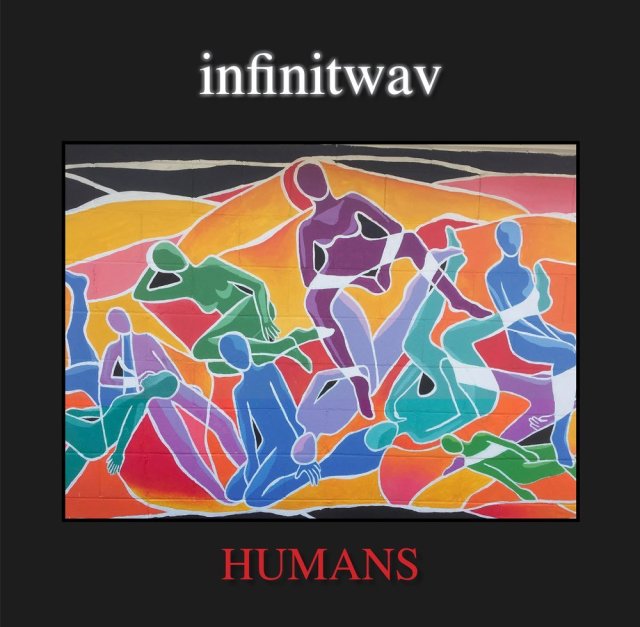
The album cover originated as a mosaic commissioned by my wife and I for the outside wall of our garage. The album cover is a photograph I took of the completed mosaic. If you look closely, you can see the outlines of the concrete bricks. The artist is Kim Loper. I’m sure she could do a better job of answering the question, but I will do my best.

The mosaic depicts human diversity in terms of physicality and personality. Some of the figures in the mosaic are clearly moving with some sense of purpose. Others are just as clearly at rest. All of the figures are closely connected to each other. To me, the mosaic gives voice to the idea that our diversity should be celebrated. In connection with the story that is told in HUMANS, the mosaic projects the idea that our diversity is, and will be, critical to our survival as a species.

What was the creative chemistry for “Humans” like?

Since HUMANS was a solo project, there was no creative chemistry between me and other musicians. There was, however, substantial creative chemistry between the written story and the music that was composed to support it.
infinitwav - Humans

Speaking of the album’s creative process, provide some insight into it.

My foray into instrumental composition began as a challenge to myself. Prior to HUMANS, all of the music I had written included vocals, with the exception of some short pieces written for movie soundtracks. As noted above, I started writing a science fiction short story at the same time. That led to the establishment of a new goal for the instrumental music. It had to be written to support the story.

The creation of the music was quite organic. Most of the songs started with a melodic phrase. That was usually followed by a drum track to make it easier to keep all of the tracks that would follow in rhythm. The third track recorded was usually a bass line. One of the compositional elements that makes HUMANS unique is that the bass lines do not change for the entire song, regardless of how much the other instrument’s parts change. Synthesizers were used to shape the soundscape in each song. To emphasize the importance of percussion throughout the evolution of human music, each of the nine songs has its own percussion signature. You can recognize the songs just by listening to the drum parts. I intentionally avoided using strings (violins, violas, cellos). Guitar voices were used extensively. Given the nature of the story, it also made sense to me that the oldest of the woodwind instruments, namely the flute, should be part of the music. For most of the songs, the lead voice was written and recorded last.

Did the environment in any way influence the vibe the album transcends?

There is more than one way to interpret the word “environment” in the context of this question. I’ll be literal and assume that the reference is to the current environment in which humanity is living. That environment includes fundamentalist leaders rising to power in many developed and emerging economies, many of whom refuse to recognize climate change as a priority, or for that matter, recognize that it exists. We have a crazy man in N. Korea threatening to start a nuclear war. We have people falling ill on the streets of Beijing because they dared to breathe the air. The Pacific Ocean has been turned into a garbage dump, and we appear to be on the verge of a mass extinction event. Men all over the planet treat women as second-class citizens, or worse.

The current human environment is toxic in many ways, but I apparently am an optimist. I believe there are enough geniuses amongst us, who have access to enough resources to allow our species to transcend a global culture, which in 2017, still forces too many humans to live in miserable poverty. That in essence, is the story of HUMANS, in which we find a way not just to survive, but to prosper, in this, and other universes.

Tell me about the gear you used for creating “Humans.” How did you achieve all these tones?

Most of the instruments (voices) on HUMANS were created with two pieces of equipment: the KORG M50 and the Roland Octapad SPD-30. Both pieces of equipment include hundreds of electronic voices, all of which can be customized. The KORG M50’s arpeggiation feature allowed me to create dense melodies that other tracks could harmonize with. The Octapad made it possible for me to create percussion parts with many different ethnic backgrounds, so that each song had a percussion ensemble that was unique. All nine songs also had unique synthesizer voices. This allowed for each chapter in the story to have its own signature sound.

With the album out, what else do you have in the pipeline?

I have another two albums of material ready for recording. I am in the process of arranging vocal harmonies for many of them, and searching for other vocalists to record backing vocals. I remain interested in instrumental music as well, and was recently inspired by the first episode of Star Trek Discovery to write what I think should be used as the theme song for whatever the next Star Trek series turns out to be. That probably won’t happen, but a human can dream.

Visiti infinitwav’s official website here.

Review: Impera – Weightless

Impera band

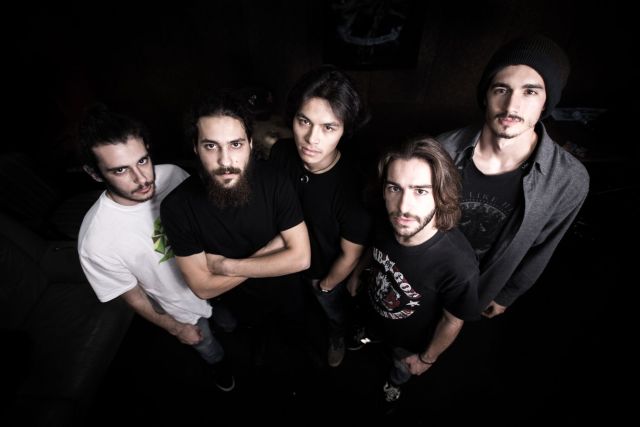
Impera from Lisbon prefer to mix their metal with some groove and prog, albeit with the strong emphasis on the ‘metal’ part. The other bands of similar genre orientation place a premium on virtuoso musicianship and highly technical song structures, and while that also figures prominently into Impera’s music, these boys slather it all up in a special sauce that I like to refer to as ‘classic sauce.’ The group’s debut album “Weightless” sounds deliberately rustic and antiqued, like that milk-stained fake money you’d buy at the museum.

But production is not what prods Impera. What stimulates this band’s formidable corpus are five very talented musicians. It’s Daniel Chen, though, who takes home the MVP award on “Weightless”; if drummers are action figures, Chen carries both a rapid-fire uzi (the toms) and an erase-all, double-barreled bazooka (dual-bass drums). I guarantee, he will brutalize you.

Impera - Weightless

Like their metal peers, Impera sport some mathematics. But where Meshuggah get deep into calculus and Dillinger Escape Plan prefer(red)  trigonometry, these guys enjoy the more accessible stuff — we’re talking pre-algebra here. They drop in just enough to keep the arrangements flavourful, but not so much as to overload the vintage guitar riffs with Dream Theater-like complexity. And then they counterbalance it with some nice, old-fashioned, Sabbath-style metal attitude: guitars crunch, wail, and burn. The complete package sounds timeless, but in that unbelievable way that you’ve never heard before.

A great band whose raging, sodden hellfire now beckons you to warm yourself at its side throughout the impending winter months. A band whose crushing, odiferous, sodomizing blade dices like a Popeil cuisinart and runs you through with gruesome exactness. This band is Impera.

Treat yourself with “Weightless” here.

Martin Eric Ain (1967 – 2017)

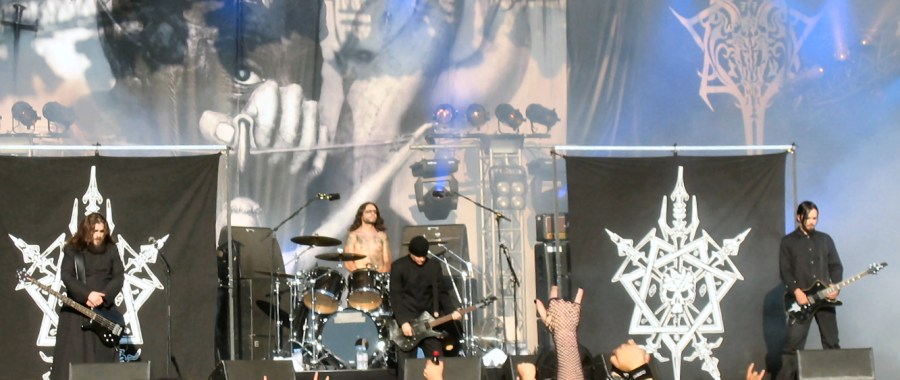
Years ago I had visited this rundown record store, and tucked away into one corner was this used CD – a grotesque cross-over artwork with Morbid Tales stamped on it. Of course, picking that up for the long drive back home was the next obvious step. Definitely not my first encounter with Celtic Frost, but this time they stunningly hit all the right notes. Not every day will someone inadvertently stumble into a Morbid Tales, quite an understated introduction for a viciously influential record.

How that eerie album intro explodes ‘Into the crypt of rays’—making an instant and deep impact. With the dusky coastal highway as an idyllic backdrop – a moment forever engraved in mind.

The whole experience was almost like discovering a trap door, straight into the nether vaults of metal. Suddenly, numerous aspects of late 80s and early 90s black/death wave starts to make sense. Those coarse structural patterns, surreal and nightmarishly poetic lyrics – they afflicted and spawned hordes of imitators. Some elevated those very elements to stratospheric levels. Quite like Venom — Hellhammer and Celtic Frost are vital, to grasping an era which otherwise might sound like sheer white noise.

Martin Ain might have departed this mortal world. But, what he invented with Tom Warrior remains vibrantly ablaze.

Image Attribution:
By Jarkko Iso-Heiko [Copyrighted free use], via Wikimedia Commons

soundstreamsunday #84: “Your Protector” by Fleet Foxes

fleetfoxes2edit

Fleet Foxes is a progressive rock band in the same sense Gazpacho is, where what they’re getting at is a total environment or vibe rather than a particular baroque form of electric music with rock instrumentation.  I read recently what I think is a good observation, that their third album, 2017’s Crack-Up, has an appropriate home in Nonesuch, which started as the classical wing of Jac Holzman’s Elektra Records, but in recent years has extended its reach to artful achievers in what we might otherwise think of as the rock world.  It’s the right label for a band that doesn’t like to rush things.  Their previous record, Helplessness Blues, was released in 2011, after which songwriter and lead singer Robin Pecknold, by then a rock star, decided to push pause and go to college and wait for the muse to revisit.  It did.

In a rock world where everything is “post-,” Fleet Foxes shares with the other intelligent American bands of their era — thinking Spoon, Band of Horses, My Morning Jacket, Shearwater — a smart melodic sensibility and a complex vocal approach to its music, atop an intense but restrained musicianship.  With a sound instantly identifiable, in its harmonies the band reliably draws comparisons with the Zombies, Moody Blues, and Crosby, Stills and Nash, and while I get it I don’t really hear it, maybe because I find Pecknold’s lyrics darker, funnier, better, or maybe because there’s no smack of the hippie, despite the hair, that so defined those groups.  I think if anything Fleet Foxes taps into the reverb-drenched sound of 90’s Britpop, the adventurousness of the early 70s British folk scene, and the impressionistic poetics of Dylan‘s best work.  Even while being on the inside there’s an outsider’s sensibility.

“Your Protector,” from Fleet Foxes’ 2008 self-titled debut, is like a puzzle you turn in your hands trying to figure out how it comes apart.  I can’t really parse it, but I’m pretty sure it’s not a happy story, while the galloping, western-movie chorus is an inscrutable, spine-tingling chant difficult to forget.

As you lay to die beside me, baby
On the morning that you came
Would you wait for me?
The other one
Would wait for me

The live-in-studio version here shows the band in full flight, as part the second series in Nigel Godrich’s From the Basement program, and includes drummer Josh Tillman (aka Father John Misty) soon after he joined the group.  There’s a sleekness to the work that speaks volumes on the meticulousness of the band’s constructions: the simplicity of the arrangement, the power in its dynamics, the harmonies.  The air crackles and sparks.

soundstreamsunday presents one song or live set by an artist each week, and in theory wants to be an infinite linear mix tape where the songs relate and progress as a whole. For the complete playlist, go here: soundstreamsunday archive and playlist, or check related articles by clicking on”soundstreamsunday” in the tags section.

Big Big Train Christmas Single

While we’ve not heard anything officially from the band, it looks as though they will be releasing a Christmas single on December 8 of this year.  Here’s the writeup that appeared on Amazon’s UK page:

BBTXmas
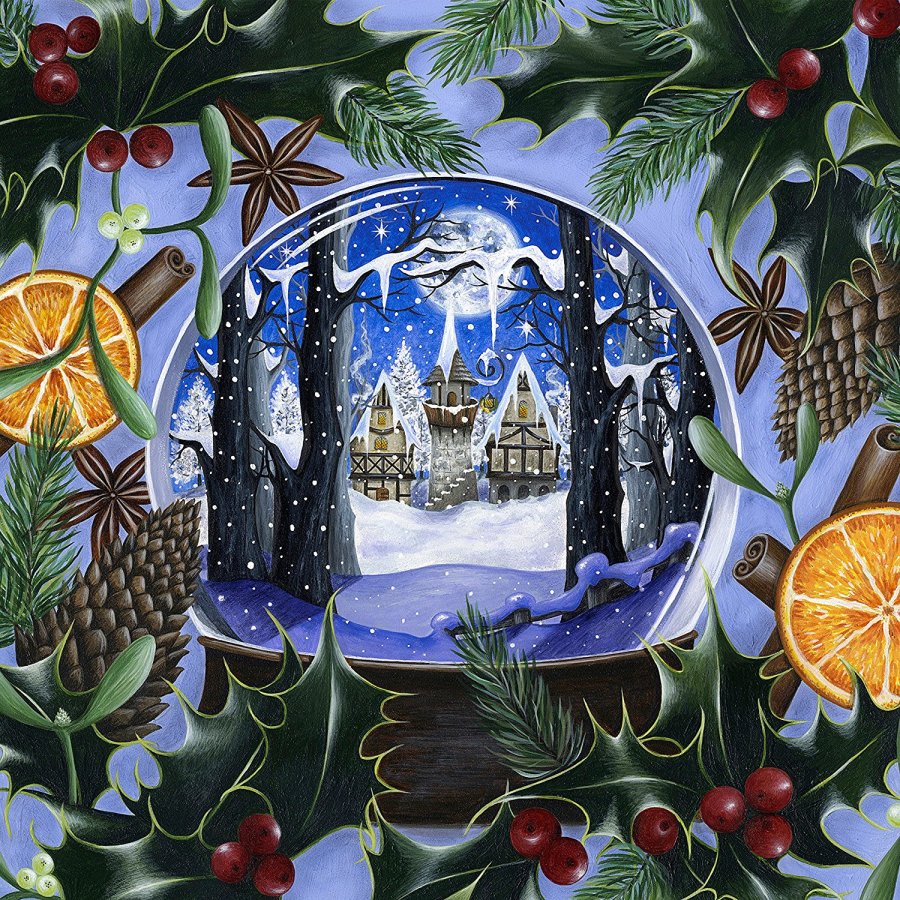
A beautifully festive cover.  I presume it’s by Sarah Ewing.

Three times Progressive Music Award winning band, Big Big Train, will be releasing their first Christmas single on December 8th.

The single is called Merry Christmas and the vinyl and CD versions of the release will feature a b side called Snowfalls.

A donation to the Night Stop homelessness charity will be made for every copy sold.

Big Big Train vocalist David Longdon says: Merry Christmas is a song about rediscovering our childlike belief in the magic of Christmas, despite living in an over commercial and sometimes cynical world. After all, what wouldn’t you give to believe again, like you believed back then?

Bass player Greg Spawton: We wanted Merry Christmas to be a proper Christmas song, so it features the Big Big Train brass band, The Chapel Choir Choristers of Jesus College, Cambridge and, of course, sleigh bells.

The promotional film for Merry Christmas will premiere on 1st December and stars actor Mark Benton who says: When Big Big Train asked me to get involved with the video for Merry Christmas, I didn’t need much convincing. I’m a big fan of the band and love the way they tell stories through their beautifully crafted songs. This song is a real Christmas song with everything you need from choirs to sleigh bells. The video was great fun to shoot and hopefully really conveys the Christmas message. Let’s make it number one in the charts, the money’s going to a great cause. I’m playing triangle and kazoo on the next album but don’t tell the band because they don’t know it yet.

Merry Christmas will be released on 8th December on 7 inch snow white vinyl (with a gatefold cover), digipack CD, hi-res and standard-res download and streaming.