I’m Andrew Jackson, and I do NOT approve of this message.
Dear Progarchists, readers, reviewers, and creators,
Just FYI, I (Brad) will be only intermittently reviewing and writing about prog over the next two months. I’ve contracted to write (and complete!–the private sector actually wants results, as Dr. Stantz reminded us in Ghostbusters) a book-length manuscript on President Andrew Jackson. All to the good, of course, but it means that I will be living the next two months in the 1830s. Sadly, this was a violent time, and a time without the benefit of progressive rock.
I’ll do my best to connect the Jacksonians with the proggers.
Progarchy should continue without a hitch, but I do want folks to know that if they submit anything to me (Brad), it might take a bit for a response.
Please make sure you also contact one of the other editors if you need anything–but especially Chris (Time Lord: progarchy@morec.com). Thank you!
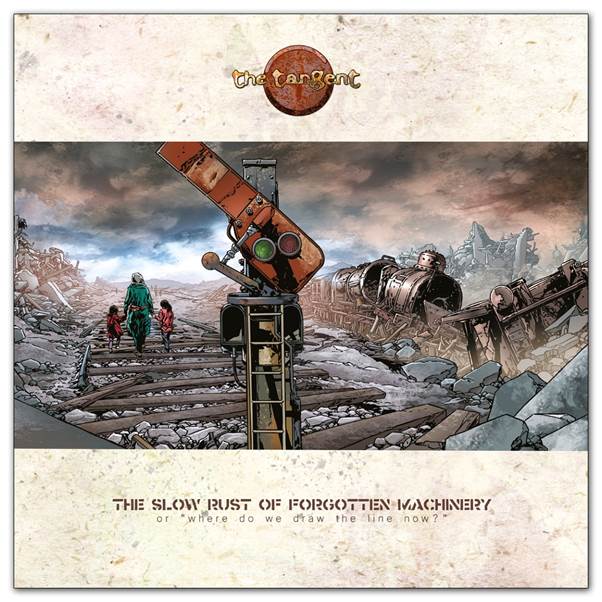
The Tangent, SLOW RUST OF FORGOTTEN MACHINERY (Insideout Music, 2017). Tracks: Two Swings; Doctor Livingstone; Slow Rust; The Story of Lead and Astatine; A Few Steps Down the Wrong Road; and Basildonxit.
The antithesis.
Andy Tillison is not a happy man.
From the art work, to the vocal work, to the lyrics of this latest The Tangent album, SLOW RUST, Tillison has embraced a critical response to the rapidly growing and evolving fascistic, fascist-lite, and insular movements of the western world over the last several years. As artist, as man, and as thinker, Tillison hopes to stay the dark trajectory of the West or even, God willing, reverse it. While the great red-headed man of prog mischief has never backed away from controversial viewpoints, he’s rarely been this explicit.
Even the album cover makes one pause. Previously, Tillison has joked that he represents the dark side of prog, the antithesis, in particular, to Big Big Train, and the cover seems to project this rather profoundly, as a (presumably) single Muslim mother walks along dilapidated railroad tracks, holding the hands of her two daughters. The once majestic train has derailed, and the crossing sign (the closest thing to the viewer of the album) reads “go.” Clearly, several things have gone very, very wrong. There’s no hedgerow in the distance, only a ruined, collapsed, and spent civilization. There’s some blue sky showing, but it’s obscured by the ruddy reds of smoke and grit floating all too freely in a broken and war-torn world.
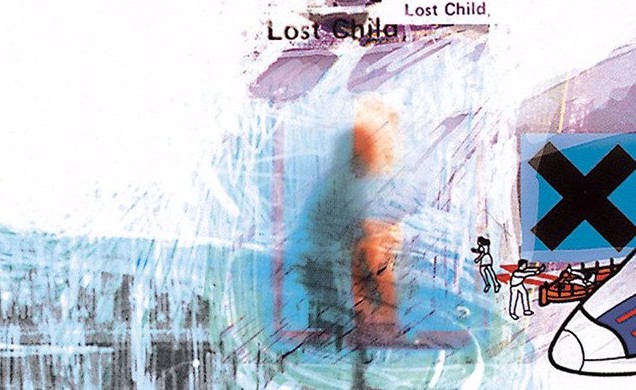
The figure “singing from the window in the Mission of the Sacred Heart” in ELO’s “Mission (A World Record)”, last week’s soundstreamsunday entry, could be the uptight narrator of Radiohead’s “Subterranean Homesick Alien,” from the band’s 1997 tour-de-force OK Computer. As if in mirrored conversation, those two songs, separated in time by over 20 years but perhaps closer than they appear — in their beam-me-up guitar melodies, keyboarded grandeur and darkening moods — are to me joined at their metaphoric sci-fi hips.
Radiohead’s confidence on OK Computer, in both the intense alienation of the fragmented lyrics and the band’s break with the walls and squalls of mid-90s guitar rock, is a subtle swagger ripe with end-of-the-millenia decaying beauty. It’s a prog goth triumph, reaching in its many directions to locate the mood of its time, a burred gloaming richly unsettled. It’s also, I was reminded when listening again to it recently, funny, in the same way that Forever Changes is, or Fight Club, or a mad prophet preaching the end times. There’s just no telling what the next turn will be, but there is a willful design, and so the satisfaction of a wicked lyric or the resolution of a majestic melodic sequence prompts a smile or a laugh. The parts come together, a human victory, a denial of the end even as it’s being trumpeted.
The internally rhyming title of “Subterranean Homesick Alien,” a riff on a Dylan masterpiece (and, further back, a Kerouac novel), feels tossed off on the one hand but also maybe the only choice given its narrator’s painting a scene of alien surveillance and his desire, that he be taken “on board their beautiful ship, show me the world as I’d love to see it.” He’s maybe one of them, maybe wants to be one of them, but who They are is undetermined and in any case moot: the point is homesickness for a place that has to be better, with the “breath of the morning” and the “smell of the warm summer air.”
soundstreamsunday presents one song or live set by an artist each week, and in theory wants to be an infinite linear mix tape where the songs relate and progress as a whole. For the complete playlist, go here:soundstreamsunday archive and playlist, or check related articles by clicking on”soundstreamsunday” in the tags section above.
This isn’t a proper review, in part because even after 7 or 8 listens I am still trying to wrap my head around the beautiful, paradoxical wonder of this album. Rather, it’s more of a “you really need to check out Land Animal from Bent Knee—you can listen to it streaming here” sort of post.
The band, which was formed in 2009, is based in New England and consists of six members. From the band’s site:
Lead singer and keyboardist Courtney Swain’s soaring vocals are instantly arresting. Guitarist Ben Levin is one of the most dynamic and versatile guitarists around, shifting between the raging and raucous to the sublime and meditative. Bassist Jessica Kion and drummer Gavin Wallace-Ailsworth combine into an enthralling rhythm section that’s equal parts powerhouse and nuance. Violinist Chris Baum’s kinetic violin work provides drama, grace and intrigue. World-class producer and live sound designer Vince Welch weaves it all together with a captivating, expert touch.
My first Bent Knee song was the whip-lash, jaw-dropping cover of Johnny Cash’s dark nugget “You Are My Sunshine,” which demonstrates well the band’s rather unique mixture of technical dexterity, cathartic bombast, cerebral coolness, and inverted, addictive catchiness. (Did I mention “paradoxical” earlier? Yep.) This opening paragraph from the band’s bio page might sound a bit hyperbolic—but if it is, it isn’t by much:
Bent Knee is unlike any band you’ve ever heard. Its borderless sound combines myriad influences from across the rock, pop, minimalist, and avant-garde spectrums into a seamless, thrilling whole. Its new album Land Animal—Bent Knee’s first for InsideOutMusic/Sony—takes its sound to a new level. It offers a suite of songs full of addictive hooks, lush melodies and enthralling twists and turns that capture the reality of life in the 21st Century—a reality of people and nations in the midst of tumultuous change. It also communicates a ray of hope and desire for listeners to embrace the fact that they’re not alone in their struggles.
In some songs, especially in more serene passages or sections that bear some faint resemblance to orthodox pop music, I hear Kate Bush and even Sia (“Hole” is perfect example of the latter). In the more “out there” moments, when Swain unleashes her blistering, gorgeous wail, I hear snatches of Fleming & John (a criminally-ignored husband and wife duo) and early Björk (oddly enough, when she loses her mind at times on the 1990 jazz album “Gling Gló”). But these reference points are merely suggestive, as the whole of Bent Knee is, again, hard to describe, a mixture of orchestral-ish passages, raw but tight guitar, polyrhythmic craziness, classically-imbued moments of open tenderness, angst-packed explosions, and much more. (The bass lines, for example, are worth the price of entry.)
The songs are certainly songs—there is no noodling or needless wandering here—but they are also soundscapes. A perfect case in point is the title song. For those looking for progressive rock that is both a bit unsettling and strangely comforting, Bent Knee is worthy of your time:
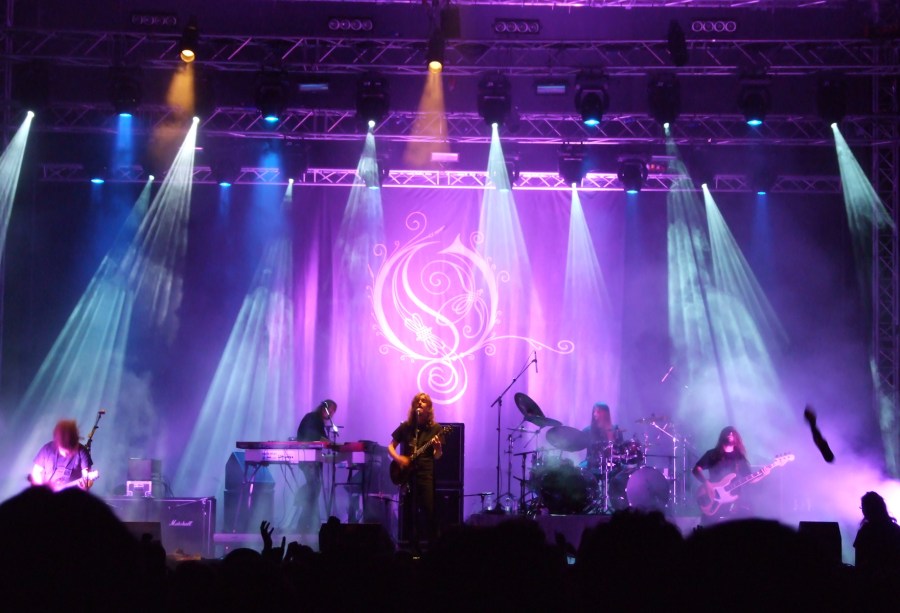
Opeth’s debut is a rare blend, it’s good old British metal melody, but decked with prog, folk, black and death metal textures. It’s the most accessible elements of metal combined with the least. Songs effortlessly transition from murky black metal to deathly blast beats, and then frequently into melodic folk passages — and they are also interestingly devoid of that punk dissonance integral to extreme metal. In short, it’s a unique cross-over. Guttural riffs, acoustic melody, and Akerfeldt growls with clean vocals – all stitched together into 10 minute epics.
Not surprising that Dan Swanö is the producer, Edge of Sanity is reflected all over the long and meandering eclectic passages. That infamous ‘Thomas Gabriel Fischer’ like curt grunts is also frequent and numerous. Opeth weaves that Celtic Frost like textures into the more accessible 70s and 80s metal progressions. Orchid is composed of those two divergent heavy metal strands, but spun seamlessly into one prog symphony. Examine long enough and we can discover Black Sabbath to Bathory to jazz elements – even for early 90s metal this is avant-garde. With drawn out extreme metal sound, but still illustrating that melodic classic metal roots, Opeth comfortably slingshots a casual metal listener — straight into the abyss of 90s Scandinavian scene.
By a curve of the river/at the end of the road/black waters rise again.–final lines of THE SECOND BRIGHTEST STAR
Tasteful. Elegant. These two words enter into my mind and soul, over and over again, at the beginning of every song on the new “companion” album by Big Big Train, THE SECOND BRIGHTEST STAR. And, not just at the beginning, but in the middle of each, and at the end of each.
Tasteful. Elegant.
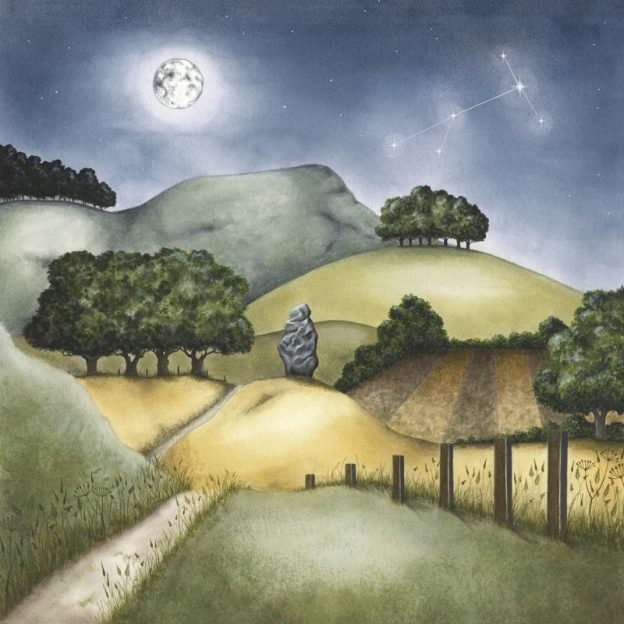
Artwork by the extraordinary Sarah Ewing.
As I look back over the history of Big Big Train (despite the rather mechanical image of the band’s title), the band seems to have a radically organic life to it. It’s not changed as much as it’s become.
It began as an oak sapling that struggled in intense competition for light and nourishment. After a burst of growth, it faltered a bit, and its Entherds, Gregory Aurelius Spawton and Andrew Epictetus Poole, decided to prune it considerably. In doing so, they allowed it to grow in ways known only to the creator of nature herself. As with all great things in this world, the band was not invented. It was discovered.
Tasteful. Elegant.
Spawton and Poole discovered the necessary talents of D’Virgilio, Gregory, and Longdon, then Manners, and then Hall and Sjöblom, realizing they could not become until they became one. These Endherds chose not to mix oaks, but rather to graft new chestnuts onto the oak. Somewhere in the mind of nature, the band had always existed—this profound mix of oak and chestnut—but it’s only come into its own over the past eight years.
Following the April release of “Grimspound”, Big Big Train are releasing a companion album, “The Second Brightest Star”, on Friday (June 23rd).
The album features 40 minutes of new songs and instrumentals which explore landscapes, rivers and meeting places and take the listener on voyages of discovery across the world and to the stars.
Alongside the new tracks, there is a bonus selection of 30 minutes of music where songs from the “Folklore” and “Grimspound” albums are presented in extended format.
“The Second Brightest Star” is available to order now for delivery commencing on 23rd June from our official stores:
* Burning Shed – https://burningshed.com/store/bigbigtrain
CD and limited edition double gatefold 180g seafoam green vinyl. (All vinyl copies will include a code for a complimentary hi-res download.)



 The figure “singing from the window in the Mission of the Sacred Heart” in

 Progarchy
