“The word ‘bombastic’ keeps coming up as if it were some trap I keep falling into … when I’m bombastic, I have my reasons. I want to be bombastic. Take it or leave it.” – Dave Brubeck
What were they thinking?
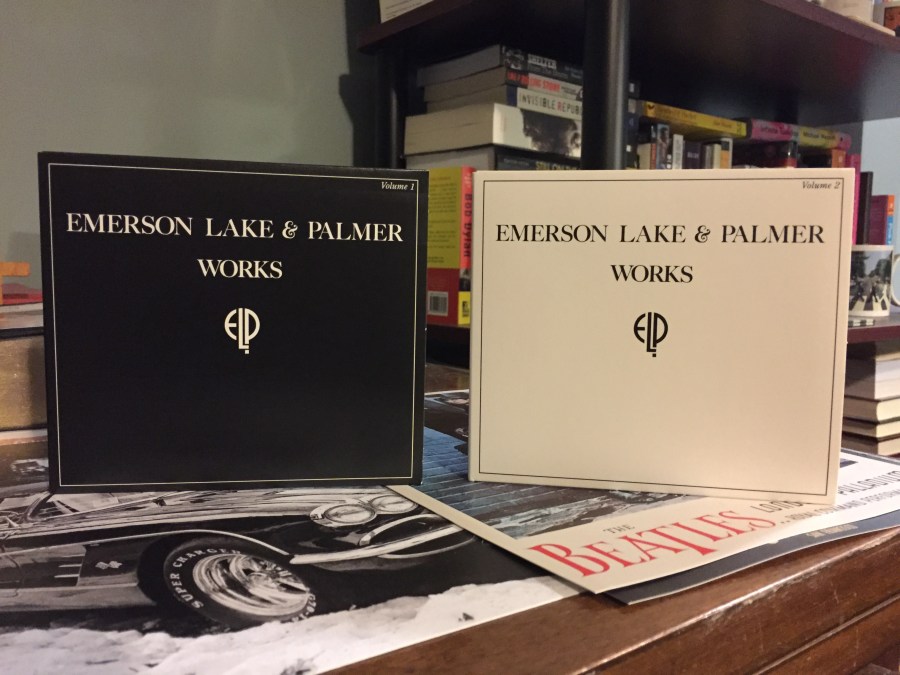
You’re Emerson, Lake & Palmer, coming off a three-year layoff — though admittedly, you were at the top of the charts and your game when you downed tools. To regain your fan base and add to your audience, would you come back with a double album that had one side of material by each band member (with guest players and full orchestras) and only one side of ELP playing together? And then, would you take a 59-piece orchestra and 6-voice choir on the road with you? To most people, that would sound like a recipe for disaster.
As with most proggers, I love what I love to be overthetop. And, I especially love overthetop excellence. As such, I must offer a huge thanks to Simon of Marillion’s Racket Records.
Excellence, to be sure.
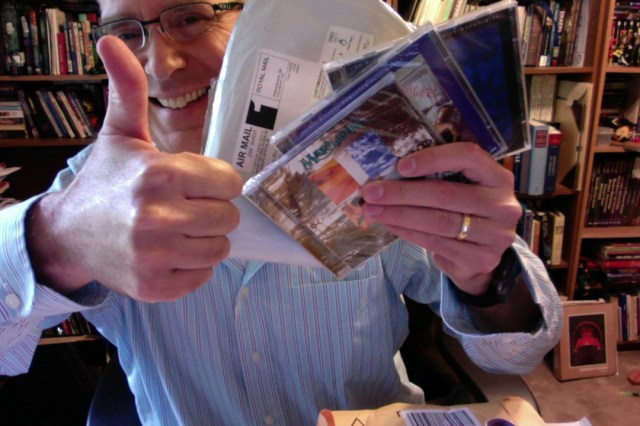
A few weeks ago, I ordered copies of FUGAZI, SEASON’S END, and HOLIDAYS IN EDEN from Racket Records. While Racket mailed them immediately, the package arrived in Michigan without any CDs! That’s right. The package was totally empty. Someone had removed the CDs.
Some lucky (and not so honest) Marillion postal worker out there?
When I contacted sales and help at Racket Records, Simon not only responded with a much needed laugh, but he sent me three new replacements. They arrived this afternoon in perfect condition, making an already gorgeous spring day even better.
I imagine that Racket is tucked away somewhere in the northeastern part of the Shire, and I, living in Gondor, have just received a King’s Ransom of the Old Toby.
In 2014, Sydney’s cinematic prog rock sextet Anubis released “Hitchhiking To Byzantium,” an album that was very well received and which was listed as one of the best Prog releases of the year. Following its release, the group embarked on tours around Australia and Europe promoting the album live as much as possible, and expanding their fanbase along the way. As a result of that Anubis released a live album titled “Behind our Eyes.” Now, almost three years later, the Australians return with their fourth full-length record “The Second Hand,” their best yet.
Singer, guitarist and producer Dean Bennison spoke for Progarchy about Anubis in 2017, the new album, and future.
Alright, first thing is first. Before we dive into all the music stuff, how’s life?
Life is good. Very good. We have a new album that’s just come out. It’s nice to have finished all that hard work and see it go out into the world.
Speaking of new music, you have an album. What can people expect from “The Second Hand”?
Well for starters, it’s a return to a narrative driven concept album. There were some people who expressed a bit of disappointment that our last album “Hitchhiking to Byzantium” didn’t have the narrative style of our previous albums, so I think those people will be happy to see we’ve returned to that format. It wasn’t a conscious decision though, it’s just that the themes that we wanted to explore were best served by going back to that format.
Musically though, I think this is probably the most diverse album we’ve made. We’ve used a broader range of sounds, and created a more dynamic album this time. I think people who liked our previous work will still find it recognizably us, but we’ve branched out quite a bit, so it’s still Anubis, but not quite as you’ve heard us before.
What was it like working on the album?
I sent a message to the other guys in the band shortly before the album was released, and told them that this was the most enjoyable album for me to make since our first album, “230503”.
We really worked well as a unit this time around, and it couldn’t have been a better experience making a record.
Are there any touring plans in support to “The Second Hand”?
Yes, but it’s early days in the planning. We’re going to do a few shows here at home in Australia this year, and the plan at this stage is to return to Europe in 2018.
While we are on the subject of touring, what countries would you love to tour?
After playing in Europe (Germany, Netherlands & UK) last year, we really can’t wait to get back there. We’d love to see more of Europe next time. We know there are quite a few fans in France & Belgium who keep telling us they want us to play there, so they would certainly be high on our list.
Who and what inspires you the most?
For me personally, first and foremost would be my wife and family.
I’m very lucky to have a loving and supportive family. Watching our young children as they grow is an endless source of inspiration. Not to mention the fact that my wife is also an amazing singer and songwriter, she is always inspiring.
Of course, the next source of inspiration for me would have to be the other members of Anubis. It’s a real privilege to play with such amazing musicians, who all happen to be great friends as well.
What other genres of music do you listen to? Have any of the other genres you listen to had any impact on your playing?
I’m a big fan of well crafted pop-rock. I’ve always been a big Beatles fan, and I’m a fan of anything Neil Finn has ever been a part of. In fact, I’ve always felt that prog music is at it’s best when it uses some of the more Beatle-esque, pop-melodic style elements as a way of drawing the listener in to the more atmospheric and complex elements of prog.
I’m not a fan of complexity for the sake of complexity. I think that music has to be accessible.
I really appreciate you giving us your time today. Is there anything else you would like to tell us and the fans before we wrap things up?
Well thank you as well.
I’d really like to thank everyone who has taken the time to listen to our music, and especially to everyone who has already bought the new album. We’ve been so overwhelmed with the response. We feel very lucky to be able to do what we do.
“The Second Hand” is out now and is available in digital format and CD from Bandcamp. Visit Anubis‘ official website for more news, and follow them on Facebook and Twitter.
U2 is named after an American spy plane that was at the center of a major Cold War confrontation. That means it belongs on my life list.
I follow bands whose names evoke the history of American foreign policy. This hobby gives me a window into modern music, assuring that my tastes don’t stagnate. When I attend a concert by one of these bands, I rarely know whether I’m going to hear reggae, folk-rock, or something frightfully new. It doesn’t matter. Staring at my ticket, I reflect on the band’s name and what it means. After the concert, I add that band to my life list.
America’s 120-year adventure in the wider world is a fascinating narrative, but few Americans know it. Reminders of our past conflicts crop up in odd places. Bands that name themselves after historic events keep those events in our consciousness. They summon us to reflect in ways that mass media rarely does. It is a wonderful example — intentional or not — of pop culture evolving to fill a political void.
Read the article for historical reflections on The Maine, The Boxer Rebellion, Berlin Airlift, U2, Cold War Kids, La Sandinista, The B-52s, Napalm Death, Agent Orange, Desaparecidos, War on Drugs, and Someone Still Loves You Boris Yeltsin.
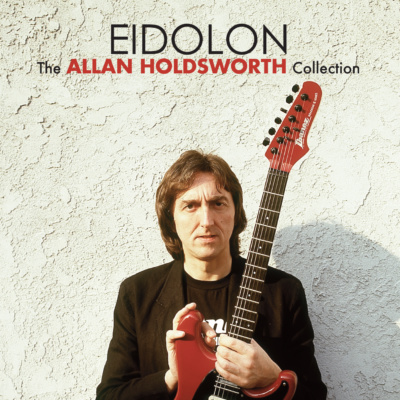
It took me a while to get my hands on a copy of the late Allan Holdsworth’s new compilation, Eidolon. It was well worth the wait.
What strikes me on the second listen to Eidolon is the seemingly endless flow of melody Holdsworth tapped. Despite his stunning contributions to the first U.K. album, it’s clear in retrospect that the man wasn’t comfortable in a highly structured musical environment. Like his hero John Coltrane, Holdsworth was much happier stating the tune at the start, in bebop head style, then seeing where he could travel with it.
Taking on the basic materials of scales and arpeggios from oblique directions, chaining them together into lightning fast, super-dense sheets of sound, slowing or stopping dead on a sustained note or an unexpected harmonic twist at just the right moment, all somehow connected to the chord changes he floated above — this is what Holdsworth brought to the Tony Williams Lifetime and Soft Machine, what he developed further in Bill Bruford’s band (before and after U.K.), and what he spent the rest of his life exploring. From the evidence here, he never ran out of new territory to pioneer; minds were duly blown, and hearts were duly moved.
Despite the admiration and support of more famous shredders like Eddie Van Halen and Joe Satriani, Allan Holdsworth never broke through to wide acclaim. But Eidolon leads me to believe that the gift of music — especially of melody — always brought him joy. Kudos to Manifesto Records for their re-release of all of Holdsworth’s albums (compiled as The Man Who Changed Guitar Forever) and this excellent compilation — which you can check out below.
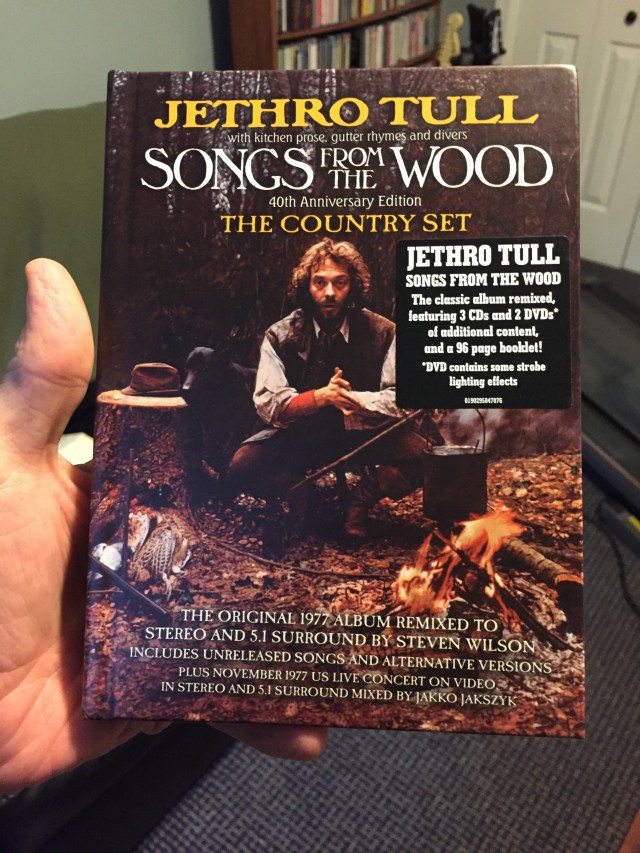
Retrenching after the thwarted theatrical ambitions of A Passion Play, War Child and Too Old to Rock and Roll, Too Young to Die, Ian Anderson moved from London to Buckinghamshire in 1976. The Jethro Tull album that followed Anderson’s country retreat, Songs from the Wood, showcased a fruitful new path for both the writer and the band.
With Anderson’s withering cynicism relaxing (ever so slightly) into amused, skeptical acceptance of human folly, David Palmer’s energetic keyboard counterpoint refreshing the group’s core sound, and a focus on traditional British folklore and festivity (courtesy of PR guy/manager Jo Lustig and Anderson’s production work with Steeleye Span), the surprising results included increased record sales, higher chart positions, and expanded tour dates, especially in America. Parlophone’s latest reissue box, released for the 40th anniversary of Songs from the Wood, ably showcases this incarnation of Tull’s appeal.
Free and blue and beautiful, those moorings Leyla McCalla holds to in her music sway and pitch like the gulf waters from Hispaniola to Lousiana, rolling through her cello and voice and coursing through her songs, lifeblood to an American music heart. In the weaving lines of the music she plays — a snaking, sliding creole so suited to, and perhaps partly a consequence of, the playing of fretless instruments — is the sound of an America taking shape as its many diasporas meet and mix and move, intersecting lines on a map that triangulate on New Orleans. Like the best Americana musicians, McCalla achieves something at once utterly contemporary but steeped in an authenticity of sound that says so much about the heart that makes the music. There’s no affected vocal, no hokum on the one hand or academic archness on the other. And there could have been, so easily. McCalla’s classically trained; she jumped from a New Jersey upbringing to a New Orleans residency; she’s an American born to Haitian rights activists in the thick of a struggle for democracy; she was an important member of the last incarnation of the much-loved Carolina Chocolate Drops. Her road was ripe for opportunity to leave the music behind in bringing a message that might not have resonated as strongly as it does. But instead she chose on her first solo record, Vari-Colored Songs (2014), to artfully adapt poetry by Langston Hughes and punctuate it with Haitian folk songs. Her second record, A Day for the Hunter, A Day for the Prey, is also cloaked in a music-first approach that makes the underlying messages — because they are indeed there, as they were in her curation of Hughes’s work — so much more compelling.
Like all achieving musicians, Leyla McCalla makes great records and is better in concert, her performances enlivened by the physicality of her musicianship and the communication among her band. In this 2016 performance of “Jogue Au Plombeau,” the band is killing it, in a droning country blues jug-on-pommel trance that I could listen to for hours should they ever decide that that could make sense. Accompanied by violist Free Feral and McCalla’s husband Daniel Tremblay on triangle (who also happens to be one of the more light-touch guitar players I’ve ever seen play live), Leyla McCalla convinces me that all the blues I’ve ever listened to begins here.
soundstreamsunday presents one song or live set by an artist each week, and in theory wants to be an infinite linear mix tape where the songs relate and progress as a whole. For the complete playlist, go here:soundstreamsunday archive and playlist, or check related articles by clicking on”soundstreamsunday” in the tags section above.
“This is so hardcore”, responded one of my colleagues at work. At that time, ‘Left Hand Path’ CD was running in my Jeep stereo. So, along with the engine, ignition turned on some Swedish death metal. My usual reflex is to adeptly switch the channel, but he insisted on listening. Perception is really an evolutionary product; going headlong into the margins of a genre might just inspire bewilderment, not fascination. So, without that musical context, he was quite puzzled about the incoherent riffs and that defiant buzzsaw guitar sound.
Early death metal is a blend of punk like structures with melodic guitar. But, 90s Swedish scene exhibits significantly more punk influences. Someone evolving from hardcore punk to metal would certainly find Entombed and Dismember more familiar than Obituary. One of the main hurdles to grasping Entombed is also that punk like dissonance. It’s that same dissonance which separates Slayer from Metallica, and also Motörhead from Judas Priest.
Pitch and tempo progressions will sound chaotic; it often contradicts our mental conception of melody. These compositions will simply not progress in those familiar comforting directions. 80s crossover thrash also seems to be a part of this whole cross-pollination. They illustrate similar blast beat and riff patterns, but with significantly less speed and distortion. In fact, last month D.R.I played at SF, and it was difficult to ignore the striking similarity across these seemingly different genres.
Entombed’s first two records are absolute death metal classics. Especially ‘Left Hand Path’, an unrelenting train of melodic guitar hooks, heavy down tuned riffs, exploding drums and deep growls. Even the leads are down tuned and always layered with grinding riffs. But, in between endless growls and distant echoing screams — almost like an accident – we have a full total of two seconds of desperate clean vocals. Undoubtedly, lyrics are even more morbidly tailored, and intended to finish off anyone who manages to survive this buzzsaw assault.
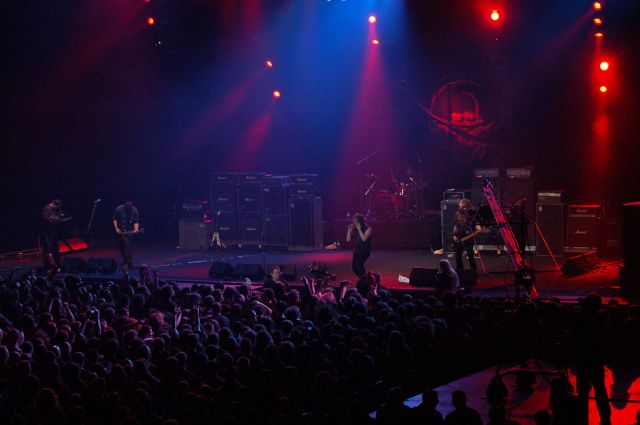
Within this broad genre, Entombed is an icon. Once I had weathered 60 miles of rain storm and flu on a weekday night to see them live. A relatively small venue, crowd was sparse and probably not more than a few dozen. Set list dominated by songs from their first two records – it was an absolute head-banging feast. Swedish death metal legends, tiny venue, and tickets priced at an affordable $19 — perks of listening to sounds not many care about.
Gregg Allman died today, a couple weeks after Chris Cornell. On the face of it these are not related events, but make no mistake, rock vocalists of their firepower and presence always made a fairly exclusive club. Who else, we might ask, are members? Their loss — inevitable, of course — provokes a wondering at the world, in the sense of the permanence of art versus the fragility of the human body, the physicality of their presence as they walked the earth. What they leave behind forever looms over the sum of chemistry and animation that motored them through their time here, hungrier in their rock-and-roll instincts and purpose than the rest of the lot of us.
Strange coincidence: on the day of the evening Cornell died, I traded in my Soundgarden Louder Than Love LP, which I’d owned since its release way back in those hoary days before grunge was called grunge, when Robert Plant was still bemoaning all the Zep copycats while steadfastly refusing to bring the goods himself. A solid, riffing record, though not their best, and unlikely to get many future spins — its value to others outweighed its use to me. Do you remember the context of this album? It came on the heels, well, or a year or two later (and I’m not going to stop and look it up now), of Guns’n’Roses bellwether Appetite for Destruction, and outwitted that band’s lackluster followup. I remember a couple years on and guitarist Kim Thayil saying they were always trying to be Sabbath without the parts that suck, and that about summed them up, because generally they were. At their core, always, was Cornell, the definition of gifted, who somewhere between Louder than Love and Badmotorfinger found his voice, a cocksure combination of Plant and Rodgers, but so goddamn powerful and so much his own thing. Henry Rollins once said that Cornell’s voice could peel the paint off the walls, and he was right. That Cornell could do it in tune and with shifts in timbre and light and tone made him all the more remarkable. At his death he was still making good records and at the top of his game as a performer. Soundgarden’s King Animal from 2012, though now unbelievably five years distant, was as good as any record they made, despite the fifteen-year gap between it and Down on the Upside. His method of exit was undeniably, tragically sad. Does it match the music? Should it? I’ll be thinking this over for some time.
Today, this first day of a three-day holiday weekend, I spent some time going through my LPs, thinking of the next batch for trade, as I am in the middle of my own vinyl renaissance, with the idea that a good record or book is better played or read than sitting on a shelf. In the trade stack went a double-album compilation of recordings by the Hourglass, Duane and Gregg Allman’s band prior to the Allman Brothers. When I later heard of Gregg’s death, I had the thought, following on my Soundgarden trade earlier last week, that somehow my record tastes were guiding the lives and deaths of rock stars. It’s not a stretch. They become part of the fabric of life, their music has a profound personal effect, and so the butterfly beating its wings, in the shape of me making the decision to, you know, ditch the Hourglass, becomes causal in Gregg’s death. Gregg’s death to me, how it effects me. Me me me. But like Chris Cornell, Gregg Allman is still Gregg Allman on record. The life there is indelible. It’s a human cry, a channeling of the Spirit. I spun up the first Allman Brothers LP (one I would never trade) this afternoon, and rocked out like I did when I first heard it, back in 1984 when I was working in a photo darkroom in Ft. Worth and my hippie boss always had the radio tuned to the station that would and did play “Whipping Post” on a regular schedule. When I saw Gregg play with his band in 1987 at Red Rocks in Colorado, opening for Stevie Ray Vaughan, I was aware even then that I was witnessing a legend. That voice. Like Cornell, Gregg Allman had a voice that defined an authenticity transcending boundaries of culture or race — it was the sound of the human soul. I understand he never got over the death of his brother (who would?), and according to Derek Trucks would consult with the spirit of Duane fairly regularly as to the artistic direction of his various bands.
Rock and roll at the level that Chris Cornell and Gregg Allman played it hits hard. We know their work brought them vast number of fans, but I think for each of us (well, for me at least) there is a connection that is personal, even in some sense private. I associate memories, there are feelings unnamed, some primal, that accompany passages of their work. I can write about the riffs, the freedom, the bellow and power of the sound as it moves air, it but ultimately it can’t be intellectualized.
They were only human. They are dead. They are here. I am listening even now.



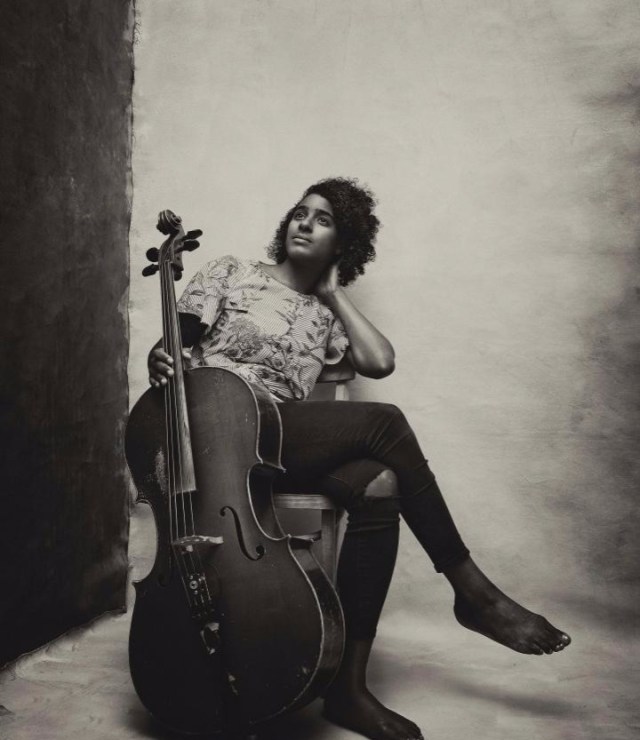 Free and blue and beautiful, those moorings Leyla McCalla holds to in her music sway and pitch like the gulf waters from Hispaniola to Lousiana, rolling through her cello and voice and coursing through her songs, lifeblood to an American music heart. In the weaving lines of the music she plays — a snaking, sliding creole so suited to, and perhaps partly a consequence of, the playing of fretless instruments — is the sound of an America taking shape as its many diasporas meet and mix and move, intersecting lines on a map that triangulate on New Orleans. Like the best Americana musicians, McCalla achieves something at once utterly contemporary but steeped in an authenticity of sound that says so much about the heart that makes the music. There’s no affected vocal, no hokum on the one hand or academic archness on the other. And there could have been, so easily. McCalla’s classically trained; she jumped from a New Jersey upbringing to a New Orleans residency; she’s an American born to Haitian rights activists in the thick of a struggle for democracy; she was an important member of the last incarnation of the much-loved Carolina Chocolate Drops. Her road was ripe for opportunity to leave the music behind in bringing a message that might not have resonated as strongly as it does. But instead she chose on her first solo record, Vari-Colored Songs (2014), to artfully adapt poetry by Langston Hughes and punctuate it with Haitian folk songs. Her second record, A Day for the Hunter, A Day for the Prey, is also cloaked in a music-first approach that makes the underlying messages — because they are indeed there, as they were in her curation of Hughes’s work — so much more compelling.
 Progarchy
