No Luggage Allowed–Andy Tillison/The Tangent

The Tangent no 7
The Tangent’s masterpiece, THE RITE OF WORK (2013)

Though perhaps not totally polite, I will admit my shock that this album isn’t discussed more among serious proggers.  To my mind, prog really doesn’t get any better or more innovative than this.  Though The Tangent is always extraordinary, this is The Tangent at its absolute best: weird; twisty; intelligent; cutting; affirming; angular; and organic.

My favorite part of the album, part VII of the third movement, “Afternoon Malaise”:

I shear the bolt, he turns the screw
We all have our part, and there’s one for you
And we’re all alone, yet surrounded by peers
Try to make our mark as we work off the years … crawling, marching

And we keep our homes if we pay our tax
I ask myself, “Just who struck that deal and just how far back?”
And some work for fortunes, some work for a dime
And some work for pensions, and some just do their time
And some of ’em build empires and some bring them down
Some work for recognition, ain’t we all just the clowns?

‘Cos you can’t take it with you
There’s no luggage allowed
No you can’t take it with you
No matter how rich or proud
Your kids will sell it off on Ebay
For God’s sake don’t waste their time
‘Cos you can’t take it with you
You can leave just a little bit behind

Burning Shed Updates Rather Seriously

A note from Burning Shed came this morning.  It looks like the site is rather seriously upgrading.  Frankly, I’ve found the current website excellent, and the service even more so.  Nice, however, to see the company getting better and better.

It’s our 16th birthday and we’re making a big change to celebrate.

Our new website is going live today and even though it might look quite similar to the old website it has lots of features which we hope will make life better for you (and for us!).

You will be able to:

* Create an account – save your name / address detail. For security reasons we won’t store your PayPal or credit card information.

* Everyone who creates an account will get a free, exclusive, download (more details to come)

* View your order history, check your order status and any tracking information

* Create a ‘Wish List’

* Gift Vouchers – send them to friends and family (or ask them to send one to you!)

* New shipping methods – choose either post or courier

* See recommendations for similar or related albums

* An expanded catalogue with advanced browse and search functions, including format and tags

Please note that any order you have placed on the old website is still active and will be shipped, but will not appear (for now) on your account in the new system

We might take longer to answer emails and ship orders over the next few days while we make sure everything is working properly.

Please bear with us over the next few days while we make sure everything is working properly.


Good luck and see you on the other side…

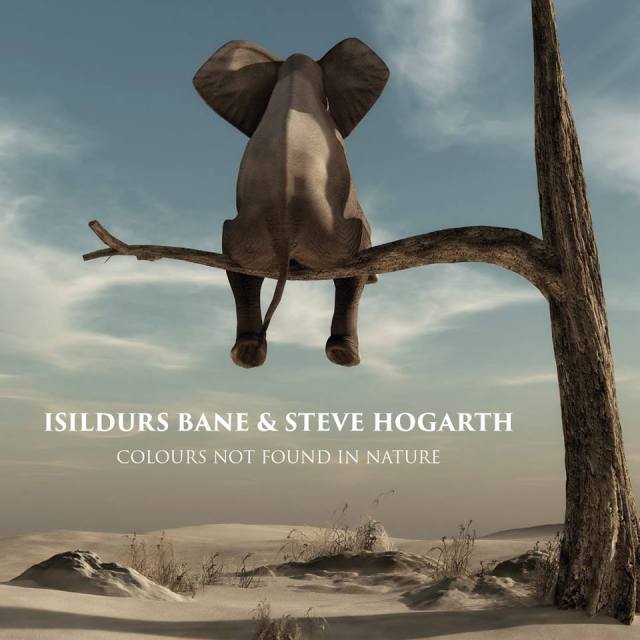
Album Review: Isildurs Bane & Steve Hogarth, Colours Not Found in Nature

A few weeks ago, Marillion’s Steve Hogarth announced his latest project, a collaboration with Swedish chamber-rock band Isildurs Bane (IB)* titled Colours Not Found in Nature.  He confessed that the last year had been a busy one.  He had written the lyrics and recorded the vocals in hotel rooms around the world while on tour with Marillion.  He also announced that Marillion’s Racket Records would be selling 1000 signed copies, which sold out within hours of their release.  Even here at Progarchy, it took us about a week to track down a copy to review.

If the album’s immediate popularity reveals one thing, it’s the deep, unwavering affection Marillion fans have for Hogarth.  I count myself in this camp, and I’m not sure I could actually dislike any musical effort that included him.  Marillion fans already know what makes Hogarth so special, much of which he displays in the lyrics and vocals of this latest album.

But what this album showed me, what I assume it showed many of us who found it through Racket Records, is the detailed, intricate, classical-progressive sound of Isildurs Bane.  IB formed in 1976 as an experimental rock band.  Through many years and many line-ups, they’ve become a mini-orchestra, led by songwriter and keyboard Mats Johansson.  Johansson met Hogarth in 2013 through their mutual friend and collaborator Richard Barbieri, and Johansson wrote the music for this latest album with Hogarth in mind, hoping the singer would join the project when he had some time.


17884112_10154337854132327_5520200373384598092_n

This is an interesting, near-perfect collaboration.  Hogarth brings all of the charm and passion he has with Marillion to this album, but with the music of IB, he also becomes a different artist.  The instrumentation allows him to be more introspective, personal, and even playful than he has been on Marillion’s latest releases.  In the upbeat opener “Ice Pop,” he laments “too cold, too sweet” as guitar, keyboard, and even trumpets carry the song.  “The Random Fires” is equally lively and bright, before transitioning to the more relaxed ballad “Peripheral Vision,” which opens with voice and strings.

“The Love and the Affair” is an example of what Hogarth the lyricist does so well, using the mundane to show us the transcendent (reminiscent of Marillion’s “The Sky Above the Rain”).  And in this, IB’s classical-contemporary sound fits him perfectly.  The string arrangements at the beginning of “Diamonds of Amnesia” are haunting, and the album concludes with the energetic, urgent “Incandescent,” where you can hear the full range of IB’s ensemble.

I’ve been listening to the album non-stop for days, and between Hogarth’s lyrics and IB’s rich instrumentation, there is always something new to find.  My only complaint is that, at 41 minutes, I wish there more.

IB features:

Katrine Amsler – Keyboards, Electronics
Klas Assarsson – Vibraphone, Marimba, Percussion
Luca Calabrese – Trumpet
Axel Crone – Bass, Clarinets, Saxophones, Flute, String Arrangements
Samuel Hällkvist – Guitars
Mats Johansson – Keyboards
Christian Saggese – Classical Guitar
Kjell Severinsson – Drums
Additional Musicians:
Liesbeth Lambrecht – Violin & Viola
Pieter Lenaerts – Double Bass
Xerxes Andren – Drums
John Anderberg – Choir Vocals (on The Love and the Affair)
Anneli Nilsson – Backing Vocals (on Peripheral Vision)

*Yes, I know this should be a possessive, but the band says otherwise.

BBT’s Greg Spawton on the shared history that binds us together @bigbigtrain

There’s a really great interview with Big Big Train’s Greg Spawton over at Echoes and Dust. Don’t miss it!

Here’s a tasty sample, which tells the band’s wondrous story from The Underfall Yard to Grimspound:

Greg: The Underfall Yard was certainly the album where we went headlong into the history and landscape story-telling. I don’t think it was thought through, particularly, it was more a reaction to what I was reading about at the time. I remember reading some of the stories around Brunel and the Victorian engineers and I read a book by Richard Fortey who was then a paleontologist at the Natural History Museum. His book started with a description of a railway journey to the west and he mentioned that the rocks further west are much older than those that could be found in London, so it was like a journey into deep geological time. On the title track which was becoming quite a sprawling, epic piece, I connected the engineers with the landscape they worked on (and under) and I also introduced some themes about the Enlightenment as those engineers were very much men who lived by Enlightenment and scientific values. I really enjoyed writing the song and that led me to other stories which I thought would be nice to write about such as the Winchester Diver. When I was writing all of these songs, I didn’t realise that I was about to meet and connect with David, who is very much my musical soul-mate. Some singers might shy away from that sort of subject matter, but he met the challenge of those songs head-on. And as he is a writer himself, he was able to ensure the vocal arrangements and performances suited the material.

(((o))): Was there a point where the other band members thought “why on earth are we writing songs about Victorian engineers!”

Greg: It wasn’t really like that back then. We didn’t really have a full band identity at that stage. We had started as a band, and then, like a reverse butterfly, had undergone this gradual metamorphosis into a studio project. At the time of The Underfall Yard, we were just beginning the process of becoming a proper band again. So, at the point of writing those songs, there wasn’t really anybody to tell me what to do and I just did what I wanted to. It is different now, we discuss and agree things, so I have had to let go a bit, but the benefits of being in a full-band with all that extra creative input far outweigh the fact that I am less able to exhibit any control-freak tendencies. I think we all feel we have carved out a bit of territory for ourselves in the last few years which has worked well in defining the band and giving us a strong identity.

(((o))): Moving forward a bit and the idea of the “story” is explored even further on Folklore. The themes and ideas or a lot less immediate here though. It almost feels more insular than English Electric, as if the songs are hushed secrets?

Greg: We think of the work we have done in the last few years as a sort of cycle of albums which has moved from songs about the individuals who worked on and under the land, to songs on the English Electric albums about the communities that those people formed and finally through to songs on Folklore about the stories that have bound those communities together over time. Again, it wasn’t planned, it evolved, and it isn’t as neat as all that, but that is, broadly speaking, the arc of it. Grimspound ties some of the threads together, it is the last full new studio album that we will be doing in this cycle of releases.

(((o))): The stories that are told through history become a kind of fabric that binds us. Do you see the music you make as a natural extension of this?

Greg: That is exactly what we hope to achieve. We would like to be a small part of the process of remembering the stories and the characters that define us as communities. There is a lot of identity politics around at the moment which seems to break people up into ever small groups of individuals, enabling people to be played off against each other in a sort of competition of who is or isn’t the least privileged. In reality, there are far more things that bind us together than separate us, and much of that is down to shared history.

(((o))): Big Big Train’s story continues with Grimspound. Can you elaborate on this enigmatic figure and what we can expect from the new album?

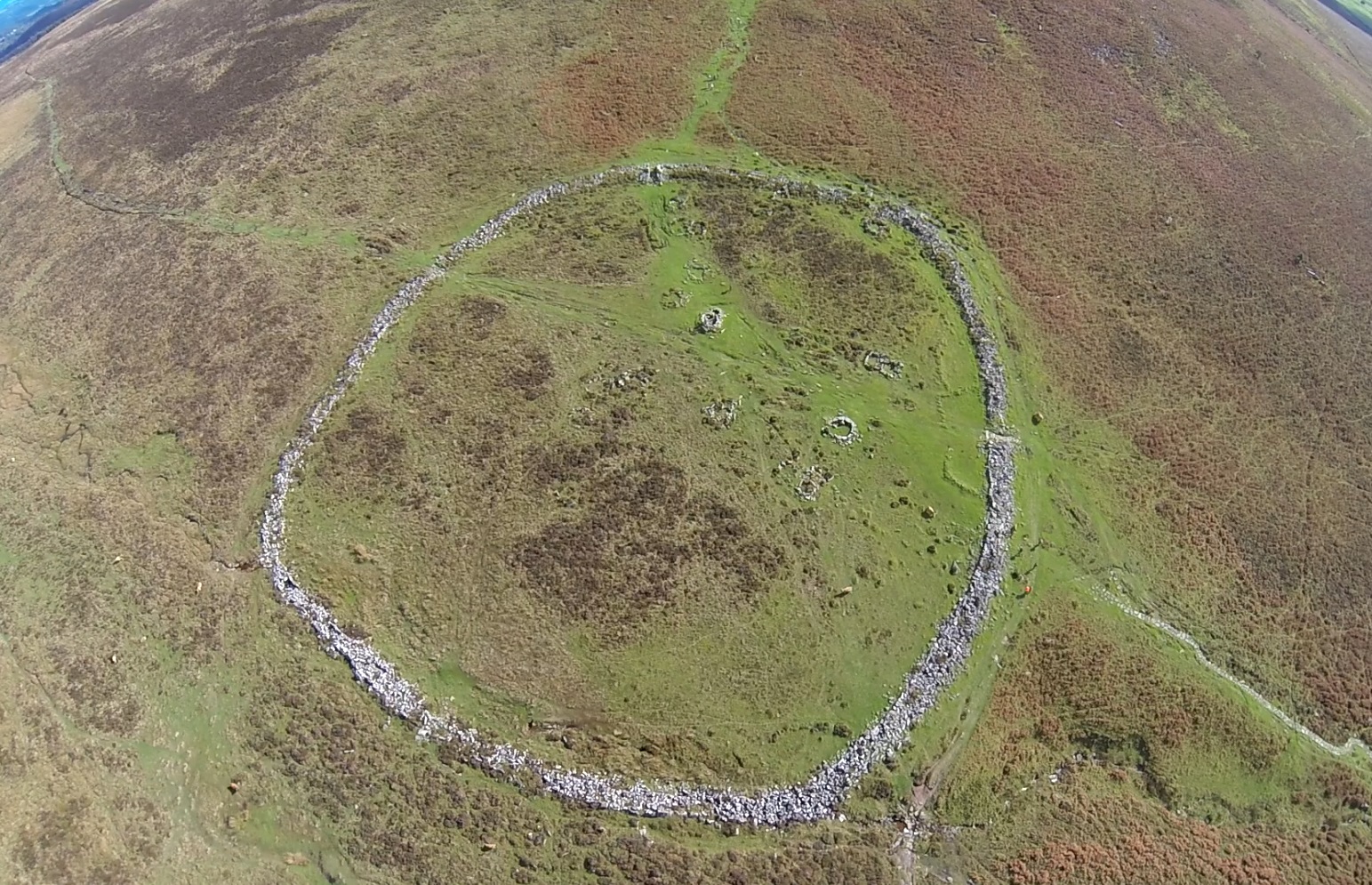
Greg: The title of the album came from a Bronze-Age settlement on Dartmoor. It is an incredibly evocative place with a mysterious name which was given to it by the Anglo-Saxons who connected it and other such places to one of their gods, Grimr. Our friend, Sarah Louise Ewing who paints our cover and booklet art had provided us with a beautiful painting of a crow for the cover of Folklore and during a conversation she asked David what the crow’s name was. His instinct was to call it Grimspound. So the name of the album came about by quite a circuitous route.

As for the album itself, I think it is in the grand tradition of progressive rock. It was an album made without any pressure. We had just released Folklore, had a couple of songs that we hadn’t had time to finish and so thought we would write one or two more songs and release an EP to fill in the gap before our gigs later this year. The amount of material we had available to us grew very quickly, with David and myself both writing some big pieces and with major writing contributions from Rikard, Rachel and Danny. So, we suddenly found ourselves with almost a double album of songs and we selected the hour or so of music that fits best together to make a cohesive album.

Massive SAND/Sam Healy Sale

Sam-Healy-header
Sadly, not everyone is born a handsome Irish man.  Then, again, some are.  Sam Healy.

One of my all-time favorite musicians, Sam Healy (North Atlantic Oscillation), has his second SAND album, the extraordinary A SLEEPER, JUST AWAKE on sale for $9 (cd and download) or $6 (download).

Definitely worth taking advantage of.  SAND’s A SLEEPER, JUST AWAKE was certainly one of my top three albums of 2016.  Healy understands sound as well as anyone in the scene today (or yesterday).

https://www.musicglue.com/sandtheband

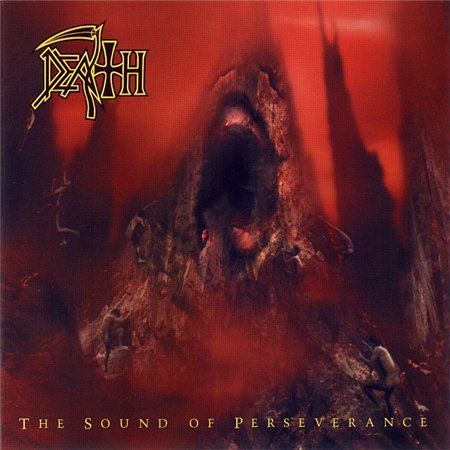
Death – The Sound of Perseverance

Whether it’s songs like “Cosmic Sea” or “Trapped In A Corner”, Death manages to capture a unique musical terrain. Deriving from primal thrash structures, they took that Celtic Frost like blueprint to a threatening, bleak, and a more refined direction. Instead of the more gruesome death metal attributes like blast beats, atonality and deeper growls — this album emphasizes coherent structural progression and melody.

‘The Sound of Perseverance’ (1998) is a genuinely dazzling confluence of these early influences and more. It’s tailored to quickly envelop a progressive metal disciple or a death metal-head. The record straddles this complex ground between progressive musical sensibilities and sheer sonic savagery. At the margins of these two demanding genres, Death crafts an exquisite bridge from a Dream Theater to a Morbid Angel. This overall immersive experience can be elegantly summarized in Chuck Schuldiner’s own lyrics: “touch, taste, breathe, consumed”.

DeathSOP-1998.jpg

Widely varying transitions are graceful and numerous. Baffling how an At The Gates like guitar imprint runs into a razor steel Priestly guitars, finally exploding into an Obituary like mid-paced chugging. The good old signature riff-drum pattern of Death is also omnipresent. ‘The Sound of Perseverance’ acknowledges the progressive side to Death, and does that without deviations from their death metal roots. Essentially the same old harsh melodic guitar tones, screaming vocals and scathing leads interleaved with intricate passages — but now restructured into a progressive death symphony.

While firmly grounded in thrash roots, over the years, Death pursued a guided musical trajectory of progressive refinement. Emphasizing that crucial New Wave of British Heavy Metal artistry and sophistication – it’s essentially Iron Maiden’s melody reconciled with Hellhammer like brutal force. This constant duality in Death’s composition was always shifting in a progressive direction. So, for the longtime fans, ‘The Sound of Perseverance’ must have been a lot like the very last song from the record – “Open my eyes wide to see a moment of clarity”.

By A Sniper (Own work) [CC BY-SA 3.0 or GFDL], via Wikimedia Commons

Rush, SNAKES AND ARROWS–Happy 10th Birthday!

snakes-and-arrows-cover-s
First appeared May 1, 2007.

Snakes and Arrows, Rush’s 18th studio album, came out on May 1, 2007.  It was the last Rush album to be distributed by Atlantic, but the first to be produced by Nick Raskulinecz.  Snake and Arrows was profoundly progressive, but it was also one of Rush’s blues-iest album, almost certainly influenced by their EP, Feedback, a 30th anniversary tribute to the bands the three members loved in the 1960s.  And yet, even the blues on the album is mischievous, an inversion or twisting of blues, propelling the flow into more classical progressive directions.

The album also sees the return of Peart, the cultural critic and observer.  The first track, “Far Cry,” begins with the harrowing “Pariah dogs and wandering madmen,” a commentary about the evil in society and those who would sell their own souls and become evil to destroy the other evil.  Each, tellingly, is a fundamentalist, “speaking in tongues.”  The track begins, musically, with a psychedelic blues feel.  This was not the world we thought we would inherit, Peart laments.

It’s a far cry from the world we thought we’d inherit

It’s a far cry from the way we thought we’d share it

You can almost feel the current flowing

You can almost see the circuits blowing

Even when we feel we might actually make something right, the world spins and we find ourselves rolled over.

Continue reading “Rush, SNAKES AND ARROWS–Happy 10th Birthday!”

Big Big Train’s “Grimspound” – A Review

I’ve had the pleasure and privilege of listening to Big Big Train’s latest work, “Grimspound,” for a few weeks prior to its release, and it’s taken me as much time to figure out exactly what it is.

This isn’t about whether or not the music is good…oh, it’s good. Very good. It’s an absolute must-buy for Big Big Train “passengers,” both new and returning.

With each subsequent listen, I kept asking myself:

  • Is this merely a collection of leftover songs from what had to be a creative outburst when “Folklore” took shape?
  • Is this sort of a “Folklore Part 2?”
  • Is this a standalone album altogether?
  • Is this part of a much bigger canon of releases?

I’ve decided that the answer clearly isn’t “a collection of leftover songs” and it’s not really “Folklore 2,” but you could argue for the other two points.

Anyway, that’s just a frame on the picture. Let’s delve through the music, shall we?

Continue reading “Big Big Train’s “Grimspound” – A Review”