
My great friend, Winston Elliott, sent me a link to this tonight. I had no idea it existed. Great to see Karl still performing beautifully. Looks better than ever.

My great friend, Winston Elliott, sent me a link to this tonight. I had no idea it existed. Great to see Karl still performing beautifully. Looks better than ever.
 Over the past several months, I’ve been rather taken with Pink Floyd. Don’t get me wrong, I’ve always loved the band. . . as far back as I can remember, their music was a part of my life. Certainly, in my little town in central Kansas, I could hear someone or some station playing Floyd at any time. As I’ve had the chance to mention before, our local planetarium played lots of Laser Floyd. I heard them so much and so often that I started to take them for granted.
Several months ago, I picked The Wall up after years of not listening to it. There was a time I thought it was a masterful work of art. I still think it’s brilliant, but it’s way too depressing for me to pick up casually. If I’m in a good mood, I certainly don’t want to be brought down by the album. If I’m in a bad mood, I don’t need it to bring me down any further.
There’s no doubt, however, that its message of anti-fascism and anti-conformity influenced my own thinking on the world profoundly.
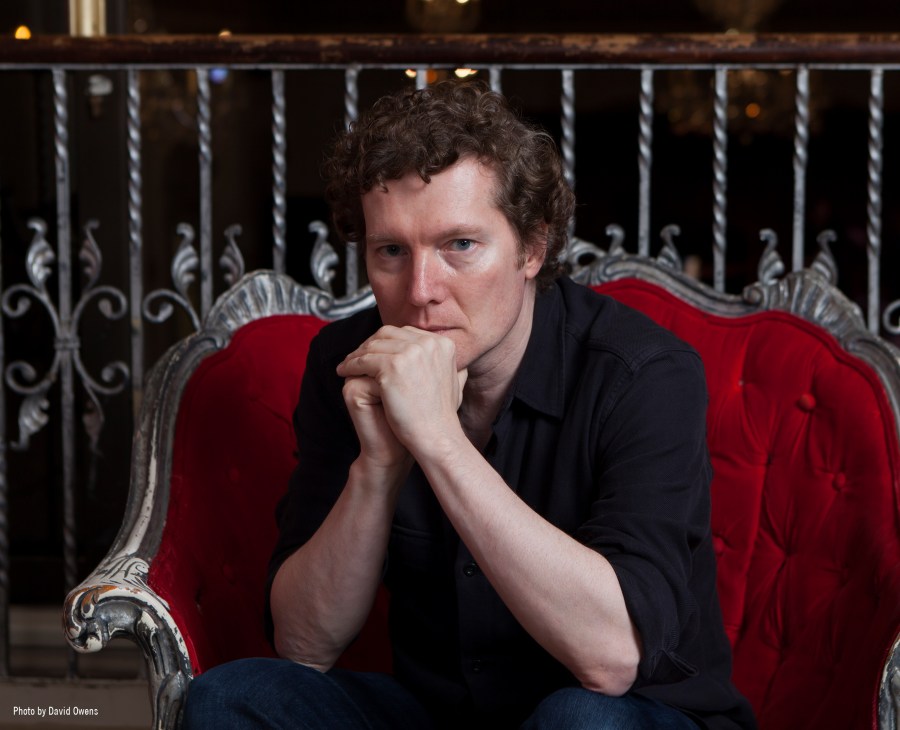
Years ago, when I was 16 I found an organization that helped with my curiosity about progressive rock, it was called the Classic Rock Society, they were based in Rotherham (a short bus ride away from the small village I lived in at the time) and they met on a Wednesday night in a pub. Beer and prog, all within a short distance from my front door, what was not to like?
One night at the pub talking about prog music in 1995 a friend lent me an album by a band I’d never heard of called No-Man, the album was Flowermouth, and it’s mix of shifting sounds and emotive vocals was my first introduction to the works of Mr Steven Wilson and Mr Tim Bowness, and I was hooked.
Luckily I got to see Porcupine Tree not so longer afterwards, but despite following No-Man and Tim Bowness solo work, it took me slightly longer (nearly 20 years in fact) to see Tim live, with Henry Fool at Eppyfest in 2014, followed quickly by seeing him at the Louisiana in Bristol in 2015.
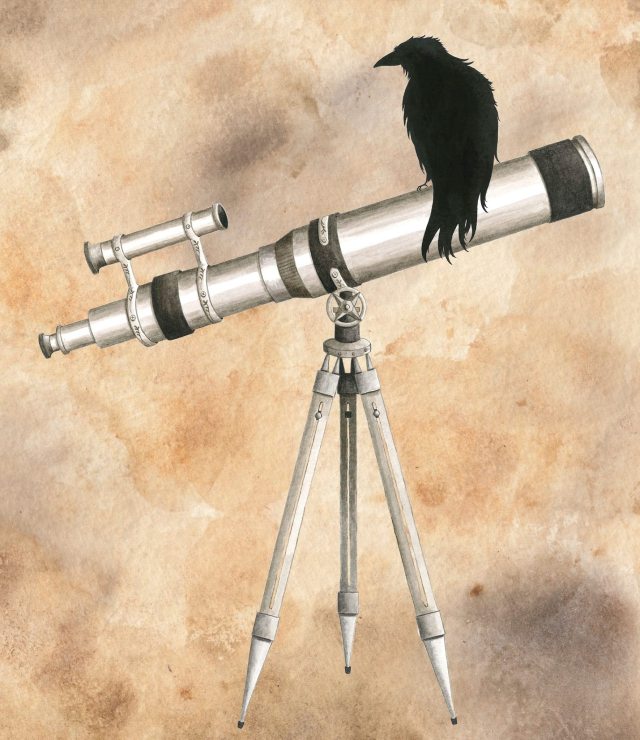
With no explanation, BBT has posted this image. Most likely, it’s either the cover or the internal artwork for the band’s forthcoming GRIMSPOUND.
 The art gallery of rock and roll is a rich and welcoming place, with room upon room spinning off into many-directioned distances. There is no entrance fee or warnings to stand back, please, from the piece. And, like at all great museums, any pretense to surface comportment is, if meaningful at all, only a nod of respect to the spark of human creativity. A sign that we don’t stand in willful ignorance. Before the work, within the work, we are all children. It is in rock’s nature to empower its listeners to create, and within this space there is no genre, no boogie no punk no progressive no pop no indie no folk, just an honoring of the empty canvas and the unrestrained fire banked down in humanity. It’s what I love about rock, and it’s what made Van Morrison’s Astral Weeks happen.
Drummer Connie Kay and guitarist Jay Berliner both famously recounted that Morrison told his musicians — and these weren’t just any musicians, but some of the finest jazz players New York could provide in the late 1960s, led by the inimitable bassist Richard Davis — to “play what you want” and then left them alone to back and guide him on a set of eight songs whose precedents were slim and bore little relation to the rock-pop classics he recorded with his band Them (“Gloria,” “Here Comes the Night”) or on his first solo album (“Brown Eyed Girl”). Astral Weeks (1968) is an echo of Miles Davis’s Kind of Blue (1959), where an extraordinarily talented group of jazz musicians received a similar lack of instruction, and Love’s Forever Changes (1967), where the pop songwriter deliberately challenged the very notion and direction of his craft. Morrison’s artistic success on Astral Weeks was, and remains, startling. The album’s embrace of acoustic jazz as a way forward had a profound impact on the burgeoning “singer songwriter” movement, and for better or worse has become instant point of comparison with subsequent work by musicians such as Joni Mitchell or Tim Buckley or Nick Drake.
“Ballerina” captures the essence of an album that is about nothing as much as ecstatic love, the joyous and at times Joyce-ean observations of a 23-year-old ancient who had spent the previous year turning his voice into a bebop trumpet. While Morrison got and kept his fame on the back of “Brown Eyed Girl” and “Moondance” and the slew of equally wonderful R&B radio-ready hits that would come his way, it’s here that his artistic street cred was established, as he honored the canvas and invited Davis, Kay, and Berliner to follow their hearts along with him.
soundstreamsunday presents one song or live set by an artist each week, and in theory wants to be an infinite linear mix tape where the songs relate and progress as a whole. For the complete playlist, go here: soundstreamsunday archive and playlist, or check related articles by clicking on”soundstreamsunday” in the tags section above.
In my mini-review of Ian Thornley’s outstanding Secrets I described the Big Wreck  singer/guitarist/writer’s solo effort as “acoustic, reflective, mellow, mournful, defiant, sad, and yet shot through with a sense of cautious hope.” The new Big Wreck album Grace Street has its reflective and mellow moments—”Useless” is a mesmerizing, melodic gem and “Motionless” is a soaring mid-tempo number—but the key, overlapping descriptives surely are “defiant” and “hope”. If I were to channel my 17-year-old self (30 years ago!), I would simply say, “This albums kicks ***!” Since reuniting in late 2011, the Canadian rockers have produced three must have albums: Albatross (2012), which includes one of my favorite rock songs, period; Ghosts (2014), nominated for “Rock Album of the Year” at the 2015 Juno Awards; and now Grace Street. As many others have said, this band deserves far more attention for consistently producing albums filled with aural delights.
The opening song, “It Comes As No Surprise”, is apparently inspired in part by Thornley’s divorce and is equal parts bombast and vulnerability, with wall-of-sound guitars bringing to mind the Von Hertzen Brothers (fans of that group’s 2015 “New Day Rising” should embrace Grace Street readily), while the vocal harmonies remind me of something from Moon Safari or even the Beach Boys. While Big Wreck is not straight prog, it certainly embraces some prog elements—similar, I think, to how Queen used complex vocal harmonies, unusual chords, and elaborate guitar passages:
The second cut, “One Good Piece of Me”, is about as AOR-sounding as the band gets (the opening riff is pure Asia, circa 1983), the sort of song that would have chewed up the radio back in the Eighties, with its power chords, anthemic vocals, and driving bass. “Tomorrow Down” has more of a grunge sound, with Thornley sounding very much like Chris Cornell, especially in how he moves from seductive to snarling at a moment’s notice. “You Don’t Even Know” is loping ear candy, a blues-inflected, hand-clapping (yes, actual hand claps!) number that would—wait for it—make Los Lonely Boys proud, with the sort of tasty guitar solo that Thornley excels at.
The middle section of the generously timed album (just shy of 70 minutes) is simply brilliant. “Useless”, as hinted at above, is a sonic and musical marvel, described by Thornley as one of his favorites. “A Speedy Recovery”, the longest track (7:38), is the very definition of an earworm, with incredibly catchy drum/bass parts, swelling guitars, hypnotizing chorus, soaring vocals, and another glorious guitar solo:
“Motionless” displays Thornley’s astounding range atop a bed of layered sonic sweetness, while “Digging In” has a more raw, classic rock sound with several overt Led Zep shout outs. “The Receiving End” could have easily fit on Chris Cornell’s most recent solo album, replete with mandolin, some slide guitar, and some falsetto. “Floodgates” is equal parts grunge and funk—Extreme, anyone?—with bassist Dave Mcmillan laying down some fabulous bass lines.
The final three cuts have plenty to offer fans of prog: “The Arborist” is built on some deceptively snaky guitar parts, with plenty of minor-keyed darkness around the edges; “Skybunk Marché” is a 7-minute long instrumental with all sorts of guitar gifts; and “All My Fears On You” is a surging, Pink Floyd-ish closer with a classic Thornley solo bringing the album to conclusion.
The Prog Report, in its glowing review, states: “At times channeling Led Zeppelin, the Rolling Stones and other 70’s acts combined with their own unique style, ‘Grace Street’ is an exhilarating and refreshing rock album, one that is already one of the year’s best.” That’s as good of summary as you’ll find of what is an early entry into CEO’s Top 10 Rock Albums of 2017.
We would be remiss if we did not acknowledge this drumming legend, an unfortunate victim of suicide. I am not aware of the demons Mr. Trucks may have been battling, but I hope his family will find peace in this difficult time.
I post the following not to start any kind of war against Nugent or any internet dog piling. I did, however, find this absolutely fascinating.
As some of you know, I’m a professor by profession. At the moment, I’m writing an intellectual biography of a very interesting sociologist, Robert A. Nisbet (1913-1996). In my research, I came across this quote from Ted Nugent. It was, by the way, next to a quote by Irving Kristol about Robert Nisbet.
If the punk rockers think they’re so punky with the pins in their face, I’ll show ’em my nine millimeter, put a couple of slugs in their chest and let’s see how punky they think that is.–Ted Nugent, quoted in THE REGISTER (November 17, 1977), F5.
I guess some things never really change.
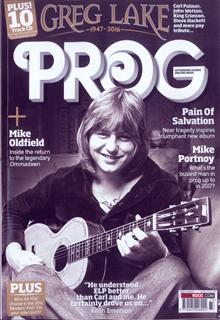
Yesterday, I received in email, a copy of PROG’s history of Pink Floyd.
Today, I received notice that PROG magazine issue 73 is ready for iPad download. And, downloaded it is.
So proud of Jerry. He took his team of writers, editors, and artists from tragedy to success.
Jerry is, to say the least, nothing if not tenacious.
Welcome back, PROG. Very proud of you. Not surprised, but certainly proud.
 Progarchy