A retro review of Tori Amos, LITTLE EARTHQUAKES (Atlantic, 1992), originally released January 6, 1992. Twelve tracks at 57 minutes: Crucify; Girl; Silent All These Years; Precious Things; Winter; Happy Phantom; China; Leather; Mother; Tear in Your Hand; Me and a Gun; and Little Earthquakes.
Originally released January 6, 1992.
Nothing quite prepared me for my first listen to LITTLE EARTHQUAKES by Tori Amos, twenty-five years ago this month (actually, twenty-five years ago tomorrow, to be exact).
Full of confessional anger and blasphemy, LITTLE EARTHQUAKES is nothing if not utterly honest. Indeed, this first album from American vocalist and pianist remains one of the most honest and earnest albums I’ve ever heard in my 49 years of life. Amos has a voice that could awake the dead who await the Last Judgment. And, if she challenged God to a debate, I don’t think it would be a pretty sight. Though, I can imagine Tori raising her fist pretty quickly at the first glimpse of the divine. I’m not quite sure what God would do.
With the amount of records being released in the present era, ranging from the bedroom to high-class studio productions, it is quite a challenge to satisfy my hunger for music lately. Most of this has to do with the fact that the music being released today lacks sincerity. Maybe I am stuck badly to the old-school understanding of rock music, but even though I try so hard, it happens quite a lot that I cannot understand and enjoy the modern music. The sound of 1970s is my comfort zone.
Althea from Milan, Italy could be described as a true progressive rock metal band with touches of metal here and there, offering well-thought melodies, interesting vocal arrangements, and passages that connect the dots that are quite enjoyable.
The album opens with “Regression from Regrets,” which after a short atmospheric intro shows that Memories Have No Name has a lot to offer. With often changes, Althea distances themselves from delivering just a pure, lifeless showcase of technical proficiency, something that these guys definitely have, but rather presents the work that is alive, dynamic and above all, interesting.
References to various stylistically different artists can be heard in Althea’s music. Their explorations within Anathema’s or Porcupine Tree’s melancholia speak of that, but the band is not afraid to delve deeper and expand their horizons. As Melodies Have No Name flows by, a listener is taken to a sound-trip that gets more metal-esque. Each of the songs on the album has its own personality, and labelling this record under a single genre would do this band a lot of injustice. As an example, “Paralyzed” is a very classic rock oriented song with addition of Opeth-ian vibe. “Revenge” channels Dream Theater, while “Halfway of Me” is somewhere between the mentioned US prog veterans and Rush. And that is just a small piece of what Memories Have No Name delivers.
To summarise, Memories Have No Name is a record largely based on the progressive rock genre channelling many different elements. This is a true epic, both in length and amount of quality material, which requires quite a few listens to get into it. How far Althea are ready to go? Time will tell. But for now they are on the right path.
Merkaba is a new instrumental ambidjent project that emerged in 2016. Led by Louis Goodwin, this one-man band produced the self-titled debut EP which includes nine tracks. We asked Louis some questions about the record, and here is what he had to say.
Alright, first thing is first. Before we dive into all the music stuff, how’s life?
Life’s good! Writing plenty of riffs, practising a lot, learning a lot. Things are chill!
Speaking of new music, you have an EP. What can people expect from “Merkaba”?
A strange mix of really heavy stuff and really light stuff. I can’t seem to decide what part of the “Djent” subgenre I’m most going for with Merkaba, whether it’s the really heavy Meshuggah, Glass Cloud or Monuments kinda thing, the more metalcorey Born of Osiris and Veil of Maya stuff, the jazzy Animals as Leaders, Plini and later Intervals influences, or super ambient stuff like Tesseract, Skyharbour or David Maxim Micic. One moment it could be a super heavy riff like the breakdown in “Sonder”, the next it could be the jazz/proggy, clean chords in Interludes I and II.
You older readers might remember and understand. Back when dinosaurs walked the earth we sometimes bought our vinyl in smaller stores that did not have turn-table listening stations. How many times did we either “score” or “strike-out” when, not knowing anything about the music, we took a gamble and just bought the lp for the cool art on the cardboard jacket? My average was way better than 50%
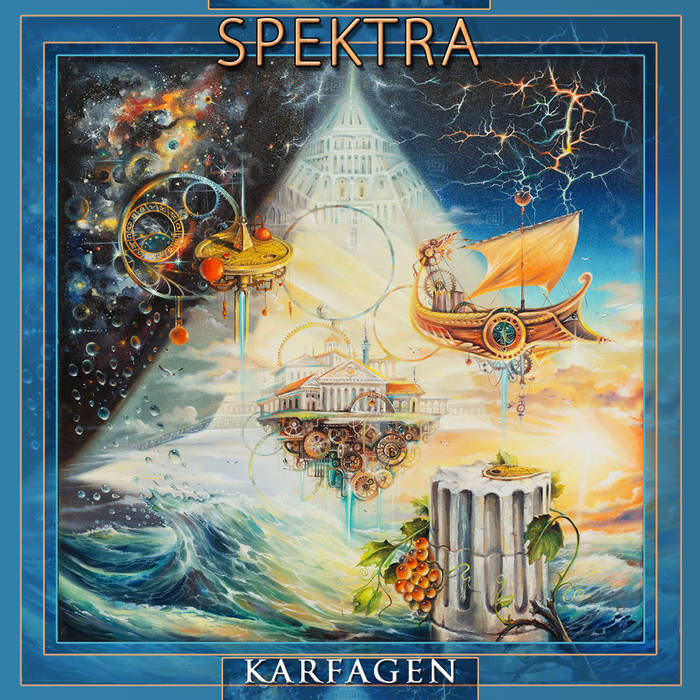
But when it comes to prog, we expect the art to be, well, “proggy.” When I was perusing some online albums to listen to recently, this artwork really grabbed my attention. The album is light-years better than the art. The art is great. What a find. This will be a rave review.
I seem to have spent most of the last few months catching up with a backlog of album reviews that have landed either on my door step or in my inbox which built up during a traumatic move, (I am never spending two weeks sleeping in the living room again!!) and so I fear this latter part of the year has been chasing my own tail, as whilst I’ve reviewed older albums, never ones have appeared!
My new Years resolution is to be more organised (honest!)
This is my first word on Bad Elephant Music this year, wrapping up some of their fine releases last year.
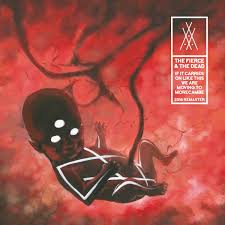
The Fierce and the Dead: If it carries on like this we’ll be moving to Morecambe
This is where it all began, and what better place for a shiny new remastered edition of TFATD debut long player to be released, complete with new artwork by Mark Buckingham, than their new home. BEM and TFATD have become synonymous with adventurous and eclectic music, and as some one who previously bought the original release from band camp, the remastering is absolutely superb, and does make a difference to the sound. Not that there was ever anything wrong with the production originally, but it’s like the difference between watching your favourite TV show on a normal telly and then switching to HD, it highlights certain nuances and little pieces of music on the album that you might have missed originally.
It’s rather hard for me not to feel a twinge of nostalgia as I think back a quarter of a century. Through my great friends, Craig Breaden, Joel Haskard, and Kevin McCormick, I was discovering a world of neo-psychedelic pop. Lush, organic, voluptuous. The Sundays, Catherine Wheel, The Charlatans, House of Love, Mazzy Star, Jane’s Addiction, and the Cocteau Twins were in full (and fulsome!) form. Phish, Smashing Pumpkins, and Lush were about to hit it big, though I really had no idea just how big they would hit.
Even old mainstays such as The Cure and XTC were releasing some of their best material at the same time.
Our good friend and fellow Progarchist Time Lord posted a great 31 December addition which he called “Late to the Party—Best of 2016.” He so perfectly expressed what all music lovers who make year-end lists encounter…too much great music and not enough time (or money). I too would add to my list the following albums which I hastily, but fervently, listened to in the last two days of calendar year 2016. They are all added to my “Honorable Mention” list:
FRACTAL MIRROR:Slow Burn 1 (Stellar musicianship, and the kind of project that makes you feel not just better after listening to it, but smarter.)
Outside the fact both groups employed players of a violin/viola in their lineups at one time or another, and possessed songwriters of legend, you’d be hard pressed to find common ground for Fairport Convention, last week’s soundstreamsunday feature, and the Velvet Underground. But in an imaginary Venn diagram of live rock jams from otherwise non-jammy groups circa ’68-’72, Fairport’s scratchy, chugging take on “Matty Groves” would share a noisy, electric segment of that interlocking circle with V.U.’s live work during the same period. In 1969 the Velvets, with aforesaid violist/bassist John Cale one year gone and a third album released (The Velvet Underground), recorded a handful of shows in Texas and San Francisco, showing an energetic, touring rock outfit whose songs of hustlers, dopers, and beloved Factory freaks worked even without Cale’s avant-garde contributions. Indeed, Cale’s replacement Doug Yule, doubling on organ, more than adequately filled in Cale’s creeped-out carnival viola drone. The tapes — unreleased until 1974’s 1969: Velvet Underground Live with Lou Reed (the full two-night run at San Francisco’s Matrix was released in 2015 in pristine glory and it is mind-blowing) —like the rest of their music, hold the seeds of punk. But beyond that, the jams they insert, not part of the studio versions, have a live inventiveness and melodic sensibility that rank among the finest of their long-haired time. On “I Can’t Stand It” — in its studio incarnation a proto pop-punk nugget of the variety the band could so effortlessly summon — the band opens up space for an extended guitar section that takes cues from Jim McGuinn’s intro to “Eight Miles High” and pushes its Coltrane-inspired riffing into the stratosphere. Mo Tucker’s relentless pounding and Yule’s bass background the song, never allowing the guitars of Lou Reed and Sterling Morrison to disintegrate into wandering exploration. This is a lean-and-mean live band unharried by the legend they would become (Tucker has even noted that on this tour audience members would tell her they couldn’t even find the band’s albums for sale), at a time when rock-n-roll was meant to be rough around the edges, and maybe even exact a toll.
soundstreamsunday presents one song or live set by an artist each week, and in theory wants to be an infinite linear mix tape where the songs relate and progress as a whole. For the complete playlist, go here: soundstreamsunday archive and playlist, or check related articles by clicking on”soundstreamsunday” in the tags section above.
Avenged Sevenfold released a surprise album a few months back, but I hadn’t listened to it until this week… when iTunes dropped the price into a reasonable range. New drummer Brooks Wackerman is a huge improvement over Arin Ilejay, bringing a punch to A7X’s music not heard since Mike Portnoy was drumming for them following the tragic death of Jimmy “The Rev” Sullivan. Personally, I’m more of a fan of early Avenged Sevenfold, but I enjoy music from across their catalog.
Well, with their most recent album, The Stage, the band finally embrace their inner prog metal souls. They have always been great musicians, and “The Rev” was one of the best drummers in metal. His style was heavily influenced by Portnoy, and it always showed in his playing. This is why it is so awesome to hear these progressive influences worn on their sleeves with their new album. The final song happens to be the longest song the band has ever written, and it almost sounds as if Dream Theater wrote it. It is over 15 minutes long, but the way it is written makes it fly by. As you sail into the new year, enjoy this little piece of brilliance by A7X:




 Outside the fact both groups employed players of a violin/viola in their lineups at one time or another, and possessed songwriters of legend, you’d be hard pressed to find common ground for

