One of my first jobs in high school was valet parking for a restaurant. Besides the perk of driving all kinds of cool cars, I also sometimes heard interesting music on the sound system. One time I hopped into a car, and there was a guy singing falsetto over a funky beat with a catchy melody. I picked up the cassette lying on the passenger seat and noted that it was by a guy named Prince, and the album was For You. I later learned that he was 17 years old, and he self-produced it.
I never picked that album up, and I didn’t hear much of Prince after that, because my tastes were more punk/new wave. However, one morning in 1982 my favorite rock radio station was playing an irresistible song where the singer declared, “Tonight I’m gonna party like it’s 1999”. Whoa! I cranked it up, because this guy was the perfect combination of rock, dance, synthpop, and rhythm and blues. It was Prince.
I did purchase that album (1999), and like later ones he would release, it was all over the place. Hard rock, gritty funk, blues, new wave, techno – it was a foretaste of Prince’s unique ability to combine seemingly incompatible styles of music into an original and appealing blend. It was also a harbinger of his incredible productivity: a double album that was “Produced, Arranged, Composed, and Performed by Prince”.
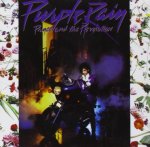 In 1984, it was impossible to turn on the radio and not hear something from Prince’s breakthrough album, the soundtrack to his movie, Purple Rain. A mega seller that actually deserved to be one, Prince was suddenly considered the main rival to Michael Jackson, the so-called King Of Pop. The movie made Prince a huge multimedia star. But there were things happening in Purple Rain foreshadowing the restless genius of Prince; things that indicated he was an artist who would follow his own muse, regardless of the commercial appeal.
Take the first single, “When Doves Cry”: opening with a crazy, squiggly guitar line, an insistent keyboard riff takes over, only to disappear while Prince sings over spare percussion. It took me dozens of listens before I figured out what made the song so compulsively listenable: there’s no bass! It’s impossible to sit still to, yet there’s no lower end – it’s brittle, percussive, beautiful, and spacey all at the same time.
A big part of Purple Rain’s success has to go to Prince’s band, The Revolution. A diverse group of musicians in the mold of Sly and the Family Stone, each member made a distinctive contribution to the overall sound. For the next few years, they would become integral to Prince’s success, reigning in his wildest musical forays, and providing him with song ideas he could bounce off of.
Every song is brilliant on Purple Rain, even the notorious “Darling Nikki”, which spurred Tipper Gore to fight for warning labels on music. The title track put to rest any doubt of Prince’s instrumental prowess: a gospel-tinged masterpiece, it features one of the finest guitar solos ever committed to tape. Which brings up the main contradiction in Prince’s music: he wrote some of the dirtiest lyrics any major star ever got away with, while at the same time composing almost sacred songs of devotion – and they expressed devotion to a lover or to God with equal ardor.
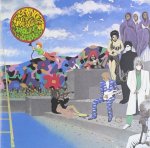 This contradiction became explicit with the next album’s closing song, “Temptation”, where Prince literally argues with God about his carnal desires vs. his spiritual struggles. Around The World In A Day, released two years after Purple Rain, confounded everyone. From its psychedelic cover to the summer-of-love sounding music within, it was the last thing anyone expected. Not surprisingly, it was a relative disappointment commercially, but after the passage of time, it is now seen as being years ahead of its time. There simply aren’t many albums containing songs as strong as “Paisley Park”, “Raspberry Beret”, “Pop Life”, and “The Ladder” all in one place.
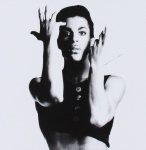 After Around The World In A Day, Prince made another movie, Under The Cherry Moon, which flopped, but the songs from it served to make another extraordinary album. Parade continued Prince’s psychedelic rock explorations, this time leavened with some spare funk (“Kiss”) and smooth balladry.
Meanwhile, Prince was also writing hits for other artists, including Sheena Easton, Sinead O’Connor, The Bangles, and Tom Jones. He also participated in a side project, Madhouse, which featured funky jazz. It was as if he couldn’t get all the music in him onto tape quickly enough.
 1987 brought the release of the album many consider his masterpiece: Sign ‘O’ The Times. The Revolution were gone (except for a couple of live house jams), and once again Prince produced, arranged, and performed everything. A sprawling double album, Prince is all over the map stylistically, yet nothing is wasted. There are gritty R & B (“Sign ‘O’ The Times”), playful pop songs (“Starfish and Coffee”), roaring funk (“Housequake”), anthemic rock (“The Cross”), and just plain weirdness (“If I Was Your Girlfriend”).
After Sign ‘O’ The Times, Prince seemed to lose focus. He recorded the infamous Black Album but never released it, because he thought it was too profane. (That didn’t prevent bootleggers from spreading it far and wide, however. It was eventually released officially by Warner Brothers.) Instead he released Lovesexy, which had some excellent songs on it, but they were all combined into one track on the CD, which made it hard to navigate among them.
He recorded the soundtrack to Tim Burton’s Batman movie and filmed another movie himself, Graffiti Bridge, which flopped. But just when Prince was starting to sound like he was repeating himself, he released Diamonds and Pearls, which had some terrific songs in the style of classic Stax/Motown, albeit with salacious lyrics that Berry Gordy would never have allowed.
He became embroiled in a long-running dispute with his record label over artistic freedom, and began referring to himself as “The Artist Formally Known As Prince”, going by an inscrutable symbol in place of any alphabetic name.
1995’s The Gold Experience was a fairly strong return to form, with Prince, oops, I mean  , anticipating virtual reality and the internet. By this time, though, he had long lost the huge fan base from the Purple Rain days.
In 1996, Prince was finally released from his Warner Brothers contract, and he quickly released a 3-disc set, Emancipation. He followed that up with the 4-disc Crystal Ball. The sheer quantity of music was enough to try the patience of the most devoted fan. He desperately needed someone to tell him what was worth releasing, and what should stay in the vault. The last album I bought was Lotusflow3r, which was a nice surprise. It featured some of his best guitar playing in years, and the songs were by and large straight-ahead rock. True to form, though, he included another disc of funk, MPLSound, and another album by his current protégé, Bria Valente, all in the same package!
Word has it there is enough unreleased music in Prince’s vault to ensure that we’ll be getting new albums for decades to come. Regardless, there are very, very few artists who have released a string of albums as consistently strong as the ones he produced from 1984 through 1987. In that brief, four-year span, he graced us with Purple Rain, Around The World In A Day, Parade, and Sign ‘O’ The Times. If that were all we had from him, his place in the highest rank of rock artists would be assured. We should count ourselves fortunate that the restless genius of Prince compelled him to share his gift with us for as many years as he did.
RIP, Prince Rogers Nelson.





 There may be too much to say about and too much going on in Esperanza Spalding’s new album, Emily’s D+Evolution, to relate anything meaningful in writing here. “Live at BRIC,” a performance of songs from the album, was recorded by NPR in March, and it shines brightly, landing it’s Parliament-like Mothership on planets traveled by Joni Mitchell, King Crimson, Zappa. Importantly, it throws down the gauntlet in terms of prog rock performance, making more out of less. It’s not just a bunch of musos looking at the floor in their noodle space, but the simple theatricality complements the music without getting in the way — it’s emotional, engaged, a pure and honest expression.
 Progarchy