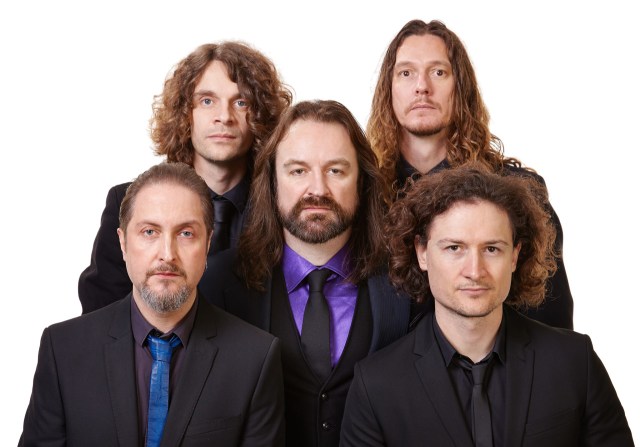
Oktopus is the band formerly known as “Progoctopus” who released an excellent EP in 2015 called Transcendence. It was one of my favorite pieces of music in 2015 because all four tracks worked together as an epic whole.
I was sad to hear that vocalist Jane Gillard who did that EP with them was leaving the group. Her vocals were truly outstanding on the EP. But now the band has a new album coming out at the beginning of April. The preview track, “Eyes Open,” is fantastic and now I can’t wait to hear what this trio is up to.
I actually hate the band’s new name and I much prefer “Progoctopus” because that name, apart from being lovably goofy, had a definite rationale: with Jane, the band was a quartet, and so if you do the math on four sets of hands, you arrive at the requisite eight for the titular prog action. I’ll take a prog octopus any day over just a plain octopus. It’s bad enough having a “k” in the octopus’s misspelled name, but if the creature can’t even do math, then I’m sorry but it would take Roger Dean doing the cover art to win me over to this new name.
Now on to what I love about this band. I love the guitar sounds with this group. And the jazz element that seeps in is definitely cool and sets the band apart. Keep up the amazing music, guys, and I can’t wait to hear what this full album has in store for 2016. If the preview track is any indication, the songwriting and musicianship promises to be top notch throughout.
So, this is unconfirmed… Tears for Fears are scheduled to play at Chateau Ste. Michelle this summer for the winery’s annual concert series. This news broke in the MorningStar this week and thankfully so. Big credit to Silver Kitty and fellow travel fans in Australia for keeping us updated on this one. We placed the […]
Ernie Ball Music Man presents Match the Master with John Petrucci! It’s your chance to win a private master class with John Petrucci, a VIP Dream Theater experience, gear from Ernie Ball Music Man, Mesa Boogie, Fractal Audio Systems, Sterling by Music Man, TC Electronic, Dunlop, DiMarzio and Ernie Ball. In this video, Petrucci is playing…
What makes a great cover version? There’s only one question you have to ask: does the band covering the song make it their own? Skyclad’s cover of Thin Lizzy’s Emerald is excellent. It’s faithful to the original song but the more metallic, aggressive and threatening delivery along with the clever use of violin to handle […]
Happy Easter, Progarchy. Today is the day when Christians all over the world commemorate Jesus’ resurrection from the dead, conquering sin and death so that we might have eternal life, if we believe.
Check out this great video of Marillion and Dream Theater performing the song, “Easter,” way back in ’95. Enjoy.
Transatlantic’s “We All Need Some Light” is also fitting. Here’s a video from their KaLIVEoscope 2014 show. The song starts around the 4:00 minute mark, after a duet with Morse and Stolt.
John says “I took a small break from recording the latest Arcade Messiah project to put together something completely different, a mellow small collection of post rock, ambient style songs, the whole process was completed in spontaneous manner over 12 days“.
The Ep will be available to pre-order from March 28th, and released on April 3rd through the bandcamp page – https://johnbassett.bandcamp.com John Bassett – Aperture EP
1. Break The Wall
2. Joy In Despair
3. Awaiting
4. Jenna
For further information, press pack, Promo downloads for reviews or features, request interviews etc contact – chris@stereohead.co.uk
Sun River is a project including singer/songwriter Martin Rude and Causa Sui’s Jonas Munk and Jakob Skott. This track is from the self-titled album that came out in 2012, a lovely record that floats you down the river gently and a bit psychedelically. While Nick Drake and Tim and Jeff Buckley comparisons are tempting and not altogether inaccurate, with its freak folk aesthetic there’s more of a Devendra Banhart vibe going on, and the Shins also come to mind with the organic arrangements. Munk and Skott’s electro-acoustic accompaniment is spot on, perfect for Rude’s vocal and the songs. “Esperanza Villanueva” caught my attention from the outset, with its guitar break consuming the song in slow burn, but I highly recommend the album as a whole, for it is a beautiful achievement.
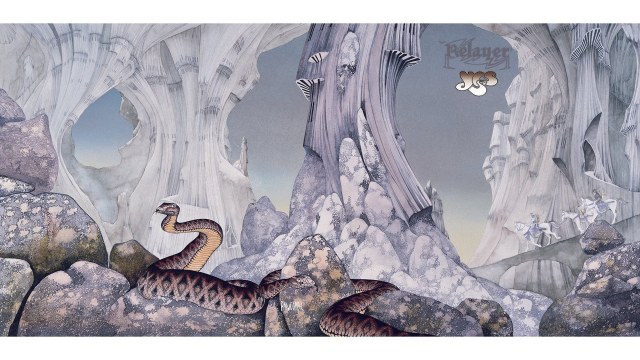
A visually stunning album cover. Profound and thought-provoking lyrics. Epic instrumentation and vocals. I could be describing almost any progressive rock album of note, but I am specifically referring to the underrated Yes album Relayer in this case. I say underrated because this album, featuring only three songs, all of which are worthy of the designation “progressive,” ended up wedged in between the controversial Tales from Topographic Oceans and the (relatively) lackluster Yes albums of the late 1970s/early 1980s.
First a brief comment on the sleeve design. Roger Dean is an integral part of Yes’ image, and his design for Relayer only bolsters the importance of his role. Inspired by images of war and the Knights Templar, Dean draws the viewer in to a world of fantastical images and drama, as the knights on horseback arrive to do battle with the twin snakes. Before one even listens to the album, he can already grasp its focus and themes: war and peace, victory and hope. Dean can capture in an image what Anderson, Squire, and Howe can capture in music.
The three songs are not only well-written, but they are also well-performed. This may seem like an understatement in regards to Yes, but this cannot be said about every song they released. The epic opener Gates of Delirium, inspired by Tolstoy’s even longer epic War and Peace, and featuring superb work on keys and synths from Patrick Moraz on his only Yes album, was best described by Jon Anderson: it is a “war song,” but not one that seeks to explain or denounce war, but rather a song that explores war’s aspects: there is a “prelude, a charge, a victory tune, and peace at the end, with hope for the future.” Sound Chaser, a frenetically paced tune featuring a true guitar solo from Steve Howe, solid drumming courtesy of Alan White, and a sizzling performance on bass guitar from the late, great Chris Squire, allows Yes to explore their jazzier side. The final tune, To Be Over, moves at a more relaxed pace, anchored by Howe’s electric sitar. It is a beautifully straightforward song, and it provides the perfect final touch on a visually and acoustically stunning album.
In sum, Relayer may not be the most renowned album in Yes’ extensive catalogue, but in this reviewer’s humble opinion, it is one of their finest works overall, and one that deserves more attention and respect.
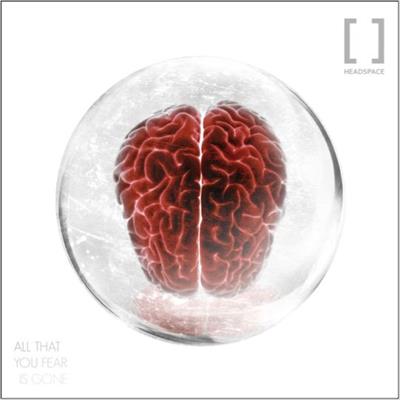
Review of [headspace], ALL THAT YOU FEAR IS GONE (Insideout Music, 2016).
Tracks: Road to Supremacy; Your Life Will Change; Polluted Alcohol; Kill You With Kindness; The Element; The Science Within Us; Semaphore; The Death Bell; The Day You Return; All That You Fear is Gone; Borders and Days; and Secular Souls
All That You Fear is Gone (Insideout, 2016).
Bread and Circuses rule the day, or so it seems.
2012. One of the best metal albums ever made.
On their second album, ALL THAT YOU FEAR IS GONE, prog metal act and somewhat supergroup [headspace] delve into some rather deep social and cultural problems. Specifically, the band asks, just 1) what is it that The-Powers-That-Be be do to distract us, and, perhaps more importantly, 2) why do we let them?
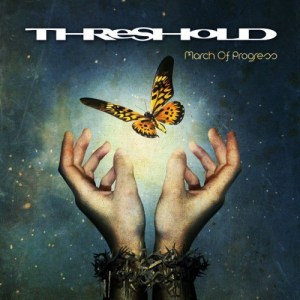
Lyrically, this album follows the first album rather closely. That is, the themes follow logically from before. If I’m interpreting the lyrics properly on the second [headspace] album, Wilson is even more writing a sequel to Threshold’s excellent MARCH OF PROGRESS (2012). All three albums, though, radiate a form of individualist libertarianism and anarchy.
Throughout its illustrious and long history, prog rock rarely fails to engage such problems and pose such questions, though it often does so through employment of symbolism, metaphor, and allegory. On ALL THAT YOU FEAR IS GONE, some symbolism exists, but the lyrics seem rather straight forward: the moral and virtuous individual, though rare, must resist the tyranny of the mass mind, whether that mass mind is found in schools, bureaucracies, corporations, governments, or neighborhoods.
From what little I’ve been able to glean from the internet, Wilson had little to do with the lyrics on MARCH OF PROGRESS, but he wrote nearly all of them for ALL THAT YOU FEAR IS GONE.
Regardless, there’s a lot of young Neil Peart hovering over this album.
And yet, not completely, especially when it comes to matters of religion. I’ll get to this in a bit.
Musically, the album is glorious prog metal, more driving than Dream Theater but not as much so as Threshold. And, where Haken might be playful, [headspace] is intense. Indeed, intense is the most proper and best way to think of the band’s music. And yet, within such prog metal intensity, there is to be found much variation. The opening track, “Road to Supremacy,” begins with a heavy Philip Glass minimalism before Wilson’s soaring vocals force us to look to the heavens. Tracks 2 through 11 mix everything from melodic ballads to folkish auras to classical guitar runs, but always with—here’s that word again—intensity.
What perplexes me and interests me most is the final song of the album, “Secular Souls.” First, musically, this is an extraordinary song. Not only does it reveal the wide range and power of Wilson’s voice, but every one of the musicians in [headspace] is in top form. No hyperbole here. The best of the best comes out here. Though there’s not a dud on this album, this is the best song of the album, and it is the perfect conclusion to what the album has built and earned over the previous eleven songs.
I’ve not mentioned the members of the band yet–but it really is a supergroup (a term, I dislike, generally, but it applies here). In addition to Wilson on vocals–Adam Wakeman on keys; Lee Pomeroy on bass (if you want to be blown away, watch Pomeroy on the Genesis II Revisited DVDs); Pete Rinaldi on guitars; and Adam Falkner on drums. Sheesh.
Second, the lyrics deal with the mystery of the Catholic Mass. “What!?!?!,” I thought when I first heard this, scratching my head and furrowing my brow. Is Wilson mocking the Mass? Though Catholic myself, I will be the first to admit, I’m a pretty bad Catholic when it comes to actual practice. Culturally and intellectually, though, I’m pretty much in full agreement with the Church. Whatever my beliefs about the next world, in this world, I have more respect for the Church—despite its rather blatant and often terrible failings—than for any other institution in existence. I write all of this not to convince you, the reader, of anything other than this: I take this stuff seriously.
Listening to the final song, one could arguably claim it is as anti-Catholic as it is pro-Catholic. Given the deep sensitivity with which Wilson sings the words of consecration (the part of the Mass in which Catholics (Anglo- and Roman-) believe the bread and wine become flesh and blood) and the placement of the song as the final song, it seems to me that Wilson is serious. And, at many levels, this works with the other criticisms of the album leveled in the previous songs. After all, from the first song on, this album praises in no uncertain terms the righteous individual.
If so, that righteousness ultimately stems from grace, not will. That grace comes through the rigors of faith. Just as Rome’s “bread and circuses” failed, so too will our modern equivalents. The only hope for Rome (or, really, the West) was the rise of an obscure sect from out of the catacombs, a sect preaching loving and sacrifice. These truths do not change, whether in 312AD or 2016AD.
2016, though it could be 1982!
You as well as Damian Wilson might be reading this and, legitimately, thinking: what the hell is Birzer talking about? If so, I apologize. But, until I hear otherwise, I’m going to assume that [headspace] embraces both libertarianism and Catholicism.
Wishful thinking on my part, perhaps.
Regardless, this is an excellent album. How many hours of enjoyment has it given to me already in the first ¼ of 2016? I couldn’t even count the hours. I can state this with certainty: I’m listening to [headspace], and I will be for many, many, many years to come.


 John Bassett – Aperture EP

 Progarchy