Remembering Keith Emerson

Like millions of other fans around the world, the death of Keith Emerson was the most terrible shock, especially as he took his own life believing that his ability, through his incredible musical virtuosity, to bring of joy and pleasure to so many was at an end.

This is my tribute to an incredible talent and a legend who helped to shape the soundtrack to my life.

“Get off your Hammond and drink your milk!” *Remembering Keith Emerson*


DPRP Reviews the New Dream Theater

The Dutch Progressive Rock Page posted their latest batch of reviews, featuring a Round Table Review of Dream Theater’s The Astonishing. Yours truly contributed one of the four reviews. A bit surprised myself, mine was the only negative review. I’m glad some people are able to enjoy the album.

Check it out: http://www.dprp.net/reviews/2016-009.php

Also, Sunday, March 13 is the last day to fill out the DPRP 2015 poll of your favorite albums, artists, etc. There are 10 prog prize packs available for lucky winners – all that’s required is that you fill out the poll: http://www.dprp.net/dprpoll/2015/

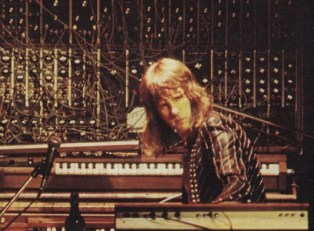
The Sage: Keith Emerson, 1944-2016

You’ll excuse me if I’m mixing prog metaphors, but right now I feel like Fish (of Marillion keith-emerson-1fame) in the first line of Script for a Jester’s Tear: “So here I am once more … in the playground of the broken hearts.” It wasn’t that long ago I was here, writing about the tragic and untimely loss of Riverside’s Piotr Grudzinski. And now, here I am again, for one of the giants of the first wave of prog, Keith Emerson.

I really, really don’t want to get good at writing these things.

In the heyday of the 1970’s prog scene, the relative merits of Emerson and his Yes counterpart Rick Wakeman were the subject of numerous debates among prog fans. But Wakeman was the only one ever mentioned in the same breath with Emerson, as the duo stood head and shoulders above other keyboardists of the day (no disrespect to Tony Banks, Patrick Moraz, Eddie Jobson, et al.). And make no mistake about it, Emerson was a giant among keyboardists, one to be admired and emulated by all those who followed. His work, first with The Nice, and later with Emerson, Lake, and Palmer (or ELP as they are more affectionately known) made an indelible mark on the music world. He made being a keyboardist every bit as cool as being a guitarist.

Earlier today I saw where someone described Emerson as “the Hendrix of keyboardists.” And of the many suitable descriptions, this one certainly fits. Emerson did things with keyboards that nobody else had done. He almost single-handedly made the synthesizes of Robert Moog an indispensable instrument for any band that includes keyboards, prog and non-prog alike. He brought a multitude of keyboard styles into rock, from the jazzy piano interludes in ELP’s Take a Pebble, jazz organ, honky tonk, and, most notably, classical.

Nobody prior to Emerson, first with The Nice and late with ELP, did more for fusion of rock and classical music. Emerson took it even further, with ELP, taking classical pieces and making them into rock – first with Modest Mussorgsky’s Picture’s at an Exhibition. Later, ELP did their own versions of Aaron Copland’s Hoedown and Fanfare for the Common Man. And in one of ELP’s most unusual and spectacular interpretations, they did their own version of Alberto Ginestera’s Toccata on the Brain Salad Surgery album.

I’ve said before that symphonic prog was a gateway drug to classical music. If so, Emerson was the lead pusher. The reason I have Aaron Copland disks in my CD collection can be narrowed down to two words: Keith Emerson. The first time I heard so much as a note of Leonard Bernstein’s West Side Story was when I heard the version of America performed by The Nice – with Emerson’s keyboards playing the staring role.

Recently, on YouTube, I stumbled across a video of an orchestra doing a version of Tarkus (link here). I love the symmetry of that – an orchestra taking Emerson’s progressive rock, and making it into a full-blown classical piece. Beautiful … just beautiful.

The mind boggles at the band being assembled in Heaven right now … Emerson on keyboards … Chris Squire on bass … Piotr Grudzinski guitar … and perhaps, Emerson’s one-time band mate, Cozy Powell on drums. But to the, ahem, management up there putting this thing together, can we maybe keep this as an instrumental band for a while? Please?

Rest in Peace, Keith.

Mob Rules – Tales From Beyond – Album Review

Artist: Mob Rules Album Title: Tales From Beyond Label: SPV/Steamhammer Date of Release: 18 March 2016 Our Teutonic friends really love this style of heavy metal and, as such, Mob Rules are one of a huge number of power metal bands that originate from Germany. The sextet also happen to be one of the best […]

https://manofmuchmetal.wordpress.com/2016/03/11/mob-rules-tales-from-beyond-album-review/

Keith Emerson: 1944-2016

keith_emerson

A tragic loss for the prog world. Keith Emerson, one third of the great trio Emerson, Lake, and Palmer, passed away last night at the age of 71. More information in the link below.

http://prog.teamrock.com/news/2016-03-11/keith-emerson-dead-at-71


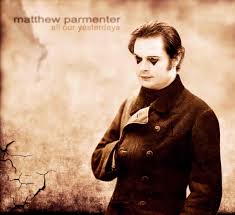
All our Yesterdays

All our Yesterdays

Released today on the small but mighty Bad Elephant Music label, All our Yesterdays is Discipline front man and songwriter Matthew Parmenters third solo release, following up 2008’s Horror Express.
Parmenter is a unique talent, and I will put it out there straight away that this album will be a Marmite album to many, there will be people out there who love this work, and people who will find it too idiosyncratic and left field for their tastes.
This however is not a bad thing, it’s wonderful as a reviewer to receive an album that grabs you by the back of the neck from the get go, and if you’re wondering where my tastes fall, I am firmly in the former camp. Basically I love this record.
I will admit now that whilst I’ve heard of Discipline and of Matthew Parmenter, this is the first time I have ever heard any of his music, and when my bank manager hangs their head in despair as I investigate his intensive back catalogue I can only blame David Elliott and BEM for introducing me to this music.
The album itself is performed entirely by Parmenter (with only Discipline drummer Paul Dzendzel playing on 4 tracks) so to all intents and purposes it is a truly solo work, and yet Parmenters virtuoso playing and complex arrangements make it sound like he’s backed by a full band.
There are shades of Peter Hammill/Van Der Graaf Generator on this album, (another artist/band who are uncompromising in their musical vision as Parmenter) particularly on the keyboard and piano driven Digital with some fantastic vocal work which brings mid-seventies Hammill to mind, again not a criticism as Matthew Parmenter is as creative and original musical visionary as Hammill is.
The impressive title track, showcases Parmenters musical talents, with a blistering guitar solo, and his fantastic vocal range is entirely taken from the works of Shakespeare, and I can just visualize him performing this on stage, pouring his heart out into the ether.
The BEM website encourages you to listen in full as this musical work is ‘best experienced as a single, all-encompassing musical odyssey’, normally as I’m a contrary Yorkshireman I ignore all listening instructions and get into the record in my own way, but BEM are right, this is an immersive experience, and whilst it sounds good booming through the stereo, it sounds even better on headphones, sat by a swimming pool in Fuerteventure drinking a cool beer (guess what I listened to on my holidays?)
In all seriousness, the musical dynamics are designed for an intimate listening experience, and the arrangements fall somewhere between the epic sound of early Queen (particularly on dramatic opener Scheherazade, and the powerful I am a Shadow) and the classical music meets rock of Jon Lords 1970’s solo work. Whilst the keyboard and piano driven work on the brooding and sinister All for Nothing acts as a backdrop for Parmenters impassioned and powerful vocals, whilst the sax that kicks in brings Van Der Graaf Generator back to mind.
Meanwhile the piano driven pop of Stuff in the Bag showcases another side to Matthews talent, as he goes from dark to light with a quick mood change that should jar, but fits seamlessly into the record as a whole. Whilst the closing epic Hey for the Dance brings the record to a fantastic close, with Parmenters vocals and the folk influenced closing coda culminating in a genuinely uplifting piece of music, that launches into an extended rock fade.
Listening to the arrangements, the depth and power that is present throughout this epic work, its hard to imagine that there isn’t a full band in the studio and an orchestra hiding out somewhere as well, it’s a testament to Parmenters skill and vision that his concept works throughout from start to finish.
I hesitate to refer to the works on this album as songs, as they are more like movements in a musical symphony, harking back to the days when progressive rock meant moving forward and pushing the recorded form to se how far you could get away with and how creative you could be with the medium,
A lot of contemporary bands on the scene have certainly forgotten the true meaning of progressive rock, Matthew Parmenter hasn’t.
He has released a contemporary concept album, as fresh and original as anything I’ve heard so far this year, and yet clocking in at around the 40 minute mark it never overstays it’s welcome, and would easily fit on one side of a C90 tape to pop in your walkman.
Like I said earlier this Matthew Parmenter is a unique talent, and this album isn’t going to be everybody’s pint of bitter, however I would rather hear a record that is striking, original and polarises opinion than a record that just sits there and you think ‘Well, it’s alright innit?’
This is an astonishing piece of work, and to all of you who’ve pre-ordered it and are waiting for the thump at the letterbox, you are in for a real treat my friends.

Haken – Affinity

Haken Affinity


Well, well well ….. what a surprise this one is.

I like Haken a lot, but they also have this annoying tendency to be a bit light-hearted and throw-away with some of their stuff.  I understand that a lot of people like this side to their attitude but their last live performance I saw in Manchester, they turned up in silly Christmas jumpers and seemed to joke their way through their rushed set.

The rush was partly due to the support act – Leprous – who frankly blew Haken away for me that night. They gave an absolutely stunning, tight and dynamic performance which was pretty much impossible to follow, particularly with Christmas jumpers on ….

However, the first time I saw Haken it was different. They played a packed venue in London with people literally hanging from the rafters. I remember it well because I forgot my ticket and left it in an outlying Vicarage. Thankfully a bit of blagging and crossing of palms with extra cash meant I witnessed one of the best gigs I’ve been to. No silliness, no frippery, just a brilliant set showcasing their magnificent ‘The Mountain’ album.

So, on to ‘Affinity’, a very welcome release from Haken and one which harks back to that night in Manchester for one reason only – Leprous.

Touring together must have paid dividends because one or two tracks here have superb synchopatic riffing that could just as easily be from a Leprous album. The second track in particular, ‘Initiate’, gets things under way in spectacular style following an atmospheric opening segue of electronic noise which I would assume will be the opening to their next live sets – very effective indeed.  In fact Einer Solberg from Leprous is a guest vocalist on the epic 15 minute track ‘The Architect’ cementing the close associations the bands must have formed.

As good as ‘The Mountain’ was, it’s refreshing to see a band go out of their way to avoid repeating a successful formula and ‘Affinity’ is striking for the way it adds completely new sounds and textures and provides a thrilling  direction for Haken to explore.

Yes, there are still the same crunching, complicated riffs and rhythms and layered vocals, but the overall sound is more immediate and catchy. Perhaps this is because of their aims to root ‘Affinity’ in the sounds of the 80’s, or maybe it’s because the songwriting has this time been a team affair rather than purely Richard Henshall (keyboards) and Ross Jennings (lead vocals) but whatever the reasons, the results are quite spectacular.

On ‘1985’ there are energetic and uplifting keyboards and synths that reflect the year in the song title but in no way does this become a trite pastiche to that era.  No – Haken take the best parts of the 80’s and wrap it around their own technically gifted and melodic talents to produce some soaring moments that will surely stand out on any ‘Best of 2016’ lists.

I mentioned earlier the propensity for jocularity with Haken’s material but ‘Affinity’ to me is a huge step forward and suggests a seriousness and maturity about their songwriting and performance that could propel them into another league.

The sound is big, the songs are well structured and written, there is just enough fret trickery without descending into Dream Theater nonsense and there is a cohesive and balanced feel to the whole album.

The last few moments of the final track, ‘Bound by Gravity’, has an almost Sigur Ros feel of exhilaration and passion with an atmospheric build up that grows and grows until we reach a final, beautiful release – this should be superb in a live setting.

So, there we are.

A quick review which others will expand on in great detail I’m sure, but I hope I have captured the vibe and feel that will be a joy for existing and new fans of Haken alike.

Keep Your Politics Out of My Prog

[This post is not an official Progarchy position on this topic. I speak only for myself, not for the writers of this great website – Bryan]

Musicians being vocal about their political leanings is nothing new, but it is still obnoxious. Rarely does much good come from a famous musician sharing their opinion about some political person, government, or law. Instead, it pisses people off. I don’t know why many continue to do it, because you are bound to anger or alienate somebody, especially when you have a lot of fans.

I’ve noticed that some of the worst in the prog world are British artists responding to American politics. The British people are great. I loved my time in England, and, honestly, if it weren’t for their politics, I would consider moving there permanently. However, as an American, I can truthfully say that I don’t want the musicians I listen to from other countries commenting on my country’s government, political system, elections, or traditions. We have guns here. Get over it. We aren’t socialist. Get over it. We might elect Donald Trump. GET OVER IT. And certainly don’t share on your social media about how stupid you think Americans are because of the way we do things. If you aren’t an American, then you likely have not made any effort to truly understand the reasoning behind our laws. All you’re doing by sharing your anti-American opinion is alienating some of your US fans. Maybe we will think twice before paying for your albums or buying a ticket to one of your shows.

Mike Portnoy understands the idea of keeping politics to yourself very well. I follow his social media fairly closely, and not once have I seen him moan about some political issue. He is a musician and an artist with a lot of fans, and he knows that whatever he says will likely upset some of them. By keeping his mouth shut altogether on those issues, everybody stays happy. Look at the flack Neil Peart got after that awful Rolling Stone interview. I know my opinion of the great drummer certainly went down (temporarily) after hearing him bash an ideology that I am favorable to. I’ve never had that happen with Mike Portnoy, because he keeps his political opinions private.

In summation, a word of advice to non-American prog musicians: many of your American fans are actually quite conservative and do not appreciate you bashing their beliefs or insulting them because they believe it. It is better to keep your mouth shut then it is to open it and tick people off. Prog already has a hard enough time gaining traction – please don’t make it worse. Thank you to all of the artists (a majority, likely) that follow this general rule. We love your music and your art. Thank you for not confusing it with divisive political garbage.


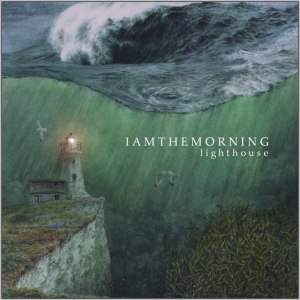
iamthemorning’s Lighthouse: Neoclassical Beauty

lighthouse_cover

Imagine, if you will, a world where Aerial-era Kate Bush, Dumbarton Oaks-era Igor Stravinsky, and Sketches of Spain-era Miles Davis got together to compose a song cycle. They might come up with something to rival iamthemorning’s new album, Lighthouse, but it’s doubtful.

A work of astonishing beauty, Lighthouse is also deeply moving. The songs chronicle a young woman’s struggle to overcome mental illness, and her ultimate surrender to it. Heavy stuff, but fortunately the gorgeous musical arrangements make Lighthouse a work worth returning to again and again. iamthemorning takes the listener on this journey through the use of neoclassical music, prog, and classic jazz. Most of the songs feature a full chamber orchestra, while others are buttressed by the talents of Gavin Harrison and Colin Edwin – Porcupine Tree’s rhythm section. Mariusz Duda, of Riverside and Lunatic Soul fame, lends his distinctive vocals to the album’s centerpiece, “Lighthouse”.

Of course, the true stars of Lighthouse are the members of iamthemorning, vocalist Marjana Semkina, and pianist Gleb Kolyadin. Semkina’s vocals are heartbreakingly beautiful, moving from peak to peak as the songs unfold. Kolyadin’s piano work is perfectly simpatico with Semkina’s singing, providing graceful accompaniment. On “Harmony”, he takes center stage, leading a sextet through a swinging instrumental.

The mood of the album flows from the somber overture of “I Came Before the Water, Pt. 1” through the melodic “Clear Clearer”, to the relatively upbeat “Harmony” and “Matches”, before descending again with “Belighted”. “Chalk and Coal”, in the words of Semkina, “represents the final twist of the album story-line, the final breakdown”. The first half of “Chalk and Coal” features the most straight-ahead rock of the album before the band seamlessly shifts into chamber jazz for the second half. “I Came Before the Water” returns, with Semkina, unaccompanied, singing of accepting defeat while a gradually swelling string chorus provides solace. The tender and brief “Post Scriptum” is a final elegy, and Lighthouse is over.

Even though the album is almost entirely acoustic, it packs an enormous punch. It is a work that is best experienced by listening to it in its entirety. Everything, from the cover art to the extraordinarily high level of musicianship, combine to create a tasteful and sophisticated work. This is music that transcends categorization; it is music that is timeless and evocative. iamthemorning have come up with an album that is destined to be a classic of modern music, regardless of the genre.


Jerry Ewing: Correct as Usual

12239561_10153217332371406_6657368983617619405_n
Our fearless leader, Jerry the Viking.

A fascinating opinion piece by the editor of PROG, our friend and ally, Jerry Ewing.

The whole scenario raises one or two interesting points which – the most obvious of which is does Robert John Godfrey have a point? And if he does, were his points of reference correct in relation to that. And ultimately, does it really matter? On this latter point my personal feeling is not really. The history of rock music is littered with verbal spats between artists, most adding a soupçon of enjoyment to the crazy world of rock’n’roll for a short while, but few, if any, leaving any lasting effects on the careers of the protagonists or remaining embedded in the memory of all but the most zealous fan.

http://www.teamrock.com/features/2016-03-08/oh-robert-you-ve-gone-and-done-it-now