Concert Review: Chris Isaak – Oregon Zoo

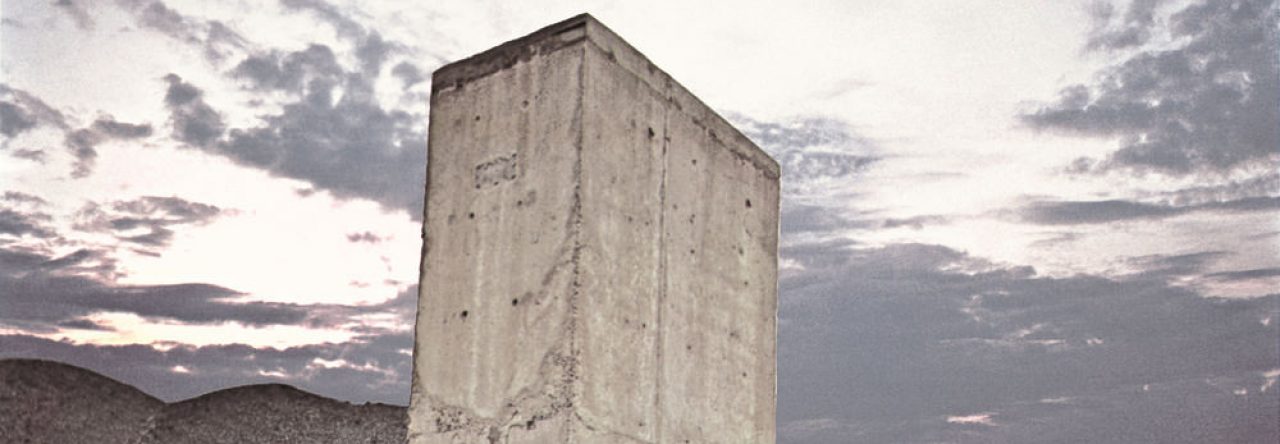
The joy of Chris Isaak. That joy is found under smoky skies with an orange hued half-moon hovering overhead as the modern day 50s man worked through a 24 song set on Saturday night at the Oregon Zoo in front of a sold out crowd. The smoke laden air from the forest fires raging miles […]

https://drewsreview.wordpress.com/2015/08/23/concert-review-chris-isaak-oregon-zoo/

An Interview with Robert McClung of TELERGY

Hypatia

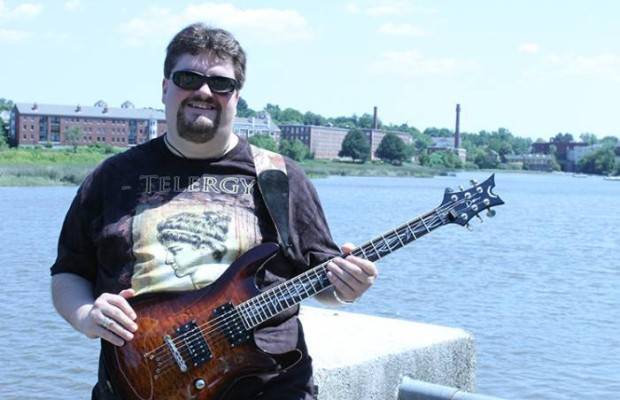
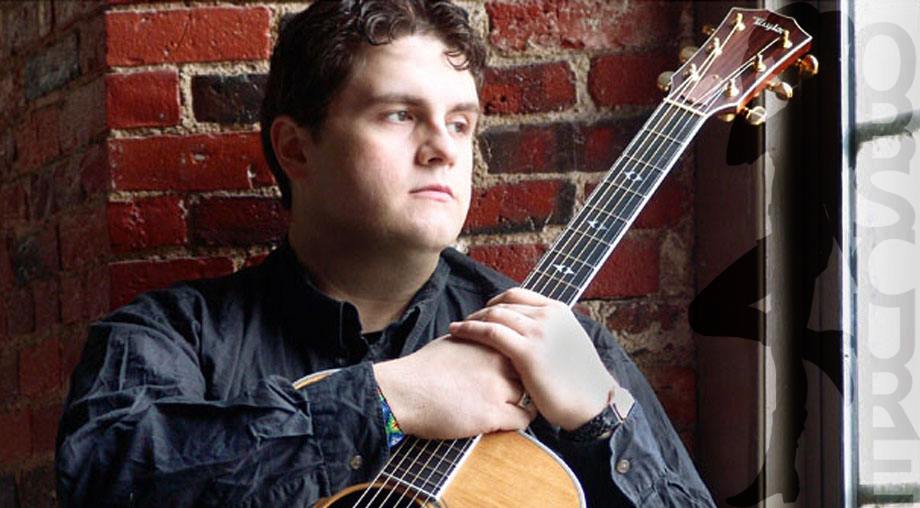
Hampton, New Hampshire native, Robert McClung have been releasing studio albums under the name Telergy since 2011, and in the period of four years he put out three full-length records. His newest offering titled “Hypatia,” tells the story of ancient Greek astronomer, philosopher and mathematician. McClung has once again gathered a team of extraordinary musicians who contributed to the new album.
 
Robert was kind to give answers to our questions. 
 
What can you tell me about the new Telergy album coming into life? What are your memories from the writing and recording sessions?
 
There were lots of fun moments. When flutist Mattan Klein came through the area on tour I only had a few hours on one day to grab him to record, but he was far away from my studio. I made a few frantic phone calls and found a synagogue near his gig that would let me use their place for a few hours. So I threw a laptop and some mics in a bag and away we went!
 
When Durga McBroom from Pink Floyd was in a studio in L.A. recording her parts she had to call me to clarify the pronunciation of some words in the script. I was going to a movie with a some friends at the time and they couldn’t believe who I was talking to on the phone, haha!!
 
I think my favorite moment during the recording was the cello duet “Martyr”. We recorded it live in a 100 year old cathedral at midnight. The acoustics were amazing and to watch such incredible musicians (Kristen Miller and Adam Nunes) performing something I wrote live was magic for me.

Robert McClung

What inspired you in the first place to tell the story of the philosopher and mathematician Hypatia?
 
She is very much overlooked in history and doesn’t get the attention she rightly deserves. The people behind her murder went to great lengths to try and erase her from the historical record. I thought doing an album about her was a good way to bring her story to a wider audience.
 
“Hypatia” as well as the previous Telergy album features guest contributions from some of the most influential people on progressive rock and metal scene. It must be flattering knowing that these musicians are a huge part of the Telergy story?
 
It is a tremendous honor to work with the musicians I work with. The fact that they even know who I am and want to be part of what I do is incredibly humbling. None of them have “rock star” attitudes. They are all really down to earth people who are super supportive of the unique thing that I do. I am blessed.
 
For the purpose of releasing the album, you launched a crowdfunding Indiegogo campaign. Are you satisfied with how it turned out?
 
Absolutely!! I did crowd funding for the last album too. In both cases I more than surpassed my funding goal. All the profits from Telergy albums go to charity, so it’s a good thing for me and the people that benefit from the album’s sales.
 
A part of raised funds in the crowdfunding campaign was given as a charity to the Cross Roads House. What is your connection with them?
 
I have volunteered for them for many years. Every year I play Santa for their annual Christmas party and buy gifts for all the children at the shelter. I know what it’s like to be homeless, and I’m glad I can help people going through such a tough experience.

Robert McClung

What do you think is important for a successful crowdfunding campaign? Also, do you think that crowdfunding is a good tool to strengthen the connection between an artist and audience?
 
I think my crowd funding success is largely attributed to the notoriety of the artists involved with Telergy. Some have large fan bases that directs allot of traffic to the site. I also made the best use of social media and friends to promote and spread the word. I do think it helps create a bond with the artist. The fans get to be directly involved with the band’s success.
 
Which of the three released albums was most challenging to compose and perform?
 
Definitely Hypatia! The scores were very in depth. Some of the orchestral players had to be in the studio for several days each to layer all the parts. As for myself, I played more solos on the first album “The Exodus”, so I got to do more challenging stuff there. But with the last two albums most of the solos went to more well known people. I’m more than happy to step back and let others shine. As the composer, producer and engineer, I have plenty on my plate to deal with already.
 
With whom of guest contributors was funniest to work over the past three records?
 
Hard to say. There have been plenty of silly moments in the studio over the years. Horn player Jennifer Larson always has me laughing in between takes. She’s got a great sense of humor. Which really helps make long and tedious recording sessions allot more enjoyable.
 
Perhaps one of the most interesting facts about Telergy’s music is absence of singers. Have you ever thought about adding them? Wouldn’t it in any way make your work easier when attempting to tell a certain story?
 
The entire objective going into Telergy was to tell stories using music, just the notes themselves. Which is where the name Telergy actually comes from (Definition: the hypothetical action of one person’s thought and desire upon the brain of another person by the transmission of some unknown form of energy. i.e, to communicate without words).
 
This concept used to be common in music. Good examples would be Mussorgsky’s “Pictures at an Exhibition”, Gershwin’s “An American in Paris” and Prokofiev’s “Peter and the Wolf”. Somewhere along the line this form of great art died out and gave way to more lyrical oriented things with Broadway and the like. I guess what I’m trying to do with Telergy is bring this great art form back to life. No offense to great lyrics, but working instrumentally is what gives me the most joy these days. But who knows, maybe some day I’ll get the urge?
 
How do you see progressive music in 2015? 
 
There are a plethora of great bands and artists out there doing amazing things. Spock’s Beard, Nightwish, Kamelot, Within Temptation, Haken. Even some of the classic acts like Kansas, Yes and King’s X are still touring and making significant contributions to the genre.
 
The internet has allowed for much wider distribution and connection to the fan base than ever before. An artist like me, with no label support or promotion, would have had a pretty rough time twenty years ago. But now it’s much different. Which is all very good.
 
I guess the drawback is that rampant piracy and streaming services that pay pennies a play to artist mean there really is no money to be made in the business anymore. Which is sad, because it means artists need to do other things than just music to earn a living most of the time and can’t be devoted full time to their art. Which is bad. But if you got into music to make money in the first place, you’re in it for all the wrong reasons.
 
Are there any plans in the future to bring Telergy on stage and present music from the albums as a spectacle in the way of Ayreon and similar artists?
 
I would love to do so, but the cost involved would be pretty astronomical. It would involve dozens of top notch musicians, weeks of rehearsals, a very large hall and tons of production. None of which is anything I could ever afford to do on my own. For it to become a reality a financial backer would have to get involved and pump some serious cash into the endevour. So the basic answer is, highly unlikely.
 
But for now I am quite content just working on writing and recording great music. Who knows what the future may hold?

Buy Telergy’s “Hypatia” from iTunes, and follow the project on Facebook.

Spock’s Beard- The Oblivion Particle. A grower AND a shower.

cd_top1

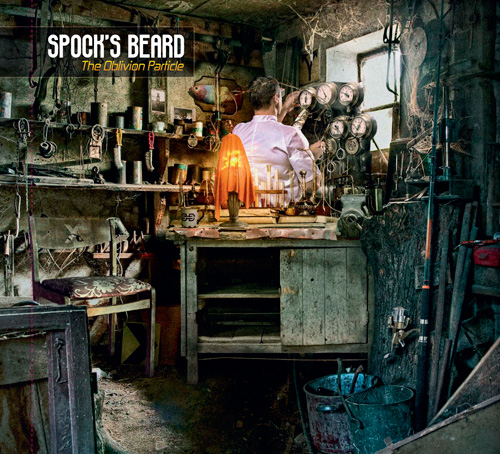
Today, InsideOut Music releases Spock’s Beard’s 12th studio album, The Oblivion Particle. This marks the second official release with the lineup Alan Morse (guitars), Ryo Okumoto (keyboards), Dave Meros (bass), Ted Leonard (lead vocals and guitars), and Jimmy Keegan (drums and lead vocals on “Benett Builds a Time Machine”)

Overall, it’s a very strong album, but it didn’t click with me right away, unlike Brief Nocturnes and Dreamless Sleep. The Oblivion Particle is definitely a grower, just because there are a lot of new sounds, that you may not expect from Spock’s Beard, being thrown at you from all directions.  The arrangements are very strong, although the album doesn’t feel as much of a cohesive unit as BNaDS, perhaps because of the multiple writers involved. Stan Aumus wrote “Tides of Time”, Morse and Okumoto wrote “The Center Line”, Leonard wrote “Minion” and “Hell’s Not Enough”, and seasoned Spock’s writer John Boegehold wrote the rest of the tracks.

“Tides of Time” is a very strong track, a perfect opening, telling you that you have made no mistake- You are listening to prog and with all great prog, this one takes you on a journey. The song starts a little too abruptly, though. It’s like being a passenger in your friend’s really fast car, and he goes from 0 to 60 before you even got a chance to fasten your seat belt. The beginning is great, I just wished it waited to start 2-3 seconds after the play button was hit. I do have the album in digital format, but perhaps the CD itself is programmed with a little more time before take off.

The first couple of minutes are undoubtedly Spock’s Beard. Then we get some great power synths thrown into the mix which make the piece sound very “Turn It On Again” by Genesis or perhaps a lost B-side of Abacab. I can totally picture Phil Collins singing the lines of the 2nd verse of “Tides of Time”- “You’d thought you’d know by now, but know it you do not. It’s a hard cold cross to bear, but pain is all you got”.  From there we get a beautiful ballad section, but it doesn’t last as long as it could. Then we get some Spock’sy counterpoint and harmonic acoustic guitars which turn into an awesome metal riff. There are some really great dirty guitar shredding and blazing rock organs afterwards, but Okumoto’s and Morse’s solos seem to get cut off by the vocals too soon.  It’s a very concise prog song just under 8 minutes, so I understand what they may have been going for, but I could have easily listened to 3 more minutes of it.

“Minion” has a Kanasas-like vocal rock anthem intro, but then immediately goes into a whole new territory. The section changes, groove changes, riffs and vocal melodies are so fantastic, it’s hard to pay attention to Leonard’s powerful lyrics at first. “Hell’s Not Enough” is a fantastic track that keeps on stepping it up notch after notch. At first we get a synth-flute which is something fresh to the SB arsenal and then Meros adds an interesting bass line. The end is very powerful and gospelly- which works really well in this song about cult-like religions. I can’t put my finger on it, but the background “Ah”s at the end remind me of something I heard already in early Neal Morse era Spock’s Beard, or probably more likely from Morse’s Christian Prog-rock endeavors.

At first it seems as if “Bennett Built a Time Machine” doesn’t stylistically belong with the rest of the album. Leonard takes a break here and passes the gavel over to Keegan for lead vocals.  The vocal harmony combined with the leads sounds a little like Weird Al overdubbed on himself, which is unfortunate because it disguises the beautiful voice Jimmy really has, but I do like the background Beach Boys-like “Oooh”s toward the end. Some of us who have seen Spock’s Beard live recently, may have seen Jimmy come out from the drums and sing “Carrie” from Snow. Of course “Bennett” doesn’t have as sweet of a style or melody, but I still felt as if he was robbed of his moment due to overproduction, mainly on the vocals. It does have a very Spock’s Beardy transition into the 2nd half, which starts with a very unexpected but exciting chord progression, which leads to a really cool bass solo- a great homage to the late Chris Squire. Okumoto then brings in some really nice synths.

When “Get Out While You Can” starts to play, all bets are off. This is not your father’s Spock’s Beard. It’s not very proggy and the first minute plays like something you’d expect from a Depeche Mode song. Leonard’s vocals go from silky smooth to gritty, really following the entire spectrum of the energy of the track.

If you could mind-meld with Spock’s Beard’s collective brain, “A Better Way to Fly” is the song you would hear. There is some quite impressive drumming by Keegan, but everyone really does give it their all in this song. It will be quite impressive to see this one done live.

Okumoto performs some great piano solos on the album including on the intro of “The Center Line” after which we get Meros to add a little Spock’s Bach counterpoint. There are a lot of notes in this song; I would also be impressed to see SB do this live. My favorite piano solo of the album is on “To Be Free Again”. Love the jazziness! Not sure why, but when listening to this song I get the impression it may be about Frodo taking an adventure and at the end he throws the Ring into the fires of Mordor.

The Oblivion Particle forms a black hole in the Large Hadron Collider and destroys all existence in final track “Disappear”. Just kidding, that’s not what it’s about, as far as I know, but that could have been awesome! “Disappear” is an appropriate finale to the album. Not only does it have the Kansas influences (I hear bits of Magnus Opus in the middle), which Spock’s Beard has had since their beginning, but it also has Kansas’s David Ragsdale tearing it up on violin. I like that it doesn’t have a big epic ending, but rather just “disappears.” But, of course, we all are hoping that Spock’s Beard will not disappear and release their 13th album in the next 2-3 years.

The album was produced by Rich Mouser, Alan Morse and John Boegehold and was engineered, mixed and mastered by Rich Mouser at The Mouse House. As with all Mouser mixed productions, you’ll definitely want to listen to The Oblivion Particle with great speakers or on headphones. There is so much going on here, so you’ll also want to listen to it multiple times. Every time I listen to it, I hear new things that I like. I can’t decide on one favorite track, but my three favorite are “Tides of Time”, “Hell’s Not Enough”, and “A Better Way To Fly”. The album is being released by InsideOut Music. The special edition CD also contains the bonus track “Iron Man”.

When I first listened to The Oblivion Particle, I was outside my place (A/C wasn’t working and it was too hot to listen to inside). When Ted sang, in “Tides of Time”, “I hope I can find my way home”, I couldn’t help but to look up at the stars. Spock’s Beard has always had that special magic which would somehow make me do such a thing in the first place. It was a beautiful moment.   ★★★★

I had a conversation with Ted Leonard a couple weeks ago about The Oblivion Particle and other topics. Click here to read.

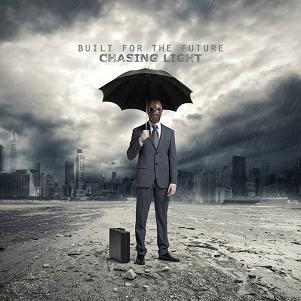
Chasing Light by Built for the Future

Built for the Future

A few weeks ago Facebook friend and prog-rocker jHimm (you can read my review of his debut album here) called my attention to a new band named Built for the Future. B4TF hails from San Antonio, Texas, and consists of only two members: Patric Farrell (all instruments, backing vocals), and Kenny Bissett (lead vocals). This dynamic duo released their debut album Chasing Light on July 28. They are supported by Dave Pena and Chris Benjamin on guitars and Imaya Farrell on cello/violin/viola. The album is dedicated to the late, great Chris Squire.

B4TF sound like a fusion of Yes, Porcupine Tree, and Spock’s Beard. Throw in some Tears for Fears, and I believe that impressive concoction comes closest to describing these alternative prog-rockers. At the end of the day, however, B4TF definitely maintain their own unique sound.

A concept album, Chasing Light is an exciting debut. These songs in particular stand out:

“Arrive” – the opening song bursts forth with energy, setting the tone for the rest of the album.

“Speed of the Climb” – as the title suggests, this piece is a thrilling, fast paced rocker that may remind one of Spock’s Beard.

“Build for the Future” – has a more somber feel to it; similar in sound to Porcupine Tree, but not quite as dark. The title alone suggests hope, and the possibility of a better tomorrow.

“Running Man” – features sensational distorted guitar work. My favorite song on the album.

“Samsara” – echoes of Yes with multilayered synths and acoustic guitars.

“The Great Escape” – the closer; stunning epic on an excellent album.

I am always pleased to find a new album to review, and I highly recommend this one. The influence of some of the best symphonic prog bands is evident, but Farrell and Bissett add their own touch to the album, and what emerges is a distinct style worthy of praise. For the best (and most succinct) description of the album, however, here is Patric Farrell himself:

 “This theme was inspired by true events in my life, and each song actually represents real feeling and escapism from that experience. Change in life is a big ordeal, looking for truths, looking for a better place, looking for light is all we can do when we are faced with such a turn.”

You can purchase the album here: https://builtforthefuture1.bandcamp.com/releases

Miracles (and Music) Out of Kansas

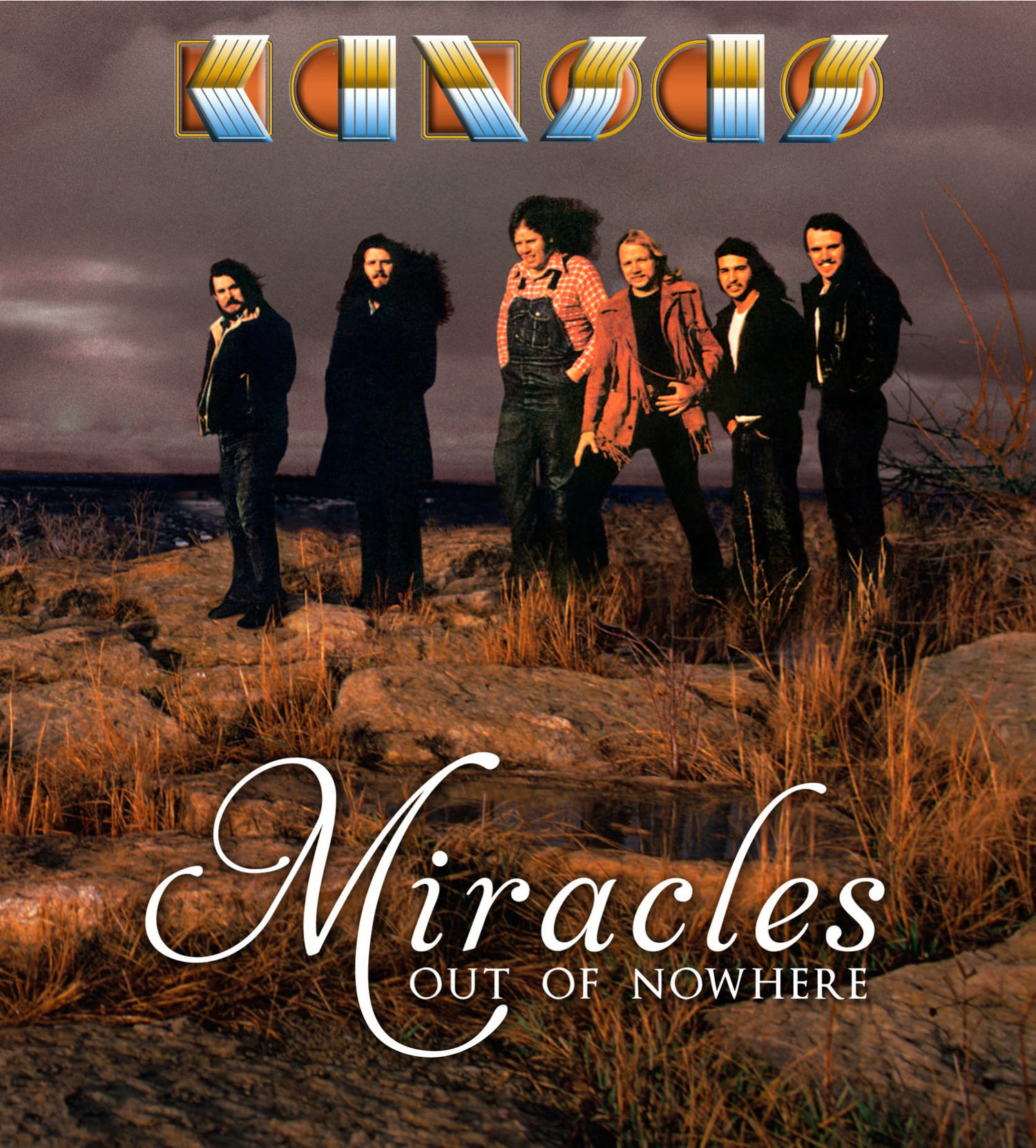
kansas_miraclesIn one of my first posts here at Progarchy.com–“A Pilgrim’s Prog-ress”–I wrote about the key role that Kansas (the band, not the state) played in opening the doors to prog for me:

Around 1985 or so, I bought a copy of “The Best of Kansas”. That opened the door to prog. There was something about the mixture of Livgren’s lead guitar, Steinhardt’s violin, and Steve Walsh’s amazing voice, along with lyrics soaked in spiritual longing and Americana, that grabbed me by the scrawny neck. Over the next three or four years, I ended up collecting everything by Kansas, Kerry Livgren (solo and with AD), and Steve Morse (solo, Dixie Dregs, etc.). My favorite Kansas albums are “Song for America” and “In the Spirit of Things”, although they weren’t the chart-toppers that “Point of Know Return” and “Leftoverture” were.

Early on in the documentary, “Miracles Out of Nowhere”, which was released in March, drummer Phil Ehart emphasizes that it was Livgren’s song writing, Steinhardt’s violin, and Walsh’s vocals that made Kansas such a distinctive-sounding band in the 1970s. He is surely correct about that, but he also, in saying so, humbly passes over another key to the band’s steady rise and eventually rather surreal success (or miraculous, a consistent theme in the documentary): he own unassuming, balanced personality and rooted, yet deeply musical, drumming. As Garth Brooks, one of several rather surprising guests, marvels in recalling his first Kansas show: “It was the first time I’d seen a drummer play actual notes!”

Miracles and music: those are the two constant themes throughout the documentary, which begins with childhood memories and concludes with 1977’s “Point of Know Return”, Kansas’ fifth album and the apex of the band’s commercial success (it hit #4 in the U.S. and featured the band’s biggest hit and best-known song, “Dust in the Wind”). That album is, arguably, a fitting conclusion to the documentary as the band would soon learn there really are points of no return; or, in the words a certain young lady, “Toto, I’ve a feeling we’re not in Kansas anymore”. It wasn’t long, in fact, before Walsh departed, then Livgren, and then the band entered into the post-classic-Kansas era (I provide some details here). Continue reading “Miracles (and Music) Out of Kansas”

Behind The Hedgerow: Big Big Train (from the London Concert Book)

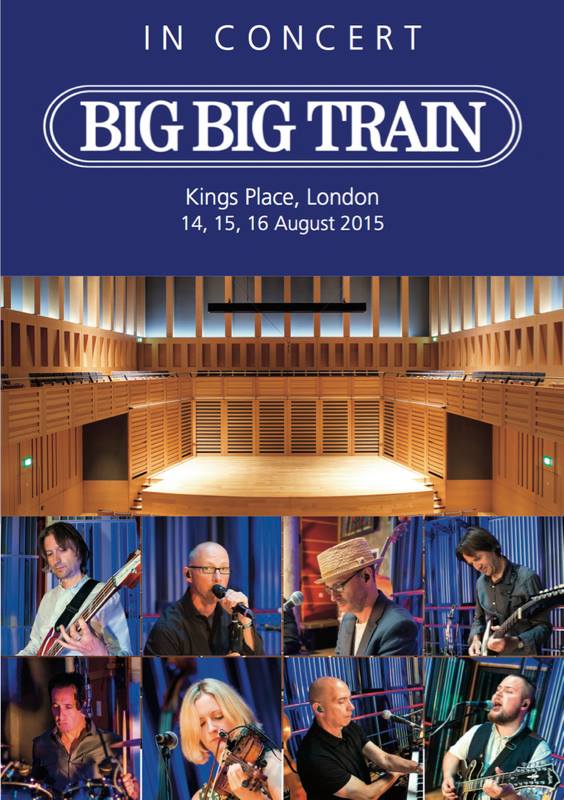
[Earlier this year, Professor Geoff Parks very kindly asked me to contribute to the BBT Concert Book, introducing and celebrating the band live for three dates this past weekend.  As any progressive rock lover knows, this happened and, surprising to no one except the members of the band, BBT performed with absolute and utter brilliance.  From my perspective, praise of BBT is praise of integrity itself.  Below is what appeared in the concert program.  I am deeply honored to have been a part of this event, even if armed only with a keyboard and separated by 3,500 miles–Brad]

bbt-london-2015-programme

Over time, most bands fade, while some others merely linger.  A few, however, grow, evolve, develop, broaden, deepen, and reach.  Toward what?  Toward excellence, toward true community, toward art, toward creativity, and toward beauty.

Big Big Train is such a band.  More importantly, it is an artistic community, in and of itself.

Founded in the early 1990s when progressive rock had become not just “weird” but almost anathema for most folks, Big Big Train stood for something solid and good even when the footing was unsure.  Writing dramatic and cinematic pieces—complete with false starts and re-dos and some clumsy grasps (one album from 2002 is even a four-letter word)—Greg Spawton and Andy Poole pursued their dreams of making their own music.  Though they correctly offered pieties to the past of Genesis and Yes, they wanted to be their own touchstone.

Then, something happened.  Gathering Speed.  At once an homage to the brave who defended the motherland against the rapacious fascists of central Europe, Gathering Speed proved to offer a distinctive sound, a “Big Big Train” sound.  Drama, time shifts, jarring passages becoming melodic and melodic becoming ethereal, and truly fine lyric writing made this album a gem.

Then, something happened.  Again.  The Difference Machine.  Astonishingly, even better than Gathering Speed, The Difference Machine told the haunting story of the stars and the souls, and the souls and the stars.  At what point do the two become one?  Chaos, order, sacrifice, dreams, death, loss.  Everything that matters in life (and death) is here, in every lyric and every note.

Then, something happened. Again.  The Underfall Yard.  Oh, the majesty of that new voice, that voice that so perfectly captures Spawton’s and Poole’s music.  That voice doesn’t just define the sound that the two remaining founders of the band had so long pursued, it gives it harmony in a perfect, Platonic sense.  The listener begins the album, lulled by that voice.  Toward the middle, we don’t know if we’re in Hell, Purgatory, or Holy Mass.  By the end of the album, we care desperately that an electrical storm has moved out to sea.

Then, something happened.  Again and again and again.  English Electric One, English Electric Two, English Electric Full Power.  A two cd set with a glorious booklet.  And, now, we see what Spawton and Poole had seen for twenty-three years: an idyllic English landscape, marred by human error and the will to destroy.  But, also leavened with the will to love, to discover, and to create.  English Electric, despite the power implied, is the delicate holding of a soul, a soul that can choose the good or the ill, the true or the terrifying, and the beautiful or the horrific.

And, now, a toast of Wassail to three live dates in London, 2015.  There, in the heart of English liberty, the heart of English commerce, and the heart of English dignity.  For there, behind wind-swept pioneers, Spitfires, divers and architects, station masters, fallen kings, intriguing uncles, decrepit athletes, shipping manifests, curators, and loyal dogs, lies . . . something.

There, just behind the hedgerow.  If you look and listen with attention and care, you’ll find the keepers of all things good, true, and beautiful.  They call themselves Big Big Train.

The State of Progarchy, Mid-2015

progarchy aDear Progarchists,

This year, 2015, has absolutely blown me away in terms of quality in music.  Since nearly a decade ago, I’ve been convinced that each year is the best prog year ever, only to find that the following year is even better.

Long may this trend continue.

As I’ve had the opportunity to explain before, the five main editors—Carl Olson (AOR), Chris Morrissey (Metal), Craig Breaden (Blues, rock, experimental), and Kevin McCormick (classical)—and I (prog) founded progarchy with the intent of offering writing equal to the music.  That is, we felt it only just to write as well as our favorite musicians played.  After all, who wants to read a sixth-grade level review of a Big Big Train album?  Greg Spawton is extremely smart.  Andy Tillison is extremely smart.  Leah McHenry is extremely smart.  Robin Armstrong is extremely smart.  Well, you get the point.

What would be a site dedicated to the beauty of music be without writing and thinking to match the level of the art reviewed?

Have we always succeeded?  I’m not sure.  Have we always tried to succeed and match the quality of our thinking and writing with the quality of the music we hear?  Absolutely.  And, whatever the faults of progarchy, I can state with certainty that I believe this website to be one of the finest websites—in terms of writing—that exists on the internet.

Since the founding of progarchy nearly three years ago, our readership has grown and grown, while our base has remained steady.  In addition to over 3,000 permanent email subscribers, we get an additional 400 to 8,000+ visits a day, depending on topic.  In case you’re interested, our biggest draw is Neal Morse with Rush being a close second.

Yesterday, something somewhat surprising but very nice happened to us.  A very, very high quality music label asked us if we’d be willing to advertise.  When we started progarchy, we avoided this for two reasons.  First, we were brand new and who would want to advertise with us?  Second, we wanted to prove our “objectivity” first.  Well, objectivity isn’t exactly the right word.  Craft, honesty, art?  Enthusiasm, certainly.  Criticism, often.  But, honesty—definitely.

After receiving the offer, I immediately emailed the other four editors.  Unanimously, we agreed it was time to promote commercial interests and labels who fight not just for success but for excellence.  So, beginning very soon (perhaps as early as tomorrow), you’ll see a brilliant banner and link across the top of progarchy.

I think we’ve proven ourselves over the last 2.9 years.  And, just in case you’re worried the money we receive from advertising might just send us on round-the-world junkets, be not afraid.  The first thing we’ll do is pay for our domain name for the next 12 months, spruce up the site a bit, and, especially, start indexing our reviews and interviews—making them far more accessible to our readership.

A huge thanks to the editors and authors of progarchy and to all of you reading this.

Yours, in appreciation and humility, Brad