The Fierce and the Dead – Magnet (2015)

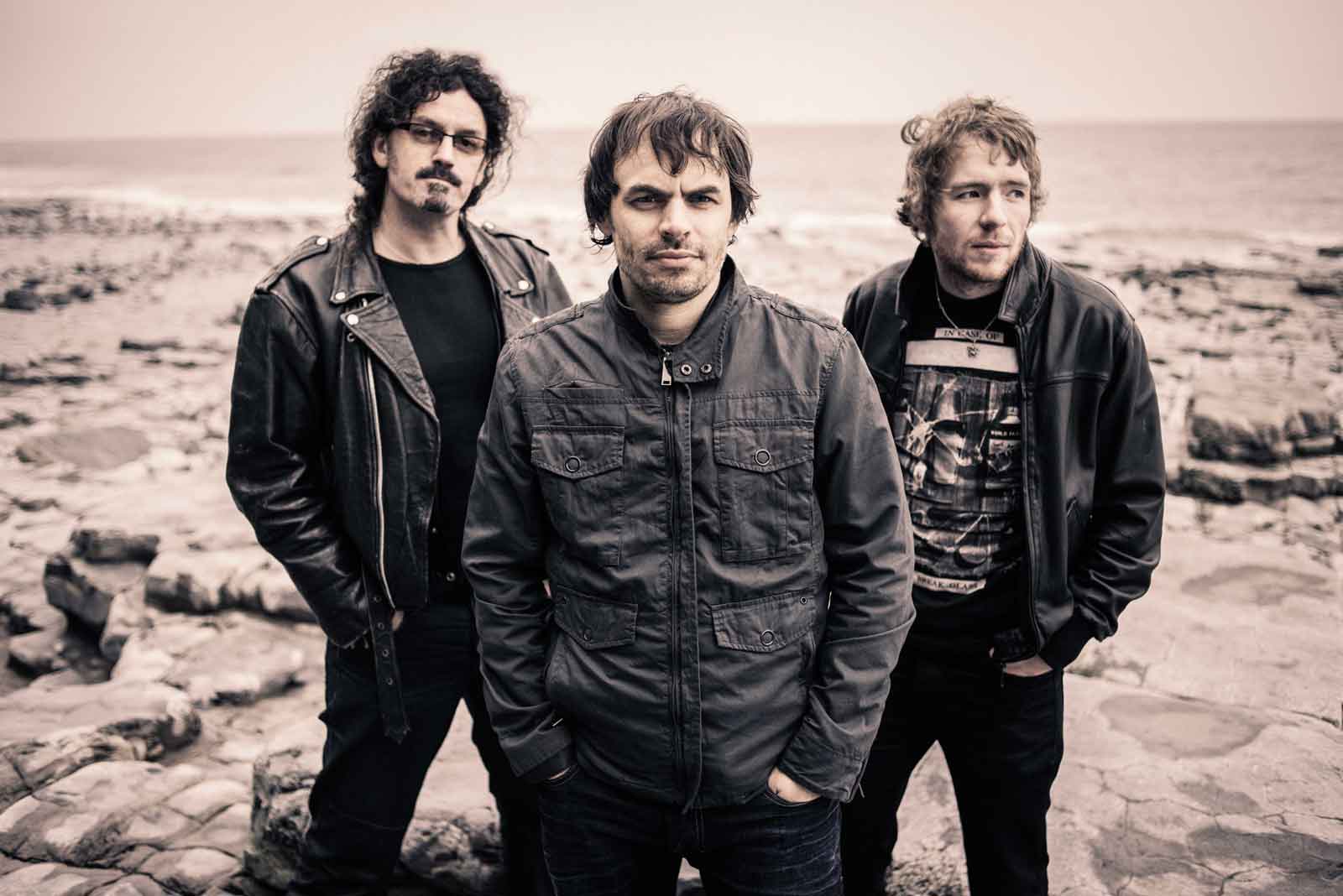
The Fierce and the Dead are still fierce, and most definitely not dead.  With Magnet, to be released in August, we have an EP with 21 minutes of music, though only 15 minutes of it is new.  A disappointment, maybe?  Not really.  If you haven’t heard it yet, listen to the aptly-titled teaser track, “Magnet in Your Face.”

OK, that’s about a minute and forty seconds.  Got good headphones or earbuds?  Try it two more times.  A punchy statement, played with a unified voice.  It’s a glimpse at a soundscape that will keep giving of its subtlety the closer you look.

The contrast in length and compact punch was already well-developed by 2013’s Spooky Action, as compared to the almost eighteen minutes of “Part 1” that was our introduction to the band in 2010.  But there’s an Spooky-Action-CD-Cover-FinishedOverannouncement here of something new-ish, characterized by guitarist Matt Stevens as being “more joyous and intense, with bigger riffs and more of an electronic feel” (teamrock.com).

Perhaps it’s not that TFATD is simply doing something to us (as if it were a magnet TO the face), but that they provide a revelation of the magnet that is already there in one’s face, an attraction as well as a reception.  When I open to the otherness of well-crafted music, the force of my openness draws into its light and its purview whatever it is that the artist has to give.  Think about how you listen to what someone says, how it’s not only passivity, but also activity, how it’s a drawing to oneself of what is said, or an attaction outward to whatever “metal” it might contain.

The EP will bring three more new tracks, plus two bonus rehearsal recordings of songs from Spooky Action.  “Palm Trees” and “Flint,” though longer (four or more minutes each), follow the tighter, joy-and-part1intensity aesthetic so compactly captured in “Magnet in Your Face.”  Even so, they allow for some stretching and soundscape exploration that assures us that this is still TFATD.  “Conceptual continuity,” to invoke Frank Zappa’s phrase, is naturally strongest on “Part 6,” picking up the thread that began with their first outing.  Here is the mix of abstract and concrete that first grabbed my attention by the scruff of the neck and connected with that center of force between my ears that the guys have now identified as my magnet.

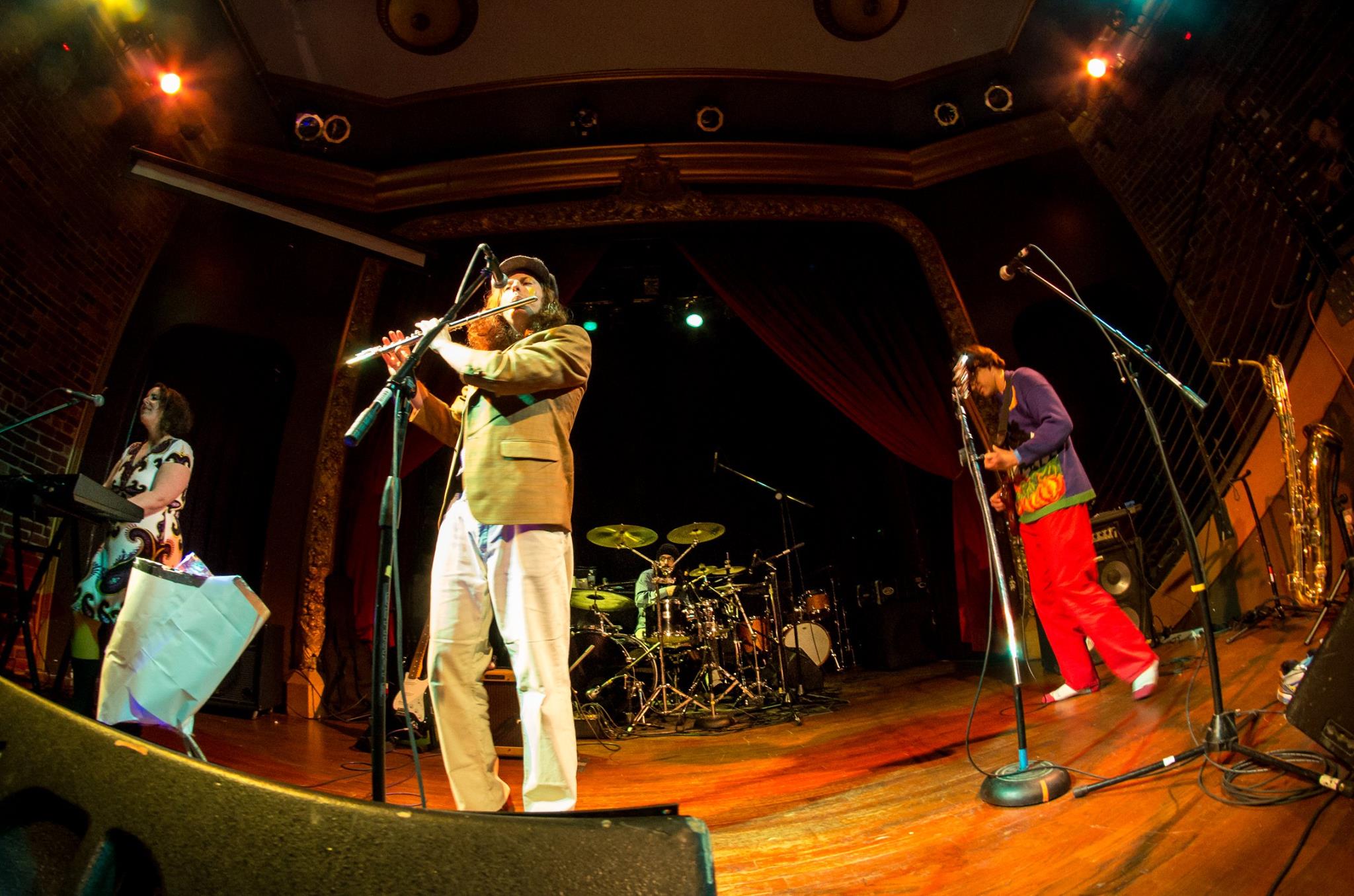
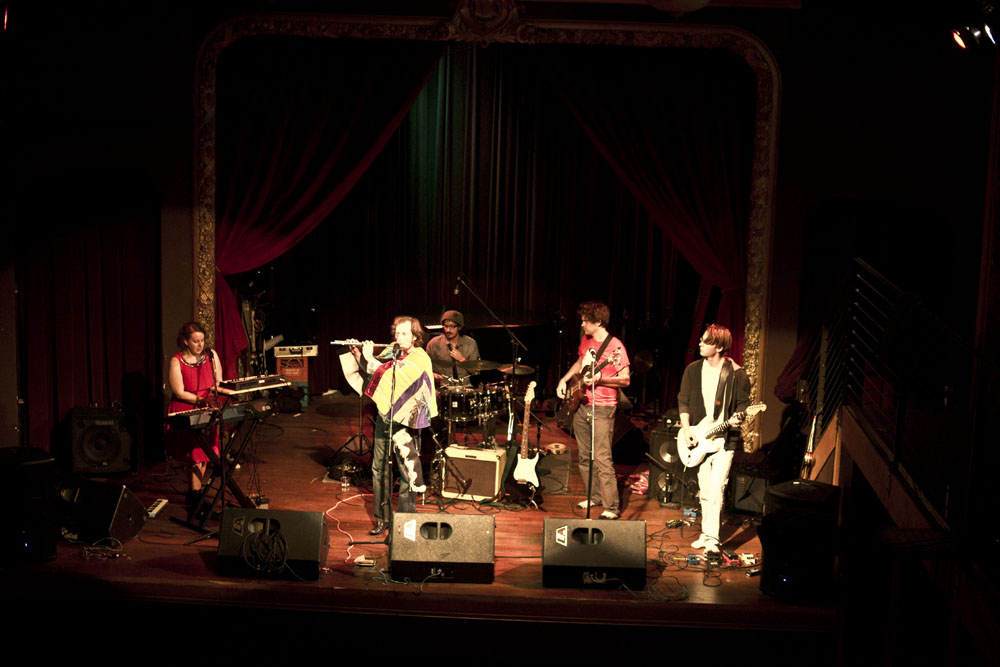
As I’ve remarked before, Matt, Steve, Kevin, and Stuart make music as a unit, as tight as nearly any guitar-based quartet I’ve heard since early to middle Wishbone Ash, but with that exquisite King Crimsonesque sophistication.  The bonus tracks bear this out.  The delightful “Let’s Start a Cult” is rather more raw and more fun than the Spooky Action version, while “Spooky Action” (a CD-only bonus track, according to our copy) nicely shows just how rich is the sound that these four guys get in performance.

The band has indicated that Magnet is an appetizer for another full-length feast now in preparation.  Pull up a chair and have a taste.  I’ve ordered another drink, and am settling in to wait for the main course.

More info, and links for pre-ordering, can be found at TFATD’s website.

My Favorite 14 Albums Ever

A few posts ago, Chris M. challenged us to list our favorite albums of Third Wave Prog.  I will do that, but, until then, I thought it would be fun to post this–something I wrote roughly 12 to 13 years ago–trying to explain to some friends why I thought New Wave (that is, late 70s/early 80s) was the proper successor to First Wave Prog.  Regardless, I still think my opinions (overall) are valid–at least at a personal level, though I would certainly revise some of this a dozen years later as well.  The obvious missing bands are Big Big Train, The Tangent, and Cosmograf.

And, a critical note: I intentionally left out ALL Rush albums, as they would’ve taken over almost everything below.  So, it seemed prudent to exclude them completely.

____

The youngest of three boys, born in the summer of love (September 6, 1967—only 3 months and five days after the release of “Sgt. Pepper’s Lonely Hearts Club Band” by the Beatles), and coming of age in the late 1970s and early 1980s, I grew up on progressive rock: Yes, Kansas, Genesis, and the Moody Blues.  We faithfully shunned the 3-minute pop format and we sought mightily the 20- and 30-minute epics of European (usually liturgically derived) symphonic music with rock instrumentation and bizarre time signatures.

I remember hearing lots of longish, prog songs as early as 1971 or 1972.  Though I’ve never played an instrument with any degree of passion, I’m assured by my mom and two older brothers that I was obsessed with music even as a toddler.  Somehow, I figured out how to crawl out of my crib and down the stairs to the family stereo.  Even as a one-year old, I would wake the entire household up, blaring the Banana Splits or Snoopy and the Red Baron at 3 in the morning.

My first great awakening came, though, from seeing the sleeves of YesSongs.  I spent hours trying to figure out how the animals made it from one floating island to the next.  And, I’ll never forget the first time I played side one of YesSongs—I was overwhelmed by the depth and complexity of it.

As is now well recognized, the prog lyrics as well as the cover art tended to be fantastic, pretentious, overblown, and theological.  There have even been some interesting scholarly articles about progressive rock thriving in the western and midwestern states of America, mostly among middle-class, conservative kids.  And, of course, we, with great confidence, derided disco and top-40 music through junior high, high school, and college.  Disco and top-40 music, as we understood it, were decadent and vacuous.  As far as we were concerned, progressive rock artists (and some New Wavers) were the only real musicians outside of the classical and jazz world.

In many ways, progressive rock helped define my own childhood and teenage years.  I will never forget seeing abolitionist John Brown on the cover of a 1974 Kansas album (it sparked all kinds of historical questions re: Kansas, abolitionism, and the American Civil War); hearing Pink Floyd’s “The Wall” at the University of Notre Dame in the fall of 1979; being introduced to Rush’s 1981 “Moving Pictures” in the Liberty Junior High School library in Hutchinson, Kansas; or listening to Yes’s “Fragile” over and over again and trying to figure out the “deep” meaning of the lyrics.  In high school, I worked as on overnight D.J. at a local rock station (KWHK), which doesn’t exist anymore.  And, while in college at Notre Dame, I had a Friday-night progressive rock show (WSND) my junior and senior years, often playing two hour blocks of Rush or other groups.

As powerful any the albums just mentioned, though, was my first listen to Talk Talk’s Colour of Spring in the spring of 1987 and, even more so, my first listen to Talk Talk’s Spirit of Eden in September 1988.

My comrade in arms in college was the singer of the most popular band on campus, St. Paul and the Martyrs.  They even opened for Phish when Phish played on campus, spring 1990.  The leader singer, Kevin McCormick, even became my oldest son’s godfather!  Now, he’s a well-known classical guitarist and even a Progarchist.

But, I’ll never forget the two of us listening to Spirit of Eden for the first time.  We were just stunned and in complete silence as we explored every note and every silence of the album.

Having turned 13 in the autumn of 1980, I also, of course, grew up with New Wave: Thomas Dolby, Kate Bush, The Police, The Cure, Oingo Boingo, XTC, Siouxie and the Banshees, and Echo and the Bunnymen.  Over the Wall!

Our local Kansas radio station—KWHK—had briefly been formatted for New Wave, so I was able to get every new album sent by the record labels.  The one that hit me hardest was XTC’s Skylarking.

My college radio show at Notre Dame focused on progressive rock, as mentioned above, but I threw in a lot of New Wave.  New Wave just seemed the more radio-friendly version of progressive rock.  And, by the early 1980s, progressive rock seemed to have run its course.  Could Asia really claim to be the successor of Yes?  Or, could Genesis without Peter Gabriel or Steve Hackett really be Genesis?  We answered with a resounding “no.”  That left us with New Wave.

After all, in 1990, we still had a few years before Dream Theater and Spock’s Beard re-introduced—in the states—a new wave of Progressive Rock.

A quarter of a century later, I realize that music took on religious significance for me and my friends.  Those who embraced disco, pop, or top 40 music were heretics, and we supporters of progressive rock were the orthodox.

High School was a long time ago for me, but I still remember it well.  During the summers, I had one of the best jobs in the world–I was a DJ at our local AM-station, KWHK.  Not only did I DJ, but I also got to write and produce commercials, and I served as a liaison between the sheriff’s department and the National Weather Service.  I grew up in central Kansas, so we had tornados and tornado warnings quite frequently.  Great job.  I’ve also been into collecting music (mostly progressive and alternative rock, some jazz, and a bit of classical) since second grade.  I started young, and, for better or worse, I’ve never stopped.  My kids (13 and under) can name bassists, singers, and drummers of the major progressive bands.  And, yes, I’m proud of them.

Freshman year of high school, 1982-1983.  It was freshman year that I really discovered New Wave.  I had been listening, almost exclusively, to progressive rock and what’s now called classic rock during the 1970s and earliest part of the 1980s.  The father of a friend of mine owned a record store, and we were introduced to all kinds of music through the store in 9th grade.  In particular, I listened to Thomas Dolby’s Golden Age of Wireless (favorite song: One of Our Submarines is Missing).  I had this on one side of a tape and ABC’s The Lexicon of Love (favorite song: 4 Ever 2 Gether).  Also lots of U2’s War (favorite song: Sunday Bloody Sunday).  Progressive Rock was never far from my heart, and I listened to Rush’s Signals (favorite song: Subdivisions) pretty much non-stop, Peter Gabriel’s IV (favorite song: Lay Your Hands on Me), and Roxy Music’s Avalon (favorite song: Take a Chance with Me).

Sophomore year of high school, 1983-1984.  This was a huge year for music.  Genesis released their self-titled album (favorite song: Home by the Sea, Parts I and II); the Police released Synchronicity (favorite song: Synchronicity II); and Yes released 90125 (favorite song: Cinema).

Junior year, 1984-1985.  Rush’s Grace under Pressure (favorite song: Between the Wheels) dominated every other album that year.  Frankly, this was THE album.  If I had to name a favorite album of high school, this would be it.  My sophomore year in college, I wrote a paper using only the lyrics from the album.  I even got an A.  I also listened a lot to The Smiths’ Hatful of Hollow (favorite song: Please, Please, Please), Oingo Boingo’s Dead Man’s Party (favorite song: same as title), and Thomas Dolby’s second album, The Flat Earth (Favorite song: same as title).

Senior year, 1985-1986.  Another great year for music, but mostly for former proggers going pop.  Albums that year included, at the top of the list: Sting, Dream of the Blue Turtles (favorite song: Fortress Around Your Heart), Peter Gabriel, So (favorite song: In Yours Eyes), Tears for Fears, Songs from the Big Chair (favorite song: Broken), and XTC, Skylarking (favorite song: The Man Who Sailed Around His Soul).  The other album I played constantly was the soundtrack to To Live and Die in LA (a pop band, Wang Chung, playing a very proggy style).  Lots of Kate Bush, Hounds of Love, too (favorite song: Hello Earth).

It wasn’t until my freshman year (1986-1987) that I really got into Talk Talk, the Cure, and Echo and the Bunnymen.  I also really liked Blancmange (kind of a really smart Talking Heads) and New Model Army and a few others.  That year, U2 released “The Joshua Tree.”  I’ll never forget sitting in the car with a friend, being about 1/2 through the album and just breaking down (not something I did very often) because of the beautiful intensity of the album.  Crazy.  At the time, I was horrified by RATTLE AND HUM.  Now, I think The Joshua Tree as a whole is really good, not brilliant.  Side two, maybe, is brilliant.  Side one has a brilliant moment–bullet the blue sky.  And, RATTLE AND HUM seems better than it did to me then.

In high school, I remember listening to some A-ha, B-Movie, b-52s, Erasure, Depeche Mode, and Communards.  I don’t think I would’ve chosen to listen to these groups, but they would’ve been pretty hard to escape then.  I would’ve always preferred something prog–unless we were dancing.  Had an all night party at my house once my senior year when my mom was out of town.  Late, late into the evening, a group of us were trying to analyze a 1977 Genesis concert we’d taped off of PBS!  I’ll never forget that night.  Lots of analyzing Pink Floyd, too.

My Top Seven Progressive Rock Albums (in no order after the first three)

Kevin McCormick, Squall (1999).  Some of the best music ever written—but tempered with very serious classical sensibilities and lacking the bombast present in even the best of progressive rock.  McCormick incorporates his profound poetry as lyrics.  Each word—and the way Kevin sings it—seemed utterly filled with Christian grace and conviction.  This is part two of trilogy (he’s working on number three).  And, it’s hard to listen to Squall without listening to its equally fine predecessor, With the Coming of Evening (1993).

Talk Talk, Colour of Spring (1986).  I could certainly regard this as either my top album of all time (though interchangeably with Squall and Spirit of Eden; depends on my mood), or close to it.  I couldn’t even count how many times I’ve listened to it.  I bought it on a whim—because I liked James Marsh’s cover.  My whim paid off, as it opened a whole new realm of music to me.  But, what’s not to like: impressionist 1950’s Jazz and 1960’s Stevie Winwood mixed with intensely Christian lyrics.

Talk Talk, Spirit of Eden (1988).  Every note and word is perfect.  Mark Hollis and Tim Friese-Greene spent 14 months in a church recording this album.  Hard to beat the 20+ minute opening to the album.  And, the lyrics—better than most hymns I hear in church, to be sure.  Side two even has a song with St. Ignatius of Loyola’s prayer asking for the grace to surrender one’s will to God.

Yes, Close to the Edge (1972).  Ok, I’m noticing a pattern as I write out these descriptions—this album, as I understand it, is about the Reformation.  Anderson and co. incorporate high-church Anglican music and choral arrangements as they sing about Christ the Word.

Genesis, Selling England by the Pound (1973).  Heavily influenced by the poetry T.S. Eliot, Peter Gabriel soars on this album.

Pink Floyd, Animals (1977).  Continuing the fantasy and science-fiction themes of their earlier albums, Roger Waters and David Gilmore seriously challenge the right of one human to exploit another in this George Orwell inspired album.

Flower Kings, Space Revolver (2000).   Lyrics range from weird to wacky, as does the music.  Pro-Christian themes abound, but placed within a rather Scandinavian pastoral setting.

My Top Seven non-Progressive Rock Albums (in no order)

Thomas Dolby, Golden Age of Wireless (1982).  This was my introduction to New Wave.  Wild arrangements and very Bradbury-esque lyrics.  It became my anthem during high school debate and forensics.

Sarah McLachlan, Fumbling Towards Ecstasy (1993).  I can’t explain why this album means so much to me, but it does.  I love McLachlan’s voice and use of organ.  And, this first album lacks the nasty anti-Christian and pro-feminist cant of her later work.  When I worked at the Organization of American Historians in graduate school, we would play this CD as we played Quake on the network (after business hours, of course).

Echo and the Bunnymen, Ocean Rain (1984).  Beautiful and bizarre—musically and lyrically.  Probably the most Doors’ inspired album of the New Wave movement.  While the lyrics don’t quite rival those of Morrissey (in the Smiths), the music surpasses anything Johnny Marr wrote.  A staple for me in college.  I’m just sorry that some of the lyrics are heretical.

Traffic, John Barleycorn Must Die (1970).  What can I say about Stevie Winwood, Jim Capaldi, and Chris Wood?  Jazz-rock with Anglo-Saxon folktales thrown in.  Lots of Traffic is excellent, but this surpasses all of their other albums.

Van Morrison, Astral Weeks (1968).  Introspection without pure naval gazing.  And, no body writes better about the beginnings of love than Van Morrison.  Must be something in the Irish soul.  As I understand it, the album was done in one take with the jazz musicians being given the music when they entered the studio.  Perfect for a spring day.

The Cure, Disintegration (1990).  From the beginning to the end, a masterpiece.  Perfect pacing, and fascinating arrangements.  The Cure’s flaw is their tendency to write hyper, bouncy pop songs.  While Disintegration has a few of these, they remain tempered by the more serious, gothic moments on the album.  And, hey, the album begins with early medieval plainsong.

Radiohead, Kid A (2000).  Intense lyrics about the problems of post modernity and scientism.  Though Ok, Computer has better moments, Kid A has no real flaws.  The lyrics, however, remain unimportant, ultimately, as Thom Yorke’s voice serves as another instrument on the album.  The producer, Nigel Godrich, deserves credit for being an equal member of the band.  The opening track, “Everything in its right place” sums up the production.

Serious honorable mentions: Talk Talk, Laughing Stock (1991); Dream Theater, Octavarium (2005); Marillion, Brave (1992); The Police, Synchronicity (1983); Yes, Drama (1980); XTC, Skylarking (1986); Kate Bush, Hounds of Love (1985); Kate Bush, Aeriel (disc 2; 2005); and Simple Minds, New Gold Dream (1982).

Big Big Train Concert Programme Cover Revealed

So proud to have two progarchists as a part of this.  Lady Alison and yours truly–BB

bbt london 2015 programme
Program by Professor Geoff Parks.

From Professor Geoff Parks: At last I can reveal a closely kept secret. A while back I volunteered to put together a programme for the band’s upcoming Kings Place concerts. To my delight that offer was accepted and early in June I sent my efforts on to Greg et al. for approval.

The programme is 24 A4 pages in full colour. It includes profiles of the members of BBT and their support staff, equipment lists and a number of articles that should be of interest to passengers, including a couple of specially commissioned pieces by Alison Henderson and Bradley Joseph Francis Birzer of this parish.

The programme will cost a very reasonable £5.

The section containing the band profiles has been cunningly designed to include convenient spaces for the collection of autographs.

You can see the front cover below.

Metal Mondays – Interview with Max Portnoy of Next to None


Next to None
, “A Light in the Dark” (Inside Out Music)

Tracks: 1. The Edge of Sanity (9:40), 2. You are Not Me (4:55), 3. Runaway (4:59), 4. A Lonely Walk (5:32), 5. Control (9:59), 6. Lost (6:13), 7. Social Anxiety (3:44), 8. Legacy (3:56), 9. Blood on My Hands (8:15), 10. Fortune Cookie (Bonus Track) (4:14), 11. Deafening (Bonus Track) (4:21)

3655066_origNext to None are an intriguing teenage prog metal band that play like musicians twice their age. After spending late spring touring with Haken on their American “Restouration” tour, Next to None released their first album on June 29 of this year. It did remarkably well, hitting number 13 on the iTunes metal charts for its first day. The band members are:

Max Portnoy: drums

Thomas Cucé: keyboards, vocals

Ryland Holland: guitars

Kris Rank: bass

Seeing as Max Portnoy is Mike Portnoy’s son, there is the obvious comparison of Next to None’s music to Dream Theater. While that is a fair comparison, as the music often resembles that of DT, a more interesting comparison is to Slipknot, a metal band that N2N sites as a major influence. In fact, N2N can be described as Dream Theater meets Slipknot, minus the often horrible, depressing suicidal lyrics of Slipknot.

For their first album, Next to None decided to make a concept album, which is entirely refreshing coming from the younger side of prog and metal. The album is about a guy with a mental illness struggling to decide what to do with his life. While deciding what to do, he loses control, and the rest of the album looks at the character struggling to cope with the gravity of what he has done. The way in which the concept is presented demonstrates a great deal of maturity on the part of these young musicians.

The music itself, which features guest appearances by Neal Morse (mellotron) and Bumblefoot (of Guns N Roses), traverses the wide range of prog metal. There are heavy metal songs, complete with some screamo and traditional singing, to quiet, piano driven songs with softer lyrics (“A Lonely Walk”). Some listeners might be turned off by the screaming, but it isn’t overdone, and it certainly fits the concept. It is used to emphasize the increasing insanity of the main character. Furthermore, Cucé is actually quite good at the screaming – it isn’t the type of screaming you would get from a doom metal band, but rather the type that Avenged Sevenfold employed on their early albums.

The musicianship on this album is superb. Max Portnoy is incredible on the drums, which comes as no surprise. He has been playing since he was 5 years old, and he currently attends a music school. Having Mike Portnoy as a father probably doesn’t hurt either. Thomas Cucé’s keyboards add a nice layering to the music, as well as wonderful piano in the quieter parts. The keyboard solo in “Control” is awesome, reminiscent of Jordan Rudess’ always fun solos. Ryland Holland is excellent on the guitars, and it was a blast watching him play live. Kris Rank’s bass is superb as well. One of my favorite songs on the album is “Lost.” At the midpoint of the story, the lyrics and the music perfectly reflect desperation. The music is driving, pounding, and the guitar solo sounds like something John Petrucci would crank out.

I really am blown away by the musicianship in this band. These guys aren’t just good for teenagers, they are excellent musicians period. They are better than many metal bands that have been around for 20 years. There are a few points in the music where the band sounds like it could use some polishing (which can only come from the experience of touring, recording, and learning on the job), but those are few and far between. Plus, the band is gaining that experience with every chance they can, playing live shows often.

Progarchy got the chance to sit down (via email) with Max Portnoy to discuss the band and their new album.

Progarchy: Can you give a bit of background on the band.

Max Portnoy: I met Ryland and Kris in first grade and we have been friends ever since. We always used to jam but we never knew a singer to form an actual band. It was about fifth grade when we met Thomas who was the first kid we knew that would sing, so we took him on board and formed Next To None.

Progarchy: Dream Theater’s influence upon your music is clear, for obvious reasons, but what other bands, artists, or musicians influence your style as a band and as individuals? Are your influences strictly metal, or are you drawn to a wide range of music, progressive or otherwise?

Max Portnoy: My favorite band is Slipknot. I’ve been listening to them my whole life basically, my dad showed me Vol. 3 when I was 4 years old and I loved them ever since. And lately I’ve been listening a lot to Meshuggah. So to me I think I come from a more metal oriented background.

Progarchy: Some might see the release of a concept album as a first record, particularly for musicians as young as yourselves, as a very bold move. It appears that “A Light in the Dark” truly stands as a single album, not merely a collection of songs, which is becoming increasingly rare these days in the music industry. What drove you to create a concept album as opposed to more standard heavy metal tracks? 

Max Portnoy: We liked the idea of a concept since nobody really does it anymore, and it really makes your album feel like a story and not just a collection of songs.

Progarchy: Can you also talk about the concept as a whole?

Max Portnoy: There’s a six song concept through out the album about a guy who struggles with mental illness and the mere fact that he’s not happy with his life and what he’s doing with it. The first two tracks he is basically arguing with himself over what is right and what is wrong. Track 4 (A lonely walk) he comes to a cross roads. By the end of the song he has convinced himself that he needs to do something with his life. Track 6 (control) he loses control of himself. Tracks 8 and 9 (Legacy and Blood on My Hands) are after the incident when he reflects on what he has done.

Progarchy: How would you describe your process of writing lyrics and music?

Max Portnoy: We get together on the weekends and we jam and someone would bring up a riff and when we hear something we like, we write around it. Sometimes it works and sometimes it doesn’t, but basically we just try to have fun when we get together, which makes the whole process very enjoyable.

Progarchy: Can you talk a little bit about your collaborations with other artists on this album?

Max Portnoy: Well, we saw Bumblefoot performing at the Progressive Nation At Sea Cruise and we were blown away, and we really wanted to work with him. We were very lucky to have him on board.

When we were recording ALITD, the last track was A Lonely Walk and we weren’t satisfied with the sound of the mellotron, and after re doing it several times we realized that we wanted it to sound like Neal Morse’s mellotron, and then we asked ourselves… “Well, why don’t we ask Neal himself to do it for us?”

Progarchy: I know you probably get asked this question a lot, but… how extensive was Mike Portnoy’s involvement as producer for “A Light in the Dark” and your subsequent tour?

Max Portnoy: Well, the truth is that MP is touring most of the time, so when he is at home he doesn’t really do much drumming related stuff and we focus on just having quality family time. But he got involved once we were ready to record everything and it was basically written already. I would say that his most important contribution to the album was driving us back and forth to the recording studio, hehehe.

Progarchy: What was your experience touring with Haken like?

Max Portnoy: It was  incredible. We learned so much, from how to soundcheck and how to kick ass on stage and then how to interact with the fans. They are an amazing group of musicians and probably one of the top representatives of the genre right now. We can’t thank them enough for the opportunity to tour with them.

Progarchy: How do you manage or balance creating music, practicing, recording, and touring with your high school responsibilities?

Max Portnoy: Well, my high school is actually a music school so when I’m not at home jamming in the afternoons, I’m putting in 6 hours of playing at school every morning… and since music is one of my biggest passions, it actually makes me want to go to school.

Progarchy: What’s next for Next to None?

Max Portnoy: We plan on touring as much as we can with as many musicians as we can. Hopefully we can successfully promote this album for the next year and then we can begin to work on our next album.

Progarchy: For the last question, would you share your favorite albums and/or bands?

Max Portnoy: In no particular order:

Vol. 3 – Slipknot

Train Of Thought – Dream Theater

Ride The Lightning – Metallica

Progarchy: Thank you so much for taking the time to do this interview with Progarchy. We wish you nothing but the best of success on the start of your career, and we look forward to seeing what the future holds for you and Next to None!

A special thanks to Inside Out Music for setting up this interview!

Check out “A Light in the Dark.” In a year that is jam packed with awesome new metal music, either already released or due to be released later this year, Next to None stand out as an incredible new band intent on making great music.

http://www.nexttonone.net

IMG_1511
Max Portnoy and me at the first show of Next to None’s tour with Haken.

Rush R40 in Vancouver: Set List G — with “Losing It” and “Natural Science”!!!

Ben Mink plays
Ben Mink plays “Losing It” with Rush at Rogers Arena on July 17, 2015

Great show last night in Vancouver by the hardest working men in showbiz — Rush.

My favorite songs from the first half of the show were “Animate,” “Distant Early Warning,” “Losing It,” and “Subdivisions.”

The second half of the show was Rush Heaven with all their greatest epics from their greatest era of prog creativity. They played all my favorites!

“Xanadu” with the double-neck guitars and orchestral percussion is arguably Rush in their most iconic live configuration.

After “Distant Early Warning,” Geddy announced that the next song they were going to do was one that they had only done three times previously on the tour. But, since violinist Ben Mink lives in Vancouver, they were going to do it tonight! Bam! — number four…

It was incredible!

So, it turns out that I was wrong with all my previous Set List speculations. It turns out that Rush threw Vancouver a curve ball and ended up doing a special Set List just for our city! We got to hear “Set List G” …

The set included “One Little Victory” (never a favorite cut of mine on album because of all the repetition, but I was thrilled by how well it worked live; it was very powerful and I ended up loving it), “Distant Early Warning” (I was hoping for “Between the Wheels” because I really love Alex’s guitar solo in that, but I was blown away by how good this song is live; the massive synth chords are so exciting and the audience went bananas and I was reminded of why it is one of their greatest), “Losing It” (a special once-in-a-lifetime treat), “YYZ” (which rocked so hard and had such a dazzling laser light show it was like an alien invasion had landed at the arena), and “Natural Science” (one of my absolute favorites and a genuine thrill to hear live).

I remember hearing an illicit version of “Natural Science” of Rush live in St. Louis from the Permanent Waves tour. It has some of Peart’s greatest lyrics and the whole concept is immensely appealing to a science geek like me and hearing this version had always had me dreaming of hearing it live because it is just so darn good. Last night my dream came true and I experienced it live. Amazing.

The Rush fan who made me the cassette tape of that concert told the story that it had been fished out of Alex’s trash can at the curb of his house. It was a white label vinyl pressing of a concert being considered for the next Rush live album. But it never happened and therefore the next Rush live album instead was Exit… Stage Left from the Moving Pictures tour. I guess Rush went with that decision in order to establish the pattern of a live Rush album after every four studio albums. Apparently this concert is now widely available thanks to the magic of the Internet, but back in the day it was a real discovery when a fellow Rush fan shared it with me as a secret cassette tape experience reserved for select initiates only. It was a rare and special experience that I will always treasure, especially due to the presence of “Natural Science.”

Just like last night’s concert!

SET LIST G

Performed on July 17th

The Anarchist
Headlong Flight (with Drumbastica mini drum solo)
Far Cry
The Main Monkey Business
One Little Victory
Animate
Roll The Bones
Distant Early Warning
Losing It
Subdivisions
-Intermission-
Tom Sawyer
YYZ
The Spirit of Radio
Natural Science
Jacob’s Ladder
Cygnus X-1 Book Two: Hemispheres – Prelude
Cygnus X-1: Book One: The Voyage – Prologue
Drum Solo
Cygnus X-1: Book One: The Voyage – Part 3
Closer To The Heart
Xanadu
2112: I. Overture
2112: II. Temples of Syrinx
2112: IV. Presentation
2112: VII. The Grand Finale
-Encore-
Lakeside Park
Anthem
What You’re Doing
Working Man
Garden Road (riff)

Rush R40 in Vancouver: Set List Speculations

If I had to guess, maybe Rush will play Set List C tonight in Vancouver, British Columbia, Canada.

It would be cool to hear “Losing It,” but that’s probably not in the cards. So, if it happens, “Natural Science” would be amazing.

Then again, I’d really love to hear both “How It Is” and “Between the Wheels,” not to mention “The Camera Eye.”

Let’s “C” how it goes…

The new digital teleology: The album promotes the tour, and not vice versa — @Wilco Star Wars

The WSJ on What Wilco’s Surprise Album Drop Says About the Music Business:

In a sign of how insignificant new albums have become in today’s music industry, rock band Wilco Thursday evening surprised fans by releasing their latest studio album without fanfare, even offering it for free on its website. …

The popularity of the surprise album release—and Wilco’s decision to offer theirs for free—shows how much less album releases matter to many major artists relative to touring and other revenue streams.

For decades, the album release was the industry’s marquee event. Record labels deployed massive resources to build up anticipation among fans. On September 17, 1991, throngs of fans lined up outside Tower Records stores in Los Angeles and New York at midnight, waiting to buy copies of Guns N’ Roses’ “Use Your Illusion” albums.

At the time, high-level artists toured the world to promote albums; making money from touring was a secondary consideration.

But the digital revolution hurt the album as a source of revenue for artists and the industry. File-sharing begat piracy. The advent of the single-track download, popularized by Apple Inc.’s iTunes store in 2003, effectively undermined albums: Casual music fans no longer needed to buy an entire album for $15.99 to get a song or two. Record sales plunged.

Today, live performances, not albums, are the industry’s lifeblood. The top 100 North American tours generated some $1.4 billion in gross ticketing revenue in the first half of 2015, up about $400 million from the same period last year, according to the trade publication Pollstar. Ticket prices have skyrocketed: the average ticket price has hit an all-time high of $76.20, up nearly 13% from the middle of 2014.

Oh man, oh man! There’s a New Fierce and the Dead EP.

This came via email:

Magnet e.p. out 14/8/15
We have some new music for you!
Available as a CD and digital download, the e.p. ‘Magnet’ is the first music we’ve released for almost two years, so we’re pretty excited about this. A new album should be following on next year so this should keep you going.
The e.p. download consists of 5 tracks with the CD version containing a bonus extra track. The CD is limited to 250 copies and the first 100 are signed and numbered.
You can listen to the first song from the EP and pre-order it from BEM here:
We will be releasing some more goodies over the coming months so make sure you keep an eye on the skies.
Get involved!

Kev, Matt, Stuart & Steve.

Here’s the promo video/song.  Very nice.

Squonk Opera – Pneumatica (2014)

Squonk Opera is a performance art company from Pittsburgh, Pennsylvania (USA).  If you are not familiar with them, you might expect that they are named for the imaginary creature (also supposedly Pennsylvanian) portrayed in a Genesis song.  You would be disappointed, though, as the band claims the name derives from the jazz term “squonk fest,” used in reference to some saxophone performances.  Nevertheless, Squonk Opera’s music does display some prog influences and sensibilities, and they are worth checking out.

Squonk1Wikipedia refers to them aptly as “a group of interdisciplinary performing artists.”  They’ve been around since the early 1990’s, and among other distinctions have competed with some success on America’s Got Talent (though the judges ultimately did not seem to get what they were up to).  Their mix of audio and visual presentation could invite comparisons to the Blue Man Group, but I find them much more relaxed and refreshing in some ways.  The Blue Men are a bit more “McDonaldized” in the sense elaborated by sociologist George Ritzer, with an implicit aspiration to a total quality-control-hold on performer as provider and audience as consumer.  To be clear, I’m definitely not saying that I don’t like Blue Man Group.  They are good at worst, and irresistable and profound at best (and I do eat at McDonalds sometimes).  But Squonk Opera retains a combination of serious artistry and relaxed fun, a vulnerability and intimacy with the audience of which Blue Man’s ethos requires avoidance.

4PAN1TPneumatica (2014) is Squonk Opera’s latest CD release, with music from their latest stage production.  Why would one only listen to the music without the visual elements?  A good question.  I wouldn’t really want to listen to Blue Man’s version of “Baba O’Reilly” without the visual, for example.  And the visuals associated with Pneumatica go beyond the performance one can see in a video.  (Their 20 page “Workshop Learning Guide” is delightful!)  But considering the music itself is interesting and rewarding.  Their interplay of gravity and levity, both seen and heard in the Gesamtkunstwerk, is embodied just as clearly in the deft movement between and synthesis of prog, classic rock, classical, pop, Celtic, marching band, and other influences.  I sometimes detect a rather strong minimalist current (as in Glass and Reich), of the sort one hears in early XTC, and it works well (to my ears) with Squonk’s dramatistic approach.

storeMayhemI’m not convinced that Pneumatica as CD/album is something that I would return to for multiple listenings, though I think that there are proggish listeners who would disagree.  For my part, I find the earlier CD, Mayhem and Majesty (2010), more fascinating and “durable,” probably because the minimalist element is most prominent and effective there.  But remember that this judgment is rendered upon the music, artificially divorced from its performative context.  Squonk Opera’s work is best felt and seen, not just heard.

Squonk Opera’s Website:  http://www.squonkopera.org/

“Whirlwinding” from Pneumatica:

Steve Hackett’s Premonitions includes 67 previously-unreleased tracks

Steve Hackett’s 14-disc set Premonitions (out on Oct 16, 2015) covers 1975-1983 and features Steven Wilson remixes.

The set includes 10 CDs and four DVDs, and 67 previously-unreleased tracks among the total of 135 songs.

And just in case you haven’t heard it yet, you should also know that Steve’s newest album Wolflight is one of the best releases of 2015.