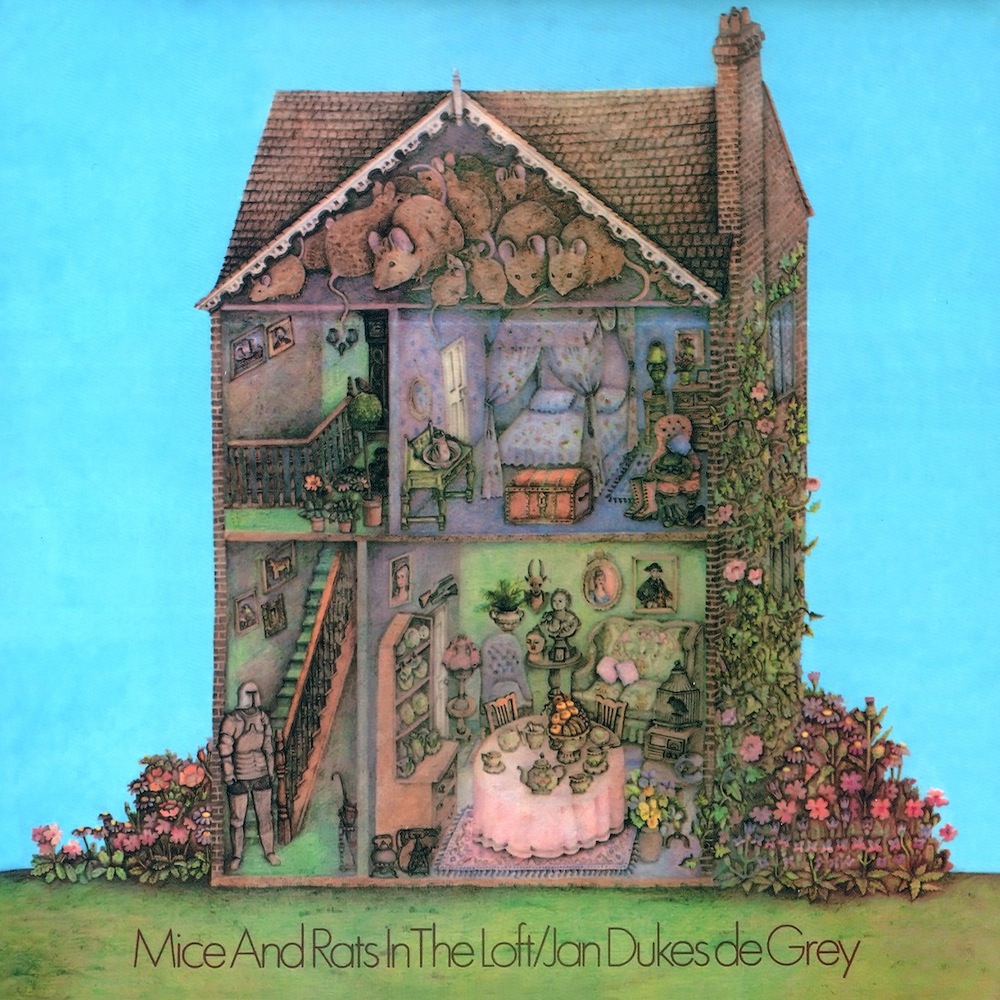
Combine the following ingredients in a vintage mixing bowl: the Gothic atmosphere of Van der Graaf Generator, the versatility and dexterity of the members of Gentle Giant, the guitar of Jimi Hendrix, the flute of Peter Gabriel, and include dash of Jethro Tull for taste. The result? Perhaps the most polished of obscure gems I have reviewed thus far. Jan Dukes de Grey’s Mice and Rats in the Loft is a psychedelic, folk-inspired acid trip that will leave the listener both mildly disturbed (listen closely to the lyrics) and suitably impressed.
After Sorcerer‘s (their debut album) cool reception from both fans and critics, British duo Jan Dukes de Grey (multi-instrumentalists Derek Noy and Michael Bairstow) brought on drummer Denis Conlan to give their follow up effort some “umph.” Although Mice and Rats in the Loft received little attention upon its initial release, it has since acquired a dedicated cult following; the album is now an in-demand collector’s item. Like many prog albums of yore, Mice and Rats in the Loft includes only three songs, but they are heavy hitters:
The opening number, “Sun Symphonica,” begins like a Jethro Tull song: your ears are greeted by the lovely, pastoral sound of a lilting flute. But soon the madness begins: Conlan pounds the drums, and Bairstow and Noy sound like two madmen enjoying themselves through music. The latter two gentlemen display their talents on just about everything: keys, guitar, flute, sax, clarinet, etc. Noy’s theatrical vocals combine with some rather ominous lyrics to weave a tale that is sure to leave you rattled by the end.
“Call of the Wild” skips the pleasant opening notes of the first song and gets straight to the madness. Noy’s work on twelve-string guitar on this album is superb – comparable to Hackett or Howe, in fact – and he shreds (yes, shreds) on this song. There are several moments – one about eight minutes in, another at the end of the piece – where Noy’s distorted guitar transports the listener into a Gothic-folk setting. This song is downright Lovecraftian in atmosphere.
The title track leaves the listener feeling no less worried about his mental or emotional state: we are greeted with the sound of a wailing siren before Noy’s electric guitar (sounding like Hendrix here) is unleashed on our ears. Like the previous two songs, the lyrics are meant to unsettle (“The blood trickled down between his…fingers”). It’s not long before we begin to wonder what exactly those mice and rats are doing upstairs….
This album is a marvelous maelstrom – a chilling cacophony – a sinister symphony – of sound. The (slightly) twisted minds of Bairstow, Noy, and Conlan offer the best elements of prog: fantastical lyrics, theatrical vocals, unbelievable versatility, and an overall unsettling atmosphere that will satisfy even the most persnickety of proggers. Do yourself a favor and give this one a listen.
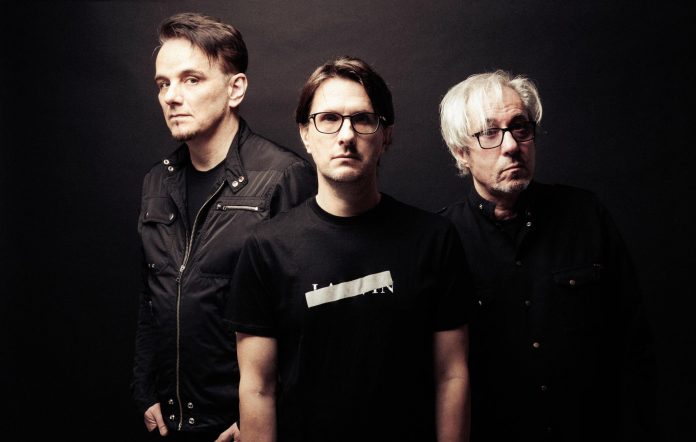
A new song from Porcupine Tree (Steven Wilson, Richard Barbieri and Gavin Harrison) is now available on all major streaming services (and on video in Europe). Herewith, “Harridan”:
Harridan and a few of the other new songs have been in play since shortly after the release of The Incident. They initially lived on a hard drive in a slowly growing computer file marked PT2012, later renamed PT2015, PT2018, and so on.
There were times when we even forgot they were there, and times when they nagged us to finish them to see where they would take us. Listening to the finished pieces, it was clear that this wasn’t like any of our work outside of the band – the combined DNA of the people behind the music meant these tracks were forming what was undeniably, unmistakably, obviously a Porcupine Tree record.
You’ll hear all of that DNA flowing right through Harridan.
The new album, titled Closure/Continuation, was completed in September and will be released on Music for Nations/Sony on June 24, 2022. Regular and deluxe CD and LP editions are now available for pre-order at the PT webstore and at Burning Shed. (Burning Shed’s exclusive white vinyl version is already sold out.)
European tour dates have been announced for October/November 2022, with tickets on sale Friday, November 5. Pre-ordering the album through the PT webstore (or just registering there) guarantees pre-sale access this Wednesday, November 3. US and Canada tour dates for autumn 2022 will be announced early next year.
All details above are available via PT’s website. Let the anticipation (and/or the bellyaching) commence …
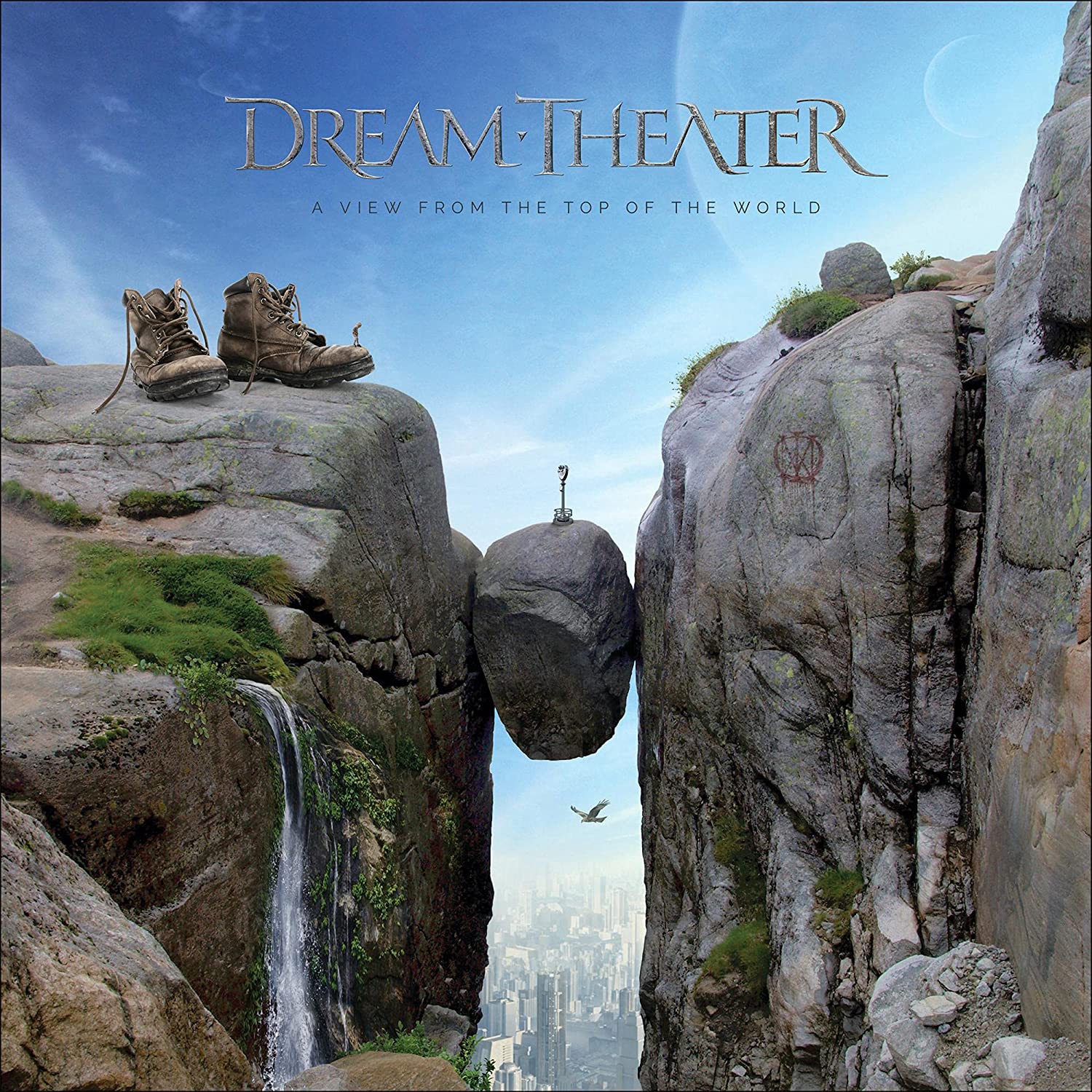
It’s Dream Theater, so by default it has to be rich in melody and progressions. But, A View from the Top of the World is riveting too. Mike Mangini-John Myung duo crafts a razor sharp bass-drum framework – more than adequate to accommodate their typical musical complexity. And often tailored to precisely slice and frame this perpetual train of John Petrucci-Jordan Rudess orchestra. This balance in musicianship is striking — omnipresent melody, James LaBrie’s signature wails, and complementing bass-lines all live in systematic harmony. Resulting compositions are meticulously high grade.
Album revives and reinforces quintessential Dream Theater qualities, sometimes illustrating them in seemingly novel ways. For better or for worse Mike Portnoy was a captive of Neil Peart school of drumming. But Mike Mangini’s style allows them to evolve, beyond those ornate confines of Rush-metal blueprint. Clearly enabling that exhibition of seemingly novel influences from symphonic prog, and atypical passages often seen in their own side projects. Or at least we can now prominently hear those influences, which were merely latent in earlier works.
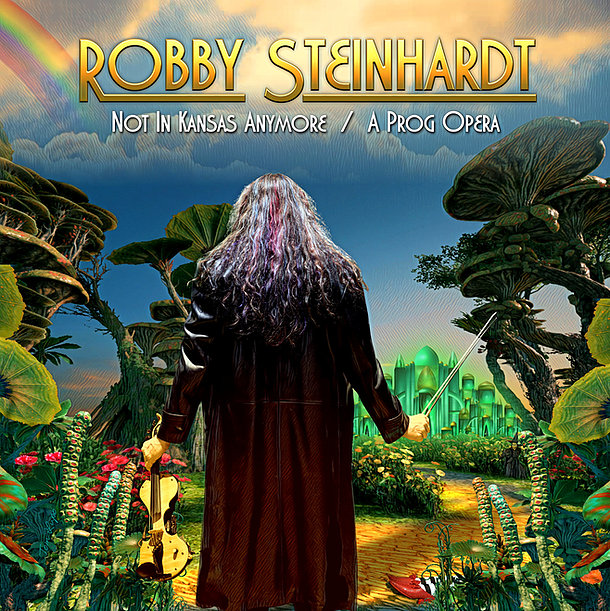
Robby Steinhardt, Not In Kansas Anymore, 2021 Tracks: Tempest (1:41), Truth 2 Power (Only Truth Can Change The World) (3:48), Mother Earth (Is Calling You) (4:42), Rise Of The Phoenix (5:22), The Phoenix (4:06), Prelude (1:54), Dust In The Wind (5:43), Pizzacato (A Slice For Baby Boy Flynn) (2:37), Tuck Tuck (6:10), Not In Kansas Anymore (4:40), A Prayer For Peace (Bonus Track) (3:15)
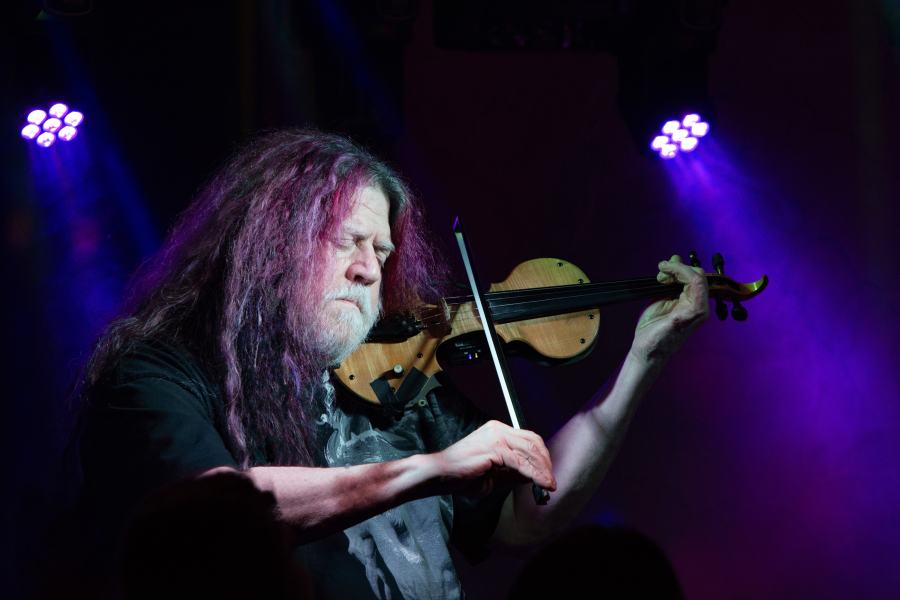
It was only a few months ago that we mourned the loss of Robby Steinhardt, but out of that sadness we found out that his very first solo album was just about finished. The album release was delayed because of his death, but Not In Kansas Anymore was released a week ago. It is far better than I could have imagined. In many ways it sounds more like Kansas than Kansas does these days. The hard rock, the unique touch Robby had on the violin, the beautiful vocal harmonies – Not In Kansas Anymore has it all.
The album was produced by Michael Thomas Franklin, who produced Jon Anderson’s 1000 Hands a few years ago, for which Steinhardt played violin on one song. Franklin pulled together a cast of literal rock stars for this record, including Ian Anderson (flute on Pizzacato), Steve Morse of Deep Purple/Dixie Dregs/Kansas/Flying Colors, Billy Cobham of Mahavishnu Orchestra, Bobby Kimball of Toto, Chuck Leavell of The Rolling Stones, Liberty Devitto (Drummer on Billy Joel’s hits), Jim Gentry, Pat Travers, Billy Ashbaugh (Moody Blues/Pat Benatar), Lisa Fischer (longtime vocalist for The Rolling Stones), and more.
The record opens with a brief instrumental before pounding into a classic Kansas sound with “Truth 2 Power.” It has a glorious intro of vocal harmonies that screams late 70s Kansas. The lyrics deliver a message of, well, truth about the necessity of speaking truth even when it is derided. The line “only truth can change the world” seems Livgren-esque in a lot of ways, seeing as the world-changing power of truth as personified in Jesus is central to Christianity and the Bible. I don’t know what Steinhardt’s spiritual background was or whether or not he was a Christian, but these lyrics certainly spoke to me in that regard.
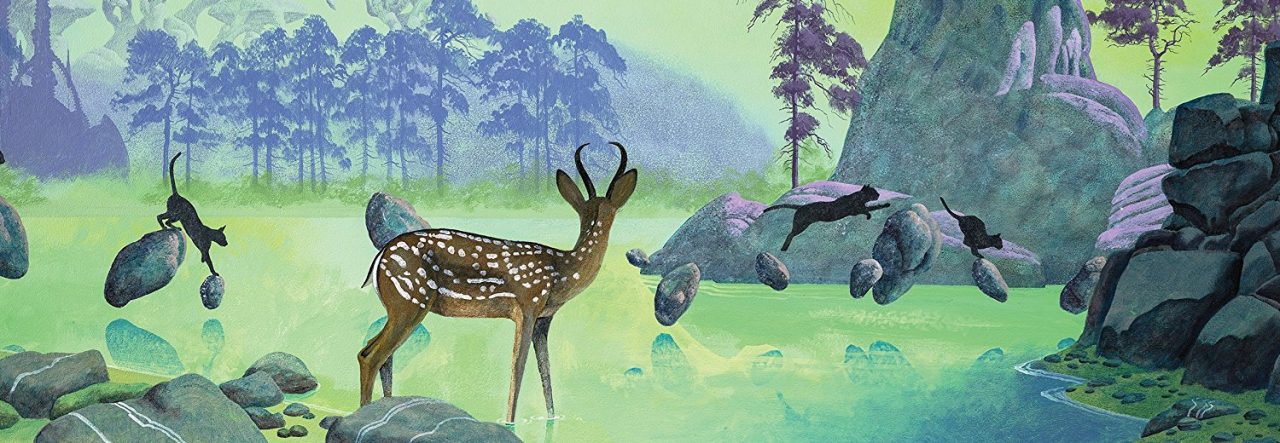
The album features an ode to the earth, which is another theme that ran through Kansas’ lyrics back in the day. Musically and lyrically “Mother Earth” reminds me a little bit of “Cheyenne Anthem.” We get a bit of western imagery in the middle of the album, and there or subtle lyrical nods to the Wizard of Oz, which is most blatant in the beautiful cover art by Tom Lupo. “Rise of the Phoenix” is an instrumental track that is pure Kansas. The guitar, bass, drums, and violin all blend perfectly in a driving track that sets the stage for “The Phoenix,” which is another track reminiscent of Kansas.
I was surprised to hear something that reminded me of Big Big Train on this record. The sixth track, “Prelude,” is a brief introduction to a beautiful cover of Kansas’ “Dust In The Wind.” The prelude blends aspects of the Kansas sound with distinctly Big Big Train movements, including a brass band towards the end and the way the musical action steps down towards the end before morphing into “Dust In The Wind.” Perhaps it wasn’t intentional, but it sounds great all the same. “Dust In The Wind” is mostly true to the original, with the song building into harder rock territory as it goes along. It also adds more symphonic elements to the track. All along it retains the Kansas sound.
Ian Anderson’s flute stands out immediately on “Pizzacato (A Slice For Baby Boy Flynn),” which is a folk instrumental rather than a rock piece. Robby’s violin blends well with Anderson’s flute, and it makes you wonder what an entire album of their collaborations could have given us. Both men strike me as being rather similar in a lot of ways, at least when it came to their stage presence back in the 70s.
“Tuck Tuck” is a rather touching ode to the forgotten people of society – the hookers, beggars, and downtrodden of the cities. Steinhardt reminds us that those who have absolutely nothing matter just as much as anybody else. He reminds us that they all have stories – backgrounds of where they came from. He calls them “a royal family / lords and ladies of the evening.” He tells us of Nancy, a girl who excelled in her youth but had to leave home at 17 because of abuse at home, and sadly now she is on the streets. He tells of a young man who came back home from serving in the military and who couldn’t find any work. Now Joey is living in a cardboard box on the streets. Both are “downtown royalty.” Musically the song is a blend of styles with elements of a laid-back country song mixed with more a more traditional ballad. Lyrically I find the song quite moving.
The losers and twenty-four hour girls The street corner boys and the underworld Holding court in city streets Everyone’s seen downtown royalty
Steinhardt’s vocals really shine on the album. I wasn’t sure how he would sound after so many years on the road as well as so many years away from the industry and the health issues he dealt with over the last decade. But he sounds just like you would remember, albeit with a bit deeper tone. It’s a warm and comforting voice that I have missed in the milieu of modern prog.
Robby Steinhardt’s Not In Kansas Anymore is one of the first albums in a little while that made me sit up and take notice. I wasn’t sure which direction this record would go – if it would be more rock, more classical, folk, or what. Robby had been mostly retired for a long time, but that time away clearly didn’t impact his talent as a musician. The most tragic part of this record is how it now represents a new beginning cut short. It was Steinhardt’s first, and sadly last, solo album. He was excited to get on the road and tour starting this past August, but unfortunately he got sick in May and never fully recovered. Thankfully we will have this record by which to remember him, in addition to his years of brilliant work with Kansas.
This album is definitely one to check out, especially if you’re a Kansas fan. It has the special touches that I think have been missing from the last two Kansas records.
To my astonishment, this appears to be the first Mastodon album reviewed on this website. How can this be? After all, this is a band that not only seasons their exceptionally math-y thrash metal with delectable flavors of sludge, stoner rock, prog and even hints of country. This is a band who came to my attention on David Letterman with the lead track from 2009’s Crack the Skye, an album-long narrative arguing the case for astral projection’s secret influence on the Russian Revolution. (And it wasn’t their first concept album, either — that was 2004’s Leviathan, based on — what else? — Herman Melville’s Moby Dick.)
After this — plus no-holds-barred follow-ups like 2011’s The Hunter and 2014’s Cthulvian Once More Round the Sun — I can’t help but ask again, where’s the love for Mastodon from Progarchy been all this time?
It’s not too late to hop on the bandwagon, though; Mastodon’s smoking new double disc effort, Hushed and Grim, is here to melt our minds and set our heads banging. Every single one of the fifteen tunes offer has at least two (and sometimes three) killer riffs pounded out by Brent Hinds and Bill Kelliher on guitar and Troy Sanders on bass, with Brann Dailor adding multiple layers of mayhem on drums. Sounds like a potentially stagnant formula on the surface, but given that the Atlanta-based quartet can spin on a dime through multiple textures, tempos, and time signatures in the course of a single song, the approach never fails.
And you never know what ear candy may show up in the midst of the prevailing heaviness — there’s the finger-pickin’ Americana intro to “The Beast,” the impeccable synthesizer solo on “Skeletons of Splendor,” the dream pop verses of the otherwise grunged-up “Had It All.” Hinds digs deep for his full-tilt solos, with a Southern-fried touch of Duane Allman peaking through every so often; Dailor’s playing calls to mind an alternate-universe Keith Moon playing with Jimmy Page instead of Pete Townsend. And the combined vocals (Sanders, Hinds and Dallor split the leads, with Kelliher as a harmony voice) provide kaleidoscopic colors to match the range of the music, from heavenly harmonies complementing 12-string textures to raucous, full-throated bellows over odd-time gallops. Producer David Bottrill (whose other credits include King Crimson and Tool) pulls all the elements of this sonic maelstrom together; the end product is marvelously stylish, delightful to listen to even as it knocks you flat.
But the music, as cool as it is, isn’t hanging out there on its own; the lyrics have a pungent bite as well. Mastodon are on a mission here, paying tribute to long time friend and manager Nick John, who died in 2018. Is the narrative here, kicking off with the vicious opener “Pain With An Anchor” and concluding with the epic “Gigantum,” a journey through the stages of grief? A depiction of dying from the inside out? Or yet another meditation on existence and mortality (for which I’ve proved a sucker time and again in the age of COVID-19)? Your mileage may vary with your interpretation — but boy, do Sanders, Hinds, Dallor and Kelliher bring the goods. The rage of “Sickle and Peace,” the devastated sorrow of “Teardrinker,” the desperate struggle of “Pushing the Tides” — all of it hits home. If you’re not cathartically drained after a listen to Hushed and Grim, you haven’t been paying attention.
As I think I’ve mentioned before, I’m not a big prog-metal head — but when it’s prog-metal as good as Mastodon, I surrender willingly. Check out Hushed and Grim for yourself below — and definitely catch them live if they come to your town! (I did back in 2015, and my ears might still be ringing.)
Our readers know that here in the Republic of Progarchy, we call ’em like we hear ’em.
So, it should be no shock if we hold nothing back, as when we discovered Dream Theater had dropped a deuce (see The Astonishing Pile of Crap), or, more recently, when Steven Wilson’s hand erases the raven and bites the fans that feed him.
In the same vein, we have to give credit where credit is due. And with A View from the Top of the World, the muscular and mighty Dream Theater serves up a grand-slam prog metal comeback.
This is a solid album and every track pummels home the undeniable truth that Dream Theater on a good day is a force to be reckoned with and can blow away almost any band on Earth.
Heck, I am convinced Mike Mangini could beat the crap out of any drummer on the planet. His enfilading fire over the drumkit carries me back to that adolescent wonder at hearing Neil Peart do things that you never knew a human could do with the sticks. Drummers of the world need to give this album some kind of special award for his performance alone.
But of course every musician in Dream Theater is top tier, and John Petrucci is a standout, not just for his masterclass in shredding faster than the speed of light, but also for his excellent lyrics on this album.
When you give this disc a first listen, don’t give up in exhaustion when Dream Theater’s dream team of musical prodigies overwhelms you with the Mozart school of “too many notes” musicality (the unofficial Progarchy motto). Wait patiently for those magical moments when you are hooked in and happily surrender, knowing that you can’t wait to return and hear the album again.
For me, it happened as soon as I heard “Transcending Time,” which is a truly glorious track that manages to combine the sound of the Steve Morse Band with that of classic Rush. The first line of the lyrics should immediately transport you to the metrical pattern of the first line of Rush’s “Red Barchetta.” This song alone should cement your purchase of the CD, as it did for me.
I can’t remember the last time I was this excited by a Dream Theater song. (Actually, I can. It was “The Enemy Inside,” and then the Limelight-laden “The Looking Glass.”)
The other track that knocked me off my complacent critic’s chair was the title track. Clocking in at twenty minutes, I have to admit that every minute of it is enthralling, and every time it ends I find myself wishing it would stop the fade and simply continue. It’s just so cool.
All hail Dream Theater for their most amazing comeback on this track and on this album.
It is right and just that the legendary Hugh Syme adorns this magnificent album with his most excellent art work.
Holy cow! I wasn’t expecting news of a new Big Big Train album this morning. This just goes to show that this band is one of the few decent things left in this world. Life seems to suck more and more by the hour, but Big Big Train breathe a bit of light into the darkness.
The new album, Welcome to the Planet, is set to be released on January 28, 2022 – just six months after their last album, Common Ground. The new album features contributions from the entire new lineup. Here’s the tracklist:
PART ONE
Made From Sunshine
The Connection Plan
Lanterna
Capitoline Venus
A Room With No Ceiling
PART TWO
Proper Jack Froster
Bats In The Belfry
Oak and Stone
Welcome To The Planet
As with Common Ground, Welcome To The Planet sees Big Big Train retain their progressive roots but also take influence from all spheres of music. The album’s opener Made From Sunshine, co-written by guitarist Dave Foster and singer David Longdon, has guitar lines redolent of Johnny Marr and vocal harmonies reminiscent of the Finn Brothers/Crowded House, with violinist Clare Lindley sharing lead vocals with Longdon.
Elsewhere on the album, keyboard player Carly Bryant gets her first Big Big Train writing credit and lead vocal on the captivating title track. The two recent singles The Connection Plan and Lanterna are included along with a winter themed song Proper Jack Froster, a bittersweet tale of childhood. The album is completed by the delicate acoustic Capitoline Venus, the beautiful Oak And Stone and a pair of dazzling instrumentals, A Room With No Ceiling and Bats In The Belfry, written by guitarist/keyboardist Rikard Sjöblom and drummer Nick D’Virgilio respectively
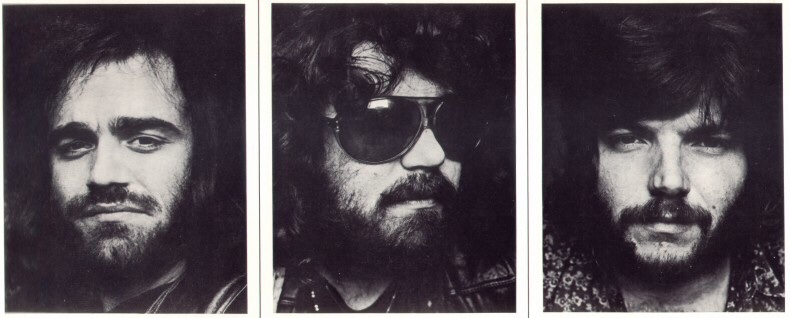
What could be described as an under appreciated psychedelic rock band from the late ‘60s and early ‘70s, Aphrodite’s Child, created several phenomenal songs worth hearing. They were a band comprised of three, main members: Evangelos Papathanassiou (Vangelis), Demis Roussos, and Loukas Sideras. With the combination of Vangelis’s extraordinary composing, Demis’s unique voice, and Loukas’s skillful drum work, this is a solid band worth coming back to.
From left to right: Demis Roussos, Vangelis, and Lucas Sideras.
The first song I heard by the group was “End of the World”. It was actually recommended to me by fellow Progarchist Connor Mullin. However, it was not until I heard the song “It’s Five O’Clock” that my eyes opened to how special the band was. The ending of that song dazzled me with its auditory brilliance. When the ending piano instrumentals gently floated into my ears, I was so shocked. The last 30 seconds consist of pure, psychedelic ecstasy. You can expect to be shocked by this band’s work throughout the course of their 3 albums. The short but oh so sweet musical endeavors of Aphrodite’s Child deserve to be discussed again and again. I’ve put together some of what I believe to be their best songs—enjoy!
“End of the World”—is one of my personal favorites because I find it so unique. It is the perfect teenage love song: full of doom and gloom (hence the name) and a feeling of being unwanted. It captures the romanticism of running away with someone you love and forgetting about everything else. But, it also deals with the unfaceable truth of rejection. Vangelis does such a wonderful job at setting the tone of when love feels apocalyptic, thanks to not only his awesome piano skills, but all of the other ominous sounds in the song. There is a great live version of this song on Youtube worth checking out. Every time I watch it I wish I could jump through the screen and be there; everyone’s outfits are superb. In addition, Demis’ opening vocals on the track are haunting in the best way possible. After hearing them, I was ready to drop everything and go to the end of the world with him! No questions asked.
“Good Time So Fine”—is my absolute favorite! This song made me fall in love with Demis Roussos. I have such a respect for his voice and musicianship. I adore this song’s playful tune. The pitch changes of Demis’ voice makes this song so much fun! It’s amazing that he is singing both parts of the song—I would have never known. The lyrics are sweet and feel like a breath of fresh air; it’s a song you’d happily be singing along to in the sunshine. The chorus makes you feel the freedom and joy that is love. This song feels like it belongs in a musical, which makes it easy to dance and sing along to. I watched a live recording of Aphrodite’s Child performing this song and it was so impressive to see Demis sing, play bass, and play the trumpet, all in the span of a three minute song. This song was made for Demis Roussos.
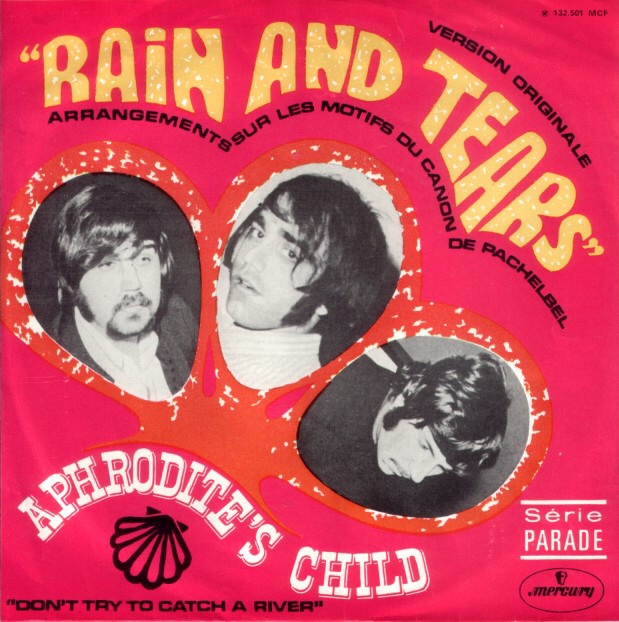
“Rain and Tears”—this song is an adaptation of Pachelbel’s Canon and is the band’s most commercially successful song. The most notable part of the song is its bridge. It transitions from a mediocre love song to a heart wrenching melody. The song could have remained in somewhat basic state, but it goes a step further. This is thanks to the masterful vocals of Demis Roussos. The song goes to such an ethereal level when Demis croons those beginning lyrics of the bridge. It’s no wonder this was such a hit.
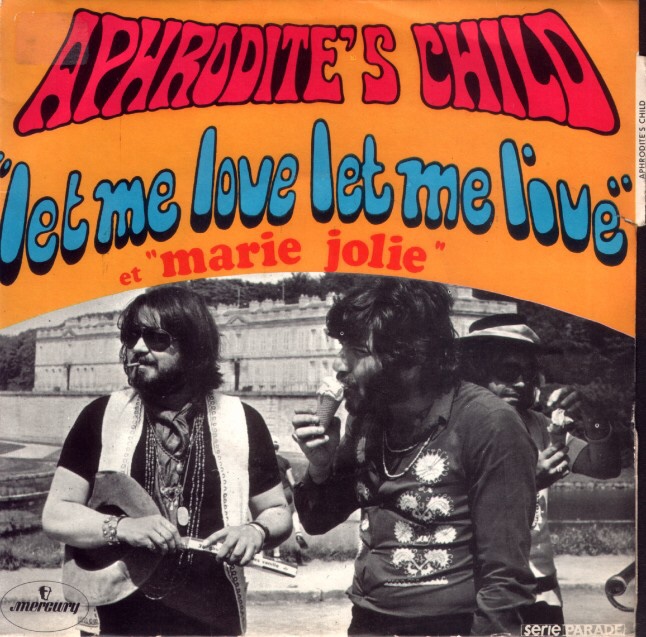
“Marie Jolie”—can be described as one of the best love songs I’ve ever heard. Again, Roussos vocals transport the listener to a celestial level. It seems like his heart and soul were put into every word he sings, which makes the lyrics so intense. Roussos’s vocals add a profundity to the otherwise simple lyrics. My favorite lyric from the song is ‘Love is everywhere you are’ because Demis presents it so powerfully. Every time I hear this song it gives me chills and I find myself swaying to the soft combination of Demis’ voice and the graceful percussion provided by Lucas Sideras.
“The Four Horsemen”—is the perfect song to get in the Halloween spirit. With an electrifying guitar solo and haunting vocals and lyrics, this is one cool and timeless song. The song —and the entire album—refers to the Four Horsemen of the Apocalypse—Pestilence, War, Famine, and Death—referenced in the Book of Revelation. The lyrics are quoting from the scripture itself, adding to the eeriness of the song. You’ll feel like your in the end times listening to this song, but in the grooviest way possible.
Aphrodite’s Child has so much to offer and I am so happy to have been shown their music. A huge thank you to all the talented people that worked on any of their albums. Aphrodite’s Child’ will live on forever and ever.
A special thank you to Vangelismovements.com for providing such detailed information about the band.
With a cover that evokes the pastoral simplicity of a Robert Frost poem or Ray Bradbury’s October Country, After the Fall seemed a fitting album to review in this most beautiful month of the year. Although one might expect to hear lilting flute and gentle acoustic guitar on an album like this, After the Fall includes neither; rather, it relies on piano, moog, and violin to create a spacey, jazz-fusion sound.
The album itself consists of only six tracks and is just over thirty minutes in length. The “Intro” opens with the sound of the blowing wind on a cool autumn day before Mark Sterling’s moog comes in to treat our ears to a soft cosmic journey. The three subsequent tracks – “October Suite,” “Earth,” and “Through the Light of Reason” – feature the prominent use of electric piano and violin, both of which are played with skill by Mark Krench and Brad Tolinksi, respectively. Elements of Pink Floyd and Camel are sprinkled throughout, especially toward the end of “Earth.” The fourth piece, “Shining,” features Jeff Rozany doing duty on both bass and vocals, but he sings only a few lines in a gentle voice before the instruments – the stars of the show – again take over. “Charisma,” the longest and best of the six, closes the album. Although the moog, electric piano, and violin continue to shine, and Pat Carson proves himself a steady anchor on the drums, it is Rozany’s bass that relentlessly drives this song forward, giving “Charisma” an edgier sound than the other tracks.
If you are expecting something in the vein of Jethro Tull’s “Witch’s Promise” (as, admittedly, I was), you will be in for a surprise – but a pleasant one. October will not necessarily blow you away (pardon the wind pun), but it does make for a lovely, relaxing listen for a cool autumn day. Fans of symphonic or jazz fusion will appreciate this one.
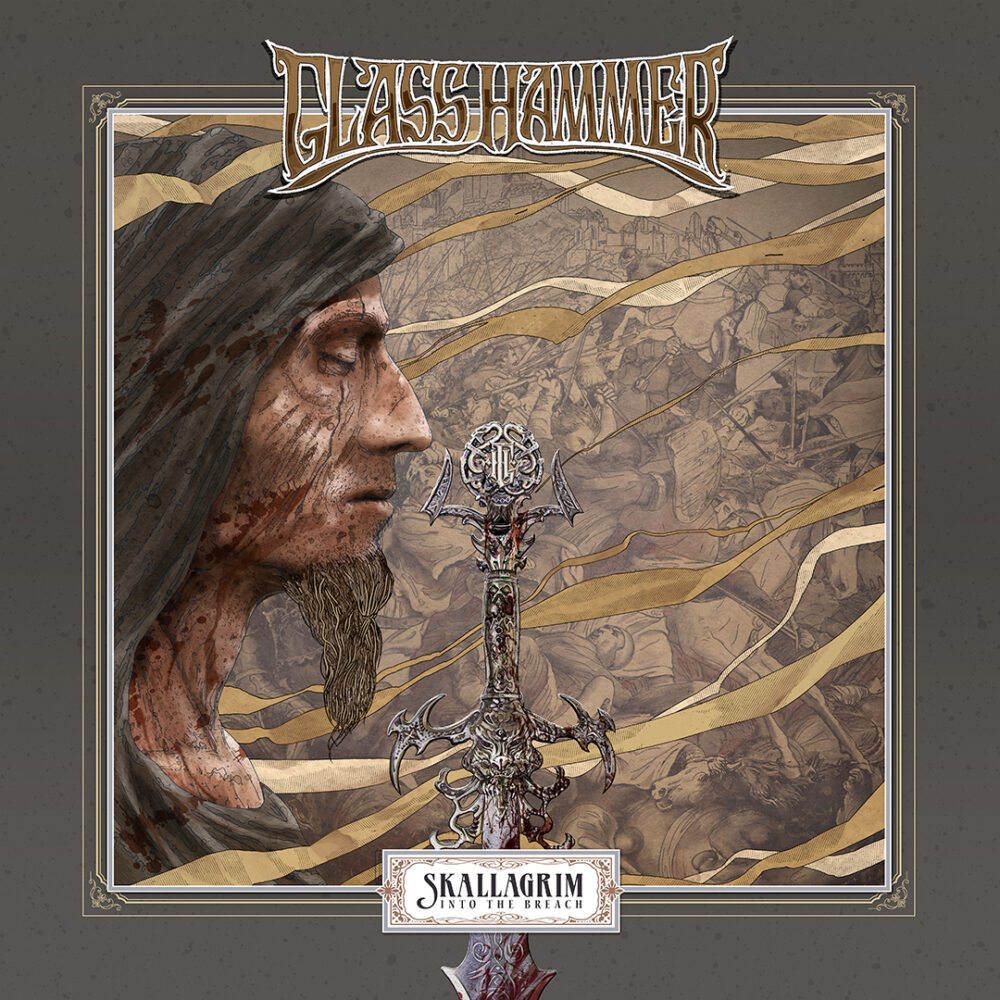
Glass Hammer, Skallagrim – Into the Breach: Fred Schendel, Steve Babb and company return with the second installment of their multi-part “sword and sorcery” epic, begun on 2020’s Dreaming City. The music rocks hard and heavy, evoking everyone from Deep Purple to Mastodon (and yes, a fair amount of Rush), with just enough moody, ambient keyboard work to cleanse your aural palate before the next round of crunchy power chords. All this marvelously matches the grimdark vibe of the titular hero’s melodramatic quest for his lost love. (And a surprise lyrical callback to an earlier GH album sets up tantalizing possibilities regarding just who that lost love is.) To top it all off, new vocalist Hannah Pryor proves a major discovery, surfing Schendel and Babb’s gargantuan riffs with zest, grace and power to spare. Every bit as involving as Dreaming City, this fine album is a blast in every sense of the term. Order signed CDs, downloads and merch direct from Glass Hammer’s webstore.
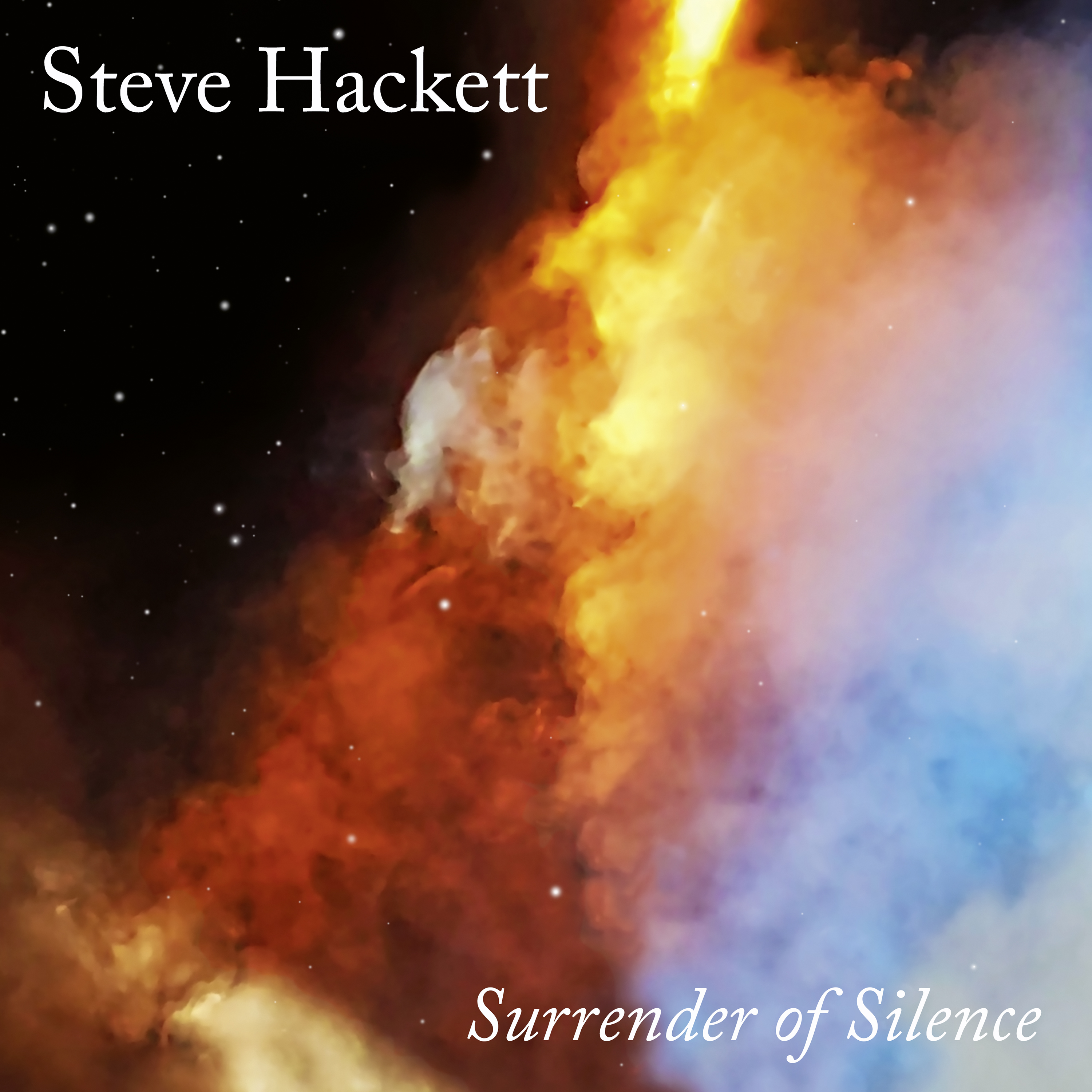
Steve Hackett, Surrender of Silence: enter one legendary guitarist, shredding! Hackett lets himself off the leash here, laying down both his wildest compositions and his most hardcore playing in quite some time. The tunes can actually be a bit undercooked, their influences not always fully assimilated (‘Hmm, Prokofiev . . . wait, Brubeck’s “Blue Rondo A La Turk”!?! . . . good grief, is that lick really “Theme from Exodus”???’). Nonetheless, Hackett’s swashbuckling solos atop Roger King’s widescreen orchestrations are irresistible as always; he and wife Jo serve up fresh sonic travelogues such as “Wingbeats” and “Shanghai to Samarkand”; and full-on burners like “Relaxation Music for Sharks” and “The Devil’s Cathedral” (featuring Hackett’s full band, including Nad Sylvan on vocals) never fail to thrill. Perhaps it’s not up to the towering heights ofAt the Edge of Light and Under A Mediterranean Sky, but Hackett’s latest is well worth your while. Order signed albums (CD, CD+BluRay combo, LP or LP+CD combo) direct from his webstore.
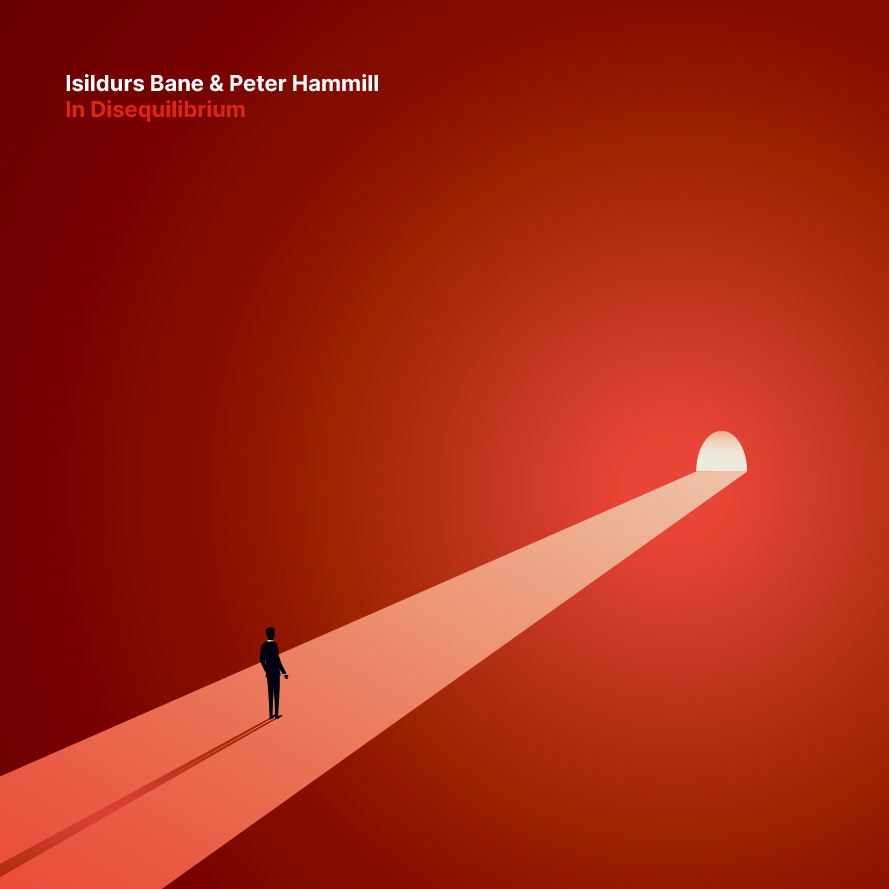
Isildur’s Bane& Peter Hammill, In Disequilbrium: Mats Johansen’s expandable international ensemble (including King Crimson’s Pat Mastelotto on drums this time) reconnects with Van der Graaf Generator visionary Hammill; two sprawling multi-movement suites result. The three-part title piece careens between hard-driving rock, off-kilter electronica, spastic percussion interludes and haunting chamber textures, as Hammill decries a post-pandemic world that was already primed for chaos. (“There’s no choreography, dance the Tarantella./In disequilibrium round and round forever we’ll go.”) In the four-part “Gently (Step by Step)”, Hammill supplies winningly vulnerable encouragement to face whatever the future holds; the band drapes his incantatory vocals in dizzying sonic collages that somehow always sound forlorn, no matter the timbre or tempo at a particular moment. This one definitely requires multiple plays to unfold its secrets, but it’s well worth the effort; the way IB’s devastatingly precise, multilayered processes track with the unpredictable contours of Hammill’s apocalyptic meditations must be heard to be believed. Order CDs and LPs (plus previous collaborations with Hammill and Marillion’s Steve Hogarth)at Burning Shed’s Isildur’s Bane store.
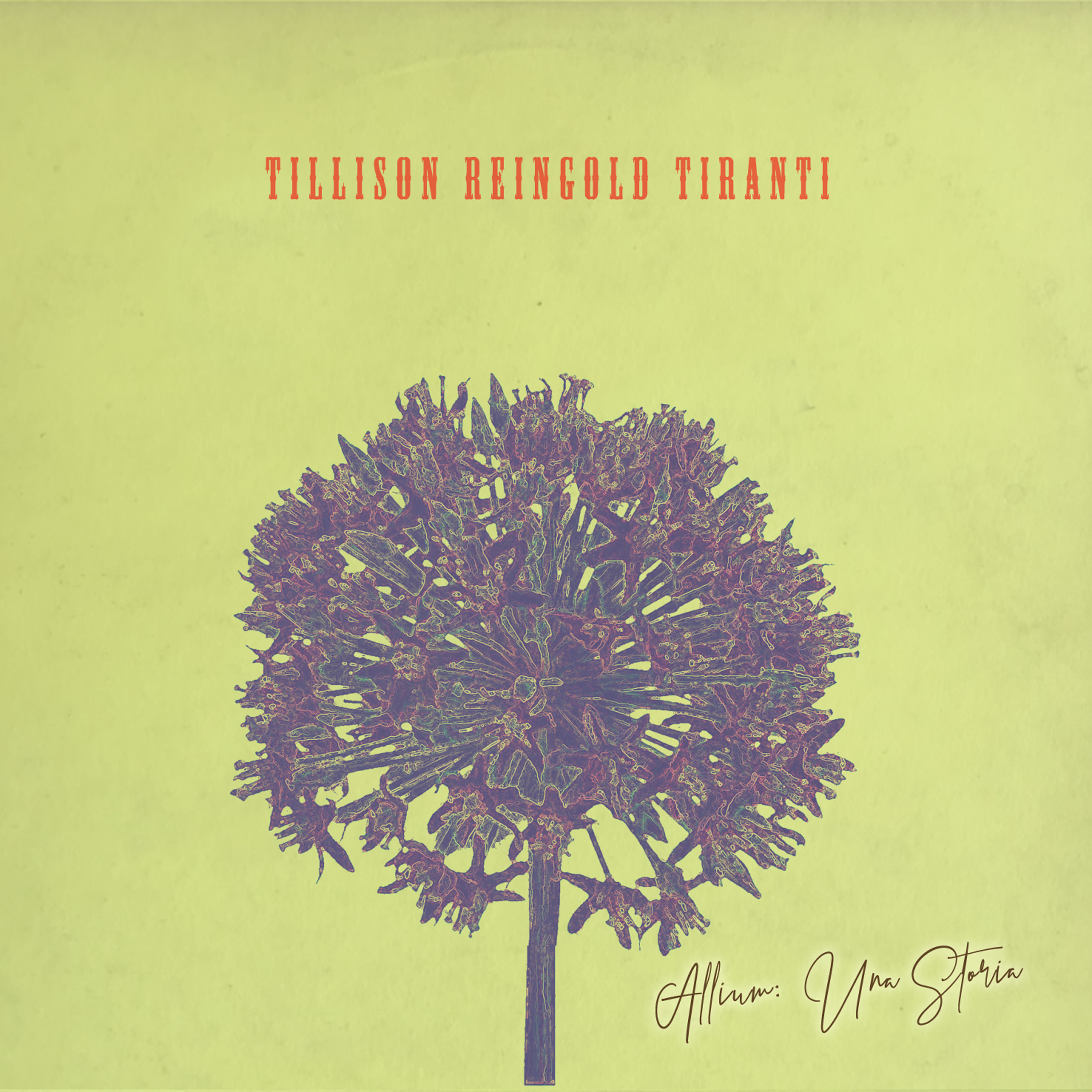
Tillison Reingold Tiranti, Allium – Una Storia: Perhaps Andy Tillison’s most light-hearted effort ever. Back in 1976, a teenage Tillison encountered (and sat in with) the obscure Albanian prog group of the album’s title at an Italian holiday camp — and it changed his life for the better. This lockdown-inspired “homage to a band whose day never came” easily goes beyond a mere tribute to Seventies Europrog, capturing the sheer joy and the heady freedom both Allium and the fledgling Tillison must have felt in those moments. Collaborating with Jonas Reingold (bass and guitars), Roberto Tiranti (vocals) and Antonio DeSarno (Italian lyrics), Tillison contributes some of his best, boldest keyboard work ever on three long, appealingly involved, frequently funky tracks — and plays all the drums! And you get both Tillison’s “Original Mix” (effortlessly conjuring up the period — I was roughly his age at the time) and Reingold’s “Respectful Remix” (which, bourgeois Philistine that I now am, I actually prefer). If you’re interesting in hearing the Tangent’s mainman just having fun, this is your ticket. Order CDs from Reingold Records.
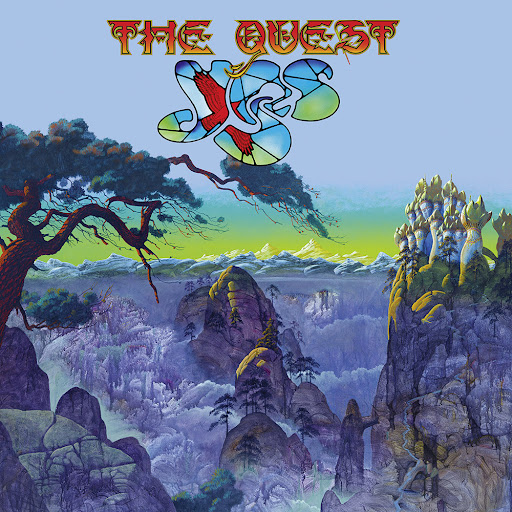
Yes, The Quest: I’d argue that Yes, in any formation, hasn’t made an essential album since 90125. I’d also argue that, when Geoff Downes’ keys and Steve Howe’s sublime guitar really lock together, as on the opening “The Ice Bridge”, the results sound more like upper-mid-level Asia than the band they’re supposed to be in here. But if Yes fans can get past these discontents (as well as the numerous others they’ve accumulated over the decades), they may enjoy The Quest’s estimable (though not overwhelming) charms. Singer Jon Davison brings the requisite lyrical themes of self-actualization and environmental issues to the party; Billy Sherwood does his manful best to channel the spirit of Chris Squire on bass and vocals; and in the studio Alan White can still summon his classic drive, if not the power he had in his prime. The FAMES Orchestra add a dash of Time and A Word/Symphonic Tour luxury to the proceedings as well. While everything’s downshifted multiple gears from Yes’ most rambunctious, energetic — and it has to be said, creative — years this is an unquestionable step up from the appallingly bland Heaven and Earth, with its own modest appeal. I can see a track or two from this fitting nicely into the setlist when Yes finally can bring their long-promised Relayer tour to the Western Hemisphere. Order the album (in CDs, red LPs + CDs, CDs + BluRay combo, and CDs+LPs+BluRay deluxe boxset formats) from Burning Shed.


 Robby Steinhardt, Not In Kansas Anymore, 2021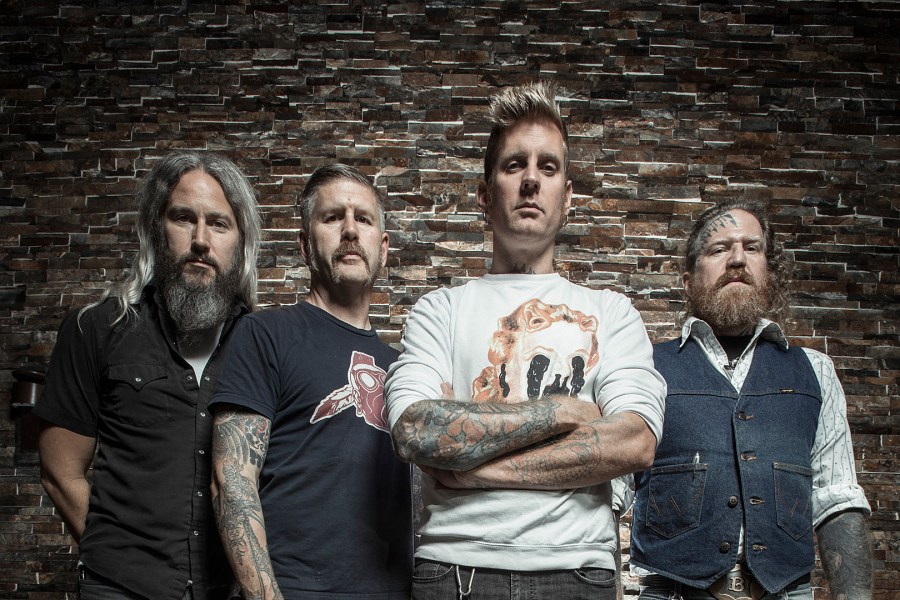
 Holy cow! I wasn’t expecting news of a new Big Big Train album this morning. This just goes to show that this band is one of the few decent things left in this world. Life seems to suck more and more by the hour, but Big Big Train breathe a bit of light into the darkness.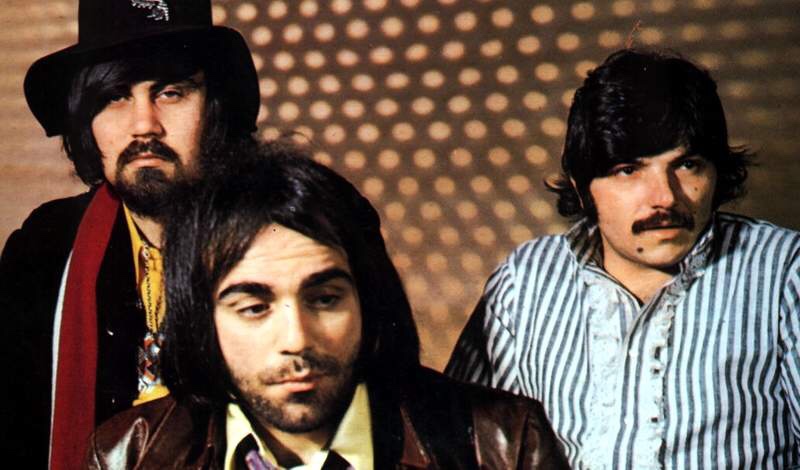

 Progarchy