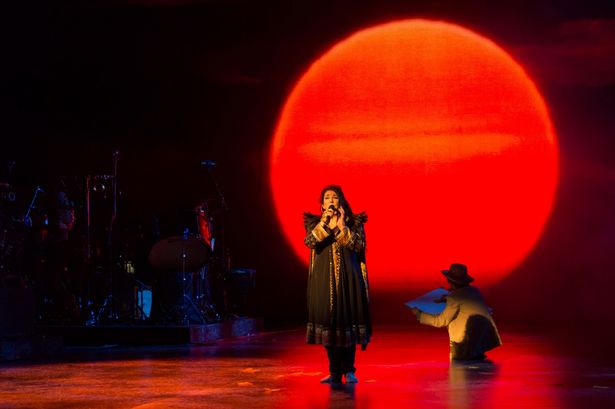
Kate Bush’s concert series this year has kicked off a remarkable return to the charts for her. She is now the first female artist ever to have 8 albums in the Top 40. And all of her albums are currently in the Top 50:
Her achievement is only bettered by Elvis Presley, who took 12 places after his death in 1977, and the Beatles, who scored 11 on their remaster releases in 2009.
Bush’s first chart record came when debut single Wuthering Heights made her the first female artist to reach No.1 with a self-written song. Now her 1986 record The Whole Story has made No.6 while Hounds Of Love, from the previous year, has reached No.9. Further titles are placed at 20, 24, 26, 37, 38 and 40, with three more at 43, 44, and 49. That means her entire back-catalogue is in the top 50.
The Electronic Press Kit for ‘Hymns For The Broken’:
It is not often that I get personally invited by an artist to interview them for this little blog of mine. However, that was exactly the reality with which I was faced recently when I was contacted directly by none other than Mr Tom S Englund of Evergrey. Or, in my world, where Evergrey are the pinnacle of my musical enjoyment, a person I consider something of a hero but also a friend.
“Matt.. I’ll be in London for press next month.. so we should do an interview – right?”
Outwardly, my reply was “I think it would be rude not to wouldn’t it?”. Inwardly, I was jumping around like a mad thing.
Having organised the requisite day off work, I headed to central London from my back-end-of-nowhere home. Informed that I was first up on the day, I made…
Juniper Research finds that digital music industry will see worldwide revenue grow from $12.3 billion this year to $13.9 billion in 2019. Juniper’s research indicates that even that growth hinges on the streaming music sector bringing in more cash as sales of digital downloads, ringtones and ringback tones continue to plummet. …
That growth comes as any album that isn’t released on vinyl dies a horrible death. Nielsen Soundscan equates 2,000 streams to one album, but even with that in the equation, album sales are down 3.3% through June. Take streaming out of the mix and you’re looking at a 14.3% drop from the same time last year. The nearly 20% drop in compact disc sales over the last year is almost expected as CDs continue their post-’90s free fall, but the 11.6% drop in digital album sales and 13% drop in digital track sales is far more troubling.
Digital download sales fell for the first time last year and aren’t coming back. People aren’t loading up their smartphones with songs anymore and aren’t carrying iPods anymore.
That’s not great news for the music industry, which uses digital track sales as a crutch to limp toward respectable numbers. When you factor in “Track Equivalent Albums” — a stat that equates 10 of an artist’s tracks with one album — Katy Perry, Pharrell Williams, Lorde and Beyonce all had albums sell 1 million copies and go platinum this year. Take those individual tracks away and reduce album sales to strictly physical and digital albums in their entirety, and suddenly Beyonce, Lorde, Coldplay and Eric Church are the only artists to go gold and break 500,000 sales this year. The only album to go platinum by that measure? The soundtrack to Disney’s Frozen, with 2.7 million copies sold in the first six months of 2014.
According to Nielsen, album sales of any kind plummeted from 755 million copies in 1999 to just 290 million last year. Compact disc sales have fallen steadily from 730 million in 2000 to just 165 million last year. This year, the Frozen soundtrack was the only digital album to sell 1 million copies — or even more than 350,000.
Meanwhile, even as digital track sales fall, singles sales remain strong. Pharrell’s Happy sold 5.6 million copies in just six months. Katy Perry and Juicy J’s Dark Horse broke 4 million, but even artists a bit further down the chart are more representative of what anyone’s actually listening to. DJ Snake, Iggy Azalea, Bastille and Aloe Blacc are absent from the first-half album charts, but all sold more than 2 million copies of their singles Turn Down For What, Fancy, Pompeii and Man.
Move it over to on-demand streaming, and those 2 million to 5 million sales turn into 40 million to 65 million audio streams and 70 million to 120 million video streams. Psy’s Gangnam Style still managed 69 million video streams this year after making more than $1 million off of streaming royalties alone last year. Google CEO Larry Page watched Psy’s viral hit rake in $2 per 1,000 pageviews and called it “a glimpse of the future.” By that measure, the 122 million views Perry’sDark Horse received through June adds up to $244,000 alone. It isn’t seven figures, but it’s a whole lot of cash for one song doing six months of work.
As the music industry continues to gravitate away from an ownership model and toward its streaming future, it’ll take any gains it can get. A robust streaming ecosystem is great for everyone involved, but if cannibalization limits both artist and label options, the same losses plaguing physical album sales and digital album and track sales now could kneecap streaming in the not-so-distant future.
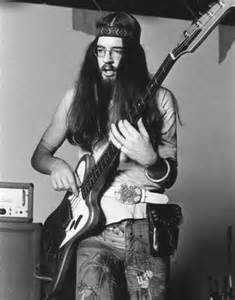
I just saw over on the Jethro Tull website that original bassist Glenn Cornick passed away on Friday, August 29, at his home in Hawaii. He died of congestive heart failure. Ian Anderson writes:
It is with great sadness that we learned today of the passing of Glenn Cornick, bass player with Jethro Tull from the band’s inception 1968 until 1970. Of course, he had also played with the John Evan Band for the year during 1967 and so his contribution to the geographical transition from Blackpool to London and into the professional music scene was considerable.
Glenn was a man of great bonhomie and ready to befriend anyone – especially fellow musicians. Always cheerful, he brought to the early stage performances of Tull a lively bravado both as a personality and a musician.
His background in the beat groups of the North of England and his broad knowledge of music were always helpful in establishing the arrangements of the early Tull.
During the many years since then, Glenn continued to play in various bands and was a frequent guest at Tull fan conventions where he would join in with gusto to rekindle the musical moments of the early repertoire.
We will miss him hugely and our condolences go to his wife Brigitte and children.
On behalf of Progarchy, I send our sincerest condolences to Glenn Cornick’s family. He certainly contributed much to Jethro Tull’s first three albums, This Was, Stand Up, and Benefit.
Admittedly, Mike Kershaw’s music is new to me, and his style is not something I typically listen to. However, I have found Ice Age
to be a detailed and complex album, definitely worthy of attention. The lyrics are hauntingly beautiful, and the keyboard driven music draws upon music from the 1970s and 80s, yet it still strikes me as being mysterious and unique. The steady drums and the interplay of the soft guitar make it all the more enjoyable to listen to.
Interestingly enough, after listening to the album, it struck me as being very “northern European.” Being an American with strictly northern and northeastern European ancestry, this music seems vaguely familiar. It is cold, yet warm underneath. It seems unapproachable at first, but once you give it a listen, it draws you in. Ice Age is an album that I believe J.R.R. Tolkien’s character Túrin Turambar, from The Silmarillion, would have on his iPod. If you haven’t read the book, you have no idea what I’m talking about. If you have, I think you might agree that this album has a very dark, brooding, and foreboding nature to it, much like Túrin. The album questions the future while looking back to warmer and happier days.
Ice Age maintains a very serious tone throughout the album, yet it becomes steadily more upbeat as the album progresses. Lyrically, the album is more hopeful in the beginning, focusing on a remembrance of happier times, yet still acknowledging turmoil ahead. As the album moves on, the lyrics become darker and focus on mere survival in the impending ice age. Yet, through all of that, aurally the album becomes more upbeat beginning with the 7th (of 9) song, “Tomorrow’s Door.” There is a distinct turn in the album with that song. The pace of the music quickens, almost as if someone has turned a pleasant walk into a jog. By the end the jog turns into a run. I find it interesting that Mr. Kershaw chose to make the album lyrically darker as it became aurally brighter. It reminds me of a bright winter day in northern Illinois, where the sun is shining, yet the temperature is -30 degrees Fahrenheit. Things can seem bright and cheery, but they really aren’t.
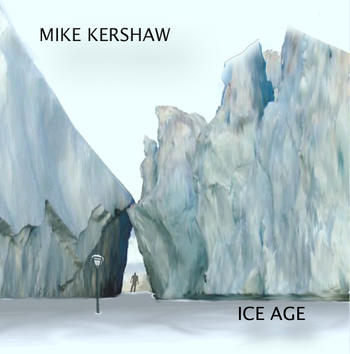
With that said, the cover art for this album is perfect. You see remnants of civilization, with what I believe is a streetlamp, with glaciers rising behind it, and in the shadow of the ice age, you see a single, solitary individual. You see the brightness of the sun reflecting off the ice and snow, yet the lyrics remind you of the cold and despair. It isn’t often when the artwork for an album so perfectly depicts the point the music is trying to get across.
Interspersed throughout the lyrics of the album, I found a gem that I particularly like. In the 5th song, entitled “Blossom Falls,” Kershaw sings:
We give our lives to progress
We pour them down the drain
These lines could not be more true, and he echoes the same sentiment elsewhere in the album. So often people devote their lives to an Aristotelian ideal of progress without remembering the mistakes and consequences of the past. When we do that, we wage the risk of wasting our lives by making the same past mistakes. Well said Mr. Kershaw. The lyrics of this album, for me, are definitely the best part of the music.
In the end, Ice Age, I believe, may take some effort to enjoy. To appreciate the complexity of the album, one really needs to devote their whole attention to it for the duration of the album. Believe me, though, it is worth it. I look forward to future releases from Mike Kershaw. The haunting beauty of his deep voice, the keyboards, drums, and guitars makes for an enthralling album.
Dear Citizens of the anarcho-Republic of Progarchy,
As some of you might know, in addition to editing this site, I also pretend to be a professor and author during the day. I’m currently working on a book on the history of dystopias (and dystopic ideas) in fiction, film, and music. I’m trying to compile a list of dystopian rock albums. Here’s what I’ve come up with. If, in the comments section, you’d like to make suggestions of things I’ve missed–PLEASE do so! I would be exceedingly grateful!
Yours, Brad
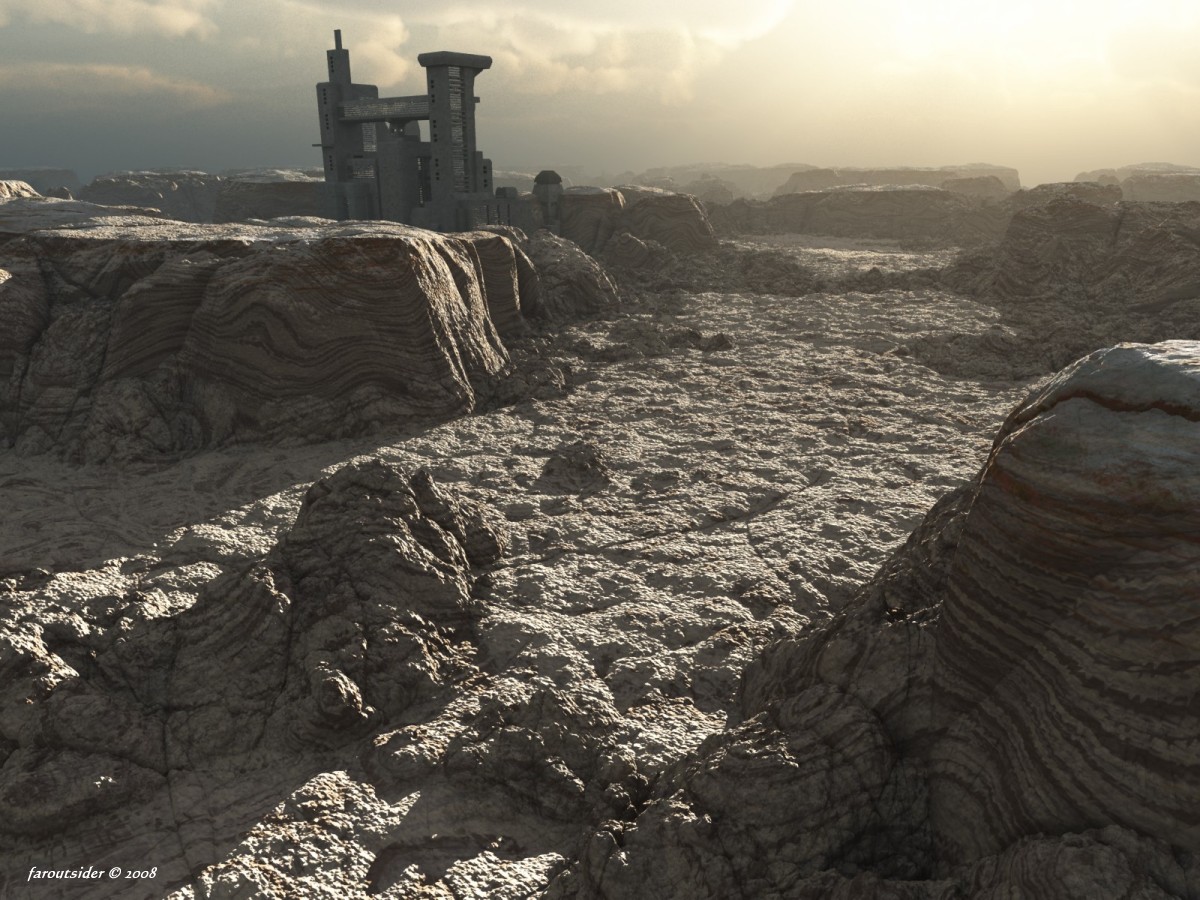
“Abandoned” by Craig Farham.
Rush, 2112
Rush, Clockwork Angels
The entire Ayreon series
Arjen Lucassen, Life in the New Real
The Tangent, Not as Good as the Book
Pink Floyd, Animals
Pink Floyd, The Wall
Gary Numan, “Down in the Park”
Radiohead, Kid A
Cosmograf, Capacitor
A few songs by Muse, Oingo Boingo, Coheed and Cambria
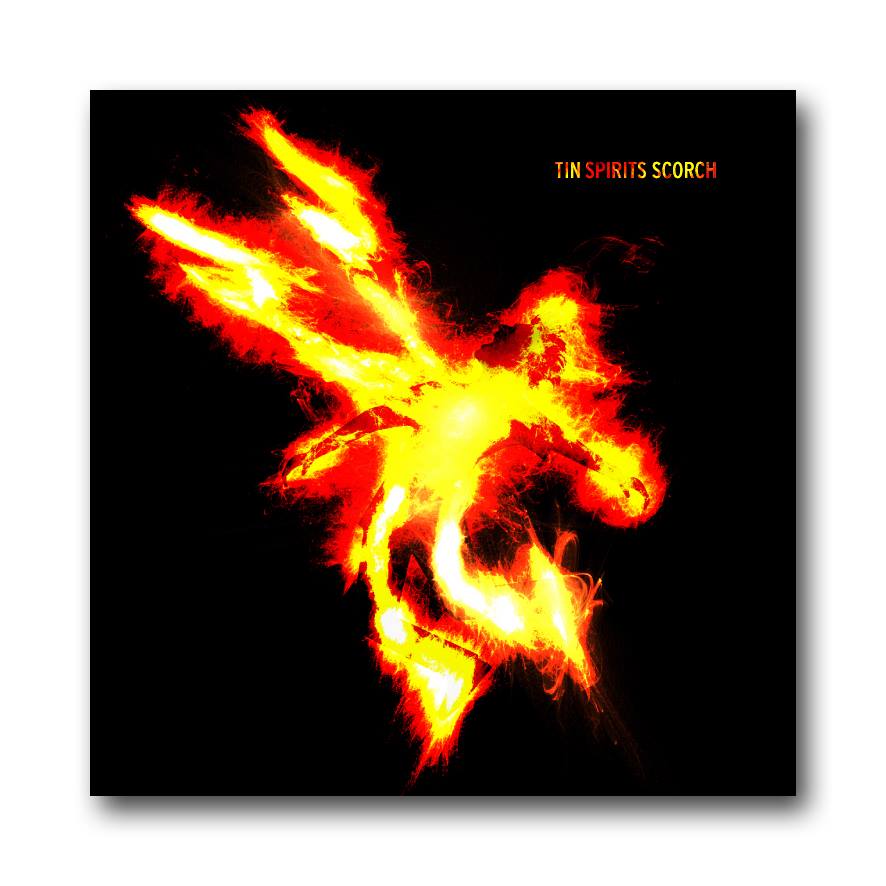
A review of Scorch by the Tin Spirits (Esoteric Records, 2014; officially released on September 15).
8 Tracks: Carnivore; Summer Now; Old Hands; Binary Man; Little Eyes; Wrapped and Tied; She Moves Among Us; and Garden State.
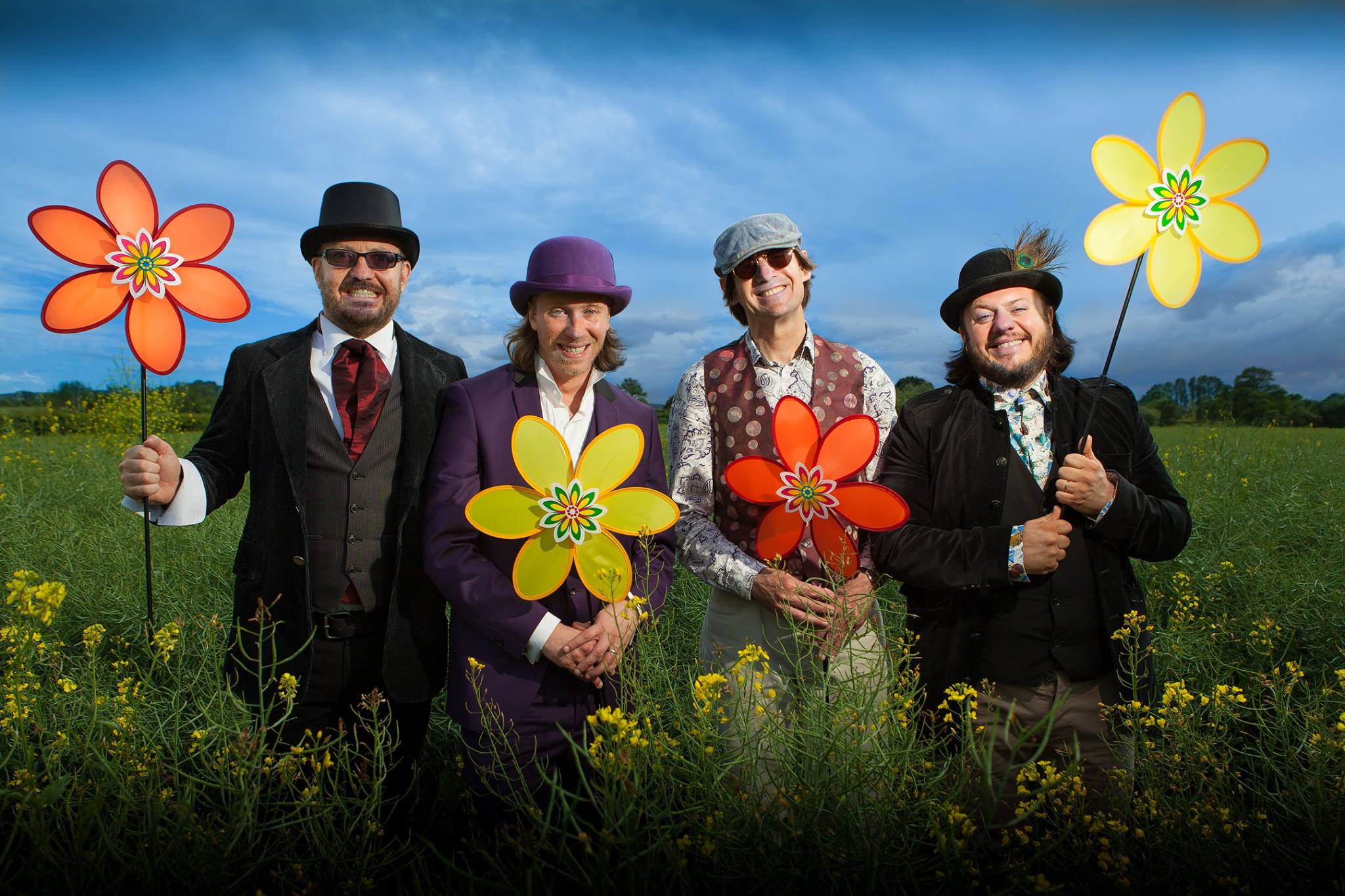
The Tin Spirits are: Dave Gregory (guitar); Mark Kilminster (bass and lead vocals); Daniel Steinhardt (guitar, vocals); and Doug Mussard (drums and vocals). You can visit the band at: http://tinspirits.co.uk
Highest recommendation. A must own for any lover of music.
Poor Icarus. Scorched. Forthcoming, September 15, 2014, from Esoteric.
A match explodes into flame, and so it begins.
The opening song, an instrumental, possesses the infectious personality of the best of post-Hackett Genesis, especially with “Turn It On Again” and “Abacab.”
Armed with driving bass, soulful guitar, and persistent drums, “Carnivore” moves the listener rapidly into an unknown future, and it does so without a trace of trepidation. And, yet, it contains a voluptuous kind of beauty.
This description applies specifically to the first of the eight tracks, but it could just as easily apply to much of the album. However one describes Scorch, the Tin Spirits are back, and I, for one, thank the good Lord. These guys are absolutely brilliant, and they seem to be even more so than they were with their first album, Wired to Earth.
This is no feint praise.
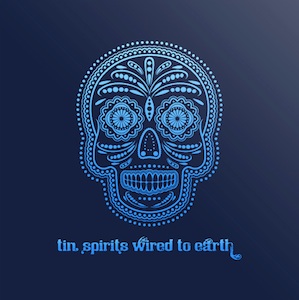
Wired to Earth (2011).
That album, Wired to Earth, hit me rather hard when it first came out. As far as I know, I was the first American to own and review a copy. I’m rather proud of this. Greg Spawton, maestro of Big Big Train, had recommended it on his own blog, noting it was a guitar kind of prog.
And, so it was.
Beginning with a somewhat airy instrumental and having a total of only five tracks, Wired to Earth called for full immersion. From airy, it moved quickly to hyper and heavy, then to 1974 Genesis, then to a gut-wrenchingly beautiful Allman Brothers style epic, concluding with a great guitar-pop rocker in the style of Nebraskan Matthew Sweet.
Even after three years of listening to the album, I’ve never tired of it. I play it at least weekly, and, in fact, the entire Birzer family loves it.
Following the intensity of “Carnivore” on Scorch, the second track, “Summer Now” gently guides the listener into a hypnotic state. Most likely, every reader of progarchy has already watched the first video from the album, and you’ve heard and seen what Tin Spirits is capable of. The video, of course, is gorgeous and psychedelic in a late 1980’s Tears for Fears kind of way. All four members look as though they’re having a blast, and Mark (vocalist and bassist) looks surprisingly GQ and non-prog! Guitar god Dave Gregory, who never seems to age, offers what is arguably the most tasteful guitar solo of the last decade. In every way, the Tin Spirits have captured the essence of summer with this song.
***
I’m not exactly sure about what’s going on with the cover (see above). It looks as though two bolts of lightning have fried some poor guy. It’s also possible the guy is shooting bolts of lightning from his body in an explosion of energy. Maybe this is a kind of a “glass half empty” or “glass half full” thing.
With the title, Scorch, though, I suspect that Icarus flew too close to the sun. Gods will be gods, and they generally don’t like man to upstage them. As Worf once explained, the Klingons found their gods more trouble than they were worth, and so they killed them. I must admit, as I look at the cover of Scorch, I’m hopeful for Icarus, siding more than a bit with the Klingons on this issue.
The interior artwork of the CD booklet flows easily from psychedelic to pyrodelic, the flowers of the first pages having become nothing more than swirled outlines of flame by the end.
I choose to believe that through the Tin Spirits, Icarus has finally prevailed against the gods.
Ok, back to the review. After all, shouldn’t a review of a prog album have an interlude?
***
So much better looking than Curt and Roland. The Tin Spirits, reaping the seeds of love.
The third track, “Old Hands,” begins deceptively. Starting as a somewhat simple World Party-like pop song, it suddenly morphs into a rather fulsome puzzle about deceptions and realities. The interplay of drums and bass especially stand out on the track.
Returning to the early 1980’s Genesis-like thrumming of “Carnivore,” “Binary Man” simply rocks. Perfectly placed on the album, “Binary Man” reveals not only the excellence of each member of the band as an individual performer, but it also highlights the power of Kilminster’s voice. “Your hypocrisy is deafening,” Kilminster laments.
“Little Eyes” is another beautiful song in the vein of “Summer Now.” Thematically, it deals with fortitude, and the guitar work on it fits wonderfully.
Grungy, angsty guitars explode at the beginning of the sixth track, “Wrapped and Tied.” The entire song has the feel of being caught in a tornado in the intial stages of its formation.
Track seven, “She Moves Among Us,” brings the listener back to the indescribable beauty of a flowering meadow. Imagine a Steve Howe solo without the overbearing flashiness, and you have “She Moves Among Us.” The whole piece whispers “taste.” As the song is an instrumental, we’ll probably never know who “she” is. But, if the guitar matches her elegance, I’m in love.
At a little over fifteen minutes in length, the eighth and final song, “Garden State,” is epic. But, it’s certainly not the length that makes this so utterly brilliant. Every aspect of the Tin Spirits comes to the fore in this finale. The song effortlessly flows from moment to moment, all parts of a coherent and cohesive whole, held together by four instruments and a voice.
Indeed, from confidence to concern to anxiety to a dreamlike state to determination and, finally, back to confidence, Kilminster again proves his sheer skill as a vocalist. There’s not a single thing about this album I could criticize, as it’s, frankly, a perfect piece of music. Still, if some one forced me, I could state with only minor reluctance that “Garden State” alone makes this album worthwhile. It is a song that good and that powerful. This epic even ends with an homage to Elton John and Bernie Talpin and a “Funeral for a Friend.”
A perfect end to a perfect album. Were I grading it, I’d give in an A+.
***
A few years ago, I proudly proclaimed Dave Gregory one of the three greatest living guitarists. This album only affirms my rather bold statement. Holy Moses. What an absolute delight. I also proclaimed the lyricists of Tin Spirits to be in the line of Keats, Wilde, and Yeats. And, again, my declaration has proven true. Again, an absolute delight.
Our friend, Greg Spawton, posted this two hours ago on the Big Big Train Facebook page:
We’ve been reading the comments about the shows. One of the things we like about this forum is that people feel free to say what they think, whether it be positive or negative about BBT, without fear of us getting offended. We know some of the decisions we take won’t suit everybody, but we do read and take things onboard. The first thing to say is that BBT is a band and also a small business enterprise. Like it or not, we can’t make music without taking care of the business side of things, making sure we pay our taxes, pay money to these we employ and try not fall into debt. Over the last few years, our album sales have reached a level where the turnover allows us to make more ambitious music and to do some of the things we would like to do. One of these things is to spend more time together as a band and to play some shows. Now the problem is, we have a complicated live line-up. There are 13 musicians. There will be a crew of about 7 people. We need to rehearse together in a suitable place, feed people, pay transport costs, hotels, venue hire etc. It is a very expensive proposition. We’ve thought very carefully about where to play and the size of venues. To keep costs down, we do not have management or tour promoters. Therefore, we need to keep things simple for us by playing in one place. We can’t book places that are very big as they become too expensive to hire, exposing us to financial risk if we don’t sell enough tickets, so we’ve settled on two nights at a 400 seat venue. The venue is the right sort of place for BBT music and has excellent transport links. We know playing only in London isn’t ideal, but the band is based in the south of England and London has the best transport links for people who may be coming a very long way. If the gigs go well, then in future years we may play elsewhere. I am from Birmingham and David is from Nottingham, so somewhere in the Midlands would suit us just fine. Some have commented that there won’t be enough tickets to meet demand. However, I think we will do very well to sell both nights out. The ticket price is an issue. We want it to be affordable, but we think we have to charge about £35 to make this financially viable. That is more than we want to charge but we cannot ignore financial realities. At this price, the shows will run at an acceptable loss which we hope to recover through the additional publicity, perhaps live recordings etc. We are going to do all we can to give people on this forum a headstart. We will be talking to the ticket office to ask for a pre-sale which we will mention on here and only on here. This will give forum members a 24 hour start. We suggest that people try to buy tickets for one night only on that pre-sale. However, we cannot police that and just have to trust people to use their judgement. Once the pre-sale is done and tickets go on general sale, then if anybody wants to buy tickets for both nights that will be up to them. We will probably make a formal announcement of the dates tomorrow and will keep the forum updated on the ticket situation. There may be comments, questions, grumbles and I will pin this post for a few days so they can be aired.–Greg Spawton
The star kicked off the first show of her Hammersmith Apollo residency last night and thanked her son Bertie, without whom it wouldn’t have been possible
Mum and son
Singer Kate Bush has dubbed her son Bertie “my chief consultant, my editor, my confidant” and said her live shows would never have got off the ground without his help.
In programme notes for her first shows in 35 years, acclaimed artist Kate tells her fans of her closeness with her 16-year-old son.
She said: “Without my son Bertie, this would never have happened. Without his encouragement and enthusiasm, particularly in the early stages when I was very frightened to commit to pushing the ‘go’ button, I’m sure I would have backed out.
“Throughout he has been my chief consultant, my editor, my confidant. In order for him to be part of this, which has always part of the deal, he has had to work really hard in order to keep his school commitments as well as his commitments to the show.
Explosive first show
“He is a very talented actor and beautiful singer, as you will witness and he brings something special to the show through his presence. Thank you Bertie. Thank you so much.”
The 56-year-old British star appeared alongside Bertie at London’s Hammersmith Apollo on Tuesday night – the scene of her last live show in 1979.
A three-hour set which was given a standing ovation kicked off a run of 22 shows , titled Before the Dawn, which sold out almost instantly when tickets went on sale.
Backed by seven musicians, Bush opened the show with Lily, from the 1993 album Red Shoes.
Stunning
The show also included the 1985 single Running Up That Hill and, from the Hounds of Love album and hits like King of the Mountain and Cloudbusting.
Singer Kate also admitted in the programme she cancelled planned London gigs at a venue “similar in size to an aircraft hanger” because she “felt physically sick seeing how big a space this was”.
She then discovered Hammersmith Apollo, now called Eventim Apollo, was free.
“The reason I wanted to have one venue for the shows was so that we could be ambitious with theatrical ideas, knowing that we wouldn’t have to pack it all up and move. The space could become ours and we could create ‘worlds’ within that space.”
Tears, goose bumps and spine-tingling electricity filled the Hammersmith Apollo on Tuesday evening, when Kate Bush took to the stage to launch her long-awaited set of live gigs – her first in 35 years.
It had been a long time coming – and it certainly didn’t disappoint.
The concert was described by BBC 6Music DJ Lauren Laverne as a ”wonderful mix.”
“intimate, adventurous, avant-garde but entirely unpretentious, so clever but so warm and inclusive,” she said.
we now know that the emotional centers of the brain — including the reward centers — are more active when people hear songs they’ve been played before. In fact, those brain areas are more active even than when people hear unfamiliar songs that are far better fits with their musical taste.