The New North Atlantic Oscillation Single

nao-fogNAO has just released its first single from its forthcoming album, THE THIRD DAY, premiered at CLASH magazine.

North Atlantic Oscillation aren’t really like other bands.

For a start, they’re named after a bizarre weather phenomenon. Casting a quick gaze over their output to date – 2010’s ‘Grappling Hooks’ and 2012’s ‘Fog Electric’ respectively – reveals a group who are comfortable in their own skin, able to mash together shoegaze, electronics, psychedelic and more.

Blessed with a near ludicrous number of pop hooks, North Atlantic Oscillation are able to piece these elements together into something immediate, something enticing. As we say, they’re pretty special.

Any citizen of the republic of progarchy knows how freakin’ much we love NAO and all things Sam Healy!  Very, very eager for this.

Here’s my review of SAND.

And, here’s my review of FOG ELECTRIC.

And, just in case you need more convincing, just look at the new cover.  Yes, it must be a part of my collection.

The Third Day
The Third Day

Bluegrass Prog: The Future History of Folk

If you’re looking for a quirky and fun movie to watch, check out The History of Future Folk.

If you know what Tenacious D is to heavy metal, or what Flight of the Conchords is to classic rock, then you have an idea of what Future Folk is to folk and bluegrass.

But there’s also what I would call a “prog twist” to Future Folk: namely, the sci-fi, alien spaceman concept album theme.

So, think of it as the genre of Prog Folk — with its one-of-a-kind occupant.

It’s charming and hilarious. Who would have thought how much fun a banjo and a guitar can be together?

And, as an added bonus, it’s the kind of movie the whole family can watch.

Does The History of Future Folk show us the future history of folk? If so, then that would be… PROG.

To which I simply say… HONDO!

Spock’s Beard Live At Sea

There’s a new Spock’s Beard album on the way
live at sea spocks beard

1. Something Very Strange
2. Hiding Out
3. Walking On The Wind
4. Waiting For Me
5. June
6. The Light

Spock’s Beard – Live At Sea
Norwegian Pearl / Stardust Theater
Concert Date: Friday, February 21, 2014

The Progressive Nation at Sea cruise, upon the beautiful Norwegian Pearl, was an event that will be considered by many of the musicians and fans that were there as one of their top lifetime live music experiences.

This is Spock’s Beard’s second and final show of the cruise, where they were joined on stage for the final two epic songs by founding member Neal Morse.

credits

releases 30 August 2014

– Audio recorded by Ron Cote (Pristine Productions) and Rich Mouser (The Mouse House Studio)
– Audio mixed by Rich Mouser at The Mouse House Studio, Altadena, CA

Photography:
– Cover photo: Lia Soscia

The Band:
– Ted Leonard – Lead vocals, guitar, keyboards
– Neal Morse – Lead vocals, acoustic guitar and keyboards on “June” and “The Light”
– Alan Morse – Guitar, vocals
– Ryo Okumoto – Keyboards, vocals
– Jimmy Keegan – Drums, vocals
– Dave Meros – Bass, bass pedals, vocals

Preview: Clockwork Angels #4 (Comic)

If you’re into Rush or comics, you should check this out.  If you’re into Rush and comics, you must check this out.

A nice five-page preview of the fourth (of six) issue.  Story by Neil Peart and Kevin J. Anderson, artwork by Nick Robles (and Hugh Syme).

ClockworkAngels04-COVER-A-6cd95

http://www.comicbookresources.com/?page=preview&id=22851


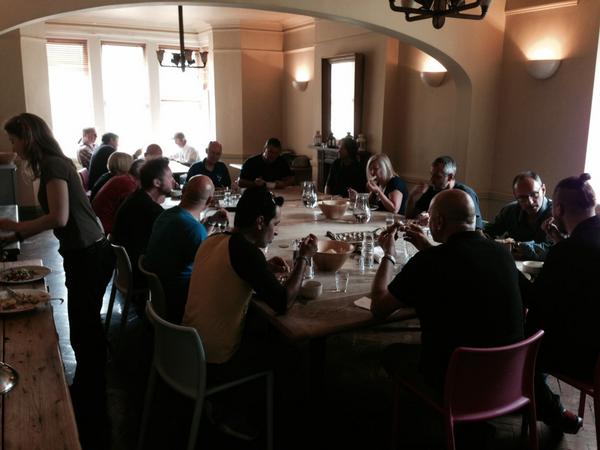
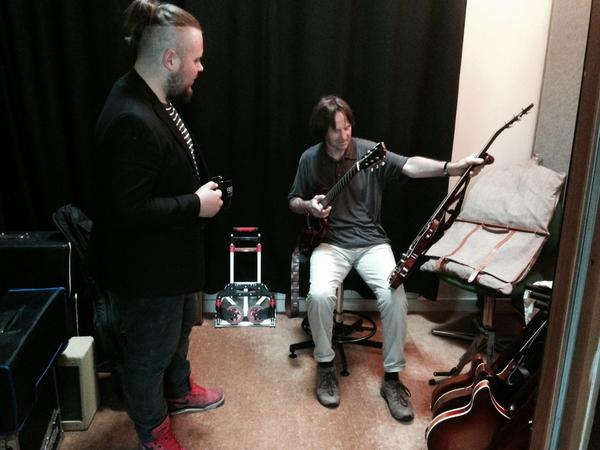
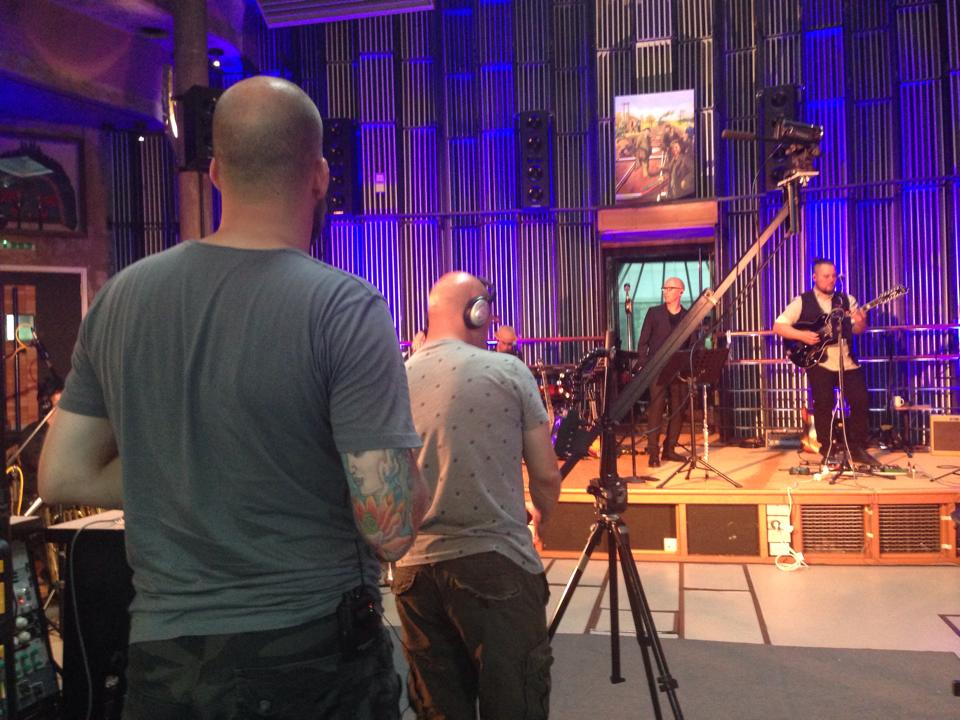
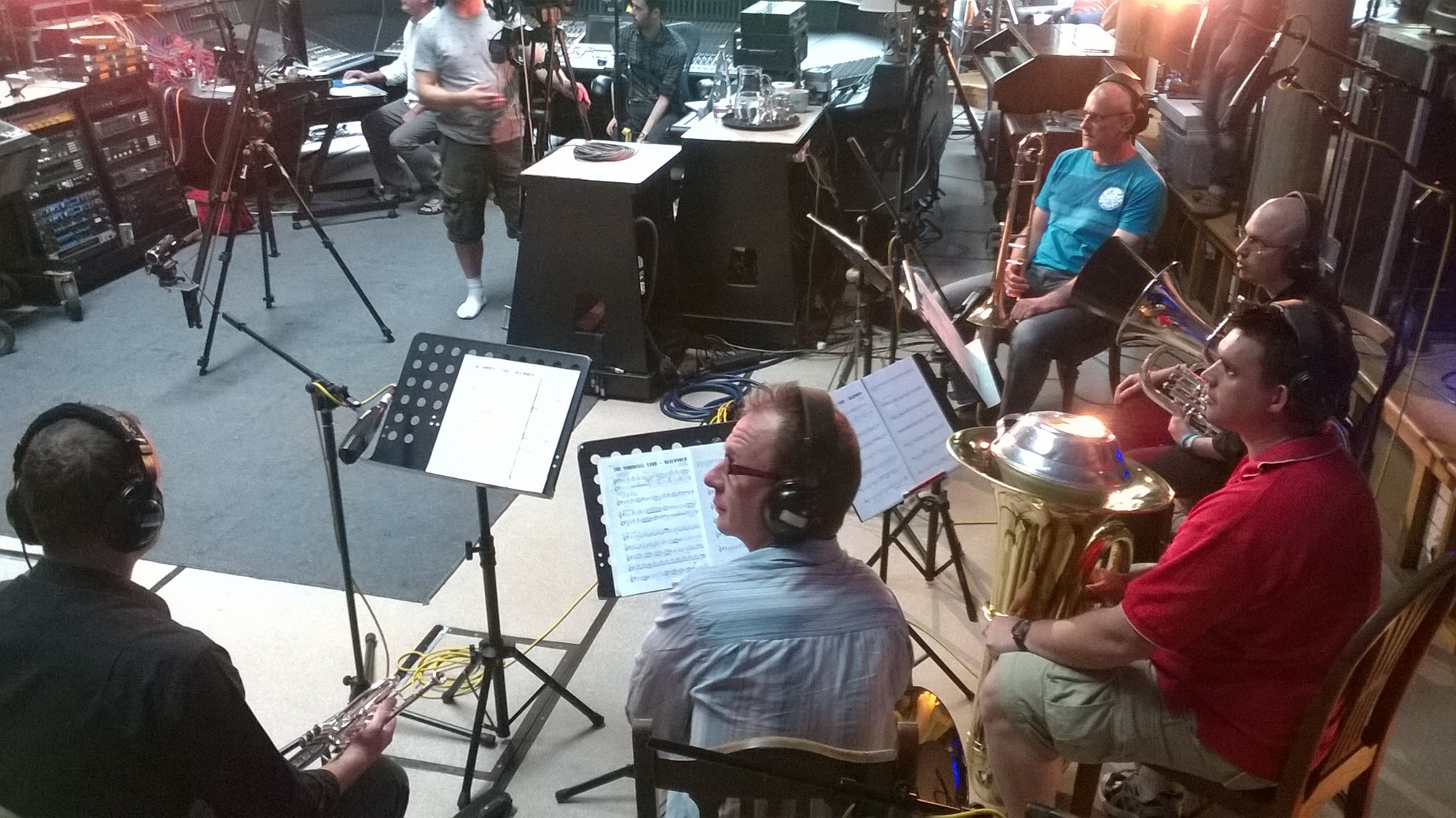
Big Big Train in the Studio: A Visual

The following are photos taken by Kain Dear, Dave Desmond, Rob Aubrey, and Greg Spawton as Big Big Train enjoys the immensity and perfection of Peter Gabriel’s Real World Studios.

BBT Lunch at the Canteen

gregory bbt pet gab

1459851_10153045233433082_2728170838162969042_n

10550134_10152716636808949_3194646398424064273_o

10526073_10153045232768082_1633667253025243363_n

10467147_10152244211644397_5796858723359577296_o

10537041_10153037574633082_5450056536506296655_n

10492149_10152214162816016_2175144061728242913_n

10457936_10203160026334752_7596253773457691052_n

10425118_10152914308463082_2691858805832699642_n


Jesus Christ! It’s prog’s new superstars Pt 1

Resonance Festival

Postcard no 2 from Balham

Hi All,

Well, despite a multiple Tube journey involving three different lines through the Metropolis, we finally made it to balmy Balham in time for the second and third day of the four day Resonance Rock Festival.

The Bedford Arms in which it was being held is an expansive, impressive building, a Victorian pile full of dark carved wood and low slung antique leather sofas which made you feel as though you about to be swallowed up when you alighted upon them.

Its most distinctive feature is the central performance area, known as the Globe after Shakespeare’s famous theatre, because of its elevated minstrel’s gallery around the four sides of the stage, giving it an intimate atmosphere. Two other stages were constructed in the ballroom and on the top floor, where bands and fans were eyeball to eyeball.

The whole purpose of the festival was to raise money for Macmillan Cancer Support, one of the UK’s leading charities in providing invaluable support to people with cancer and their families to help them through their most difficult of days.

As well as a star-studded cast, all the Resonance crew were giving freely of their time, their toughest tasks including lugging cabinets full of equipment up sizeable staircases and ensuring quick turnarounds between bands.

Those two days yielded plenty of surprises and delights, several of which I shall impart here over two blogs. The opening session on the Friday evening saw the mighty John Mitchell, producer, composer, guitarist and singer with It Bites, Frost*, Arena and Kino – to name but a few – in mellow mood with just an acoustic guitar and on keyboards, Liam Holmes, who delivered an eclectic selection of songs including Nat King Cole’s Smile and Floyd’s Comfortably Numb to which the attentive audience duly sang along.

This all felt a bit safe and familiar until a lion haired, wild-looking young rock dude came bustling onto the stage to join them who John Mitchell introduced as Nathan James. You may not have heard of him now but believe me, you will do so very soon.

From nowhere, Nathan launched into the most extraordinarily impromptu reading of Jesus Christ Superstar’s Gethsemene, not a song to be trifled with lightly at the best of times, especially in front of a strongly prog crowd.

Even with a simple acoustic setting, Mitchell, producer of his debut album under the band name of Inglorious and Holmes, Nathan’s musical director, were grinning widely as this 26-year-old unleashed only a fraction of the potential power of his monster voice.

Further research reveals that Nathan was a contestant on two television talent shows, BBC’s The Voice show to find brilliant new singers and also Andrew Lloyd-Webber’s Jesus Christ Superstar in which he was a finalist.

Since then, he has sung with Scorpions’ legend Uli Jon Roth and is now vocalist with prog theatre specialists Trans Siberian Orchestra. Catch him and them if you can.

It is no secret that Lifesigns was my favourite album of 2013, a heady combination of classical prog with lots of modern twists in its content and style, five individual songs being linked with a theme about life, the Universe and all things in between. For the record, Nick Beggs provided bass and vocal harmonies, while Robin Boult, Steve Hackett and Jakko Jakzszyk offered up some beautiful guitars and Thijs van Leer the intergalactic flute.

With Beggs touring the world with Steven Wilson, Steve Hackett and Kim Wilde, composer John Young went on a recruitment drive to find a bassist and guitarist to join him and drummer Martin “Frosty” Beadle. They found the Cardiacs’ Jon Poole as bass player and Steve Wilson guitarist Niko Tsonev to fill the vacant berths.

I was lucky enough to travel to the Leamington Assembly in March to witness the debut of Lifesigns live which was a revelation. Ten gigs later, Lifesigns in concert continues to grow in stature as a multi-faceted show, full of power and beauty. Poole has a full-on bass style which never tries to imitate Beggs while Tsonev has continued to develop and personalise the guitar parts to fully exploit the considerable range of his prowess.

The final act on Day Two was Also Eden, a band playing on the eyeball to eyeball stage, who have continued to forge a strong reputation through the release of their emblematic Think Of The Children album which they followed up last year with the widely acclaimed [Redacted].

Much of their material is written by their vocalist Rich Harding, who nearly died in a road accident soon after joining the band in 2010, suffering multiple fractures, a ruptured aorta and broken ribs. Hovering between life and death while in an induced coma has coloured his lyrics as he articulates a place where hopefully, none of us will ever venture.

Now with Mr So & So’s keyboard player Andy Rigler in to replace Howard Sinclair, their live show is both melodic and intense, guitarist Simon Rogers adding solid riffs throughout and a gorgeous waterfall effect on Chronologic. They really are a band who are as engrossing live as they are on record.

And so the curtain fell on day two at Resonance. Day three promised even more with one of the most heavenly singers around on show.

* Nathan James performs with the Trans Siberian Orchestra. http://www.youtube.com/watch?v=Utjo6iJ8A_I

On Going to 11

You have experienced this during your own listening:

Music released today typically has a dynamic range only a fourth to an eighth as wide as that of the 1990s. That means if you play a newly released CD right after one that’s 15 years old, leaving the volume knob untouched, the new one is likely to sound four to eight times as loud.

As Ethan Smith has written, the problem is with us all over the place:

Over the years, rock and pop artists have increasingly sought to make their recordings sound louder to stand out on the radio, jukeboxes and, especially, iPods.

But audiophiles, recording professionals and some ordinary fans say the extra sonic wallop comes at a steep price. To make recorded music seem louder, engineers must reduce the “dynamic range,” minimizing the difference between the soft and loud parts and creating a tidal wave of aural blandness.

“When there’s no quiet, there can be no loud,” said Matt Mayfield, a Minnesota electronic-music teacher, in a YouTube video that sketched out the battle lines of the loudness war. A recording’s dynamic range can be measured by calculating the variation between its average sound level and its maximum, and can be visually expressed through wave forms. Louder recordings, with higher average sound levels, leave less room for such variation than quieter ones.

The problem even extends to vinyl releases, as Angry Metal Guy chronicles:

Labels are also looking to cash in on vinyl’s new found popularity, and so there’s plenty of lazily produced, poor sounding special edition reissues out there. And even with new vinyl, there’s never a guarantee of a dedicated, dynamic master, only the possibility. If the vinyl is sourced from the CD, it will sound every bit as bad.

In short, the problem here is that the ability to turn the music up to 11 should reside with the listener, not the mastering engineer:

There is a major difference between manipulating the recorded volume versus the playback one. When a mastering engineer artificially pushes the volume higher by applying massive amounts of DRC, he or she is changing the recorded volume by squashing the high and low ends of the frequency spectrum. This process has the nasty byproduct of causing transients and imaging to substantially degrade, making the music sound lifeless and dull.

Loudness Wars

The are many reasons why this huge problem persists today.

But one of the big myths (“metal should go to 11”) can be debunked quantitatively:

One of the most pervasive myths in metal production today is that because metal is supposed to be played loud, it has to be recorded loud. This could not be further from the truth. Some of the most popular metal albums in history are also some of the most dynamic. Master of Puppets: DR12. Rust In Peace: DR13. Painkiller: DR11. Reign In Blood: D14. Notice anything similar about these albums? They were all released prior to 1992, which is roughly the start of the Loudness War. From that year onward, the entire music industry began to engage in constant one-upmanship. Not only did every new album have to be louder than the one that preceded it, but louder than the other guy’s new album as well. By the late ‘90s everyone began to settle around DR6, which is where we are now. Why DR6? Because that’s as loud as you can possibly go while still attempting to hold on to some semblance of fidelity. DR6 is far from ideal, but for every point of dynamic range lost below that mark, you begin to do exponentially more damage to the sound.

A big problem with the industry today is that if you’re on a major label, chances are they won’t let you release an album with high levels of dynamics even if you wanted too. If you send them a fully dynamic master, they’ll think there’s something wrong with it and hire an engineer to smash it down to DR6 before sending it off to the CD pressing plant. …

The truth is that most bands simply have no idea that the DR5 and DR6 masters used on the vast majority of new CD releases are not something people actually want. I know that it’s going to be a long and uphill battle to change the minds of the executives at the major labels, but most bands on small labels generally have a fair amount of creative freedom in terms of what they can do with their masters. So if enough of you let them know that you want them to release albums with proper dynamics, they will listen.

Prog should definitely lead the way out of this morass. Why shouldn’t every self-respecting prog artist proudly and prominently place a DR number on the back of every CD they produce? It could be a way of self-identifying yourself as a serious prog artist committed to only the best sonic experience.

If not, maybe the DR Database needs to be in every reviewer’s toolkit. But keep in mind this caveat that the Dynamic Range number is just the beginning of a discussion about an artist’s musical release, and not the final word on its evaluation:

DR6 is now the industry average and already considered by most sane engineers as too compressed. The recommended level by most industry experts is DR8 or higher. A bit of a fair warning though, a higher number doesn’t necessarily mean its sounds better, but in the overwhelming majority of cases, it usually does. And applying DRC is not evil in itself either, provided it’s done judiciously. The fact is DRC is an invaluable tool that can make a good sounding record sound great. I highly encourage you to read some of our in-depth articles about dynamic range and why it’s not about the numbers, but about the sound.

So I’m sure you’re wondering though, why sacrifice the music’s fidelity just to make it sound artificially loud?

It stems from the fact that at least initiallyour ears perceive louder as sounding better, and labels and artists try to leverage that fact in order to gain market share. The idea is simple, if a label’s roster sounds louder than its competitor, you, the listener, will tend to gravitate toward that label’s louder tracks than the other guy’s softer ones.

Perhaps the Priests of the Temples of Syrinx were objecting to the acoustic guitar because of its magnificent dynamic range.

Attention all planets of the Prog Federation: DR6 has assumed control…

Send My Roots Rain ★★★★★ @JosephBottum @RemodeledMusic

Send My Roots Rain

Don’t miss Send My Roots Rain, a great EP with amazing vocals by Mallory Reaves, splendid instrumentation and production by Chris Folsom, and music and lyrics by Joseph Bottum:

Recorded by Nashville studio performers, Send My Roots Rain presents seven songs by poet and bestselling essayist Joseph Bottum. It’s new wine in old bottles—as each song rethinks a roots melody, giving new words and new life to underappreciated moments from the deep traditions of Anglo-American music. With an ear for the modal strains of shape-note and folk music, Bottum provides the words and revised melodies that bring out the murder, mayhem, and melancholy—the lovesick emotions, the God-haunted thickness, and the rich connections to the natural world—that the old music always assumed. The poetry of Send My Roots Rain aims at nothing less than what traditional music wants to say.

This is truly a splendid release from Remodeled Music. Definitely an upper-echelon release for 2014!

Consisting only of the finest sort of traditional popular music and poetry, you will want to download this and play it again and again during your most reflective summertime moments.

Moving Pictures: Rush on Film

movingpicturesBTSLet’s face it, it’s hard to bottle lightning. Rock docs, whether they’re concerts or biopics or even music videos, succeed when the veil is lifted and performers face their own vulnerability. Because this is a state of being for Rush, the films about them, even non-descript concert videos, are generally quite good. This list is really a starter for myself, and I share it in hopes that in the comments below our readers will add other favorites.

1. La Villa Strangiato at PinkPop, 1979. Smoking. This is Rush live in the 1970s at their very best. Thank the prog gods someone had the presence of mind to film it. La Villa Strangiato is one of their most popular pieces, but the band attributes the complexity of it and the album from which it came, Hemispheres, to their shift toward shorter pieces as the 70s turned into the 80s. This appears to be the only clip from the show, although the entire concert is available as audio on YouTube as well.

https://www.youtube.com/watch?v=78D00dYOBrM

2. Beyond the Lighted Stage. Beyond the Lighted Stage is a successful long-form band documentary, a rarity in rock, which as a performance art often fares better in conceptualized concert films. The film benefits from the full participation of its main actors, a well-selected and articulate supporting cast of fellow musicians, family and fans, and most importantly a directness and honesty that neither discounts nor over-rates Rush’s place in popular music. Of course it’s no surprise given the band’s history and its members’ personalities that such a project should work, but when Geddy Lee announces at the end of the film that he warned the production crew, “Don’t be surprised when you discover how boring we really are,” the takeaway is two-fold. First, many rock docs manage to show little beyond how mundane the rest of a rocker’s life is, as we find that most great musicians are successful by virtue of their absorption in their art and have little to say outside of it; second, that the depth of their integrity as an artistic entity and the basic good-guyness of each of the members of Rush as individuals — nothing more, nothing less, as they would tell you — sets them apart, and compared to many of their peers in the rock world makes them truly unique.

https://www.youtube.com/watch?v=zb-MwVUUy3g

3. Classic Albums: 2112 and Moving Pictures, 2010. The Classic Albums series, first broadcast on VH1 umpteen years ago with hour-long profiles of albums by the Band, the Grateful Dead, and Fleetwood Mac, remains a marvelous program dedicated to the dissection of key albums in rock history. I never saw one that didn’t have something to add to what I knew about an album already. The series turns its eye to not one but two of Rush’s records, and runs almost two hours. Made around the same time as Beyond the Lighted Stage, it amplifies the details of Rush’s most famous albums. While much of the story of these records is known, it’s refreshing to see Rush sitting at the mixing board with producer Terry Brown, talking about how the tracks were actually laid down.

4. The Colbert Report, 2008. I think many fans value this appearance by Rush on the Colbert Report as a recognition that those of us who love Rush will not be denied. Colbert gets it, in the same way he has the measure of the rest of American culture. Although marginalized by the music press, Rush was never a cult band — their album sales and sold-out concerts put the lie to that idea. What is maddening is the casual dismissal of the band by hipster rock journalists and others who just don’t get it. Not getting it is cool — in fact, few Rush fans get into all of Rush’s records (there are, after all, many sides to this band) — but given their substantial influence there was something more than a little insidious in their barring from the Rock and Roll Hall of Fame for 14 years. As Colbert comments in his inimitable way, “That’s bullshit.”

https://myspace.com/james_yyz/video/rush-on-the-colbert-report/50001106

5. Rock and Roll Hall of Fame Acceptance Speech, 2013. Equal parts grace, joy, and humor, you’d be hard-pressed to find a better set of speeches accepting the rock and roll honor of honors. Lifeson’s now infamous, hilarious “Blah blah” performance underscores what both Peart and Lee are getting at, that for an award that wasn’t supposed to mean so much to them, it actually meant a lot.

https://www.youtube.com/watch?v=TKuO1FpCWRI

6. Xanadu, Exit Stage Left, 1981. Rush have been documenting their live shows every few years, starting in 1976 with All the World’s a Stage. I’m including this version of Xanadu because, beyond being among my favorite Rush songs, it captures the vibe of a Rush show and was recorded for the film in a less than polished manner, so really has a live grit to it. This is full on double-neck splendor.

https://www.youtube.com/watch?v=8JAA90BRp6o

7. Come On Children. Google around and you’ll find various clips of this Allan King documentary, released in 1972 and featuring a 17-year-old Alex Lifeson. Documenting a fabricated months-long social experiment, in which teenagers are sent out to live on a “farm” without any adults, Come On Children is certainly a product of its era, and while now more associated with Lifeson and his renown, the film very effectively provides a window into the larger environment from which Rush emerged.

8. Halo Effect, Dallas, 2012. There are worse things in rock than the modern concert video — the swoopingly overwrought crane shots, vast stages, the polished cosmeticism — but I can’t think of many. The bland emotional impact is rarely rewarding. I’m including this performance from Dallas from 2012 because even though it suffers from some of those problems, it shows what a great live band Rush still is as well as the maturity of songwriting on “Halo Effect,” from Clockwork Angels. It’s a beautiful song, full of love and regret, a personal song, and not typically Rush even though Peart is writing in a typical mode for him, through an invented first person. Hearing Geddy Lee singing in a register fitting the new songs is nice, since a lot of the older material finds him straining these days (no discredit to him, mind, those songs are age challenging). Alex Lifeson’s intro, not on the studio version, is masterful, an overture that touches on the themes in the song without being just the song, and is redolent of Jimmy Page’s live electro-drone folk outings with Led Zeppelin.

https://www.youtube.com/watch?v=qlKsMYsb47s

****

rush-at-40-001-version-2